You just paid $6 for a bottle of water. Somewhere past security, less than a five-minute walk away, there’s a free refill station doing the exact same job, and you had no idea it existed. That’s not bad luck. That’s the entire business model.
Once you’re past the TSA checkpoint, you’re a captive customer with nowhere else to go, and airports price accordingly. But here’s the part almost nobody tells you: the free version of nearly everything you’re paying for is usually sitting in plain sight, just outside your line of sight. Here’s what frequent flyers and airport insiders quietly know.
#14 – Bottled Water That Costs 4x More Than the Same Bottle at a Gas Station
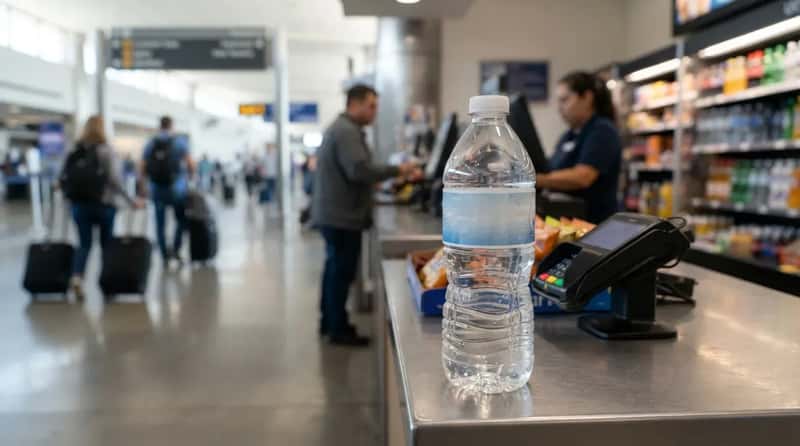
A basic 16.9-ounce bottle of water that runs about a dollar at a convenience store is often $3-5 at U.S. airports, even in low cost-of-living cities. At JFK, one traveler was famously charged $7.66 for a single bottle of water at a shop near Gate 2. A 20-ounce Dasani that sells for $1.69 at a normal store regularly goes for more than double that at the same airport.
Walk a little farther, though, and the math flips completely. Most larger airports now have water refill stations after security, so you can bring an empty bottle through the scanner and fill it for free on the other side. The mistake almost everyone makes is buying a sealed bottle at the first shop they see instead of carrying an empty one. Two gates away, the same hydration costs nothing.
Fast Facts
- JFK shop price for a single bottle: $7.66
- Gas station price for the same size bottle: about $1
- Free refill stations now standard past security at most large U.S. hubs
- Bringing an empty bottle through the scanner is fully allowed by TSA
#13 – Luggage Carts That Are Basic Courtesy Everywhere Else on Earth
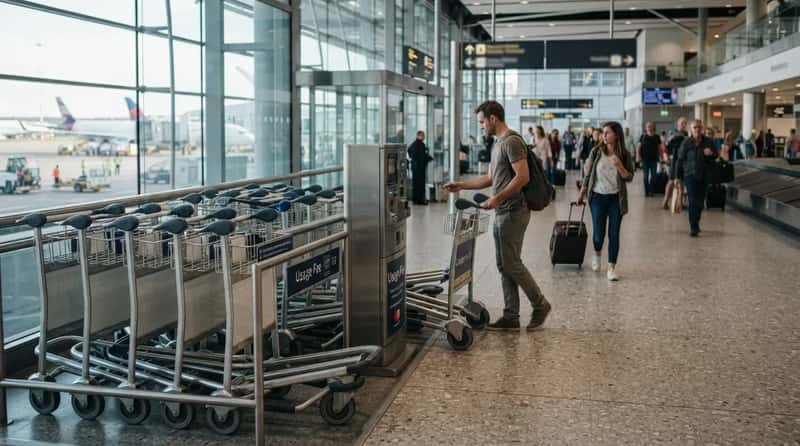
In the U.S., grabbing a cart for your suitcases can cost real money. Fees vary by airport, typically ranging from $5 to $9, while many international hubs simply hand them out. Miami is one of the worst offenders at up to $9 a pull, with Detroit close behind at $7, while major hubs overseas treat carts like a basic courtesy, not a revenue stream.
The frustrating part is the inconsistency inside American airports themselves. At SFO and LAX, carts are free, but only for international arrivals. Domestic travelers still pay. Meanwhile, Toronto Pearson gives them away entirely thanks to a corporate sponsor, which means rolling your bags two terminals over on the same trip can drop your cost from real dollars to zero.
#12 – Premium Wi-Fi Passes When Basic Wi-Fi Is Sitting Right There
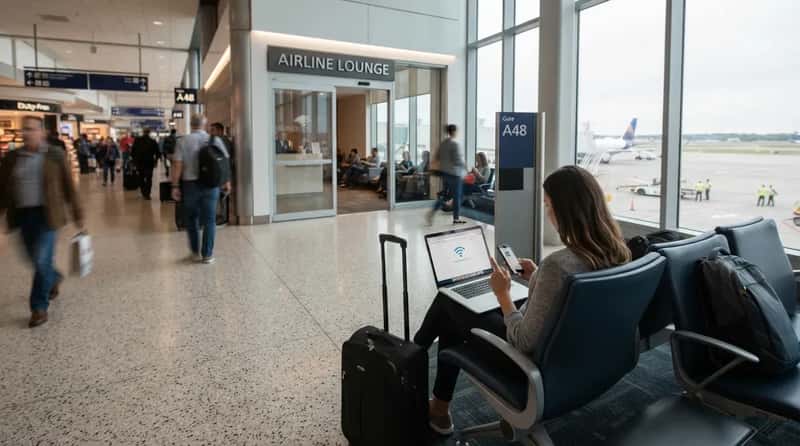
Plenty of travelers instinctively pull out a credit card for “fast” airport internet without realizing free Wi-Fi is usually already broadcasting nearby. Paid day passes for premium connections typically run $8 to $10, even though most terminals already offer a slower, free tier for anyone who connects. Some overseas hubs make the split even clearer, like Amsterdam’s airport, which only starts charging after your first free hour.
The easiest workaround sits inside almost any airline lounge, where complimentary Wi-Fi is standard, no upgrade purchase required once you’re inside. Skip the paid splash page entirely, try the free network first, and only consider paying if you genuinely need lounge-grade speed for a video call.
#11 – Phone Charging Kiosks Next to Rows of Free Outlets
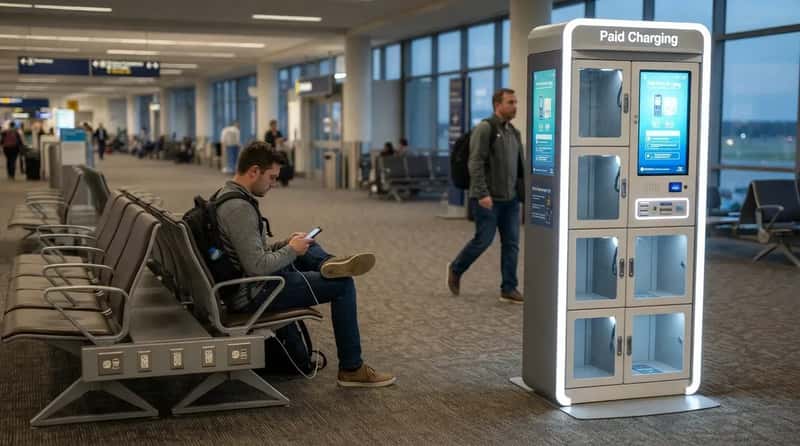
Paid charging lockers and vending-style kiosks show up in high-traffic terminals, tempting stressed travelers with a dying battery and a flight to catch. What most people don’t realize is that dozens of free outlets are usually built into the gate seating just a short walk away. San Francisco International alone has 125 outlets in Terminal 1, 388 in Terminal 2, 750 in Terminal 3, and 200 more in the International Terminal, all free.
Atlanta takes it further with dedicated charging stations scattered throughout the concourse, letting travelers plug in at no cost anywhere in the airport. The paid kiosks tend to cluster near the busiest checkpoints, banking on rushed travelers who don’t want to search. Walk toward a quieter gate, and you’ll usually find a free outlet within thirty seconds.
At a Glance
- SFO Terminal 3 alone offers 750 free outlets
- SFO’s full outlet count across terminals tops 1,400, all free
- Atlanta spreads free charging stations across its entire concourse
- Paid kiosks cluster near busy checkpoints, not quiet gates
#10 – Day-Pass Lounge Access When a Free Lounge Sits One Concourse Over
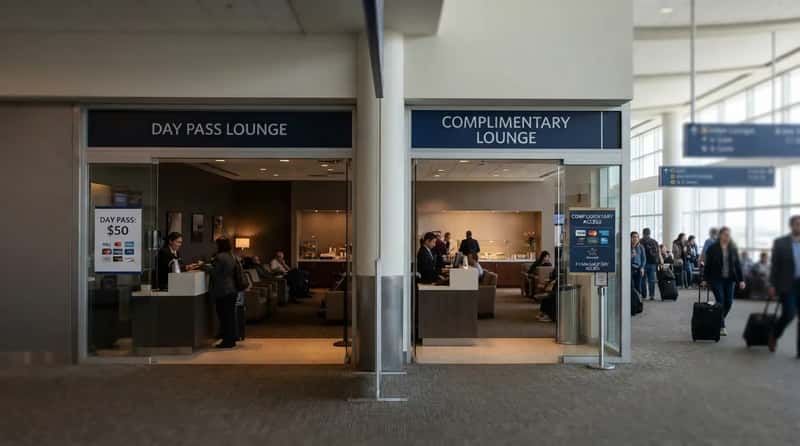
Walk-up lounge access without status or a premium credit card isn’t cheap. Day passes typically run about $50 per visit, and annual memberships can climb to $300-$500 a year. Most travelers assume that’s the only door in.
What frequent flyers know is that certain credit cards, a military ID, or even a same-day upgraded ticket can unlock a nearly identical lounge experience for free, sometimes in the very next terminal. Comparing two lounges in the same airport, one requiring cash and one requiring a card you may already own, regularly reveals the exact same buffet and shower setup behind two very different price tags.
Quick Compare
- Walk-up day pass: about $50, paid on the spot, no strings attached
- Annual lounge membership: $300-$500 a year, unlimited visits
- Premium travel credit card: often already includes lounge access as a card perk
- Active military ID: frequently grants free entry to the same lounge
#9 – Shoe-Shine Stands When a Cleaning Kit Sits Free in the Restroom
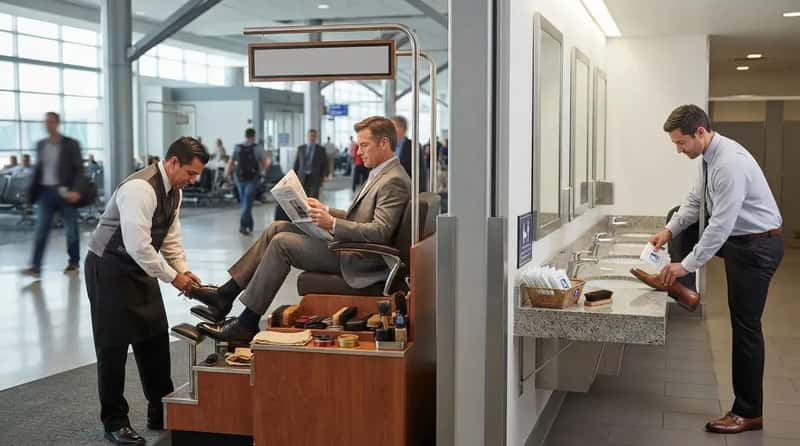
Staffed shoe-shine stands remain a fixture in business-heavy terminals, charging a flat rate for a five-minute polish before a big meeting. It’s a legitimate service, but most travelers never notice that many airport restrooms stock free shoe-cleaning wipes or brushes near the sink, especially in renovated terminals built with business travelers in mind.
The real value of the paid stand is the seated break and the attendant’s speed, not the shine itself. If you’re just trying to knock the scuff off a loafer before a client meeting, the free option two gates down does the same job. It just requires you to do the work yourself instead of paying someone else to.
#8 – Coin-Operated Massage Chairs Beside Free Relaxation Zones
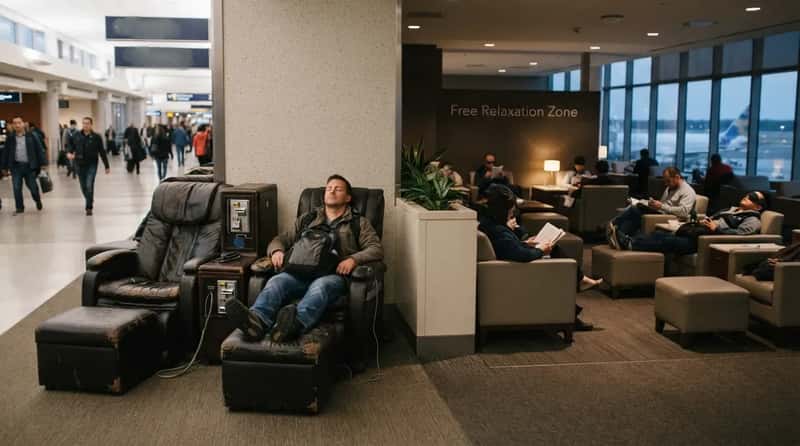
Massage chairs bolted near baggage claim or a food court have been an airport staple for decades, taking cash or card for a few minutes of shoulder vibration. Travelers waiting out a long layover often drop several dollars here without realizing many newer terminals have added free relaxation lounges, quiet zones, or even yoga rooms specifically to cut down on stress-related complaints.
The chairs persist because they’re a proven, low-maintenance revenue stream, not because they’re the only relaxation option left. A growing number of major hubs now dedicate entire gate areas to quiet seating with dimmed lighting, at zero cost. If your only goal is decompressing before a flight, the free room usually beats the paid chair.
#7 – Plastic Luggage Wrap When Tape and Zip Ties Are Free at the Counter
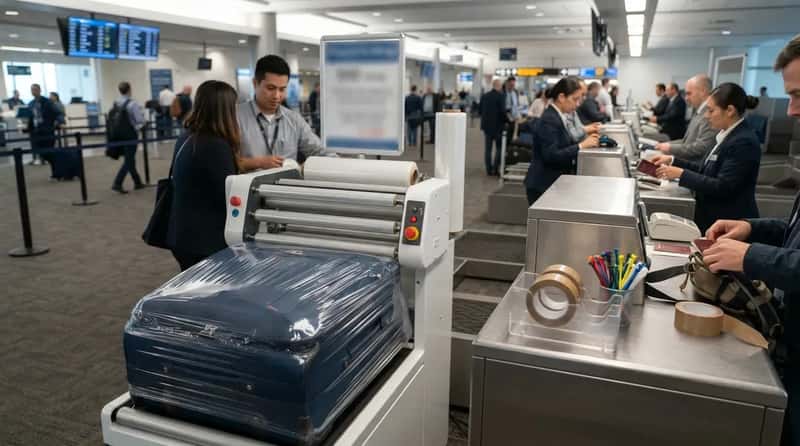
Shrink-wrap kiosks near check-in charge a noticeable fee to cocoon your suitcase in plastic, marketed as protection against damage or tampering. It genuinely deters theft on connecting flights through less secure hubs. But most travelers never ask the airline counter directly, where staff will often supply packing tape or zip ties at no charge if a zipper looks stressed or a strap is loose.
The wrap service thrives on convenience, not necessity. It’s positioned right where anxious travelers are already worried about their bags, which makes the sell easy. A free workaround, even a less polished one, sits at nearly every airline counter for anyone willing to simply ask.
#6 – “Skip the Line” Passes When a Free Fast Lane Already Exists
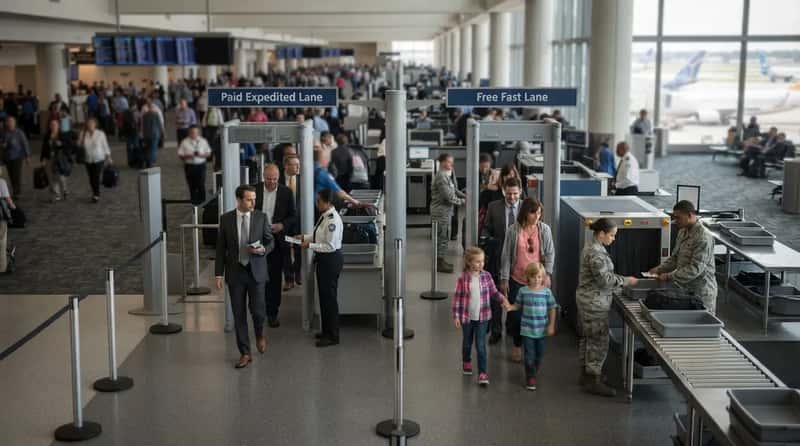
Paid expedited security programs promise a shorter wait for a fee, and during peak travel windows, that promise is real. What often gets buried in the marketing is that free fast lanes already exist for active military members, families traveling with small children, and travelers enrolled in government trusted-traveler programs, which cost far less annually than many private skip-the-line memberships.
The paid lane and the free lane frequently funnel into the same checkpoint, just from different queues. Travelers who assume the paid option is their only route to a shorter wait are often standing two lanes away from a free one they simply never checked their eligibility for.
Worth Knowing
- TSA PreCheck runs roughly $78 for five years, working out to about $15.60 a year
- Active-duty military and their families can use expedited lanes at no cost
- Families with small children are routed to family lanes free at most checkpoints
- Many premium “skip the line” club memberships cost far more per year than PreCheck
#5 – Currency Exchange Kiosks When a No-Fee ATM Sits Nearby
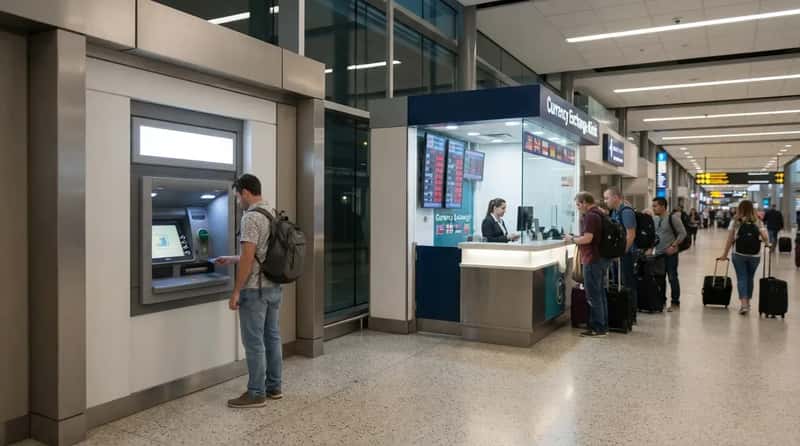
Airport currency exchange counters post rates that look official but bake in a steep markup, sometimes 10-15% worse than what you’d get anywhere else. Travelers grab cash here out of pure convenience, especially right after landing in a new country, without realizing a bank-branded ATM in the same arrivals hall often delivers a far better rate for just a small foreign transaction fee.
The kiosk’s real product is speed and simplicity, not value. It’s positioned directly in the path of jet-lagged arrivals who haven’t had time to think straight. A two-minute walk to a legitimate bank ATM, or simply withdrawing cash before departure, routinely saves travelers real money on the exact same currency.
#4 – Luggage Storage Lockers When Airline Bag Check Is Free for Short Holds
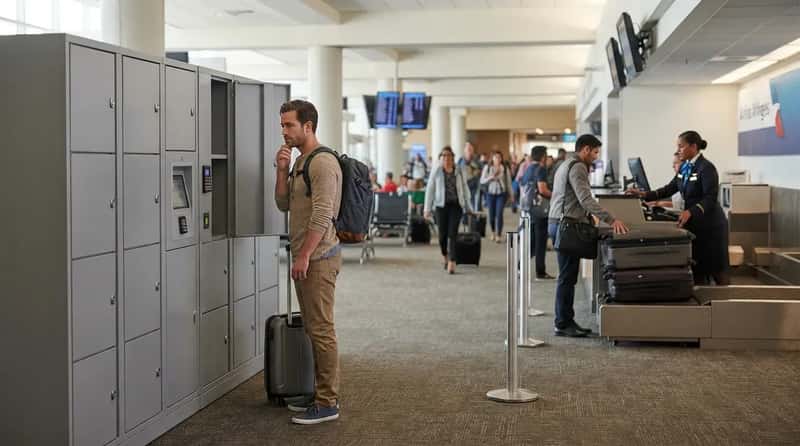
Paid storage lockers let travelers stash bags for a few hours between an early arrival and a late check-in, charging by the hour or by the day. It’s a real convenience for tight layovers. What fewer travelers realize is that some airlines will hold a checked bag at the counter for a short window at no charge, particularly for passengers with elite status or a same-day connecting itinerary.
The locker company profits because most travelers never think to ask their airline first. It’s worth a single question at the counter before defaulting to the paid box. In the right circumstances, the exact same service, someone else watching your bag, costs nothing just one queue over.
#3 – Golf-Cart Rides to the Gate When Wheelchair Assistance Is Free
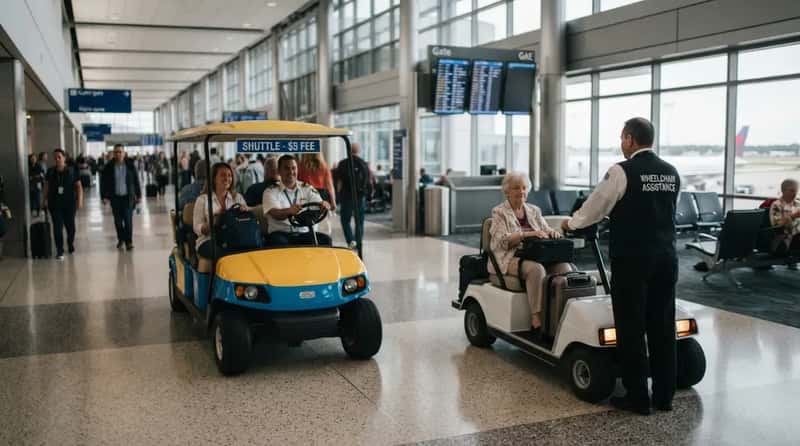
Some terminals offer paid golf-cart shuttles for travelers racing to a far gate, charging a flat fee for the ride. It’s fast, and it’s real. But airlines are required to provide wheelchair and mobility assistance to any passenger who requests it at no cost, and that assistance frequently includes a motorized cart ride straight to the gate.
The paid cart appeals to travelers who don’t think they qualify for airline assistance or don’t want to ask. The truth is that airline assistance isn’t means-tested. It’s available to anyone struggling to make a connection, injured, elderly, or simply overwhelmed, and a quick call to the airline before travel usually secures the same ride for free.
Worth Knowing
- Federal law requires airlines to provide free wheelchair and mobility assistance on request
- Assistance is not means-tested; it covers anyone who needs help making a connection
- Calling ahead usually secures a cart or wheelchair waiting right at the jet bridge
- Paid golf-cart shuttles cover only a fraction of the routes free assistance can reach
#2 – Pay-Per-Use Shower Suites When Lounge Showers Are Included
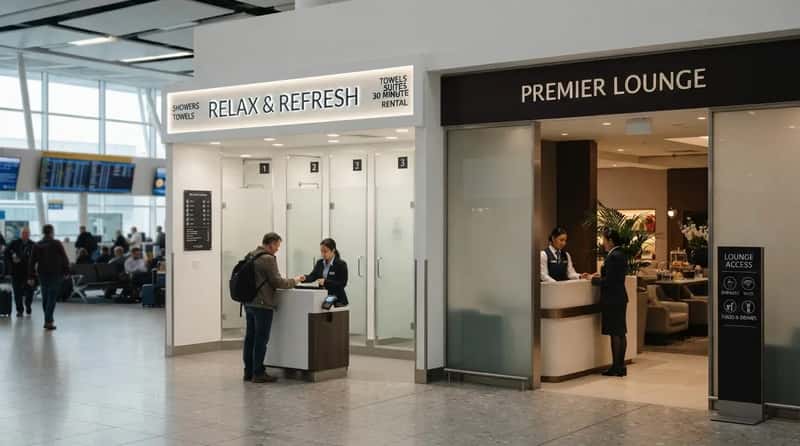
Standalone shower suites, often run by third-party vendors, charge a flat rate for a set number of minutes of hot water and a towel, a genuine lifesaver after a red-eye. It’s a legitimate business built on real demand. What a lot of travelers miss is that many premium lounges include shower suites as part of the day-pass or membership price, meaning the shower is effectively free once you’re inside.
Comparing the standalone shower fee to a lounge day pass often reveals the lounge is the better deal anyway, especially when food and drinks are bundled in too. Travelers paying twice, once for the standalone shower and once later for lounge access, are the ones losing the most money in this comparison.
Quick Compare
- Standalone shower suite: paid separately, covers hot water and a towel only
- Lounge day pass: roughly $50, but bundles in the shower plus food, drinks, and Wi-Fi
- Paying for both separately almost always costs more than the lounge alone
#1 – Nap Pods When a Free Quiet Room Sits Just Past Security
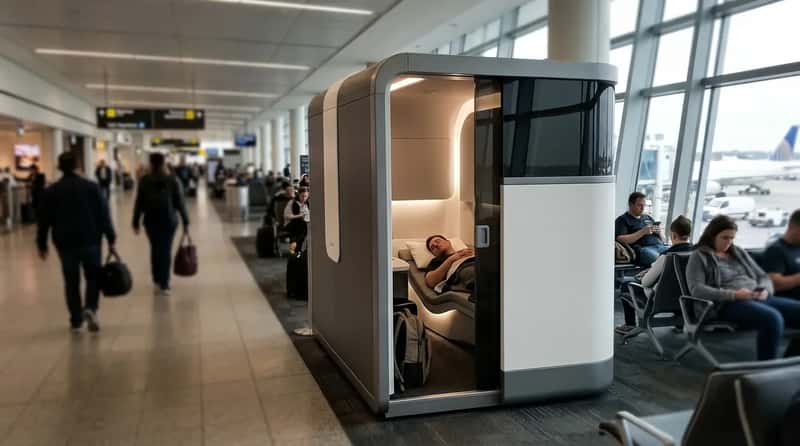
Private nap pods and sleep suites have exploded in major hubs, charging by the hour for a door that locks and a flat surface to lie down on. For a genuinely exhausted traveler with hours to kill, it’s often worth every penny. The part almost nobody checks first is whether their own terminal has a free quiet room, meditation space, or low-traffic gate area explicitly designed for resting travelers, tucked away from the main concourse noise.
The pods work because sleep-deprived travelers rarely have the energy to go looking for a free alternative. They book on impulse. Airports that have added free rest zones rarely advertise them the way they promote the paid pods, since the pods generate revenue and the quiet room doesn’t. Ask an information desk before booking a pod. The free version might be closer than you think.
The pattern across all fourteen is the same. Airports profit from travelers who don’t ask questions or don’t walk a little farther. The free version of almost everything is usually hiding in plain sight, past security, inside a lounge, or simply one counter over. The paid version exists because most people never check.
Which one of these has caught you off guard? Drop your airport horror story in the comments.