Most of us picture a coach tour guide as the person with a microphone and a joke about the next rest stop. For travelers over 70, the good ones are doing something far bigger. They run a quiet system in the background, and it works so smoothly that guests assume the day just happened to go well.
Here’s the twist. The most useful items on this list almost never appear in the brochure, and several happen before you realize you needed them. Some are tiny habits you’d walk right past. One of them might change how you choose your next tour.
#14 – The Headcount Ritual That Never Takes a Day Off
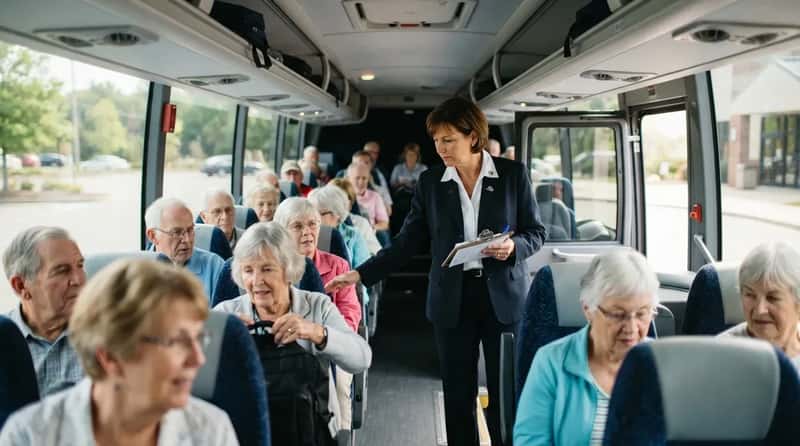
Every guide counts passengers, and careful ones count constantly. Before the coach leaves any stop, they confirm that every seat is filled or every name is checked off. Careful guides often count twice, once as people board and again after everyone is seated. It sounds fussy, but it prevents the nightmare of leaving someone behind at a rest area or a gift shop.
At a Glance
- Count one: as passengers board the coach
- Count two: once everyone is seated and before the doors close
- A clear return time and a named meeting landmark at every stop
- A cushion built in for slower walkers and long restroom lines
For older travelers, the count matters even more. Someone walking slowly back to the coach, or still waiting in a long restroom line, is easy to miss in a crowd. Good guides name a return time and a meeting landmark, then build in a buffer for slower walkers. That cushion means nobody has to hurry, and nobody has to feel hurried. But the next habit is one most people only notice when it goes wrong…
#13 – Bathroom Breaks Planned Before Anyone Has to Ask
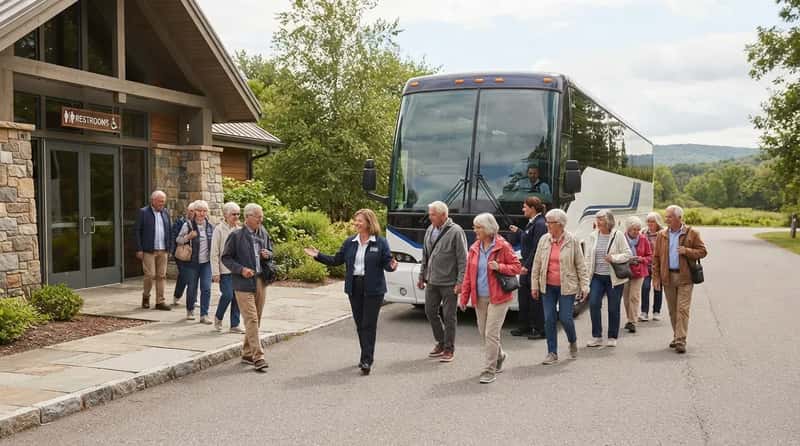
Nobody wants to be the person who asks a whole coach to pull over. Experienced guides know this, so they plan restroom stops ahead of time. Many itineraries build in a break roughly every couple of hours, and guides often know which stops have shorter lines and easier access. The best stop is often not the highway plaza but a quiet museum café or visitor center.
This matters more with age, because urgency and comfort become real planning issues. A guide who announces the next stop before anyone starts fidgeting takes the awkwardness out of the whole thing. Some also remind the group to use facilities before a long stretch with none. The payoff is a calmer coach where nobody feels singled out.
And that’s before anyone even touches your suitcase, which brings us to the next item…
#12 – Your Suitcase Gets Carried While You Walk Away Empty-Handed
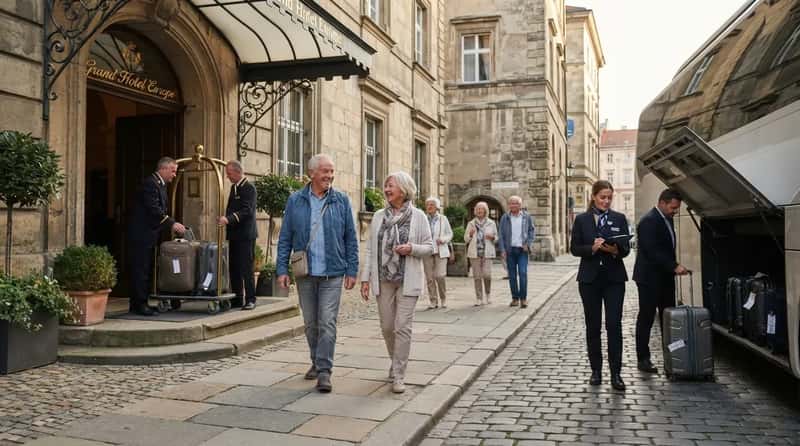
On many escorted tours, luggage handling is built into the price. Porters or hotel staff move bags from the coach to your room, and your only job is to have the bag outside your door on time. Operators typically cap luggage at about one suitcase per person, so check the limit for your tour. For many older travelers, this one perk is the difference between a trip they can manage and one they skip.
The guide is the coordinator behind the scenes. They tag bags, confirm pickup times, and chase down any piece that goes missing. That spares travelers from dragging wheeled cases over cobblestones or up hotel steps. It’s a small line item on paper and a huge relief at the end of a long travel day. Still, the coach door has its own hazard that guides watch closely…
#11 – A Steady Hand at the Steps You Didn’t Know Were a Problem
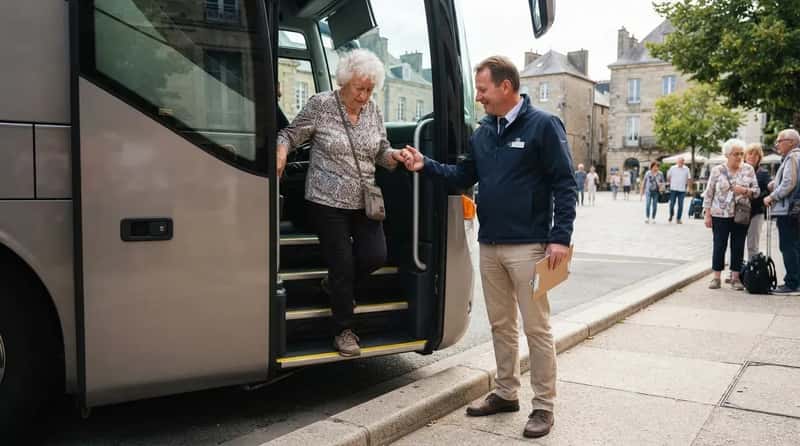
Coach steps are tall and steep, and guides know it. Many stand at the door and offer an arm or a hand as people board and exit. Drivers often pull up close to curbs when they can, which cuts down on awkward drops. That tiny hand at the door may prevent more trips and stumbles than any safety briefing.
Accessibility planning goes further than steps. Federal rules generally require large motorcoach operators to provide accessible service, usually with advance notice. That means a wheelchair or walker user should tell the operator when booking, not on departure morning. Guides can then arrange the lift, the seating, and the route. Which brings up an argument tour fans never settle…
#10 – The Seat Rotation That Half the Coach Secretly Hates
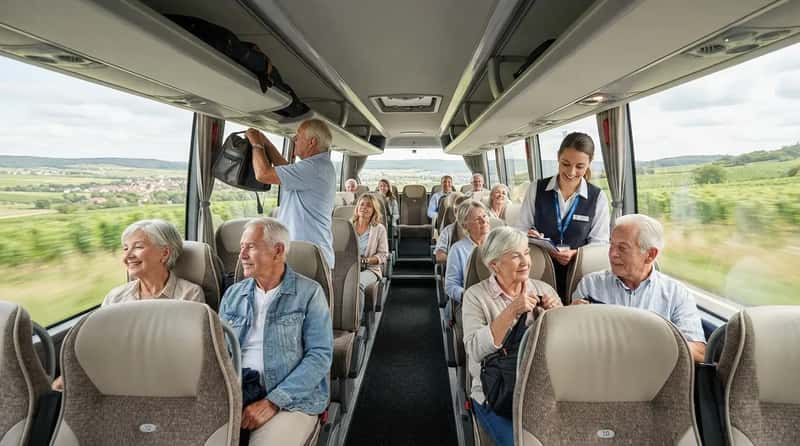
Many tours rotate seats daily so everyone gets a turn at the front. Guides do it to keep things fair, and it helps older travelers who need the front for motion sickness, leg room, or an easier walk to the door. Seat rotation is also one of the most debated rules on any tour. Some guests love the fairness, and others quietly mourn the loss of their favorite window.
Plenty of travelers swear the back of the coach is the fun zone. Many guides argue the front third is the best seat for anyone with balance or stomach concerns. Experienced guides handle exceptions quietly. If you have a real need, say so early, and most will hold a seat for you without announcing why.
But the next entry has a bigger effect on how your whole day feels…
#9 – Days Paced So Nobody Collapses at 4 p.m.

A well-designed itinerary doesn’t pack every hour. Guides learn how a group’s energy rises and fades, so they put the big walking site early and the lighter stops later. Many include free time after lunch, and many tours publish walking-level ratings so you can judge the pace before you book. The “free afternoon” is often the most strategic part of the day.
Quick Compare
- Join the optional excursion: more sights and more stories, but a longer day on your feet.
- Rest at the hotel: fewer photos, but a calmer evening and more energy for dinner.
- The guide’s quiet view: either choice is fine if you make it on purpose.
Here’s the opinion that starts arguments. Many travelers see optional excursions as can’t-miss extras, while others argue the smartest move is to skip one and rest. Guides rarely say this out loud, but they’ve watched both groups. The people who rest often arrive at dinner in a better mood than the people who pushed on. Another habit helps anyone who struggles to hear all of this…
#8 – Headsets, Repeated Facts, and a Guide Who Faces You When They Talk

On busy streets or in echoing cathedrals, a guide’s voice disappears fast. That’s why many tours use whisper systems, small radio receivers with earpieces, so guests can hear without crowding the guide. Good guides also face the group when speaking and repeat key information, such as meeting times and the coach number. The most important announcement is usually repeated at least twice.
This helps travelers with hearing loss, who often miss the first pass of a fast announcement. It also helps everyone who was busy staring at the view. Some guides write the day’s schedule on a small sign or hand out printed itineraries. The goal is simple: nobody should have to ask what they missed.
Then there’s the part of the trip that happens after the coach parks…
#7 – Hotel Check-In Handled So You Never Stand in That Line

Group check-in can turn into a 40-person traffic jam. Guides work around this by handling the room list at the desk while guests wait comfortably in the lobby. In many cases, keys are handed out in a batch, so you walk straight to the elevator. You may never realize the line you avoided.
Guides can also pass along practical room requests ahead of time, such as rooms near elevators or on lower floors when possible. Those requests work best when guests mention their needs at booking. A guide can relay the information but can’t always promise a perfect room. Still, a quick word beforehand beats pleading at the front counter at 6 p.m.
Next comes something at the dinner table that most guests overlook…
#6 – Restaurants Warned About Your Diet Before You Sit Down

Group meals run smoothly because guides do the paperwork. They pass along dietary needs, such as low-sodium meals, gluten-free plates, diabetic-friendly options, or allergies, to restaurants ahead of time. The kitchen often knows your restrictions before you walk in. That spares you the awkward moment of explaining a medical need to a busy server.
Worth Knowing
- Dietary requests usually travel best when they’re logged at booking, not on the coach.
- Guides relay the list, but each restaurant’s kitchen handles it differently.
- For serious allergies, a quick word with your server still adds a second layer of safety.
- Mention preferences like smaller portions or an earlier seating, too. Guides can sometimes ask.
Guides also watch timing. Slow, multi-course meals can drag on, and older travelers may not want to eat late or sit too long. Many guides favor restaurants with easy access and a reasonable pace, then keep the group on schedule. If your needs are serious, tell the operator at booking and remind the guide on the first day. Meanwhile, the person driving your coach is working under rules you rarely hear about…
#5 – Schedules Built Around Rules the Driver Can’t Break
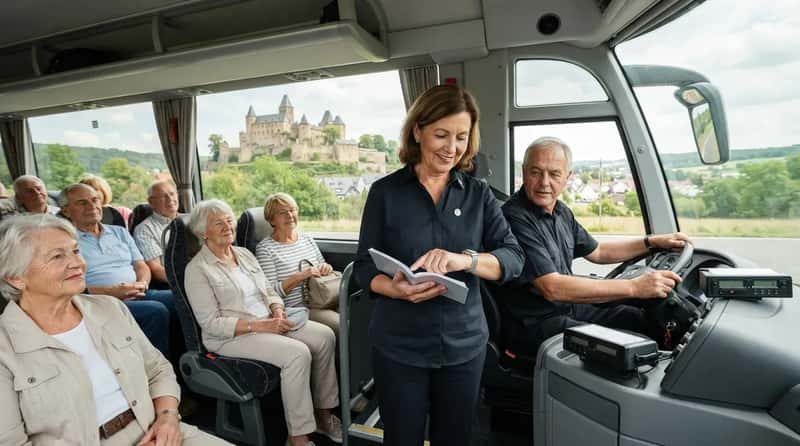
Behind the smooth ride is a regulated professional. In the U.S., federal rules limit how long passenger-carrying drivers can drive and work. Guides plan the day with that in mind, since one delay can ripple through the whole itinerary. A coach that runs late can’t simply drive faster to catch up.
That’s why you might hear, “We need to be back on the coach by 3.” It’s not just about museum closing times. It protects the driver’s legal hours and your next stop. Guides also build in buffers for traffic and slow loading, and that time discipline is a big part of why a good trip feels calm.
And the weather can force changes no one planned for…
#4 – Plans Quietly Rearranged When the Weather Turns Dangerous
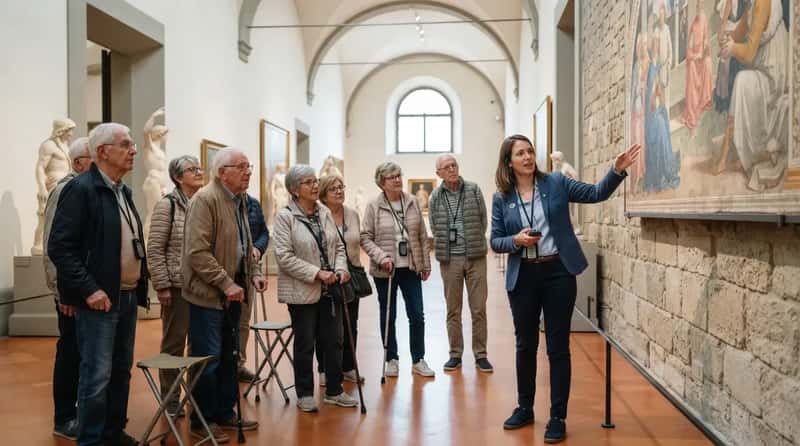
Good guides watch the forecast like hawks. On a hot day, they may move the outdoor site to the morning, add shade breaks, or hand out water. On a cold or rainy day, they may swap in an indoor stop. The “change of plans” announcement is often a safety decision in disguise.
That matters for travelers over 70, because the CDC lists older adults among those at higher risk from extreme heat. Guides rarely frame it that way, since nobody wants to feel fragile. Instead, they say the new schedule is “more comfortable.” The result is the same, and the day feels easier without anyone being singled out.
But the next habit is the one you hope you never need…
#3 – Emergency Plans Already in Their Back Pocket

Guides are trained to prepare for the worst quietly. Many carry emergency contacts, know the nearest hospital or clinic on the route, and keep a plan for what to do if someone feels ill. They usually can’t dispense medication, but they can get help moving fast. That calm, practiced response is invisible until the moment it’s needed.
One thing guides often wish travelers knew: Medicare generally doesn’t cover care outside the U.S., so travel insurance is worth a serious look. Some guides ask about health needs privately on the first day. A few travelers bristle at the question, but many guides see it as the single most helpful thing a guest can share. One habit goes beyond logistics entirely…
#2 – A Seat at the Table for Travelers Who Came Alone

Many older travelers join coach tours solo, often after losing a spouse or a travel partner. Thoughtful guides notice this fast. They introduce people, mix up dinner tables, and make sure no one is eating alone on night one. The friendships that form on tours are often the real souvenir.
It happens in small ways. A guide may ask someone to join a new group at lunch, or turn a quiet traveler’s story into a conversation starter. The best ones do it without making anyone feel like a charity case. Done well, it’s invisible, and by the end of the week people are swapping addresses. But the number one habit is the quietest of all…
#1 – Noticing Who’s Struggling and Fixing It Without a Word
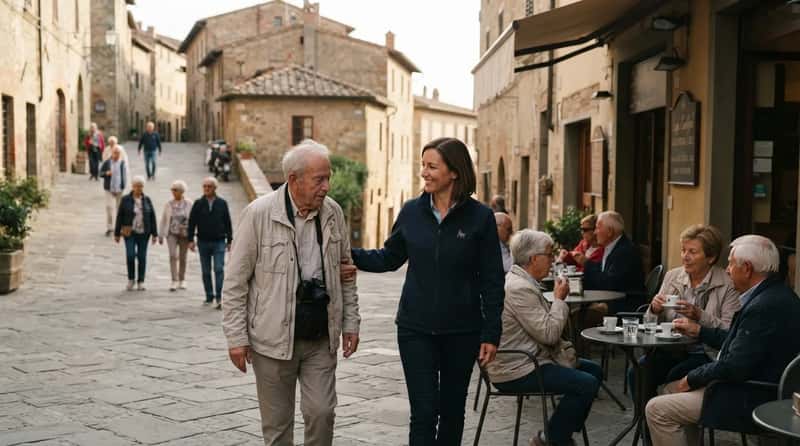
The best thing a guide does for a traveler over 70 is the thing nobody sees. They watch how people walk, who hangs back on the hill, and who quietly stopped eating. Then they adjust. A “coffee break” announced at the bottom of a steep hill is sometimes a kindness in disguise.
Why It Stands Out
- Nobody is labeled slow, tired, or fragile in front of the group.
- Easier options show up as “optional,” so saying yes feels like a choice.
- Benches, coffee stops, and taxis appear as if they were always part of the plan.
- The traveler keeps their dignity, and the group keeps its rhythm.
It might be a shorter route offered as “optional,” a bench found just in time, or a taxi arranged for someone who is tired. Nobody is announced as slow or fragile. The traveler keeps their dignity, and the group keeps moving. That is the real service, and no brochure can promise it.
Headcounts, luggage, room lists, and weather plans are the visible machinery of a good tour. The part people remember is the moment a guide read the room before anyone had to say a word.
Next time you’re on a coach and the schedule shifts a little, look around. Somebody may have just been spared a hard moment, and the only proof is that the day felt easy.