Watch a seasoned long-haul flyer board and it looks like nothing is happening. No big unpacking, no dramatic stretch, no gadget parade. Meanwhile the person in 34C is quietly deciding how the next 12 hours will feel.
The moves below are small, and a few go against what the airline’s schedule nudges you to do. One takes ten seconds and almost nobody does it. Another comes with numbers blunt enough to change how you sit down, but start at the top, because the first habit happens before the doors even close.
1. They Reset Their Clock Before the Doors Even Close
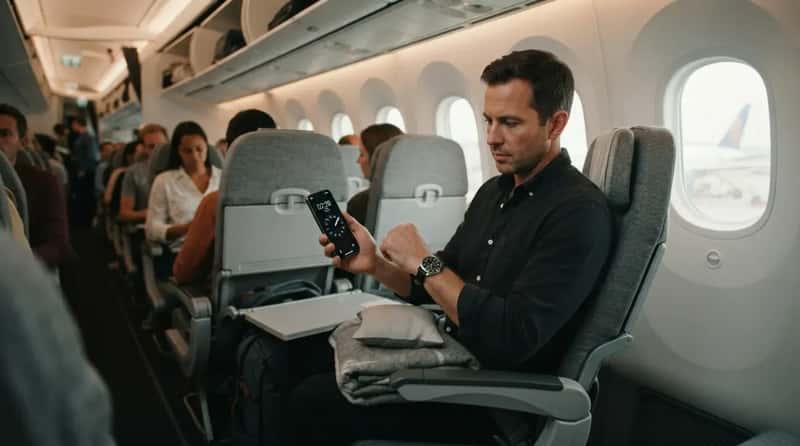
The first thing many regulars touch isn’t the entertainment screen. It’s their watch and phone. Travel guides keep repeating one move: set both to your destination’s local time the moment you sit down. If it’s midnight where you’re landing, the cabin becomes nighttime for you.
Jet lag happens when your body clock stays set to home while the local clock moves ahead or behind. Regulars treat the switch as a decision, not a feeling.
Sleep, food and caffeine all get judged by destination time from minute one. That decision sets up the next habit, which most people get backwards.
2. They Pick a Sleep Plan Before the Wheels Leave the Ground
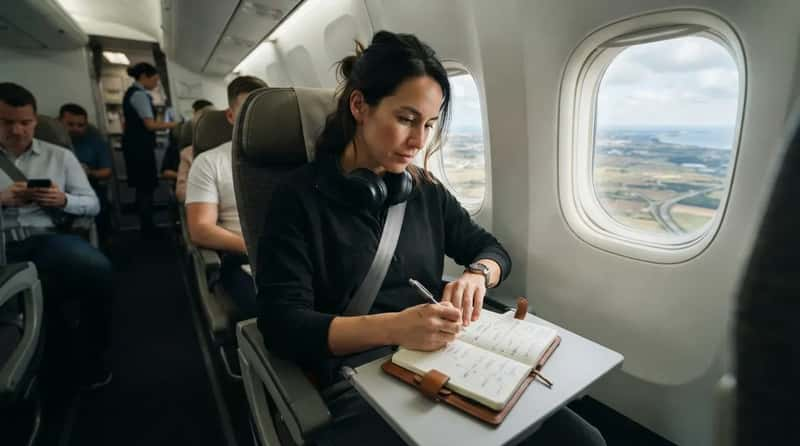
Regulars don’t just “see how it goes.” They decide early which hours of the flight are for sleeping and which are for staying awake. One guide’s advice is to sleep only during the destination-night portion if the flight crosses both day and night at your destination. That means checking the destination clock instead of waiting for the meal service to tell you what time it is.
Here’s the twist: sleeping the whole way isn’t always the win. If you sleep through the entire flight and land wide awake at local midnight, it may make jet lag worse. Another guide adds that if it’s daytime when you arrive, you should get outside.
Worth Knowing
- Destination night is your sleep window. Destination daytime is your stay-awake window.
- Sleeping the entire flight can backfire if you touch down at local midnight.
- Landing in daylight? Get outside soon after.
- The target is arriving in sync, not racking up the most hours of sleep.
The plan is about landing in sync, not logging the most hours of sleep. Next comes a habit that looks like pure comfort but does more.
3. They Slip Their Shoes Off and Start Moving Their Feet
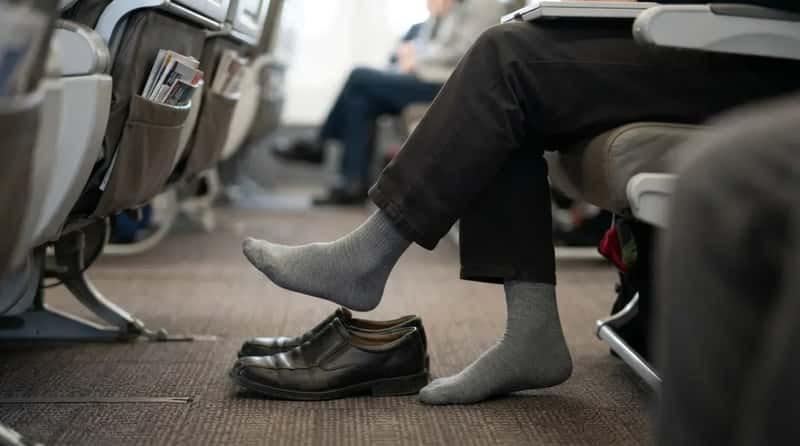
Within minutes of takeoff, the shoes come loose and the ankles start a quiet roll. It looks like getting comfy. It’s really about circulation, because sitting for long stretches slows blood flow in the legs.
Regulars start early instead of waiting until their feet feel tight and swollen.
Many keep a pair of clean socks in the seat pocket, which beats padding down the aisle barefoot or in damp airport shoes. They also avoid crossing their legs for long stretches, since that cuts off even more movement.
The people who look the most relaxed are often doing the most quiet work. Now for a drink most people handle backwards.
4. They Sip Water Steadily Instead of Chugging It
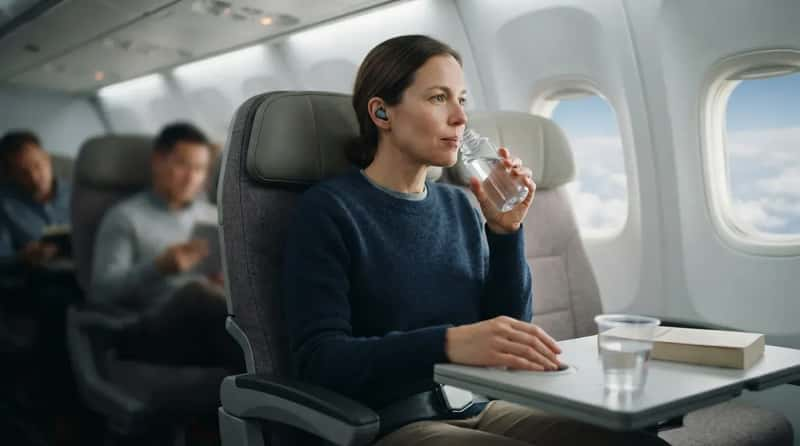
The cabin is far drier than most people expect. One guide says humidity can drop below 20%, compared to 40–60% at sea level. Another puts it at 10–15%, which is drier than the Sahara Desert at 25%.
So the air you breathe for 12 hours can be drier than a desert.
Regulars don’t panic-drink at the gate. They sip steadily instead of chugging water before boarding, which spares them repeated trips past a sleeping neighbor.
There’s a catch: one guide notes that drinking extra water doesn’t speed up jet lag recovery. Water helps you feel better, but it won’t reset the body clock. The next habit is the one that sparks the most arguments.
5. They Quietly Pass on the First Drink Round
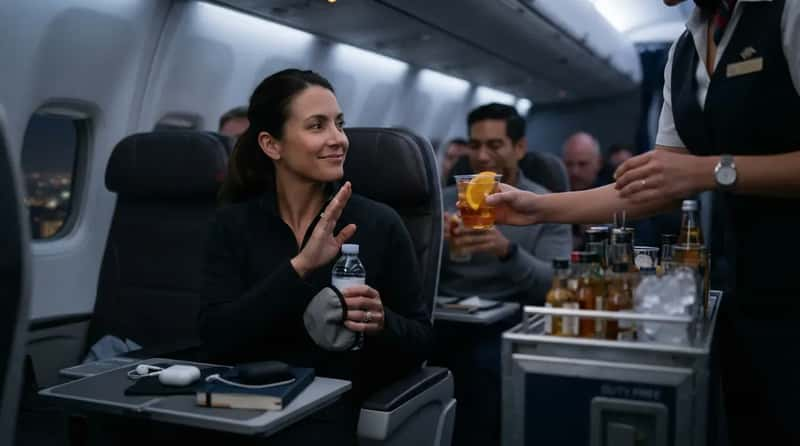
The first cart rolls out and plenty of passengers grab a free cocktail. Many seasoned flyers wave it off. Here’s the hot take: on an overnight flight, that “free” drink may be the most expensive item on board. The price just isn’t paid in dollars.
One travel guide notes that alcohol exacerbates dehydration and disrupts REM sleep, which is why it recommends limiting intake on a long-haul flight. Another points out that alcoholic beverages can also affect normal sleeping patterns.
Regulars would rather have the sleep than the sip. Some travelers disagree and say a drink helps them relax, so this one is personal. The next habit has only gotten more important recently.
6. They Know Their Power Bank Rules Cold
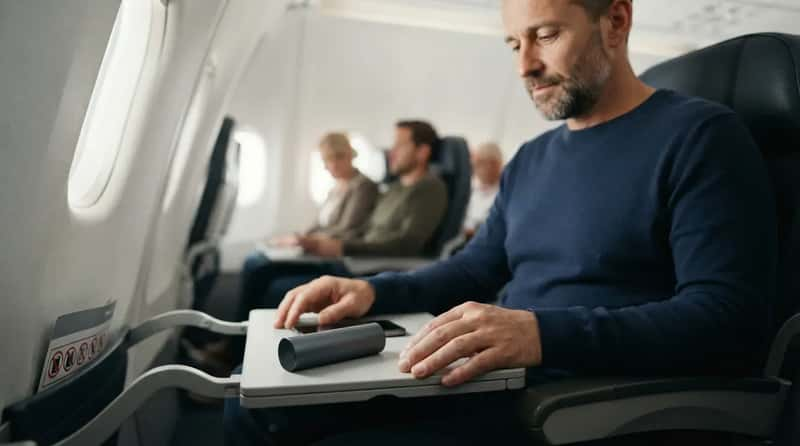
A few years ago, plugging in a portable charger was an afterthought. Now the rules are strict and changing. ICAO rules in force since 27 March 2026 limit international passengers to two power banks and ban recharging them on board. That’s the baseline, and airlines can go further.
Many carriers ban using them in flight as well. One roundup lists Singapore Airlines, Cathay Pacific, Emirates, Qantas and all Lufthansa Group carriers among those that prohibit using or recharging them. Southwest, by contrast, allows use only if the bank stays in plain sight.
Regulars check the rule early and plan their charging around it. Another dry-air habit comes next.
7. They Pull Out the Tiny Moisture Kit
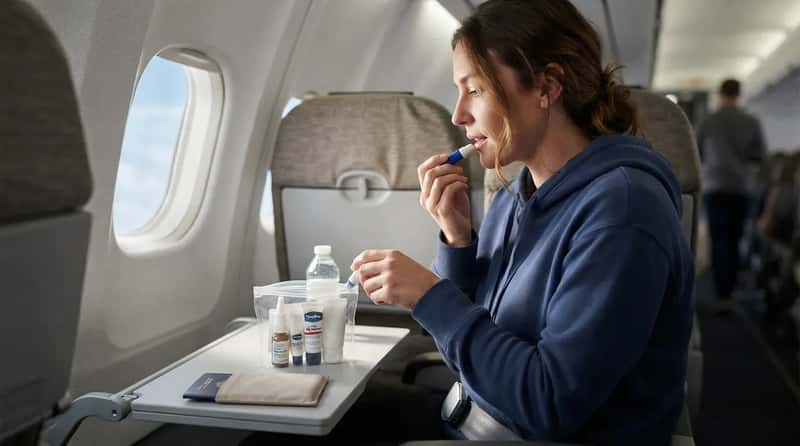
The cabin dries out more than your throat. Low humidity parches skin, eyes, lips and nasal passages over a long flight. Regulars keep the fix within reach instead of buried in a bag overhead.
The usual kit is simple. Saline sprays replenish moisture in nasal passages, and a petrolatum-based lip salve helps protect lips against dry cabin air. Some add a light moisturizer.
It costs a few dollars and takes about 30 seconds. The payoff shows up around hour eight, when everyone else is rubbing their eyes and wincing at cracked lips.
8. They Set Up Their Sleep Gear Before the Cabin Goes Dark
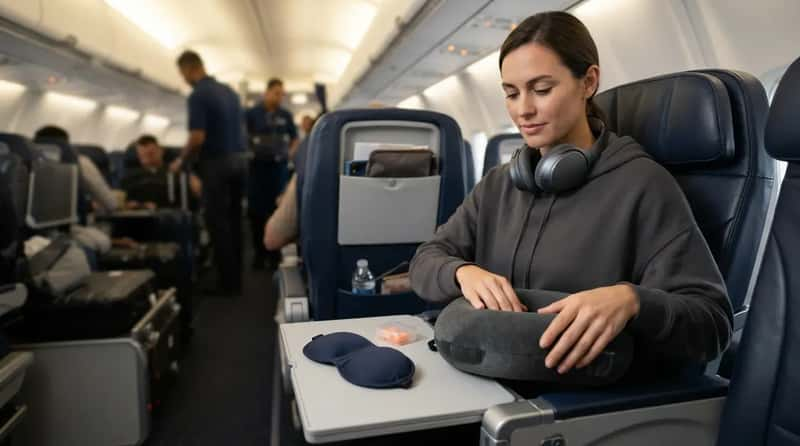
When the lights dim and the blinds drop, the cabin gets dark fast. Regulars have already placed the eye mask, earplugs or headphones, and neck support where they can reach them. Fumbling through a bag at 2 a.m. is how you wake the whole row.
The reason is practical. One guide says disrupted sleep on long-haul flights is a major influence on jet lag, so it recommends gear that manages noise, temperature and light.
The sleep window is short, and every minute of fumbling comes out of it. The next habit is about moving, which sounds odd for people stuck in a seat.
9. They Scout the Galley and Take an Early Walk
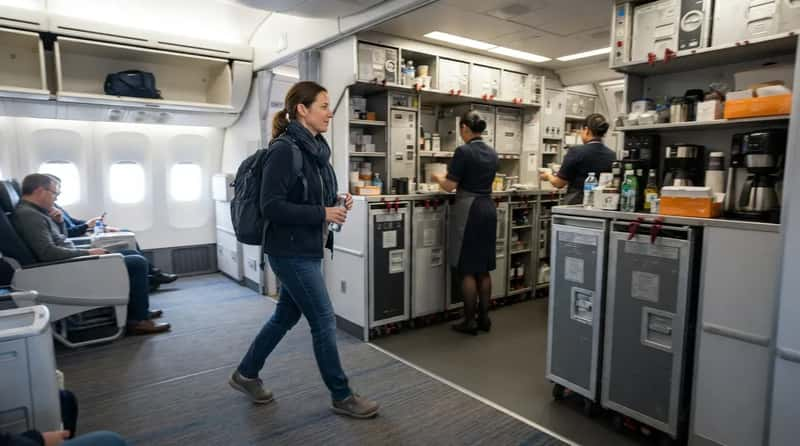
Long-haul regulars know where the galley is, and they know it before service starts. On long-haul routes, water is often available from the galley throughout the flight. A quiet visit also means they don’t have to wait for the cart.
Advice on how often to walk varies. One nutritionist recommends getting up every hour for a short walk around the cabin. Another guide suggests moving every two to three hours when it’s safe.
Quick Compare
- Every hour: a short walk around the cabin, per one nutritionist.
- Every two to three hours: move when it’s safe, per another guide.
- The overlap: the first hour, when the aisle is clearest, is the easiest time to start.
So the experts don’t agree on the exact schedule. Either way, the first hour is when the aisle is most open, before the carts arrive and block everything. Then comes the habit that keeps your own stuff from becoming a problem.
10. They Treat the Overhead Bin Like a Vault
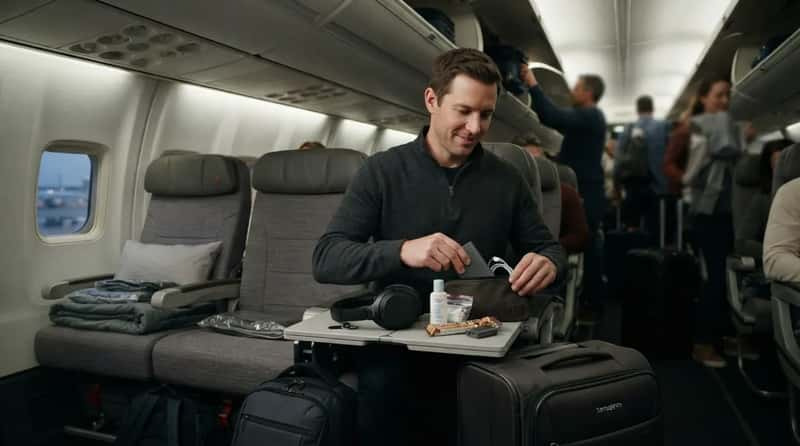
Before the bag goes up, regulars pull out everything they’ll want at 35,000 feet. That means headphones, medication, snacks, charger, the moisture kit and a layer. Once the bin is shut and the aisle is packed, getting back in is a hassle.
There’s a second reason now. Several airlines restrict where power banks can go. United says power banks can no longer be stored in overhead bins as of March 1, 2026. Another roundup says Korean Air and Asiana stopped overhead storage in March 2025.
Even a gate-checked carry-on needs a quick check, since one guide says to remove the power bank before handing it over. Next is the safety habit most passengers skip.
11. They Count the Rows to the Nearest Exit
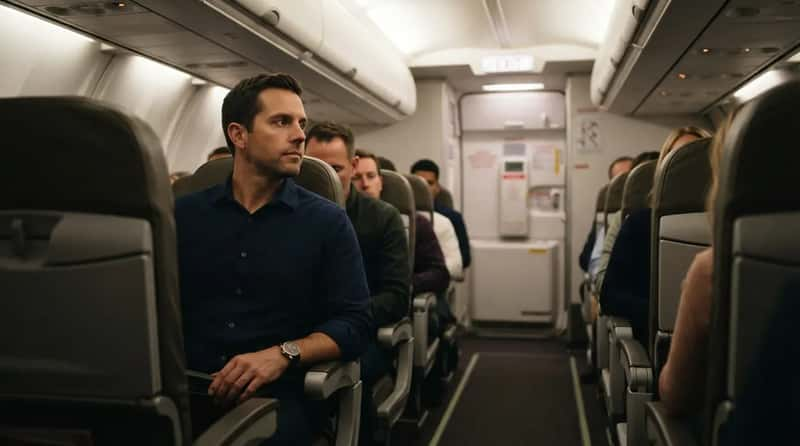
It takes about ten seconds and almost nobody does it. Regulars glance at the exits during the safety demo and count the seat rows to the nearest one, forward and back. In a dark, smoky cabin, that count is all they would have.
They also put the safety card back in the pocket and don’t treat the briefing as background noise. Experienced flyers often say it’s worth watching even when you’ve heard it a hundred times, because aircraft types and exit layouts differ.
The routine is boring until the day it isn’t. Meal timing is where this list gets controversial.
12. They Eat on the Destination Clock, Not the Airline’s
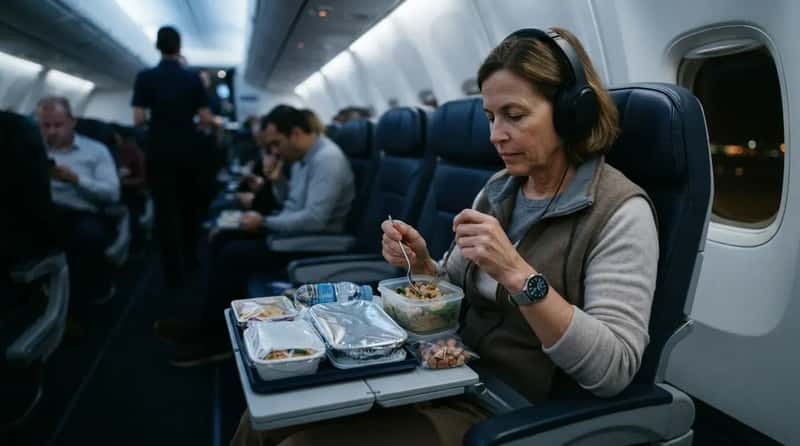
The meal cart shows up when the airline’s schedule says so, not when your body clock does. Some regulars skip the first tray or only pick at it. They follow the advice to eat, sleep and manage activity based on destination time from the moment they board.
Another guide gives an example: when your watch reads 11 p.m. at your destination, you decline the coffee and eat only when it’s mealtime there. The same guide suggests packing snacks so you can eat on destination time.
Skipping free food feels wrong to a lot of travelers, and plenty will argue about it. Next is the temptation sitting right in front of your face.
13. They Don’t Start With Random Scrolling
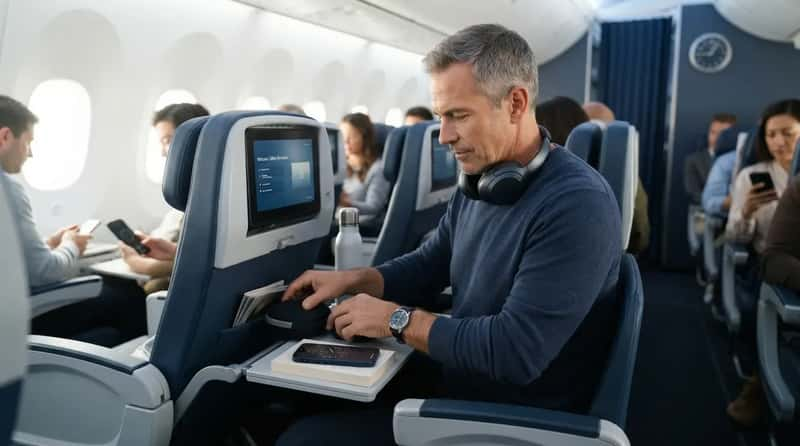
The seat-back screen is right there, and so is the urge to browse. Regulars treat the first hour as setup time, not entertainment time. One guide’s first-hour checklist includes setting your watch to destination time, organizing your seat area, and choosing a sleep or wake block. It lists random scrolling as the mistake to avoid.
They also load their movies, podcasts and playlists before takeoff instead of counting on the seat screen or connectivity. That way, if the screen is broken or the signal drops over the ocean, nothing is lost.
At a Glance
- Set your watch and phone to destination time.
- Organize the seat area while the cabin is still bright.
- Choose a sleep block or a wake block.
- Download entertainment before takeoff.
- Skip the aimless scroll.
The first hour decides whether the rest of the flight feels planned or accidental. The next move is a quiet scan most passengers never think about.
14. They Scan the Cabin for Empty Rows
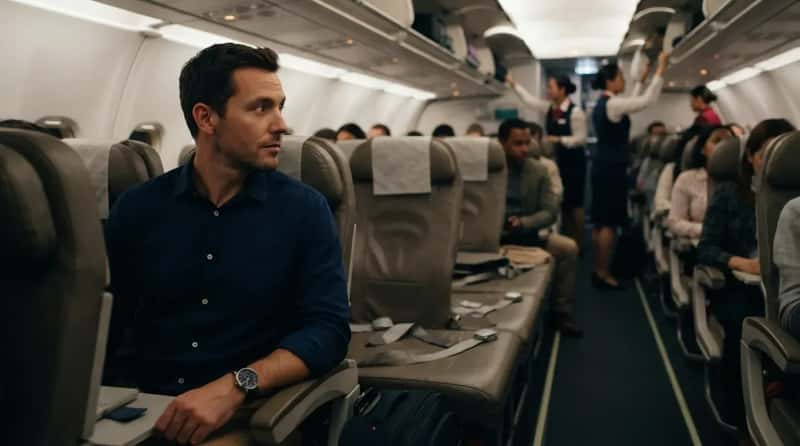
Once boarding wraps up, a regular’s eyes do a quick sweep. An empty row, or even an empty seat beside them, can make a long overnight feel like a different flight. They don’t leap up, though. They wait for the seat belt sign and ask first.
The move only works if you’re polite about it. Switching seats without asking can cause trouble, and the crew may need passengers where they’re assigned for safety reasons.
The ones who get the empty row are usually the ones who asked nicely. The next habit is one almost every regular does and almost nobody mentions.
15. They Dress the Seat Like a Small Bedroom
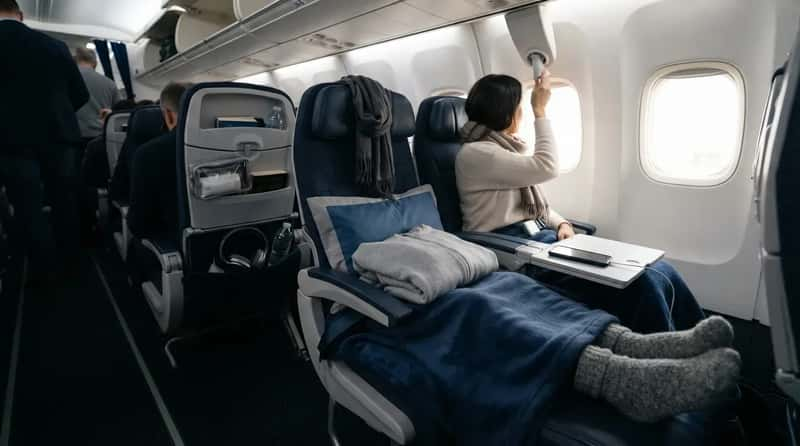
Cabin temperature can feel different from one seat to the next, and it shifts between daytime and sleeping hours. Regulars come in layers: a light sweater or scarf that doubles as a blanket, a hoodie, and thick socks. Then they adjust the air vent so it isn’t blowing on their face all night.
They also set the seat up early: seat pocket packed, bottle in reach, phone charging, blanket unwrapped. It’s easier to do all that while the cabin is bright and the aisle is still quiet.
The goal is that nothing needs adjusting once the lights go down. The last habit is the most serious, and the numbers back it up.
16. They Keep the Seat Belt On, Even When the Sign Is Off
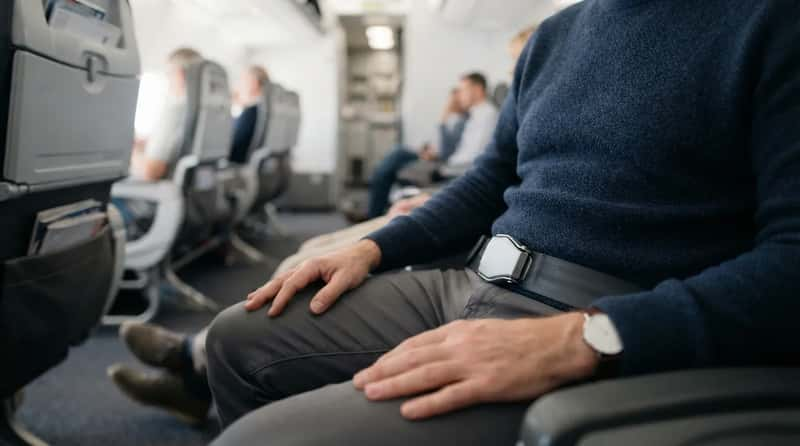
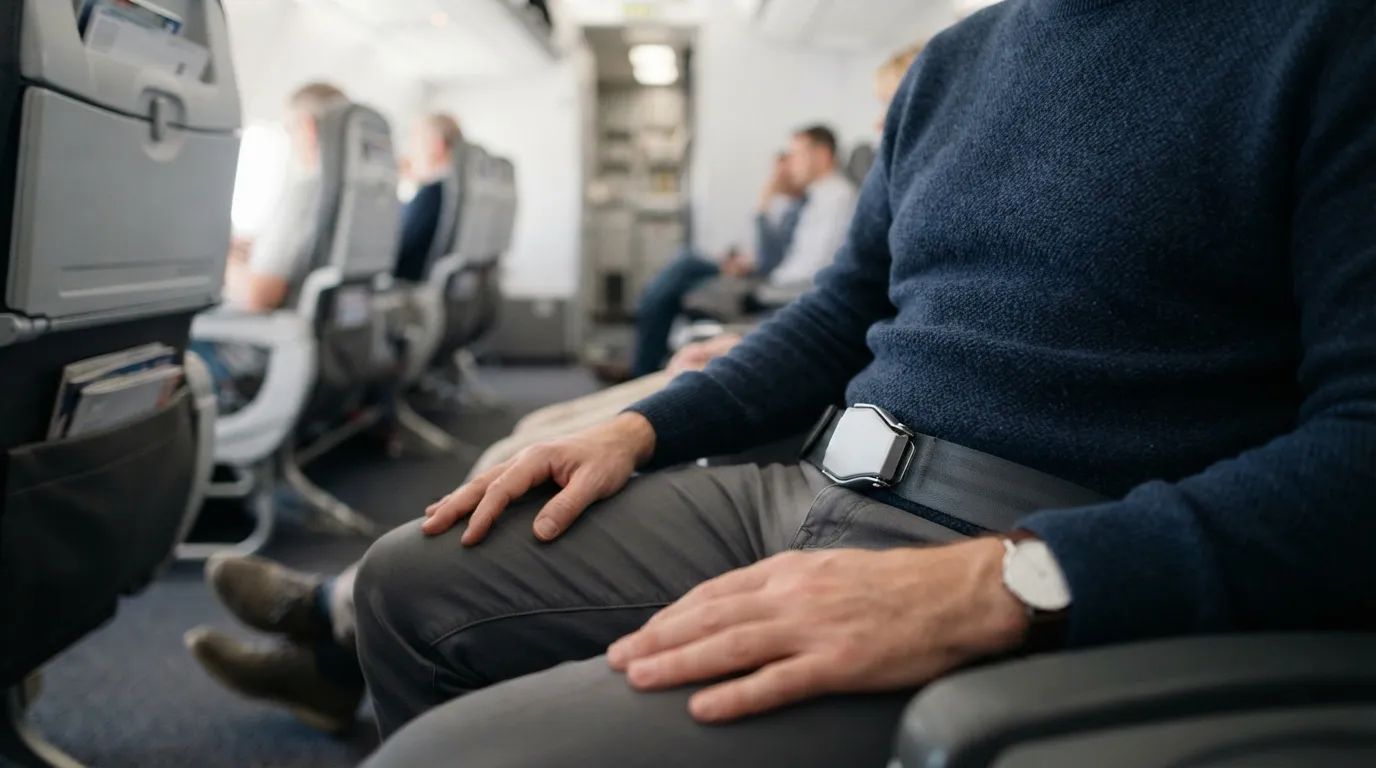
This is the one crew and regulars treat as non-negotiable. The FAA’s advice is clear: keep your seat belt buckled at all times while seated. Regulations require it at certain times, but turbulence doesn’t wait for the sign.
The data is stark.
Fast Facts
- In an NTSB review of 2009–2018, only 1 of 123 seriously injured people was wearing a seat belt.
- Flight attendants accounted for 78.9 percent of the seriously injured.
- Another summary says an FAA review found more than 90 percent of turbulence injuries were to people not buckled in.
Regulars buckle in because the people who get hurt are the ones who weren’t.
None of this is glamorous. It’s a watch reset, a pair of loosened shoes, ten seconds spent counting rows to an exit.
But the people who look so calm at hour ten almost always did the quiet work at hour one.