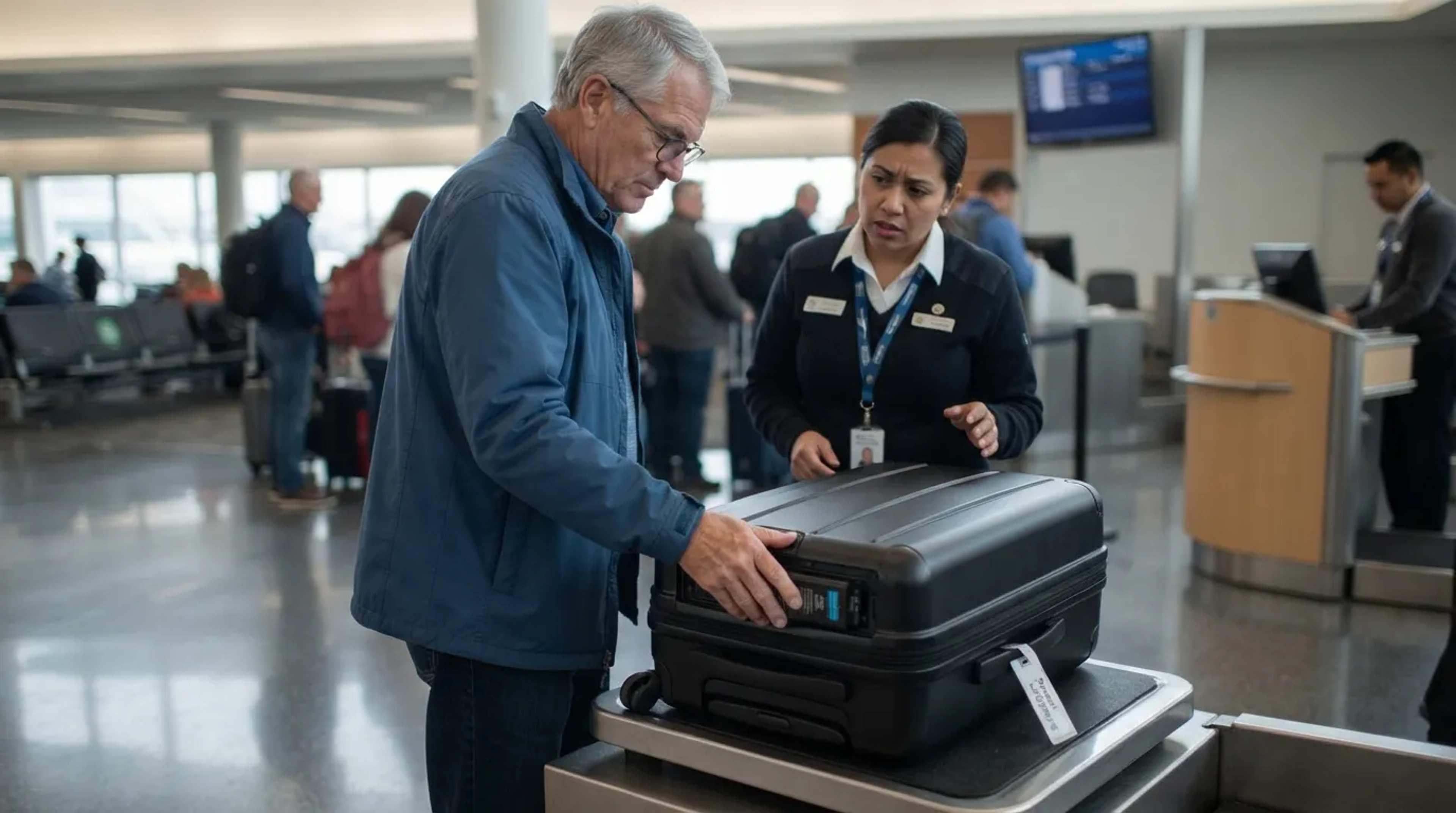
Boarding is where a flight’s first complaints get made, and a surprising share of them trace back to a carry-on. Flight attendants and former crew describe the same scenes again and again: bags laid flat, wheels pointing out, a winter coat wedged into the spot a suitcase needed.
Those are the mistakes you can see from the aisle. The costliest one on this list is small enough to fit in a coat pocket, and the airline rules around it changed in 2026. It waits at #1, and the first stop is a checkpoint classic that costs travelers a favorite bottle before they ever reach the gate.
#17 – The Full-Size Shampoo That Never Clears Security
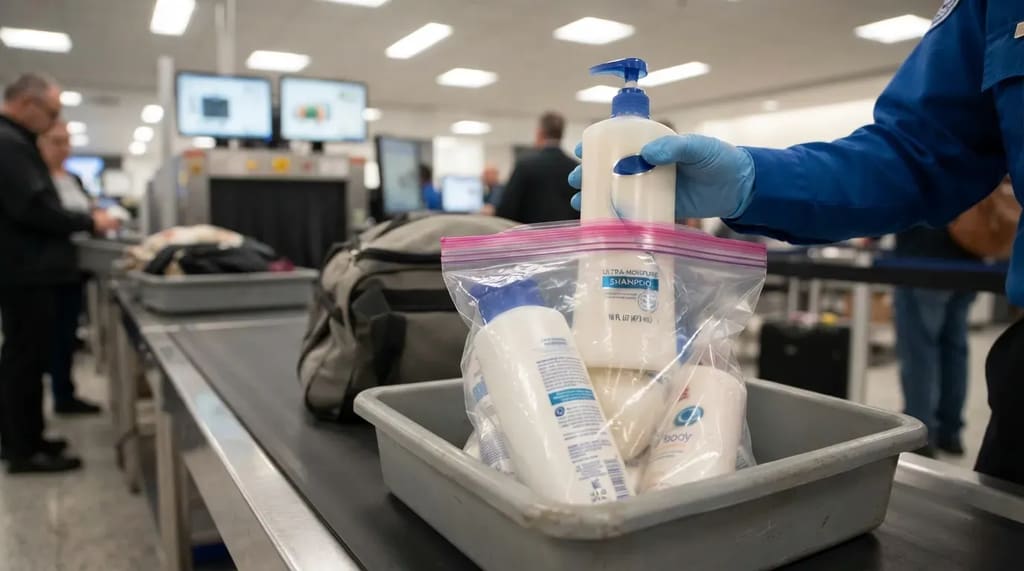
Liquids over 3.4 ounces are among the items TSA collects from carry-on bags most often, which makes the family-size bottle one of the most predictable casualties at the checkpoint. The rule is 3.4 ounces per container, all in one quart-size bag, one bag per passenger.1 Toothpaste, shampoo, conditioner, mouthwash and lotion all fall under it.
The size printed on the bottle decides, not what’s left inside. A 6 ounce bottle with only 1 ounce remaining is still prohibited in carry-on luggage.1 2 Anything bigger belongs in a checked bag, or you buy it after security. The same rule also catches foods that don’t look like liquids at all.
#16 – The Peanut Butter Jar Hiding in Your Snack Bag
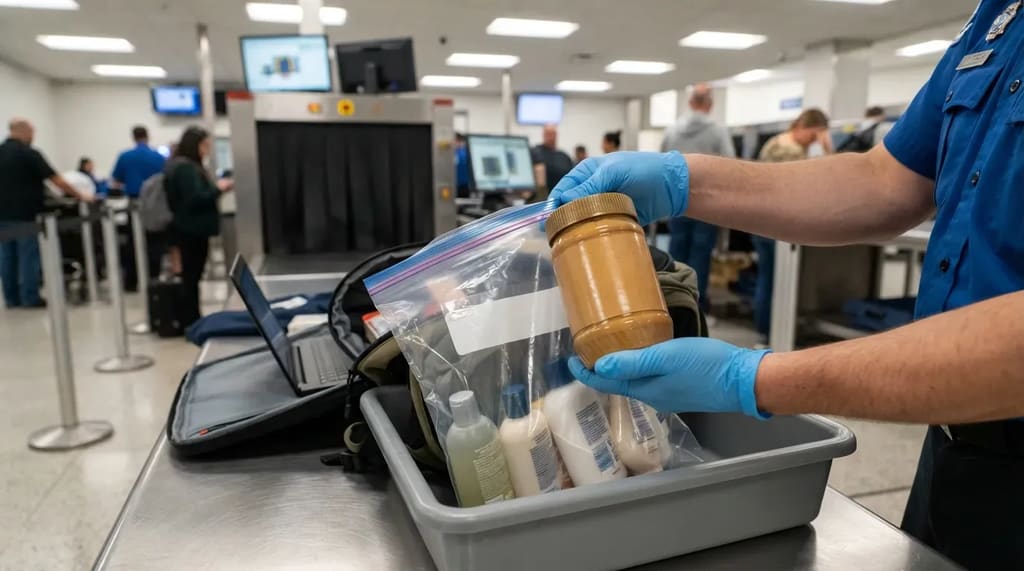
A peanut butter sandwich flies without trouble, but the jar it came from may not. Spreadable, pourable or liquid-state foods such as hummus, yogurt, soup, peanut butter, jam and salsa are subject to the 3-1-1 rule.1 Applesauce and pudding count as gels too.
The dividing line is simple once you see it. Solid food can go in your carry-on, so bread, cheese, crackers and whole fruit are safe bets. Anything you can spread or pour needs a 3.4 ounce container, so spread the sandwich at home and carry it finished. Another category gets pulled for what it looks like, not what it contains.
#15 – The Toy Gun and the Eight Inch Wrench
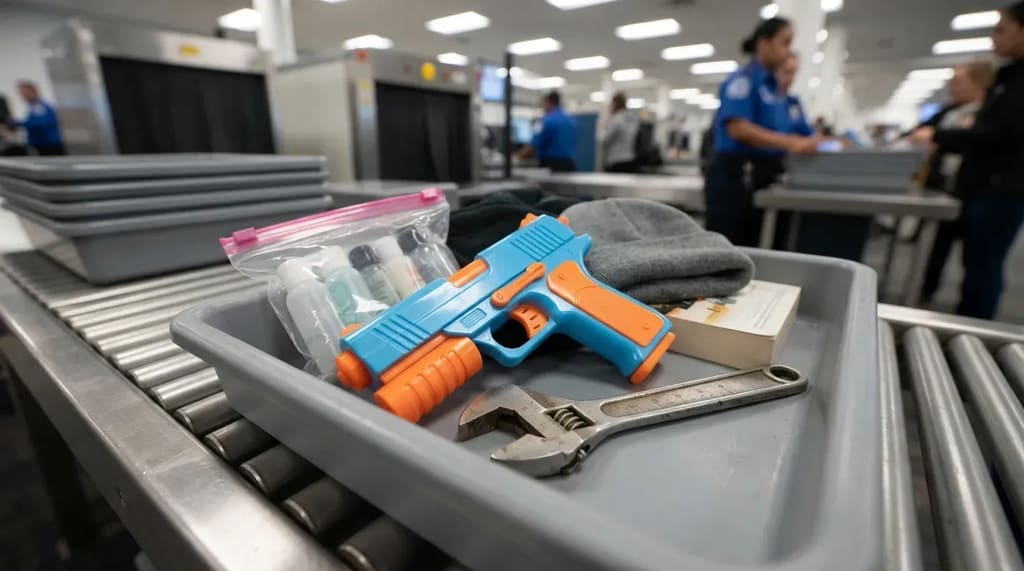
The gift for the grandkids can cause as much trouble as the toolbox. Squirt guns, Nerf guns, toy swords and other items that resemble realistic firearms or weapons are prohibited. If a water gun does travel, it should be emptied and it must follow the liquids rule.
Tools are the other surprise. Tools longer than 7 inches, measured end to end, must be packed in checked baggage, which covers many wrenches and pry bars. Sharp objects in general are prohibited in carry-on bags, so anything with an edge goes in the suitcase you check.
Fast Facts
- Tools 7 inches or shorter can ride in a carry-on.
- Scissors with blades shorter than 4 inches from the pivot point are allowed.
- Disposable razors are fine, but loose razor blades are not.
- Realistic-looking toy weapons stay home, even for a gift.
Even a legal bag can still fail at the bin, and the test there is your own shoulder.
#14 – The Bag You Can’t Lift Over Your Head
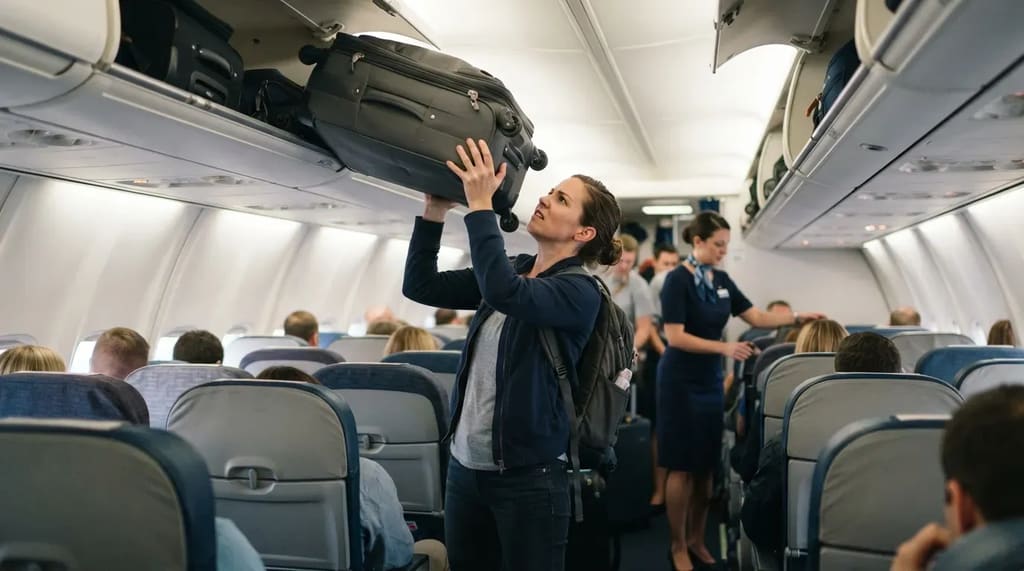
The advice from etiquette expert and former flight attendant Elaine Swann is blunt: “If you can’t lift it, check it.” Flight attendants aren’t expected to hoist luggage into the bin. Delta says its flight attendants can’t proactively help place carry-ons in overhead bins, with certain exceptions, partly to reduce injuries from repetitive lifting.3
So pack only what you can raise to shoulder height by yourself. Hoping a stranger will help is a shakier plan than checking the bag on your own terms, because a bag tagged at the gate by surprise leaves you with no say in what goes below. Heavier items belong under the seat in front of you, not overhead. Once the bag is up, the end that goes in first matters, and it’s the end that has rolled across the airport floor.
#13 – Wheels Out, Dirt Everywhere
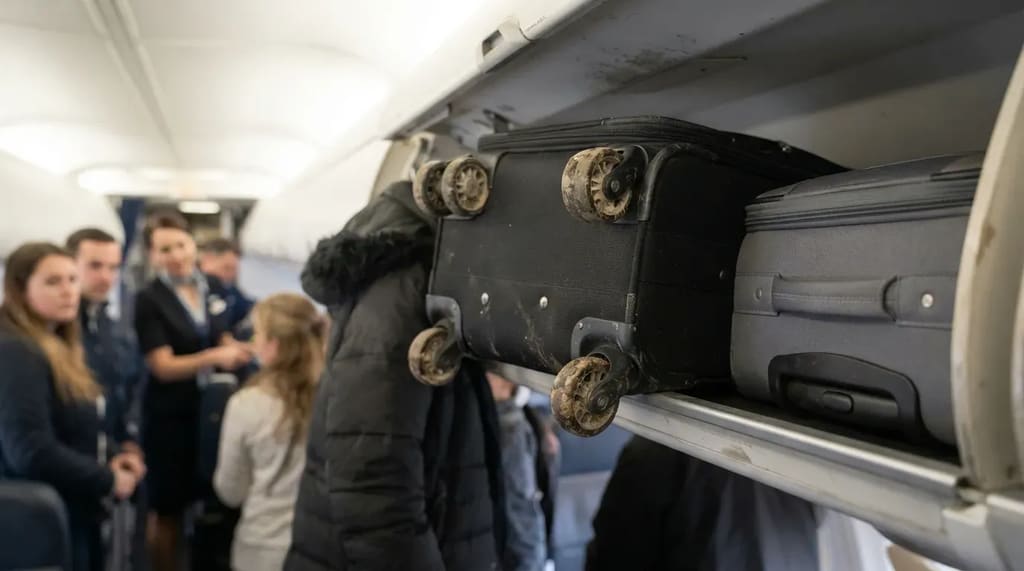
Your suitcase wheels have crossed the street, the terminal floor and, very likely, the restroom. Flight attendants quoted by Travel + Leisure say bags that don’t go in wheels first create hygiene issues and slow boarding. Wheels pointing out means they brush the coats and bags of whoever reaches in next.
The fix takes no extra time. Wheels go in first, handle facing out, and that placement maximizes space and speeds up deplaning.4 That only works if the bin is big enough for the bag to go in that way, which depends on how you turn it.
#12 – The Bag Laid Flat Across the Whole Bin
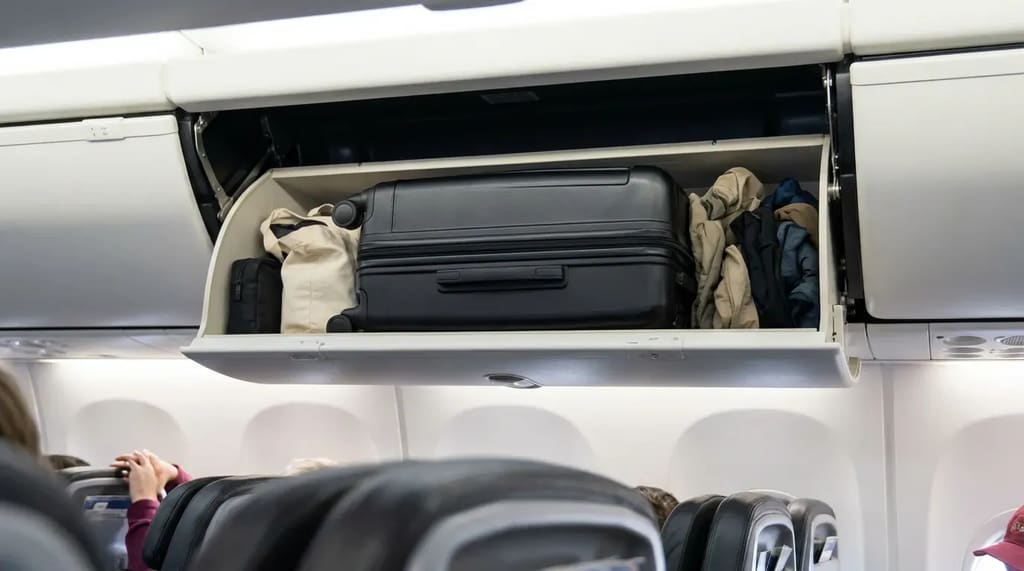
A bin door that won’t close is a problem for the crew, and the bag causing it is the one that gets pulled. As one flight attendant put it to Travel Awaits, if the bin won’t close, the bag gets checked. As overhead bins convert to drop-down spaces to maximize storage, placing bags sideways creates room for more luggage.
Not every aircraft is built the same way. Delta says it flies many aircraft types, with bins in different shapes and sizes, so there isn’t one right way to stow a bag.4 Look at the bin first, then decide. If the bin is wide enough, turn your bag on its side so the door can close. Laying it flat to protect what’s inside is a bad trade, because the bag that blocks the door is the one that ends up in the hold.
#11 – The Coat and Purse That Took a Bin Seat
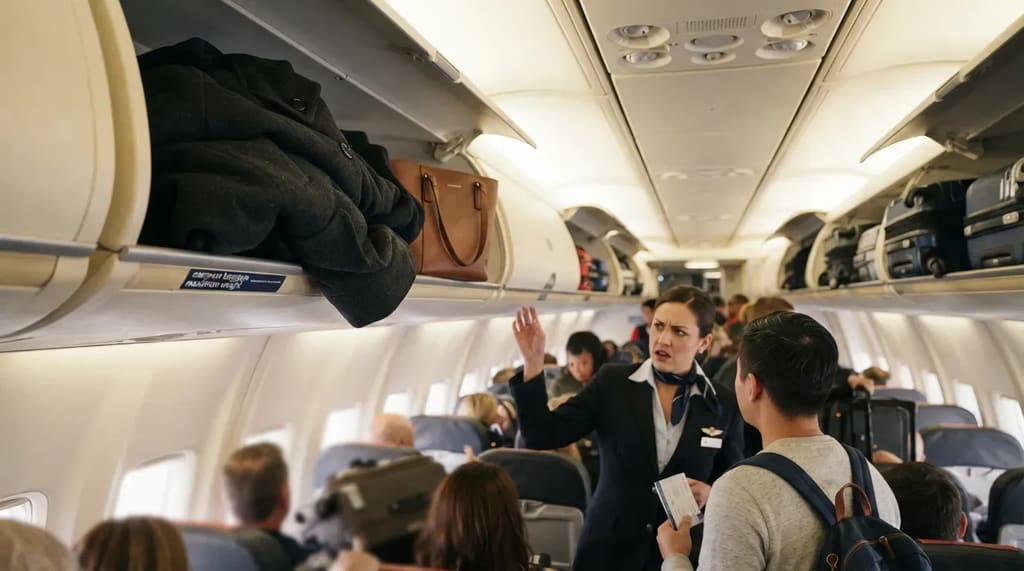
Bin space is meant for the large carry-ons, and small items can use it up early. Putting personal items in the overhead bin can cause space to run out before everyone has finished boarding. Crews sometimes describe the space as reserved for large paid-for carry-ons.
Crews then have to work backward. Having to move purses, coats and backpacks to find their owners can stall boarding and delay takeoff. Hold small items until boarding ends, then ask the crew about leftover space. Even when a flight is empty and the crew announces that personal items may go in the bin, don’t do it without permission. There’s a version of this that happens even earlier, when you pick the bin itself.
#10 – The Bin Five Rows Ahead of Your Seat
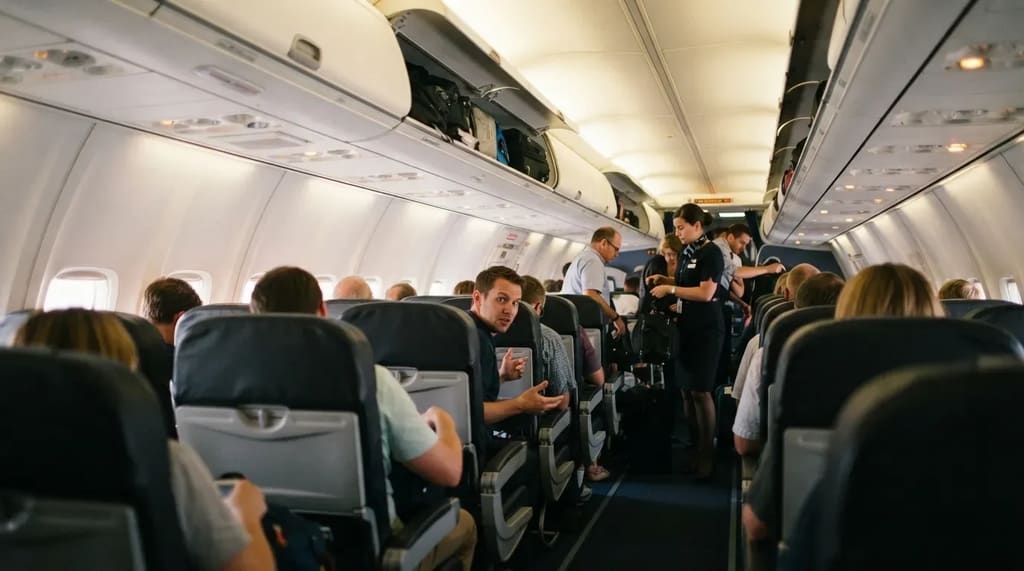
It can be tempting to stash your carry-on rows ahead of your seat to get off faster once you land. That’s a gamble, and the odds aren’t in your favor.
Quick Compare
- Bin near your seat: your bag stays in view, and a flight attendant can help find a spot if space is tight.
- Bin five rows ahead: you only get the quick exit if there’s room. If the bin fills and your bag has to go below, you’ve traded it for a wait at baggage claim.
Swann’s rule is place your bag as close to your seat as possible. If space near you is tight, ask a flight attendant to help find a spot. The rule runs both ways, though. The bins are shared space, and you may occasionally have to stow your bag away from your seating area. Whatever goes up there, one category of belongings should never go in the bin at all.
#9 – The Medicine and Glasses Left Overhead
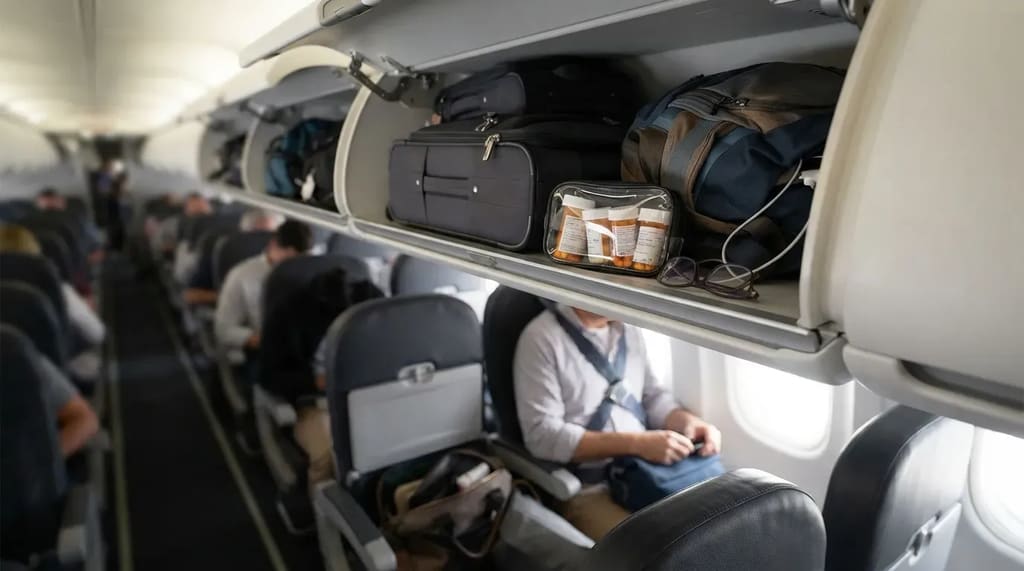
The bin is the wrong place for anything you might need before landing. Crew advice is not to leave entertainment, medicine, snacks or water in the overhead locker. Taxi and takeoff are no time to stand up and dig for reading glasses.
Medication has one advantage over the toiletries in #17. TSA makes exemptions for medically necessary liquids, medications and creams over 3.4 ounces in a carry-on. Declare them at screening.1 Keep medicine, glasses and your phone charger in the bag at your feet. The bin is for what you won’t need until you land.
The bin above you also isn’t only yours, and rearranging it is a rule that experienced fliers forget.
#8 – Moving Another Passenger’s Bag to Fit Yours
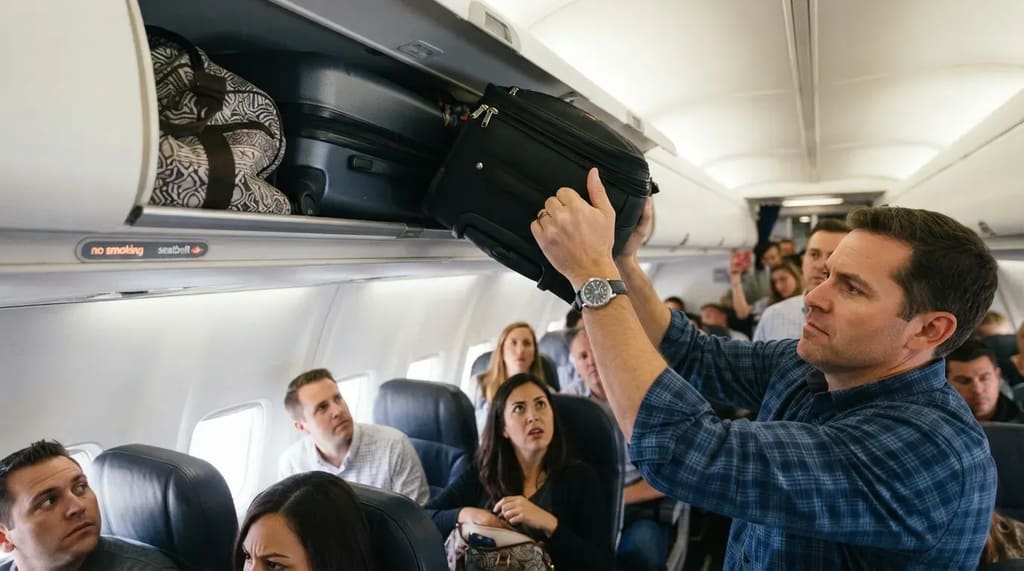
A bag that doesn’t fit is not an invitation to shift someone else’s. Etiquette expert and former flight attendant Jacqueline Whitmore told Fox News Digital that passengers should never move someone else’s belongings without asking. The bag you’re shoving may hold a laptop, camera or medication, and you can’t tell by looking.
Ask the crew before you touch anyone else’s bag. Flight attendants have advised using nearby space and asking the crew for help rather than turning a storage problem into a passenger dispute. And once it’s in, close the bin. One flight attendant described having to work out how to close a bin a passenger had left jammed.
#7 – The “Compliant” Bag With No Bin Left
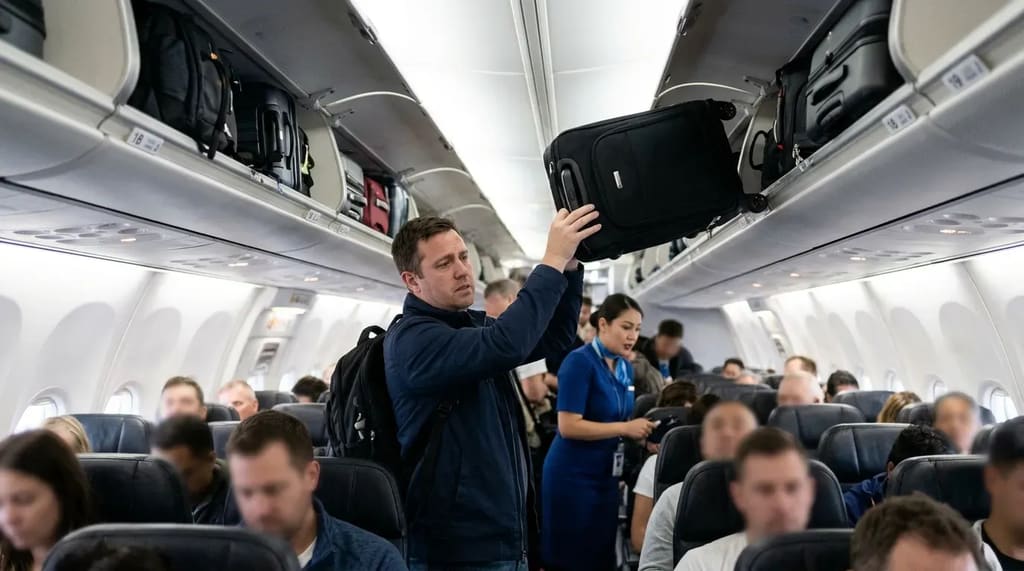
A bag that meets the airline’s size limit can still lose its spot. A compliant carry-on isn’t guaranteed overhead space on every aircraft or every full flight. Carry-on limits also change by airline, so a bag that sails through on one carrier may be gate-checked on another.
So pack as though the bag could be tagged at the gate. Keep valuables, medicine and chargers in your personal item, not the roller. That personal item stays with you, and the roller may not. When flights are full, overhead bin space fills up fast.
Pack for that gate-check carefully, because one item has to come out of the bag before it goes below.
#6 – The Power Bank Left in a Gate-Checked Bag
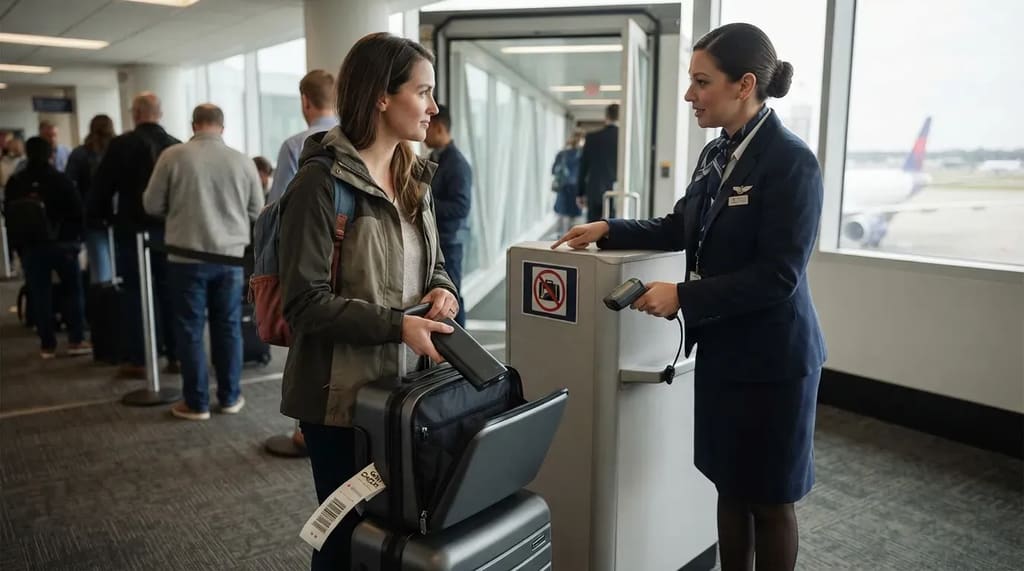
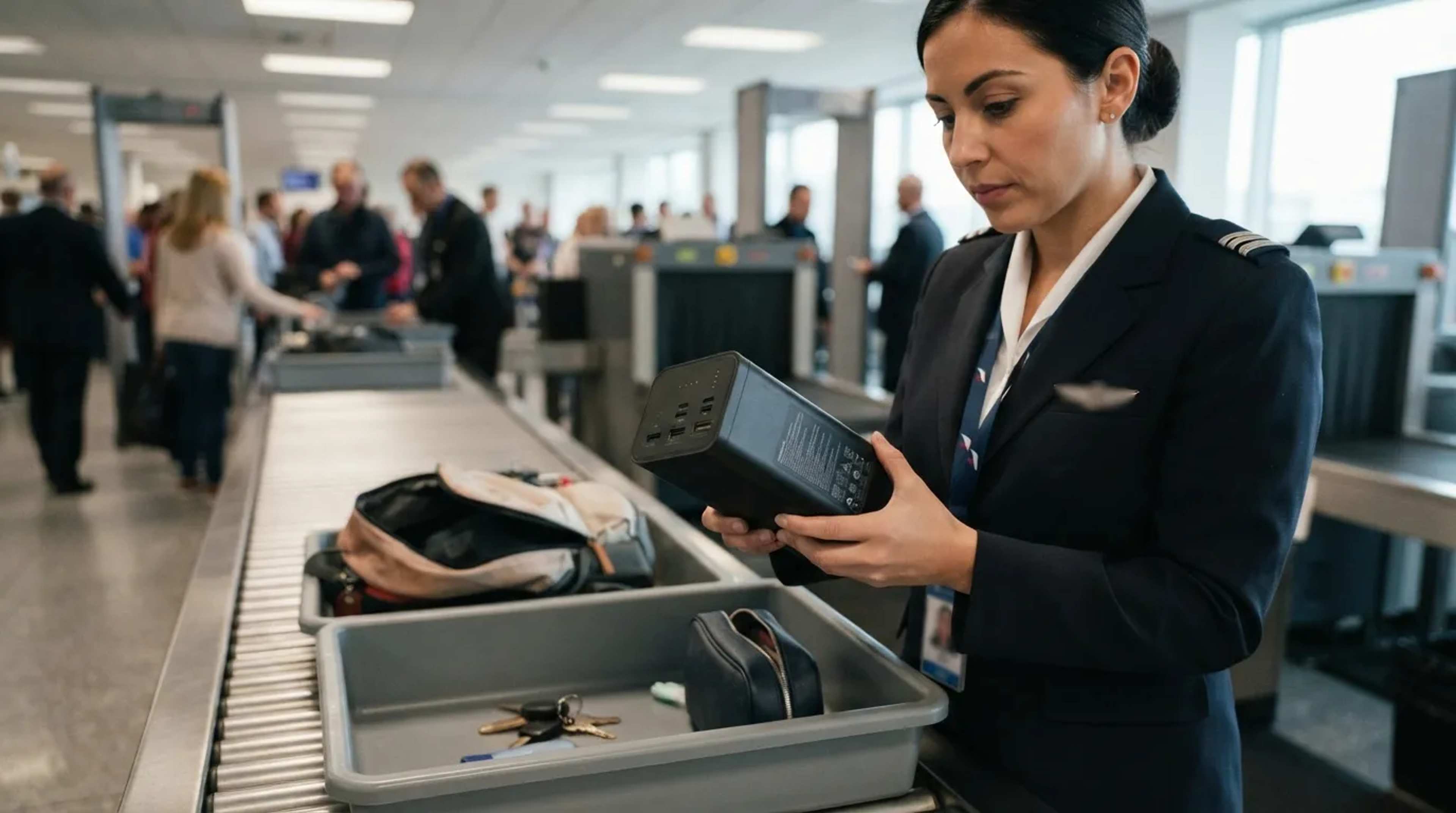
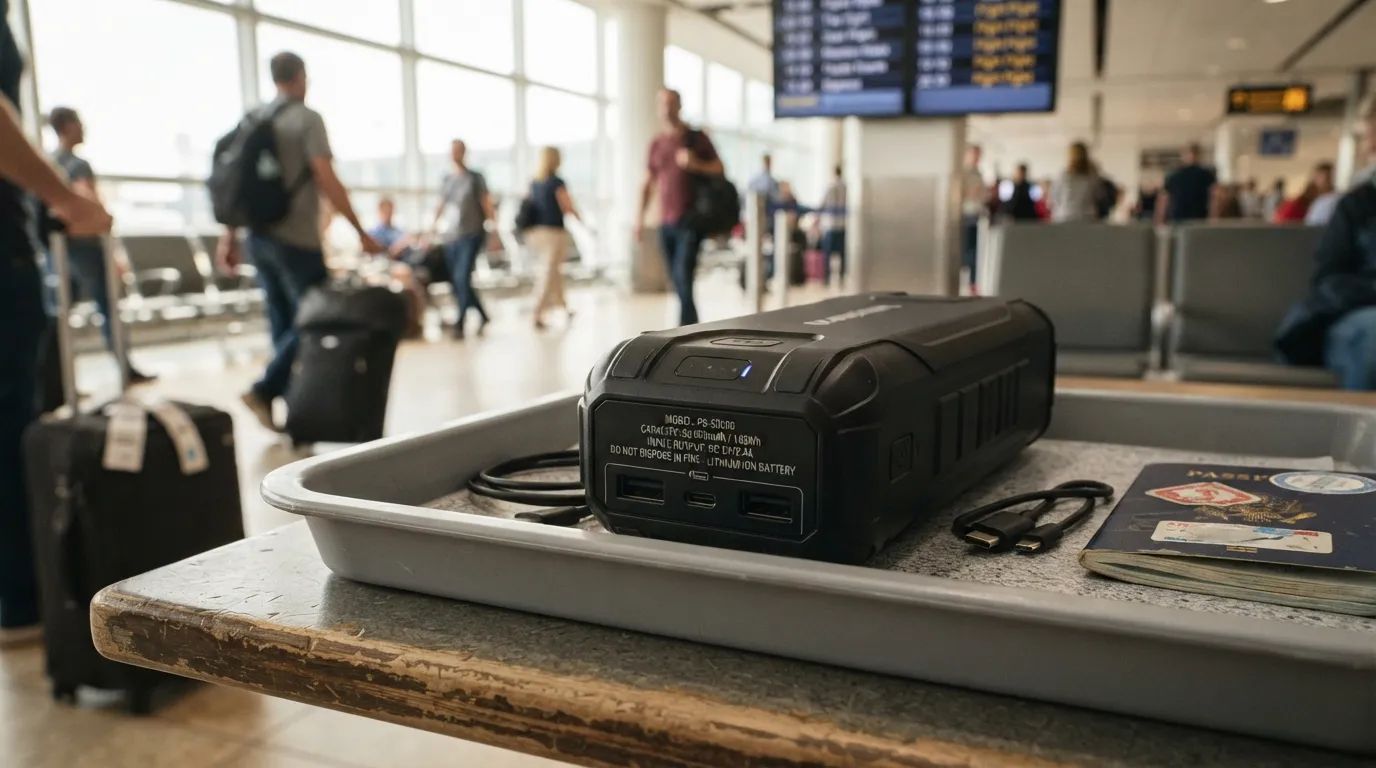
Gate agents tag the bag, and the power bank rides along in it. That’s against the rules. If your carry-on is gate-checked, you must remove all power banks and spare batteries before handing the bag over.5 Power banks and spare lithium batteries are prohibited in checked baggage.6
The reason is access. The FAA wants spare batteries in the cabin, where the crew can respond if one overheats, catches fire or begins producing smoke. A fire in the cargo hold is far harder to detect and contain. Pull every power bank before you hand over the bag. If you took the advice in #7, it’s already in your personal item.
Getting the bank into the cabin is the easy part. The rule that decides whether it’s allowed is measured in a unit the label may not even print.
#5 – The Power Bank Rated in the Wrong Unit
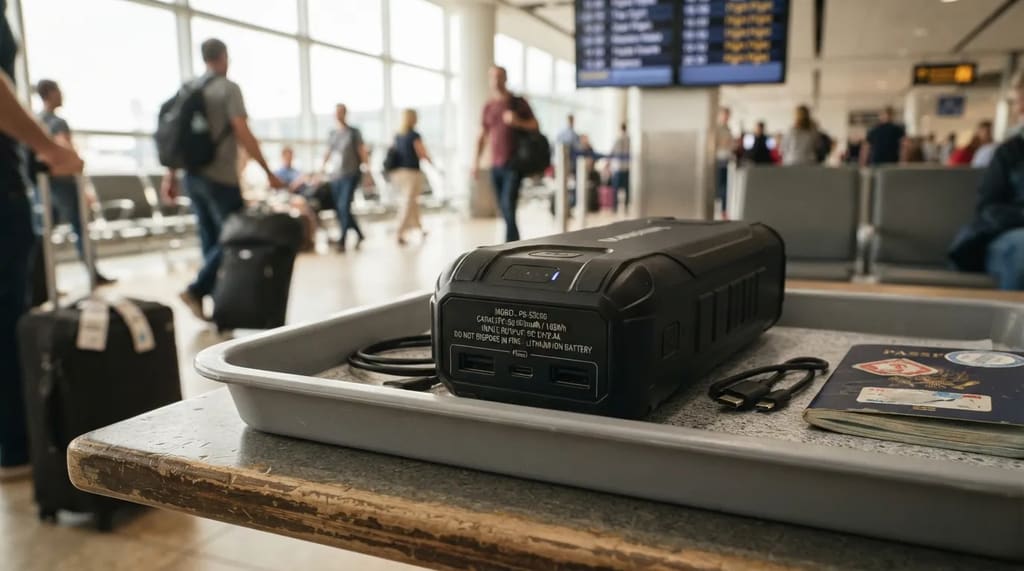
The number on the box is milliamp hours, but the rule is written in watt-hours. Up to 100 Wh is generally fine, 101 to 160 Wh needs airline approval with no more than two spares, and more than 160 Wh is prohibited.6 7 A 27,000 mAh bank works out to about 99.9 Wh, and a 30,000 mAh bank is about 111 Wh.
Here’s the quick math: multiply milliamp hours by 3.7 and divide by 1,000, and stay under 100. That’s the standard conversion at a typical battery voltage, and the Wh figure is often printed on the unit itself. A bigger bank isn’t a better travel bank. Past 100 Wh, you’re asking an airline for permission for a charger that most phone owners don’t need.
Even a bank that passes the math can be turned away for how it looks.
Related Stories From Travelbinger
#4 – The Swollen or Cracked Battery Packed Anyway
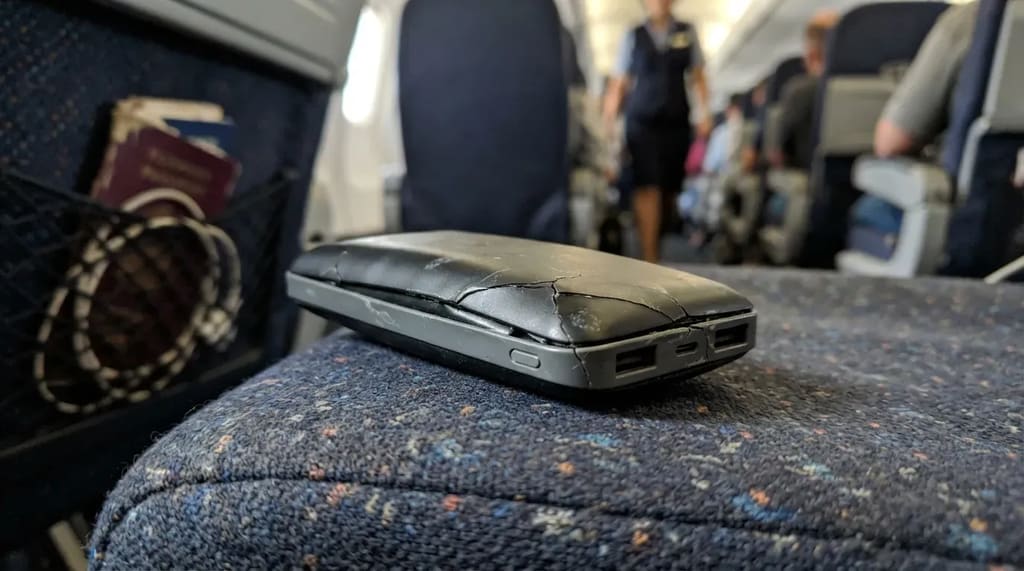
The rule leaves no room here. Damaged, swollen, defective or recalled batteries are not permitted.7 A puffy case or a cracked shell is a sign something has gone wrong inside the cell, and it’s the one warning a battery gives you before you leave home.
There’s a second requirement for loose batteries. Battery terminals must be protected from short circuits, which in practice means a case or tape over exposed contacts. Recalls matter too. American Airlines’ policy page names specific power banks and chargers as recalled and banned. A swollen, cracked or recalled power bank stays home.
#3 – One Power Bank or Two, Depending on the Airline
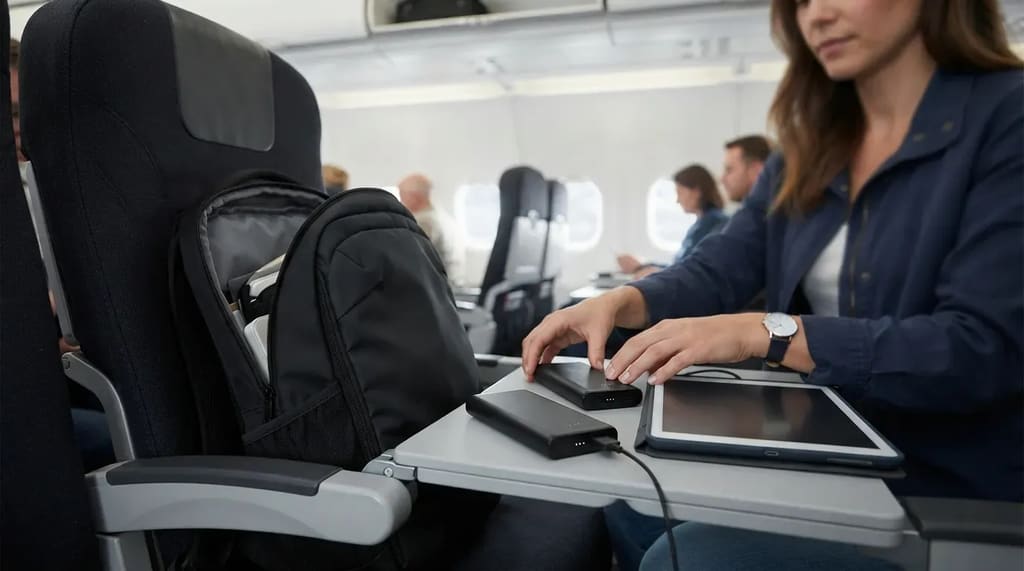
If you carry a spare bank for the tablet, the airline you fly now matters. The limit isn’t the same everywhere, and some of the numbers only took effect in 2026.
Quick Compare
- Southwest: one power bank per customer, from April 20, 2026.8
- American and Delta: two power banks.
- ICAO baseline: a maximum of two per passenger, in effect since March 27, 2026.
The federal rule is looser than any of them. On US domestic flights the FAA sets no number for banks under 100 Wh, but airlines can, and some have.6 Check your airline’s current limit before you pack a second bank. If you fly more than one airline, read the rules for each, since the one in your bag last month may be one too many today. Then there’s the matter of where you plug it in, and the seat has a port right there.
#2 – Charging the Bank From the Seat Port
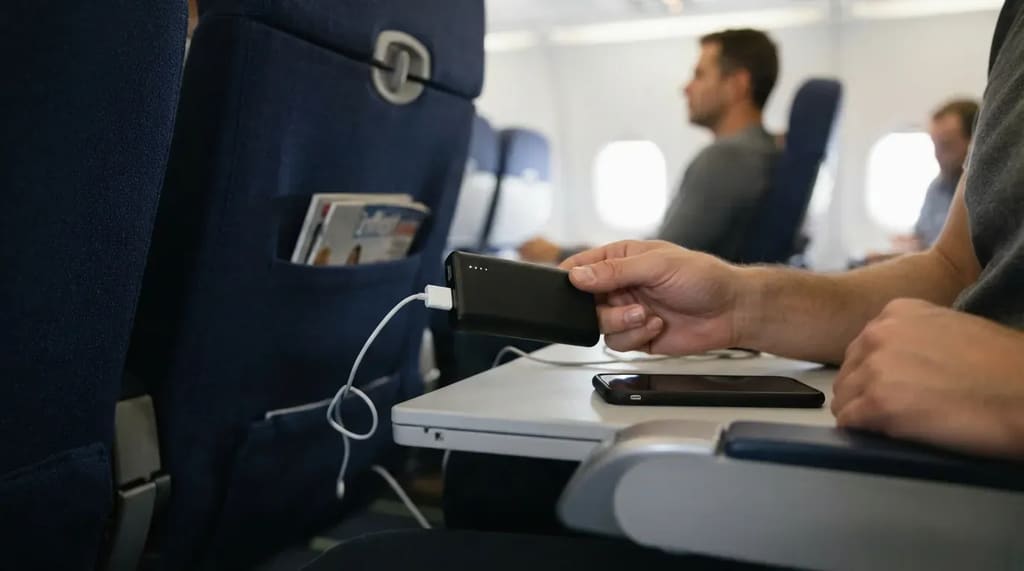
The USB port in the seat back looks like the obvious place to top up a drained bank. It isn’t allowed. Southwest, Delta and United all bar recharging the power bank itself from aircraft power. IATA’s dangerous goods rules, in effect since January 1, 2026, ban charging a power bank from in-seat USB ports.
Charging a phone from the bank is a separate question, and airlines answer it differently. JetBlue says power banks shouldn’t be used to charge or power other devices during flight. Southwest allows use, but the bank must be visible and not inside a bag. Charge the bank fully at home or at the gate, never from the seat. The last item is where you set it down once you’re seated.
#1 – The Power Bank Buried in the Overhead Bin
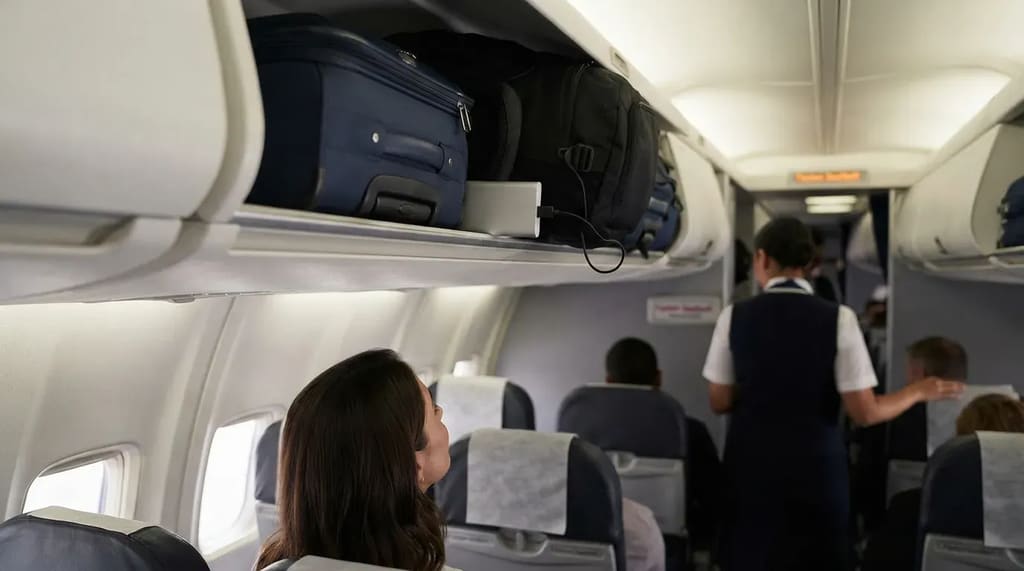
A bin keeps the battery in the cabin, but it also puts it out of sight and out of reach. The FAA keeps spare batteries in the cabin so the crew can respond if one overheats, catches fire or smokes. A closed bin full of bags is the one spot in the cabin where nobody sees that start.
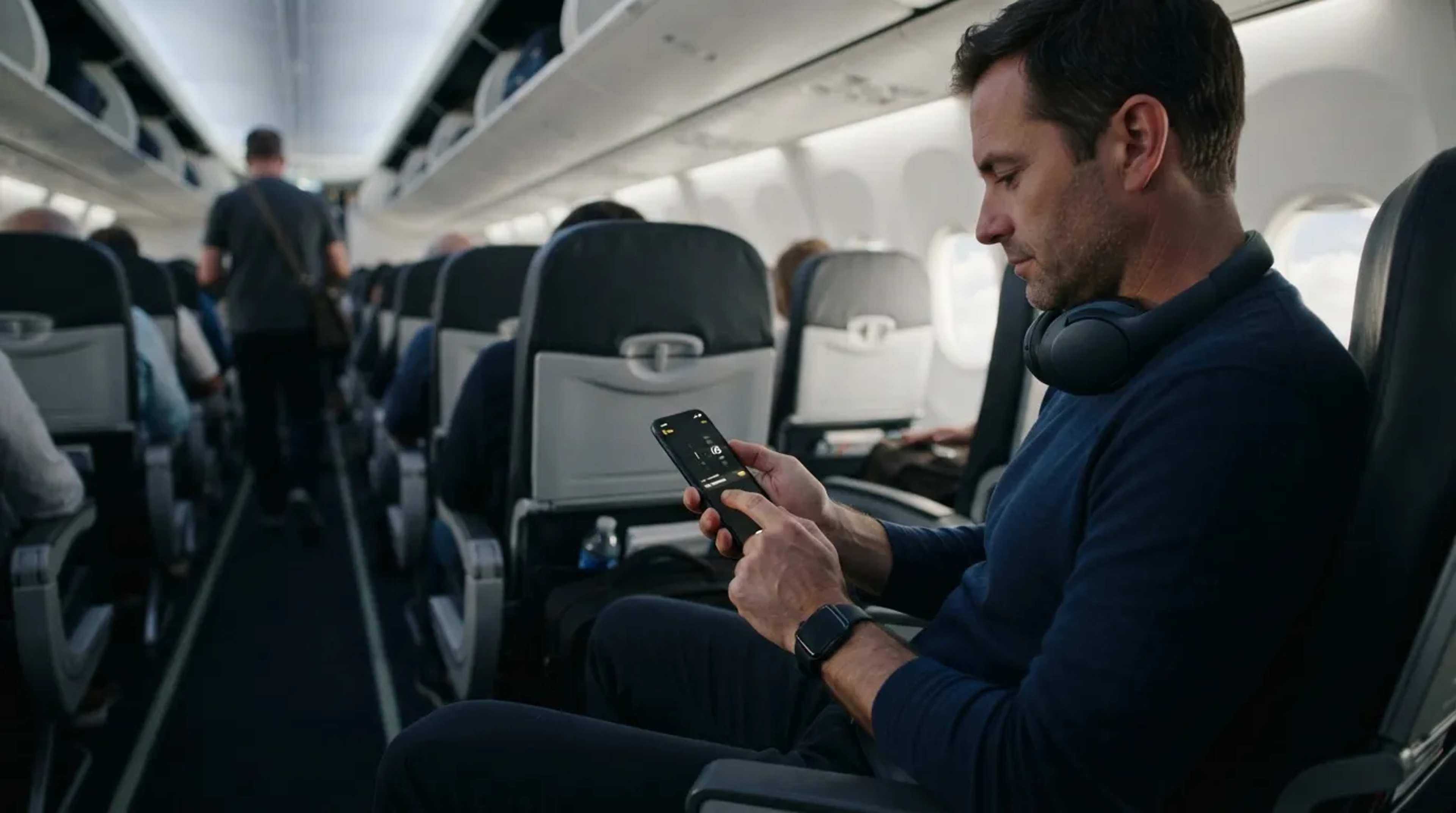
That’s why airlines are writing it down. Power banks should stay accessible during the flight, not buried in an overhead bag.5 Southwest, from April 20, 2026, requires the bank to be visible while in use and not in the overhead bin. Singapore Airlines points passengers to the seat pocket or the space under the seat in front. Keep the power bank in your pocket or the seat pocket, never the bin. The pattern is the same as the rest of this list: what sits where you can’t see it is what costs you.
Run back through the list and one thing stands out. The small stuff is annoying, but the bigger problems start where a bag, a bottle or a battery goes out of sight and out of reach, in a bin, in the hold, or in a bag you handed over at the gate. Packing for reach changes what you keep close, and it costs nothing.
Try it on your next trip: put the medicine, the glasses and the power bank where your hand can find them, and let the rest ride overhead. What’s the one thing you always keep in the seat pocket on every flight?
- Afar TSA 3-1-1 Guide: https://www.afar.com/magazine/the-tsas-3-1-1-rule-for-liquids-in-carry-on-luggage
- NerdWallet 3-1-1 Liquids Guide: https://www.nerdwallet.com/article/travel/3-1-1-liquids
- TravelPulse Flight Attendant Lifting: https://www.travelpulse.com/news/airlines-airports/why-flight-attendants-don-t-help-passengers-lift-carry-on-bags
- Travel + Leisure Overhead Bin Tips: https://www.yahoo.com/lifestyle/articles/everything-flight-attendants-want-passengers-133943595.html
- US Airline Power Bank Rules: https://yourmileagemayvary.com/2026/07/12/us-airline-power-bank-rules/
- FAA Airline Passengers and Batteries: https://www.faa.gov/hazmat/packsafe/airline-passengers-and-batteries
- FAA PackSafe for Passengers: https://www.faa.gov/hazmat/packsafe
- Southwest Power Bank Limit: https://simpleflying.com/southwest-airlines-limiting-passengers-1-portable-charger-onboard-reduce-fire-risk/