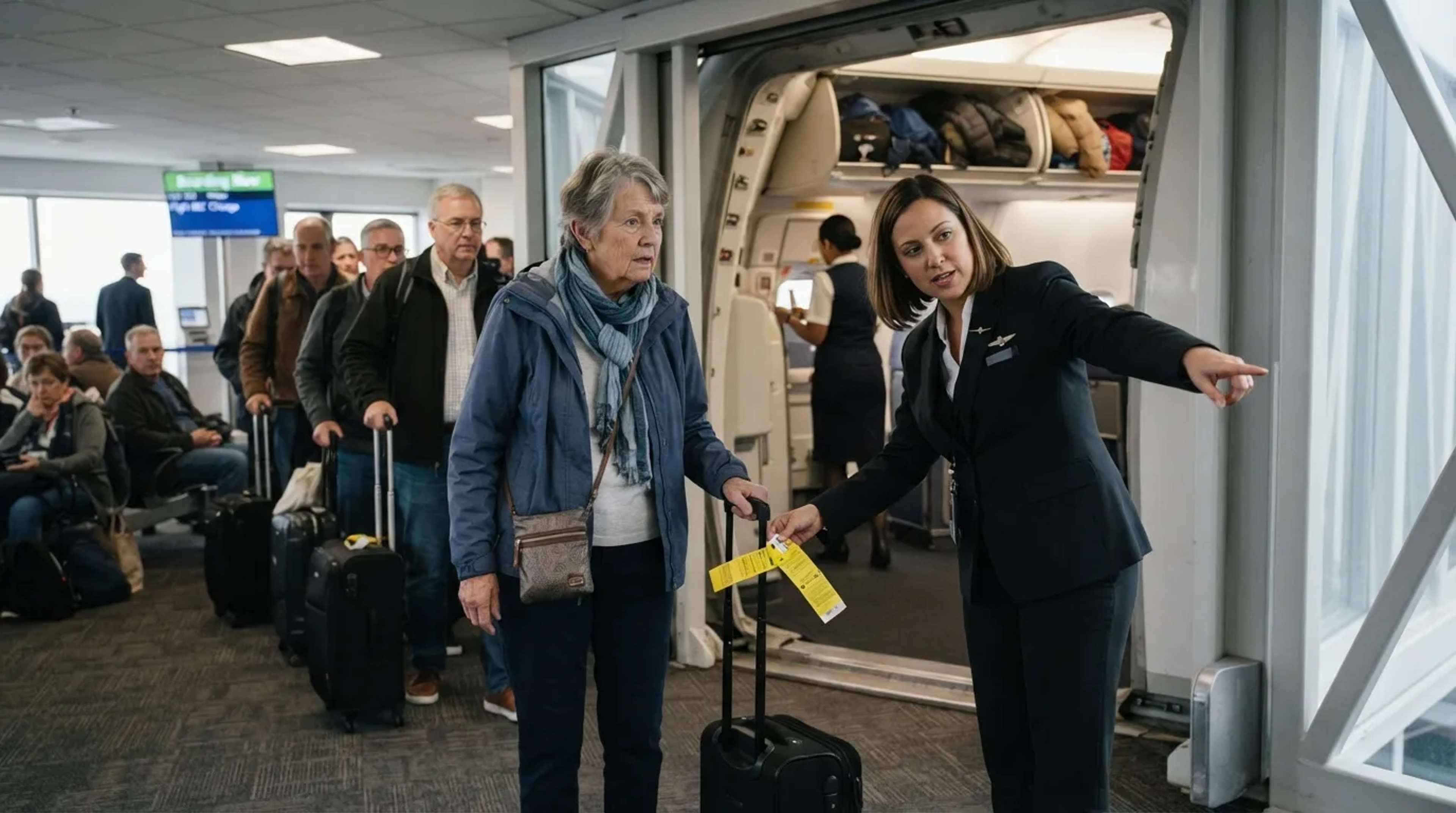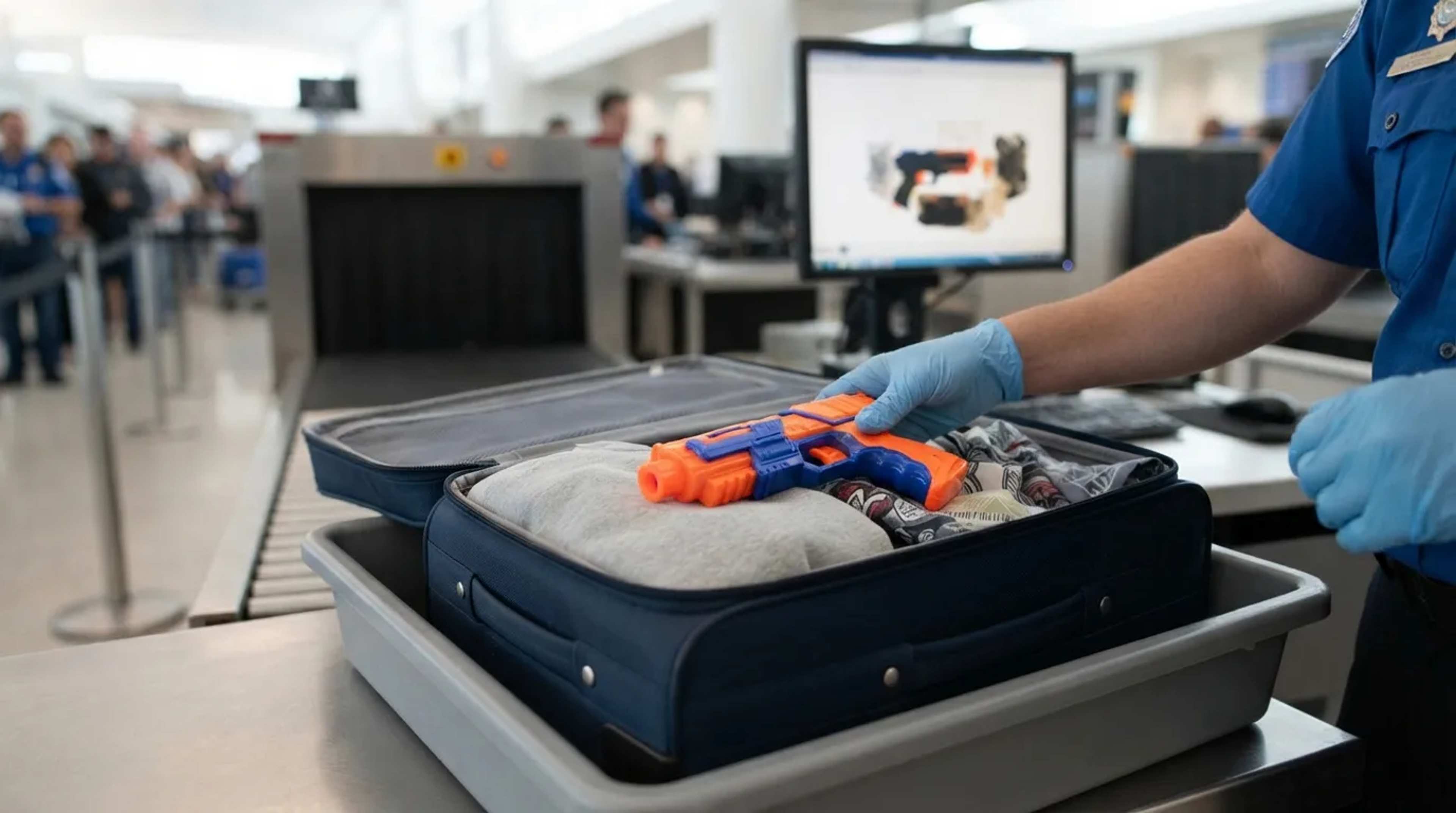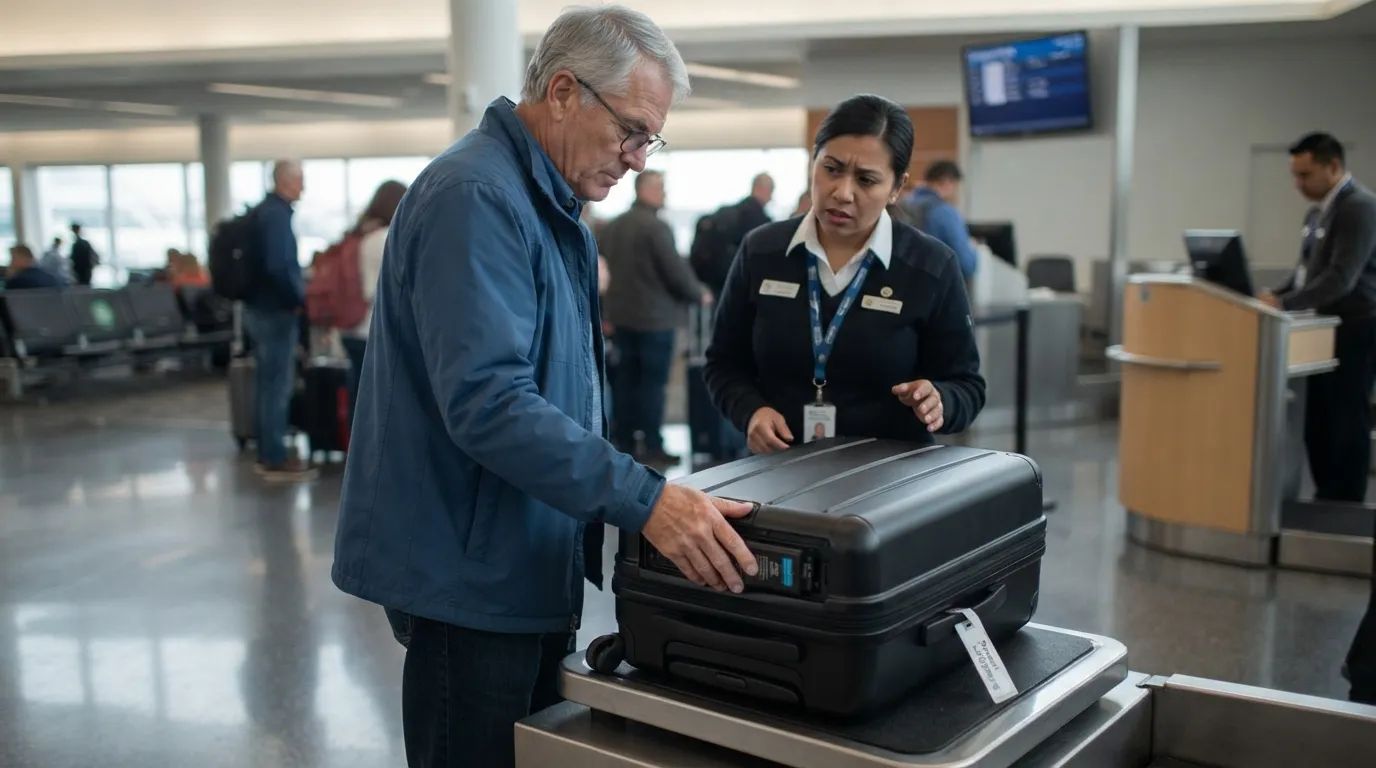
A gate agent sizes up your carry-on before you reach the podium. On most major U.S. airlines, the largest bag that fits the overhead limit is 22 by 14 by 9 inches, wheels and handles included.
A bag over that can be sent to the hold, sometimes with a fee. That is a bad moment if your pills, charger and spare clothes are inside.
Only one rule here depends on your age, and it starts at 75, not 70. Another has nothing to do with the bag and carries the biggest bill in this piece.
Start with the measurement itself, because it counts parts of the bag the label may leave out.
#14 – The Wheels and Handles Are Part of the Measurement
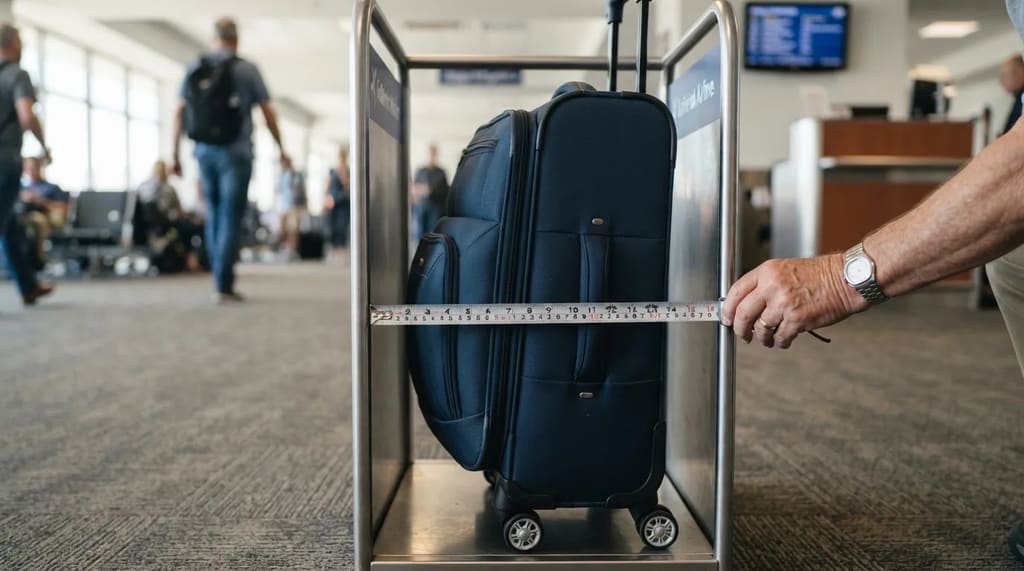
The 22 x 14 x 9 limit is measured with the wheels and handles included. A case sold as a 22-inch bag can measure more once the wheels are on the floor.
External pockets count too. A bulging front pocket pushes past the nine-inch depth, which is the first number a full bag tends to break.
Stand your bag on its wheels and measure it with a tape before you leave home. Then check which size actually travels everywhere.
#13 – The One Size That Works on Every Major Airline
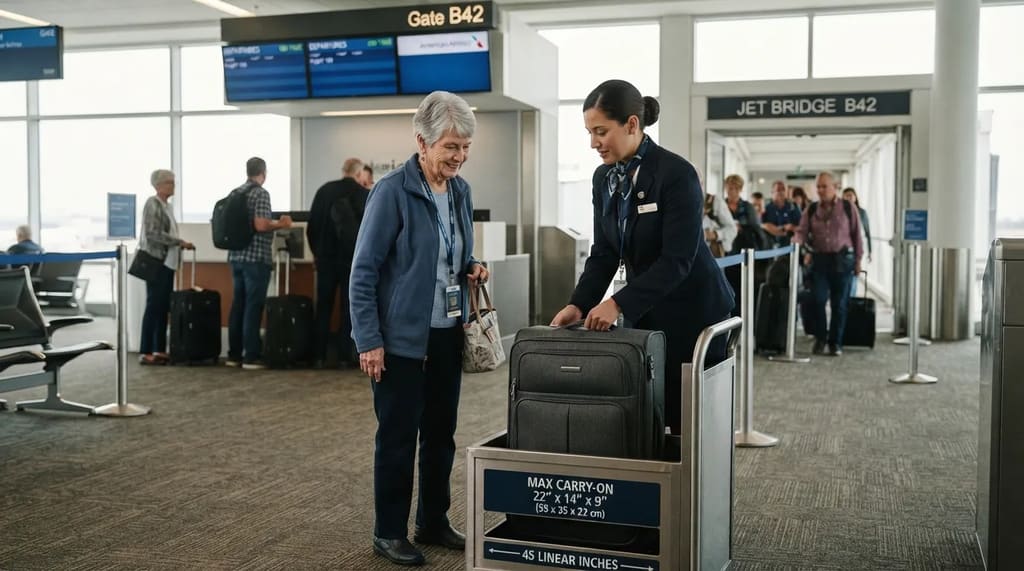
A bag at 22 x 14 x 9 inches fits every major U.S. airline, so it is the safest size to own. Southwest and Frontier allow a bit more, at 24 x 16 x 10.
Buy to the smaller number even if you mostly fly Southwest. The bigger bag is the one that causes trouble on American, Delta, United, JetBlue and Alaska the first time you switch.
The main bag gets the attention. The smaller one is the one that quietly saves you.
#12 – The Personal Item That Is Smaller Than It Looks
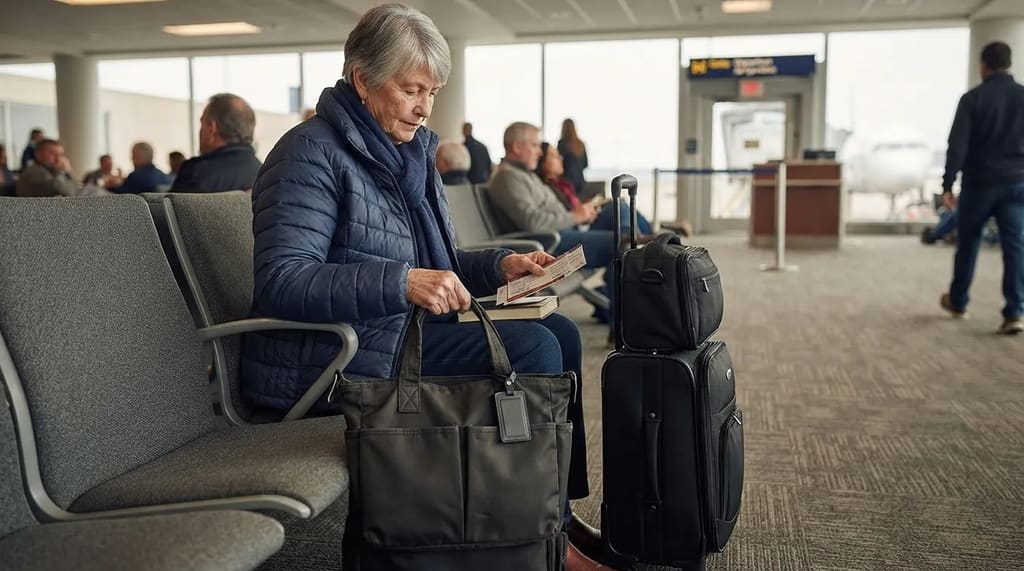
United allows a personal item up to 17 x 10 x 9 inches, while American allows up to 18 x 14 x 8. A tote sized for American may not pass on United.
Delta only requires that the bag fit under the seat. That under-seat bag rarely gets tagged at the gate, which makes it the most valuable bag you carry.
Fast Facts
- United personal item: up to 17 x 10 x 9 inches.
- American personal item: up to 18 x 14 x 8 inches.
- Delta: the bag just has to fit under the seat.
- Safest tote: one that clears the smallest limit, so it works on every airline.
One more limit decides how heavy that main bag can get, and the airline often leaves it to you.
#11 – The Weight Limit You Enforce Yourself
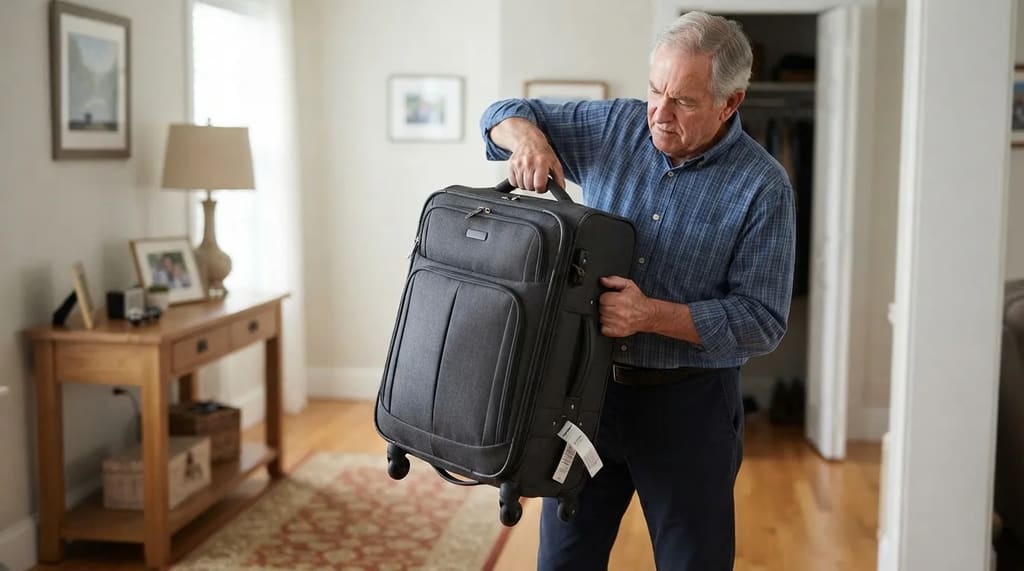
United lists no carry-on weight limit, and American lists none enforced. The practical limit is whatever you can raise into the bin.
Air Canada’s guidance says you must be able to lift the bag unassisted. Emirates and Qatar Airways list about 15 pounds (7 kg) for economy cabin bags, far lighter than a full roller.
Pack to what you can lift comfortably, not to what the airline allows. Next up is a bag that can set off a different kind of alarm.
#10 – The Smart Bag With a Battery You Can’t Remove
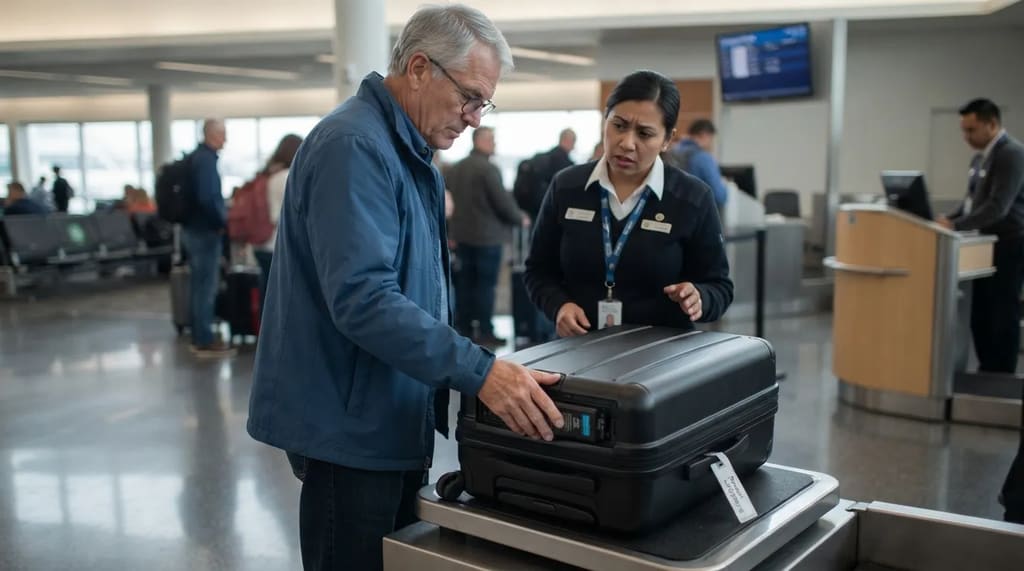
The FAA says a bag with lithium batteries must travel as carry-on unless the batteries can be removed. A charging suitcase with a fixed battery cannot go in the hold.1
If you buy one, learn how the battery comes out before you fly. A plain bag plus a separate power bank is far simpler when an agent asks you to check it.
Once the battery is out, it counts as a spare.1 And spares are judged by a number most people never look at.
#9 – The Watt-Hour Number Hiding on Your Power Bank
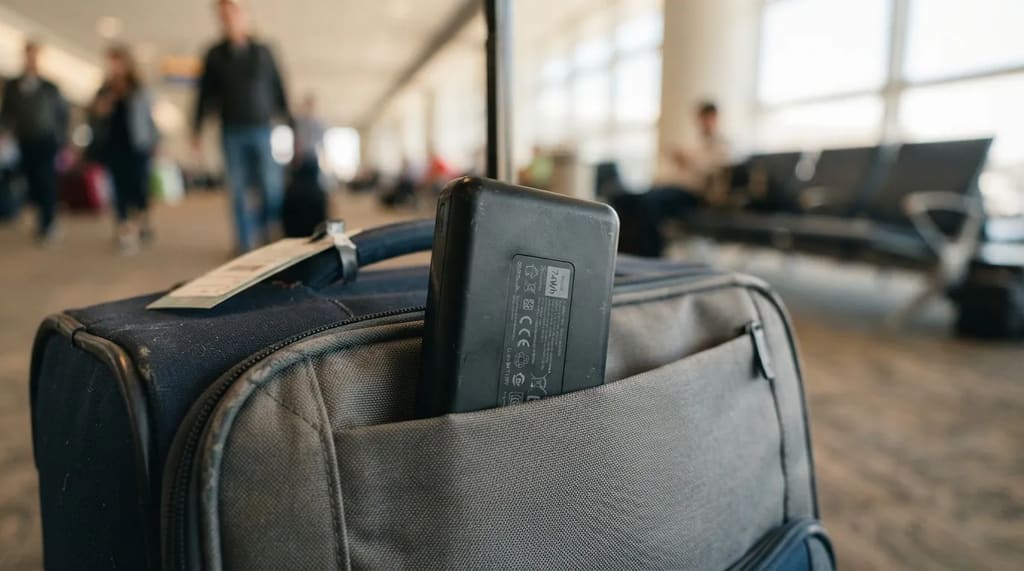
The FAA requires spare lithium batteries, including power banks, to be carried on and not checked. Each one is limited to 100 watt-hours.2
With airline approval, you may carry up to two larger spares of 101 to 160 Wh.2 Most phone banks sit well under the line, since a 20,000 mAh bank works out to about 74 Wh.
Meeting the limit gets the bank onto the plane. It does not settle what happens when the bag it rides in gets tagged at the gate.
#8 – Power Banks Have to Come Out When the Bag Is Tagged
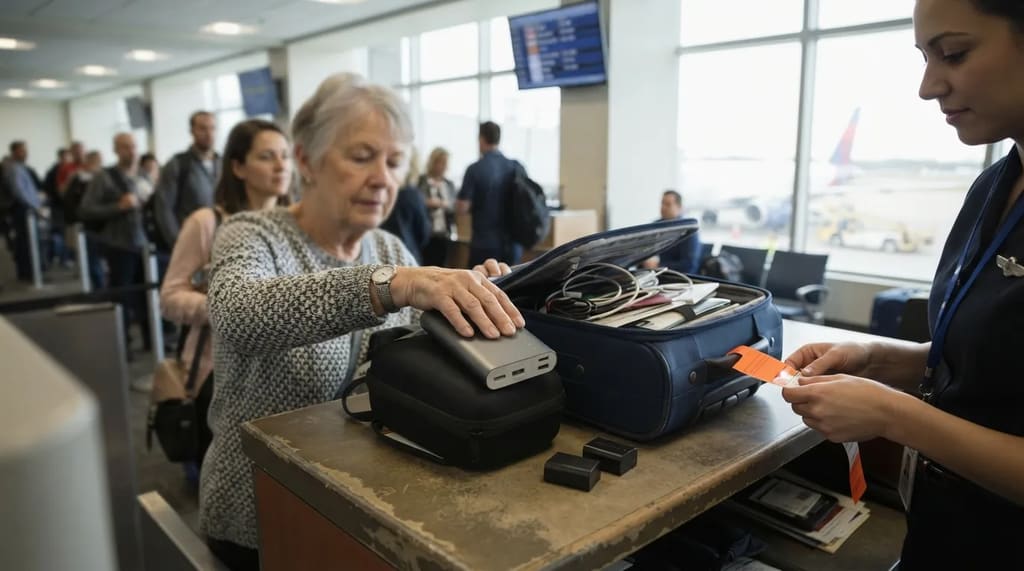
If your carry-on is gate-checked, you must remove all power banks and spare batteries and bring them into the cabin.2 That means emptying pockets at the gate with other passengers waiting.
Damaged units are out entirely. A cracked or swollen power bank should not come on board, so replace it before you travel.
Some airlines add their own rules, such as keeping a bank in plain sight while it charges or capping how many you carry. One bank is enough for most domestic trips.
Worth Knowing
- Every power bank and spare battery comes out before the tag goes on.
- Cracked or swollen units stay home.
- Keeping all batteries in one pouch makes the gate-side handoff quick.
- Check your airline’s own limits on how many you can carry.
#7 – Wheelchair and Scooter Batteries Get Their Own Rules
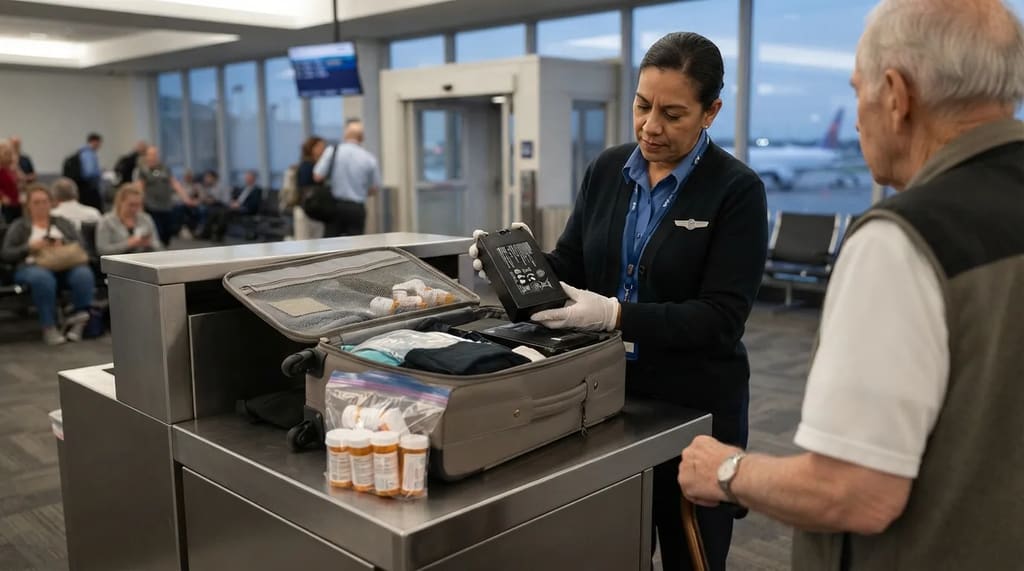
The FAA limits mobility device batteries to 300 watt-hours. A spare or removed battery is limited to one of up to 300 Wh or two of up to 160 Wh each, carried in the cabin only.3
Those numbers are the federal baseline. Confirm your exact battery with your airline before the trip, since the airline handles the device at boarding.
Batteries are worth a phone call. The pills in the same bag call for a different kind of preparation.
#6 – The Pill Organizer With No Label
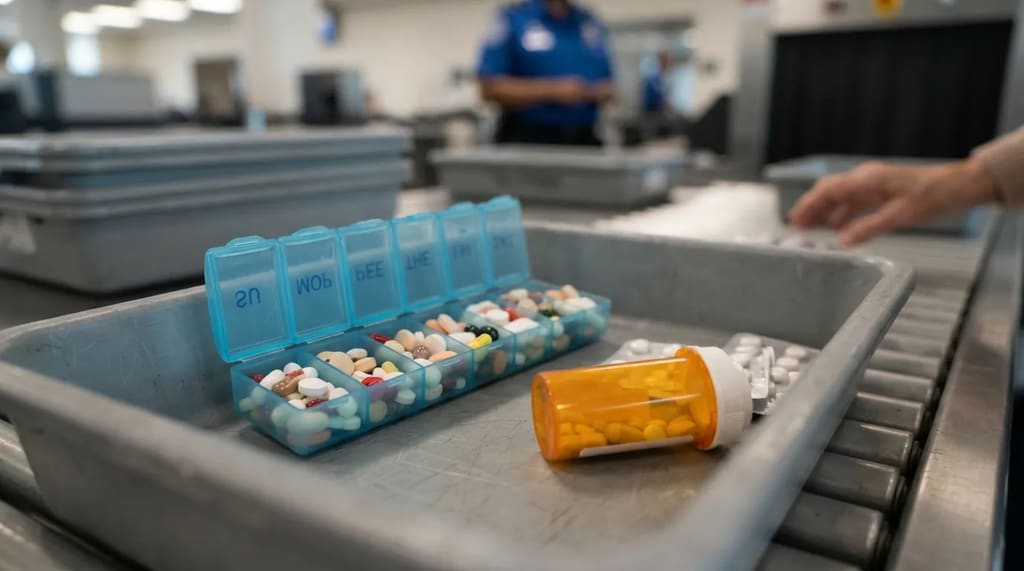
Pills, tablets and capsules fall outside the liquids rule, and you can bring any quantity. A weekly pill organizer is fine.
TSA does not require original pharmacy bottles for solid medications, though it recommends them. Use the organizer for daily convenience, but keep the original bottles in the bag too.
For controlled substances or large quantities, a doctor’s letter is worth carrying. Keep all of it in the cabin, never in a bag that might be tagged.
Pills pass through quietly. Liquid medicine does not.
#5 – Liquid Medicine That Beats the Quart Bag
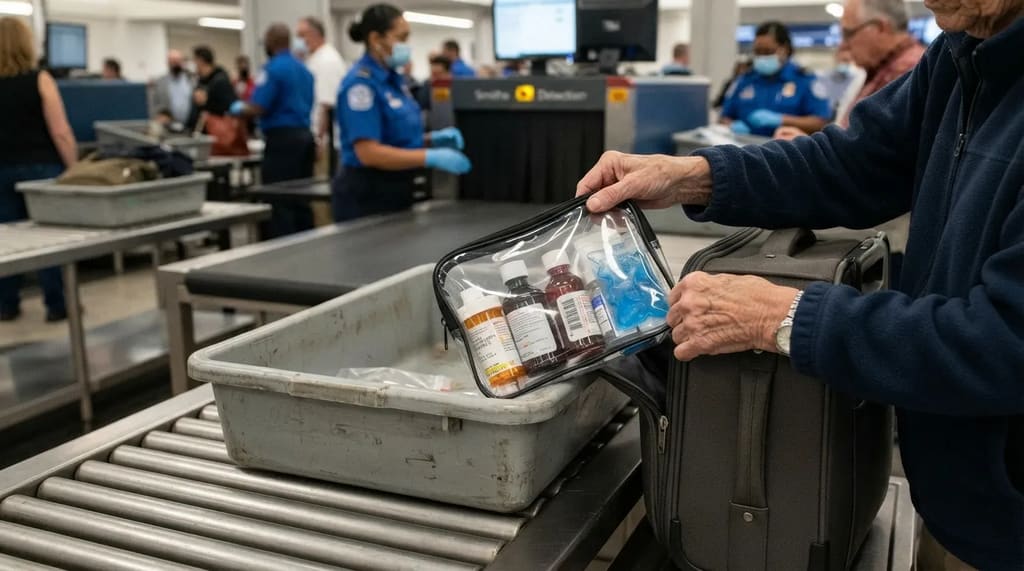
The 3-1-1 rule does not apply to medically necessary liquid medications. You still have to take them out of the bag and declare them before screening begins.4 5
Over-the-counter liquids are narrower. Cough syrup and similar products stay under the 3.4 oz limit unless declared as medically necessary.
Tell the officer about ice packs for refrigerated medicine too. Then there is the machine that matters most to many travelers.
#4 – The CPAP Machine and the Implant Card
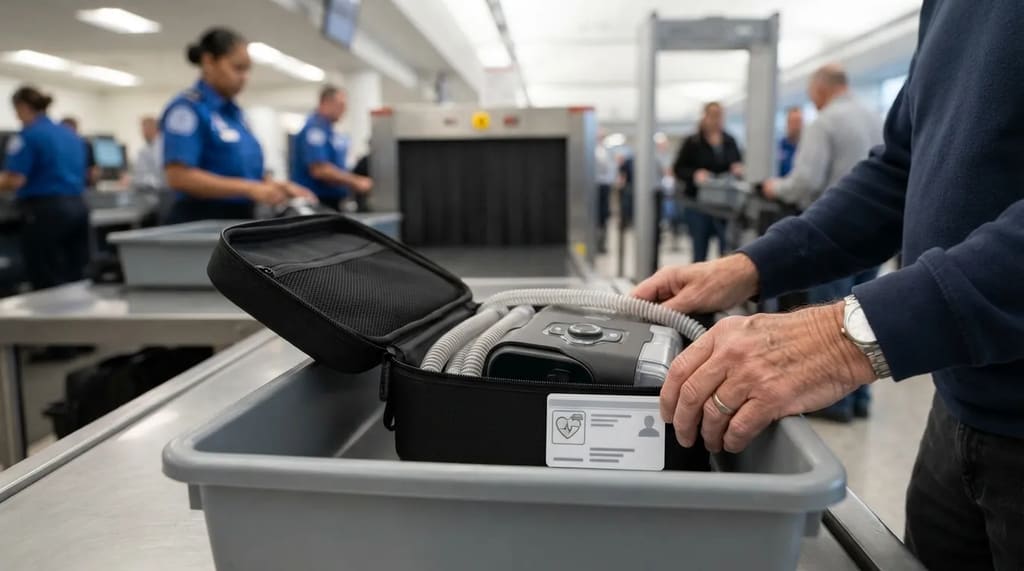
A CPAP machine is allowed and screened separately. Like your pills, important medical devices belong in your carry-on.6
If you have an implant such as a pacemaker, TSA can use manual screening or a hand search. A medical device ID card may make it smoother.
At a Glance
- CPAP: allowed, and screened separately from your bag.
- Implant: manual screening or a hand search is an option.
- Device ID card: may make the process smoother.
- Where it travels: in the cabin with you, not the hold.
Pack the CPAP so it comes out of the bag without digging. Now for the one rule that really does depend on your age.
#3 – The Screening Rule That Starts at 75, Not 70
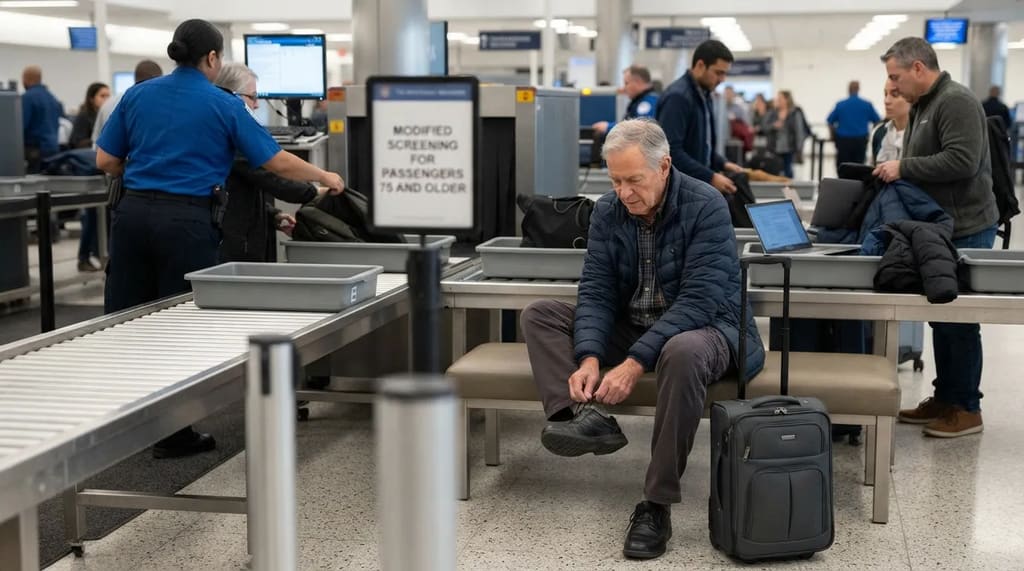
TSA offers modified screening to passengers 75 and older, which can mean less to take off. If an alarm goes off, you may still need extra screening or a pat-down, and you can ask to be seated for that part.
Shoes no longer make the difference, because TSA ended its shoe-removal requirement on July 8, 2025. Everyone now keeps shoes on.
Related Stories From Travelbinger
So a traveler of 72 follows the same checkpoint steps as everyone under 75.
Clearing the checkpoint feels like the finish line. But the aircraft still decides whether even a legal bag stays with you.
#2 – The Regional Jet That Takes a Perfectly Legal Bag
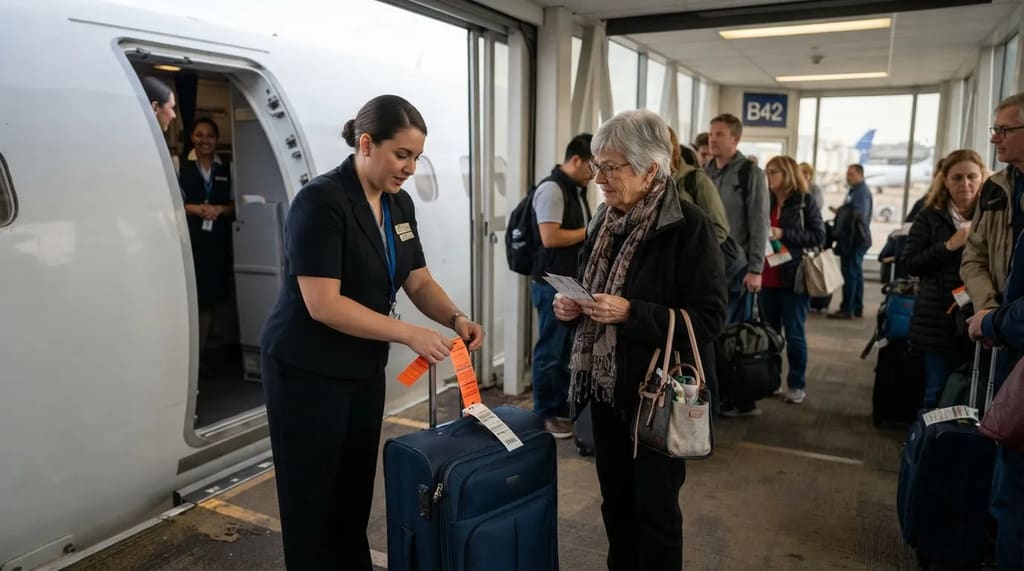
Regional aircraft may force gate checks regardless of size. The cause is bin space, and a gate-check for lack of space is usually free.
A free tag still puts the bag in the hold. The power banks and pills must be out of it before the tag goes on.
A full bin is one reason a bag goes to the hold. The ticket you bought is another, and it comes with a bill.
#1 – The Fare Class That Decides What You Owe
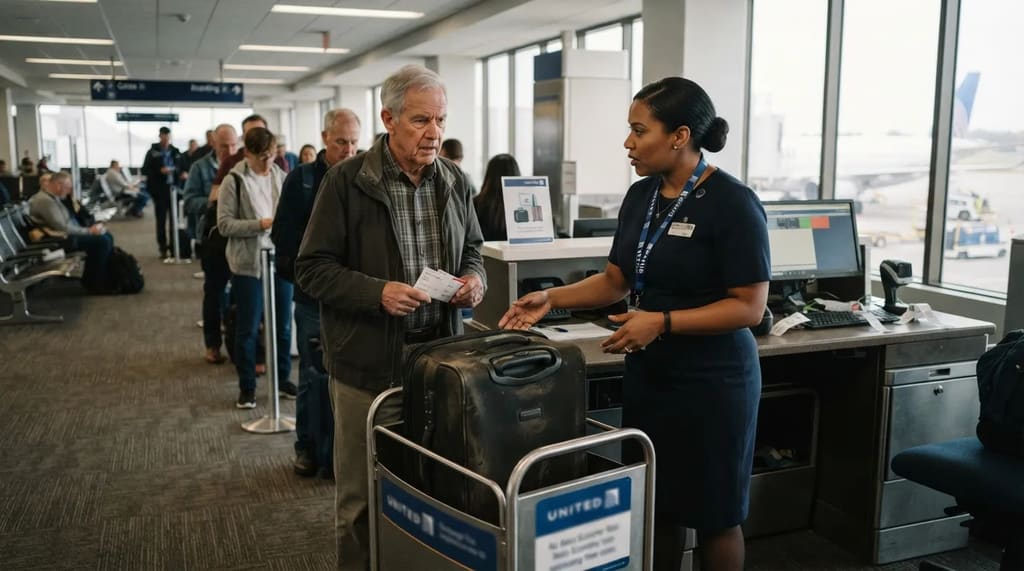
On United, Basic Economy does not include a carry-on on domestic flights, only a personal item. Bringing a roller to the gate on that ticket can cost a $65 gate-check fee.
Budget airlines work differently. Spirit and Frontier charge extra for a carry-on, and the gate is usually the most expensive place to pay.
The lowest fares on American, Delta, Southwest, JetBlue and Alaska have generally included a full carry-on. Those terms change, so read your fare rules before you pay.
Quick Compare
- United Basic Economy: personal item only, and a roller at the gate can cost $65.
- Spirit and Frontier: carry-on costs extra, and the gate is the priciest place to pay.
- American, Delta, Southwest, JetBlue, Alaska: lowest fares have generally included a full carry-on.
The bag is not the problem here, because it can be the right size and still draw a bill. If you can’t travel with only an under-seat bag, the cheapest ticket is rarely the cheapest trip.
Think of your carry-on as two bags: one you can let go of and one you can’t. Medicine, devices and batteries belong in the second, the one under the seat.
Then the roller can be the bag that gets tagged without costing you anything. What is the one item you keep in your under-seat bag on every flight, no matter what?
- FAA Baggage With Lithium Batteries: https://www.faa.gov/hazmat/packsafe/baggage-with-lithium-batteries
- FAA PackSafe Lithium Batteries: https://www.faa.gov/hazmat/packsafe/lithium-batteries
- FAA Wheelchairs and Mobility Devices: https://www.faa.gov/hazmat/packsafe/wheelchairs-mobility-devices
- TSA Travel Tips: https://www.tsa.gov/travel/travel-tips
- TSA Medication Requirements: https://www.tsa.gov/travel/frequently-asked-questions/i-am-traveling-medication-are-there-any-requirements-i-should-be
- TSA Disabilities and Medical Conditions: https://www.tsa.gov/travel/tsa-cares/disabilities-and-medical-conditions