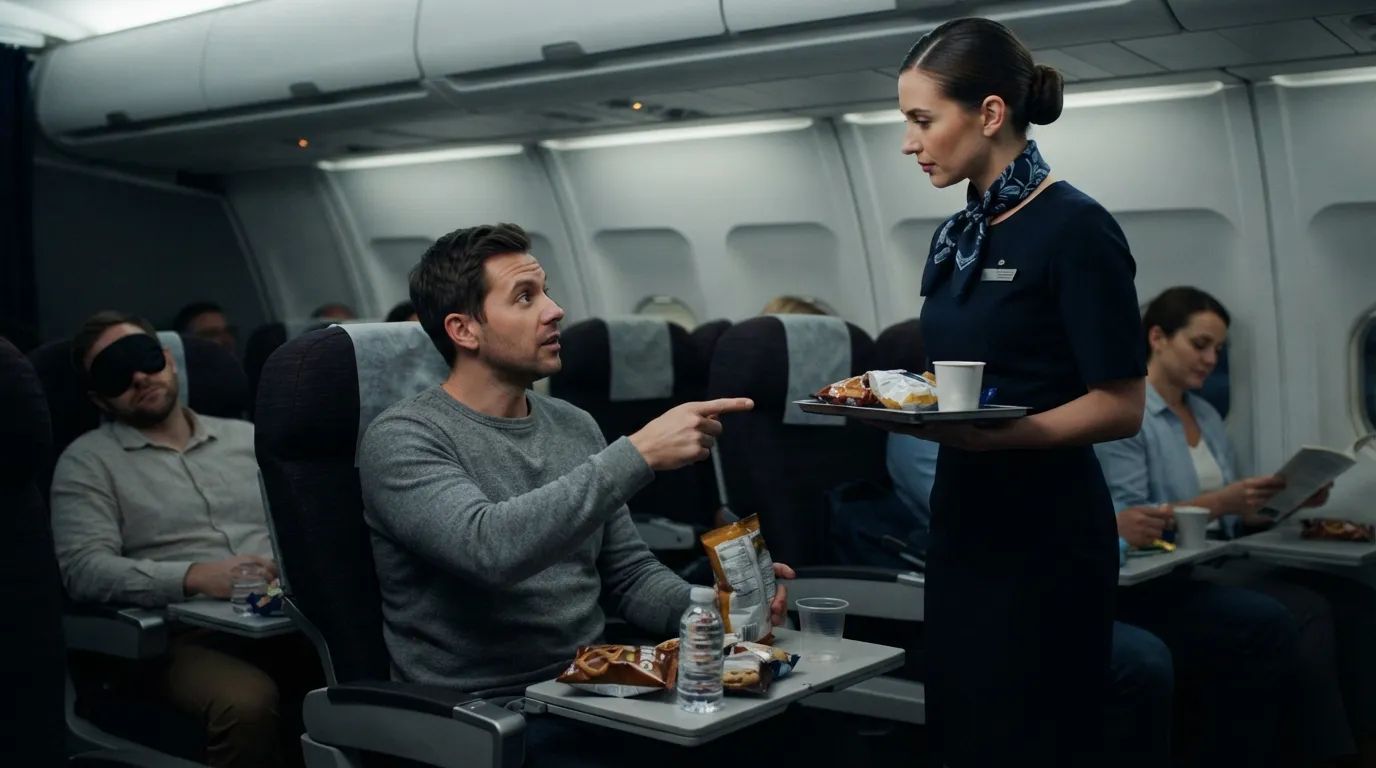
Every flight attendant carries a mental file of passengers they will never forget, and it is rarely the dramatic ones. It is the small, shameless habits that play out for hours in a tube full of strangers.
Most of what follows falls well below a true unruly-passenger incident, but crews notice every bit of it. One item starts with something you can legally carry through security and ends with a five-figure fine, and the smallest offense on the list is the one left behind in the seat pocket.
#15 – Leaving Trash and Used Gum Behind
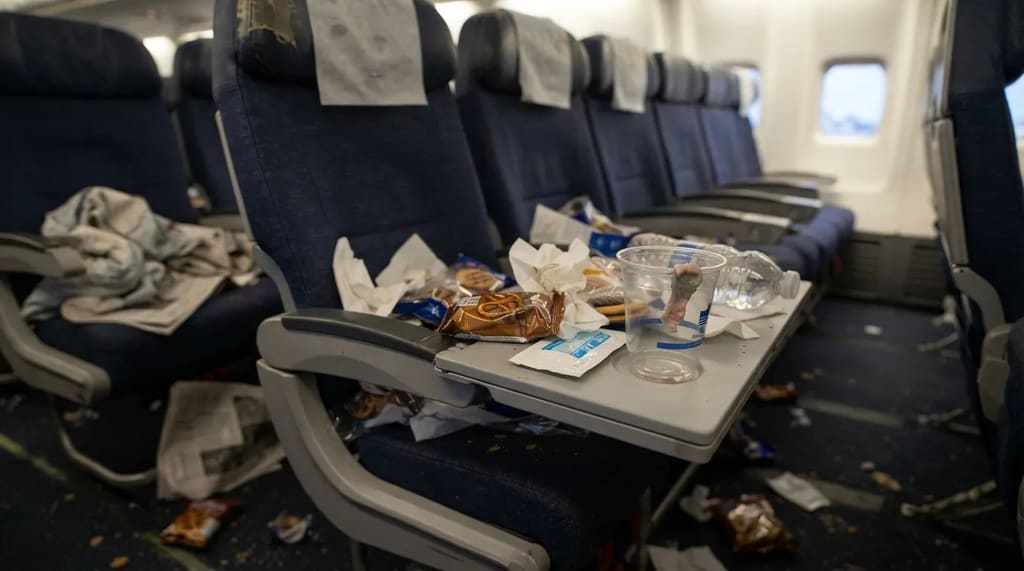
Ask a Southwest Airlines flight attendant what grinds his gears, as Travel + Leisure did, and the answer is trash left behind. Flight attendants in a BuzzFeed roundup also object to gum stuck on the side of a glass or cup.
Crews pass through the cabin with a bag during service, so handing over your cup, napkin and wrapper costs you about three seconds. Gum goes in a tissue first.
A wrapper can be collected, but cologne stays in the row until the plane lands.
#14 – Dousing Yourself in Perfume or Cologne
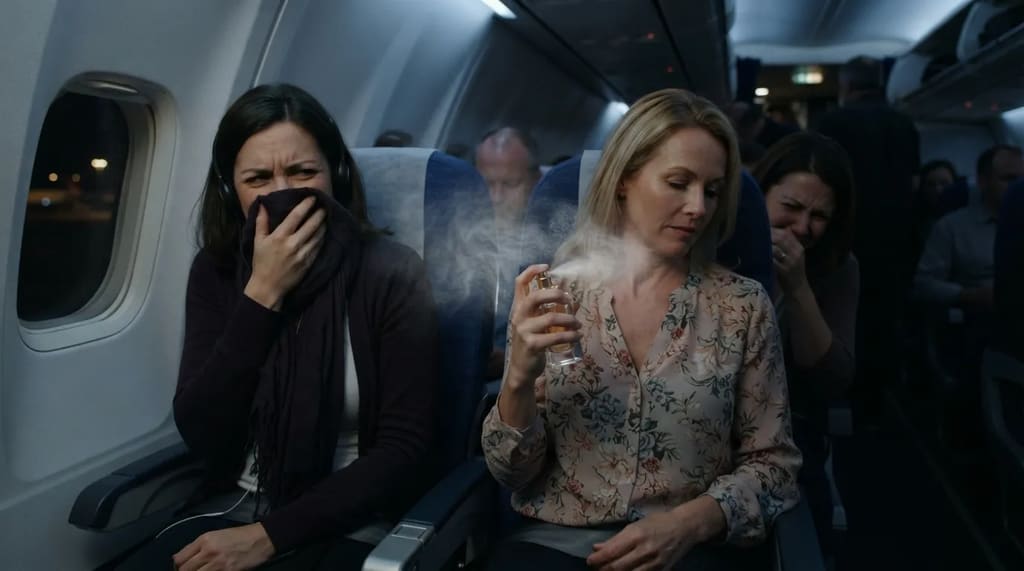
Travelers United lists passengers who douse themselves in fragrance among the worst offenders. It calls them almost impossible to sit next to and notes they can cause real trouble for people with asthma.1
Your seatmate cannot leave, so on a long flight the smell sits with them for hours. Put it on in the terminal after you land, and nobody is stuck with it.
#13 – Keeping Earbuds In When the Crew Speaks
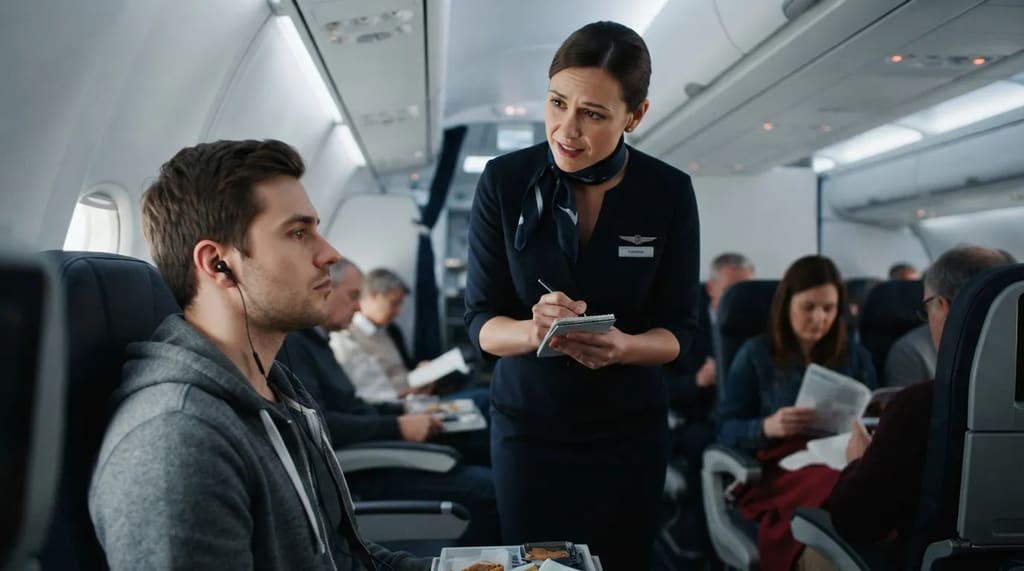
Ally Murphy, a former flight attendant and host of The Red Eye podcast, described the pattern plainly. Many passengers don’t acknowledge the crew as they pass or serve them, or won’t take out earbuds when asked a question.
The questions are usually practical ones, like a drink order or a meal choice. Pulling out one earbud takes no effort and saves the attendant from repeating themselves down a full row.
#12 – Reclining Into the Person Behind You
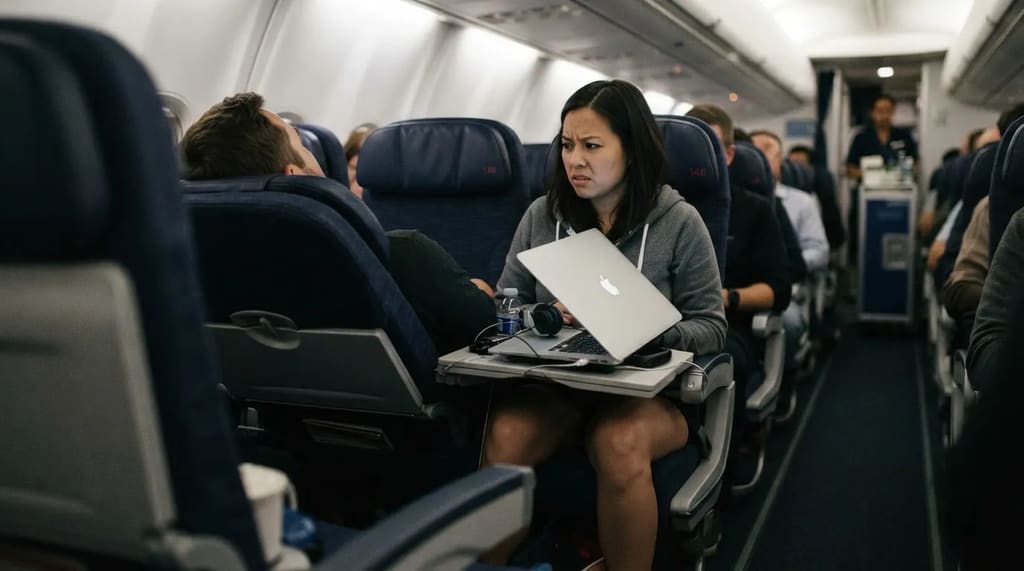
Flight attendants in the BuzzFeed roundup call it rude to lean your seat back when someone is seated behind you. Travelers United adds the practical cost: less space, a blocked seatback screen, and sometimes a squeezed laptop on the tray table.1
A survey reported by USA Today also found reclining rude.2 Still, the seat is built to recline, so the real move is to glance behind you first and hold off while the person has a meal tray or laptop open.
The person behind you has a screen to protect, while the crew has a cart to move and a job that is not just snacks.
#11 – Treating the Crew as a Snack Service
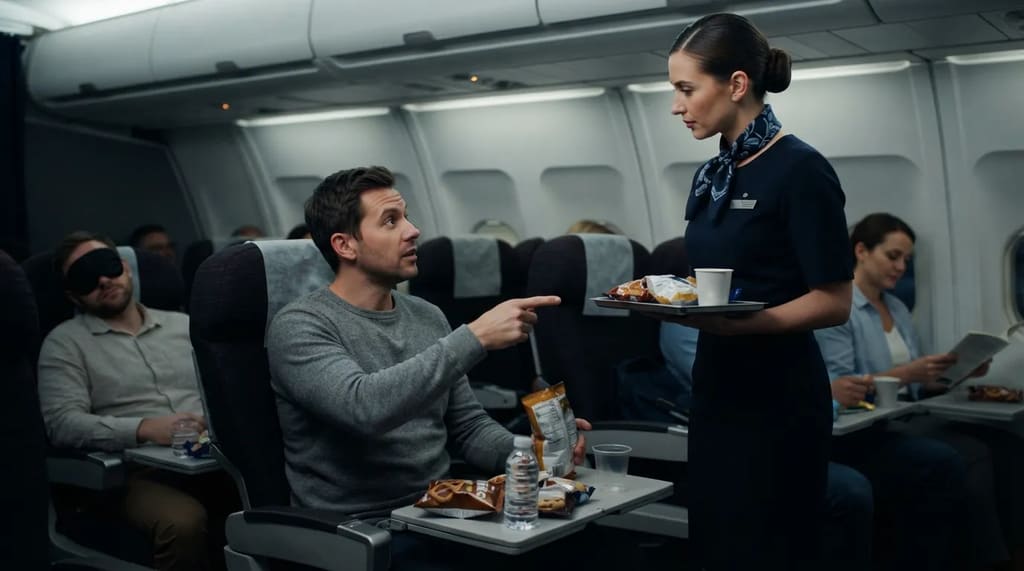
Serving food and drinks is not the flight attendants’ main job, yet some passengers expect snacks and drinks throughout the whole flight. Their main job is safety, and the cart is just the part you see.
The same roundup lists asking for free drinks as a pet peeve, with the reminder that economy doesn’t get champagne. If you want something between services, ask politely during a lull and accept a no without a fuss.
Fast Facts
- FAA staffing rules are built around seat count, not around how many people are in the seats.
- On planes with more than 100 seats, an airline needs two flight attendants plus one more for every 50 seats, or part of 50, above 100.3
- By that math, a 200-seat aircraft needs at least four.3
- Those minimums exist largely so someone can handle emergency exits, not to keep the cart rolling.4
That cart also has to get down the aisle, which is a problem once passengers start parking in it.
#10 – Blocking the Aisle, Galley and Lavatory Door
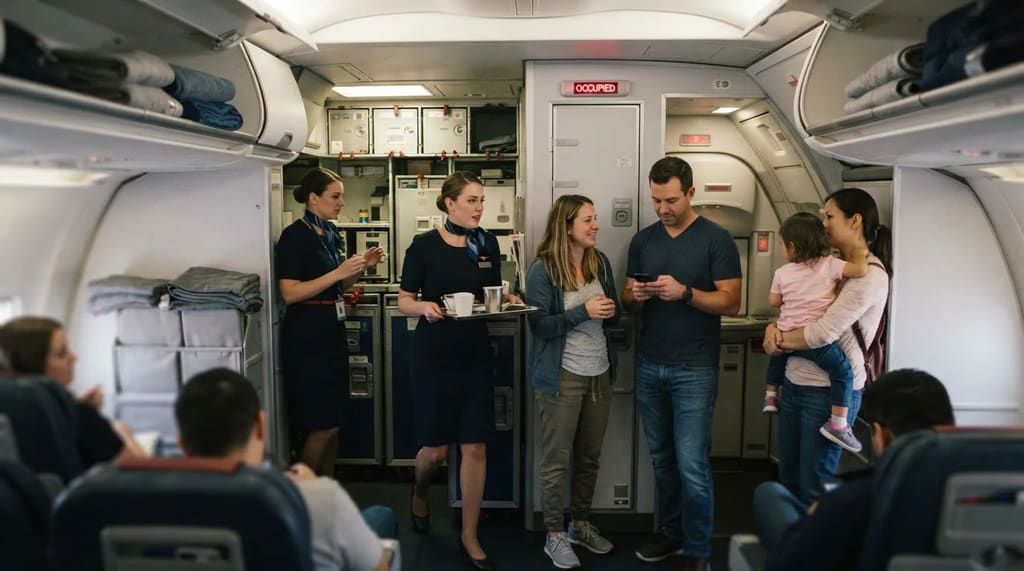
Flight attendants find it incredibly frustrating when passengers block the walkways, bathrooms and galley. Those are the spaces they need to get through on short notice.
If you stand to stretch, step to the side and let people pass. Lingering at the galley for a chat puts you in the way of someone who actually has to work there.
Many of the people waiting at the lavatory are parents with a small child, and they face a tricky decision about where a diaper gets changed.
#9 – Changing a Diaper on the Tray Table
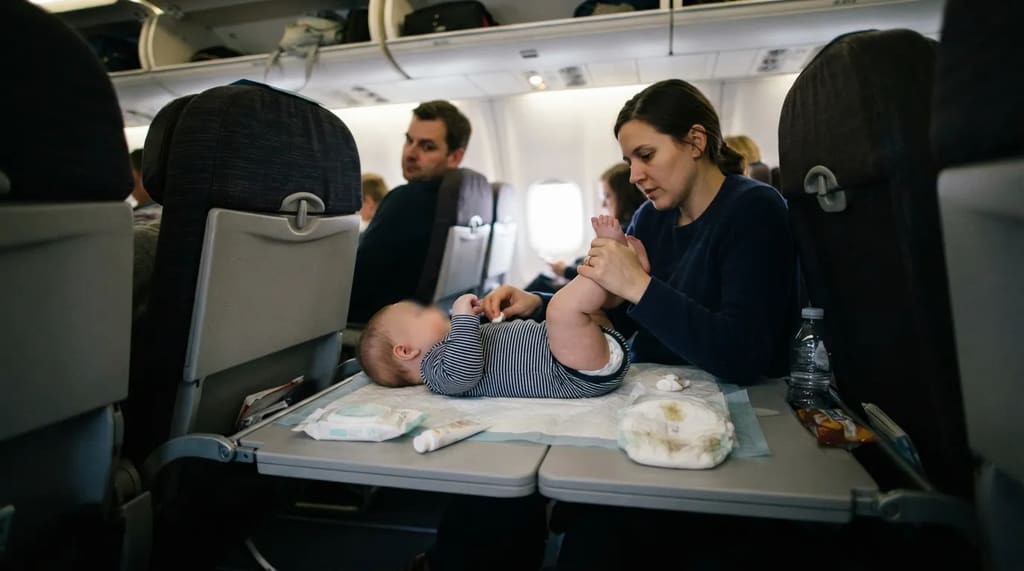
One flight attendant in the BuzzFeed roundup called changing diapers on the tray table absolutely diabolical. It is where your food and drinks sit, and the next passenger in that seat will use it too.
Parents are rarely careless on purpose, because a cramped seat leaves them few options. The fix is to take the baby to the lavatory, or to tell a crew member about the problem before it happens.
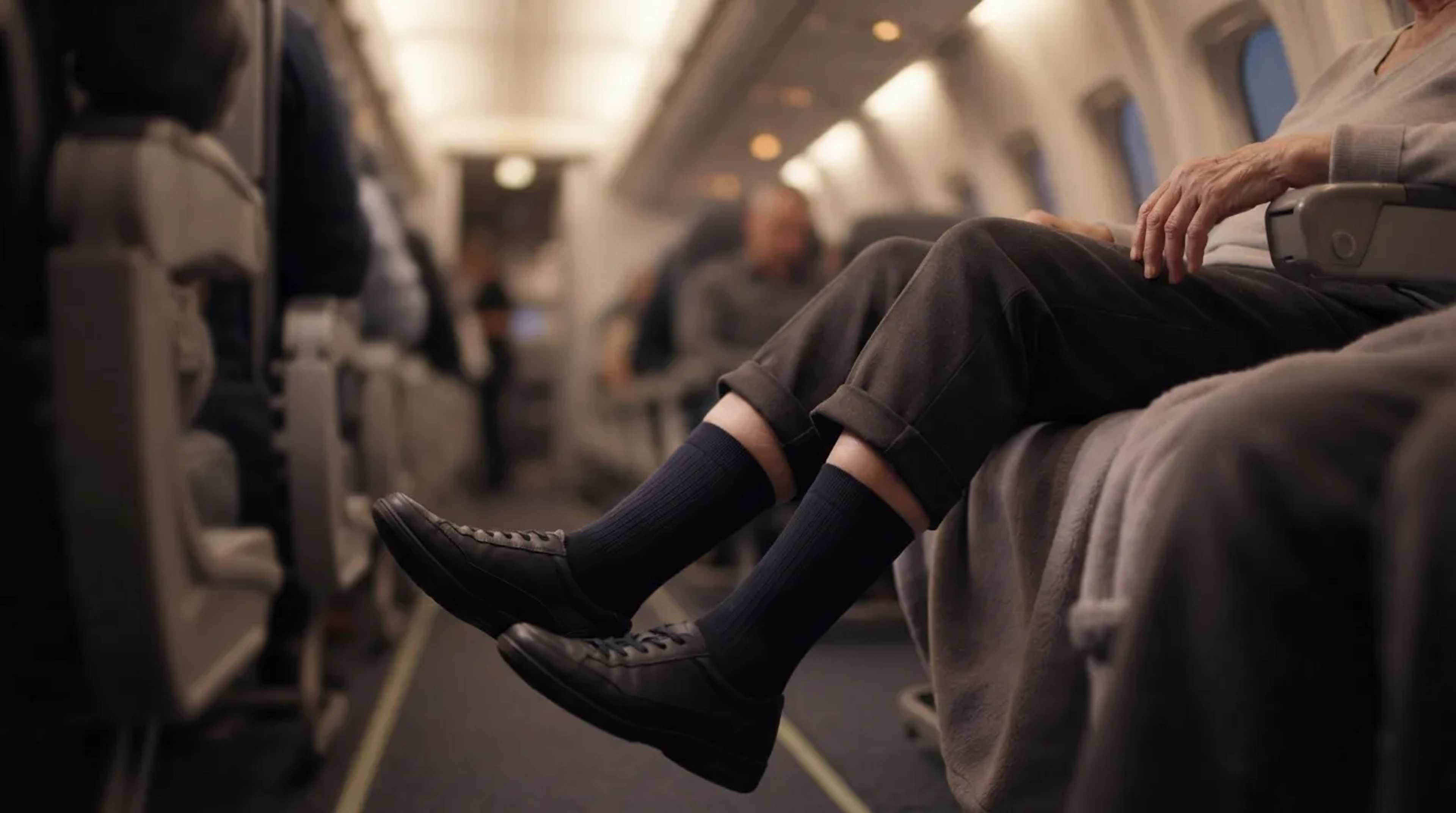
#8 – Propping Bare Feet on the Seat in Front
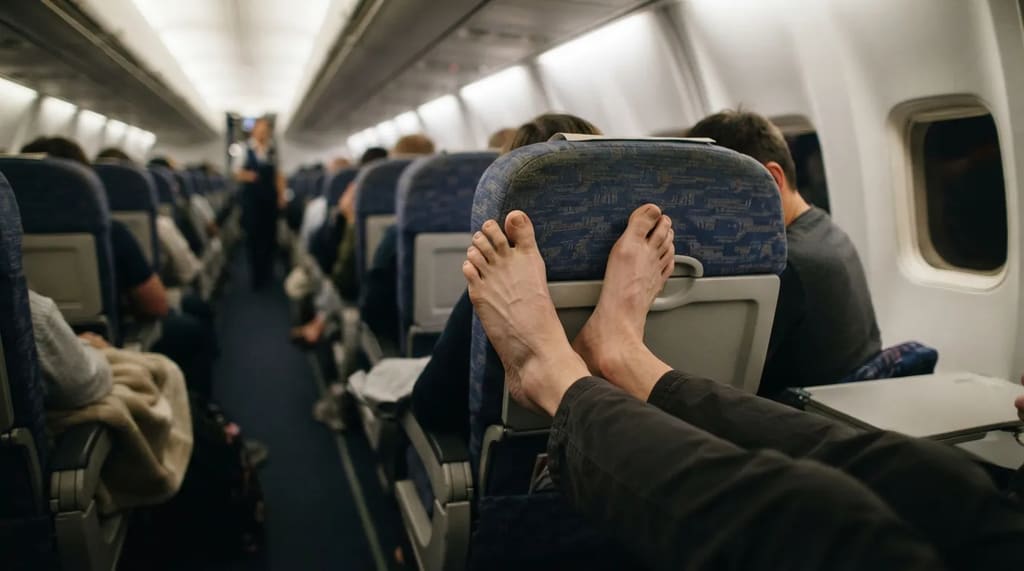
A Reddit post in the Delta community went viral when a user shared a photo of a man leaning back with his bare feet up on the seat in front of him. Jacqueline Whitmore, an etiquette expert and former flight attendant, said that if you plan to take your shoes off on a long flight, it is best not to walk around without slippers.
Taking your shoes off at your own seat is fair on a long flight. Putting your feet on someone else’s seatback is the line, because that surface belongs to the passenger in front.
Feet near a seatback offend a stranger, but hands on a crew member land on someone who is at work.
#7 – Touching a Flight Attendant to Get Their Attention
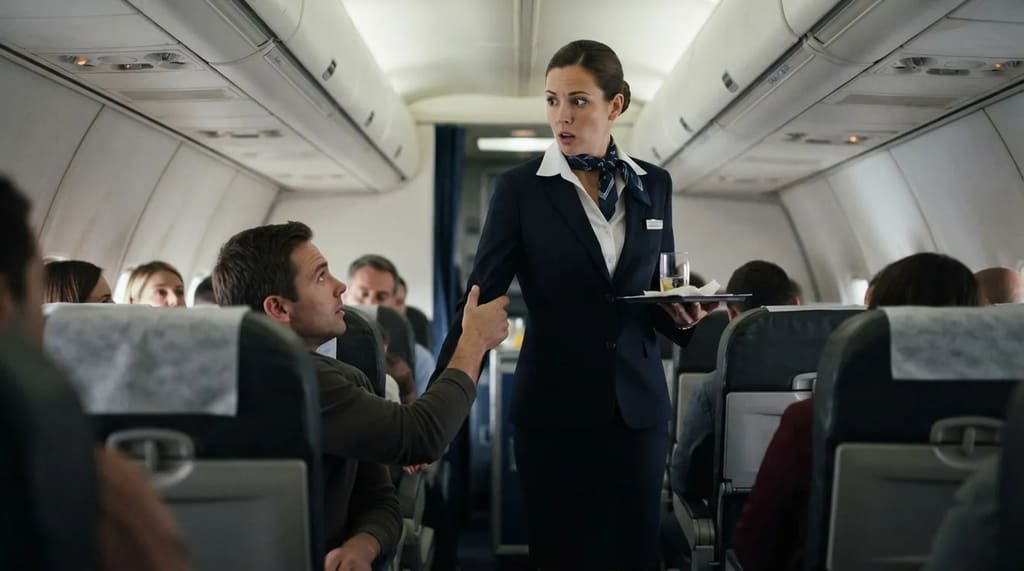
The golden rule is to avoid touching flight attendants at all, because it can make them feel unnecessarily exposed. That includes a tap on the arm or a hand on the sleeve as they pass.
Use your voice as they approach, or press the call button. It is a small rule that costs you nothing.
Quick Compare
- Skip: A tap on the arm as they pass. Try: A clear “excuse me” as they approach.
- Skip: A hand on the sleeve mid-aisle. Try: A quick press of the call button.
- Skip: Waving down the row. Try: Catching their eye and waiting a beat.
#6 – Nodding Instead of Answering for the Exit Row
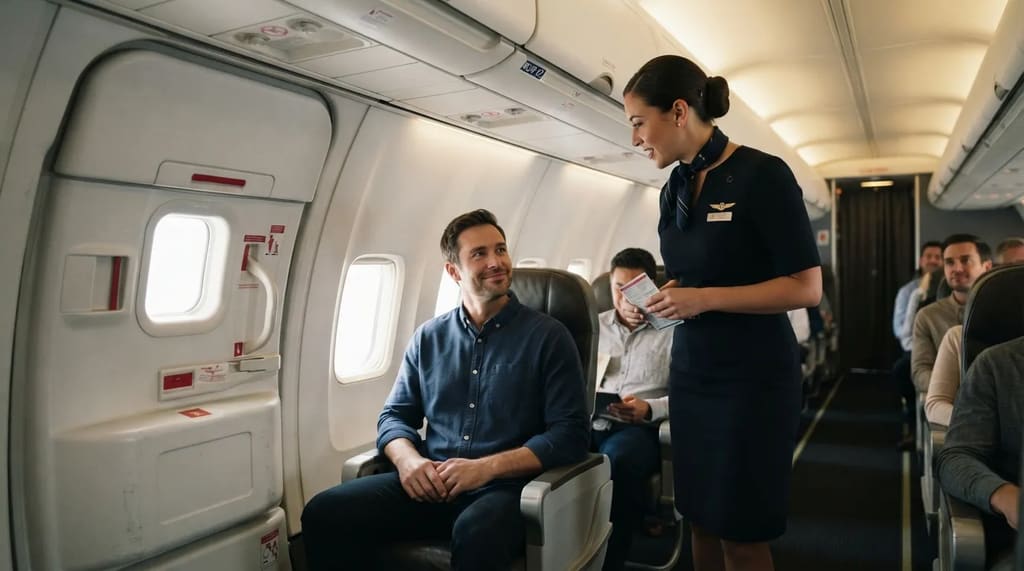
A flight attendant in the BuzzFeed roundup noted that when the crew ask for verbal confirmation for the exit row, some passengers just nod. Exit-row passengers are expected to help open the door in an emergency, so the crew need to hear a clear yes.
If you are not sure you could do it, say so and ask to be moved. Nobody will think less of you, and the swap is far easier on the ground than in an evacuation.
An evacuation is rare, but turbulence is a lot more common.
#5 – Walking Around With the Seat Belt Sign On
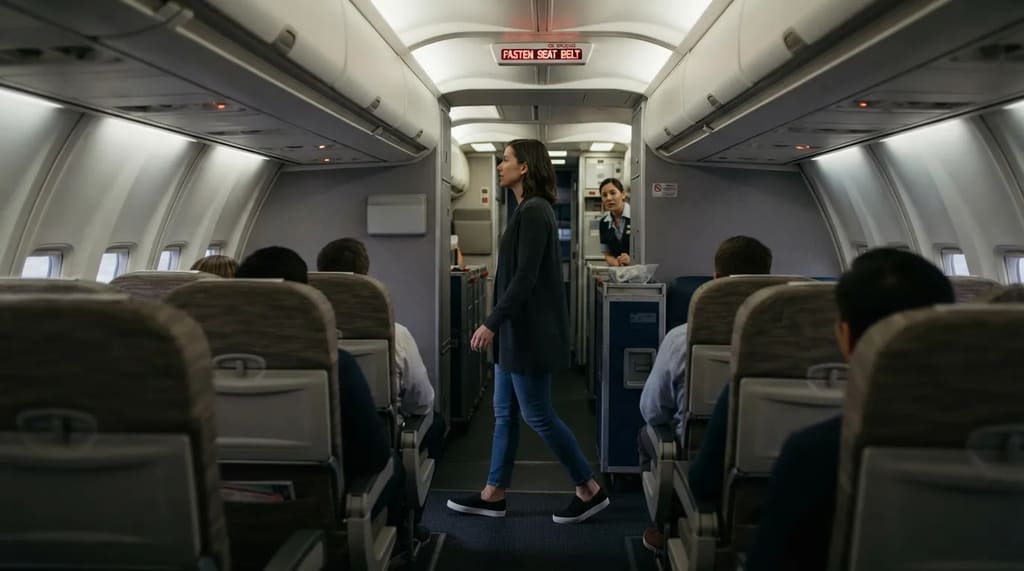
Another flight attendant in the roundup was blunt about passengers who act as if they don’t see the seat belt sign. It is there for safety, and turbulence does not announce itself.
If you are seated, keep your belt fastened even when the sign is off. If you get up while the sign is lit, expect the crew to tell you to sit back down.
Many of the people ignoring that sign are headed for the lavatory, and the question is what they have on their feet when they get there.
#4 – Walking Into the Lavatory in Socks or Bare Feet
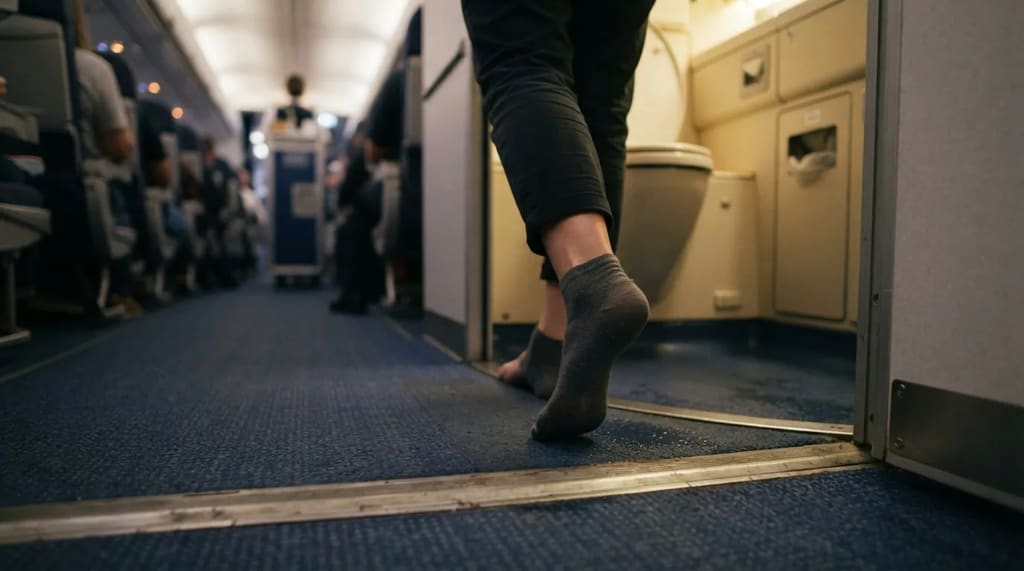
Elizabeth Regan, a commercial flight attendant, told HuffPost that passengers use the bathrooms all the time with bare feet or only socks on. Hilary Clark, a former flight attendant who now directs inflight services for a private jet company, called going barefoot into the lavatory unhygienic and said it should always be avoided.5
Clark suggests packing slippers or disposable slippers.5 Dr. Gonzalo Bearman of VCU Health noted that airplane lavatories generally pose no greater threat than other public bathrooms, so this is no reason to panic.
Still, slippers cost a few dollars and keeping your shoes on costs nothing, so this one is easy to skip the drama on.
The floor is only one surface, because the flush itself sends germs into the air.
#3 – Flushing With the Lid Up
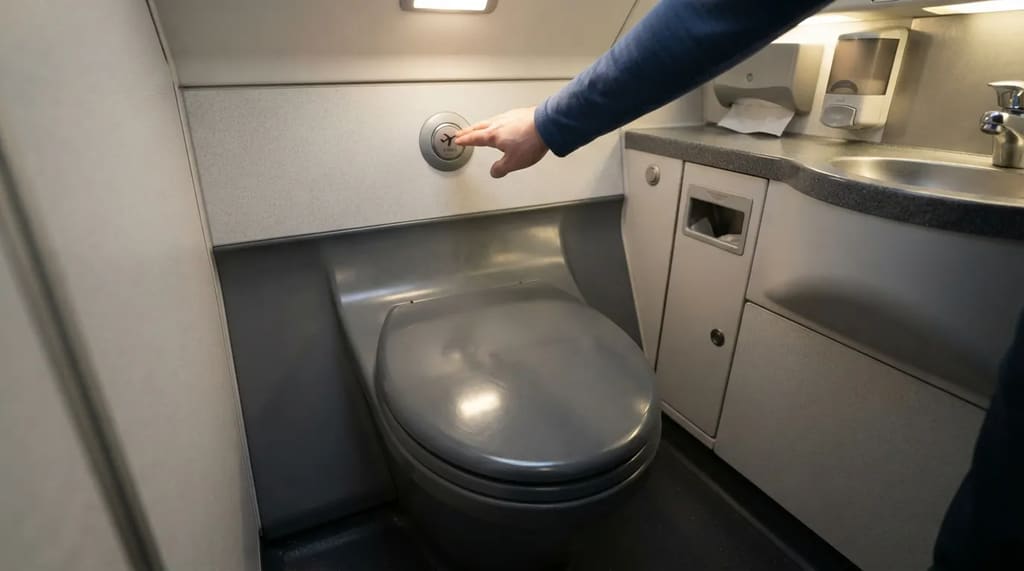
Flight attendants stress closing the toilet lid before flushing to limit the spread of germs in tight lavatories. One American Airlines flight attendant called leaving it open a surefire way to spread germs in such a small space.
Dr. Bearman agrees it is best to close the lid first. Plane toilets work differently from home ones, but a lid down can still reduce exposure in a confined, recirculated space.
#2 – Arguing With the Crew Until It Escalates
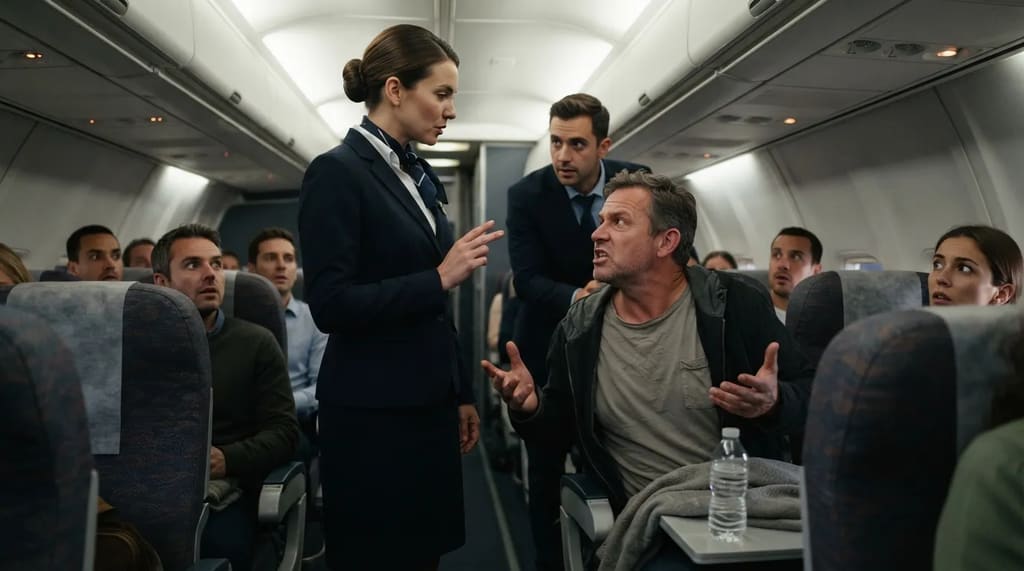
Arguing with a flight attendant can cost more than it seems. Even lesser incidents, such as drinking until belligerent or arguing with a crew member, could land you on an airline’s no-fly list.
Related Stories From Travelbinger

The International Air Transport Association says such acts come from a minority of passengers but have a disproportionate impact. The crew’s request is rarely personal, since it usually comes from a rule they have to enforce.
Intoxication is one of the categories the airline industry tracks, and the rule that governs it fits in one sentence.
#1 – Drinking Your Own Bottle on Board
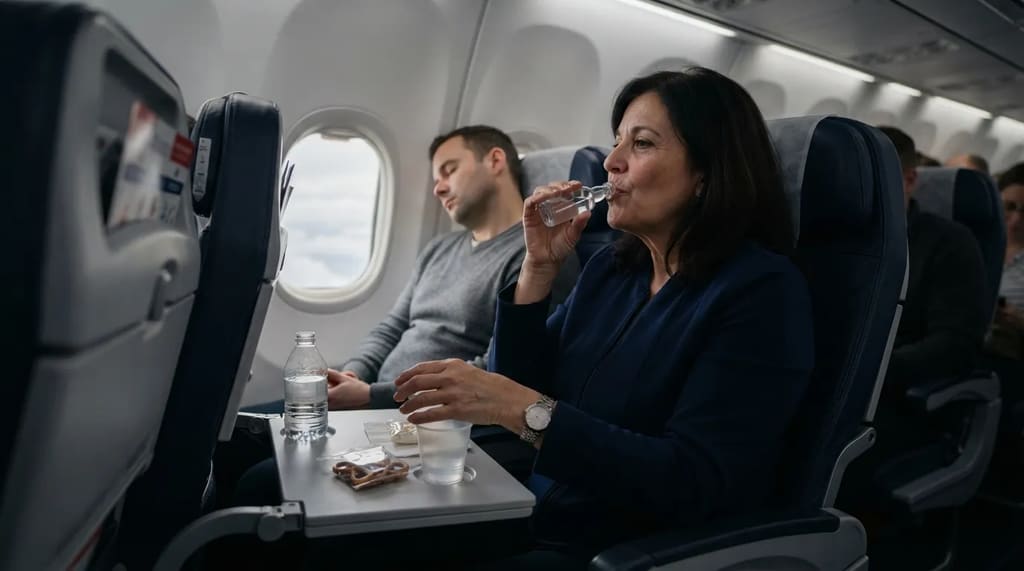
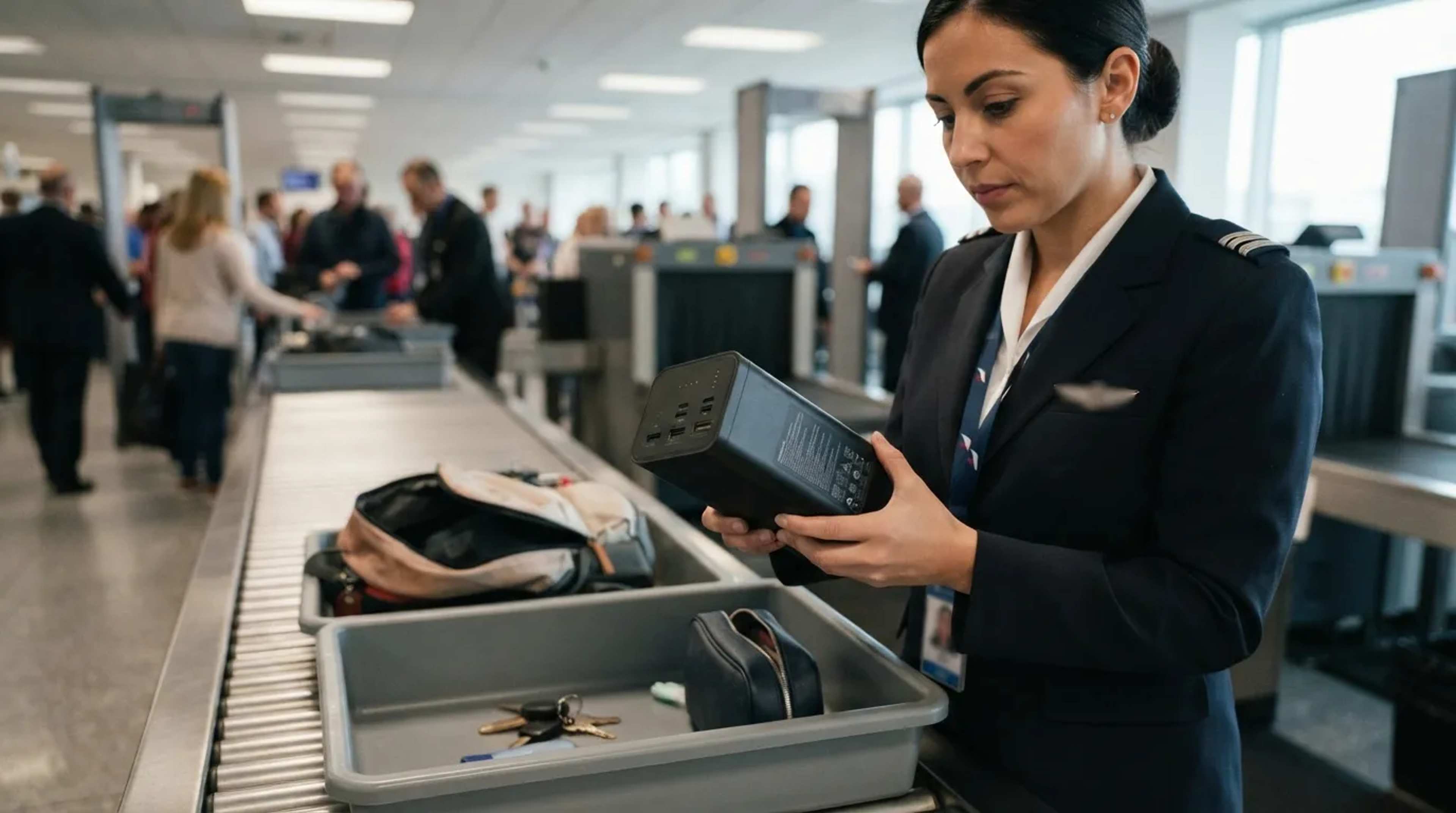
You can legally carry alcohol onto a plane, but opening it is another matter. FAA regulations prohibit passengers from drinking alcohol on board unless it is served by the air carrier.6
Carry-on liquids are also limited to 3.4 oz (100 ml) containers at the TSA checkpoint.6 That makes the mini bottle that slips through security exactly the one people reach for.
Airlines spell it out. United says you can’t drink alcohol you bring on its aircraft, and American, Delta and Southwest all require passenger-brought alcohol to stay unopened.7
At a Glance
- Carrying a sealed bottle through security is allowed, within the 3.4 oz (100 ml) limit.
- Opening it on board is the violation, from boarding to landing.
- The legal way to have a drink in the air is to buy one from the crew.
- Airline policies can be stricter than the FAA, so check yours before you fly.
A JetBlue passenger on a December 2020 flight from New York to the Dominican Republic faced a $14,500 FAA fine for drinking his own alcohol and refusing to wear a mask.8 Part of that figure involved the mask refusal, but the bottle was where it started.
The rule exists so the crew can see what you are drinking, because a flight attendant is not allowed to serve you once you appear intoxicated. Airlines added boarding announcements about it after a run of unruly incidents, many involving passengers drinking their own alcohol.
A plane is a small room you share with strangers and with people who are working. Most of what is on this list costs the person at fault almost nothing to avoid, whether that is one earbud out, slippers in the carry-on, or a lid closed before the flush.
So the question to ask before you do something on a long flight is simple: who ends up carrying the cost? Often you can move it back onto yourself for a few dollars or a few seconds.
What do you keep in your carry-on on long flights that makes the trip easier for the people around you?
- Travelers United Worst Behaviors: https://www.travelersunited.org/a-dozen-air-traveler-worst-of-the-worst-behavior-peeves/
- USA Today Reclining Survey: https://news.yahoo.com/recline-seat-during-flights-rudest-090015642.html
- FAA Flight Attendant Staffing Rules: https://fedlaws.org/flight-attendant-rules-and-regulations-faa-duties-rest-and-penalties/
- Flight Attendant Staffing Explained: https://www.uponarriving.com/how-many-flight-attendants-on-plane/
- HuffPost Barefoot Lavatory Report: https://www.huffingtonpost.co.uk/entry/the-1-thing-flight-attendants-wish-passengers-would-stop-doing-on-planes_uk_667d543ee4b017bda37bd43e
- FAA PackSafe Alcoholic Beverages: https://www.faa.gov/hazmat/packsafe/alcoholic-beverages
- Frommer’s Onboard Alcohol Policies: https://www.frommers.com/tips/airfare/are-you-allowed-to-drink-your-own-alcohol-on-a-plane/
- FAA Civil Penalty Announcement: https://www.faa.gov/newsroom/faa-proposes-14500-civil-penalty-against-passenger-allegedly-interfering-flight-attendants