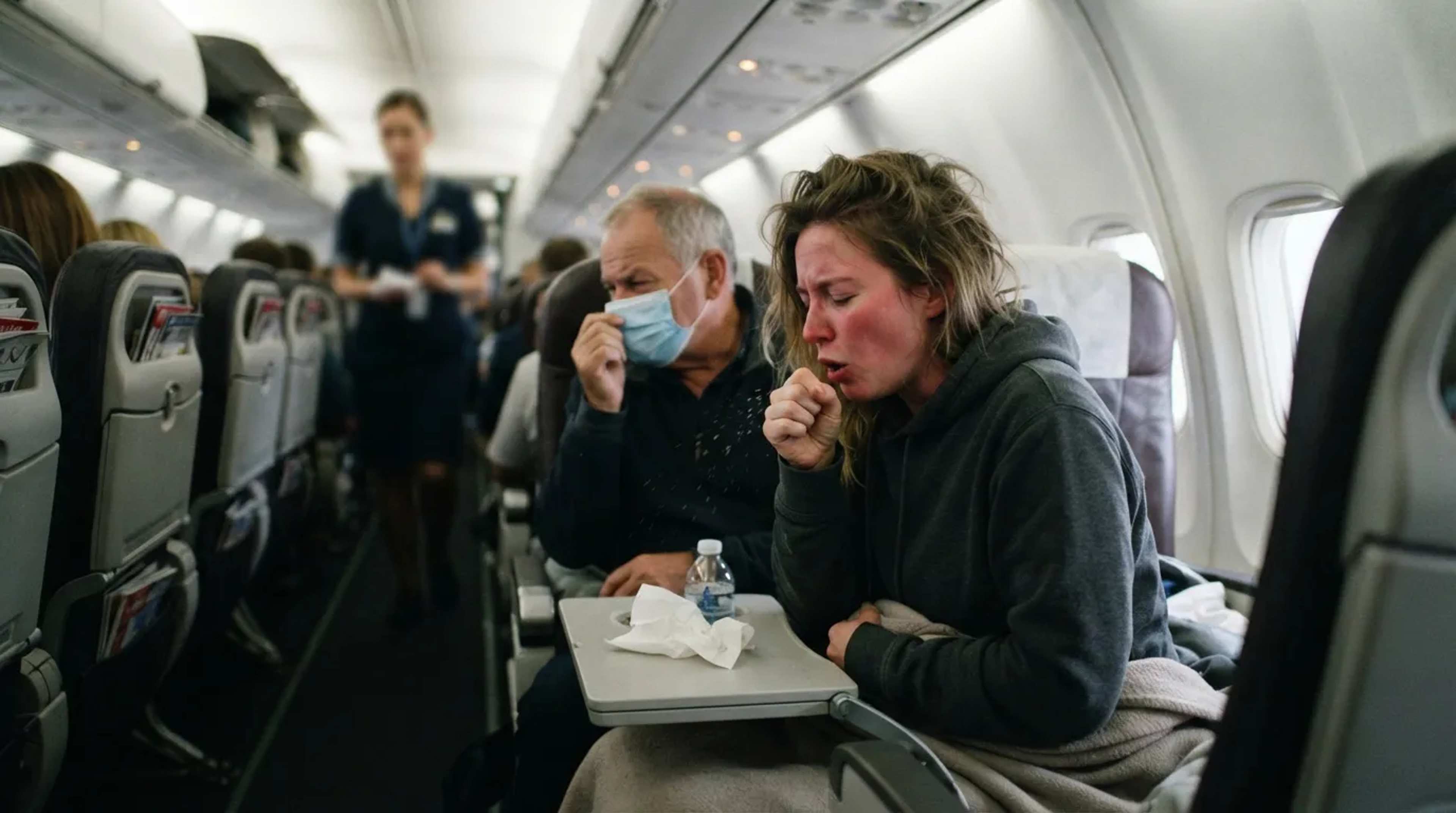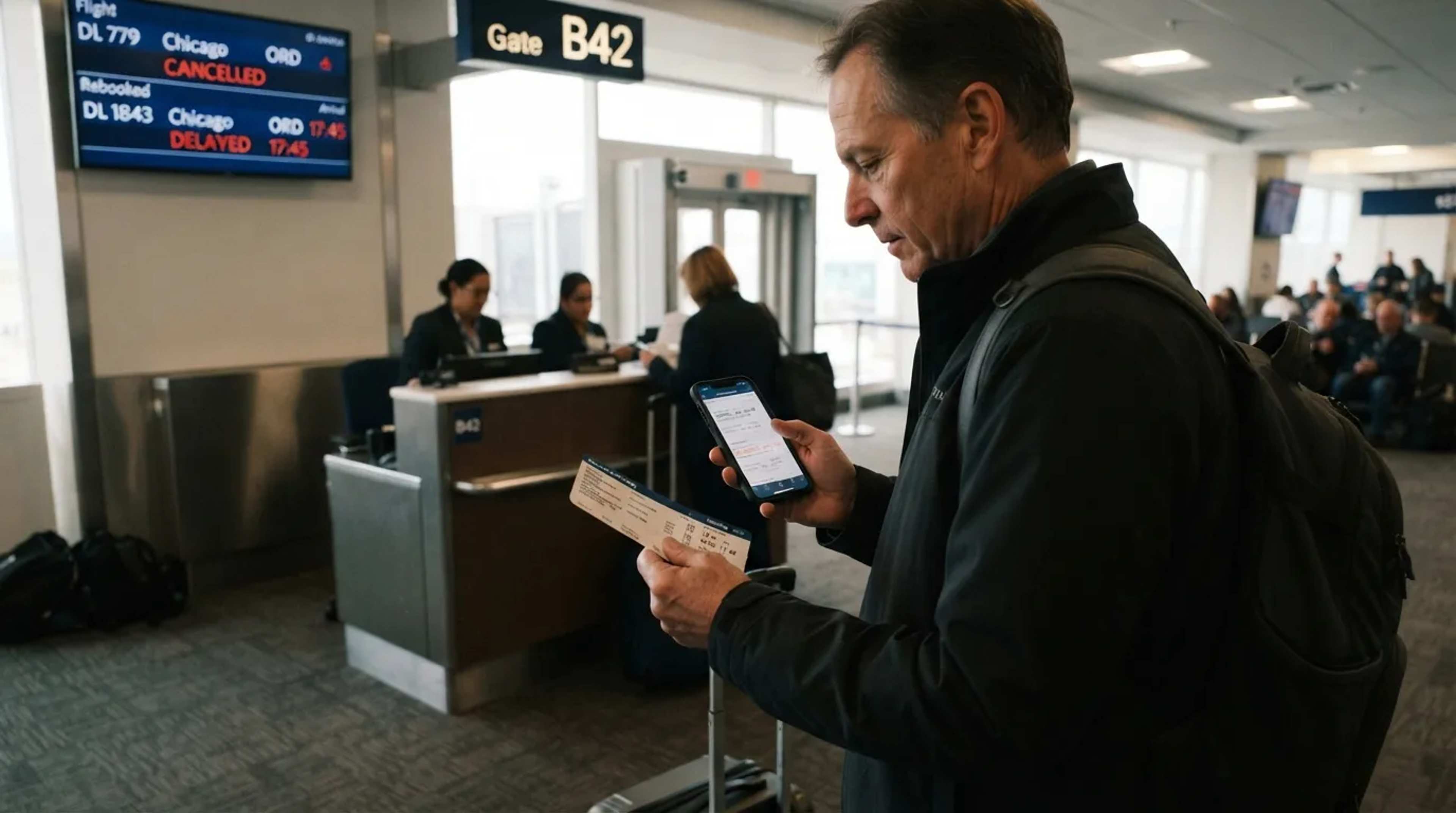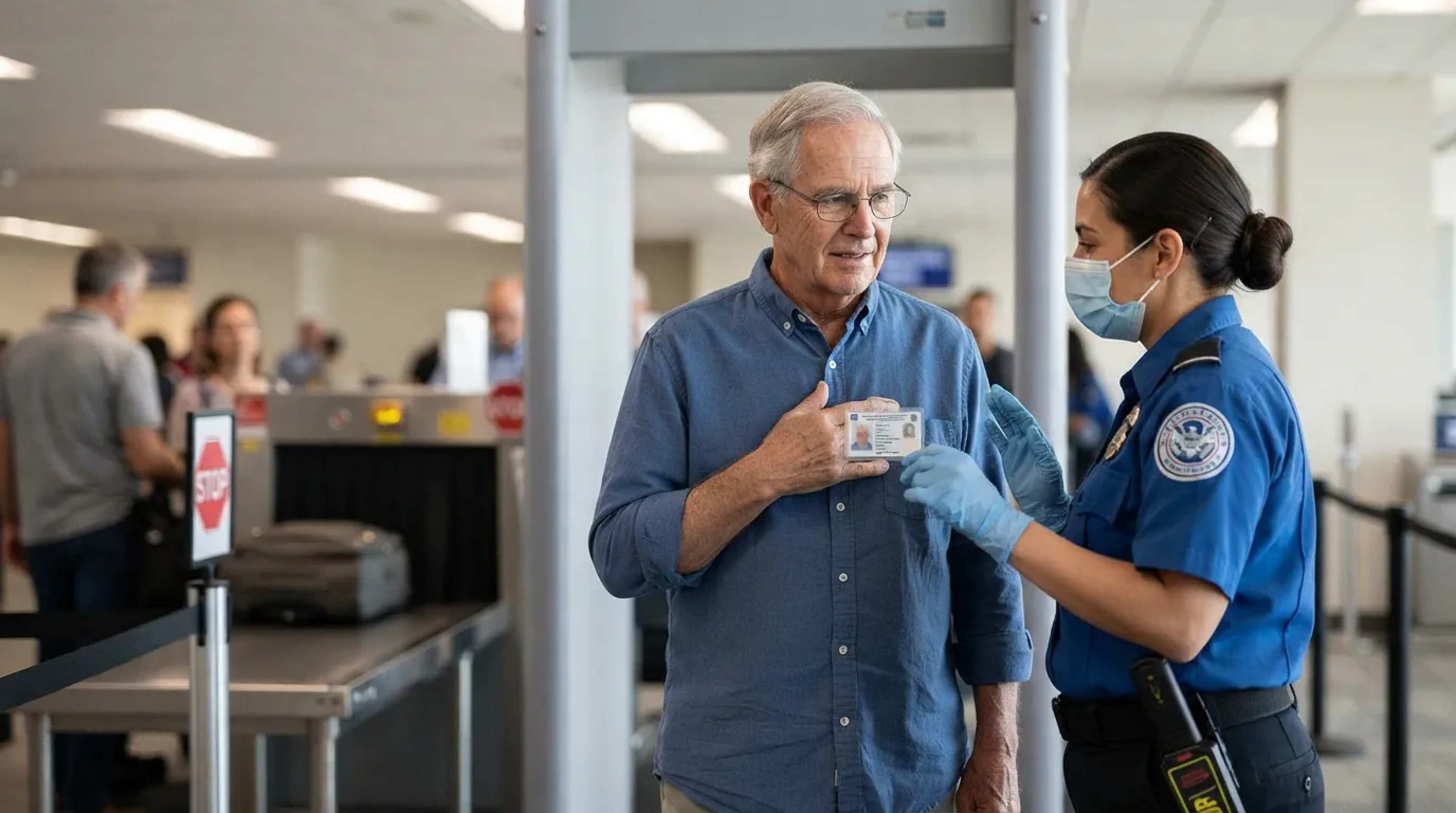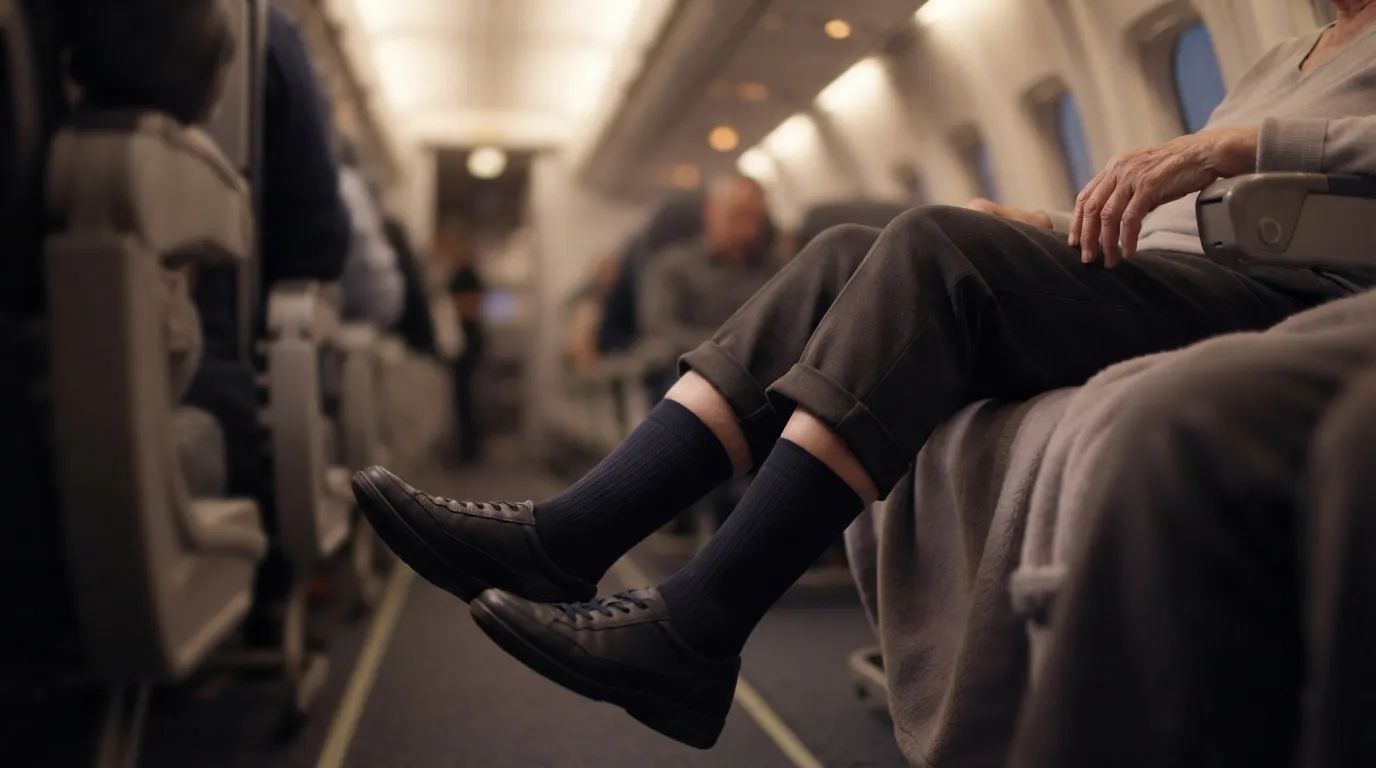
Flight attendants aren’t just counting heads at the door. They’re running a quick, quiet risk check, and one review of in-flight medical events found emergencies on roughly 1 in 212 flights.1 2
So crews read small details at boarding: a stride, a nod, a bag. The very first clue has nothing to do with your face, and it’s waiting at #14.
#14 – The Walk Down the Jet Bridge
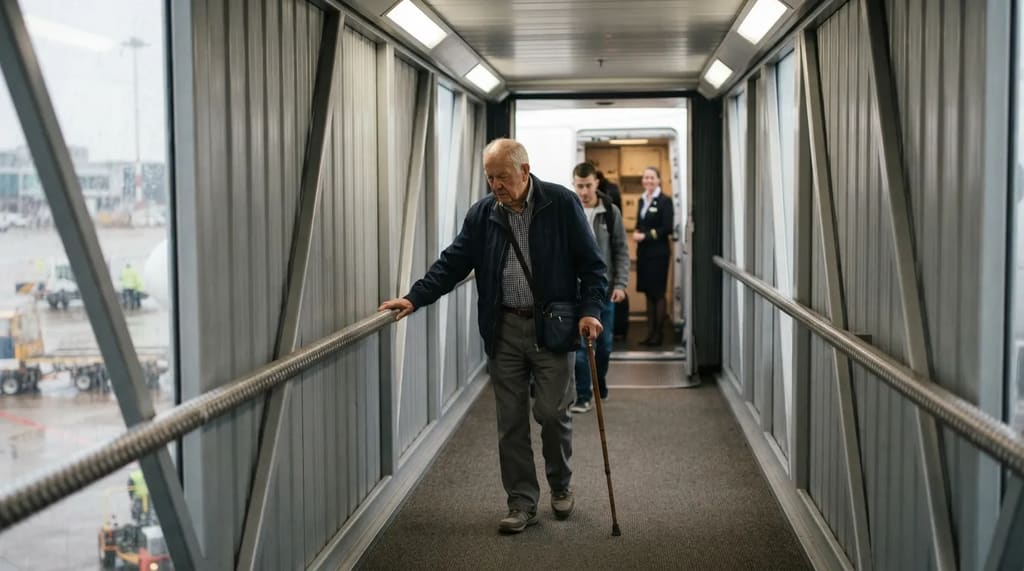
The first thing crews read isn’t your face. It’s your stride.
A careful or slightly unsteady gait tells them something before boarding is even finished. It’s anticipation, not judgment.
Crews make a point of noting where passengers with mobility challenges are seated, relative to the nearest exits. That one detail shapes their plan for the whole flight.
Nobody is timing your pace. A slower walk simply gives the crew more time to plan.
At a Glance
- Pace: steady, cautious or hesitant.
- Balance: whether a passenger reaches for rails or seat backs.
- Support: a cane, a walker or a companion nearby.
- Seat: how far the row is from the nearest exit.
And the crew may have known you were coming long before the jet bridge. That’s #13.
#13 – The Name Already on the List
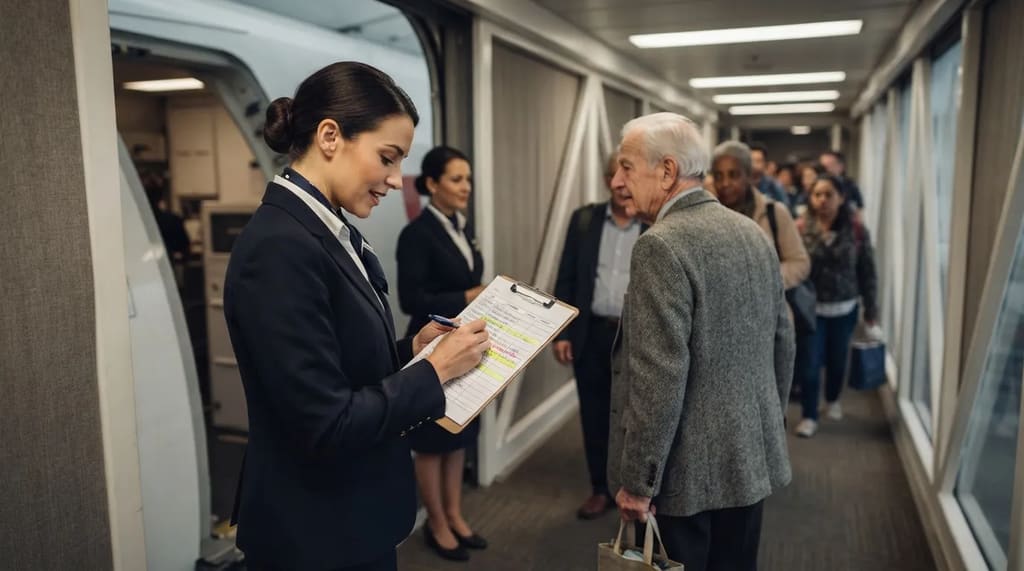
Some crews have your name before you reach the gate.
Flight attendants get a manifest before boarding, and it can include notes on passengers who requested special assistance. That lets them plan instead of guess.
But here’s the catch. Don’t assume a reservation note means the airline knows you’re the person who asked for help.
Tell staff in person, and the note and the passenger finally connect.
Once you’re on board, the next thing crews spot happens at the overhead bins. That’s #12.
#12 – The Overhead Bin Struggle
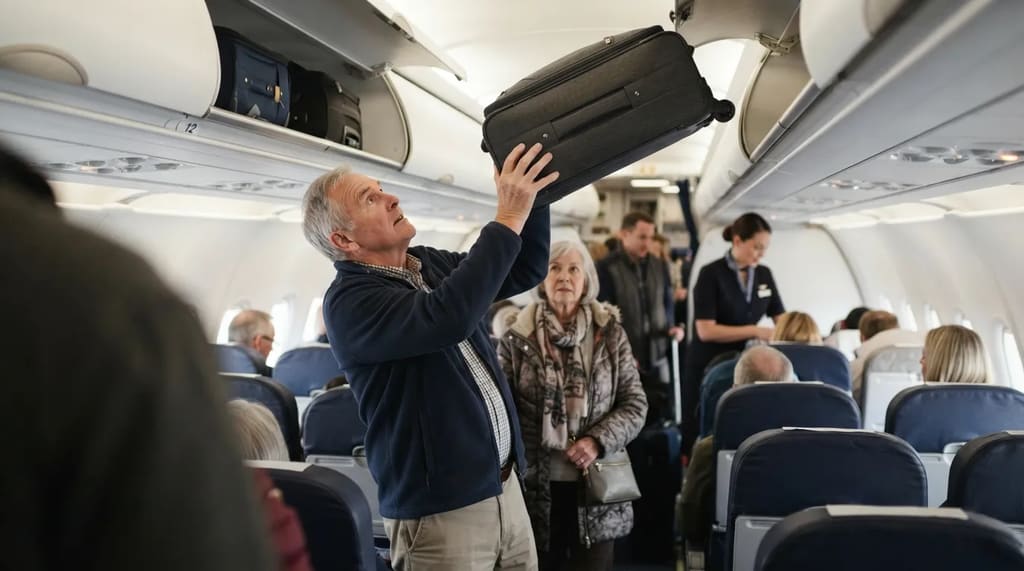
Few things get noticed faster than someone wrestling a bag toward the bin.
Flight attendants see it almost immediately. The catch is that they can’t help someone they don’t know about.
Crews are trained to prioritize passengers who need help, but only if they know ahead of time.
- Keep the heaviest items in a bag that fits under the seat in front of you.
- Hand a coat or small bag over first so the crew isn’t juggling.
Many travelers think the boarding line is a fine time to ask for favors. Some veteran crews argue it’s the worst moment, since seat changes and long stories put them in an impossible spot.
But the next detail has nothing to do with bags. It’s about what’s on your feet. That’s #11.
#11 – The Shoes
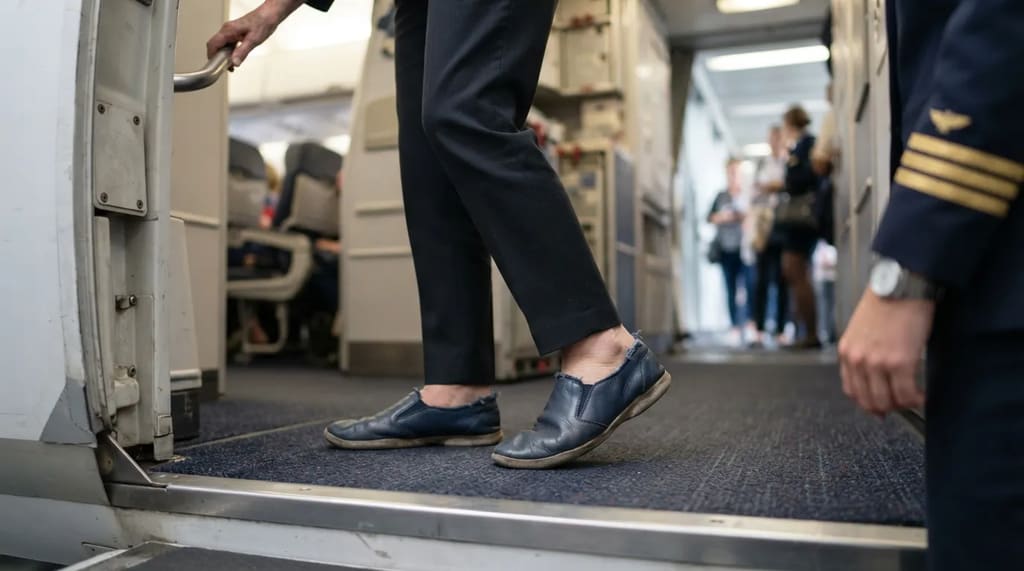
A trained eye often goes to footwear first.
Flight attendants watch for anything that could become a hazard in an emergency. That includes shoes that are loose or hard to move in.
If shoes look like a problem, crews may direct certain passengers more deliberately or stand closer to those rows.
It sounds extreme for a routine flight. But crews think about worst-case scenarios on every boarding.
Shoes are only the visual clue. The next signal is something you hear, or don’t. That’s #10.
#10 – The Friendly Hello That Gets No Reply
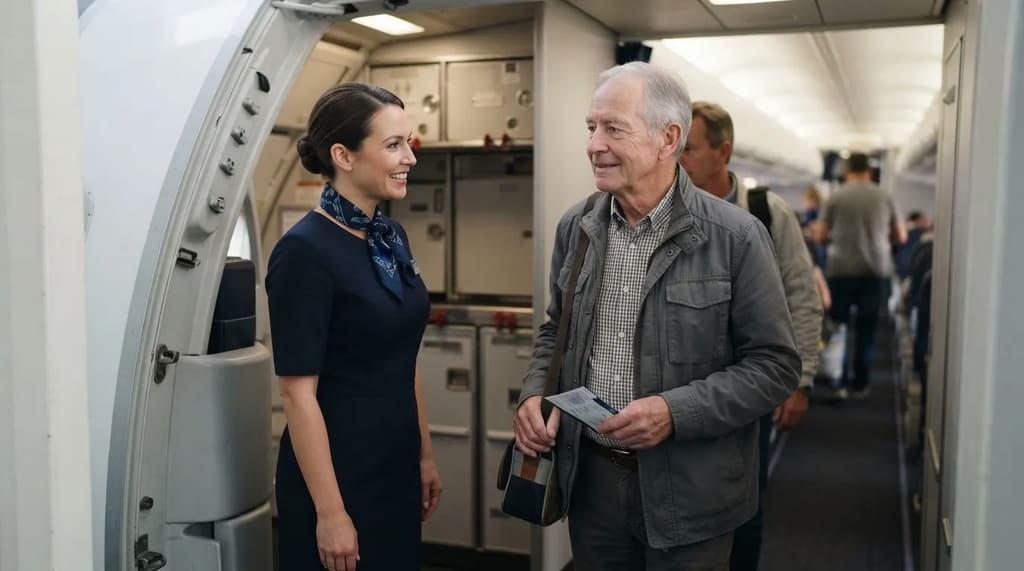
The greeting at the door is a screening tool in disguise.
For older passengers, it can reveal hearing issues, disorientation or anxiety that will matter later in the flight. A blank look or a mismatched answer gets noticed.
Nodding along can hide hearing loss, and crews know it. That’s why they may repeat safety-related instructions face to face.
Hearing isn’t the only thing crews check at the door. Sometimes it’s your boarding pass. That’s #9.
#9 – The Boarding Pass Pause
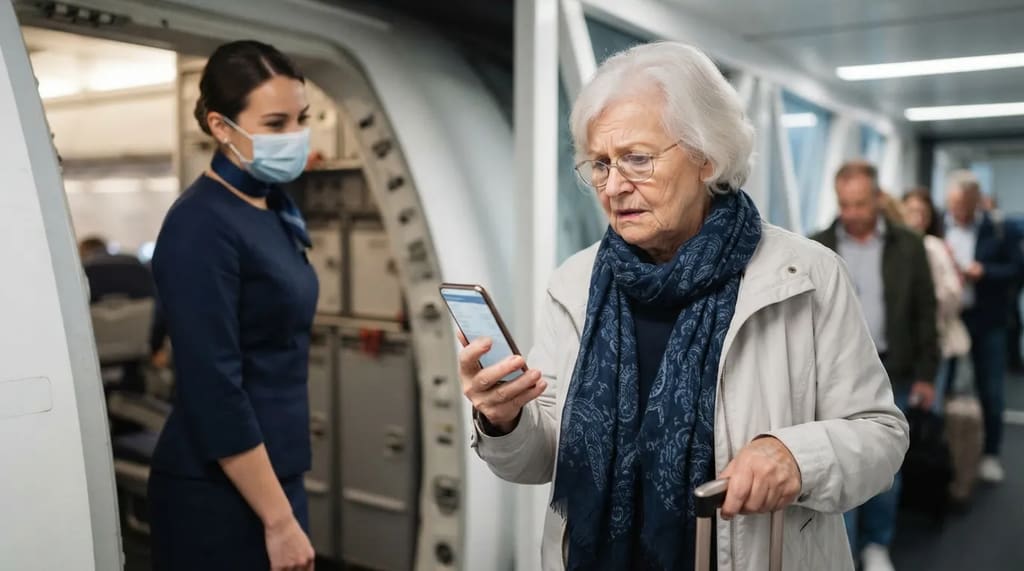
A few seconds of hesitation can mean two very different things.
It may be simple rustiness from not flying much, or something crews take more seriously. They read the context, not just the pause.
Nerves and tech trouble can look alike:
- Flight nerves: a tight grip and questions about every noise.
- Tech trouble: a phone held out and a puzzled look at the boarding pass.
One quick sentence to the crew at boarding changes how they treat you. If you’re a nervous flyer, say so.
Worth Knowing
- If a phone boarding pass feels stressful, ask a gate agent about a paper one before the line forms.
- Many airlines offer preboarding to passengers who need extra time. Ask at the gate.
- Tell the first crew member you meet if you’re anxious. They’d rather know early.
Next, crews watch how you move down the aisle. That’s #8.
#8 – The Seat-Back Grab
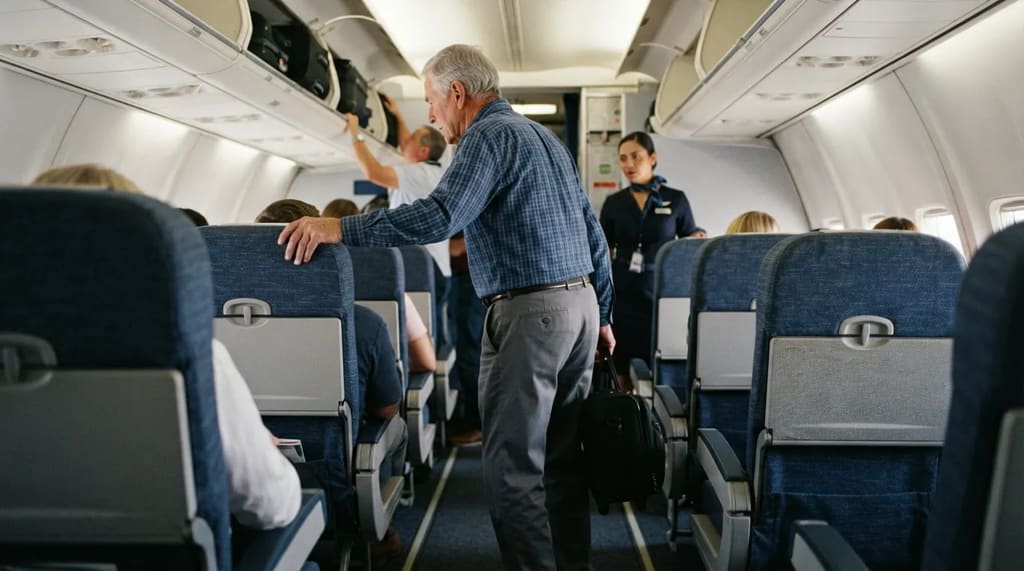
Hands tell the story the aisle can’t.
Reaching from seat back to seat back can reveal a wobbly walk. Crews notice it before you’ve even found your row.
Seats near the front shorten the walk to the bathroom and the door. Window seats may look like the prize, but plenty of crews would steer an unsteady walker toward the aisle.
But what about passengers who arrive with a cane, a walker or a wheelchair? That’s #7.
#7 – The Cane, the Walker and the Folding Chair
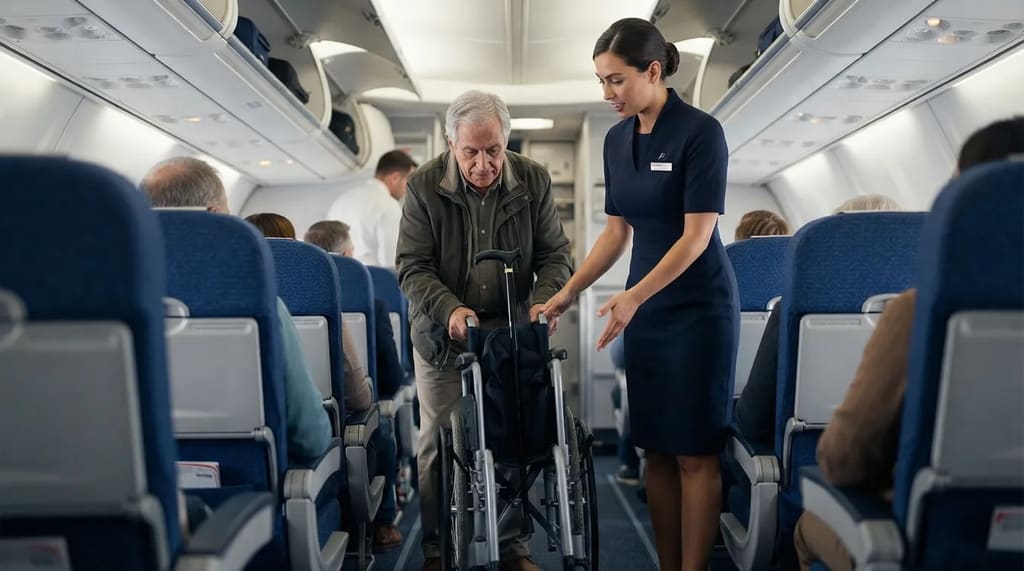
Mobility aids change the boarding plan in seconds.
Passengers can keep canes in the cabin, but they can’t block the aisle or an exit. Crews check where the aid will actually go.
Aircraft with 100 or more seats must have priority space for at least one folding manual wheelchair, but you must request to pre-board to have the chance to stow it in the cabin.3
Skip the request, and that space isn’t guaranteed.
Some equipment is far more critical than a cane, though. That’s #6.
#6 – The Oxygen Machine
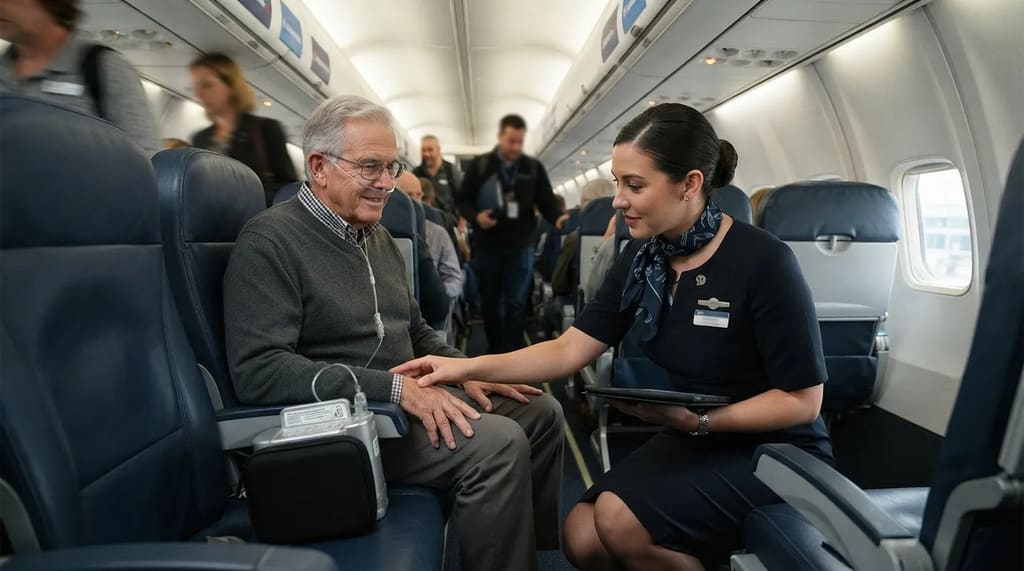
A small device in a carry bag gets more attention than most people realize.
U.S. airlines must allow FAA-approved portable oxygen concentrators during all phases of flight on aircraft originally designed for more than 19 seats. Crews check the device and the seat.
No one operating a portable oxygen concentrator is permitted to occupy an exit seat.4 Compressed oxygen tanks and liquid oxygen systems are generally prohibited for passenger use.
Oxygen isn’t the only thing that decides where you sit. Another seat rule catches people off guard. That’s #5.
#5 – The Exit Row Reassignment
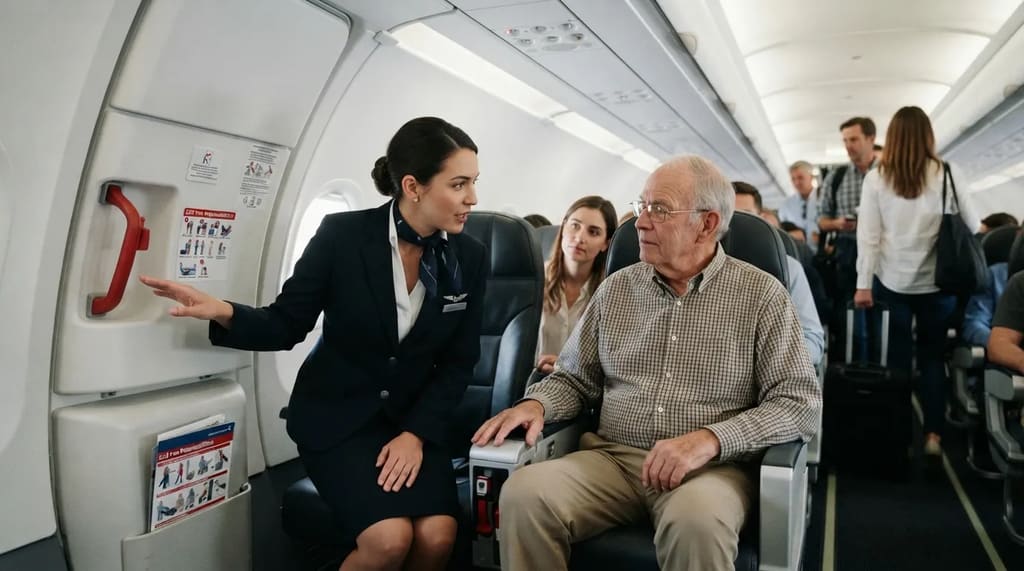
That extra legroom comes with a job description.
Exit row passengers must be able to open the door and assist others without help. If a crew member doubts that, they’ll move you.5
Reassignments usually happen right at the gate or in the first minutes of boarding, before the door closes.
Some passengers call it unfair. Crews say it’s about the job, not the birthday.
Next up is a detail about who’s sitting beside you, or who isn’t. That’s #4.
#4 – The Solo Traveler
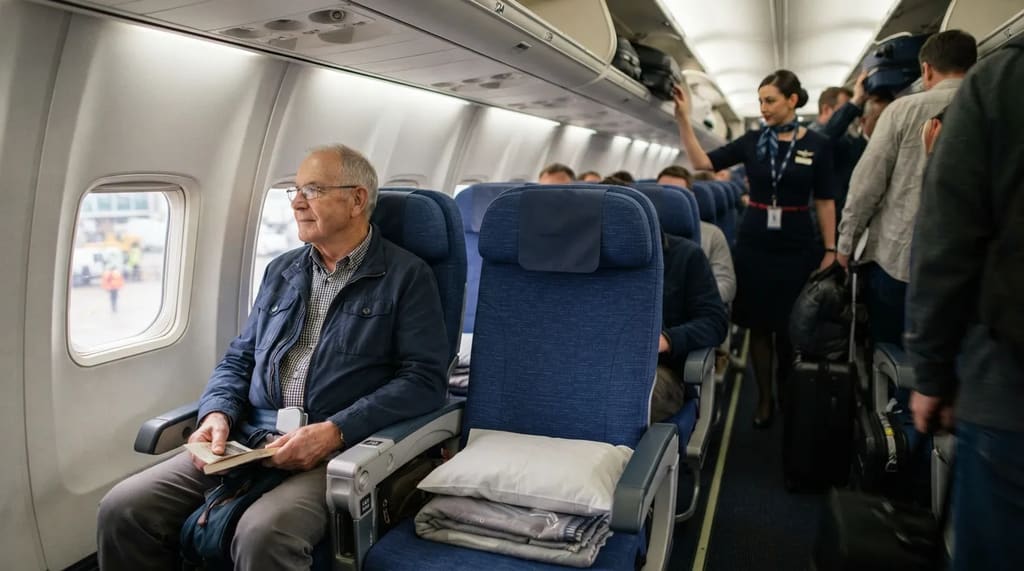
An empty seat next to you changes the crew’s math.
A solo traveler has no one in the next seat to flag a problem at altitude. So crews quietly adjust their attention without announcing it.
Most incidents are minor. In a study of more than 77,000 medical events, about 8% of passengers were taken to the hospital after landing, and only 1.7% of events were serious enough to divert the plane.1
The research doesn’t say older solo flyers face special risk here. Crews simply plan for the chance that no one nearby will notice a problem.
But one of the biggest long-flight worries starts with swollen ankles. That’s #3.
Related Stories From Travelbinger
#3 – The Legs and the Long-Flight Clot Worry
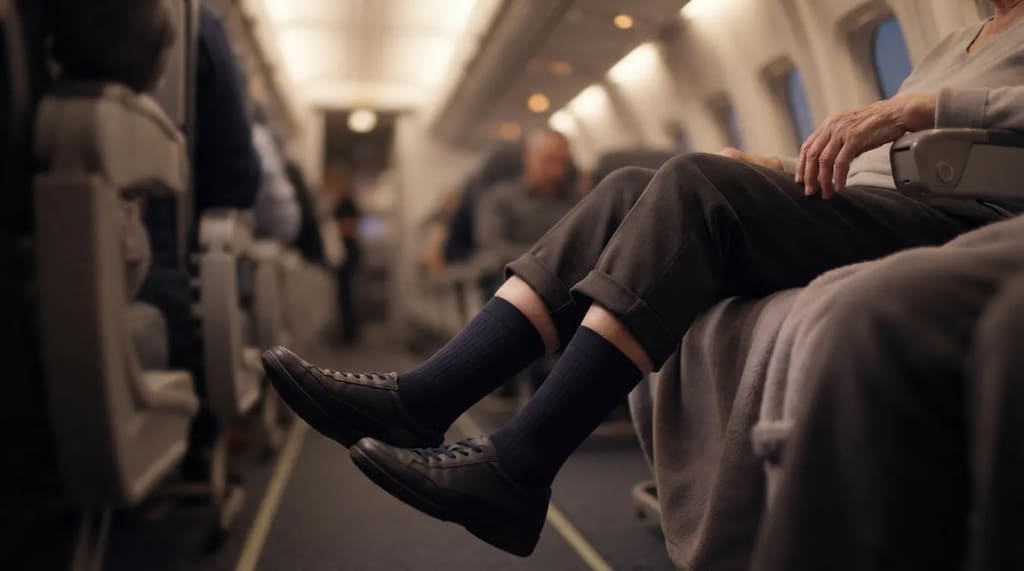
Crews notice who never gets out of their seat.
Older age is one of the risk factors for travel-related blood clots.6 On long flights, passengers who stay locked in place stand out.
One travel guide suggests compression socks with 15 to 20 mmHg pressure, put on before boarding. Some flyers call them overkill on short trips, but they’re a common suggestion for long ones.
There’s also a simple comfort request crews rarely have to be asked twice about. That’s #2.
#2 – The Chill and the Cup of Water
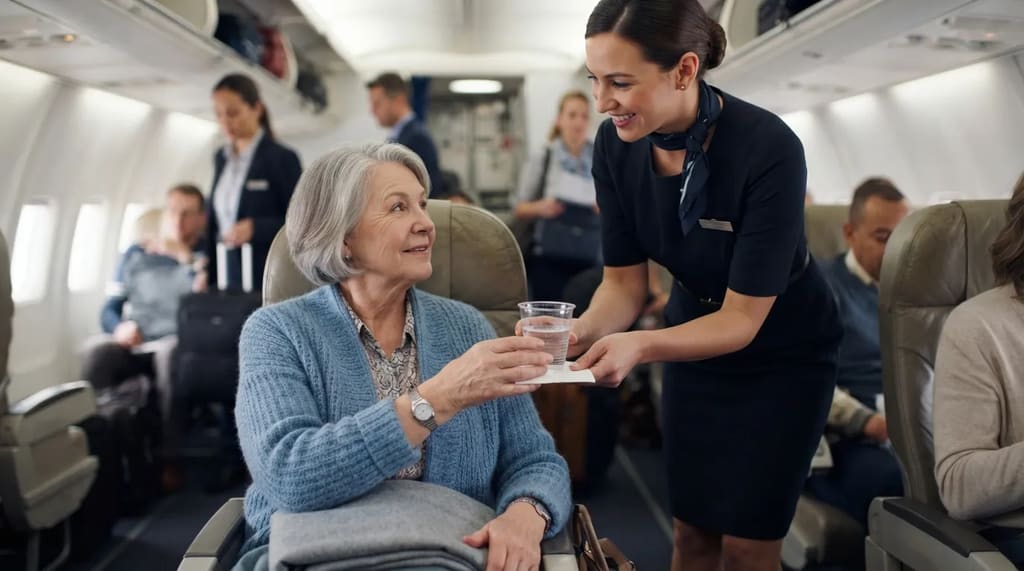
Two small requests say a lot about how prepared a passenger is.
Many people feel the chill sooner as they get older, and most crews understand that. They’ll often bring a second blanket or nudge the cabin temperature if they can.
Asking for a full cup of water at boarding costs nothing and saves a later flag-down. Cabin air is dry, and an early cup is an easy head start.
Plenty of passengers hate asking. Crews expect it.
Fast Facts
- Cabin air is commonly described as very dry, often under 20% humidity.
- An empty reusable bottle can go through security, then be filled at a fountain or refill station.
- A light sweater or shawl in your carry-on beats waiting for a spare blanket.
- Blanket supplies vary by airline and flight, so asking early helps.
But the biggest thing crews notice isn’t a weakness at all. That’s #1.
#1 – The Quiet Competence
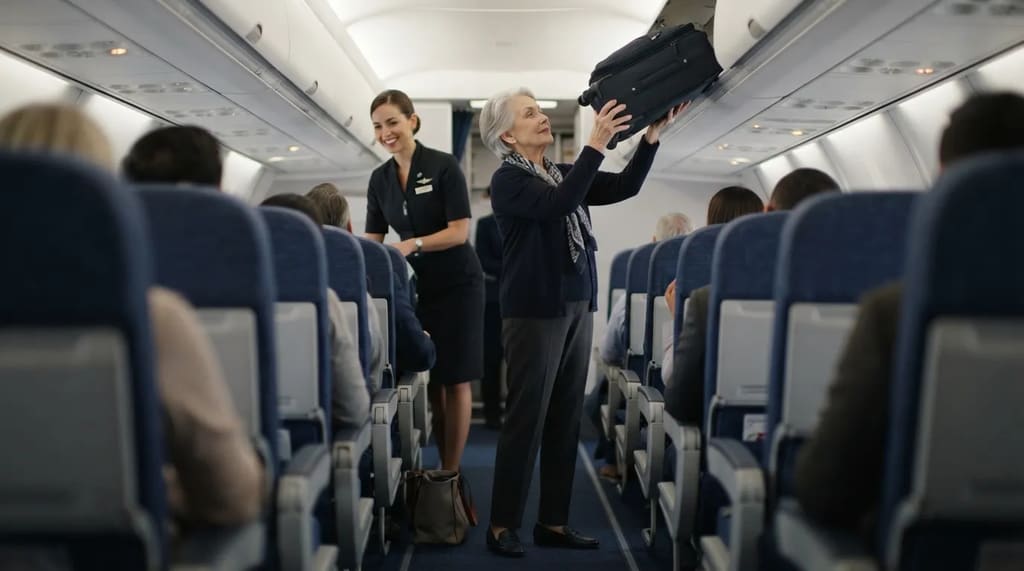
The strongest signal at boarding isn’t fragility.
It’s the passenger who stows the bag in one smooth move, settles in and follows instructions without a fuss. Crews spot that calm almost instantly.
A simple greeting and steady eye contact set a tone that crews remember all flight.
Flight attendants aren’t judging older passengers at boarding. They’re planning for the whole flight, and gait, hearing, footwear, mobility aids and seat choice all feed that plan.
The most useful fact is also the simplest: crews can only help with what they know. One sentence to the gate agent or the crew can unlock preboarding, bin help and a better seat.
And the quiet twist is that preparation tends to stand out far more than age ever does.
- Duke Health In-Flight Emergencies: https://corporate.dukehealth.org/news/new-study-reveals-frequency-flight-medical-emergencies
- JAMA Network Open Study: https://jamanetwork.com/journals/jamanetworkopen/fullarticle/2839407
- DOT Travel Tips Disabilities: https://www.transportation.gov/individuals/aviation-consumer-protection/general-travel-tips-persons-disabilities
- 14 CFR 125.219 Oxygen Rules: https://www.law.cornell.edu/cfr/text/14/125.219
- FAA Exit Seating Requirements: https://www.faa.gov/sites/faa.gov/files/2022-05/PL_115-254_Sec_323_Safety_of_Unoccupied_Exit_Rows.pdf
- CDC Travel Blood Clots: https://www.cdc.gov/blood-clots/risk-factors/travel.html