Walk into any American home built in the 1970s and the scene writes itself: harvest gold appliances, shag carpet deep enough to lose a remote in, and walls paneled in dark fake wood that turned every room into a cave. For millions of families, none of it felt like a choice. That was just what a house looked like. It was normal. It was home.
But a surprising number of those beloved 70s staples aren’t just dated — some are genuinely dangerous, and others are quietly destroying your home’s value and air quality right now. A few of the items on this list are still sitting in houses across America, completely undetected. You’ll want to check every single one.
#14 – Popcorn Ceilings That Could Be Hiding a Toxic Secret
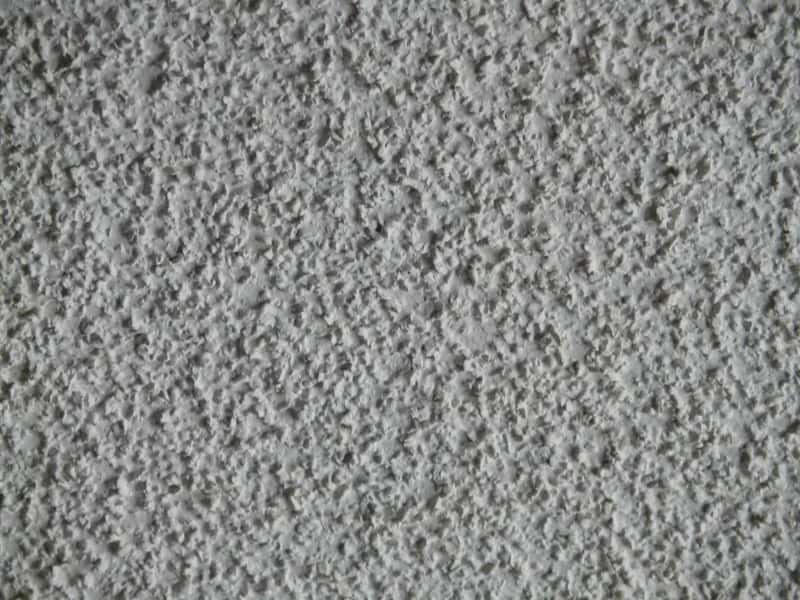
Popcorn ceilings were a builder’s best friend — spray on the texture, skip the painstaking drywall finish, charge the same price. They ended up in virtually every 70s home, from split-levels in Ohio to ranch houses in Arizona. Nobody questioned them. They were just… the ceiling.
Here’s where it gets serious: popcorn ceilings applied before the late 1970s frequently contained asbestos, added for fire resistance and texture. If your home still has the original untouched ceiling, do not sand it, scrape it, or drill into it. Get it tested by a certified inspector first. The fad fell out of style precisely because of new asbestos regulations — and if yours tests positive, remediation requires a licensed abatement company, not a weekend DIY project.
Fast Facts
- Asbestos was a standard ingredient in most popcorn ceiling formulations throughout the 1960s and 1970s.
- Most popcorn ceilings applied before 1980 contain between 1% and 10% asbestos by content.
- Some estimates place the chance of asbestos presence at 45%–70% for ceilings from that era.
- The EPA expanded its ban on asbestos in spray-on ceiling products in 1978 — but leftover stock was used into the early 1980s.
- The only way to confirm asbestos presence is professional lab testing — you cannot tell by looking.
#13 – Dark Wood Paneling
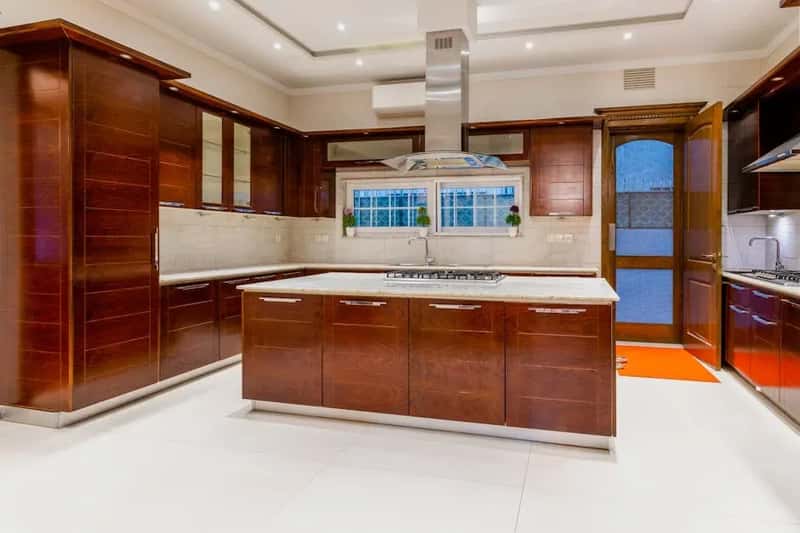
Wood paneling was the shiplap of its era — every home that wanted to feel modern nailed it to every available wall. The effect turned even spacious rooms into something resembling a dim basement. Cozy for about ten minutes. Suffocating after that.
But the aesthetic problem is secondary to the chemical one. Much of that pressed-wood paneling was manufactured using urea-formaldehyde resin as a binder. The U.S. EPA has identified this type of pressed wood as one of the largest sources of indoor formaldehyde emissions — and formaldehyde exposure is linked to watery eyes, respiratory distress, asthma attacks, and cancer. That dark paneling isn’t just stealing your light. It may be actively polluting the air your family breathes every day.
#12 – Shag Carpet in Places It Was Never Supposed to Go

Shag carpeting was the defining floor covering of the decade — lush, deep pile in avocado green, burnt orange, and mustard yellow. People loved the feel. What they didn’t realize was what was living inside it. Dust mites, allergens, pet dander, and decades of debris all find a permanent home in high-pile carpet, and no vacuum reaches the bottom of it.
The real offense? Kitchens, bathrooms, and staircases were all fair game for thick shag in the 70s. Practicality had simply left the building. If you’ve still got original shag carpet in a bathroom or kitchen — and some homes do — it’s been absorbing moisture and spills for fifty years. It’s one of the worst things possible for indoor air quality and hygiene. It doesn’t need to be updated. It needs to be gone.
#11 – Avocado Green and Harvest Gold Appliances Still Running on Borrowed Time
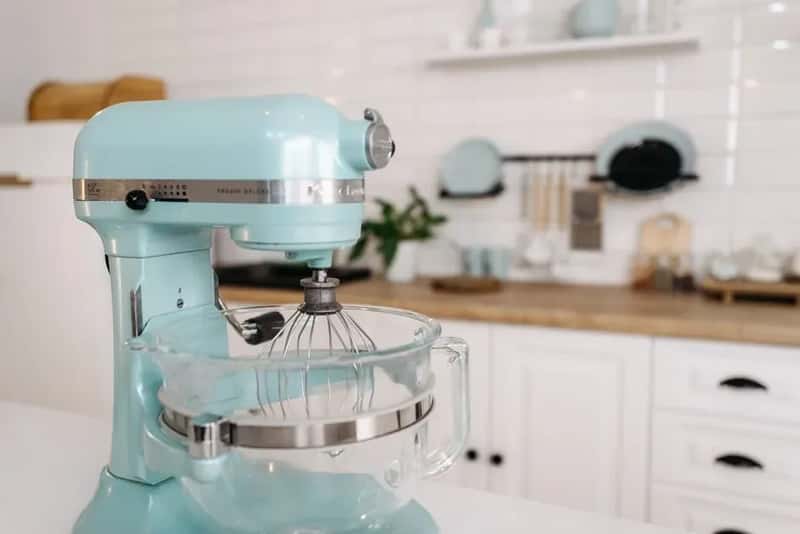
The 70s ran on earthy tones, and nothing captured that more completely than the avocado green refrigerator dominating the kitchen. These units were built like tanks and some are genuinely still running today — humming away in basements and rental properties, seemingly indestructible. Don’t mistake durability for efficiency.
A refrigerator from 1975 uses roughly five times more electricity than a modern Energy Star model — and can cost $200 or more per year extra to run. Every month you keep one plugged in, you’re paying a significant energy penalty for a machine that could fail without warning and likely requires custom cabinet modifications to replace. The nostalgia is real. The monthly utility bill premium is also real. One of them has to go.
At a Glance: The Real Cost of That Old Fridge
- 1970s refrigerators consumed roughly 2,200 kWh of electricity per year on average.
- A modern Energy Star model uses closer to 300–450 kWh per year — up to 70% less.
- The annual operating cost difference can exceed $150–$200 depending on local electricity rates.
- Many utility companies offer rebates or free pickup when you retire a refrigerator older than 10 years.
#10 – Aluminum Single-Pane Windows That Are Costing You Every Month
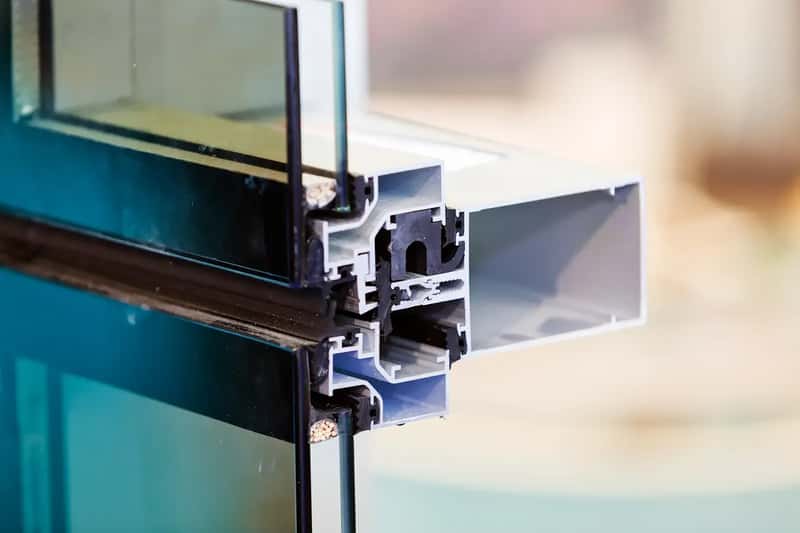
Aluminum windows were standard in 70s construction — cheap, durable, and completely indifferent to insulation. Most homeowners with original aluminum frames have no idea how much of their heating and cooling bill is escaping directly through the glass and metal. Vinyl and fiberglass replacements insulate dramatically better, and the difference shows up on the utility bill within months.
There’s a second problem: single-pane aluminum windows condensate heavily in winter, and that moisture has to go somewhere. It goes into the sill, into the wall framing, and eventually into the substructure of the house — creating ideal conditions for mold. Long-term mold exposure is linked to allergic reactions, asthma, and certain autoimmune conditions. Replacing those windows isn’t just a comfort upgrade. It cuts off a moisture pathway that may have been quietly doing damage for decades.
#9 – The Waterbed That Was Never as Cool as It Seemed
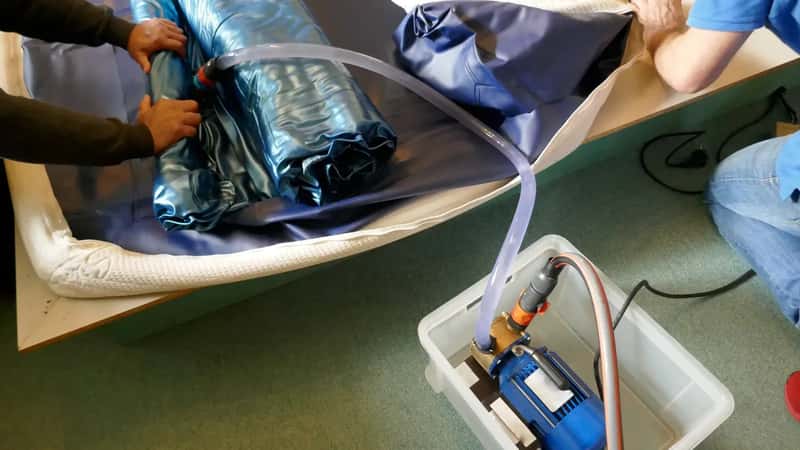
Waterbeds hit their cultural peak in the 70s and promised a sleep revolution. What they delivered was a sloshing, temperature-sensitive, impossible-to-make experience that was better in theory than in a real bedroom at 2 a.m. If you still have one, the problem isn’t just comfort — it’s structural.
A fully filled waterbed can weigh between 1,500 and 2,000 pounds, putting enormous stress on floor joists that 70s-era construction wasn’t always engineered to handle. Even a slow leak introduces moisture into flooring and subflooring, where mold develops undetected for months before anyone notices. Modern mattress technology has advanced so dramatically that there is no practical argument left for a waterbed. Your back, your floors, and your peace of mind are all asking for the same thing.
#8 – Decorative Ashtrays That Left More Behind Than Ash
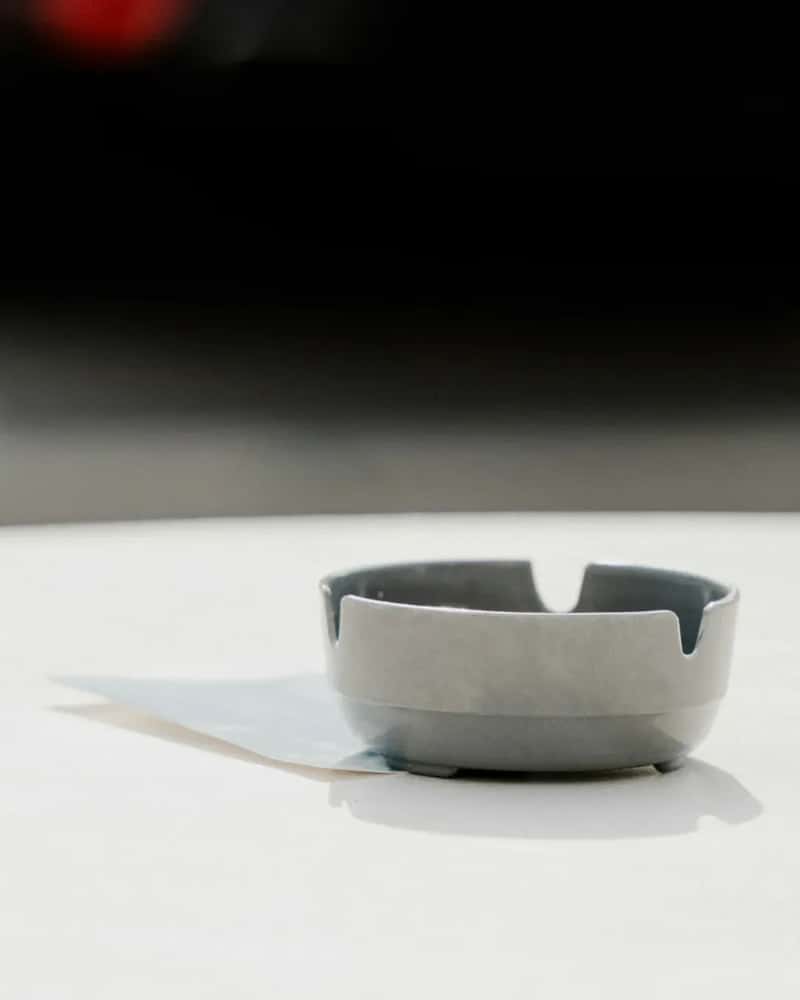
In the 70s, even non-smokers kept decorative ashtrays scattered around the living room for guests. A proper dinner party setup included an ashtray beside the butter dish. It wasn’t considered unusual — it was hospitality. Every five-and-dime had glass ashtrays in every shape imaginable.
The problem nobody talks about is thirdhand smoke. Research has shown that nicotine and carcinogenic compounds from cigarette smoke bond chemically to surfaces — furniture, drapes, walls, and ceiling tiles — and can persist for years after the last cigarette. Homes where heavy smoking was routine throughout the 70s may still carry that contamination on soft surfaces. The ashtrays themselves are the least of it. If your home has that history, deep cleaning, repainting, and replacing old upholstered furnishings is the real work that needs doing.
#7 – Full-Wall Mirrors That Were Solving the Wrong Problem

The logic made sense on paper: cover an entire wall with mirror tiles and the room looks twice as big. What it actually produced was a fingerprint-covered surface that turned every family dinner into an awkward rehearsal in front of an audience of yourselves. Interior designers have largely agreed that full mirror walls create visual chaos and make spaces feel unsettling rather than expansive.
Beyond the aesthetics, there’s a genuine safety issue. Those large glued-on mirror tiles were adhered with mastic adhesives that degrade over time. As the adhesive loses its hold, heavy glass panels can detach from the wall without warning — no earthquake required. If your home still has original glued mirror tiles from the 70s build, have a professional assess the adhesive before anyone leans against that wall or a curious pet decides to investigate.
Worth Knowing
- Mastic adhesives used in the 70s were often asbestos-containing — another reason to call a pro before removal.
- A single full-wall mirror panel can weigh 30–50 lbs or more — enough to cause serious injury if it falls.
- Modern design alternatives (framed art walls, textured paint, open shelving) add dimension without the safety risk.
- If the tiles are intact and you want to keep them temporarily, document their condition and check for edge lifting annually.
#6 – Old Teflon Cookware
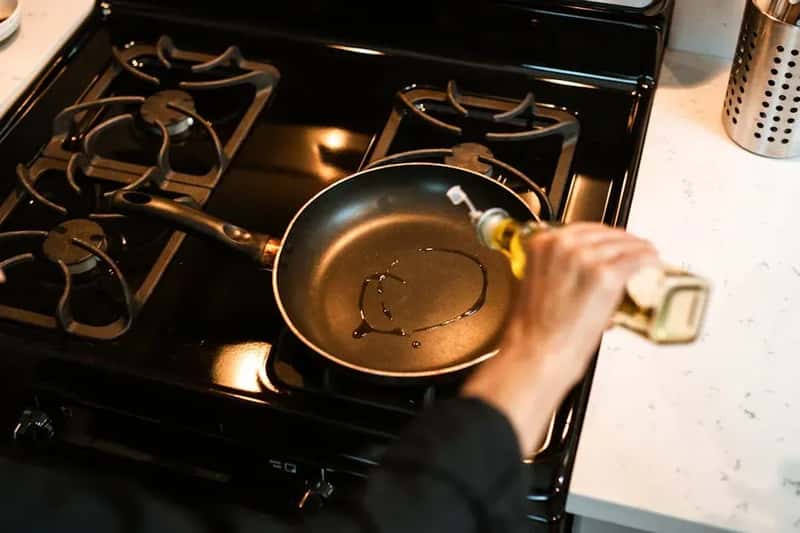
Non-stick cookware coated with polytetrafluoroethylene (PTFE) — marketed as Teflon — changed cooking in the 70s. Convenient, easy to clean, and everywhere. The coating itself isn’t the problem when a pan is in good condition. The problem is what happens after fifty years of use, high heat, and metal utensils.
Once the non-stick coating begins to scratch, chip, or flake, those particles end up in your food — and overheated, degraded PTFE coating can release fumes associated with polymer fume fever and respiratory irritation. A scratched, worn pan from 1974 is not a charming vintage find. It’s a liability. Modern ceramic-coated and cast-iron alternatives perform better, last longer, and don’t carry the same concerns. If you inherited grandma’s non-stick collection from the original decade, it’s time to respectfully retire it.
#5 – Mothballs in the Closet That Are Quietly Poisoning the Air
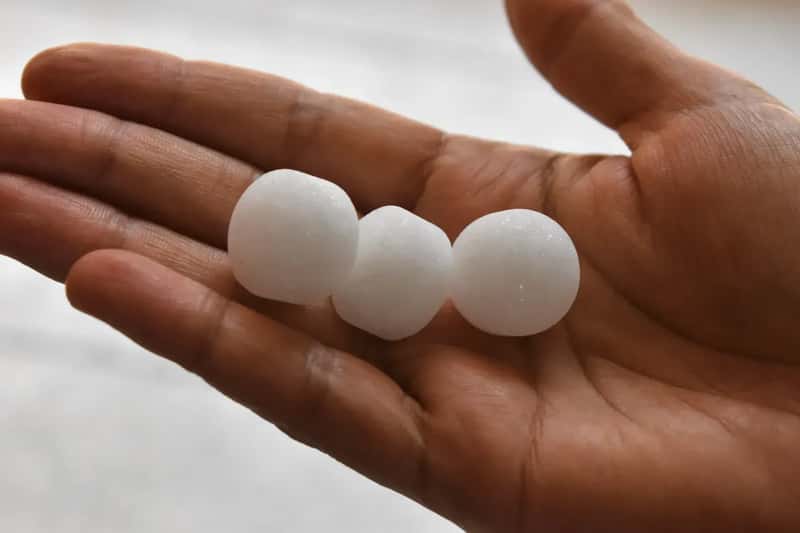
For decades, mothballs containing naphthalene were tucked into closets, cedar chests, and dresser drawers without a second thought. They kept insects away — that part was real. What was less appreciated was that naphthalene vapor is highly toxic, causing respiratory irritation and, in cases of ingestion, serious poisoning, particularly in children and pets.
The smell that hits you when you open an old 70s closet isn’t just musty nostalgia — it’s active off-gassing. Fabrics stored with old mothballs absorb the chemical into the fibers, and the vapor continues releasing long after the mothball itself has dissolved. Cedar blocks and lavender sachets accomplish the same pest deterrent without filling the air with carcinogenic vapor. If that sharp chemical smell greets you every time you reach for a coat, that’s not something to get used to. It’s something to fix today.
#4 – Lead-Based Paint Underneath Every Layer You’ve Painted Over
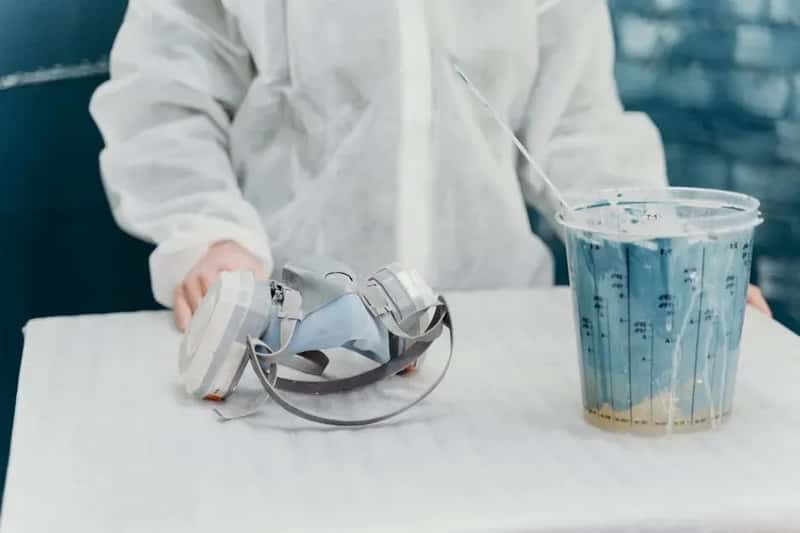
Lead paint was banned by the EPA in 1978 — which means any home built or painted before that year has a meaningful chance of containing it somewhere under the current finish. For decades prior, lead was added to paint specifically because it improved durability and color richness. It worked beautifully. It also poisoned generations of children.
As old paint ages and chips, it releases toxic dust and flakes. Children who ingest or inhale lead particles face irreversible developmental delays and neurological damage. The danger doesn’t require peeling paint — sanding or dry-scraping old painted surfaces kicks up toxic lead dust that can contaminate an entire household. If your home was built before 1978 and has never been professionally inspected for lead, that inspection is not optional. It’s one of the most important things you can do for anyone living under that roof.
Quick Compare: Lead Paint Risk by Build Era
| Home Built | Estimated Chance of Lead Paint |
|---|---|
| Before 1940 | ~87% |
| 1940–1959 | ~69% |
| 1960–1978 | ~24% |
| After 1978 | Very unlikely |
#3 – Asbestos Insulation, Floor Tiles, and Pipe Wrapping Hidden in Plain Sight
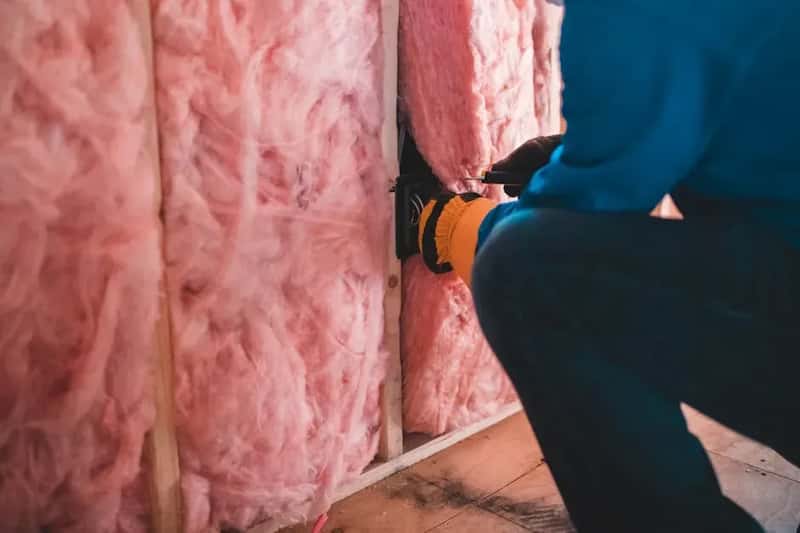
Asbestos was used in an extraordinary range of building materials — floor tiles, pipe insulation, wall insulation, siding, roofing, and adhesive mastics. It wasn’t fully banned in the U.S. until 1989, but it was standard in construction throughout the 70s and before. Many homeowners have no idea it’s present because it’s buried inside walls, under floors, or wrapped around pipes in the basement.
When asbestos materials remain fully intact and undisturbed, the health risk is low. The danger explodes the moment those materials are cut, drilled, broken, or sanded — releasing microscopic fibers that lodge permanently in lung tissue. Asbestos exposure is responsible for an estimated 255,000 deaths annually worldwide, including from mesothelioma, a cancer with no cure and a grim prognosis. If you are renovating a 70s home, get a professional assessment before touching any wall, ceiling, floor tile, or pipe wrap. This one is non-negotiable.
#2 – Outdated Electrical Wiring That’s a Fire Waiting to Happen

1970s homes occupy a dangerous middle ground when it comes to electrical wiring. The wiring looks modern enough on the surface — it’s not the knob-and-tube you’d find in a 1920s house — but it’s now old enough that insulation throughout the walls is actively degrading. Cotton and early plastic insulation that was installed fifty years ago was never meant to last this long, and when it frays or cracks, exposed wire meets wood framing.
Most 70s homes also lack a ground wire running to outlets and fixtures. Ungrounded outlets aren’t just an inconvenience for your electronics — they’re a shock and fire hazard, especially in kitchens, bathrooms, and garages where moisture is present. The Consumer Product Safety Commission has estimated that electrical failures and malfunctions account for tens of thousands of home fires in the U.S. every year. If your 70s home has never had its wiring inspected by a licensed electrician, that appointment belongs at the very top of your list — before any of the cosmetic work even starts.
Why It Stands Out
- 50-year-old wiring insulation was never designed to last this long — degradation is happening inside your walls right now.
- Ungrounded two-prong outlets are still common in unupdated 70s homes and are a known shock and fire risk.
- A licensed electrician inspection typically costs $100–$200 — a fraction of what a house fire costs.
- GFCI outlets (required today in wet areas) were not standard in 70s kitchens, bathrooms, or garages.
#1 – The Original Closed-Off Kitchen

The closed-off kitchen wasn’t an accident of 70s design — it was intentional. Cooking was considered domestic labor, something to be done behind a door, out of sight of guests and family social spaces. The result was cramped, poorly ventilated rooms where grease, odors, and cooking fumes accumulated in an enclosed box. Even in large homes, the kitchen felt like an afterthought.
That closed-off kitchen is the single biggest drag on a 70s home’s resale value and daily livability. Open-plan kitchens consistently command higher sale prices and faster offers — that finding shows up in virtually every major real estate analysis of renovated older homes. Beyond money, sealed kitchens trap cooking fumes at levels the EPA considers a health concern, particularly from gas ranges. Opening that wall doesn’t just update the look of the house. It changes how the entire home feels to live in — and that’s why it earns the top spot on this list.
Some of what the 70s left behind is charming. The homes themselves, the bones, the craftsmanship — a lot of it holds up beautifully. But the materials and design choices buried inside those walls? Several of them are working against you every single day, and a few are genuinely dangerous. Lead paint and asbestos deserve professional attention now. The avocado appliances and shag carpet are just quietly costing you money and comfort. Either way, the case for clearing them out is hard to argue with. Which one surprised you most — or which one is still hiding somewhere in your house?