
What is Chùa Vạn Phật in District 5 really like, and is it worth seeking out among the many pagodas in Saigon? Tucked inside a narrow alley in Ho Chi Minh City’s Chinatown, this temple is easy to miss but difficult to forget. Known in English as the Temple of Ten Thousand Buddhas, it offers a dense, layered interior that feels very different from the city’s larger, more open pagodas. In this guide, I’ll share what you can expect when visiting Chùa Vạn Phật, a bit of its background, and what stood out to me personally when I stepped inside.
Finding Chùa Vạn Phật in District 5

The first challenge with Chùa Vạn Phật isn’t understanding it – it’s finding it.
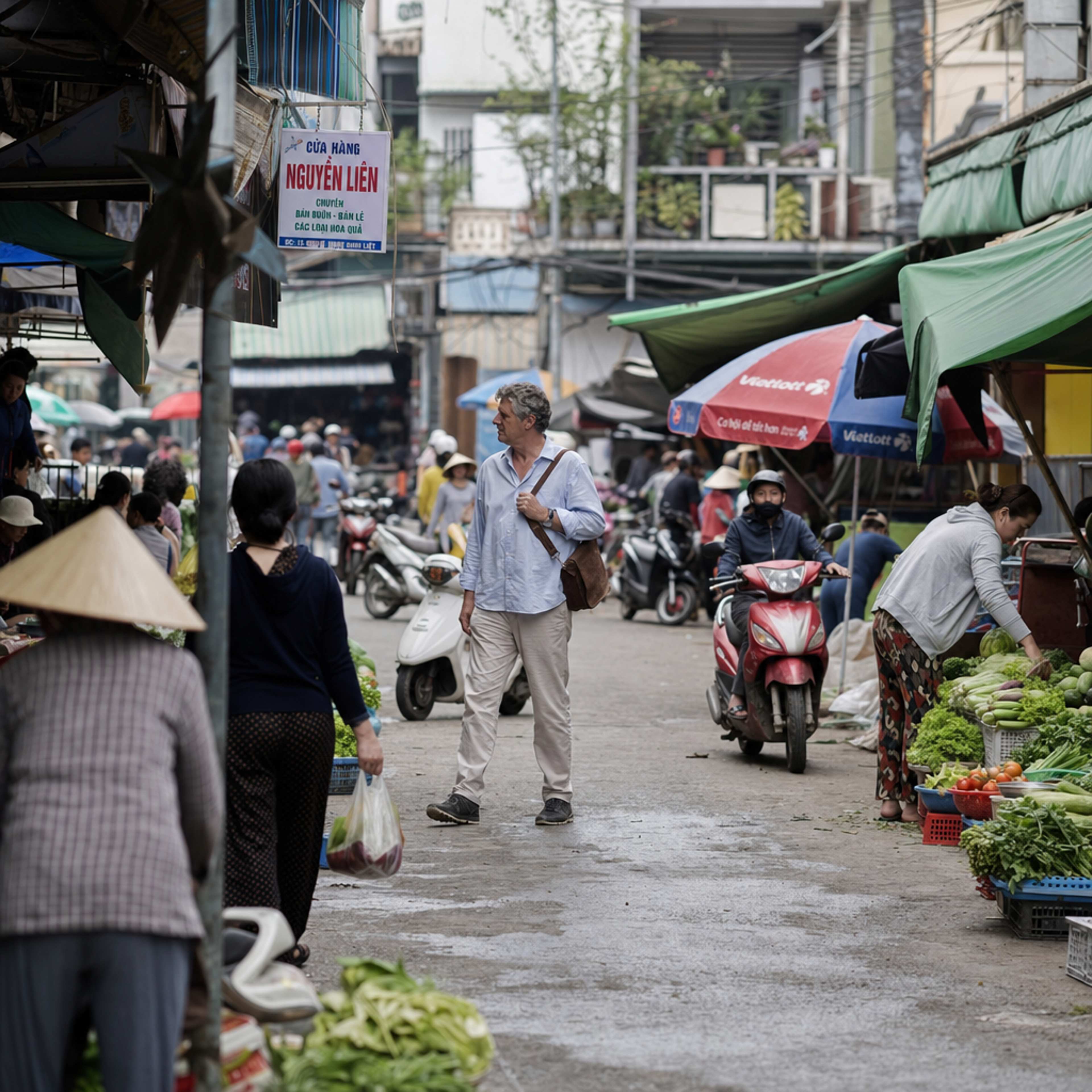
District 5, Saigon’s Chinatown, is busy in a way that feels different from District 1. The streets are narrower, the signage is bilingual, and the atmosphere leans heavily toward Chinese-Vietnamese culture. Nghĩa Thục Street is active, lined with shops and local businesses. There’s nothing on the main road that screams “major temple here.”
Then you turn into a small alley. The entrance doesn’t feel grand. It feels practical. If you weren’t looking for it, you could walk past without realising you’d missed one of the more distinctive pagodas in the city.
I’ve always liked temples that don’t announce themselves too loudly. It changes the way you approach them. Instead of arriving with expectations, you arrive curious.
A Brief History and Background

Chùa Vạn Phật was founded in 1959 and is associated with the Chinese-Vietnamese Buddhist community in District 5. The pagoda follows the Mahayana (Northern) Buddhist tradition, which is the dominant form of Buddhism practised in Vietnam and much of East Asia.
The name “Vạn Phật” translates directly to “Ten Thousand Buddhas.” It isn’t symbolic exaggeration. The interior theme revolves around repetition – rows of Buddha figures placed carefully along the walls, creating a sense of visual multiplication.
The temple underwent significant renovation between the late 1990s and 2000s, which explains why the structure feels cohesive rather than fragmented. It carries the weight of tradition without feeling fragile or neglected.
What stands out most is how strongly it reflects Chinatown’s religious identity. District 5 temples feel structured and disciplined in a way that differs slightly from other areas of Ho Chi Minh City. You can sense that continuity of community here.
Inside the Temple of Ten Thousand Buddhas

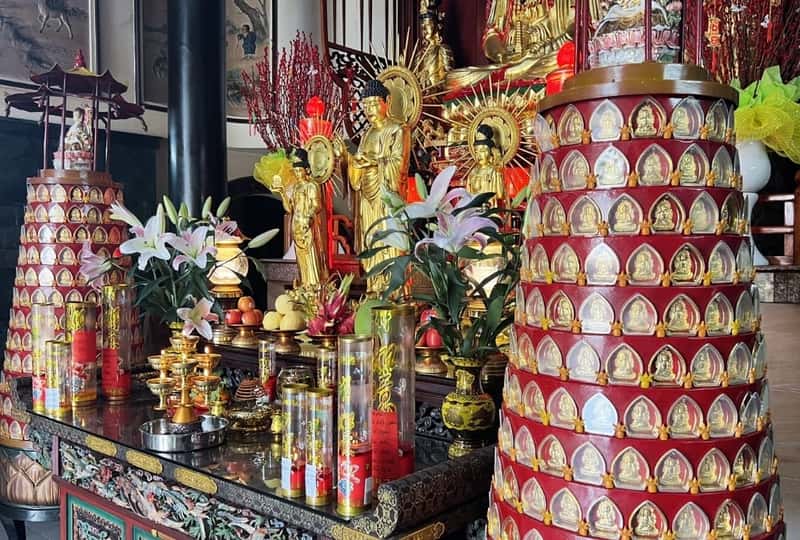
Stepping inside, the first thing I noticed was how vertical everything felt. Unlike Buu Long Pagoda, which opens outward into courtyards and sky, Chùa Vạn Phật builds upward. The walls are lined with small Buddha figures in repeating rows, climbing tier after tier. It creates a pattern that draws your eyes up without you realising it.
The air inside is thick with incense. The lighting is softer and more contained than some of the brighter temples in Thu Duc. Gold tones stand out against darker wood and red accents. The main hall doesn’t overwhelm you with scale; it pulls you inward with detail.
When I visited, there were locals quietly praying. No one was rushing. No one was treating it like a sightseeing stop. That changes the atmosphere completely. You become aware that you’re in someone’s active religious space.
What I appreciated most was the focus. There’s no large garden, no dramatic exterior courtyard. The beauty is concentrated inside the hall itself.
Architecture and Visual Character
Architecturally, Chùa Vạn Phật reflects Chinese-influenced temple design common in Saigon’s Chinatown.
The rooflines are layered, with traditional decorative details. The structure is multi-level, which is partly a response to the limited space of its alley location. Rather than spreading outward, it builds upward.
Inside, the layering continues. Altars are arranged in tiers, with central figures framed by smaller statues. The repetition of Buddha imagery is what gives the pagoda its visual identity.
Compared to Thien Hau Pagoda, which feels historic and open to the street, Chùa Vạn Phật feels enclosed and inward-facing. Compared to Buu Long, which is expansive and photogenic from a distance, this temple rewards close observation.
What It Felt Like to Me

District 5 has a rhythm that’s different from the rest of Saigon. It’s busier in some ways, but more traditional in others. When I stepped into Chùa Vạn Phật, I felt that shift immediately. The alley makes the arrival quieter, and the interior makes it more focused.
I remember standing still for a few minutes just looking at the walls. The repetition of statues creates a kind of visual calm. It’s not minimal. It’s not sparse. But the pattern makes it orderly.
There’s something about temples that are clearly built for worship rather than presentation. This one feels like it belongs first to its community and only second to visitors.
Practical Information for Visiting
- Location: District 5 (Chinatown), Ho Chi Minh City
- Access: Best reached by motorbike, taxi, or ride-hailing app
- Entrance fee: Free (donations welcome)
- Dress code: Modest clothing recommended
- Best time to visit: Morning or late afternoon
Because it’s in an alley, I recommend using a maps app rather than relying on street signage. Once you’re there, move slowly and be respectful. Photography is generally allowed, but avoid flash and be mindful of people praying.
You don’t need more than 30–45 minutes here unless you’re sitting quietly. It pairs well with visiting Thien Hau Pagoda or exploring other Chinatown temples nearby.
Final Thoughts
Chùa Vạn Phật doesn’t dominate the skyline or draw large tour groups. What makes it one of the most distinctive pagodas in District 5 is its concentration of detail and its strong connection to Chinatown’s Buddhist community.
If you’re looking for wide open courtyards and dramatic architecture, you might prefer Buu Long. But if you want a temple that feels layered, disciplined, and deeply rooted in local religious life, this is worth finding.
Sometimes the most memorable places in Saigon aren’t on the main road. They’re waiting down a narrow alley, quietly holding their ground.