Picture the classic 1970s road trip: a wood-paneled wagon, a cooler in the way-back, Dad gripping the wheel. Now look inside that cooler. Vegetables trapped in gelatin, meat from a can that politely called itself a “food product,” and in a few cases, dinner wrapped in foil and cooking on the engine.
Some of these dishes would be sent back by a modern parent in seconds. A few were actually delicious and have quietly come back as trends. One entry is so far gone that no restaurant could open under its name today. Keep scrolling, because the strangest one is waiting at #1.
#30 – Tang by the Thermos, Poured Like Fuel for the Whole Back Seat
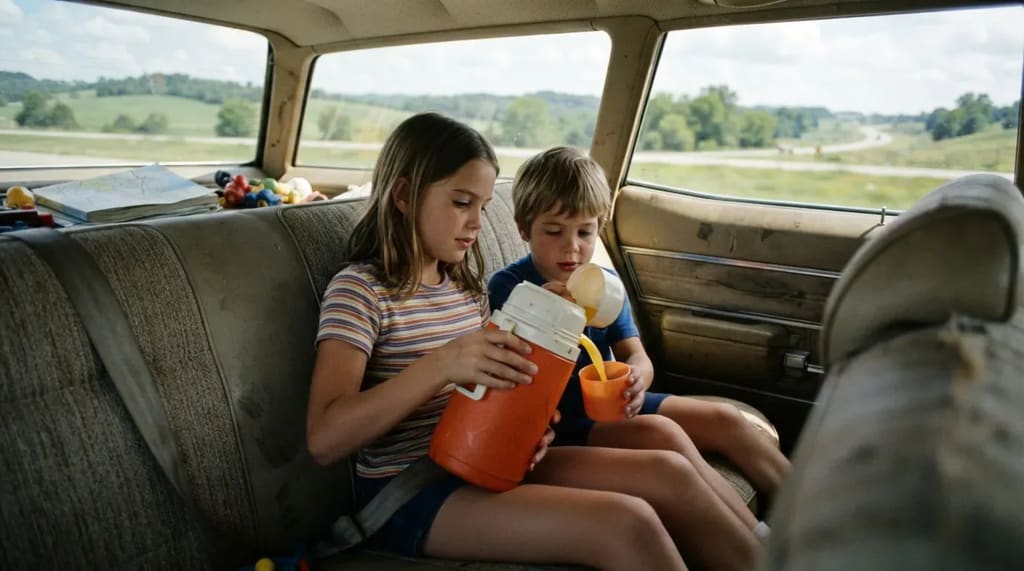
Half the back seat was drinking “astronaut juice.” General Foods launched Tang in 1957, and it sold modestly until NASA used it on John Glenn’s 1962 flight and on later Gemini missions.1 By the 1970s it was a pantry staple, stirred into thermoses before the car left the driveway.
Tang only took off after it went into space. It was powdered sugar, acid and orange flavor mixed with tap water. Today a thermos of sweetened powder is exactly what many parents try to avoid.
But the next dish had an even stranger relationship with vegetables…
#29 – Lime Jell-O Salad With Shredded Carrots, Wobbling Through Every Curve
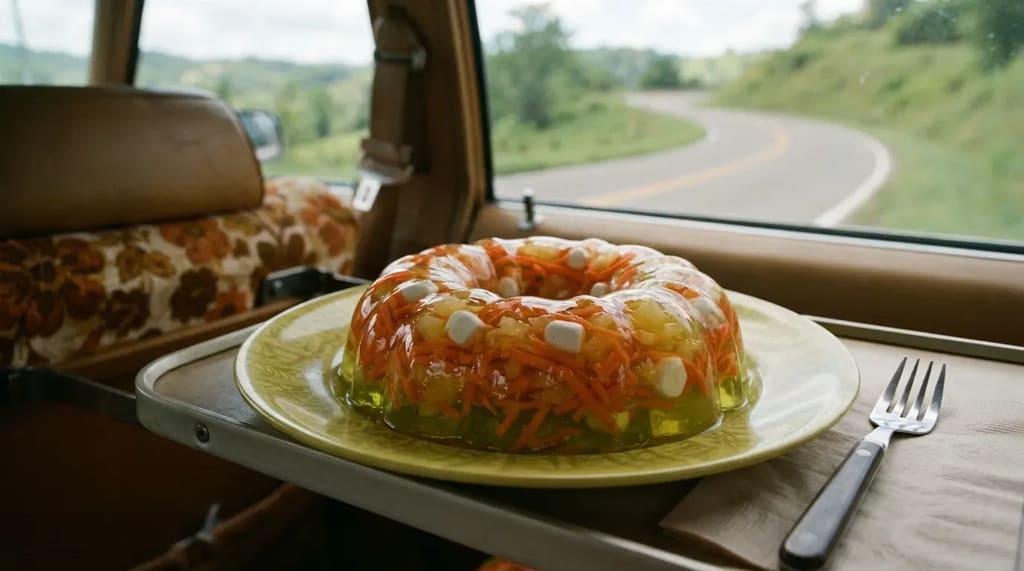
This “salad” was neither a salad nor a dessert. Jell-O has been around since 1897, and by mid-century cooks were folding in cottage cheese, marshmallows, canned pineapple and shredded carrots. It rode to picnics in a covered container and shivered through every turn in the road.
Jell-O tried to push the idea even further. In the 1960s it sold savory flavors, including celery, Italian and seasoned tomato. They flopped. My view: the carrot-and-lime version still deserves the scorn it gets.
Next up is a spread that came with its own devil…
#28 – Deviled Ham on Soft White Bread, Straight From the Little Red Devil Can
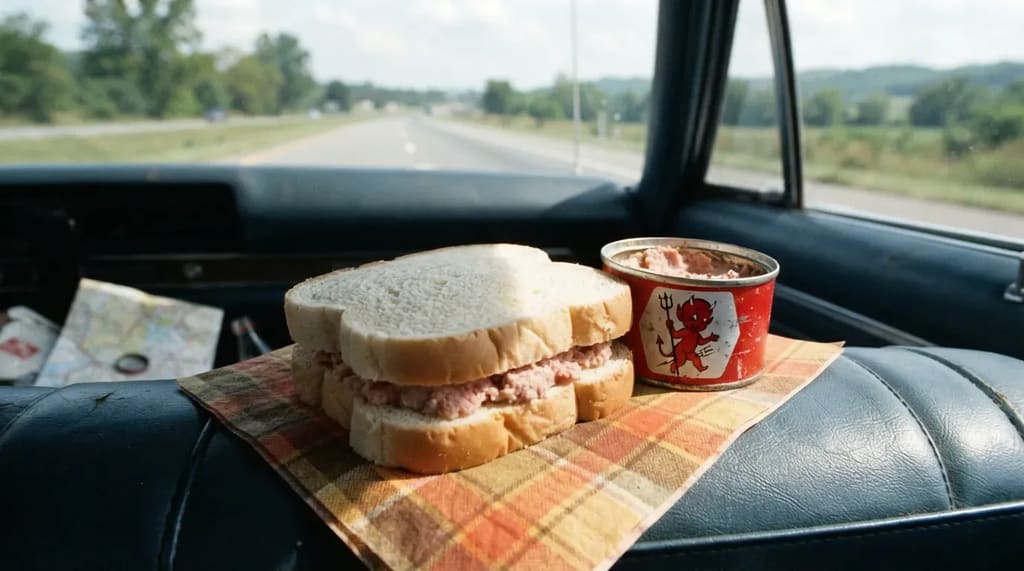
The little can with the red devil on it fed countless back seats. Underwood has sold deviled ham since 1868, which makes it one of the oldest packaged foods still on the shelf. It is ground ham, seasoned and spreadable, and it went straight onto white bread.
Today most travelers would pass. The devil logo is often called the oldest food trademark still in use in America. The name sounds like a warning, but “deviled” simply means spiced.
The meat in #27 had an even bigger fan club…
#27 – Fried Spam, the Camp-Stove Breakfast Nobody Will Admit They Miss
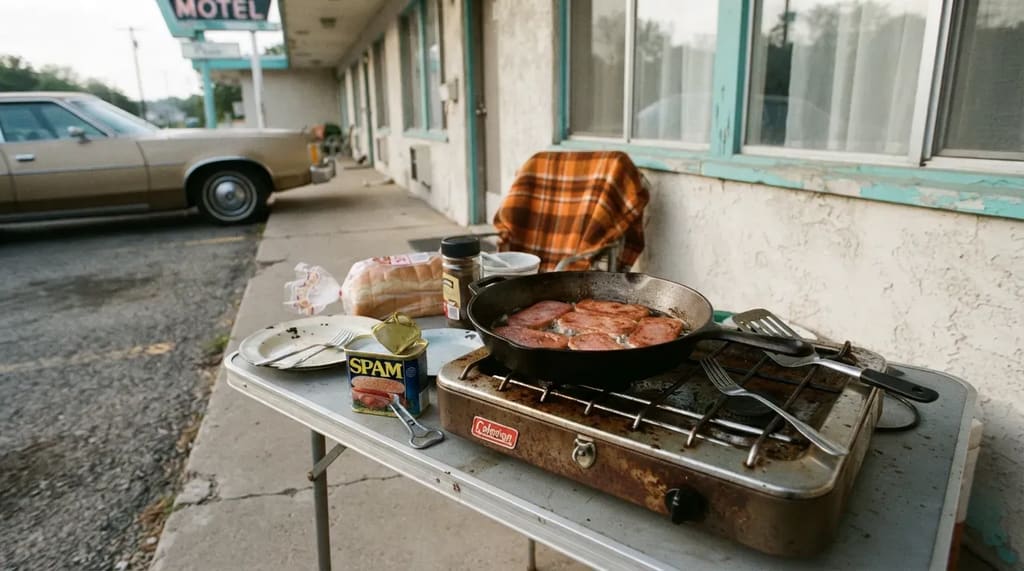
Spam was a road-trip workhorse. Hormel launched it in 1937, and by the 1970s a sizzling slice on a camp stove was a normal breakfast outside a motel room. It needed no refrigeration until opened, and it fried up crisp at the edges.
Here is the hot take: Spam is more honest than most lunch meat. Classic Spam lists just six ingredients. The real objection today is salt and processing. The World Health Organization’s cancer agency classified processed meat as carcinogenic in 2015, and that changed how many people see a can like this.2
Fast Facts
- Hormel introduced Spam in 1937.
- The classic recipe: pork with ham, salt, water, modified potato starch, sugar and sodium nitrite.
- An unopened can is shelf-stable. Once opened, it belongs in the fridge.
- Hawaii and Guam are famous for loving it far more than the mainland does.
Wait until you see what the South did with cheese…
#26 – Pimento Cheese Sandwiches Baking in the Back Window
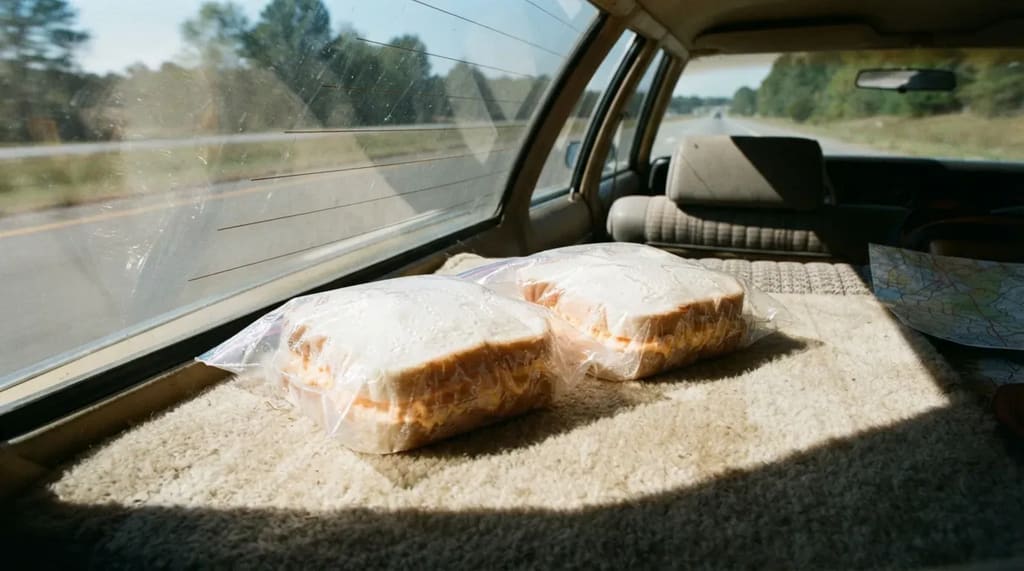
This sandwich was practically a Southern road-trip passport. Cheese, mayo and diced red peppers went onto bread in the morning and sat in a bag until lunch. In a sunny car window, that is a gamble.
The origin story is a twist. Pimento cheese began as a Northern creation made with cream cheese, and the South adopted it later. The USDA says perishable food shouldn’t sit out more than two hours, or one hour once it’s above 90°F.3
Now for something with a lot more sizzle…
#25 – Fried Bologna With the Edges Slashed So It Wouldn’t Puff Up Like a Hat
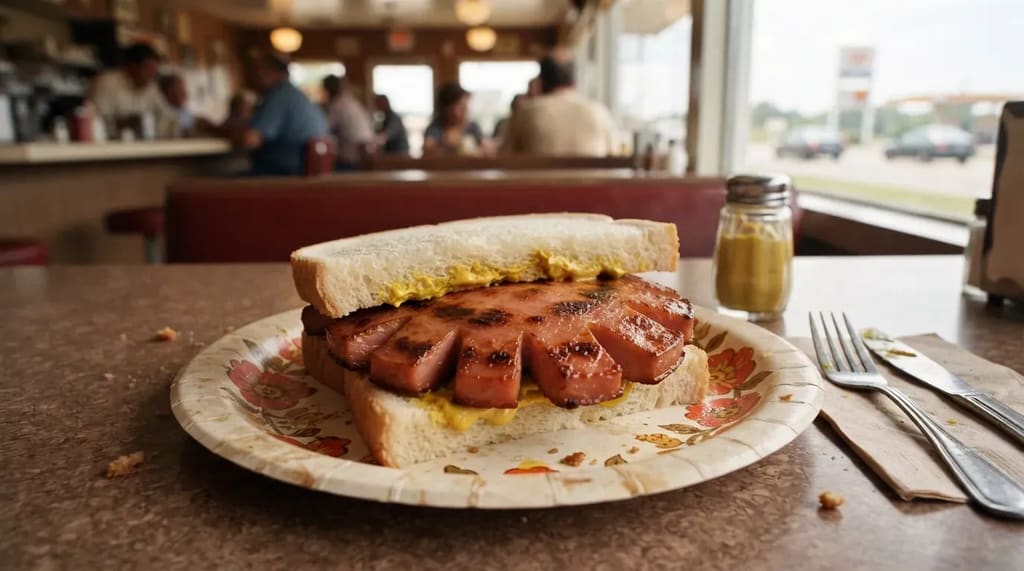
Every kid knew the trick. Cut little slits around the edge of a bologna slice, or it would balloon in the pan like a tiny hat. Then it went onto bread with mustard.
American bologna is only a distant cousin of Italian mortadella. It’s a finely blended, mild sausage, not a slice of Italian tradition. It was cheap, salty and filling, which is why it fed so many road-trip lunches.
The deli counter had weirder things in store, though…
#24 – Olive Loaf and Pickle Loaf, the Lunch Meat With Surprises Inside
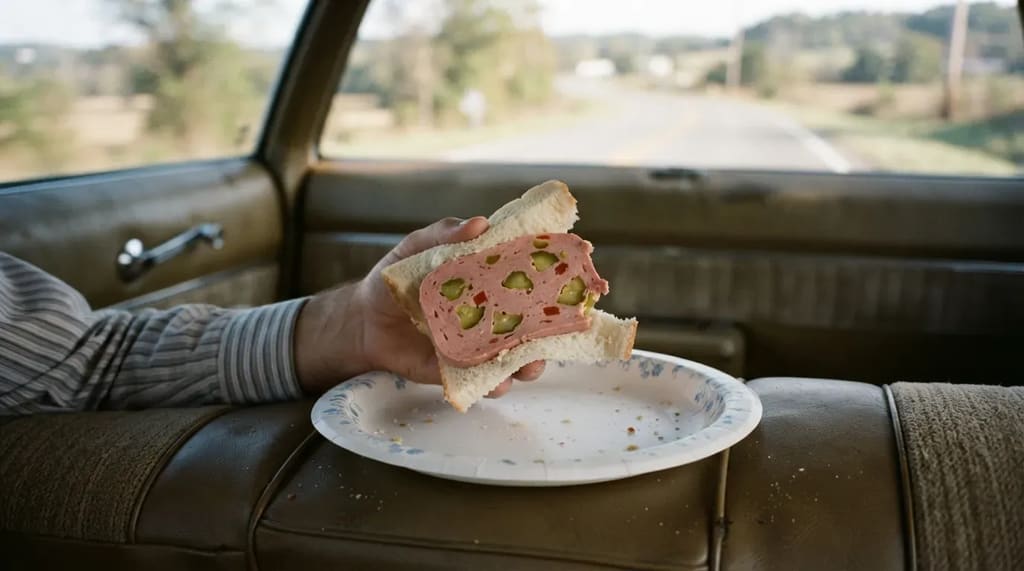
Slice it and you found little green circles looking back. Olive loaf and pickle-and-pimento loaf were standard deli counter items, and Oscar Mayer sold versions of them. Packed between two slices of bread, they were a road-trip classic.
That pink slab with chopped pickles in it was an ordinary grocery-store choice. Nobody blinked at it in the 1970s. Today you’d have to hunt for it, and a lot of shoppers would flinch when they found it.
Now for a snack you ate straight from the can…
#23 – Vienna Sausages Eaten Straight From the Can at 65 Miles an Hour
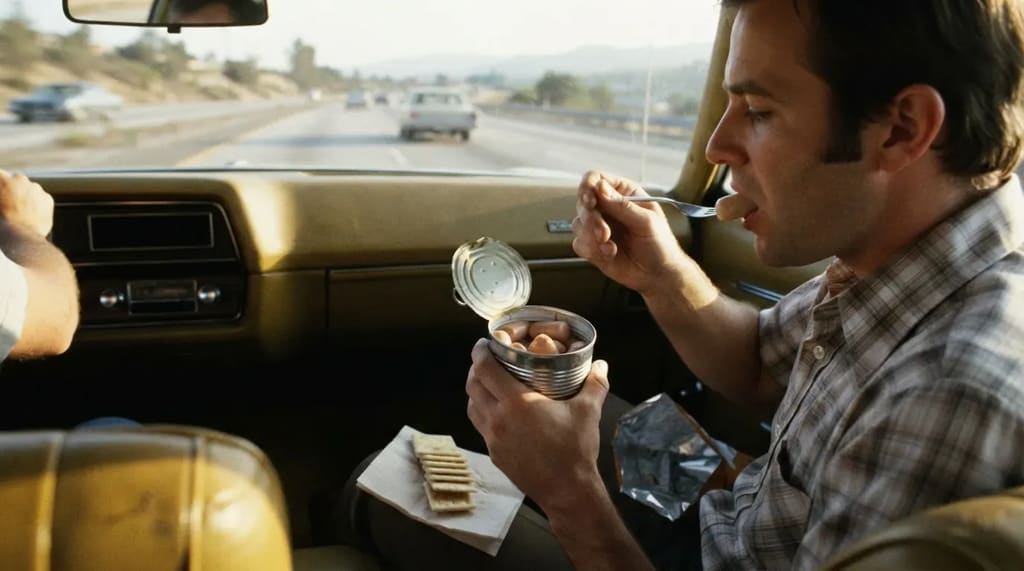
Pale, soft and packed in brine, they went down one at a time from the passenger seat. The name nods to Vienna, Austria, where the wiener tradition began. The canned version is a very long way from the sausage stands of Vienna.
Dad ate them with saltines. Kids fought over the juice. Hardly anyone would call it a meal today, but in the 1970s the can sat easily on the seat between two people.
But the next one was even smellier…
#22 – Sardines on Saltines, the Snack That Cleared the Car
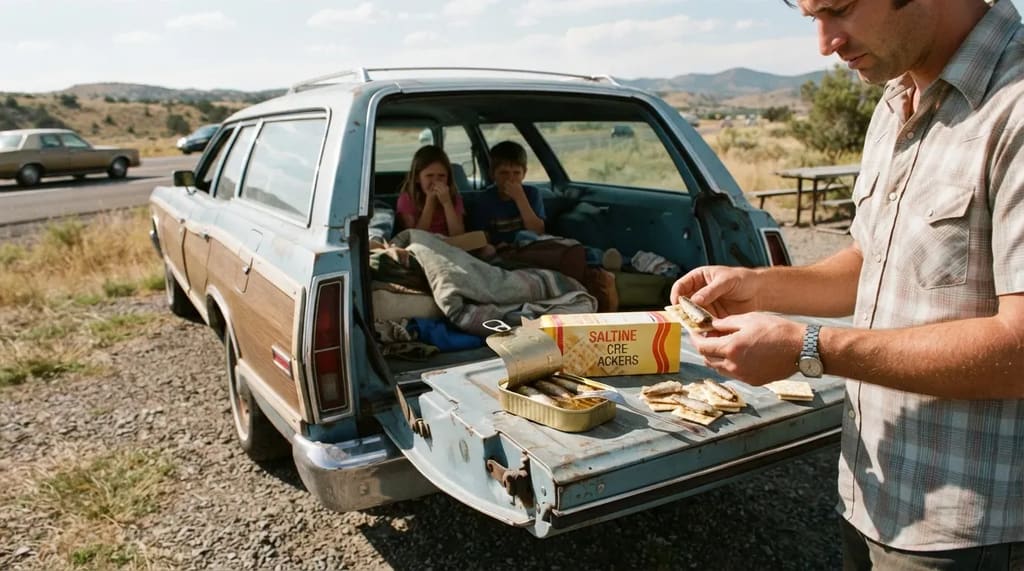
Crack open a tin at a rest stop and every window went down. Sardines packed in oil or mustard sauce were a cheap protein, and plenty of fathers ate them with crackers on the tailgate. Kids, naturally, held their noses.
Here’s the twist. Tinned fish has become a trendy restaurant item. The same tin that was a punchline in a station wagon now shows up on small-plate menus. The 1970s family simply ate it too early.
The mystery in #21 comes with a label that tells you too much…
#21 – Potted Meat, the Can That Admitted It Was a “Food Product”
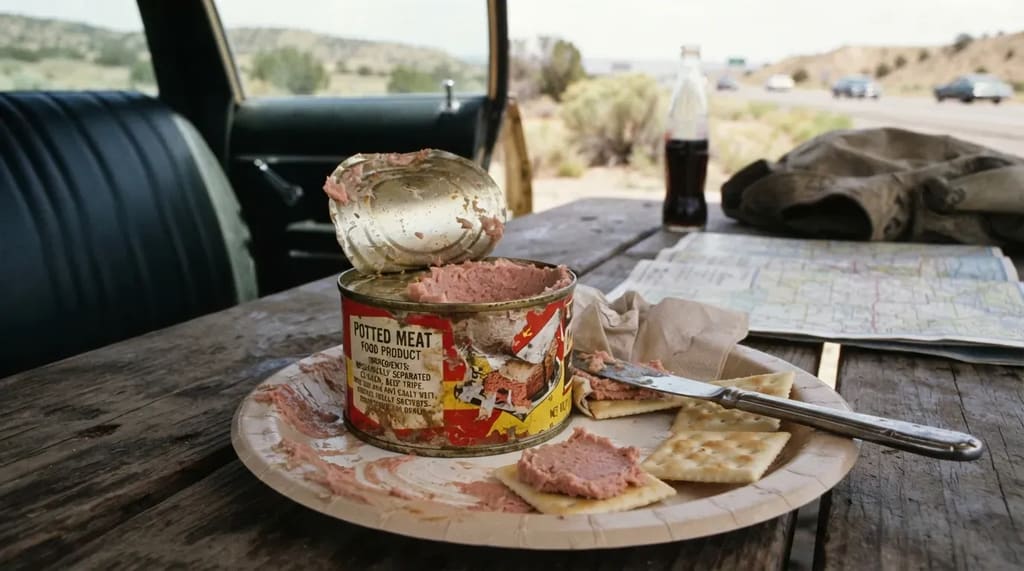
The label told you more than you wanted to know. Potted meat was a soft, pink spread, and the wording on the can carefully said “food product,” not simply meat. Ingredient lists on such cans have included mechanically separated chicken and beef tripe.
It went onto crackers, and it was cheap. It was one of the cheapest ways to put meat in a road-trip lunch. Parents called it a budget food. Kids called it something else.
The next jar sat on counters in roadside taverns, and it was cloudy…
#20 – Pickled Eggs From the Big Jar on the Counter
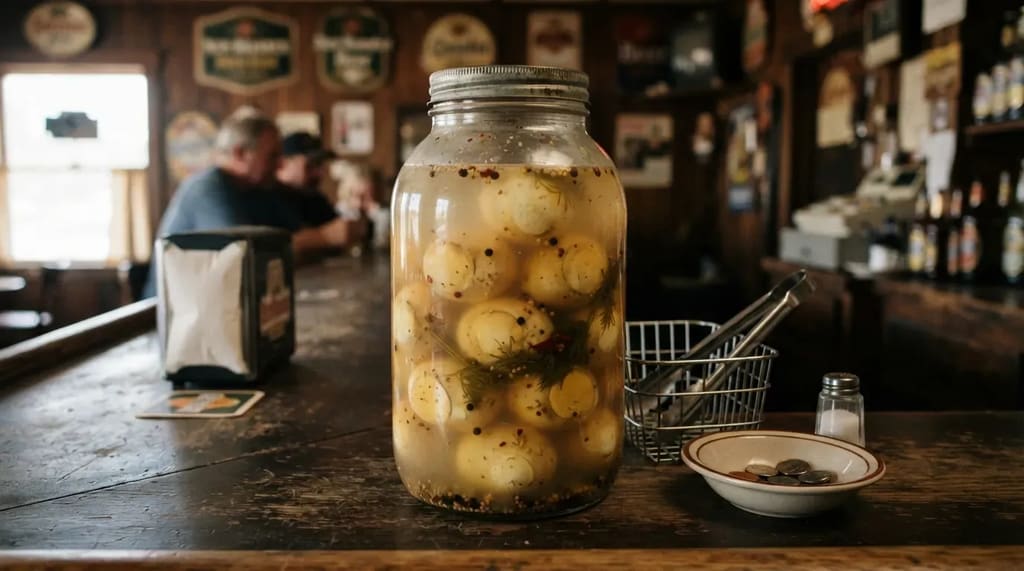
Roadside taverns and country stores kept them in a giant jar, floating in cloudy brine. You paid a few coins and someone fished one out with tongs. Truckers and road-trippers ate them with salty snacks.
Today most people would not touch that jar. Pickled eggs were bar food long before craft beer had a menu. They were chewy, sour and oddly satisfying.
And what a warm car does to eggs is a different story…
#19 – Egg Salad at the Rest Stop, With Mayonnaise Wrongly Blamed
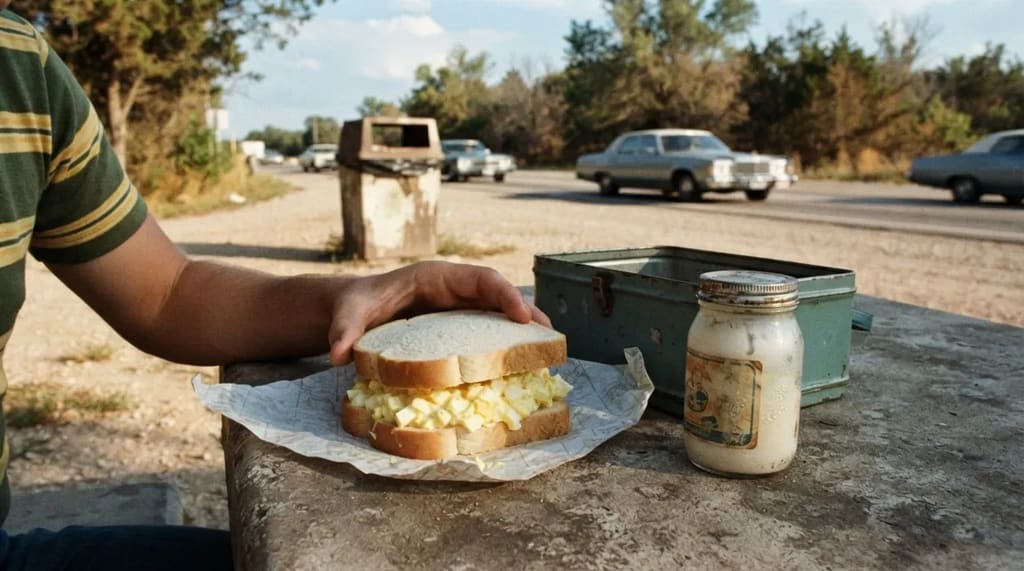
Everyone knows the story. Mayo goes bad in the sun, and egg salad makes you sick. The 1970s family packed it anyway, between two slices of white bread.
The truth is more interesting. Mayonnaise is rarely the real culprit. Commercial mayo is acidic, and food-safety experts say the danger comes from time and temperature. Chopped eggs sitting warm for hours are the real problem.
The next sandwich is the one every food-safety expert warns about…
#18 – Tuna Salad Made at 7 a.m. and Eaten at 1 p.m. in a Parked Car
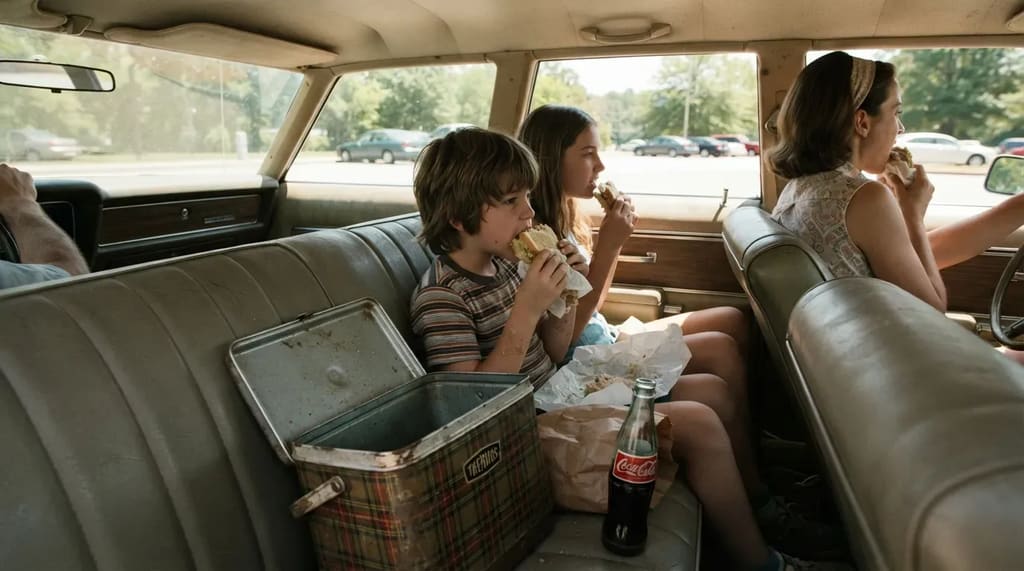
Tuna salad was the lunch of choice for thrifty parents. Canned tuna, mayo, chopped pickles. It was made at home at 7 a.m. and eaten at 1 p.m.
A closed car can run far hotter than the air outside. A sandwich inside it can spoil without any sign. Experts now say a cooler with ice packs is the minimum, not an extra.
No stove? No problem, said the can in #17…
#17 – Canned Ravioli, Eaten Cold in the Back Seat
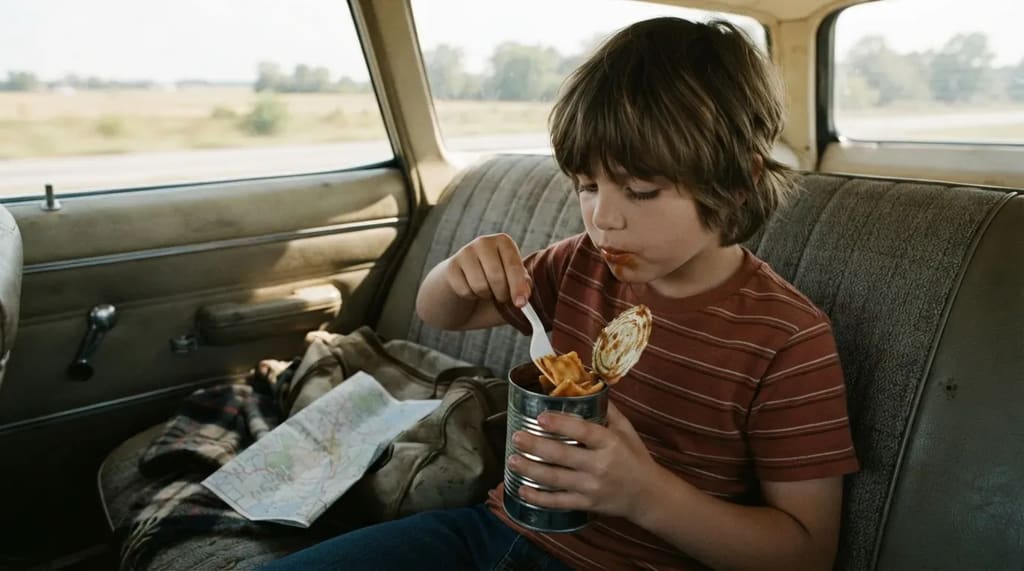
No stove? No problem. Plenty of kids ate Chef Boyardee ravioli straight from the can with a plastic fork. Mom opened it on the hood of the car.
The backstory surprises people. Chef Boyardee was a real chef. Ettore “Hector” Boiardi was an Italian-born cook who ran a restaurant in Cleveland before his sauces went into cans. Today, most families would rather grab a salad from a drive-through window.
Then came the dinner that went right into the fire…
#16 – Pork and Beans Heated Right in the Can on the Campfire
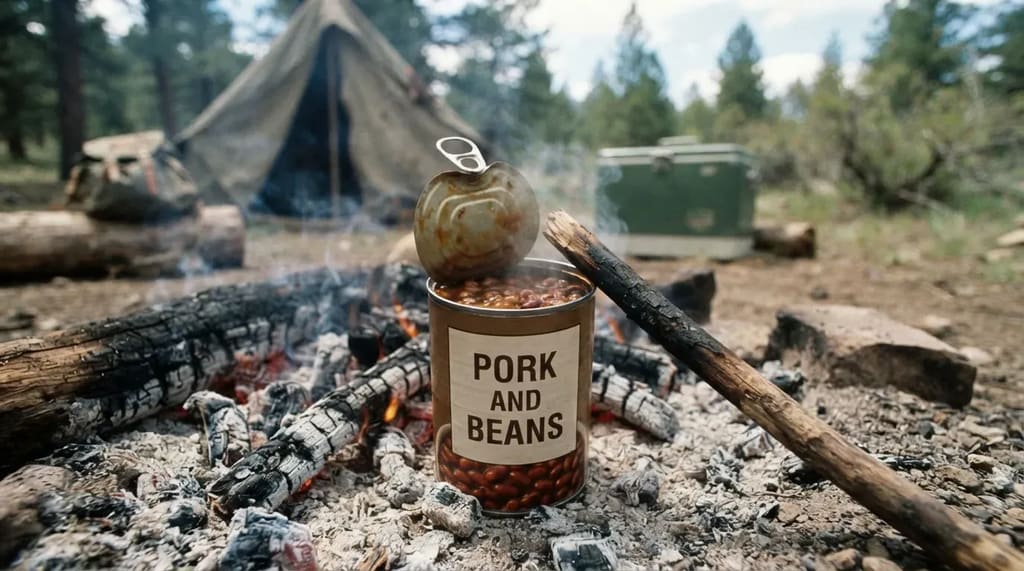
This was camping at its simplest. Set the can on the coals and wait. Dad poked it with a stick to see whether it was hot.
A sealed can set directly in a fire can burst. Safety guidance for campers now says to open the can first. The beans themselves were cheap and filling, and nobody questioned them at the time.
The next sandwich was basically dessert in disguise…
#15 – The Fluffernutter, a Sandwich Nut-Free Schools Now Turn Away
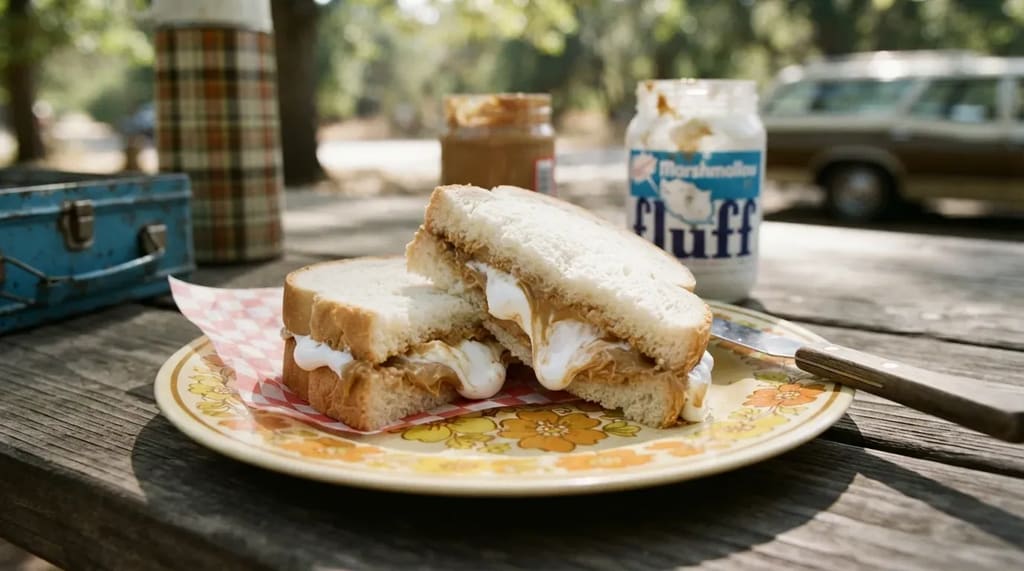
Peanut butter and marshmallow creme on white bread. That was dessert disguised as lunch. Marshmallow Fluff has New England roots, and the jar was a fixture in 1970s cupboards.
It has not gone away entirely. Fluff is still made in Lynn, Massachusetts. But peanut allergies have put the sandwich on school no-go lists, and it rarely survives a modern lunchbox check.
Worth Knowing
- Archibald Query is credited with inventing Fluff in Somerville, Massachusetts, around 1917.
- In 1920, he sold the recipe to H. Allen Durkee and Fred Mower for $500.
- The company, Durkee-Mower, still makes it in Lynn.
- A 2006 Massachusetts bill even proposed naming the Fluffernutter the official state sandwich.
The next one was bright orange and glossy…
#14 – Cheez Whiz on Crackers, Scooped Straight From the Jar
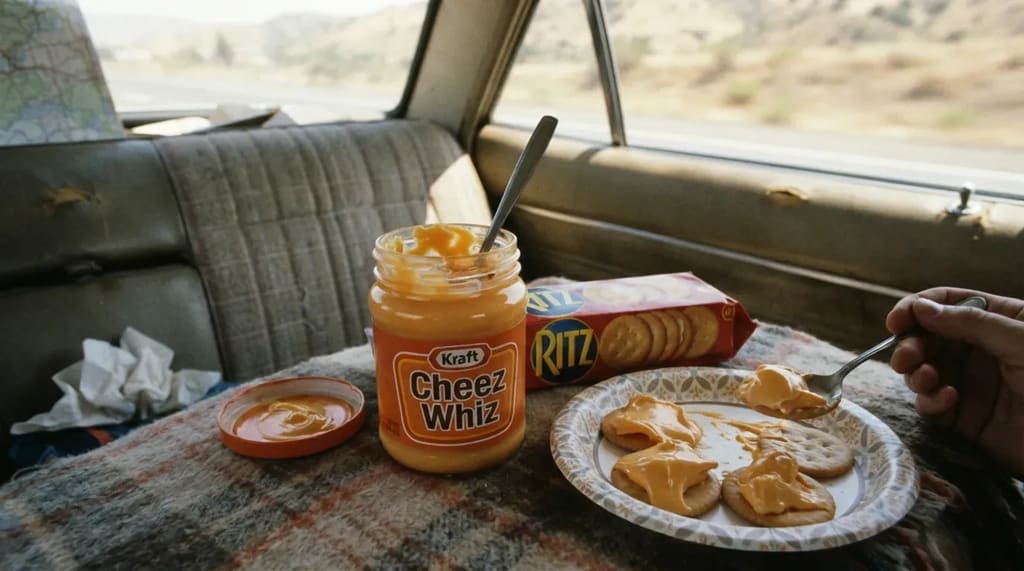
Bright orange, glossy and strangely spreadable. Kraft introduced Cheez Whiz in 1953, and by the 1970s it was in plenty of road-trip snack bags. You could spread it, scoop it or pour it.
It never pretended to be cheese from a farm. It was designed to be convenient, and it was. Today, fans of artisan food would walk right past the jar.
Next, a snack that promised the future…
#13 – Space Food Sticks, the Chewy Bars That Promised the Future
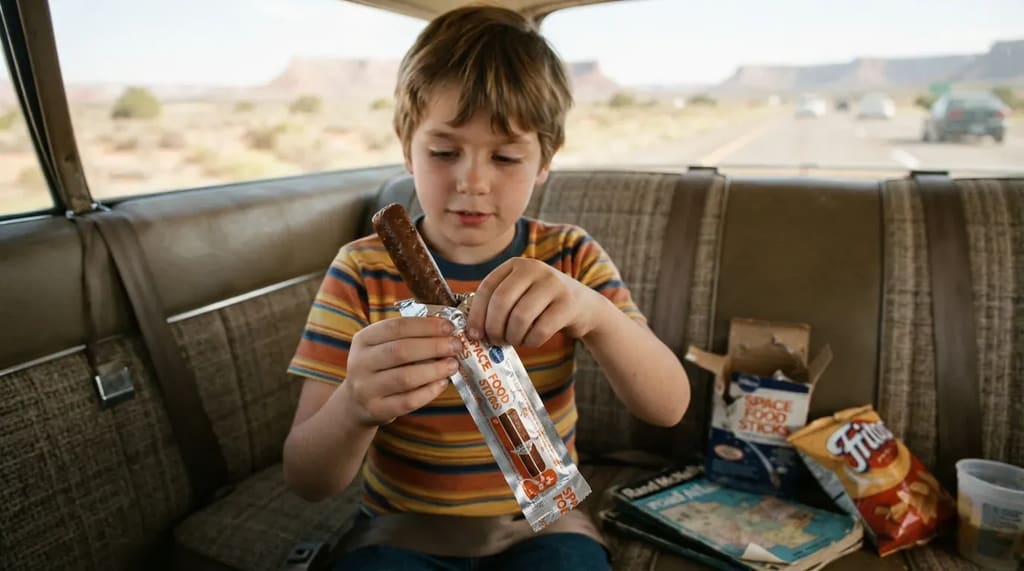
Kids thought they were eating a mission. Pillsbury sold Space Food Sticks as a snack inspired by the Space Age. They came in flavors like chocolate and peanut butter.
The whole pitch was that you were eating like an astronaut. The reality was a long, chewy bar. They faded from shelves, and today the idea feels like a very 1970s mix of science and candy.
And one candy came with a rumor that scared a whole generation…
#12 – Pop Rocks and Soda, the Combo Behind a Fake Death Rumor
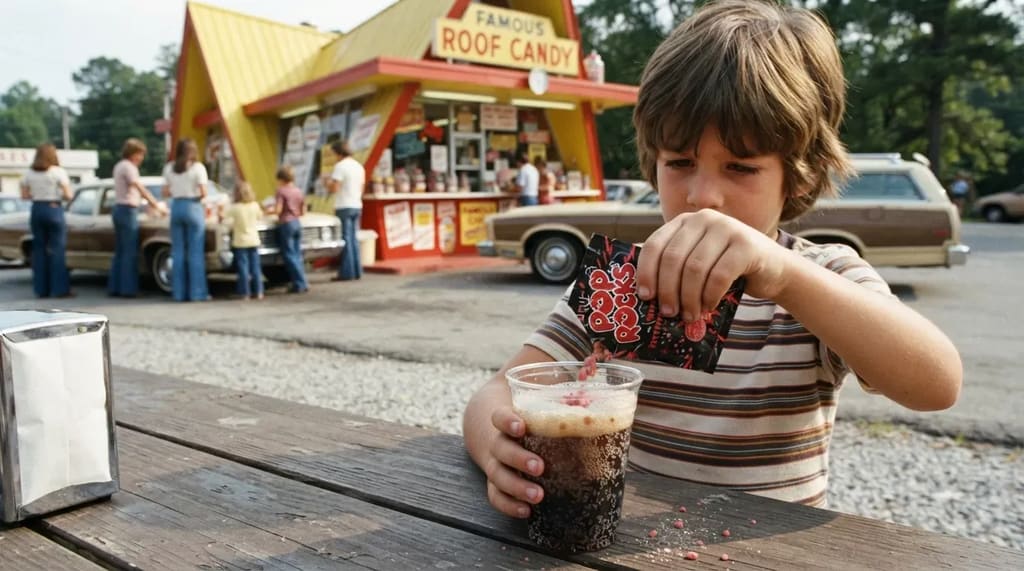
The candy crackled on the tongue, and the rumor spread faster. General Foods began selling Pop Rocks in 1975. Soon every kid had heard that Mikey from the Life cereal commercial had died after drinking soda with them.
It was completely false, and the company went as far as running ads and writing to schools to fight it. The actor was fine.4 The myth, however, followed the candy for years.
The next stop was a candy stand with a famous roof…
#11 – The Stuckey’s Pecan Log Roll, Bought Under a Teal Roof
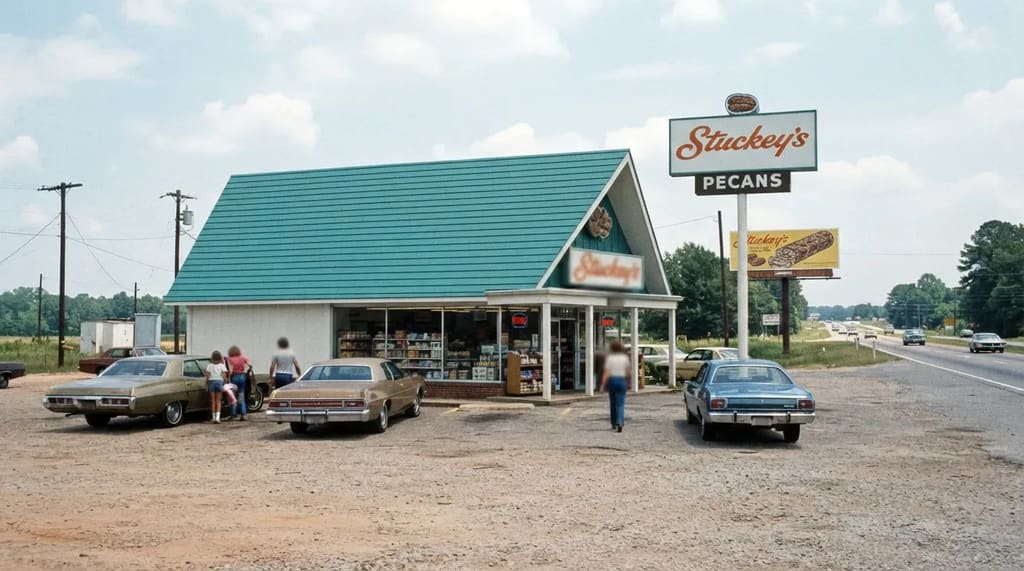
Teal roofs, a billboard and a stop you couldn’t skip. W.S. Stuckey started with pecans in Eastman, Georgia, in 1937. The chain grew into a roadside fixture, and its pecan log roll became a symbol of family trips.
It was a log of nougat coated in caramel and pecans. A roadside pecan stand grew into a highway institution. Today, most travelers pick up a coffee and a protein bar instead.
And then there was the orange roof…
#10 – Howard Johnson’s Frankforts and Fried Clams, Served With 28 Flavors
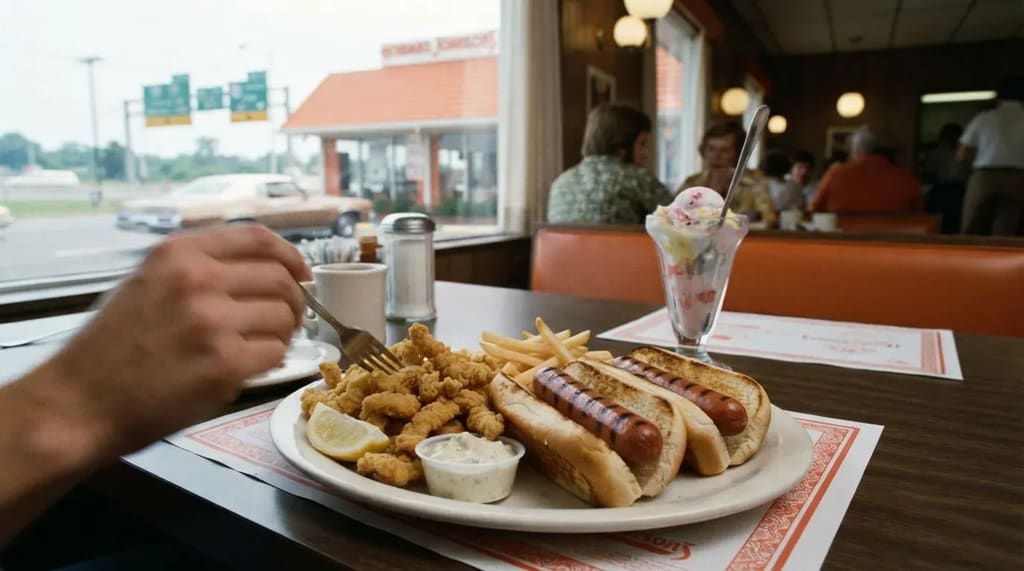
The orange roof meant you had arrived. Howard Johnson’s was one of the biggest restaurant chains in the country in the 1960s and 1970s. Its menu leaned on fried clams and grilled “Frankforts” in a toasted split-top bun.
It advertised 28 flavors of ice cream, long before anyone talked about variety. The restaurants have all but vanished. The hotel brand lives on under Wyndham.
The next chain gave kids something no one expected…
#9 – Burger Chef’s Big Shef and the Funmeal That Beat the Happy Meal
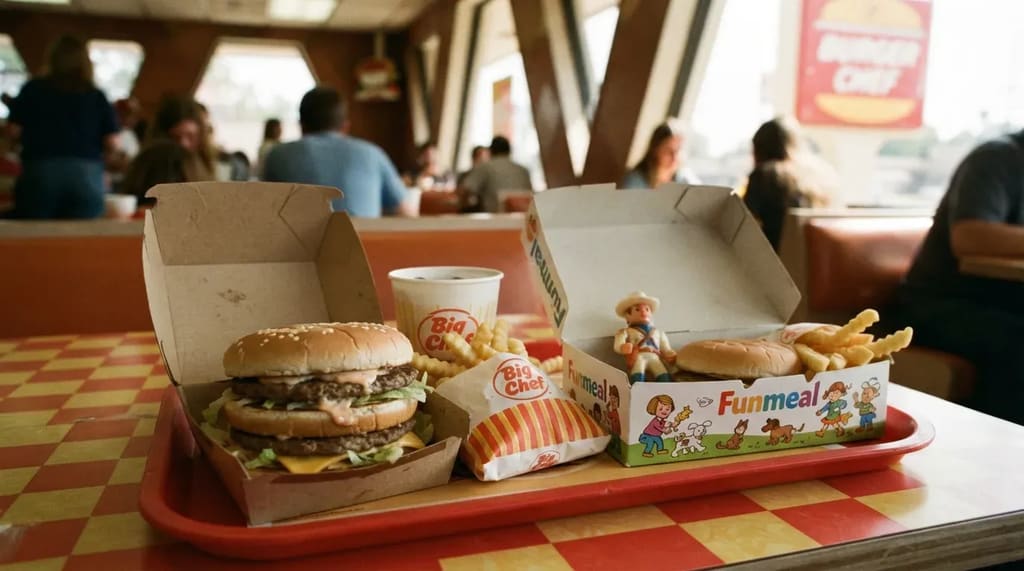
This chain doesn’t exist anymore. Burger Chef was founded in Indianapolis in 1954, and by the 1970s it was a rival to the biggest names on the highway. Its Big Shef was a double-decker answer to the Big Mac.
In 1973 it launched the Funmeal, a kids’ meal with a toy.5 That predates the Happy Meal. Hardee’s took over most of the locations in 1982, and the name disappeared.6
Then there was the pancake house in #8, and its story is complicated…
#8 – Pancakes at Sambo’s, a Menu No Chain Could Launch Today
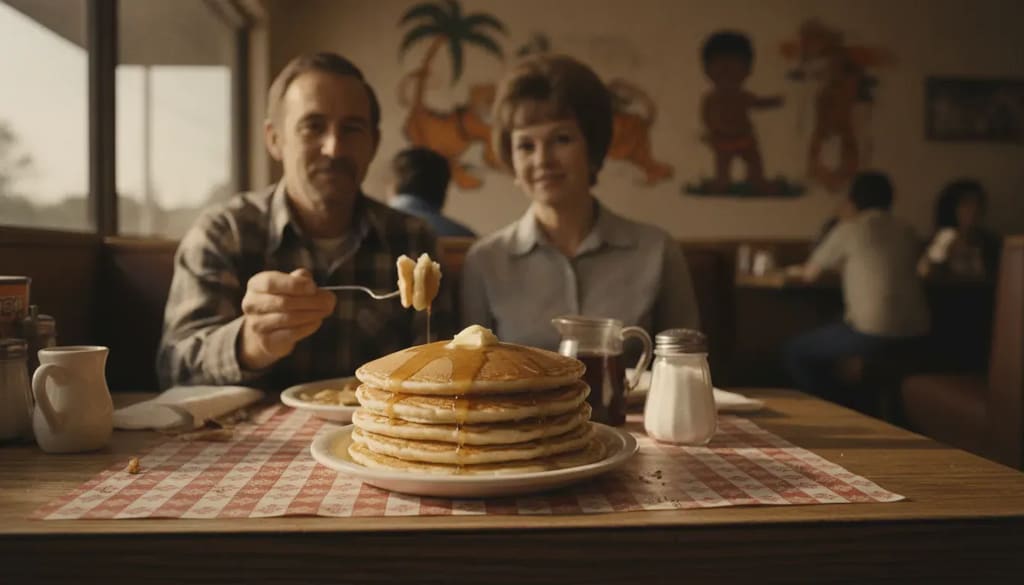
Sambo’s was a roadside favorite for breakfast at any hour. The chain started in Santa Barbara in 1957 and spread across the country. It served stacks of pancakes to families all day long.
The name and imagery are the problem. Protests over its name and its storybook imagery helped bring the chain down by the early 1980s. No restaurant could open with that branding today, and few people would want to.
The next dish came with a plate and a sneeze guard…
#7 – The Steakhouse Salad Bar With Canned Beets and Fake Bacon
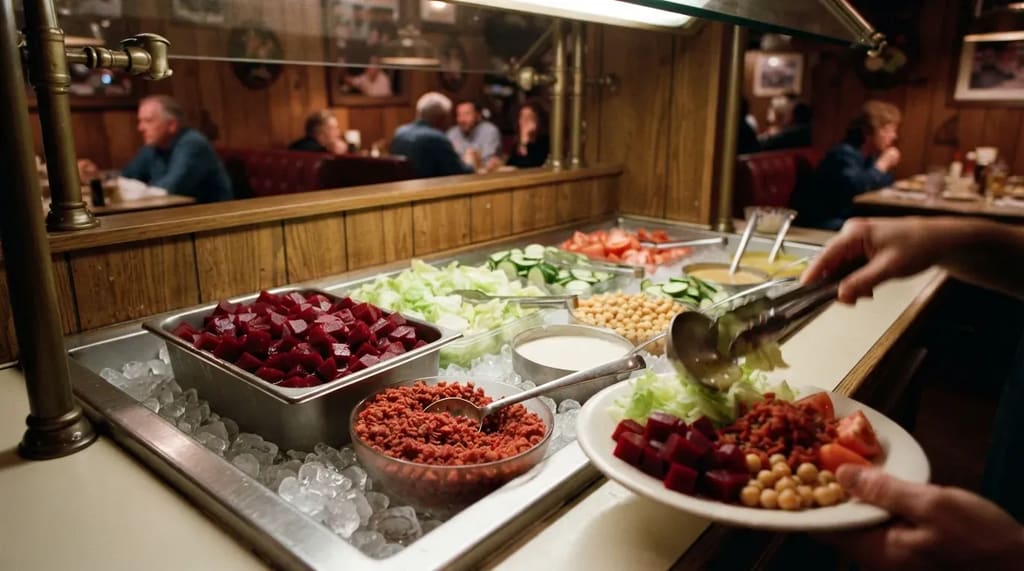
The salad bar was the big attraction. Steakhouse chains along the highway built them in the 1970s, with iceberg lettuce, canned beets, chickpeas and a ladle of Italian dressing. It felt like a feast for a few dollars.
Related Stories From Travelbinger
The secret was in the bacon bits. Many of them were made from soy and contained no bacon at all. General Mills’ Bac-Os is one famous example. Today, “fresh” is the selling point, and canned beets are rarely the star.
But the next plate was a diet tragedy…
#6 – The Diet Plate: Cottage Cheese, a Canned Peach and a Lettuce Leaf
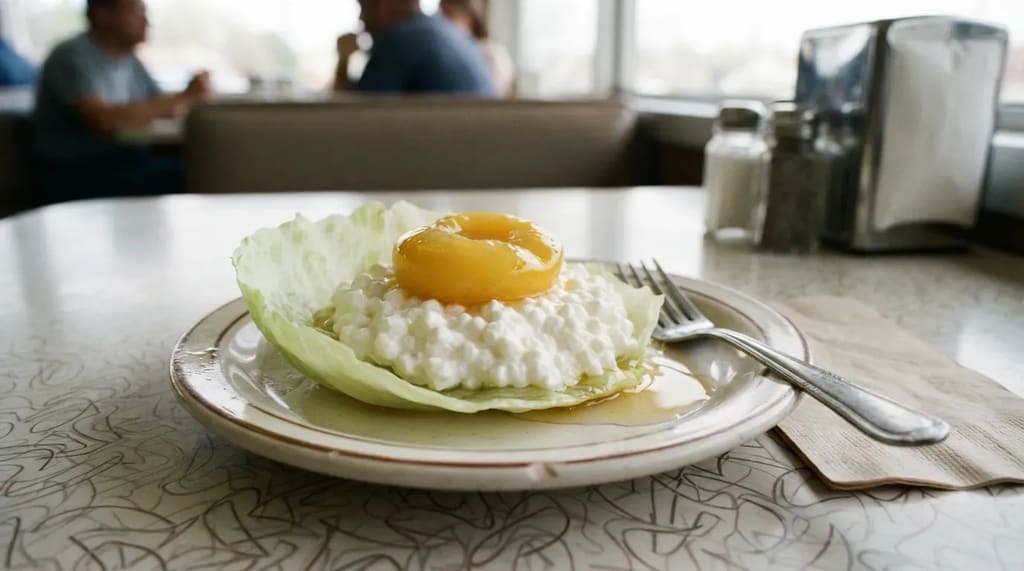
Order the diet plate and out came a sad little scoop. Cottage cheese went on a lettuce leaf, topped with a peach half from a can. It was the diner’s idea of eating light.
Today people would send it back. Yet cottage cheese has had a comeback on social media, and the protein-heavy snack is trendy again. The canned peach, though, has not been invited back.
Now for the daily special that kids dreaded…
#5 – Liver and Onions, the Blue-Plate Special Kids Dreaded
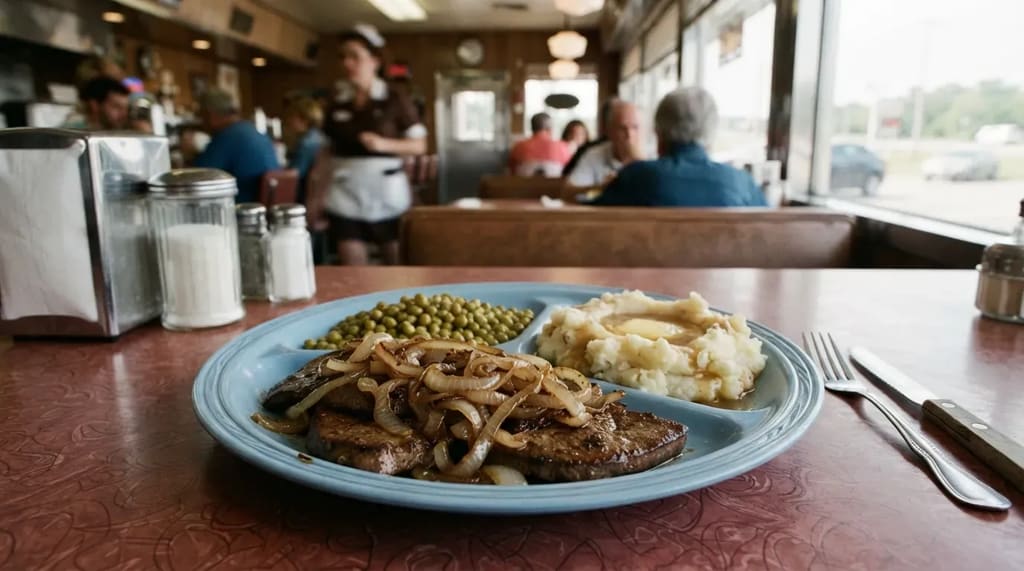
Diners put it on the chalkboard as the special of the day. Liver and onions came with mashed potatoes and a side of dread. Parents ordered it. Kids pushed it around the plate.
The twist is that it’s a nutritional powerhouse. A serving of beef liver can supply more than a full day’s vitamin A. Too much preformed vitamin A isn’t good either, which is why doctors suggest moderation. Most diners dropped it long ago.
But the next plate was pure comfort…
#4 – The Hot Open-Faced Turkey Sandwich, Drowned in Gravy
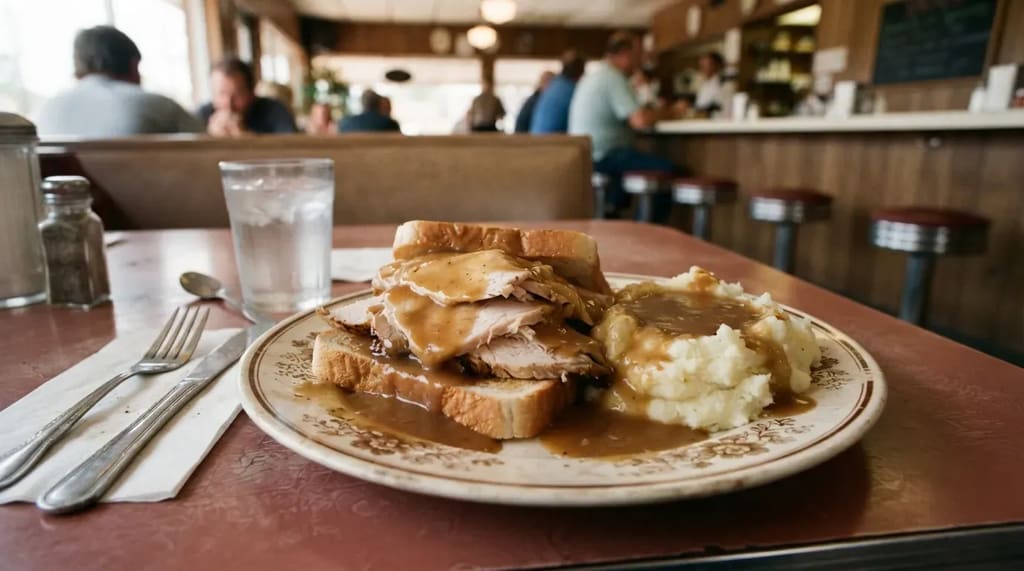
This one was comfort on a plate. White bread, sliced turkey, mashed potatoes and a ladle of gravy. Truck stops and diners served it to every kind of traveler.
Today it sounds like a calorie dare. The whole thing was eaten with a knife and fork because it was too soggy to pick up. Yet fans swear it beats most modern road-food meals.
And then came the chicken that surprised everyone…
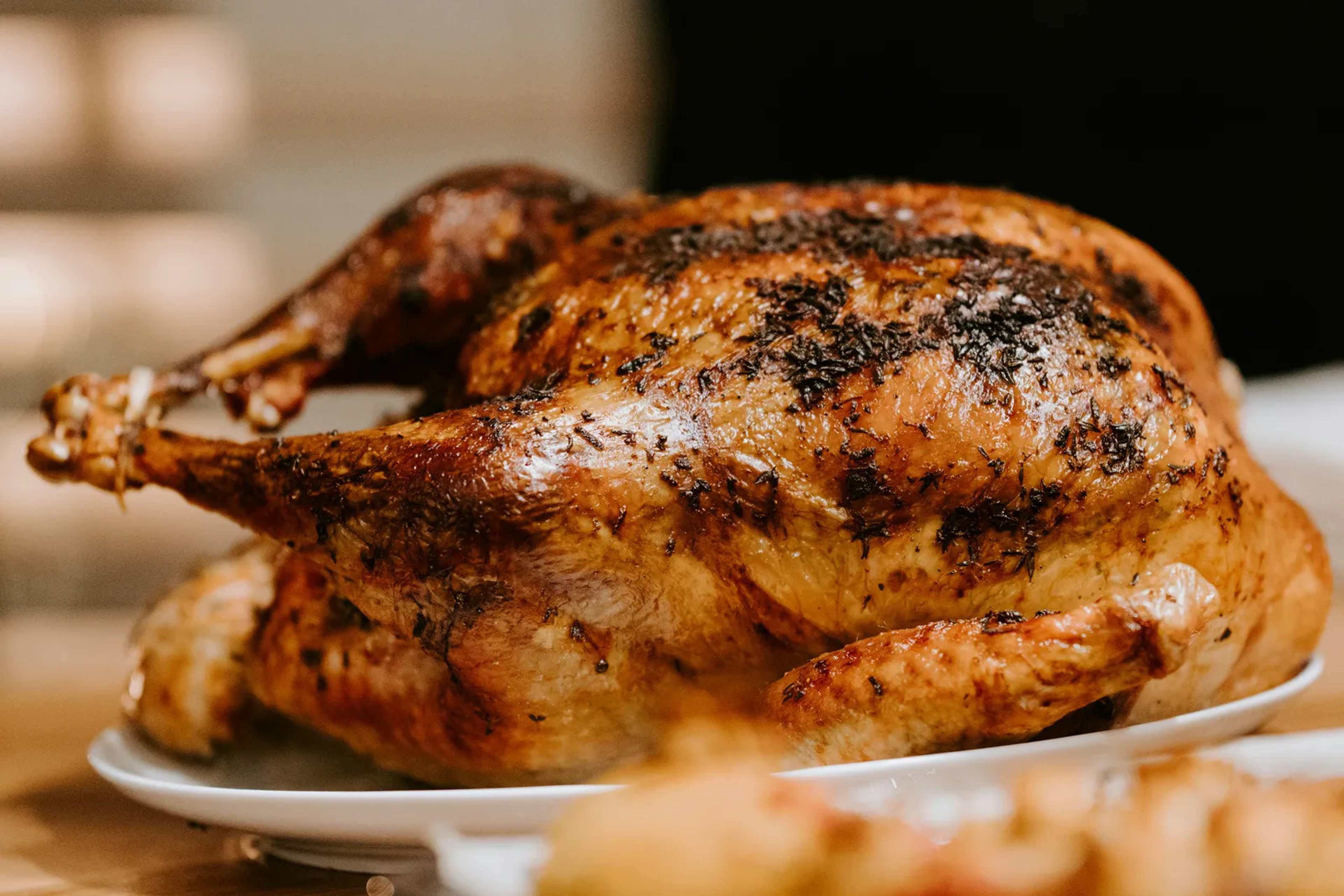
#3 – Cold Fried Chicken Wrapped in Wax Paper, Eaten at a Roadside Table
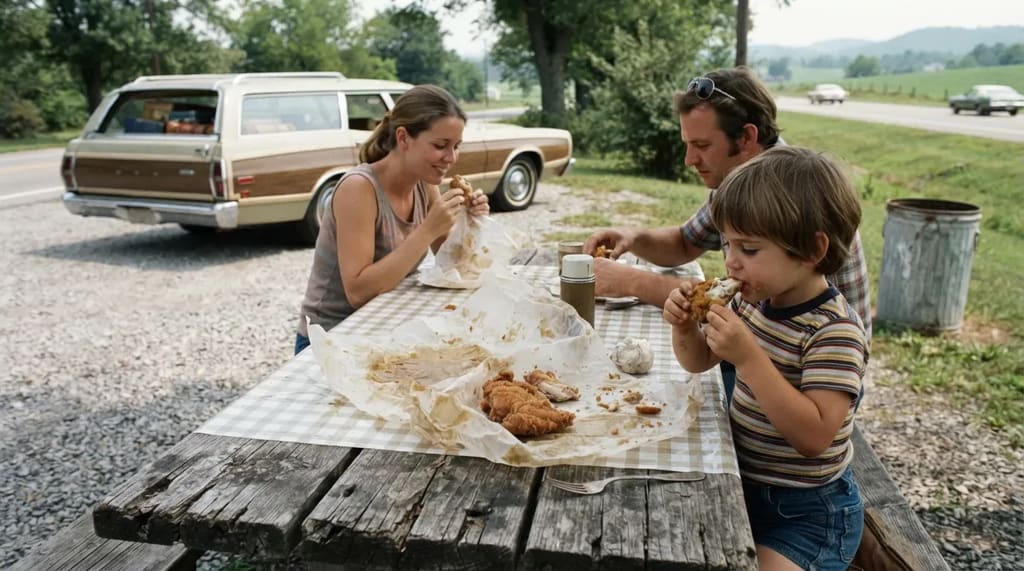
This one is a surprise entry. A family packed fried chicken the night before and ate it at a picnic table the next day. The wax paper went translucent with grease.
Here’s the part that holds up: cold fried chicken is actually fine if it stayed properly chilled. The USDA says leftover cooked poultry keeps three to four days in the refrigerator3. The mistake was leaving it in a warm trunk, and plenty of families did.
At a Glance
But the cooler itself was the real villain in #2…
#2 – Sandwiches Floating in the Melted Ice of the Family Cooler
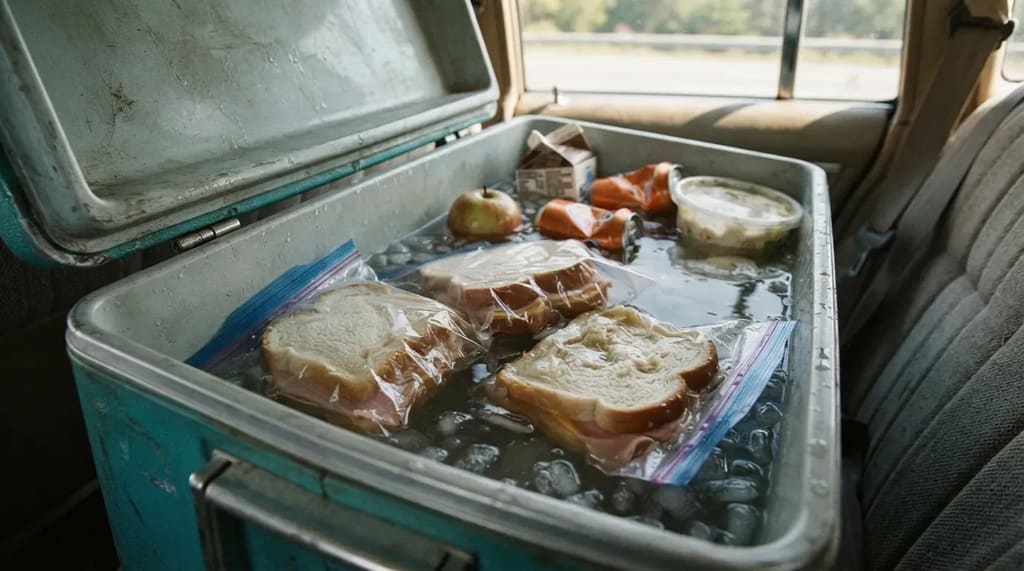
Open the lid at noon and the damage was done. The ice had turned to water, and the sandwiches were sitting in it. Any bag that wasn’t sealed tight let the water in.
A leaky bag turned a ham sandwich into soggy pulp. Worse, cold food sitting in lukewarm water is no longer cold. Experts now tell travelers to use ice packs and to keep food out of standing water.
But nothing prepared us for what people cooked on the engine in #1…
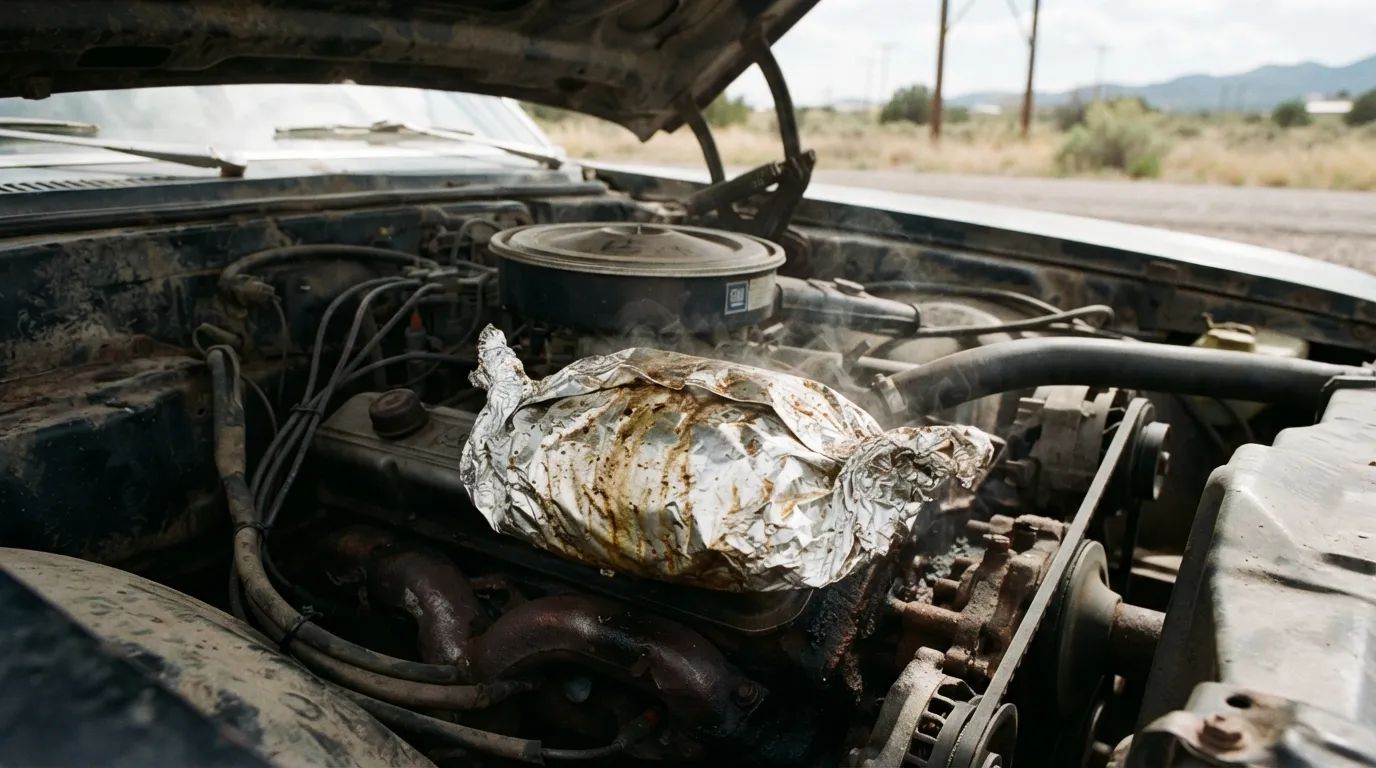
#1 – Dinner Cooked on the Car Engine, Wrapped in Foil
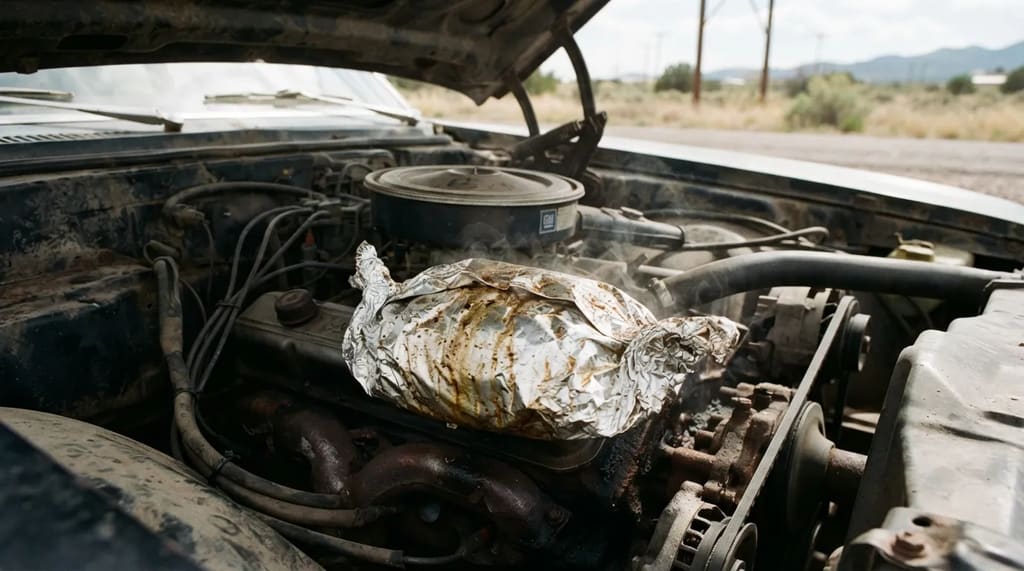
This sounds like a joke, and it wasn’t. Some drivers wrapped food in foil, tucked it onto the engine manifold and let the heat do the work. They counted cooking time in miles, not minutes.
There is an actual cookbook on the subject, “Manifold Destiny.” It was written by Chris Maynard and Bill Scheller. Modern engines have plastic covers and tight spaces, and loose foil near moving parts is a real hazard.
It was strange, and it was real.
The 1970s road-trip menu was cheap, salty, sugary and often left in the sun. Some of it, like cold fried chicken and tinned sardines, has aged better than anyone expected. Some of it, like the tuna salad in the hot car and the Sambo’s sign, has not.
What’s left is a snapshot of how families ate when the open road was the destination. Which of these rode in your family’s back seat?
- Tang Not a NASA Invention: https://www.deseret.com/2008/11/12/20285418/nasa-invented-tang-it-s-a-myth/
- IARC Processed Meat Evaluation: https://www.paho.org/en/news/26-10-2015-iarc-evaluates-consumption-red-meat-and-processed-meat
- USDA Leftovers and Food Safety: https://www.fsis.usda.gov/food-safety/safe-food-handling-and-preparation/food-safety-basics/leftovers-and-food-safety
- Pop Rocks Mikey Myth: https://www.mashed.com/979298/did-pop-rocks-and-soda-really-lead-to-a-gruesome-death/
- Indianapolis Business Journal Burger Chef: https://www.ibj.com/articles/burger-chef-indys-biggest-ever-restaurant-chain
- WRTV Burger Chef History: https://www.wrtv.com/lifestyle/history/1982-bye-bye-burger-chef-hello-hardees