Ask a first-time overnight train rider what they packed, and you’ll hear the usual suspects: a phone charger, a neck pillow, maybe some snacks. Ask someone who’s ridden a dozen sleeper trains, and you’ll hear duct tape, travel-size shampoo, and a very specific plan for tipping cash in small bills.
The night before departure isn’t downtime for these travelers. It’s quiet prep work most people never think to do until they’ve already suffered without it, somewhere around 2 a.m., cold and wide awake. Some of these habits sound like overkill until you understand exactly what they’re protecting against.
1. They Study the Seat Map Like It’s a Chess Move

Casual travelers just grab whatever seat pops up first. Experienced ones pull up the seating chart the night before and study bunk position, not just room type, because on Amtrak’s Superliner trains, sleeper compartments are split across two levels – and that single detail can make or break the trip.
Passengers who land an upstairs roomette often regret it the second they try to haul a suitcase up a narrow spiral staircase. That’s exactly why veterans check free checked-bag policies before booking, so their heaviest bag never has to make that climb. They also know the most popular option, the Amtrak Roomette, converts its two facing seats into bunk beds only after dinner service, not before, which changes how they plan the whole evening.
Quick Compare: Upper vs. Lower Level Roomettes
- Upper level: closer to the dome car, but reachable only by a narrow spiral staircase
- Lower level: fewer stairs, and typically the level with the accessible bedroom and its private toilet
- Luggage racks: located at the end of each sleeper car, not tucked inside every roomette
- Heavy bags: far easier to manage from the lower level, especially traveling solo
2. They Pack a Separate “Go-Bag” for the Night
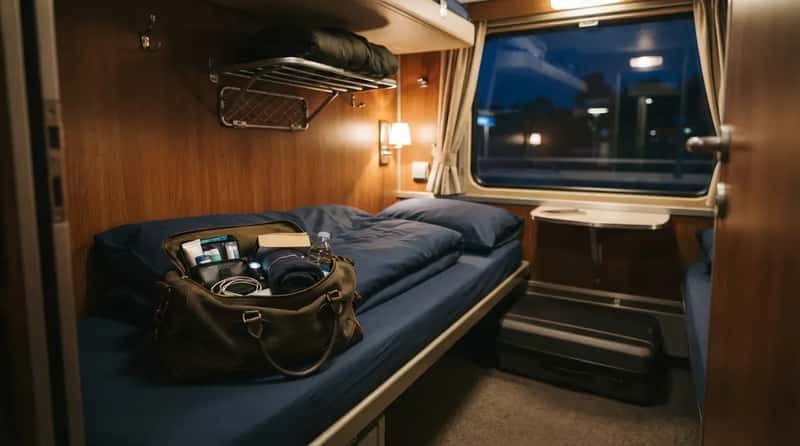
Nobody wants to unzip a full suitcase at 11 p.m. while a stranger tries to sleep three feet away. Experienced sleeper-car travelers build a small overnight bag the night before, completely separate from their checked luggage, and it changes everything about how the room feels.
Cramped compartments turn ugly fast once bags start piling up. If you’re sharing a sleeper, tripping over suitcases turns a cozy room into a cramped one, so veterans stuff everything they need for the night into a small carry-on and keep the floor clear. Even guides written specifically for sleeper-car newcomers repeat the same rule: pack a small overnight bag so you never have to dig through large luggage once the room’s already made up for bed.
3. They Download Movies and Books Before Losing Signal
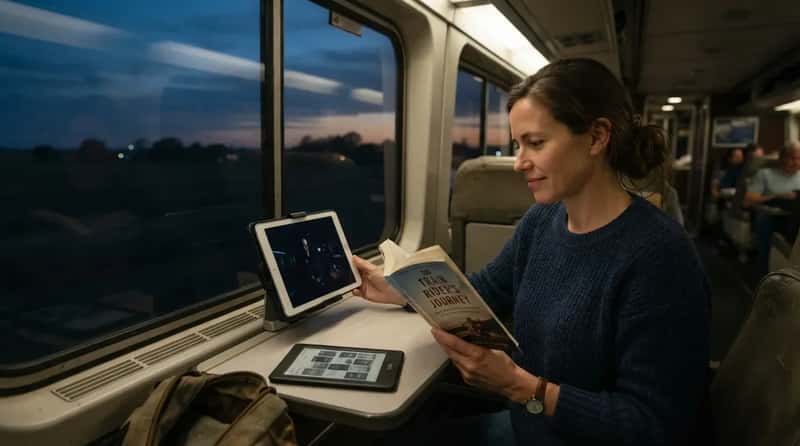
Most first-timers assume train Wi-Fi will save them. Experienced riders know better, so they load their devices with movies, shows, and books the night before departure, not while already rolling through the middle of nowhere.
Long stretches of track cut through dead zones with zero cell service. One frequent Texas Eagle rider learned this the hard way, discovering that huge sections of that route run through rural areas where signal simply vanishes; unplugging unexpectedly turned out to be kind of nice, but only because shows were already downloaded and ready to go. Some travelers lean into the disconnect entirely, packing puzzle books or a deck of cards instead of fighting it.
4. They Pre-Pack a Cooler Like It’s a Road Trip
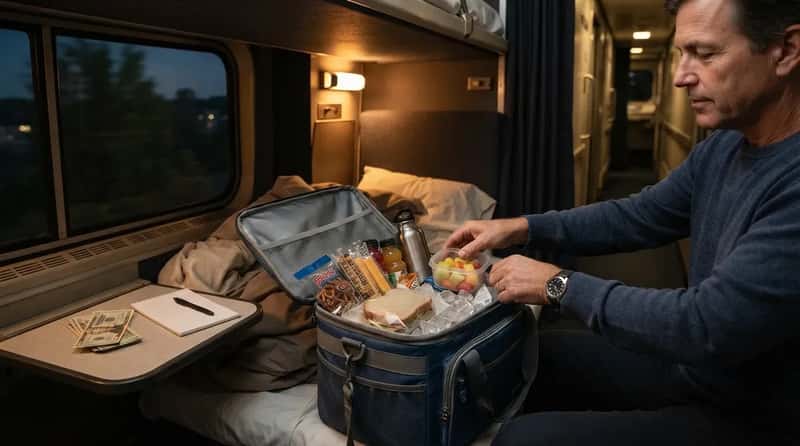
This one catches first-timers off guard every single time. Experienced train travelers treat the night before like grocery night, packing a small collapsible cooler because room service simply doesn’t exist on a train.
Amtrak literally cannot store or heat personal food for passengers, which is exactly why frequent riders never leave this for the morning of. Veterans fill their cooler with sandwiches, snacks, and drinks, knowing their room attendant can top off the ice as needed throughout the trip. Some go a step further and calculate their dining-car tipping budget the same night, since a common guideline is around $2 for breakfast, $3–$5 for lunch, and $5–$10 for dinner.
5. They Pack Their Own Shampoo (Seriously)
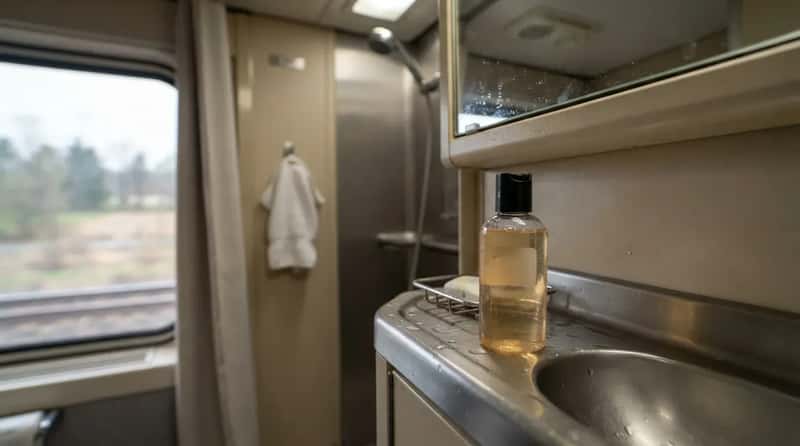
This is the detail that trips up almost every rookie sleeper-car passenger, and it happens simply because nobody warns them ahead of time.
Amtrak provides soap and towels in every sleeper room, but not shampoo, and that gap catches people off guard constantly. Sleeping car attendants confirm it plainly: sleepers just aren’t stocked with shampoo, so skipping it means washing your hair with bar soap, a mistake every frequent rider says you only make once. Veterans toss a two-ounce travel bottle into their bag the night before so they never have to learn that lesson standing wet in a train shower.
6. They Pack Duct Tape for a Weirdly Specific Reason
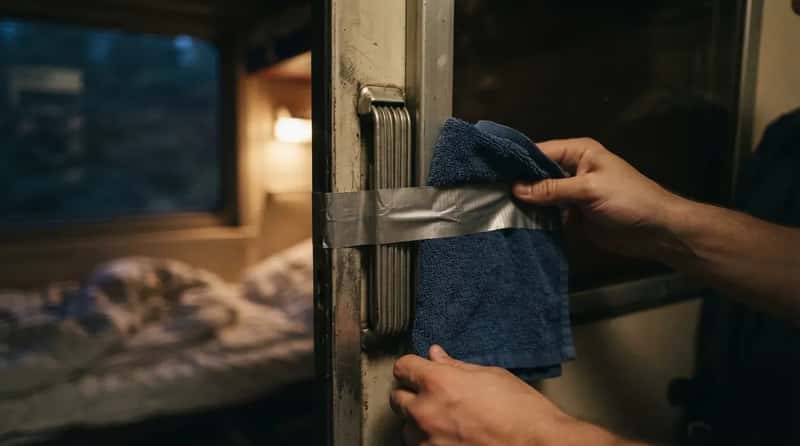
If you spotted duct tape on someone’s train packing list, you’d assume it was a joke. Experienced overnight riders know it’s dead serious.
Older train equipment rattles, clanks, and leaks cold air in ways that can wreck an entire night’s sleep. As one longtime rider explains, unless the train is crawling slowly over mountain grades, there are bound to be bone-rattling moments, since aging equipment on freight-maintained tracks makes sliding doors and in-room mechanics clank constantly. The fix is almost absurdly simple: a folded towel and a strip of tearable duct tape redirect the cold draft and muffle the noise, and sleeping car attendants say it’s one of the most surprising tricks frequent passengers swear by.
7. They Lay Out Earplugs and an Eye Mask Before Bed, Not During It
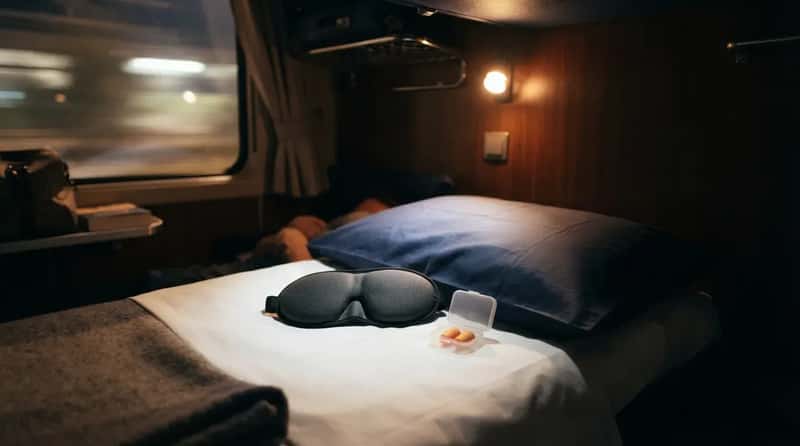
Fumbling through a bag in the pitch dark for earplugs is a rookie mistake. Experienced riders set theirs out the night before, right next to the pillow, so nothing gets lost in a moving, dimly lit compartment.
Light and noise control can genuinely make or break an overnight trip, since train interiors are rarely fully dark or fully silent. Amtrak itself acknowledges this, noting that light sleepers benefit from earplugs and an eye mask to block out noise and light, especially when a Quiet Car isn’t available. European night train operators say the same for a different reason: in some compartments the lights can’t be switched off completely, so a sleep mask isn’t a luxury – it’s basically required gear.
8. They Set Out Slip-On Shoes for Middle-of-the-Night Walks
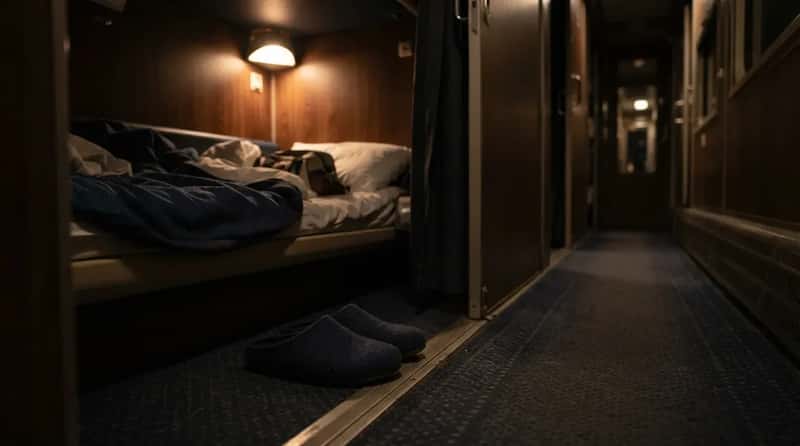
Nobody warns you about this until you’ve lived it once: fumbling with shoelaces at 3 a.m. in a swaying train car is genuinely miserable. Experienced travelers solve the problem the night before by setting out shoes that require zero effort to put on.
The walk to a shared bathroom happens more often than most people expect on a long overnight run. One frequent rider puts it simply: slip-on shoes make it easy to walk down the hall in the dark, whether you’re in coach or a sleeper. Some even pack a second pair specifically for the shower, keeping sneakers and flip-flops separate, a small detail that sounds excessive until you’re the one hopping barefoot down a moving hallway.
9. They Check Weather for Every City Along the Route, Not Just the Start
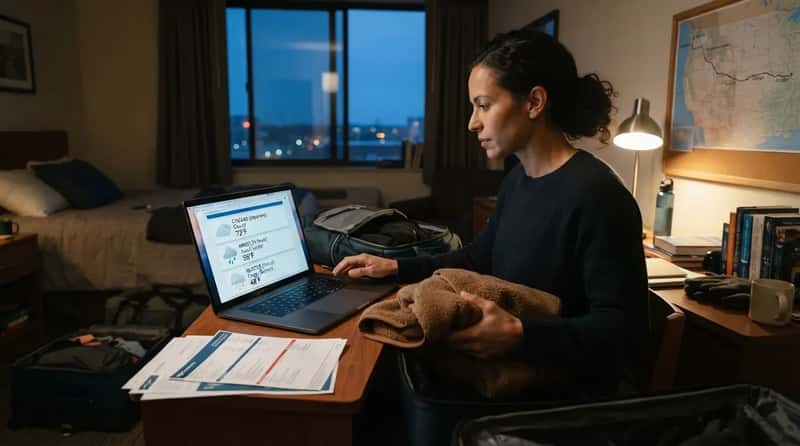
Most travelers check the weather where they’re leaving from and call it done. Experienced train riders check the weather everywhere the train goes, because a single overnight route can pass through three or four completely different climates.
A trip that starts warm can end up near-freezing by morning, and that catches people off guard constantly. As one frequent Amtrak rider notes, weather can shift dramatically along a route like the Empire Builder, which runs between Chicago and Seattle and crosses plains, mountains, and coastline in under 24 hours. Packing the night before means checking three or four forecasts, not just one, so nobody steps off the train shivering in shorts.
Fast Facts
- The Empire Builder connects Chicago to both Seattle and Portland along one overnight route
- The train passes near Glacier National Park, where temperatures often run far colder than the departure city
- A single run can shift from open plains to mountain passes to coastline before the trip ends
- Packing for only one climate zone leaves travelers unprepared for at least one more
10. They Set Aside Cash for Tips Before Boarding
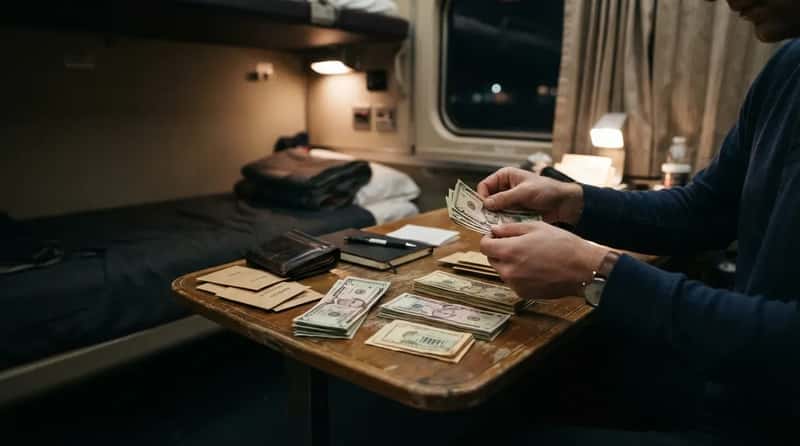
ATMs don’t exist on trains, and card readers aren’t guaranteed at every dining car table either. Experienced sleeper passengers count out small bills the night before specifically for attendants and servers.
Most first-timers have no idea tipping expectations even exist on a train, let alone how much to bring. Frequent riders plan ahead using a rough guide – around $2 for breakfast, $3–$5 for lunch, and $5–$10 for dinner per person – and often set aside a little extra for two consecutive nights of service. Realizing you’re broke in the dining car is an awkward, entirely avoidable moment, and it simply never happens to someone who prepped their wallet the night before.
At a Glance: Dining Car Tipping
- Breakfast: around $2 per person
- Lunch: around $3–$5 per person
- Dinner: around $5–$10 per person
- Sleeping car attendant: usually tipped separately, per night of service
11. They Triple-Check Their Reservation Is Actually Confirmed

This is where a surprising number of European night train trips fall apart, and it happens because people assume a ticket alone is enough. It isn’t, and finding that out at the platform is brutal.
On Austria’s Nightjet network, a journey requires an actual reservation, and boarding without one isn’t permitted at any comfort level: seat, couchette, or sleeper. Booking guides repeat the same warning for good reason, urging travelers to reserve at the same time they purchase their ticket. Experienced riders pull up their confirmation email the night before just to be certain, because a station-morning surprise is the worst possible way to start a trip.
12. They Pack Disinfecting Wipes for Shared Bathrooms
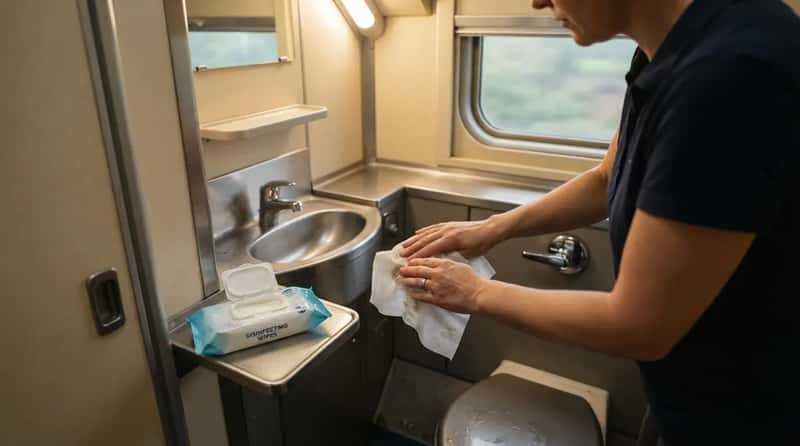
This habit sounds slightly extreme until you think about how many strangers touch the exact same surfaces over a two- or three-day trip.
Some frequent sleeper passengers burn through two full packs of wipes on a single trip, and it’s not paranoia, it’s math. Sleeping car attendants who see it every run confirm that communal bathrooms see more traffic than people expect, so veterans pack extras and wipe down tray tables, door handles, toilet seats, and faucet handles as routine. It sounds like overkill until you actually picture one bathroom serving an entire train car for two straight days.
13. They Charge Every Device to 100% and Pack a Backup Battery
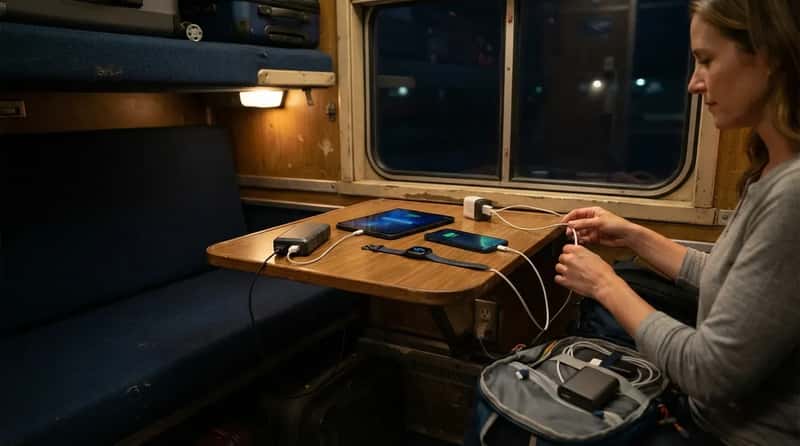
Outlets on a train are not the guarantee most people assume they are, and experienced riders know it well enough to prep the night before departure.
Some sleeper cabins only have a single working outlet meant for two people to share. As one longtime rider notes, older Amtrak sleeper cars sometimes have just one outlet, meaning one passenger ends up running a cord clear across the room to reach it. That single detail explains why veterans charge everything fully the night before and pack a portable battery instead of gambling on decades-old cabin wiring, since nothing kills a scenic sunrise photo faster than a phone stuck at 15%.
Worth Knowing
- A basic 10,000 mAh power bank can typically recharge a smartphone about two to three times
- A short multi-port cable helps avoid competing over the single outlet in a shared roomette
- Charging everything before boarding removes the guesswork over who gets the outlet first
14. They Set an Actual Alarm Instead of Trusting the Train
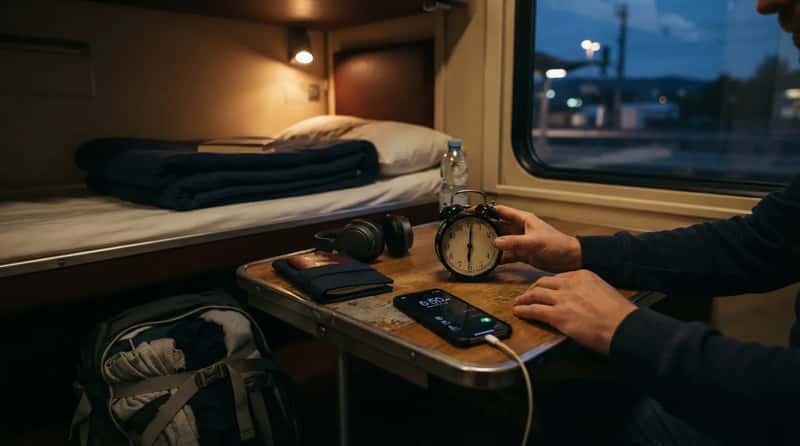
This is the habit that separates a relaxed arrival from a frantic, half-dressed scramble off the platform, and experienced travelers never skip it.
Overnight trains don’t wait, and neither do the stations that slide by in the dark. European night train guidance is blunt about this, recommending a real alarm clock or the sleeping car’s wake-up service so there’s time to freshen up and grab breakfast before arrival. Veterans set this up the night before, phone alarm included, because waking up thirty minutes from your stop with luggage still shoved under the bunk is a stress nobody needs.
None of these habits are glamorous. They’re small, specific, slightly odd routines built from actual nights spent rattling across the country or through the Alps in the pitch dark.
But together, they explain why some passengers step off a 20-hour train ride looking rested while others stumble out looking like they lost a fight with their own suitcase. The real secret isn’t luck or an upgraded room, it’s a night-before routine most people never hear about until they’ve already lived through the alternative. Which one of these did you already know, and which one are you stealing for your next trip?