Most people think the night before a trip is for cramming socks into a suitcase. Experienced travelers use it for something sneakier: closing small gaps, like a passport that looks valid but isn’t, or a phone that dies before the boarding pass loads.
The fourteen habits below come from official guidance and published airline rules, not travel folklore. A few take two minutes, and one of them can decide whether an airline lets you board at all. The strongest one is saved for last, and it’s the habit most people cut first.
#14 – They Check the Forecast for Every Stop, Not Just the Last One

Your packing list is only as smart as your forecast. Plenty of travelers still pack for the weather at home and hope for the best.
Experienced travelers look up every stop on the route, including layover cities and day-trip locations. A coastal evening, a mountain morning, and a city afternoon can each call for a different layer.
They check the daily high and low, the chance of rain, and the wind, because a breezy ferry deck feels nothing like a sheltered street. Then they swap one layer in or out instead of adding a whole new outfit.
The real trick is checking a second time, right before the zipper closes. That last look is the one that changes what actually goes in the bag.
That pile of clothes hides an even smarter trick, and it starts with your bed in #13…
#13 – They Lay Everything Out Before Packing Anything

The bed is the most underrated packing tool in travel. Seeing everything at once exposes duplicates and gaps instantly.
Experienced travelers group items by outfit, then by day. Anything that doesn’t fit into at least two outfits gets a hard second look.
There’s a payoff beyond neatness. A tighter pile makes a carry-on-only trip realistic, which can save money on checked bag fees and time at baggage claim.
- Lay out clothes by outfit, not by category.
- Keep documents, chargers, and medications in one separate spot.
The layout doubles as a last-minute audit. If something on the bed has no job, it stays home.
Here’s a take that splits the travel world. Many seasoned travelers argue that packing days in advance is a mistake, because you end up digging through the bag for the one thing you forgot.
Once the bag is full, one tiny bottle can undo all that careful work at security in #12…
#12 – They Measure Every Liquid Against a 2006 Rule

Most people don’t realize the size of the bottle matters more than what’s left inside. The rule is simple, and it still catches people every day.
Each passenger may carry liquids, gels, and aerosols in containers of 3.4 ounces or 100 milliliters, all in one quart-size bag. The current rules were introduced in 2006, after authorities disrupted a plot involving liquid explosives.
A 6-ounce bottle with only 1 ounce left is still prohibited in carry-on luggage. The rule also covers consumables like salsa, honey, and peanut butter.
Newer scanners confuse people. TSA says CT scanners may let travelers leave travel-size liquids in their bags in certain lanes, but the liquid limit itself hasn’t changed.
Do the check at home, where a full-size shampoo costs you a little space instead of a trip to the trash bin at the checkpoint. Checked bags are far more forgiving, so decide tonight which bag each bottle rides in.
The next item on the list is the one that fails silently at 35,000 feet in #11…
#11 – They Charge Everything and Check the Power Bank

A dead phone can mean a dead boarding pass, a dead map, and a dead ride home. Experienced travelers treat charging as a pre-flight task, not a background one.
They plug in the phone, earbuds, watch, e-reader, and power bank the night before. They also pack the cables in the same pouch, so nothing gets left in a wall outlet at home.
Many also pack a short cable, because gate-area outlets are scarce and usually crowded. It sounds minor until you’re sitting on the carpet with a cord stretched across a walkway.
Here’s the part people skip. Airline safety rules generally require spare lithium batteries and power banks to travel in the cabin, not in checked bags.
Fast Facts
- Spare lithium batteries and power banks ride in carry-on bags only.
- Under 100 watt-hours: generally allowed in the cabin.
- 100 to 160 watt-hours: usually needs airline approval, with a limit of two spares.
- Over 160 watt-hours: not allowed on passenger planes.
- The watt-hour rating is typically printed on the battery label.
A power bank tucked into a checked suitcase is an easy mistake to make. Check your airline’s current battery rules before you seal the bag, since limits can vary by carrier and country.
Charged devices only help if the right things are stored on them, which brings us to #10…
#10 – They Download Everything That Doesn’t Need Signal
Signal disappears at the worst possible moments. Experienced travelers assume it will.
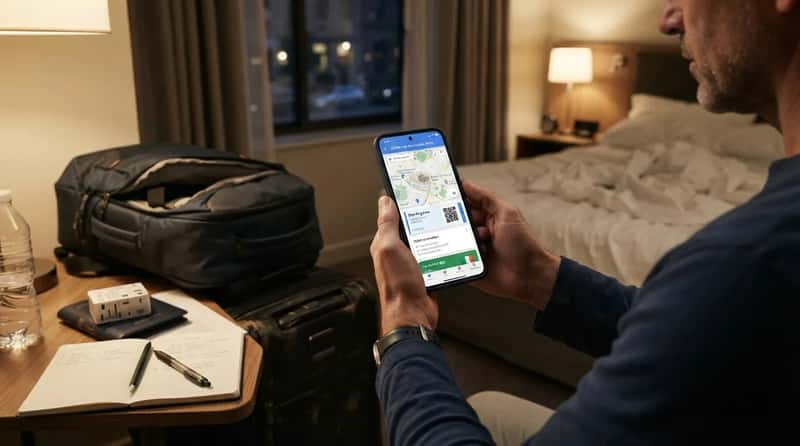
Tonight they save offline maps for the destination, along with hotel confirmations, ticket QR codes, and any reservations. Many major map apps let you save an area for offline use, but the steps differ by app.
They also load entertainment before leaving the house. Airport Wi-Fi is unpredictable, and a long delay is a bad time to discover a streaming app needs a connection.
- Save offline maps of the destination and any transit hub.
- Download the boarding pass and hotel address to your phone.
For international trips, they also save translation packs where their apps allow it.
The one download most people forget is the address of their own hotel, written in the local language. A taxi driver can read that even when your phone can’t.
Downloads cover the digital side of the trip, but money is the physical side, and it’s next in #9…
#9 – They Make Sure They Have Two Ways to Pay
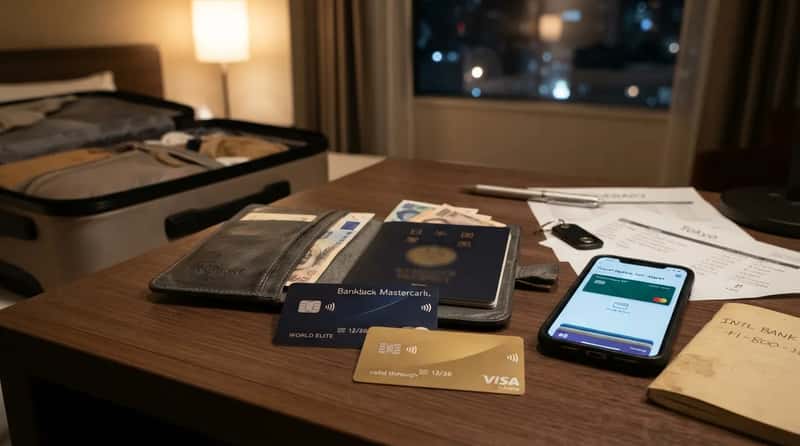
One card is a single point of failure. Experienced travelers carry at least two, from different accounts, and keep them in different places.
Tonight they check the expiration dates, the daily limits, and whether the cards work with a mobile wallet. They also confirm they know the PIN, because some machines abroad still ask for one.
Many card issuers now handle travel alerts through their apps. Some still want a heads-up, so open your issuer’s app or website and see what it says for your destination.
They also save the issuer’s international phone number somewhere offline. Toll-free numbers often don’t work from abroad.
The mistake is learning your card is blocked while standing at a foreign checkout. Fixing it from an unfamiliar time zone is far harder than fixing it from your couch.
Cards can be replaced. The next thing on the list is much harder to replace from abroad, in #8…
#8 – They Back Up Their Documents Twice
A lost passport is a bad day. A lost passport with no copy is a much worse one.
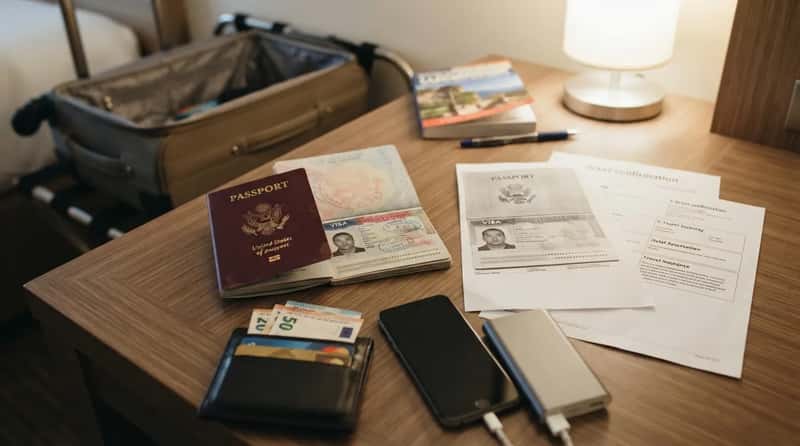
Experienced travelers save photos or scans of their passport, visas, insurance details, reservations, and emergency contacts. They store them somewhere reachable from any device, and they share a copy with someone at home.
Here’s an opinion that gets pushback. Some say paper backups are pointless in the age of phones, but a dead or stolen phone takes your digital copies with it.
A paper copy kept in a different bag from the originals covers the exact scenario phones can’t. It also gives an embassy or consulate something concrete to work from if replacement becomes necessary.
Quick Compare
- Phone copy: Fast and searchable, but gone if the phone is lost, stolen, or dead.
- Cloud copy: Reachable from any device, but it needs a signal and a login you remember.
- Paper copy: Needs no battery or Wi-Fi, but only helps if it’s kept apart from the originals.
Phone numbers live on phones now, so a handwritten emergency contact is worth the ten seconds. It’s the kind of note you forget about until the screen goes black.
Copies protect the trip you’re already on. The next habit decides whether you even reach the airport on time in #7…
#7 – They Plan the Ride, Set Two Alarms, and Know the Cutoffs
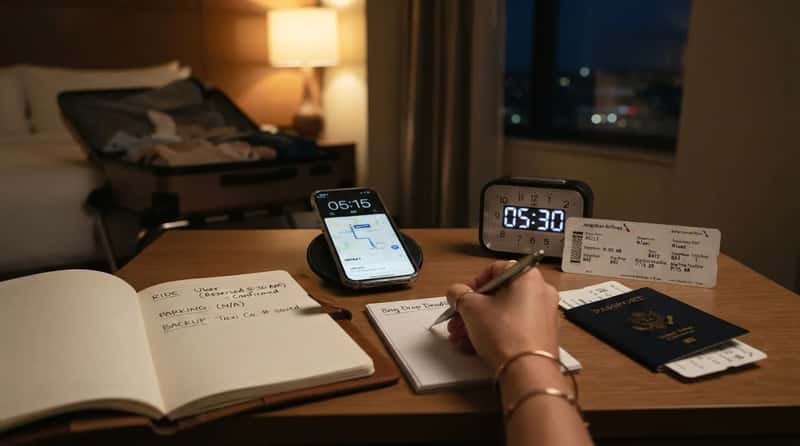
Most people plan the flight and forget the trip to the airport. Experienced travelers plan both.
Tonight they confirm the route, the parking or ride plan, and a backup option. Then they set two alarms on separate devices.
The cutoffs are stricter than many travelers think. Airlines publish hard check-in and bag deadlines, and missing one can mean being rebooked on a later flight.
American’s checked-bag cutoff, for example, is 45 minutes before U.S. departures and 60 minutes before international ones. These are minimums, not recommendations.
Here’s a take that will spark debate: arriving three hours early for every flight is overkill. Experienced travelers usually scale their buffer to the airport, the season, and whether they’re checking bags.
Getting out the door is only half the problem, because what you leave behind matters in #6…
#6 – They Secure the House Before They Sleep
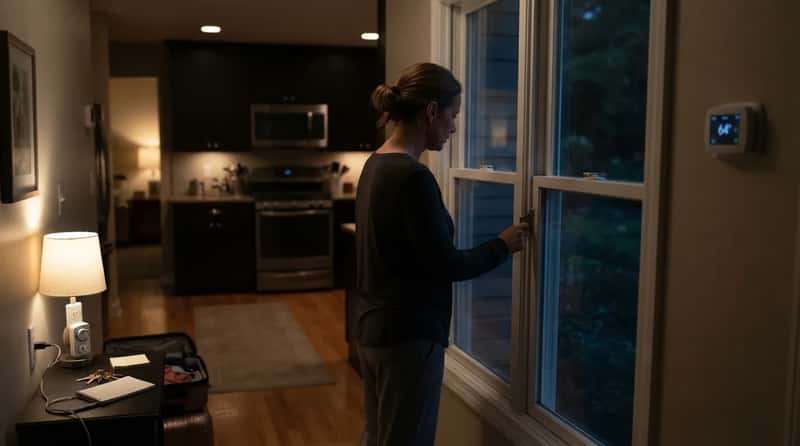
The trip only feels relaxing if you aren’t wondering about the stove halfway across the country. Experienced travelers do a quick walk-through tonight.
They take out the trash, deal with perishables, and unplug anything that doesn’t need to stay on. They also lock windows, adjust the thermostat, and confirm someone has a spare key.
Longer trips add a few steps, such as pausing mail or newspaper deliveries and asking a neighbor to keep an eye on things. A full mailbox is a visible sign nobody is home.
A lamp on a timer helps the house look lived-in. It’s cheap, quiet, and works while you sleep on the plane.
They also keep their plans off public social media until they’re back. That’s simple caution rather than paranoia, since a post about being away tells strangers the house is empty.
Once the house is handled, the smartest move is a digital one in #5…
#5 – They Check Flight Status and Check In the Moment It Opens

The airline’s app knows things you don’t. Experienced travelers open it before bed, so any delay, gate change, or seat problem shows up while there’s still time to fix it.
Online check-in typically opens between 24 and 48 hours before departure, though the exact window varies by carrier and route. Delta, Southwest, and United all list 24 hours.
During check-in, passengers can select or change seats, pre-pay for checked bags, enter passport details for international flights, and download a digital boarding pass. Delta says eligible passengers who are logged into its app are checked in automatically 24 hours before departure.
Some airlines open check-in far earlier, and easyJet opens it 30 days beforehand. Policies differ widely, so check yours rather than assuming.
Checking in is the easy part. What you carry through security can quietly undo it, as #4 shows…
#4 – They Put Medications and Essentials in the Carry-On
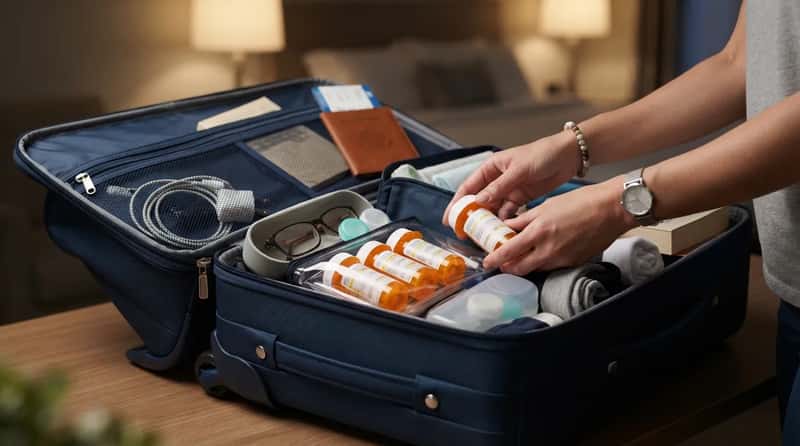
Checked bags get delayed, and prescriptions can’t wait. Experienced travelers keep the irreplaceable items with them.
That means medications, glasses, contact lenses, chargers, a change of underwear, and any key documents. If the checked bag goes missing, the trip can still go on.
The liquid rules have carve-outs here. Liquid prescription medications, breast milk, and infant formula are permitted in amounts above 3.4 ounces.
Tell the TSA officer about them and keep them separate from other liquids to avoid delays. Plenty of travelers don’t realize they can bring these over the limit at all.
Keeping medications in their original packaging also makes questions easier to answer. It’s a small habit that can turn a long conversation into a short one.
Once the bag is sorted, there’s one area where the rules change depending on where you’re going, and it’s easy to get wrong in #3…
#3 – They Confirm the Entry Documents Beyond the Passport
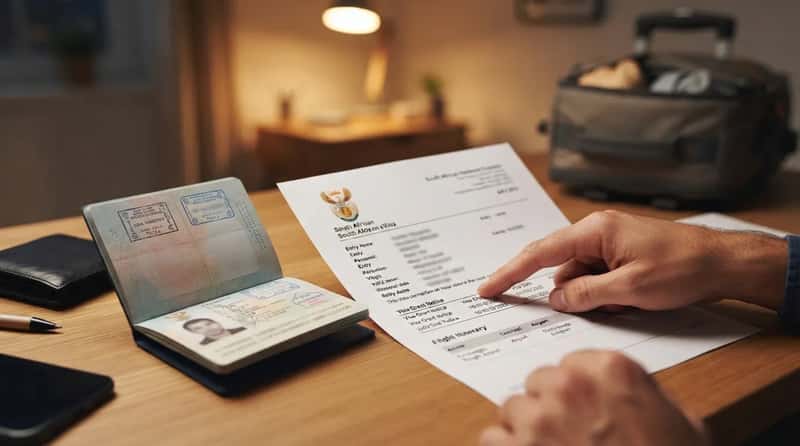
A valid passport isn’t always enough to enter a country. Experienced travelers check whether they also need a visa or other approval.
Passport validity is separate from visa, eVisa, and ETA requirements. A connecting country can also have its own document rules, depending on the airport and itinerary.
Then there are the blank pages. Some destinations require one blank page, while others require two consecutive blank pages.
South Africa, for example, requires 30 days of validity beyond your intended departure and two consecutive blank visa pages. Requirements like these can change, so verify them at the source.
Confirm the current rule on the State Department’s international travel pages and with the destination’s embassy or consulate. Rules also vary by nationality, so check the ones for your passport.
Worth Knowing
- Passport validity, visas, eVisas, and ETAs are separate checks.
- A connecting country can add its own document rules.
- Blank-page requirements run from one page to two consecutive pages.
- Rules change by nationality, so look up the ones for your passport.
And the most misunderstood rule of all is the one in #2…
#2 – They Verify the Passport Rule That Isn’t Really One Rule
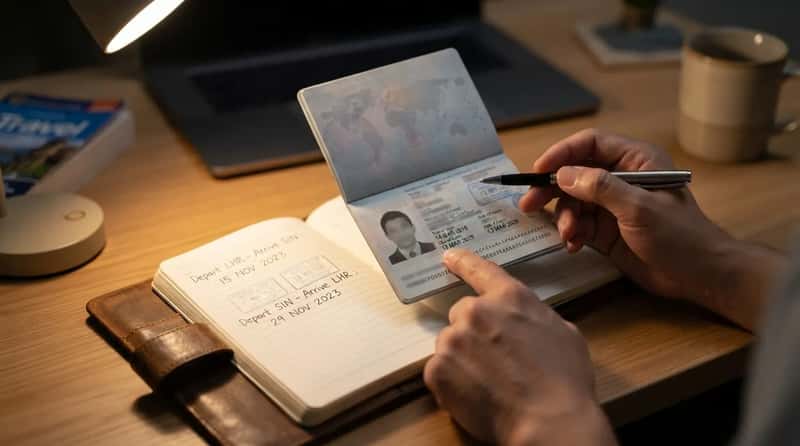
Most people believe “six months” is a universal rule. It isn’t, and that gap catches travelers out.
Many non-EU travelers entering the Schengen area need a passport valid for at least 3 months after they intend to leave, and issued within the last 10 years. Countries that commonly require six months of validity include mainland China, Vietnam, Thailand, Singapore, and India, among others.
The clock can start at different points. Some countries count six months from arrival, while others count from your departure date.
Check three dates tonight: when the passport was issued, when it expires, and when you plan to come home. Put them side by side and the problem, if there is one, jumps out.
A passport can look valid and still fail a destination’s entry rules. Airlines check passport validity before boarding and can refuse to carry you if you don’t meet the requirements.
A renewal takes far longer than one night, so this is a last-chance check. The final habit is the one people sacrifice first, and it’s waiting in #1…
#1 – They Protect Their Sleep, Not Just Their Packing

The most important thing in the bag is you. Staying up until 2 a.m. finishing a packing list is the mistake that quietly ruins the first day.
The CDC’s Yellow Book notes that sleep loss during travel can worsen jet lag symptoms. For long trips, the advice starts earlier than the night before.
For big time-zone jumps, the CDC suggests shifting your sleep about 1 hour per day for a few days before departure. Go earlier for eastward travel and later for westward.
Eastward trips are usually the tougher adjustment, which is one more reason the night before matters. Starting the trip already exhausted only makes the gap wider.
The plan can be small. Pack the essentials early, set out tomorrow’s clothes, and let the last half hour before bed be boring.
So finish the list, then go to bed. The bag can survive being packed at 10 p.m., but you can’t pack a night of sleep after the fact.
The Bottom Line
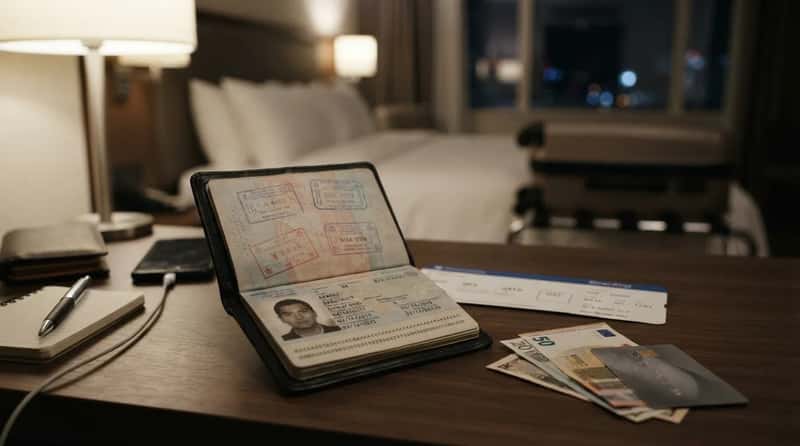
The night before a trip is really a short audit: forecast, liquids, batteries, offline files, payment, copies, transport, and home. None of it is glamorous, but each item prevents a specific problem.
The stakes rise with the paperwork. Passport validity and entry documents vary by country, airline, and nationality, and airlines can refuse boarding when the requirements aren’t met.
You don’t need to do all fourteen every time. Even two or three can turn a frantic morning into a boring one, which is exactly what you want from travel day.
And the habit people cut first is the one that matters most: sleep. Which of these 14 do you usually skip, and which one has already cost you?
Bonus #15 – The Two-Minute Bag Insurance Nobody Tells You About
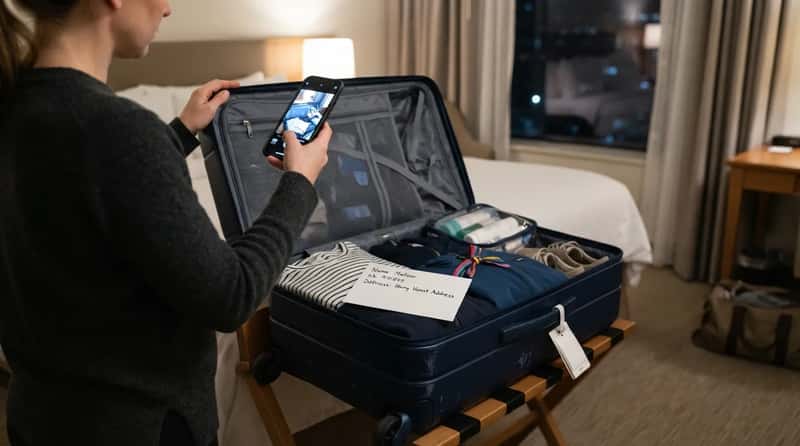
Do this before you zip the suitcase: build a “lost bag file” while you still have the bag in your hands. When an airline loses or delays luggage, the first thing it asks for is a detailed description, and that is hard to give from memory.
- Photograph the outside and the contents. Take one clear shot of the closed bag from each side, showing any ribbon, strap, or sticker, and one shot of the packed contents. Those photos help with the airline’s report and with any later claim for missing items.
- Put a paper slip inside. Write your name, your cell number, and the address of your first night’s stay on it, then place it on top of your clothes. If the outside tag rips off, staff can still find you.
- Add a tracker if you own one. Drop a Bluetooth tracker into an inner pocket, never into a power bank pouch. Then you can show the airline a location instead of just waiting on hold.
- Photograph the baggage claim tag at the counter. The barcode sticker on your boarding pass jacket is your proof that the bag was checked.
If the bag doesn’t show up, file the report at the airline’s baggage desk before you leave the airport, and ask for a reference number. For international flights, the Montreal Convention sets a written-complaint window of 7 days for damage and 21 days for delay after you get the bag, so don’t sit on it.
Keep the essentials from #4 in your carry-on. Then a missing suitcase is an inconvenience, not a ruined trip.