Most first-timers board a scenic train thinking the hard part is over the moment they find their seat. Sit back, look out the window, let the landscape do the work – right?
Not quite. The brochure shows you snow-capped peaks and vine-covered valleys, but it never mentions observation car politics, the side of the train that actually matters, or the booking window that separates a jaw-dropping seat from a wall of concrete.
Scenic rail journeys hide layers of strategy, unspoken etiquette, and timing tricks that no travel blog bothers to explain. Here’s what actually happens once you’re aboard – starting with the seat almost everyone books wrong.
#14 – The “Best Seat” You Booked Is Probably the Wrong One
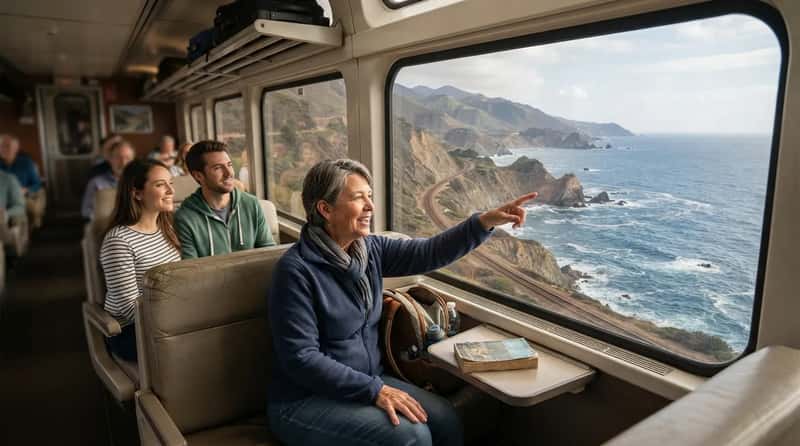
Almost every first-timer books a window seat and calls it a day.
Turns out, which side of the train you sit on can make or break the entire journey – and the brochure never mentions it.
On coastal routes, the sea-facing side is the obvious pick, and rail forums often spell out the best side for specific journeys mile by mile.
The right side varies by route, season, and direction of travel – when in doubt, ask the car attendants, since they’ve watched thousands of passengers get it wrong.
But that’s nothing compared to what we found about #13…
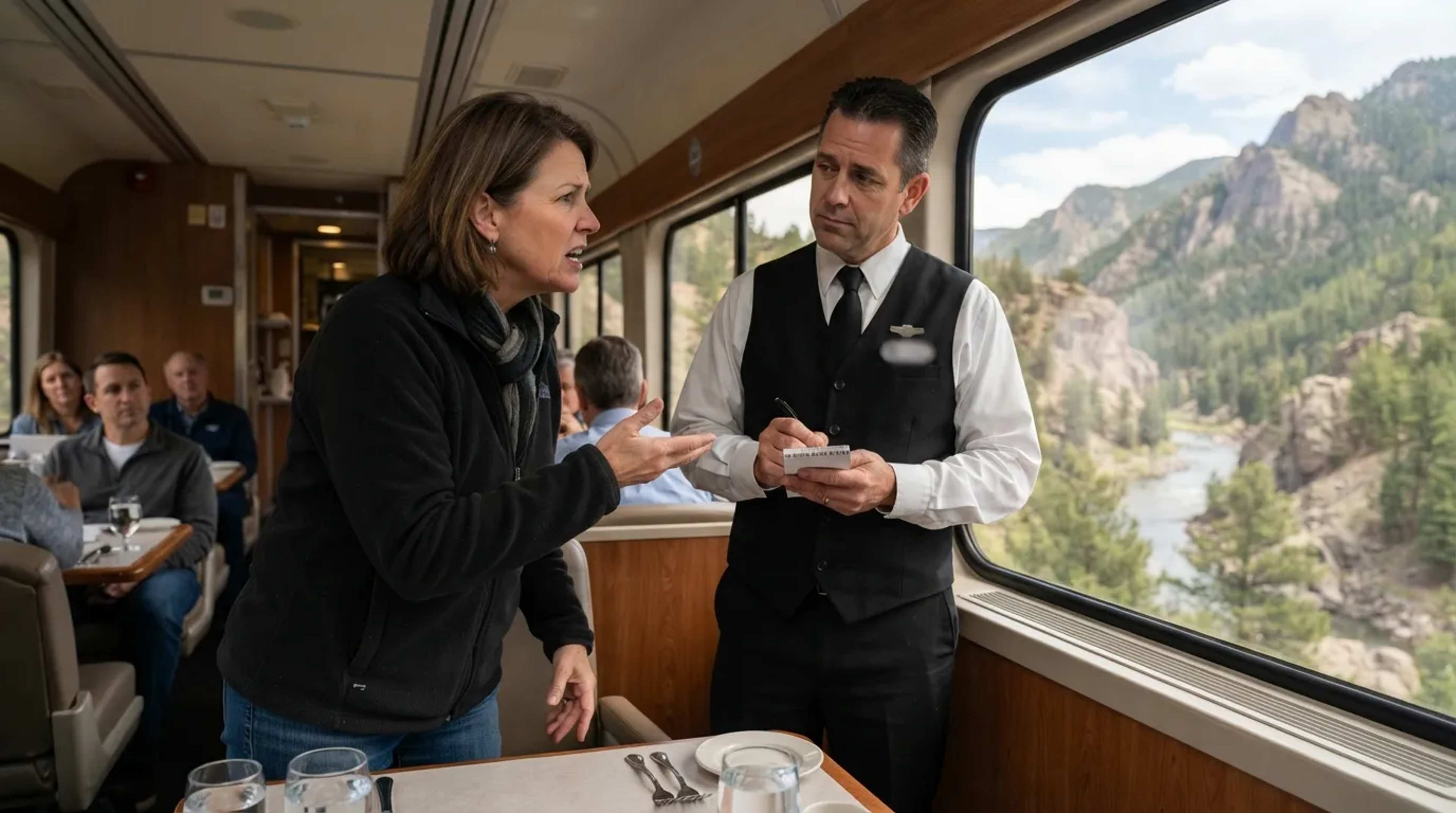
#13 – You’ll Be Eating With Strangers (Whether You Like It or Not)
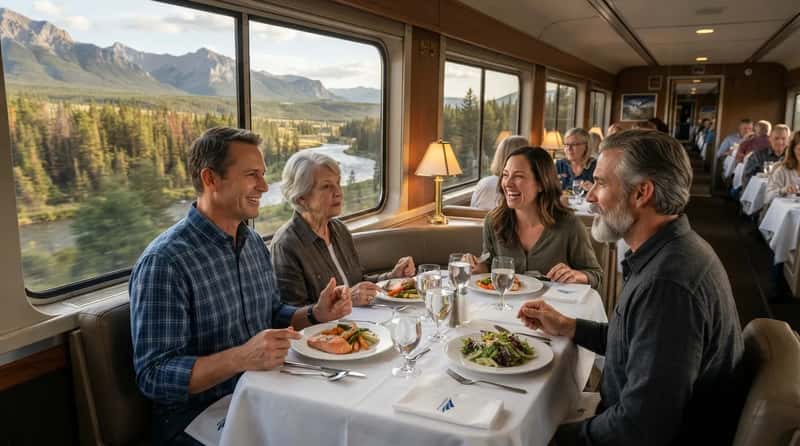
Most people assume dining on a scenic train works like a restaurant, with a table to yourself.
On many long-distance routes, that assumption gets corrected the moment you sit down.
On cross-country US routes, single passengers get seated with three strangers – one rider ended up sharing a meal with one of only seven people in the world qualified to restore antique pipe organs.
Want to eat alone instead? Tell your sleeping car attendant in advance, and every meal can be delivered straight to your private room.
But that’s nothing compared to what we found about #12…
#12 – The Observation Car Runs on Rules Nobody Explains to You
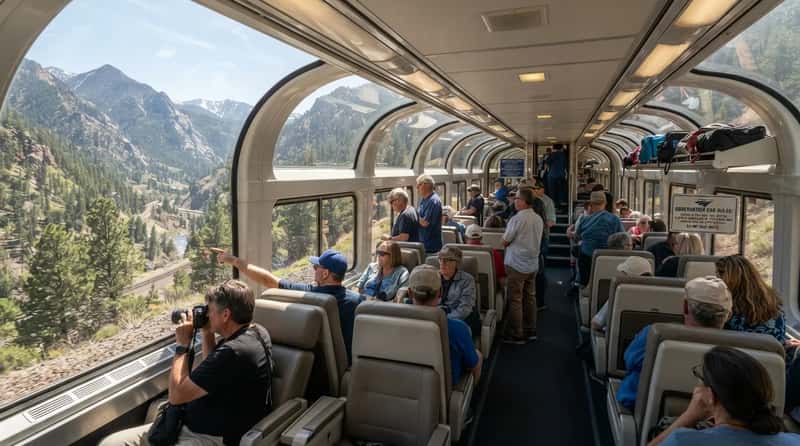
The observation car looks like a shared lounge – open, relaxed, first come first served.
In reality it runs on a strict, unwritten social code nobody explains at boarding.
On routes like the California Zephyr and Coast Starlight, crew members actually announce that passengers should take turns during the most scenic stretches – holding a seat through the best terrain is considered bad form.
Leave your things to “save” a spot and wander off, and don’t be shocked to find them moved to the floor when you return.
But that’s nothing compared to what we found about #11…
#11 – “Scenic” Routes Were Often Built for Mines, Not Tourists
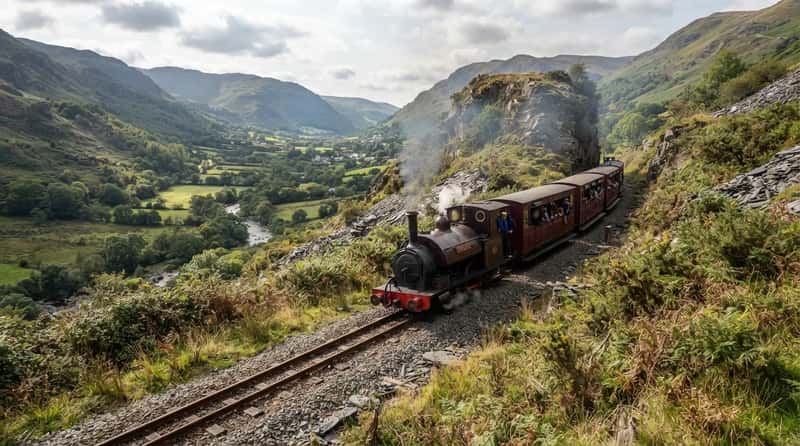
The marketing makes scenic rail lines sound like they were designed purely for pleasure.
Most were actually built to haul raw material out of remote terrain – and that gritty history is exactly what makes them so spectacular.
Many of today’s best scenic routes were either engineered deliberately through jaw-dropping, otherwise inaccessible terrain, or repurposed from lines that once served mining, logging, or regional transport.
Wales’ Talyllyn Railway, which crawls at 9 mph through the Fathew Valley, originally hauled slate out of local mines – today it’s staffed entirely by volunteers.
But that’s nothing compared to what we found about #10…
#10 – Some Trains Are Lifelines, Not Just Tourist Rides
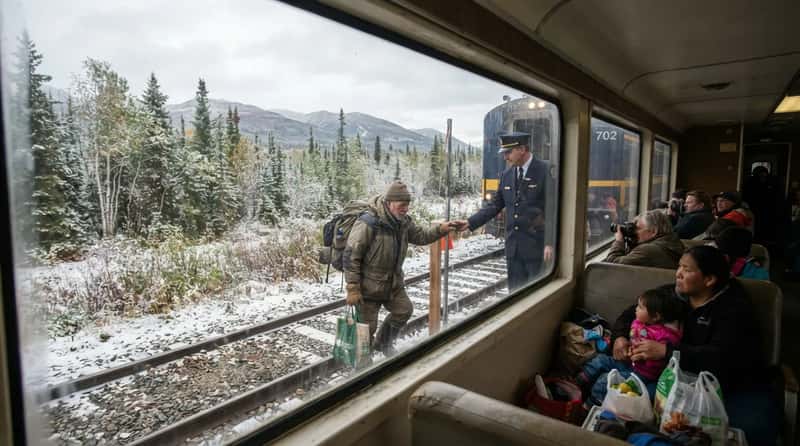
You might board expecting everyone around you to be a tourist with a camera.
On certain routes, you’re actually riding a working piece of community infrastructure that locals depend on all year.
Some towns along these routes lose road access in winter, so the same train that delivers sightseers also delivers residents to work, school, and groceries.
That dual identity changes the atmosphere entirely – you’re not on a theme-park attraction, you’re on a real train with real stakes, and that authenticity is something no tour bus can fake.
Fast Facts
- The Hurricane Turn is one of the last true flag-stop trains in the United States, stopping anywhere a passenger waves a flag along the route.
- The round trip Distance travelled: 57.6 mi (92.7 km) Average journey time: 2 hours 30 minutes each way 5 hours 45 minutes round trip.
- There is no dining service aboard the Hurricane Turn Train; guests are encouraged to bring their own food and beverage aboard.
- The nearby settlement of Chase is home to approximately 40 year round residents who depend on the train as their supply line.
But that’s nothing compared to what we found about #9…
#9 – Booking Three to Four Months Out Is the Bare Minimum
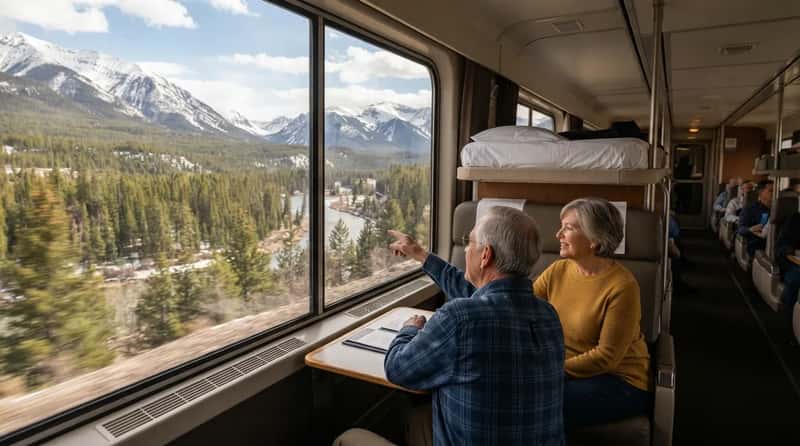
Most travelers treat scenic train tickets like concert tickets – something to sort out a few weeks ahead.
Experienced riders know that approach usually means settling for whatever’s left.
Like air travel, the best scenic routes reward early booking – three to four months out is the standard advice for cross-country trips like the California Zephyr, since the roomettes and meal-included sleeper cabins sell out first.
Amtrak’s email list is where the buy-one-get-one deals quietly land, which can save serious money if you’re booking more than one roomette.
But that’s nothing compared to what we found about #8…
#8 – Wi-Fi Is Often Nonexistent on the Best Routes
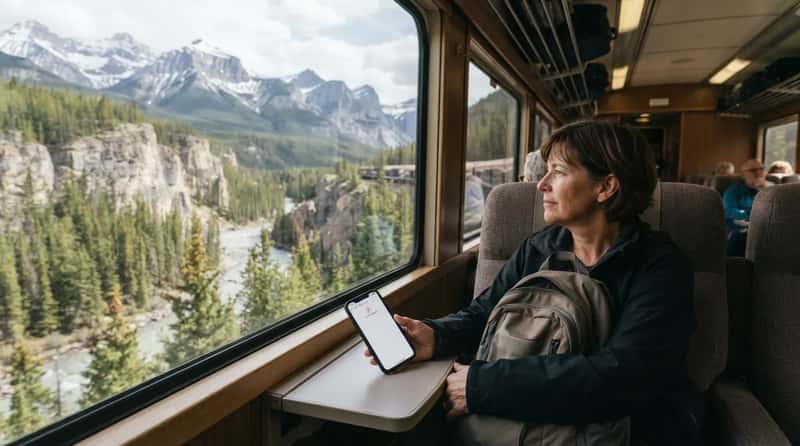
The most photogenic, remote scenic routes tend to run through terrain with zero cell service and no onboard Wi-Fi.
That surprises a remarkable number of passengers who assume every modern train is connected by default.
Want Wi-Fi on most scenic Amtrak rides? Bring your own hotspot – international routes through mountains and canyons are just as offline.
The disconnect is actually the point: the scenery exists because nothing, including cell towers, has been built there. Download your maps, shows, and books before you board.
But that’s nothing compared to what we found about #7…
#7 – The Train’s Crawl Is Deliberate, Not a Flaw
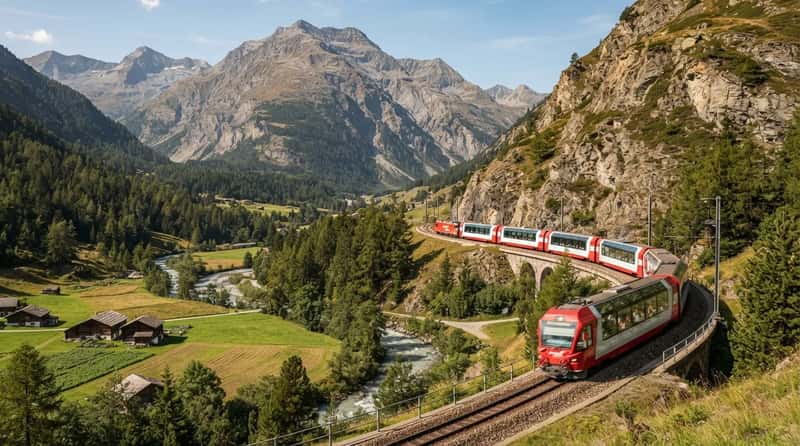
Travelers raised on high-speed rail sometimes board a scenic route expecting efficiency and feel vaguely cheated by how slowly things move.
That slowness is the entire engineering philosophy, not an oversight.
Switzerland’s Glacier Express is officially billed as the slowest express train on earth – an eight-hour ride that packs in surprises precisely because it refuses to rush.
A plane crosses the same landscape in an hour at altitude; a slow train turns it into hours of changing light, terrain, and detail that only proximity to the ground can produce.
But that’s nothing compared to what we found about #6…
#6 – The Dining Car Food Is Better Than You Expect (on the Right Trains)
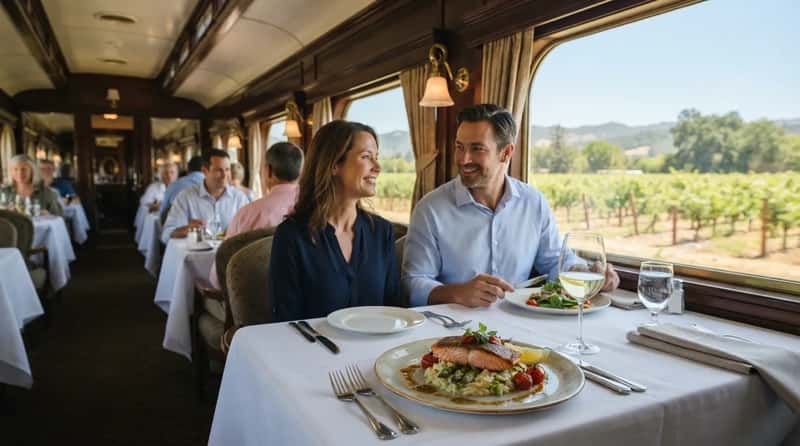
Train food has a reputation, often deserved, for being forgettable.
But on the right routes, the dining car is one of the genuine highlights of the trip.
Food has improved dramatically on premium routes, with some lines now serving Michelin-caliber meals on the logic that a captive audience deserves something outstanding.
A few trains go further still – the Napa Valley Wine Train stops at three wineries and pairs a gourmet meal with the scenery in between.
Quick Compare
- Classic Lunch or Dinner: most rides last 2.5 to 3 hours and include a gourmet meal, with standard experiences starting around $200 per person, with no winery stops.
- Vista Dome Package: Vista Dome experiences serve a four-course meal for both lunch and dinner options, and pricing typically runs $150–$250 or more per person depending on the date and specific package.
- Legacy Experience: it runs approximately six hours total – three hours on the train and three hours split across stops at established Napa wineries along the route, with pricing for the Legacy running from roughly $500 to well over $700 per person.
But that’s nothing compared to what we found about #5…
#5 – Some Routes Cross Canyons Deeper Than the Grand Canyon
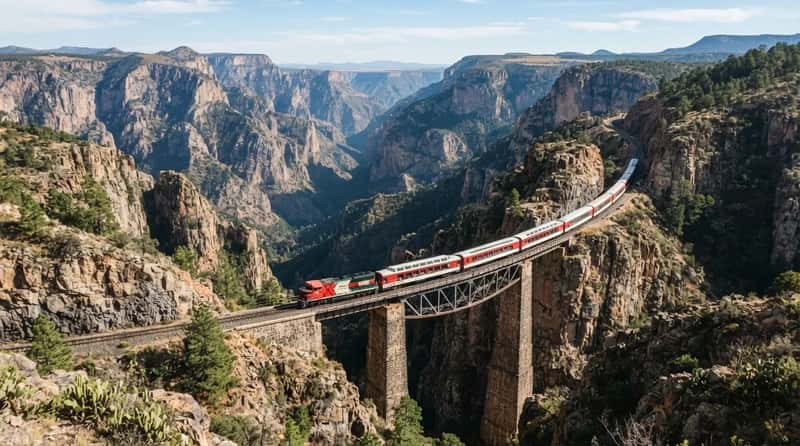
Most travelers use the Grand Canyon as their mental yardstick for dramatic canyon scenery.
A train ride through northern Mexico quietly makes that yardstick obsolete.
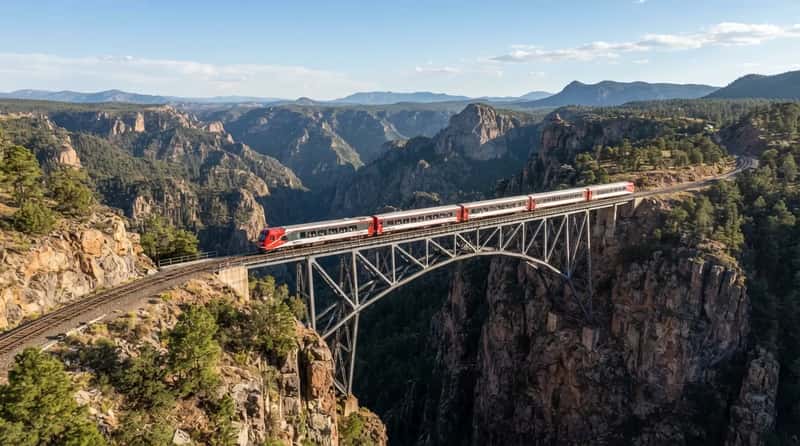
Mexico’s El Chepe railway threads through six Copper Canyons that, combined, are four times larger than the Grand Canyon, plunging as deep as 1.25 miles in places.
Mexico’s most modern passenger train runs this 13-hour route, linking the arid interior with the Pacific coast past sheer canyon walls, waterfalls, and the high desert of the Sierra Tarahumara.
But that’s nothing compared to what we found about #4…
#4 – There’s a Hidden Onboard Entertainment Economy Nobody Warns You About
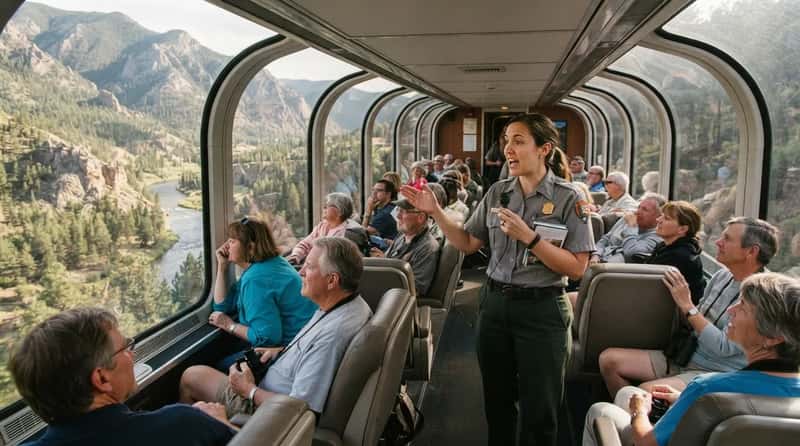
When brochures mention “onboard entertainment,” most people picture a lounge car with a TV screen.
The reality on many routes is far stranger and far better.
You might find a musician playing, a local storyteller sharing regional lore, or a spontaneous conversation that erupts in the observation car simply because everyone’s staring at the same view.
Certain US routes run the Trails on Rails program, where National Park Service guides ride along and narrate the landscape outside your window – turning passive sightseeing into something closer to a lecture you didn’t know you needed.
But that’s nothing compared to what we found about #3…
#3 – The Glacier Express Has 291 Bridges and 91 Tunnels
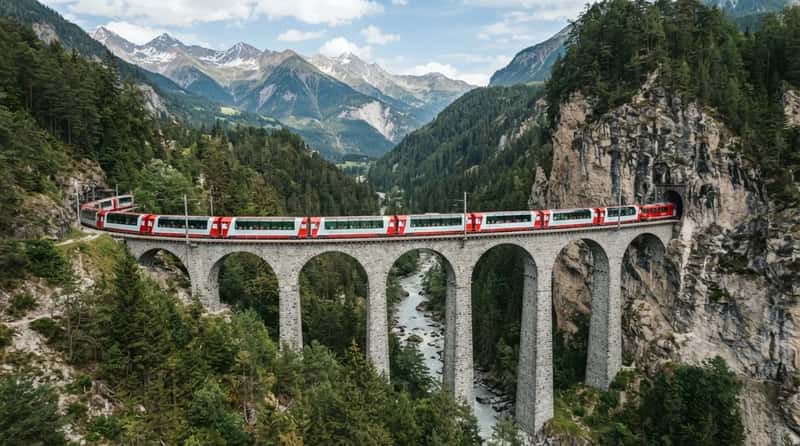
People describe the Glacier Express as scenic, but the engineering statistics behind it rarely make it into the conversation before you board.
The infrastructure itself is the spectacle, not just the view framed by the windows.
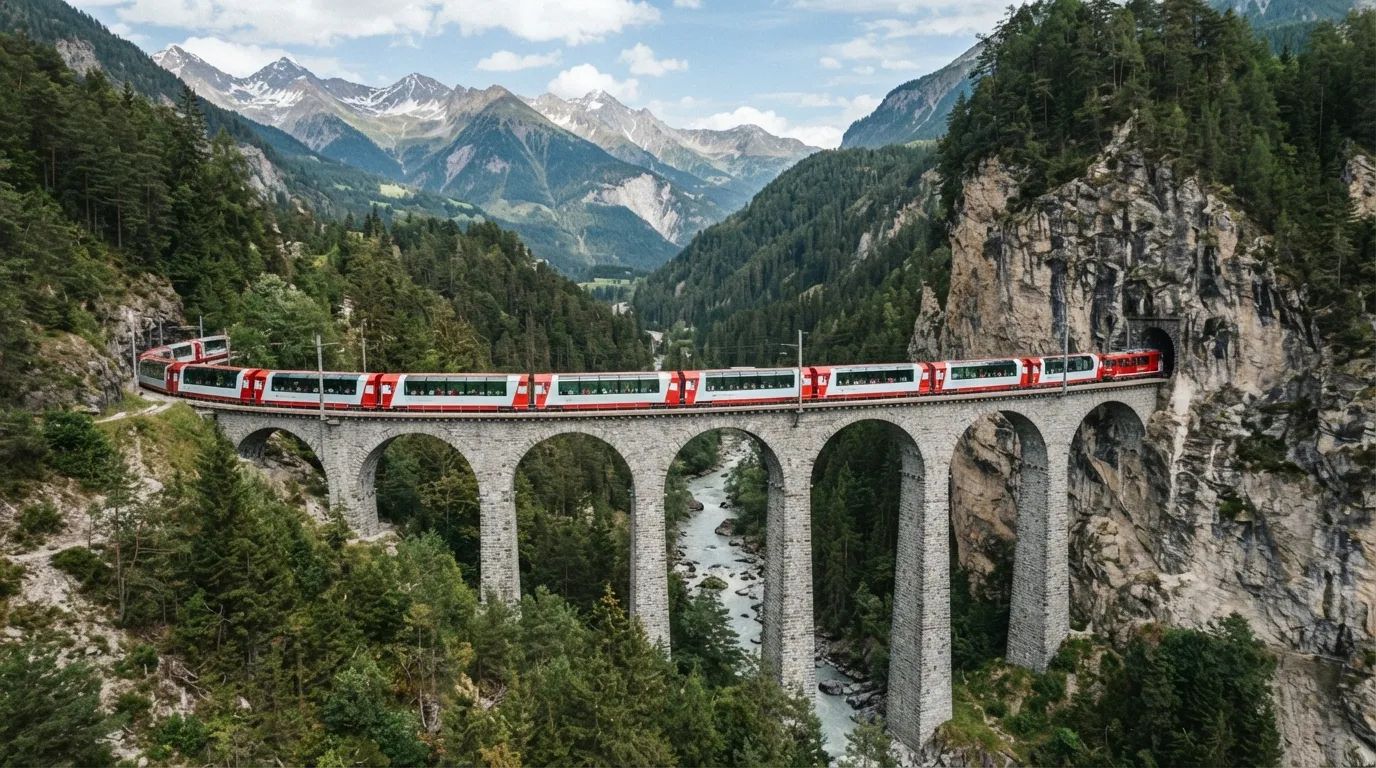
The route squeezes 91 tunnels and 291 bridges into an eight-hour crossing of the Swiss Alps between Zermatt and St. Moritz, threading bottlenecked valleys and impossibly tight curves.
The Landwasser Viaduct, a UNESCO World Heritage site, carries passengers directly over the Landwasser River gorge at nearly 7,000 feet – terrain that was genuinely considered inaccessible before the railway existed.
But that’s nothing compared to what we found about #2…
#2 – The West Highland Line Is a World-Class Scenic Route You Ride With a Regular Ticket
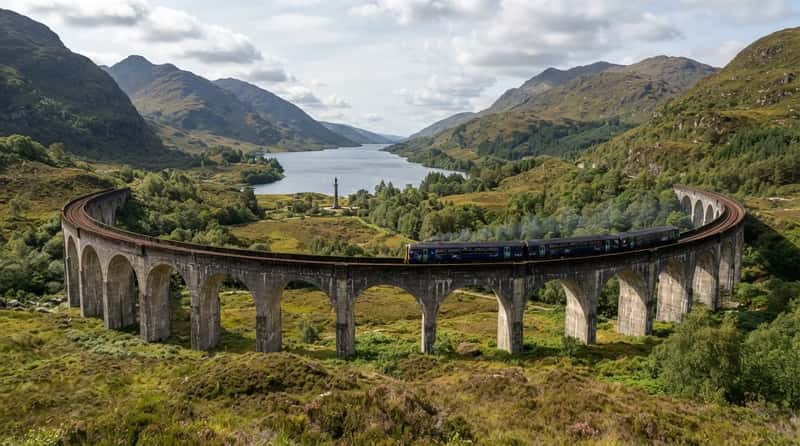
Most people assume a truly spectacular scenic journey requires an expensive tourist package and months of advance planning.
Scotland’s West Highland Line quietly proves them wrong – it’s a scheduled public service anyone can board like a commuter train.
Running between Glasgow and Mallaig, it passes the shores of Loch Lomond and crosses the Glenfinnan Viaduct, the same bridge the Hogwarts Express crosses in the Harry Potter films.
The seasonal Jacobite Steam Train covers part of the same route for anyone chasing extra nostalgia, but the plain public service alone delivers scenery most railways charge a premium for.
But that’s nothing compared to what we found about #1…
#1 – The Best Scenic Train in the World Is Only 25 Minutes Long
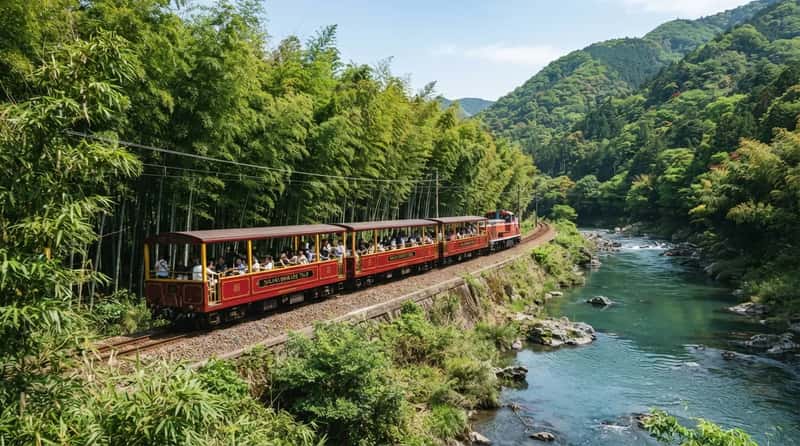
Everyone expects the greatest scenic rail experience on earth to be a multi-day odyssey across a continent.
The data disagrees, and the answer is quietly humbling for anyone who’s spent thousands booking a week-long rail adventure.
Japan’s Sagano Romantic Train, gliding past the Arashiyama bamboo forest in Kyoto, topped a global scenic train ranking with a score of 91.9 out of 100 – in a ride that lasts just 25 minutes along the Hozu River.
Running between Saga-Arashiyama and Kameoka in open-sided carriages with unobstructed views, it proves that the most extraordinary scenic train ride on earth can cost almost nothing and be over before your coffee gets cold.
The Bottom Line
Scenic train travel rewards preparation in ways flying and driving never do.
The side of the train, the car you claim before the dramatic terrain hits, the booking window, the email list you joined months early – these details separate a genuinely revelatory trip from a missed opportunity with a nice window.
The routes themselves keep delivering surprises: canyons four times the size of the Grand Canyon, world-class views on a regular commuter ticket, and the single highest-ranked scenic train on earth wrapping up in under half an hour.
At a Glance
- El Chepe’s Copper Canyons: combined, four times larger than the Grand Canyon, with drops of up to 1.25 miles.
- Glacier Express: an eight-hour crossing packed with 91 tunnels and 291 bridges.
- Sagano Romantic Train: just 25 minutes long, yet ranked the world’s top scenic train with a 91.9/100 score.
- Booking window: three to four months ahead for the best cross-country sleeper cabins.
The real secret nobody tells you: the journey is the destination – but only if you board it already knowing the rules.
Which of these caught you off guard? If we skipped a route that deserves a spot on this list, drop it in the comments.