Walk through any U.S. terminal and you’ll see it happening in real time: grown adults swiping credit cards for things that cost absolutely nothing back in their own kitchens, bathrooms, and living rooms. A bottle of water. A phone charge. A place to simply sit down. Most people don’t even notice they’re doing it, because the second you clear security, airport prices start to feel oddly normal.
But the gap between what you pay at 30,000 feet and what the exact same thing costs at home isn’t a small markup – in some cases it’s several hundred percent higher, and the reasons behind it are stranger than you’d think. Here’s what frequent flyers, airport economics, and real traveler receipts actually reveal.
14. Bottled Water That Costs More Than a Fast-Food Meal
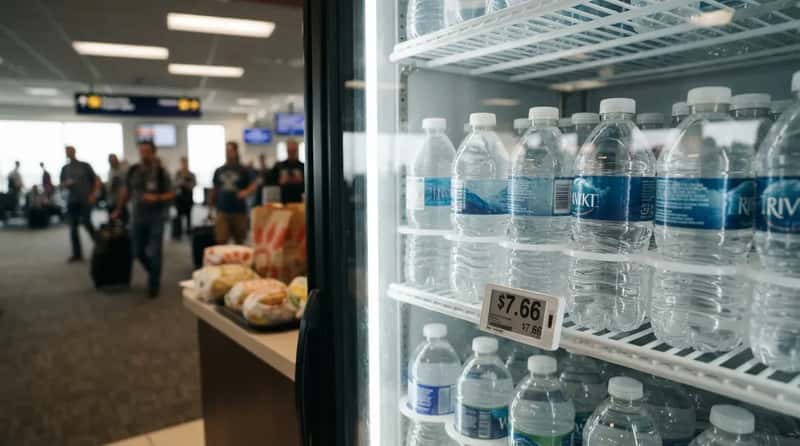
Water is the single most reliable airport money-grab in America, and the markup is almost comedic. The average airport price for a bottle of water lands around $4.25 versus roughly $1.89 for the same bottle locally, a markup of well over 100%. Some travelers have paid even more eye-popping amounts, including one passenger at New York’s JFK who reported being charged $7.66 for a single bottle at a store near the gate.
At home, that same water comes out of your tap for pennies. The part almost nobody realizes is that most major airports now have free refill stations hiding in plain sight near security or the restrooms. Denver International proved the point when it expanded free refill stations from just 12 to more than 70 across its terminals, and bottled water sales promptly dropped 18% while refill usage surged. Bring an empty bottle through security and you erase the entire markup before you even reach your gate.
Quick Compare
- Airport bottled water: about $4.25 on average, sometimes $7 or more at busy hubs
- Home tap water: essentially free, just pennies per gallon
- Free refill stations: now common at major airports, cutting the cost right down to zero
13. A Luggage Cart to Wheel Your Own Bags
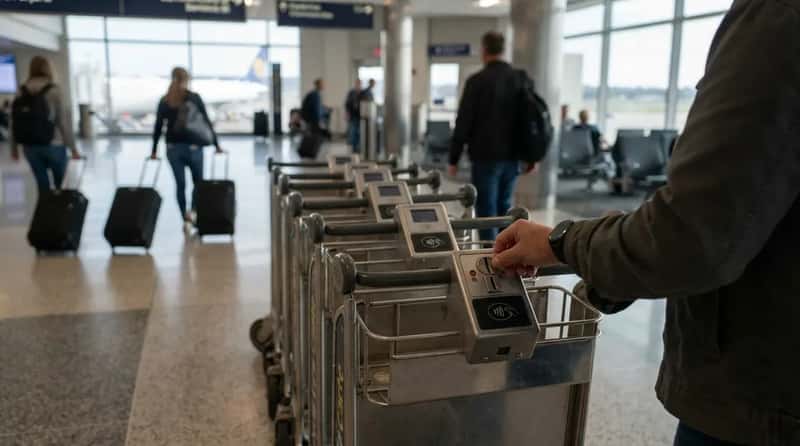
At home, you carry your groceries or roll your own suitcase without a second thought, and nobody charges you rent for the privilege. At the airport, that same basic convenience suddenly comes with a price tag attached, usually presented as a coin slot or a tap-to-pay screen bolted right onto the cart handle.
Most U.S. airports charge between $5 and $9 to rent a cart, and this is typically a flat rental fee rather than a refundable deposit. Reagan National charges $5.00 per cart, while San José Mineta charges $6. Nearly all of these carts are supplied and managed by a single company, Smarte Carte, which operates in exchange for a cut of every rental. It’s a small fee individually, but multiplied across millions of travelers a year, it adds up to a business built entirely on something that’s free in your own driveway.
12. A Comfortable Chair That Isn’t Bolted to the Floor
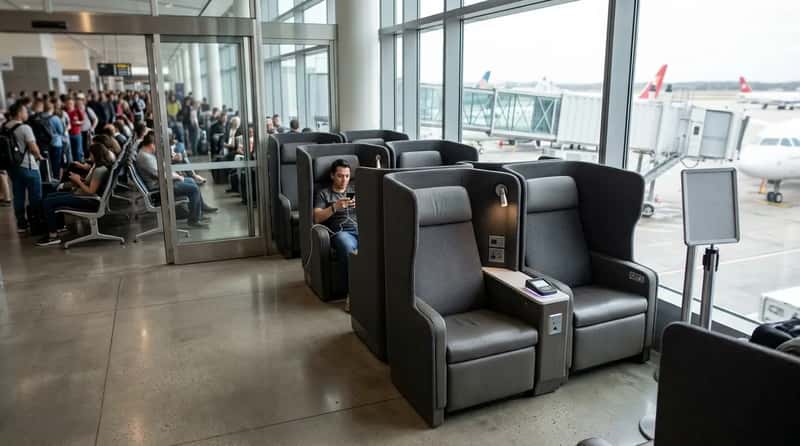
At home, sitting down doesn’t cost anything, ever. At the airport, padded “premium seating” pods with built-in charging outlets have become a paid product at some terminals, while everyday travelers fight over hard, bolted-down metal benches near their actual gate.
The uncomfortable truth many frequent flyers won’t say out loud is that airports often design gate areas with deliberately limited free seating, nudging travelers toward paid lounges or restaurant tables where you’re expected to buy something just to sit. It’s a subtle psychological push most passengers never consciously notice; they just assume the seating shortage is an accident. At home, an entire couch is free real estate with zero strings attached, which is exactly why lounge day passes have exploded in popularity over the last few years.
11. Wi-Fi That’s Somehow Slower Than Your Home Router
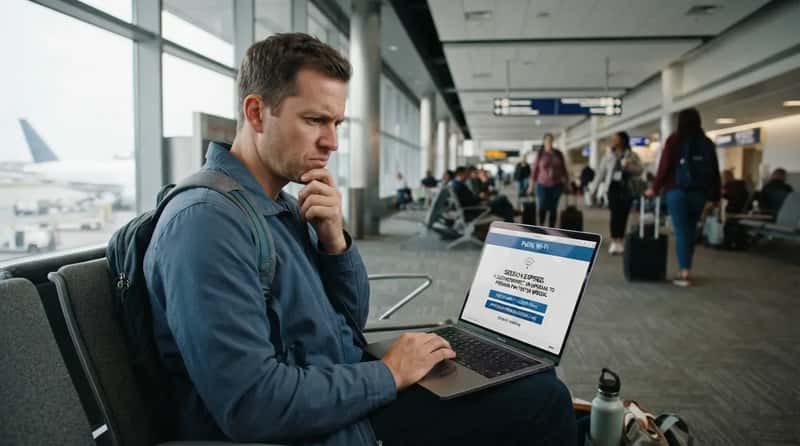
Free airport Wi-Fi exists almost everywhere now, but the “premium” version – faster speeds, no time limit, no pop-up ads – is often sold as a paid add-on, sometimes bundled into lounge access packages. At home, your router doesn’t throttle you after twenty minutes or interrupt your show with a sign-up wall demanding your email address.
Some regional airports have gone the opposite direction and quietly fixed this. San José’s airport advertises the fastest airport Wi-Fi in the country, and no password is even required to connect. That’s still the exception rather than the rule, since most major hub airports continue to gate their faster tiers behind a paywall, which feels almost absurd next to the unlimited, unmetered Wi-Fi sitting in your living room right now for free.
10. Phone Charging That Should Never Cost a Dime
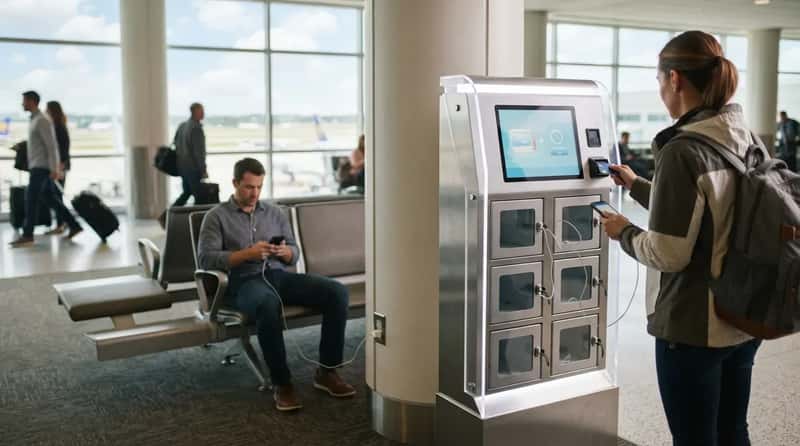
Nothing captures airport desperation quite like watching a stranger pay to plug in their phone. Standalone charging kiosks and rentable charging lockers have popped up in dozens of U.S. terminals, some charging a few dollars for just twenty or thirty minutes of juice.
At home, every wall has an outlet, and it’s been free your entire life. The real insider secret is that most gates still have free wall outlets tucked under seats or hidden near support pillars, but travelers rarely hunt for them because the paid kiosk is planted right at eye level. Airport retailers know exactly what they’re doing by putting the paid option where you’ll see it first and the free plug where you almost never will.
9. A Simple Sandwich Priced Like a Restaurant Entrée
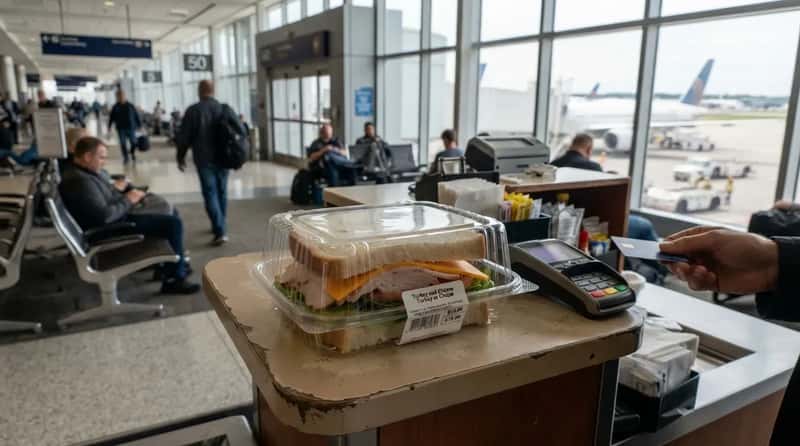
Food is where airport markups stop being subtle and start feeling aggressive. Back in 2010, one traveler found that a Quarter Pounder meal at LAX cost $7.19, almost $2 more than the identical meal at a downtown McDonald’s just a few miles away. Prices have only climbed since then, and travelers today routinely report paying $15 or more for a plain sandwich at a terminal kiosk.
At home, that same sandwich costs a few dollars in ingredients and takes maybe five minutes to make. Airports justify the markup with high rent and limited competition, but the truth is simpler than that: once you’re past security, you’re a captive customer with nowhere else to go. That’s the entire business model in one sentence, and it’s exactly why experienced travelers now pack snacks before every single flight without exception.
Fast Facts
- A 2010 LAX comparison found a Quarter Pounder meal cost $7.19, about $2 more than the same meal downtown
- Today, a plain airport sandwich can run $15 or more at a terminal kiosk
- Homemade version: just a few dollars in ingredients and about five minutes to make
8. Lounge “Relaxation” That’s Just a Quiet Room
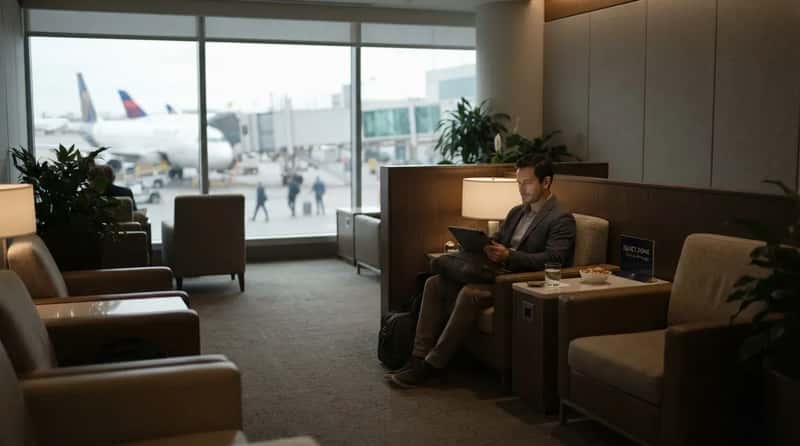
Airport lounges sell peace and quiet as a luxury product, and travelers are paying more for it than ever before. Most lounge day passes cost somewhere between $35 and $75 for about three hours, and in exchange you get reliable Wi-Fi, a few outlets, and a quieter corner for phone calls. Some international hubs charge even more, with exclusive lounges pushing past $100 for a single day pass.
At home, a quiet room with decent Wi-Fi and a comfortable chair is just Tuesday.
Common traveler observation
For someone flying just once or twice a year, dropping $50 on a lounge for a soda and a chair can feel steep next to simply finding a free gate seat. Frequent flyers with memberships see it completely differently, and that split in opinion is exactly the kind of debate that lights up every travel forum online.
7. Hand Sanitizer and Basic Toiletries
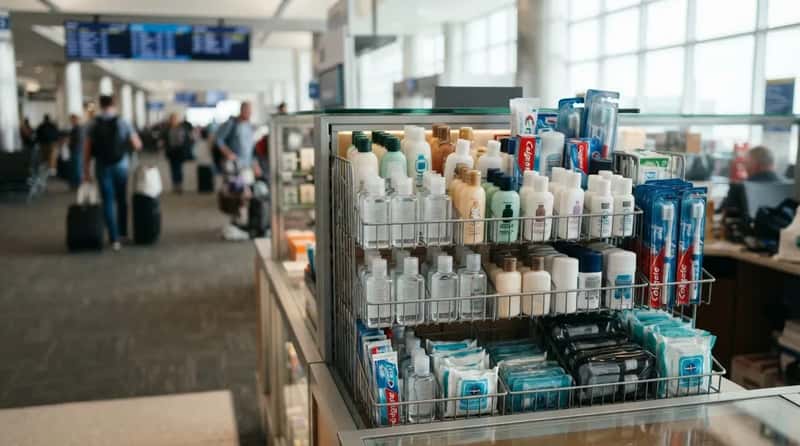
Ever notice how forgetting your toothbrush at the airport instantly turns into a $6 emergency purchase? Travel-size toiletry kits, hand sanitizer, and basic hygiene items get marked up dramatically at terminal kiosks compared to what’s already sitting in your bathroom cabinet at home for free.
The pricing here isn’t random, it’s deliberate. Vendors know you’re not price-shopping the moment you realize you forgot deodorant twenty minutes before boarding. Most travelers don’t realize they can avoid this entirely by packing a small emergency kit of travel-size toiletries before ever leaving home, something frequent flyers do religiously but casual travelers almost never think about until they’re already standing at the register.
6. A Boarding Pass Printed at a Kiosk Instead of Your Own Printer
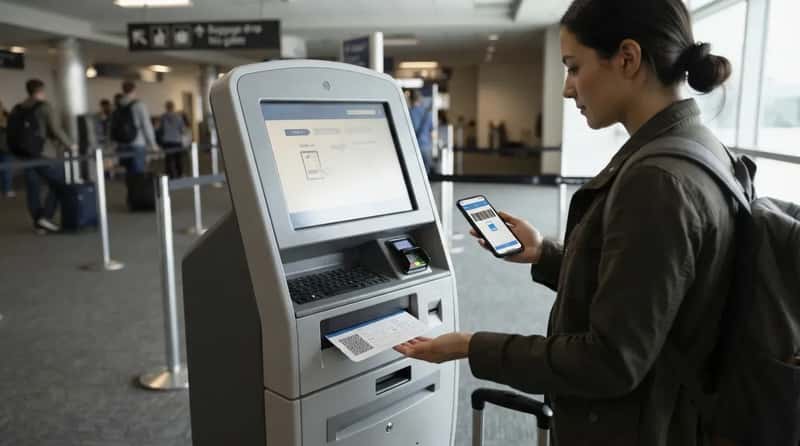
Some smaller airports and older kiosks still charge printing fees for boarding passes or baggage tags if you didn’t check in online ahead of time. At home, printing a single page costs a fraction of a cent on your own printer, or costs literally nothing if you just save the mobile version to your phone’s wallet app.
This is a shrinking problem as more airlines push travelers toward mobile boarding passes, but it hasn’t disappeared everywhere yet. Older regional airports and certain international counters still nickel-and-dime passengers who show up without a printed document, treating it like a specialty service instead of the free administrative task it actually is. It’s a small fee, but it stings precisely because it’s so easily avoidable.
Worth Knowing
- Mobile boarding passes now work at nearly every major U.S. airline counter and TSA checkpoint
- Saving your pass to a phone wallet app sidesteps printing fees entirely
- Older regional airports and some international counters still charge for paper printouts
5. Neck Pillows and Blankets You Already Own
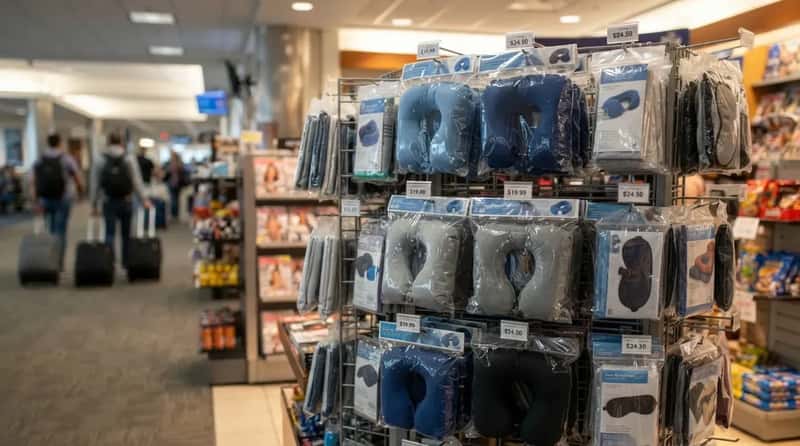
Airport gift shops sell inflatable neck pillows, eye masks, and thin blankets at prices that would make any home closet blush, especially since most travelers already own better versions of every single one of these items. A pillow that costs a few dollars at a big-box store gets marked up substantially once it’s sitting in a newsstand next to the gum and phone chargers.
At home, you’ve probably got two or three neck pillows from past flights stuffed in a closet somewhere, plus every blanket you’ll ever need. The travelers who consistently dodge this markup are the ones who treat their carry-on like a small survival kit, packing a compact pillow and light blanket every trip instead of relearning the same expensive lesson at six in the morning before a flight.
4. Phone and Tablet Chargers You Forgot to Pack
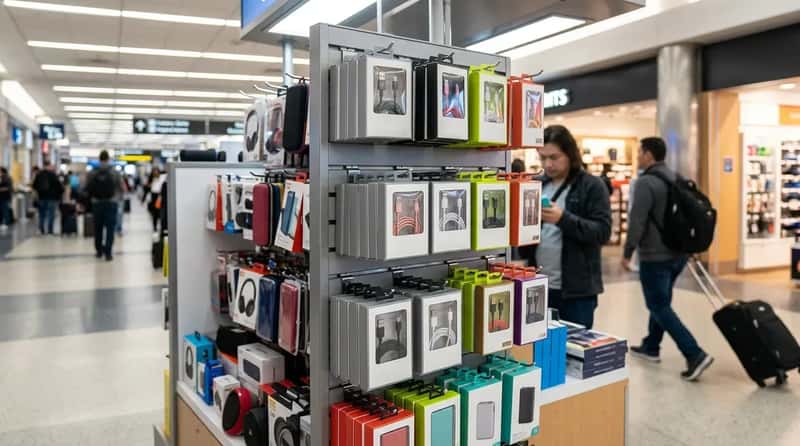
Forget your charging cable at home and you’ll pay dramatically more for a replacement at an airport kiosk than at literally any drugstore, big-box store, or online retailer. Airport electronics stands specialize almost entirely in convenience markups built for exactly this kind of last-minute panic purchase.
At home, chargers are usually just lying around in a drawer somewhere, sometimes three or four of them left over from old phones. The frustrating part is how predictable this expense really is; travelers make the same mistake constantly, and airport retailers have built entire product displays around catching that one moment of panic right before boarding.
3. Newspapers and Magazines You Could Read Online for Free
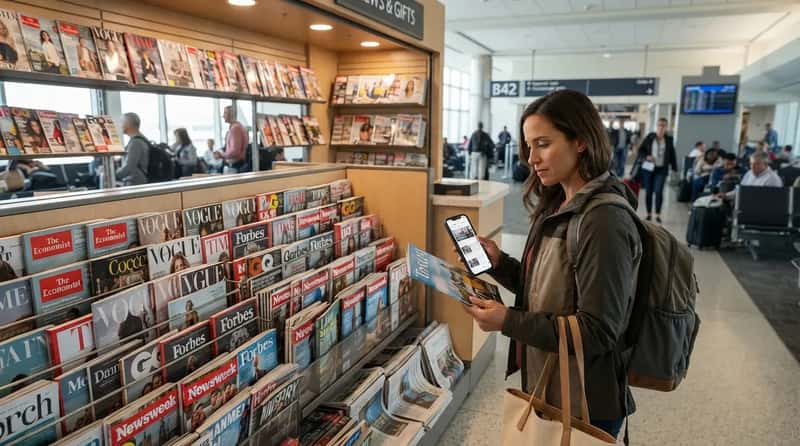
Print newspapers and magazines at airport newsstands are priced at a steep premium compared to their digital editions, many of which are free or nearly free to access on your phone at home. Travelers routinely pay full retail cover price for physical copies of publications they could scroll through on an app without spending a single cent.
This is one of the more old-fashioned airport markups, a holdover from decades before smartphones made this exact content essentially free everywhere else. Yet gift shops still stock full racks of glossy magazines at eye level near the gate, betting correctly that boredom and a long layover will override the fact that the same content already sits in your pocket, completely free.
2. A Massage Chair or Relaxation Pod
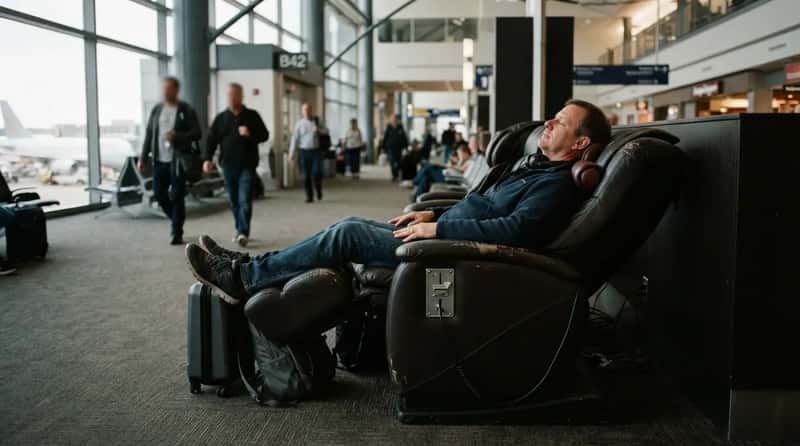
Some terminals now feature coin-operated massage chairs or private relaxation pods that charge by the minute for something you can get from a thirty-dollar chair pad at home, or simply by lying down on your own couch for free. It’s one of the strangest airport-versus-home contrasts on this entire list.
The appeal makes sense in the moment, since you’re stressed, your flight is delayed, and a ten-minute massage suddenly sounds worth almost anything. But the price-per-minute math is genuinely brutal compared to home relaxation, and most travelers who try these admit afterward they’d have been just as comfortable stretching in a free gate seat. It’s less about the massage itself and more about paying for permission to sit still for a few minutes.
1. Simply Charging Your Devices While You Wait
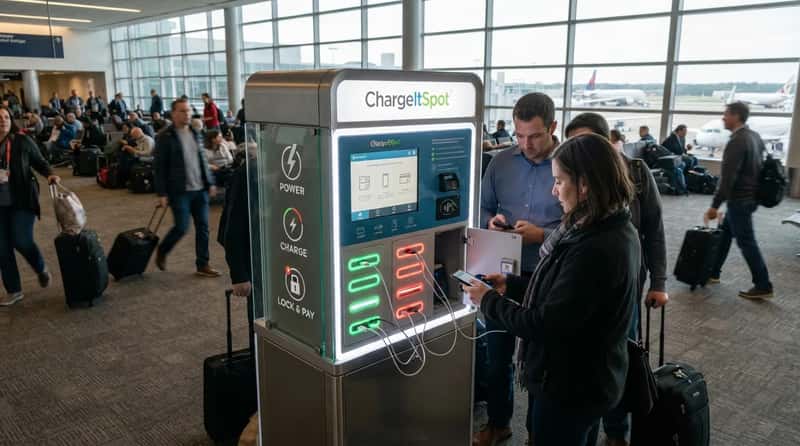
This is the one that surprises people most: the most basic, universally free utility at home, electricity, has become a genuine paid product inside America’s busiest airports. Standalone charging stations, rentable charging lockers, and premium lounge outlets have turned something that costs nothing in your own house into a transaction travelers accept without question.
At home, you plug in wherever you want, whenever you want, for as long as you want, and the monthly bill barely notices the difference. At the airport, a dying phone before a long flight suddenly feels like an emergency worth paying for, and vendors have built a small industry around that exact moment of panic. The most avoidable part is this: a fifteen-dollar portable battery pack from home pays for itself after a single airport charging fee, yet millions of travelers still show up without one every single day.
Why It Stands Out
- Electricity is the one utility every home gets essentially free, yet airports turn it into a paid service
- A fifteen-dollar portable battery pack can pay for itself after a single airport charging fee
- Free wall outlets still exist at most gates, just hidden near seats or support pillars
None of this means airports are doing anything illegal. Most of these markups are simply what happens when a captive audience meets limited competition inside a sealed-off retail environment. But knowing the pattern changes how you pack. A refillable water bottle, a portable charger, a travel pillow, and a few snacks tucked into your carry-on can quietly save you fifty dollars or more before you even reach your gate.
The things that cost nothing at home don’t have to cost a fortune at 30,000 feet, you just have to know which ones to bring with you. So which one of these has quietly gotten you before? Drop your worst airport markup story in the comments, we want to hear the receipts.