Most nervous flyers think they’re hiding it perfectly. Neutral face, headphones on, carry-on stowed like it’s just another Tuesday. Then the flight attendant at the door glances over, and she already knows. A March 2026 TPG/YouGov survey found that 74% of U.S. air travelers admit to at least some nerves, and 46% say they’re somewhat or very nervous. Crews meet anxious passengers every single day.
Here’s the twist: the giveaways are rarely the dramatic ones. Some are tiny, some are oddly logical, and a couple have nothing to do with looking scared at all. Keep reading, because the last few reveal what crews actually do once they spot you, and it’s not what most nervous flyers expect.
#14 – The Armrest Grip That Gives You Away Before Pushback
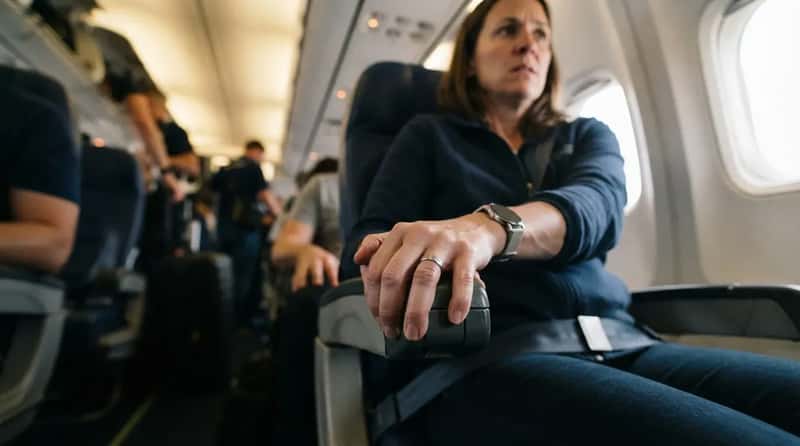
The armrest grip is the oldest tell in the book, and crews spot it fast. It shows in your facial expression, in how tightly you hold the armrest before takeoff, and in how often you look around for reassurance. Cabin crews are trained to pick up on these signals during boarding, and they usually do it almost instantly.
Here’s the twist. The grip has little to do with experience. Plenty of people still clutch the armrests like they’re on a roller coaster, even after years of flights without a single incident. The numbers show why that feels so irrational: USAFacts figures from 2023 show 0.003 deaths per 100 million passenger miles, which one writer put at roughly 177 times safer than driving. So the white knuckles are about how flying feels, not how dangerous it is. But the next giveaway has nothing to do with your hands.
Fast Facts
- 74% of U.S. air travelers admit to at least some nerves (TPG/YouGov, March 2026).
- 46% say they’re somewhat or very nervous.
- Air travel: 0.003 deaths per 100 million passenger miles (USAFacts, 2023).
- Crews start reading faces and body language during boarding.
#13 – The Eye Contact That Vanishes at the Cabin Door
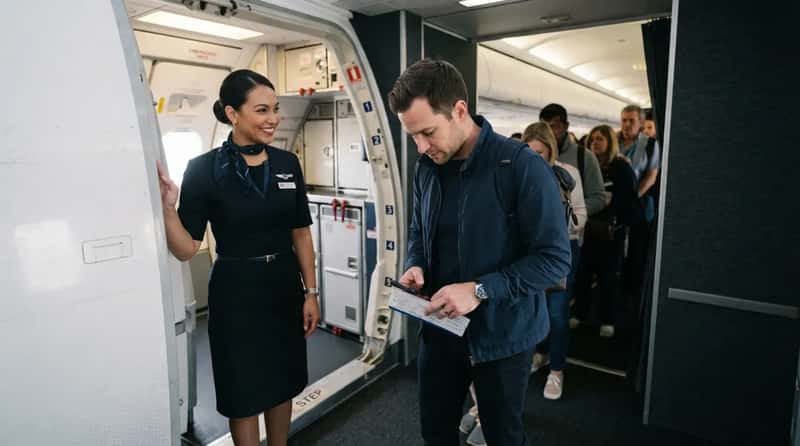
The greeting at the door is a tiny test, and nervous flyers often fail it without knowing. They may look jittery or distracted, and they sometimes avoid eye contact with the crew and other passengers. Suddenly the floor, the seat numbers and the phone look fascinating.
Eye contact can also be the cure. If you’re traveling alone and dread takeoff or landing, a flight attendant may help you through it by keeping eye contact with you. The very thing many nervous flyers dodge is something crew can use to calm them down. The next tell isn’t something you do. It’s something you say.
Boarding is one thing. But what happens when you actually open your mouth?
#12 – The Strained “Good Morning” That Sounds Slightly Off
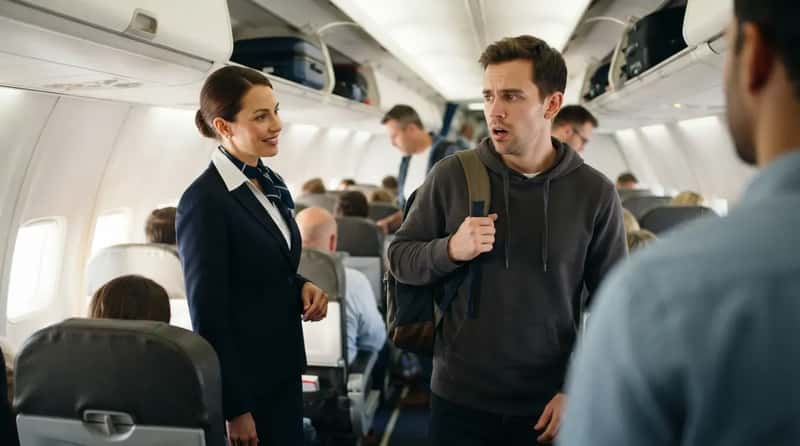
Your voice can betray you faster than your face. A nervous flyer’s answer to a greeting often sounds strained. It’s usually a clipped, quiet hello, followed by a fast walk down the aisle.
Here’s a take that may start an argument: a quiet, nervous passenger is easier to misread as cold than as scared. Crews who read faces and body language all day often catch it anyway, and they look for nervousness they can answer with a little reassurance. That short “hello” can say more than you meant it to. The next signal is physical, and it’s hard to fake your way out of it.
And that’s just the sound. Wait until you see what the hands do.
#11 – Hands That Can’t Stop Fidgeting With Everything You Own
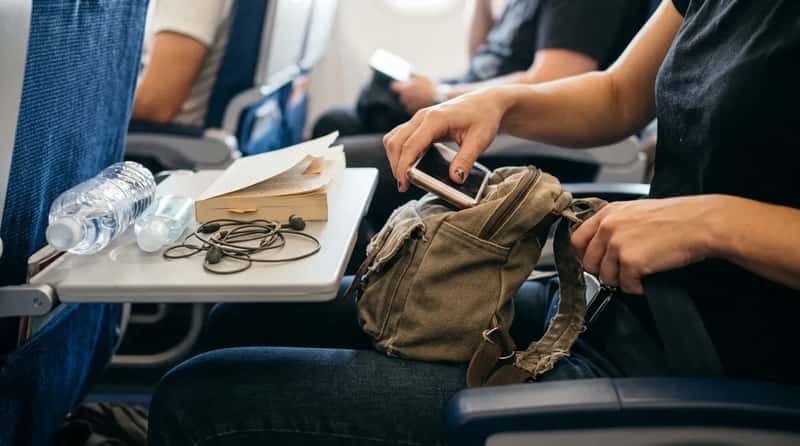
Restless hands are one of the easiest things for crew to see. The tell-tale signs range from mild to severe, and they start with fiddling with personal items. The phone, the bag strap and the seatbelt all get picked up, put down and picked up again.
Crews don’t write it off as a quirk. Fiddling, trembling and excessive sweating are the signs of being on edge that attendants look for. The same list that starts with fidgeting ends with the early signs of a panic attack. That’s why a pair of busy hands gets noticed. The next sign is harder to hide, because it comes from your body, not your habits.
At a Glance
- Mild: picking up and putting down the phone, bag strap or seatbelt.
- Moderate: trembling hands.
- Stronger: excessive sweating.
- Most serious: early signs of a panic attack.
#10 – Sweating When Nobody Else in Row 12 Is Warm
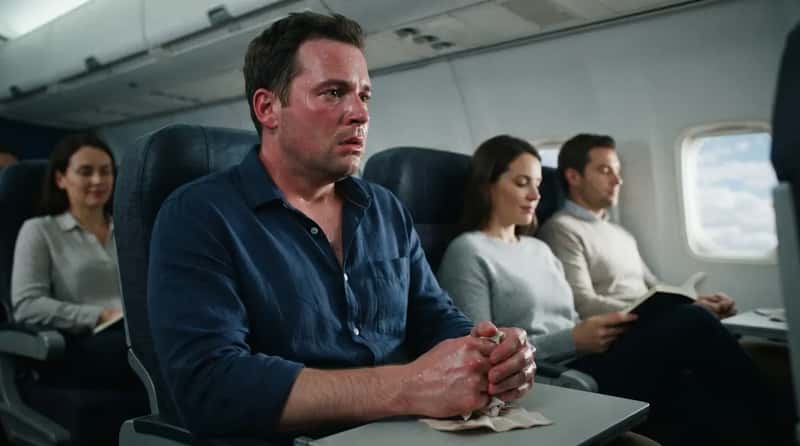
You can’t talk your way out of this one. Excessive sweating is one of the classic signs attendants watch for, along with trembling. A flushed face and damp hands stand out in a cabin where everyone else is settling in with a neck pillow.
There’s a reason it happens. A Delta health executive described the brain’s response as a normal, protective release of chemicals triggered by a frightening event. Fear of flying is also much older than you’d think. A doctor in the UK wrote about “aero-neurosis” at the end of World War I, describing pilots and crew who were or became anxious about flying. Even the people who flew the planes were once diagnosed with nerves. The next tell is one you probably haven’t noticed in yourself.
There’s a habit nervous flyers share that nobody warns you about.
#9 – The Quiet Habit of Watching the Crew Like a Weather Report
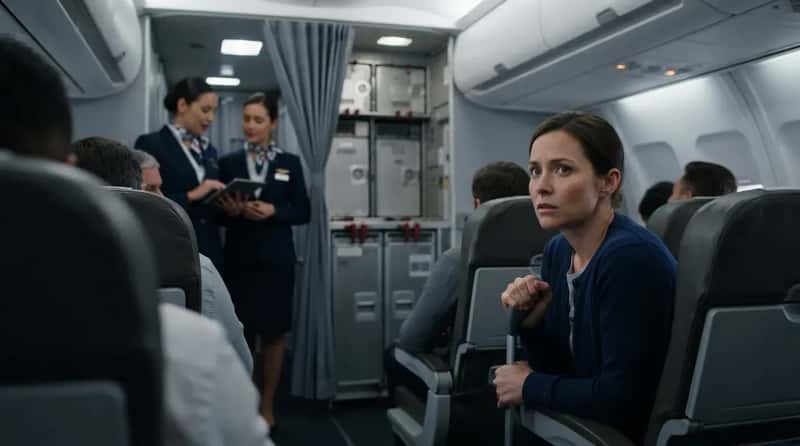
Crews watch passengers, and nervous passengers watch right back. They study the cabin crew like weather instruments, even though the crew is trained to keep a calm, even tone. Every walk down the aisle becomes a data point.
The details people track are tiny. A slightly faster walk, a brief huddle near the galley, or a flight attendant sitting down earlier than expected can all become signals worth analyzing. Most other passengers never notice these micro-behaviors at all. The person staring at the galley curtain is usually the one who needs the most reassurance. Next up is a tell you can read on someone’s face from across the aisle.
Some of what crews see on faces has nothing to do with the cabin at all.
#8 – The Pale, Queasy Look That Crews Take Seriously
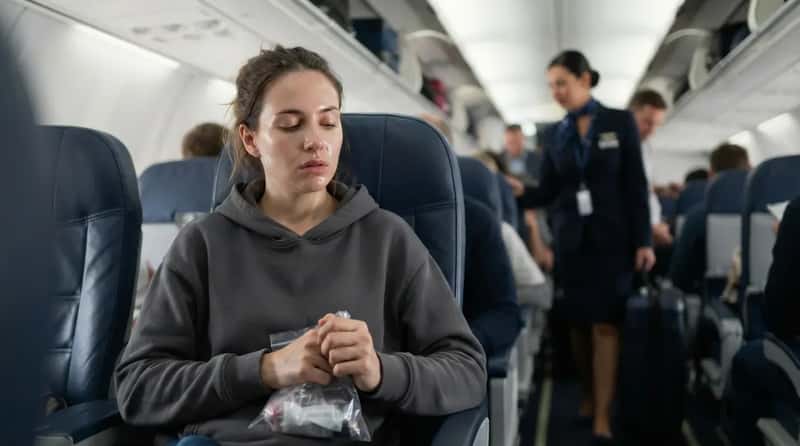
Fear can look a lot like illness, and crews know it. Anxious passengers may also show signs of dizziness, nausea or difficulty breathing. A pale face and shallow breaths during boarding are enough to get an attendant’s attention.
Crews aren’t being nosy. They’re searching for signs of illness during the boarding process. If you seem legitimately unwell, crew members will likely keep a closer eye on you from the start. An anxious passenger and a sick passenger can look almost identical from the aisle. So expect an extra check-in. The next giveaway is something nervous flyers do with their ears.
#7 – The Engine-Sound Detective Who Hears Every Change
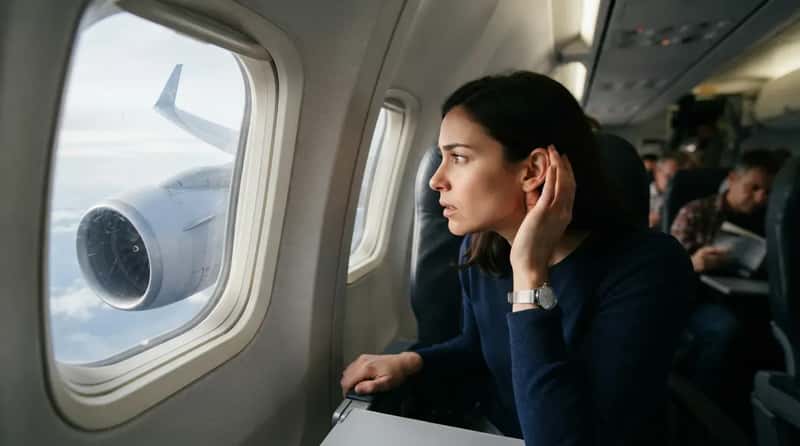
Most passengers tune the engines out. Nervous flyers don’t. Someone with flight anxiety tends to track engine sound closely, noticing subtle pitch changes during climb, cruise and descent. Every shift sounds like a warning.
Most of those shifts are routine. A slight change in tone after takeoff is often just the pilot easing off initial thrust. Once crews spot a nervous passenger, they’ll often explain unusual sounds during takeoff or check in a few extra times. The “scary” sound after takeoff is often just the pilot easing off the throttle. The next tell shows up before you’ve even found a seat.
Still, some passengers don’t ask. They just look around for someone to lean on.
#6 – The Solo Traveler Scanning for a Friendly Face
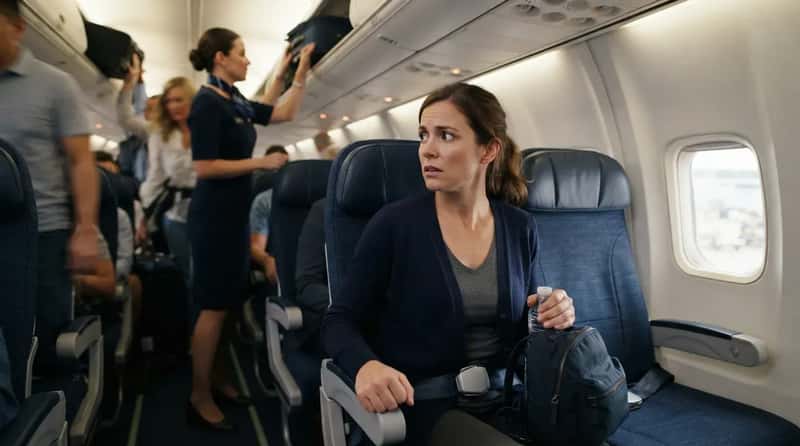
Crews notice who you’re traveling with, and flying alone makes nerves easier to spot. They note whether you’re with children, a partner, colleagues or a relative, or solo, so they know where they can help most. A lone passenger who keeps glancing around for reassurance stands out.
You’re also far from the only one. Surveys vary, but the numbers are big. A 2025 YouGov survey found 49% of American air travelers reported some nervousness, and 18% called themselves “afraid.” Nearly half of U.S. flyers say they feel some nerves. Crews meet them every day, and some make a point of introducing themselves by name. The next spot on this list is a seat where nerves can become a real problem.
Worth Knowing
- Crews note whether you’re with children, a partner, colleagues, a relative, or alone.
- 49% of American air travelers reported some nervousness in a 2025 YouGov survey.
- 18% called themselves “afraid.”
- Some crew members introduce themselves by name to solo passengers.
#5 – The Exit-Row Passenger Who Hesitates at the Briefing
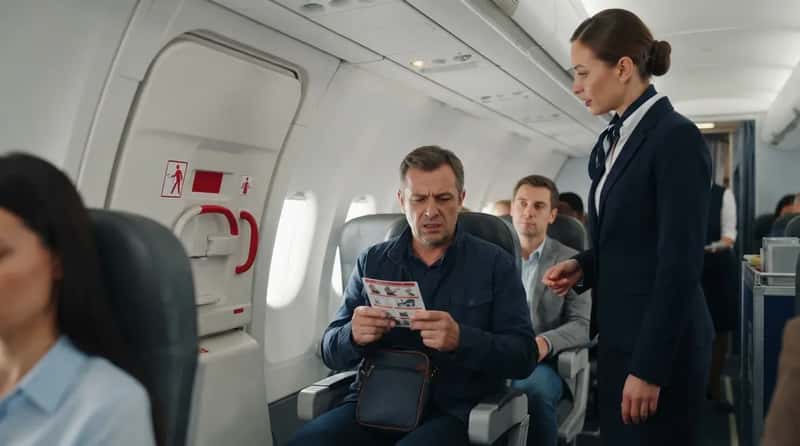
Exit rows carry a job, and crews watch how you react to it. Passengers there must be able to operate the exits, understand the procedures and relay instructions to others. Attendants watch whether you pay attention to the briefing and say yes out loud, and they notice any hesitation.
Many travelers see the legroom as a prize worth gritting their teeth for. Crew-focused guides disagree. One says a nervous flyer in the exit row should tell the crew and swap seats with someone else. Extra legroom comes with a duty that a shaky passenger may not want. Next, a tell that rarely looks like fear at all.
The next tell is one you’d never connect with fear.
#4 – The “Extra Drink” Instead of Visible Panic
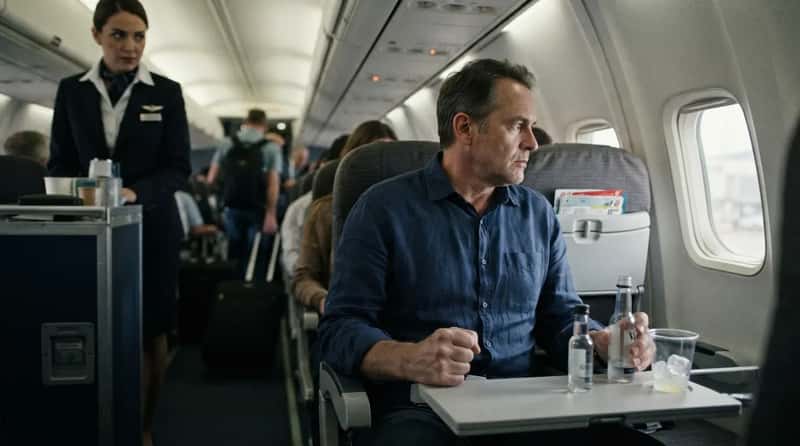
Some nervous flyers never look nervous at all. One write-up citing a clinician says anxious passengers rarely show visible panic, but they might have an extra drink instead. The fear goes inward, and the cocktail cart gets the traffic.
Crews are trained to watch for this kind of cover-up. Flight attendants are particularly careful to watch for signs of intoxication, illness or anxiety during boarding. Anxiety, illness and intoxication sit on the same watch list for crew. A passenger who is quiet, rigid and reaching for the drink order tells them something. The next tell is the one that makes crews glad you spoke up.
Which brings us to the one thing that actually changes how the crew treats you.
#3 – The Quiet “I Get a Little Nervous” at the Door
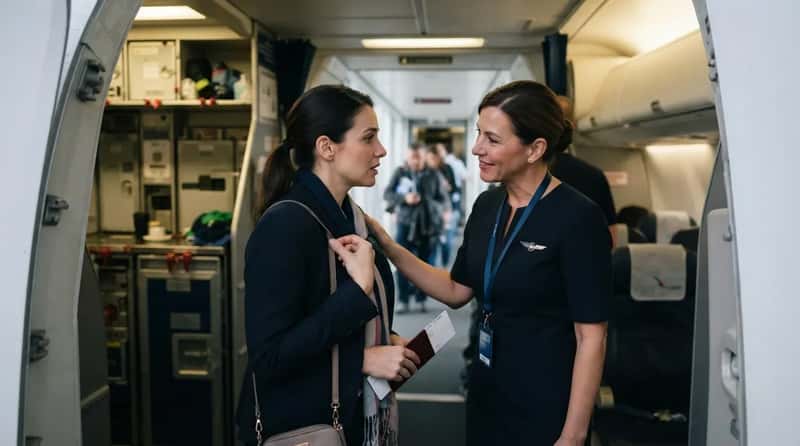
This is the one tell that works in your favor. Letting the crew know helps you, and a short line like “I get a little nervous on flights” gives them something concrete to work with. You can even ask to greet the pilot if that would soothe your nerves.
Plenty of people think confessing makes them look weak. The crew guides say the opposite. The crew will probably have noticed your jitters already. The moment you say it out loud, the crew’s job shifts from guessing to helping. Most passengers never try it. The last two tells on this list are the ones crews remember.
But a calm word isn’t always enough once the wheels start rolling.
#2 – The Flinch at Every Jolt, and the Headlines Behind It
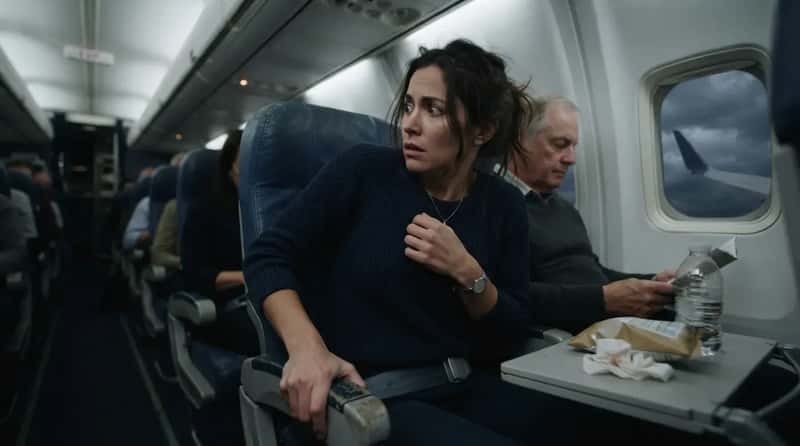
When the cabin goes quiet and the seat shakes, nervous flyers are the ones who flinch. Researchers describe the fear as a mix of feeling a complete loss of control, strange cabin sounds, sudden jolts and long, dull hours with nothing to do but imagine worst cases. Crews know that feeling, and some check in more often for exactly that reason.
News coverage plays a part too. TPG’s survey followed a fatal midair collision, a Delta regional flight that flipped over on landing in Toronto, and an Alaska Airlines door plug blowout. In an earlier TPG/Harris poll, 65% of Americans said recent crashes made them more nervous. Yet in 2024, about 5 billion passengers flew on more than 40 million flights worldwide, and the global accident rate stayed below one per million flights. Fear follows headlines, even when the numbers barely move. And the strongest tell of all comes before takeoff.
Quick Compare
- What people feel: 65% of Americans said recent crashes made them more nervous (TPG/Harris).
- What the numbers show: About 5 billion passengers on more than 40 million flights in 2024.
- The result: A global accident rate below one per million flights.
#1 – The Panic Attack That Starts Before Wheels Up
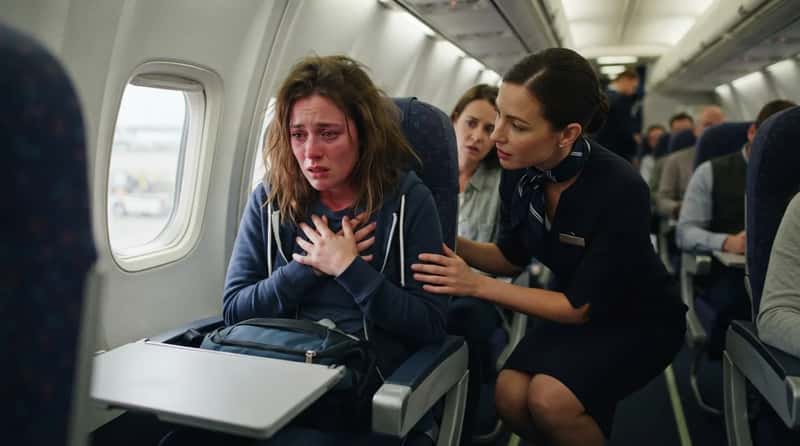
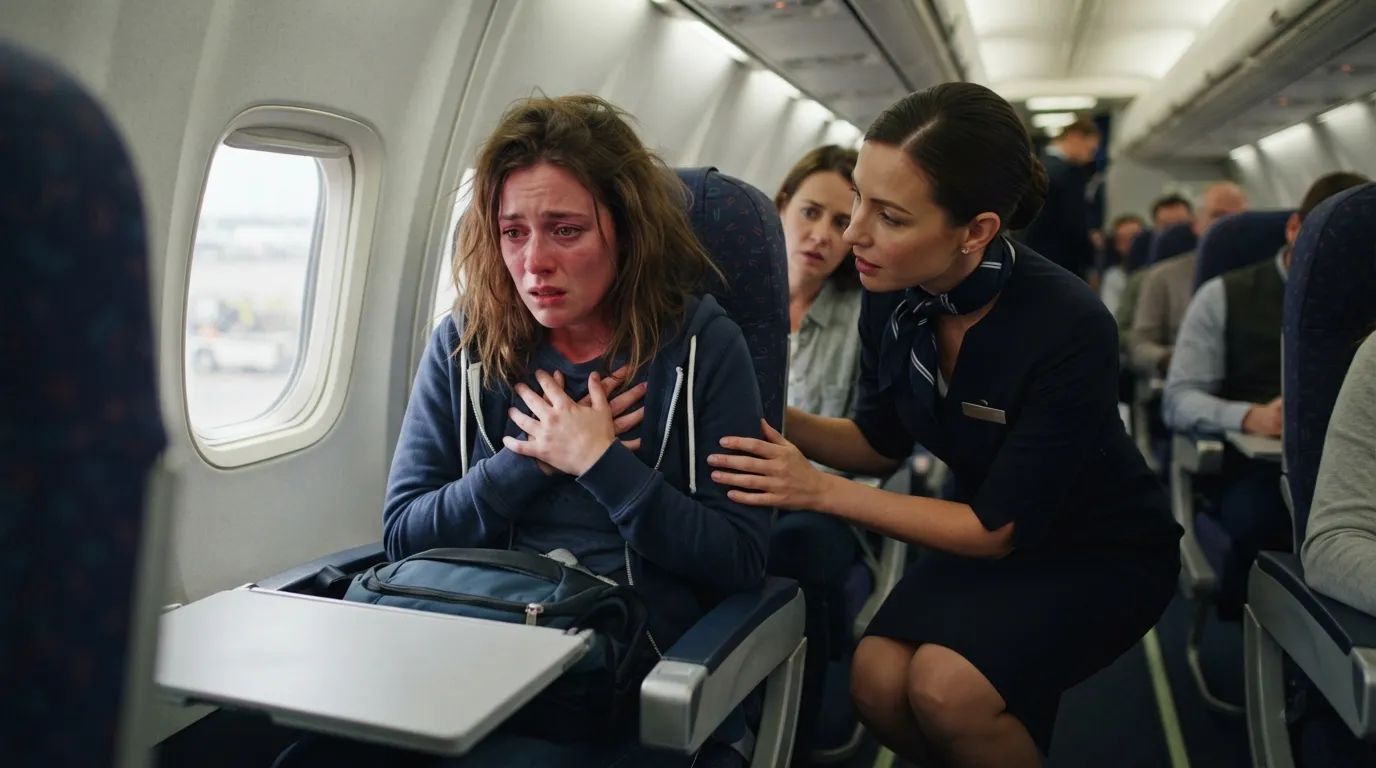
This is the moment crews are really watching for during boarding. Anything that could become a safety issue in the air is better addressed on the ground, because problems are much harder to handle after takeoff. Most anxious flyers calm down fast, and usually a few words of encouragement are enough. Sometimes, though, the anxiety grows into a full panic attack.
It can get serious. Panic attack symptoms can mimic more dangerous conditions like heart attacks and strokes. One former flight attendant described a passenger who was hyperventilating soon after takeoff. The crew called for a medical professional over the PA, and an ER nurse stepped in and calmed her. Flight attendants are trained in psychological first aid and prepared to respond to signs of distress. That’s why crews would rather you tell them early than quietly struggle alone.
Crews don’t spot nervous flyers by magic. They notice a tight armrest grip, vanishing eye contact, a strained hello, restless hands, sweat, and a passenger watching the galley like a weather report. The surprising part is what happens next: the crew’s reaction is usually kindness, not judgment.
A short, honest line at the door can bring extra check-ins, explained noises and a calmer flight. The person in 14C gripping the armrest isn’t the odd one out. They’re just the one who hasn’t said it yet.