
Ask a travel agent what they’d never book for a client over 70, and you’d expect bungee jumps and jungle treks. The real answers are far more ordinary, and that’s exactly why they cost so much when they go wrong. Every item below comes with the real-world details that make agents wince.
Senior trips rarely fall apart because of the destination. They fall apart over a 55-minute layover, a cabin at the wrong end of a ship, or an insurance deadline that quietly expired. We’re counting down from #14, and the last entry is the one most travelers walk into with total confidence.
#14 – The 55-Minute Layover That Turns a Dream Trip Into a Terminal Sprint

The shortest connection on an itinerary is the first thing many agents rewrite. On a booking screen, 55 minutes looks fine. In real life it can mean a train between terminals, a passport line, and a surprise gate change, all before the plane starts boarding. A “minimum connection time” is built for an average traveler moving briskly, not for someone who needs to stop and catch their breath.
Many advisors prefer two to three hours between international flights for older clients, even if the ticket costs a bit more. If the first flight runs late, a missed connection can strand someone overnight in a city with no hotel booked. The cheapest routing is often the one that costs the most when it slips. Airlines generally provide wheelchair or mobility assistance if you request it ahead of time, which can turn a sprint into a ride.
At a Glance
- Check whether the connection means changing terminals or clearing immigration.
- Book both flights on a single ticket so the airline is responsible for rebooking you after a miss.
- Request mobility assistance when you book, not at the gate.
- Choose a morning departure when you can, so a delay doesn’t push you into the night.
#13 – The “7 Countries in 10 Days” Tour Agents Quietly Steer Seniors Away From

The bucket-list blitz sounds like fantastic value. Agents say it’s the itinerary that sends people home needing a vacation from their vacation. Some fast-paced tours change hotels almost every night, which means early bag pickups, long hours on a coach, and constant repacking.
The alternative advisors keep suggesting is fewer bases and more day trips. Settle into one hotel for three or four nights and explore from there. Brochures sell the multi-country sprint as the smartest way to “see it all,” yet plenty of experts call it a poor use of a once-in-a-decade trip. On a rushed tour, the thing you remember best can be the hotel lobby at 6 a.m.
#12 – The Bargain “Basic Economy” Fare That Can’t Bend When Life Does

A $200 saving can vanish the moment a doctor says “don’t fly.” Basic economy fares often carry strict change and cancellation limits, and some restrict seat selection, which can leave a couple sitting rows apart. The rules vary a lot by airline, which is exactly why agents read the fine print before booking.
Agents tend to favor fares with some flexibility for clients who have medical appointments or health that can change quickly. Federal rules generally give you a 24-hour window to cancel a ticket for a full refund if you booked at least a week before departure. After that window closes, the fare’s own rules take over. The real cost of a rigid ticket often shows up weeks later, not at checkout.
#11 – The Red-Eye Followed by a 9 A.M. Walking Tour

It looks efficient on paper: fly overnight, land, and start sightseeing before breakfast has settled. Agents say this plan backfires fast. After a night of upright, interrupted sleep, a morning of cobblestones and museum queues feels like a different sport. The lost night doesn’t stay lost. It shows up the next day, too.
A common rule of thumb says the body needs roughly a day per time zone crossed to fully adjust. That’s why many advisors build in a quiet arrival day, ideally with a hotel room that’s ready early. The red-eye is oversold as a time-saver. For many older travelers it costs a full day instead of saving one.
#10 – The Cheapest Cabin That Lands at the Far End of the Ship

On a cruise, the deck plan matters more than the balcony. Agents warn about guaranteed cabins, where you book a category and the line assigns your actual room late. That can mean a very long corridor or a long trek to the nearest elevator. For someone with a cane or tired knees, that walk happens a dozen times a day.
Another overlooked wrinkle is the tender port. At some stops the ship anchors offshore, and passengers ride a small boat to land. On a tender day, getting ashore means stepping from the ship onto a boat that bobs with the swell. Policies for travelers with mobility aids vary by cruise line and conditions, so agents ask before booking.
Quick Compare
- Guaranteed cabin: usually the lower price, but you may not learn your location until close to sailing.
- Cabin you pick: often costs more, but you can choose a spot near elevators and dining.
- Middle-of-the-ship cabin: typically means shorter walks in either direction and a steadier feel in rough water.
#9 – The Shore Excursion Labeled “Moderate”

Agents distrust that word. Excursion ratings are not standardized, so “moderate” can quietly mean cobblestones, steep steps, and ninety minutes on foot. Think of Santorini’s cliffside paths or the hills of old Italian towns. The brochure rarely mentions the stairs.
Even famous sites can surprise people. Machu Picchu, for example, includes stairs, uneven stone paths, one-way routes, and walking at elevation. A “bucket-list highlight” can hide a hundred small physical demands. Good agents press operators for specifics, such as step counts, hours standing, and where there’s somewhere to sit.
#8 – Flying Straight From Sea Level Into Cusco

Most travelers assume Machu Picchu is the altitude problem. It isn’t. Cusco, the usual gateway city, sits at about 11,152 feet above sea level, well above the point where altitude sickness can begin. It’s most common when people ascend quickly to elevations above 8,200 feet (2,500 meters).
Anyone with a heart or breathing condition should get a medical check before a trip like this. Cusco is actually higher than Machu Picchu itself. That’s why many itineraries send travelers from Cusco Airport straight down into the Sacred Valley and save the city for later. Agents say the order of stops can matter more than the stops themselves.
#7 – The “Last Great Adventure” in a Place Hours From a Hospital

Polar cruises, deep-backcountry safaris, and high mountain treks all share one feature: help is far away. Agents aren’t saying older travelers can’t go. They’re saying the distance between a problem and a hospital should be part of the plan. A medical issue that is minor at home can become a major logistical event in the middle of nowhere.
The costs show why. One breakdown of evacuation costs says a complicated medevac, such as one from a remote mountain, can reach $200,000 or more. Another estimate puts an air ambulance from a remote Costa Rican lodge to the U.S. at $90,000 to $120,000. That’s the price of the ride alone, before any hospital bill. Many advisors want a doctor’s sign-off and strong evacuation coverage before a deposit goes down.
Worth Knowing
- Ask the operator how far the nearest hospital is and how long a transfer would take.
- Confirm that your insurance covers medical evacuation, not just hospital bills.
- Carry a printed list of your medications, conditions, and emergency contacts.
- Find out whether the group has a guide trained in first aid.
#6 – The July Heat Wave Trip to Rome, Athens, or Seville

On every brochure, summer is “peak season.” Many advisors now argue it’s the worst time to send a 70-something to Southern Europe. Recent summers there have brought repeated heat waves, and sightseeing means hours outdoors on hot stone and pavement. Older adults are generally considered more vulnerable to heat illness.
The fix agents suggest is the shoulder season. Spring and early fall usually bring milder temperatures and thinner crowds. The best months for crowds and the best months for comfort are rarely the same. Early-morning sightseeing and a long midday break help in any season.
#5 – The Self-Drive Route on Roads You’ve Never Seen

Driving on the opposite side, through roundabouts and down narrow village lanes, sounds like freedom. Agents say it’s a lot to learn at once, especially at dusk. Night vision tends to decline with age, and unfamiliar road signs don’t help. One wrong turn in a medieval town can mean a very tight squeeze.
Rental details add friction too. In much of Europe, manual transmissions are common, and automatics often cost extra and sell out early. Some countries also expect an International Driving Permit, and the rules vary, so agents check them for each destination. A “freedom” rental can quietly become the most stressful part of the trip. Many advisors suggest a private driver or the train for the long stretches.
Fast Facts
- An International Driving Permit is a translation of your license, not a replacement. You still need to carry your U.S. license.
- In the U.S., official permits are issued only through AAA and the American Automobile Touring Alliance.
- Automatic cars are usually the minority on European rental lots, so reserve one early.
- Ask about drop-off fees and deductibles before you reserve, not at the counter.
#4 – Prescriptions Packed in the Checked Bag

Bags get delayed, and medications don’t wait. Agents insist that every prescription travels in the carry-on, in original labeled containers. A missing suitcase is an annoyance. A missing blood pressure or heart medication on day two of a trip is a real problem.
Replacing meds abroad isn’t simple either. Medicare Part D drug plans do not cover drugs purchased outside the United States, so a replacement means paying out of pocket. That quick pharmacy stop abroad may not be covered by your plan at all. Agents suggest asking your plan about an early refill before departure and bringing a few extra days of supply.
#3 – Booking Five Separate Websites With No One to Call
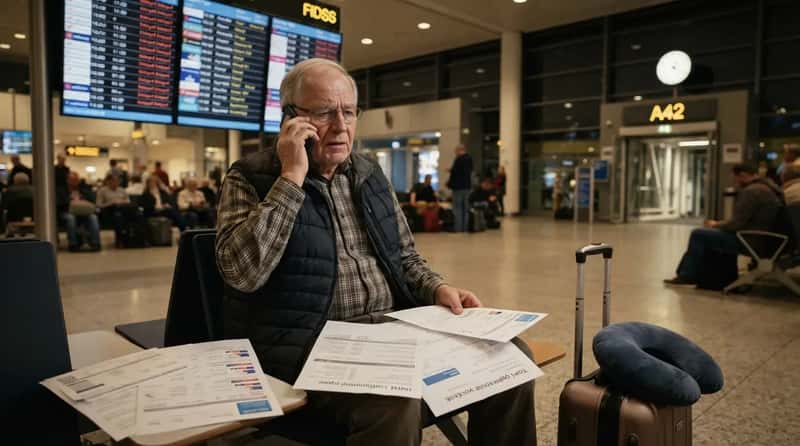
Do-it-yourself booking is sold as freedom, and it works well until something breaks. Then the flight is with one company, the hotel with another, and the tour with a third. Each has its own refund rules, and none of them owns the whole trip. A delayed flight doesn’t pause a prepaid hotel night.
Advisors argue a single point of contact matters most when plans change at 11 p.m. in a foreign airport. Online sites often rank DIY as the smartest money-saver, while many agents call it the most overrated shortcut for older travelers. They also have a business stake in saying so, so it’s worth weighing. The core idea still holds: somebody should be holding the full itinerary.
#2 – Buying Travel Insurance After the Final Payment

This is the quiet one, and it’s where a lot of regret begins. Pre-existing condition waivers usually come with a clock. Many policies require you to purchase within 14 to 21 days of your initial trip deposit to qualify. You generally also need to insure the full non-refundable trip cost and be medically able to travel when you buy.
Waiting can void your eligibility for a waiver, and without one, pre-existing conditions probably won’t be covered. Yet one travel site, citing Squaremouth sales data, says the typical buyer purchases about 67 days before the trip, long after those windows have closed. For travelers over 70, who are more likely to have a managed health condition, that gap matters.
#1 – Counting on the Medicare Card Overseas

The card in your wallet is not an international health plan. Medicare generally does not cover healthcare outside the United States, and coverage is limited to the 50 states, Washington, D.C., and certain U.S. territories. There are rare exceptions, such as limited situations in Canada or Mexico. Most foreign hospitals also do not file Medicare claims.
The bills can be staggering. One insurer estimates a hospital stay in Europe can cost $10,000 to $50,000. Meanwhile, air medical transport runs from about $30,000 to over $250,000, according to Medjet, and Original Medicare generally does not pay for evacuation from another country. For many travelers, the most expensive part of a trip abroad isn’t on the itinerary. Agents say this is the one assumption they’d never let a client leave with.
None of these 14 is about age limiting where you can go. They’re about margin. The trips that unravel usually run out of something: time between flights, a rest day, a doctor’s sign-off, or coverage that was assumed rather than confirmed.
Build slack into the schedule, the budget, and the paperwork, and the same itinerary becomes a better trip. Which of these would you have booked without a second thought?