Most people assume tasting rooms keep a quiet “senior menu” for older guests. But none of the winery guides we checked mention an age-based pour at all.
The rumor does point to something real: a handful of ordinary pours and options that suit guests over 60 better than any secret menu could. The last one is what the professionals use every day, and most visitors never think to ask for it.
#14 – The 1-Ounce Taste
The smallest pour in the room is also the least standardized one. Most visitors never think to ask how big it will be.
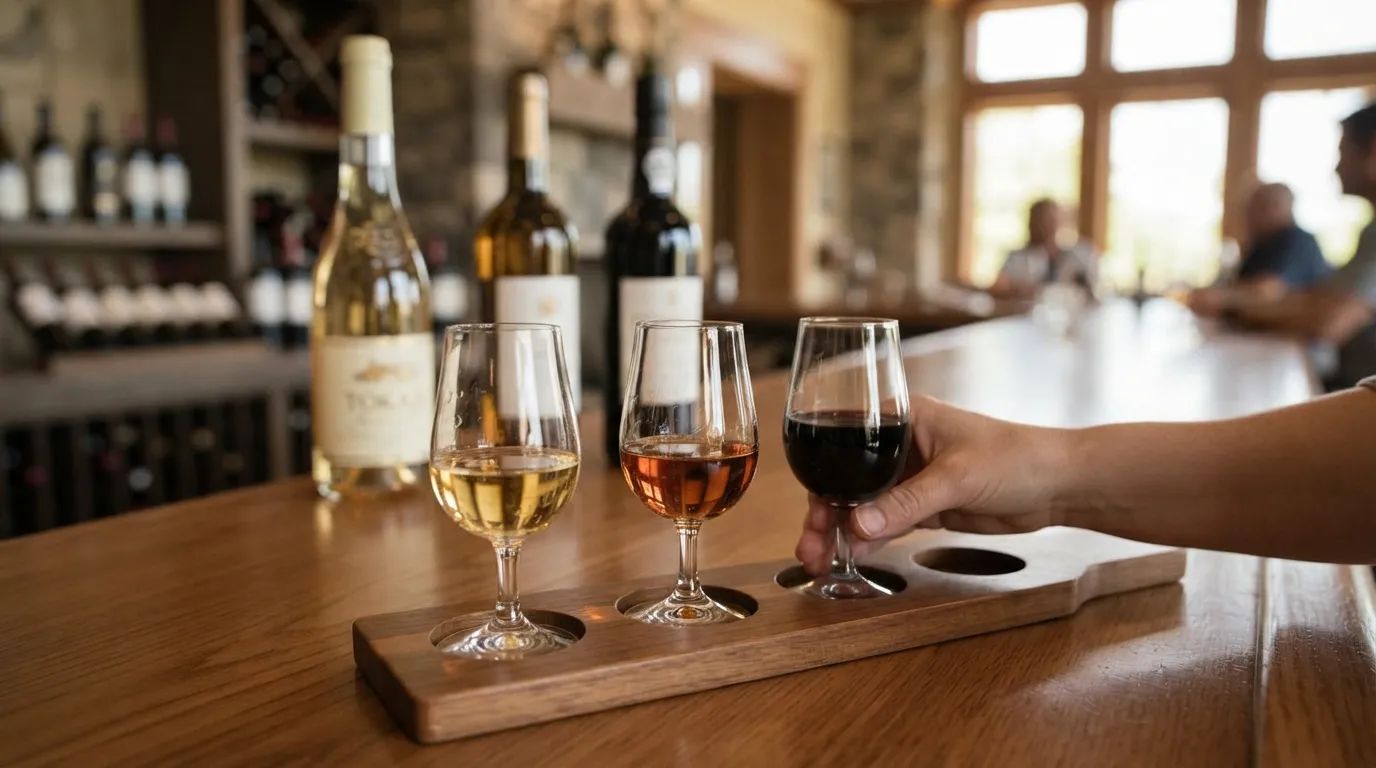
One guide says a standard tasting pour typically ranges from 1 to 3 ounces. Another says Napa wineries typically pour 1 to 1.5 ounces per wine, which lets guests sample several wines without overdoing it.
A full glass is a different thing. A standard drink is about 5 ounces of wine, so a 1-ounce taste is roughly a fifth of one drink.
- Napa-area guides: about 1 to 1.5 ounces per wine.
- One California guide says wineries are limited by law to 1 oz pours. Other guides list 2 to 3 ounces, so local rules and house habits clearly differ.
But the next item isn’t really a pour at all, and most people dump it without knowing why.
#13 – The “Rinse” Pour
Sometimes the first splash in your glass isn’t meant to be drunk. Staff call it a rinse.
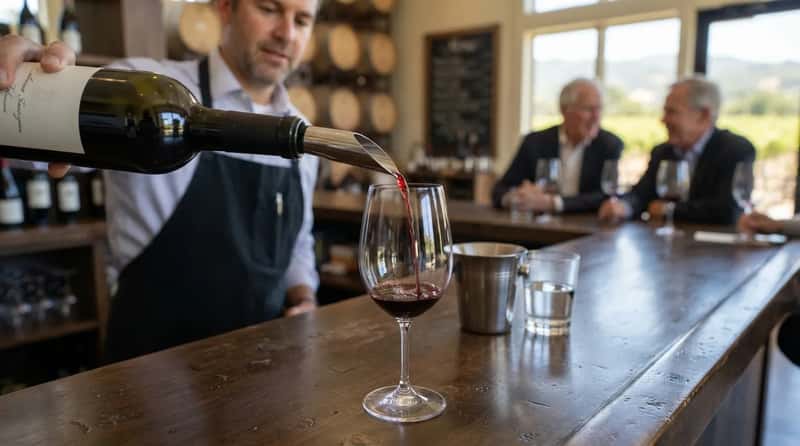
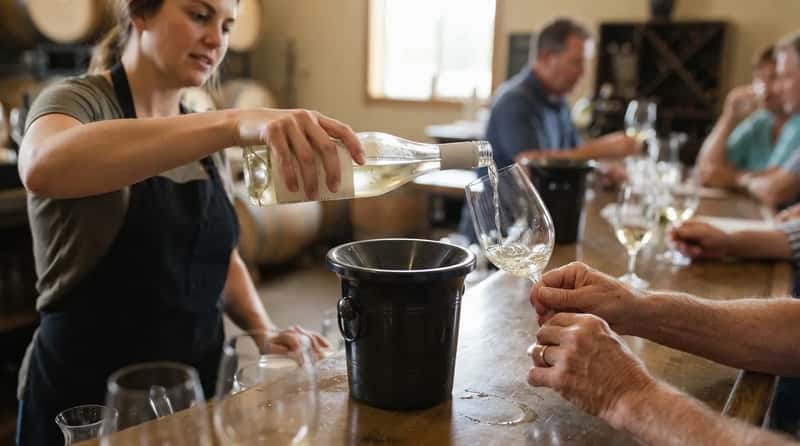
According to one etiquette guide, the host pours a small amount of the next wine into your glass. You swirl it around and empty it into the dump bucket.
Why not just use water? One guide says rinsing with water can dilute the wine, and chlorine in tap water can affect smell or taste.
The same guide says rinsing isn’t needed between every wine. It suggests it mainly when switching from red to white, or from sweet to dry.
For a visitor pacing themselves, this is the pour that counts least. It cleans the glass and adds almost nothing to your total.
The next option is even simpler, and it may be the most underused thing on the counter.
#12 – A Glass of Water
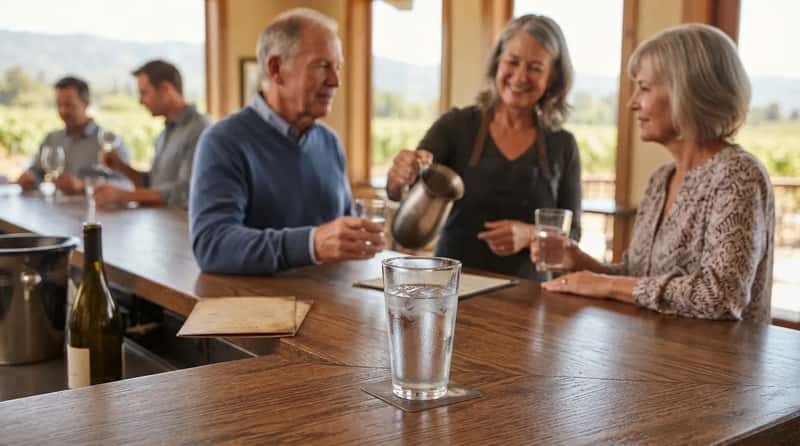
The most useful thing on the tasting bar isn’t wine. It’s the one thing people forget to ask for.
One Sonoma Valley guide says water should be available throughout your tasting. It suggests asking for some when you start to feel woozy.
That timing is backwards. Waiting until you feel the effects means the moment to act has already passed.
Age matters here too. According to the National Council on Aging, age changes our bodies in ways that make alcohol affect us differently.
Worth Knowing
- Water should be available throughout a tasting, so you don’t need to wait for a break.
- Ask at the start, not when you feel woozy.
- A standard drink is about 5 ounces of wine, and water costs you none of that allowance.
- Age can change how alcohol affects your body, even if your habits haven’t changed.
Woodinville tasting-room staff give the same advice in plain terms: “Don’t forget to drink water!”
Water helps, but there’s another item on the counter that does double duty, and most people treat it as a snack.
#11 – The Little Crackers
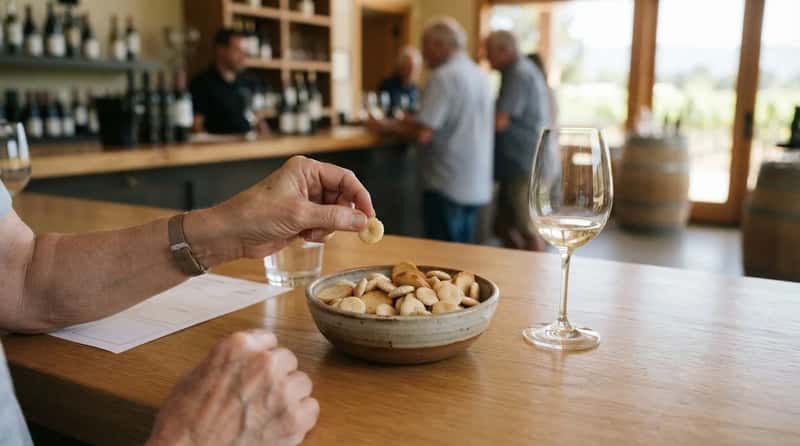
Those tiny crackers aren’t decoration. They’re a tool, and most guests use them wrong.
A winery consultant’s etiquette list explains that the crackers are palate cleansers to use between samples. The same list says to resist the urge to empty the bowl.
Another guide says the purpose of the neutral food is to clear the palate after each wine. So they work mainly as a reset, not as a meal.
That matters for older visitors. Eating or drinking water when you have alcohol can lower the rate of its absorption, according to AARP’s summary of the guidance.
Next comes a pour that almost nobody finishes, and that’s exactly how the room expects it to go.
#10 – The Pour You Don’t Finish
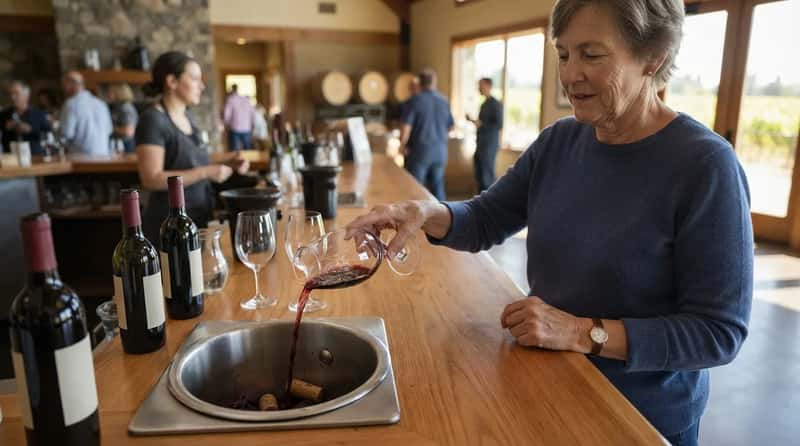
Nobody behind the bar is keeping score of how much you drink. They’d rather you poured it out than forced it down.
One etiquette guide says it plainly: you don’t have to drink all the wine in your glass. A dump bucket sits on the counter for that purpose.
Another guide says pouring out wine you don’t want to finish is completely normal and nobody will judge you. It adds that you’ll feel better by the last stop if you haven’t finished every pour.
Staff at one Washington winery put it bluntly: “NO shame in tasting and dumping” when you’re visiting several wineries.
Dumping helps with quantity. The next pour changes the wine itself, and it may surprise you.
#9 – The Older Vintage
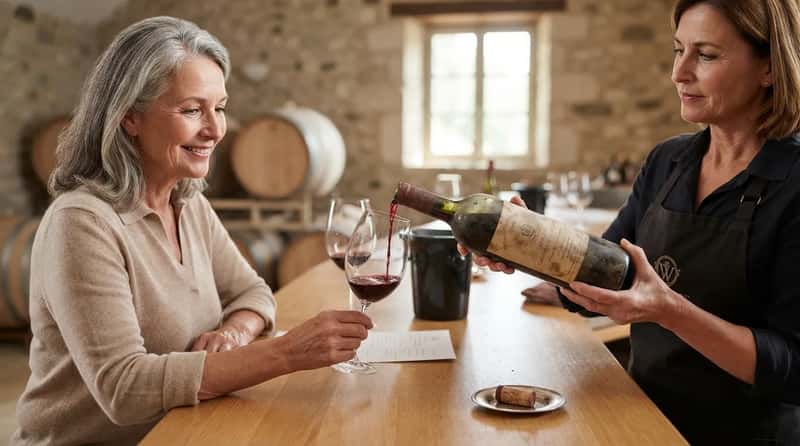
The same grape can taste like a different wine after a few years in the bottle. That’s a big deal if young reds feel harsh to you.
One explainer says that when wine is young, its tannins can be harsh and overwhelming, giving a bitter taste. Over time, wine scientists generally accept that aggressive astringency softens during wine aging.
It isn’t guaranteed, though. The rate depends on grape variety, winemaking techniques, and storage conditions.
Not every winery keeps older bottles to pour. But if yours does, asking about an older release is a fair question, and the answer may change what you buy.
Now for a pour that comes with a stereotype attached, and the research is far less tidy than you’d think.
#8 – The Off-Dry “Easy” Pour
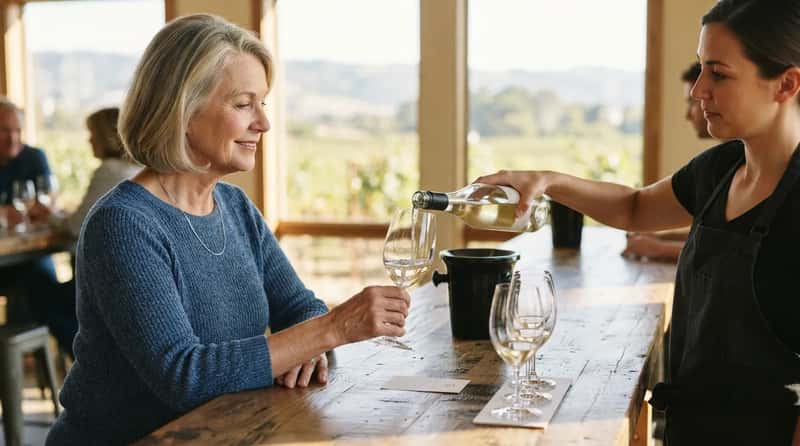
The laziest assumption in wine country is that older visitors want something sweet. The research doesn’t back that up cleanly.
One study compared adults 65 and older with young adults. It found that only four taste thresholds differed between the groups, and sweetness was the exception.
A separate review found that sour and bitter tastes seem to be the most impaired. It also says there is still no consensus on whether these changes affect food preferences.
So sweetness may hold up better than other tastes. That isn’t the same as older drinkers preferring it.
If a server hands you the sweet bottle by default, it’s fair to ask why. If you actually like off-dry wine, ask for it by name.
Sweetness has a cousin on the menu, and it comes in an even smaller glass.
#7 – Dessert and Fortified Sips
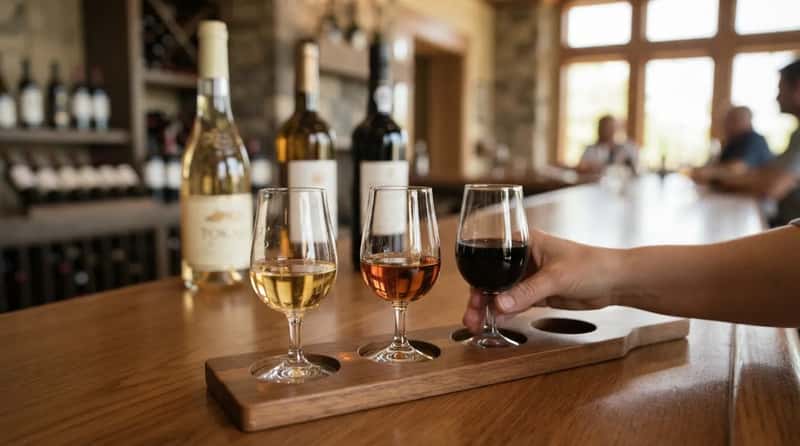
Some of the smallest pours on any menu are also the richest. There’s a reason for that.
Fortified wine is wine with a distilled spirit added to increase its alcohol content. Sherry and port are good examples.
Dessert wines are also meant to be served small. One hospitality guide says they’re meant to be enjoyed in smaller quantities.
The history is old. Ancient Greeks made straw wine, capable of aging due to its high sugar content.
Tasting flights often end here. One guide suggests flights that include sparkling, white, red, and dessert wines.
Small pours raise an awkward question, though: what happens when you love one and want more?
#6 – The Second Taste

Going back for seconds is allowed, with one catch. The room expects you to mean it.
One guide says you wouldn’t usually ask for a second taste unless you indicate you’re interested in purchasing. A California guide says you can ask, but it may be expected that you’ll buy.
Quick Compare
- First taste: Part of the flight. Split it into at least three sips to get the most from it.
- Second taste: Usually read as a sign you may buy.
- Skipping it: Perfectly fine if the first pour told you enough.
A better move is to taste slowly the first time. A Woodinville winery suggests splitting each pour into at least three sips: one to coat the palate, two to really taste.
Honesty helps too. Staff there say you won’t hurt their feelings with your honest opinion of a wine.
So the second taste is really a buying signal. If you don’t plan to buy, your first pour should have told you enough.
The next option turns a single pour into something more useful than a sip.
#5 – The Pairing Pour
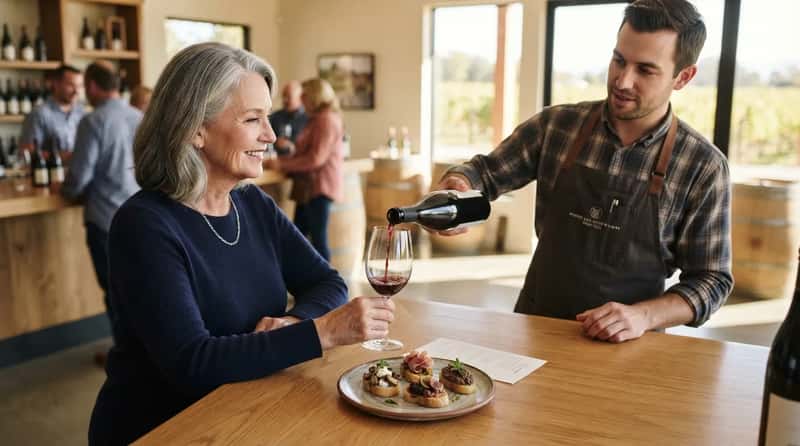
Some of the best pours come with a plate of advice attached. It costs nothing to ask.
One guide suggests being open to every wine and letting staff explain its structure, origin, and preferred food pairings. Another says tasting notes should be available and can help you discover flavors and aromas.
That matters because tannins change how other flavors land. One explainer says the astringent sensation can enhance the perception of bitterness and acidity while suppressing sweetness and fruitiness.
Food also fits the health side. AARP’s guidance notes that eating when you drink lowers how fast alcohol is absorbed.
Now for the pour that goes against the usual advice, and it’s the one sure to start an argument.
#4 – The Bold, Dry Red
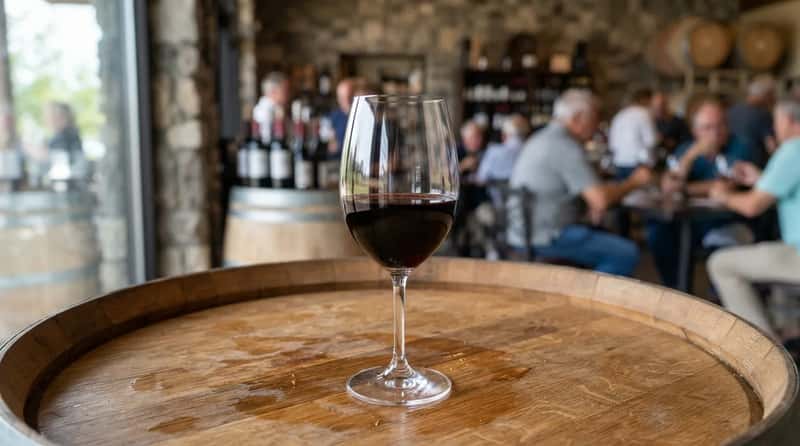
Here’s the twist most “senior-friendly” advice skips. Bitterness may fade with age, not sharpen.
One study notes that younger subjects are more sensitive than older subjects to the bitterness of certain test compounds. A wine writer argues that this makes some older drinkers prone to more tannic and drier reds.
The science is still mixed. One large study found that perceived taste intensity falls as age rises, but also that individuals differ a great deal.
Why It Stands Out
- It flips the assumption that older palates need soft, sweet wine.
- One study found younger subjects more sensitive to certain bitter compounds.
- Individual differences are large, so averages won’t predict your taste.
- Dental work may change what you taste.
Researchers even found bitter sensitivity differed between people with removable and non-removable dental prostheses. Dental work can change what you taste.
So the “soft and sweet” default may be exactly wrong for some guests. The only way to know is to taste the big reds and judge for yourself.
Before you order that cabernet, though, there’s a pour you’ll never get, however politely you ask.
#3 – The Cutoff

There’s one pour no tasting room will give you if you look like you’ve had enough. It isn’t personal.
A California guide says if you appear to have consumed too much wine, tasting room staff are not allowed to serve you. That is the rule of the house, not a judgment.
The cutoff sneaks up on people. One Sonoma guide warns that adding another tasting or two at other wineries means you’re likely past your limit.
The numbers for older drinkers are sobering. Binge drinking occurs in about 1 in 4 adults over 65 who drink, according to the NIAAA.
Pacing is one thing. Medication is another, and most visitors never think about it until it’s too late.
#2 – The Pour You Skip
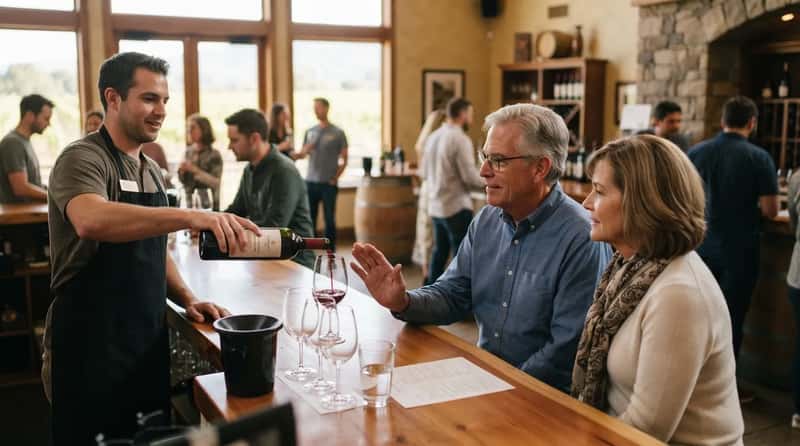
Sometimes the smartest pour is the one you turn down. Tasting rooms expect it.
One guide says it is acceptable to skip any of the wines on the tasting list. You may prefer to focus solely on reds or a particular varietal.
For some older visitors, skipping isn’t about taste at all. AARP’s guidance says to avoid alcohol if you take sedatives, sleep medications, opioids, muscle relaxants, or certain diabetes and blood-thinning medications.
Medicines and alcohol can interact even when they aren’t taken at the same time. Johns Hopkins explains that the drug may still be in your blood when you have a drink.
One last pour remains, and it’s the one the professionals use every day.
#1 – The Spit Cup
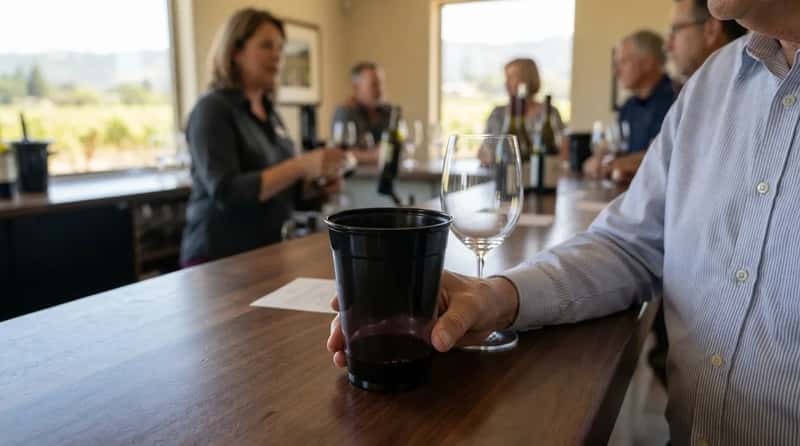
The move that looks most professional is also the one that protects you most. Staff won’t think twice about it.
One Napa and Sonoma guide says winemakers and sommeliers do it when they evaluate dozens of wines in a session, and there’s nothing weird about it. Its advice is simple: ask for your own cup.
Another guide says you’ll still be able to taste the wine but without the excess alcohol. Spitting during a tasting is perfectly acceptable, especially if you plan to visit several wineries in one day.
Some etiquette lists note that other guests don’t want to watch you spit into the shared bucket, so a disposable cup is the polite way to do it.
The limits make the case. The NIAAA recommends that adults 65 and older have no more than 7 standard drinks per week and no more than 3 on any single day.
That leaves one more thing to say about the whole list.
The Bottom Line
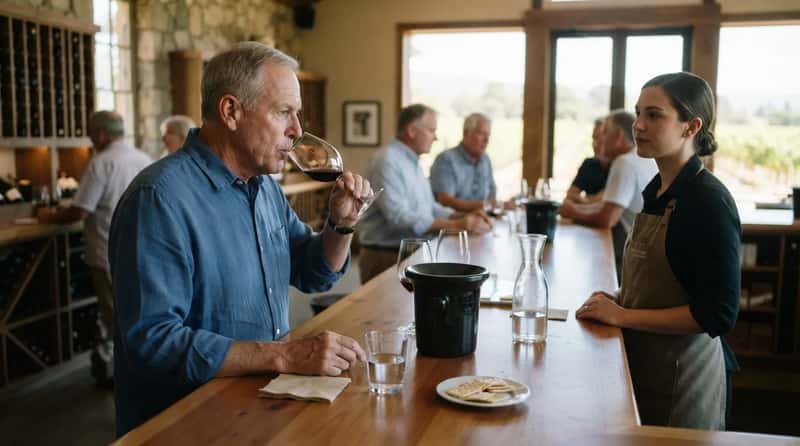
We found no evidence of a secret age-based pour. What we did find is a set of ordinary options that suit visitors over 60 well.
The biggest surprises were that taste research doesn’t support the “sweet for seniors” stereotype, and that spitting is the most professional move in the room.
Everything else comes down to pacing, water, food, and asking your pharmacist about medications.
At a Glance
- No age-based pour turned up in any guide we checked.
- Napa-style tastes run about 1 to 1.5 ounces, against 5 ounces for a standard drink.
- Water, food, and a spit cup are free and easy to ask for.
- The NIAAA advises adults 65 and older to have no more than 3 drinks on any day and 7 per week.
Which of these have you actually asked for at a tasting room?