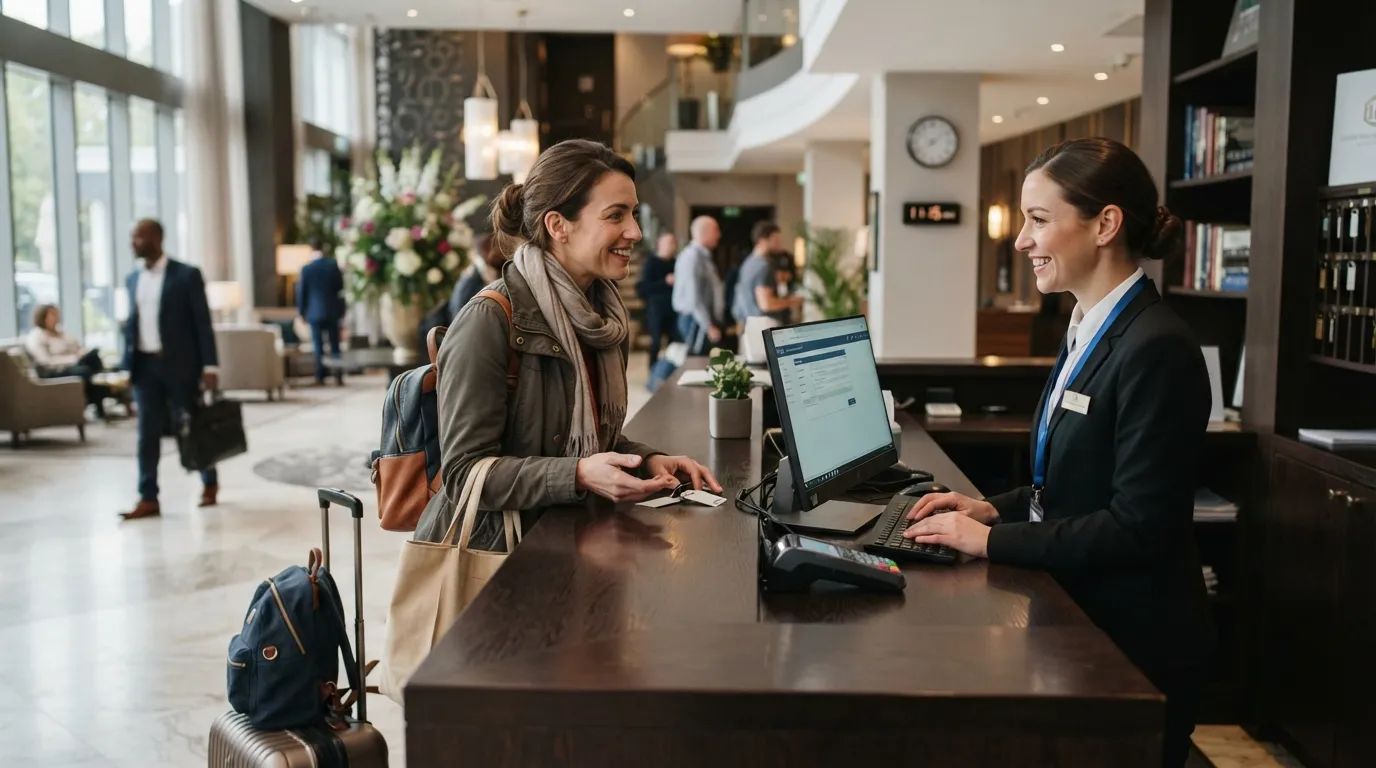
Most travelers treat check-in like a formality: grab the key, nod at the front desk agent, and head straight to the room. But that rushed two minutes at the counter is exactly why so many people spend their first night on hold with customer service, hunting for parking, or arguing about a charge they never agreed to.
The guests who never seem to have hotel problems aren’t luckier than you. They’re just doing a handful of small things at the counter that everyone else skips entirely. Here’s what frequent travelers and front desk veterans actually do before they ever put a bag down.
1. Lock In Late Checkout Before You Even Get Your Keycard

Asking for late checkout at check-in works dramatically better than asking the morning you’re leaving. Front desks can see the next several days of reservations the moment you arrive, so they know instantly whether your room is booked again that night. Ask at 3 p.m. on arrival day and you’re one of the first requests logged, not one of twenty calls flooding the desk at 10 a.m. on departure day.
This single move can turn a rushed, stressful last morning into a relaxed one. Many properties will casually offer a 1-2 p.m. checkout just for asking nicely, no status or loyalty tier required. Wait until the last minute and the best you’ll usually get is a shrug and a bag check at the front desk instead of real extra hours in the room.
2. Ask Exactly What the Resort Fee Covers
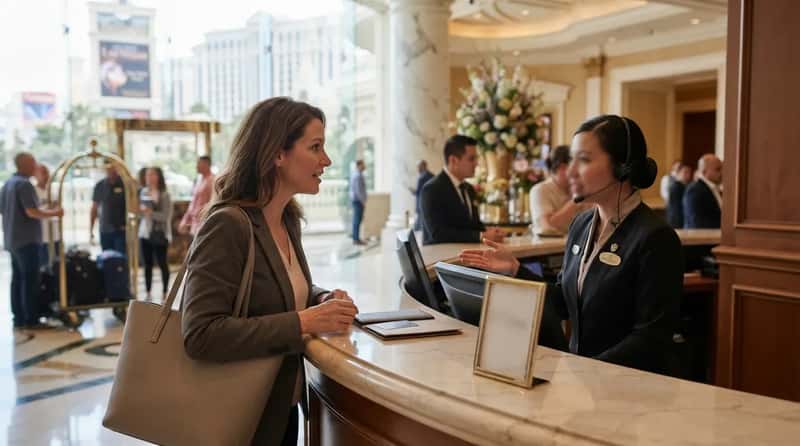
Resort fees have quietly become one of the most misunderstood charges in travel, and asking about them at check-in avoids a nasty surprise on your final bill. A 2025 NerdWallet study that looked at over 400 hotels found the national average for these fees sits around $33 to $35 per night. In tourist-heavy cities, that number climbs fast.
Most major Las Vegas Strip hotels charge between $45 and $55 per night before tax, with premium properties like Bellagio, Wynn, Venetian, and Caesars Palace at the $55 end. As of 2025, the FTC’s Rule on Unfair or Deceptive Fees requires hotels to show the total price including all mandatory fees upfront, but that rule only covers advertising, not what’s actually included in the fee. Ask at the desk exactly what it pays for – pool, gym, Wi-Fi, parking – because it varies wildly by property.
Quick Compare
- National average resort fee: $33-$35 per night
- Typical Las Vegas Strip hotel: $45-$55 per night
- Premium Strip properties (Bellagio, Wynn, Venetian, Caesars): closer to $55
- FTC’s 2025 disclosure rule covers advertised pricing, not what the fee includes
3. Photograph the Room the Second You Walk In
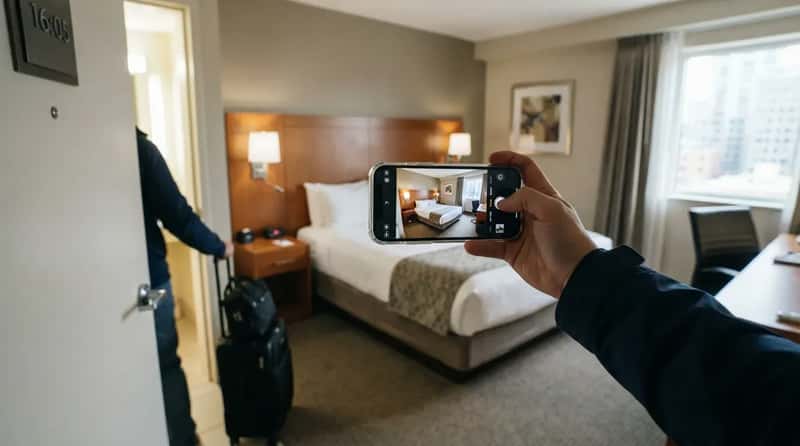
Taking thirty seconds to photograph the room before you unpack is the cheapest insurance policy in travel. Scuffed walls, cigarette burns, a broken lamp, or a stained carpet can all become “your” damage if nobody documented it existed before you arrived. Housekeeping teams inspect rooms after every checkout, and disputes over pre-existing damage happen more often than most guests realize.
A quick photo timestamp of the bathroom, bedding, and any visible wear protects you from an awkward charge showing up on your card days after you’ve gone home. It takes less time than scrolling social media in the elevator. Skip this step, and you’re trusting that nobody else’s damage gets pinned on you.
4. Request Extra Keycards for Everyone in Your Group
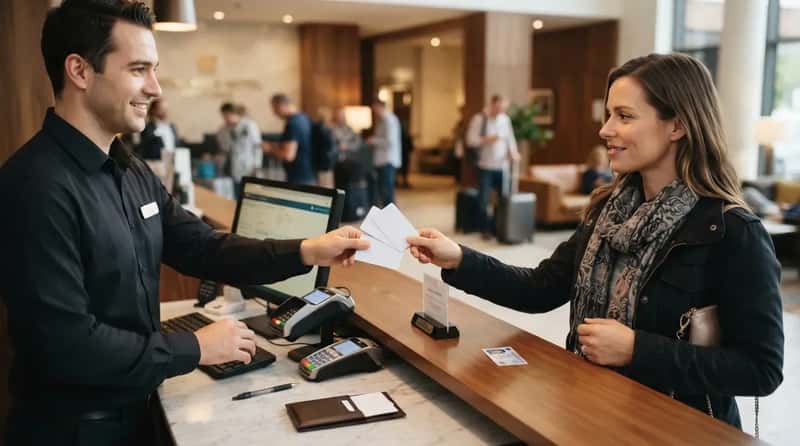
Asking for one keycard per adult in your party at check-in avoids the single most common mid-trip annoyance: someone locked out while everyone else is at the pool or exploring the city. Most hotels will cut extra cards for free if you ask up front, but many charge a small replacement fee if you come back later asking for a second one.
This matters even more for families or groups sharing a room, where schedules rarely line up perfectly. A surprising number of front desks limit standard checkout to two cards unless you specifically request more. Tell them exactly how many people are staying and hand over IDs if needed – it’s faster than a return trip to the lobby at 11 p.m.
5. Confirm Your Parking Situation Before You Park
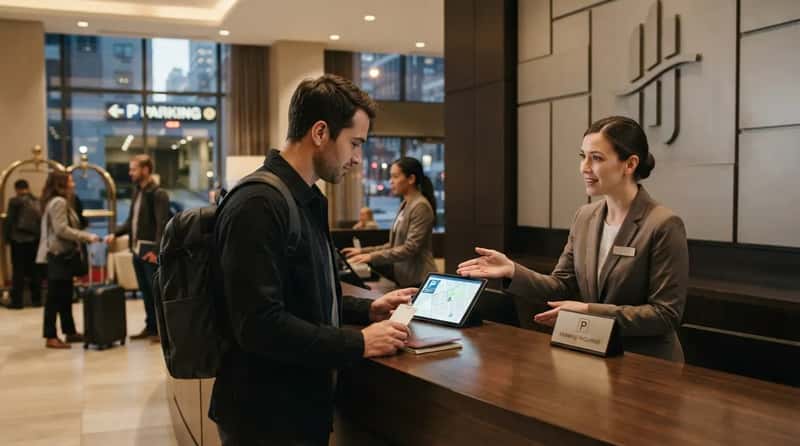
Parking questions are one of the most overlooked check-in topics, and getting them wrong can mean paying twice or circling a packed garage for twenty minutes. Ask whether self-parking is included, whether valet is mandatory at certain hours, and whether the rate is per day or per stay.
Urban and airport hotels are especially notorious here, since overnight parking at some city properties now runs $30 to $60 a night on top of the room rate. Some hotels validate nearby garage parking instead of offering their own lot, which nobody tells you unless you ask directly. Confirming this at the desk saves the frustration of discovering a $45 daily charge on your folio the morning you check out.
6. Ask What the Incidental Hold Actually Covers

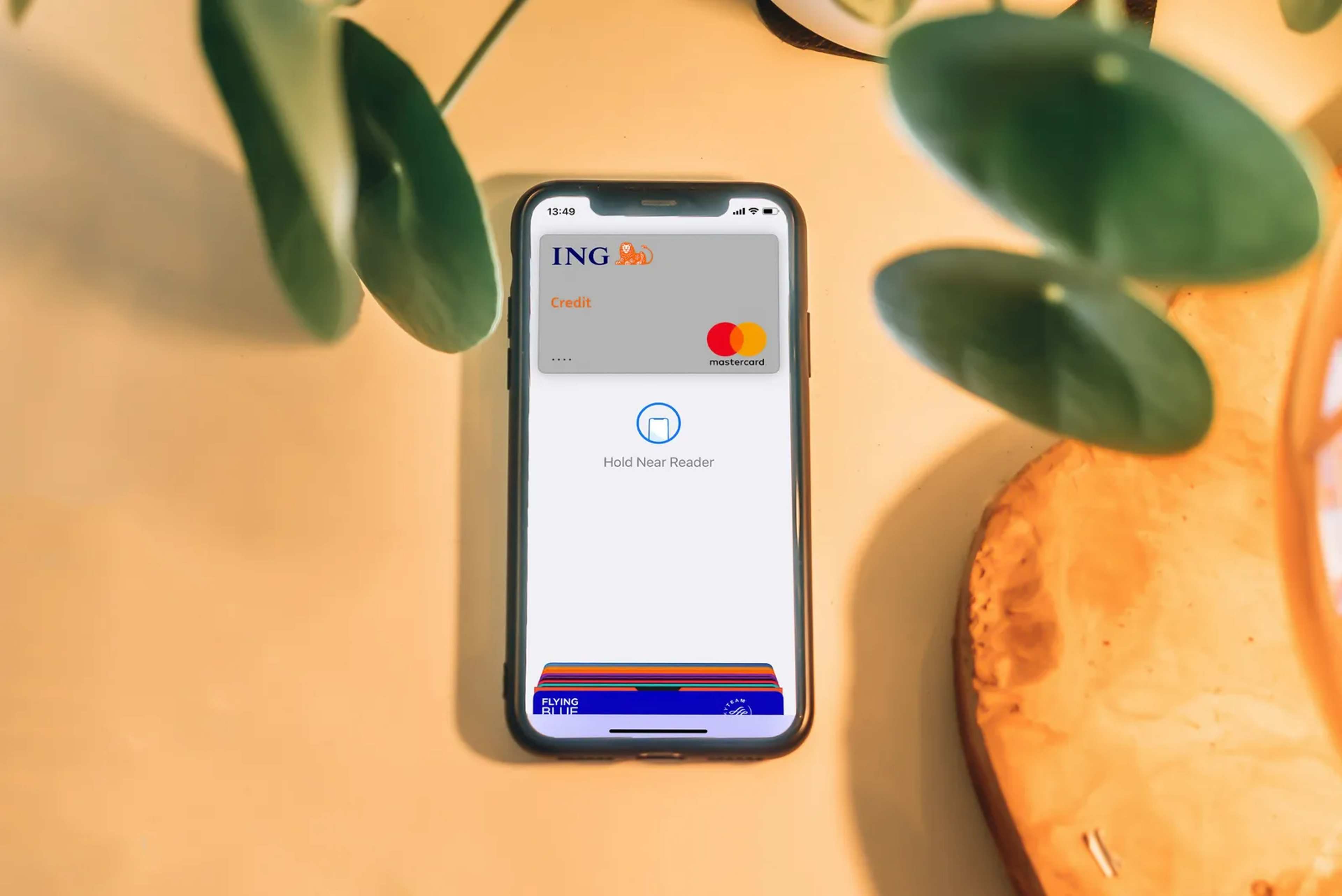
Nearly every hotel places a temporary hold on your card at check-in, and asking about it upfront prevents a lot of confusion later. This incidental hold typically ranges from $25 to $200 per night, depending on the property, and it’s meant to cover things like minibar use, room service, or damage – not your actual room charge.
The timing of when that hold disappears varies more than most people expect. Visa cards can have a hold last for up to 30 days, while American Express cards only allow holds for up to seven days. Some major chains move faster: Hilton’s payment FAQ says the hotel releases its hold within 72 hours after checkout, while Marriott’s terms state that the issuing bank may retain the hold for up to five business days after departure. Ask at check-in what your specific hold amount is and how long it typically takes to clear, so a temporarily lower available balance doesn’t catch you off guard on a road trip.
Fast Facts
- Typical incidental hold: $25-$200 per night
- Visa: holds can last up to 30 days
- American Express: holds capped at 7 days
- Hilton: releases its hold within 72 hours of checkout
- Marriott: issuing bank may hold funds up to 5 business days after departure
7. Get the Wi-Fi Password AND Ask About a Backup Network

Most guests assume Wi-Fi just works, then spend the first hour of their stay troubleshooting a network that drops every ten minutes. Asking at check-in whether there’s a premium or backup network – common at larger hotels and convention properties – can save real frustration later, especially if you need to work or stream during your stay.
Many hotels quietly run two separate networks: a free, congested one for casual browsing and a faster paid tier for guests who ask. Front desk staff rarely volunteer this unless questioned directly. It takes ten seconds to ask and can be the difference between smooth video calls and a buffering wheel all weekend.
8. Enroll in the Loyalty Program at the Desk, Not Later Online
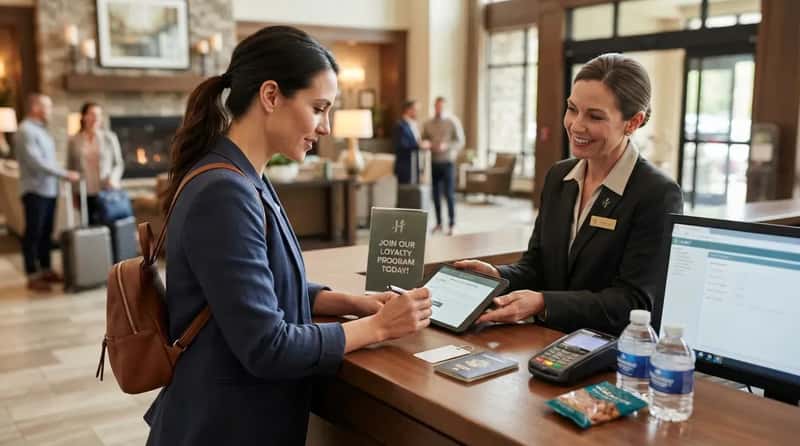
Signing up for a hotel’s loyalty program the moment you check in, rather than after your trip, means your stay actually counts toward your account instantly. Waiting until later often means missing out on stay credit entirely, or having to call customer service after the fact to get points manually applied.
Desk agents can also often note preferences directly into a fresh loyalty profile – floor requests, pillow type, early check-in flags for future stays. Enrolling in person sometimes unlocks small same-day perks like a complimentary water or snack that online sign-ups never trigger. It costs nothing and takes less time than waiting for the elevator.
9. Ask for a Room Away From the Elevator, Ice Machine, or Construction

Noise complaints are one of the top reasons guests call the front desk at 11 p.m. asking to switch rooms, and nearly all of it is preventable at check-in. Elevator machinery, ice machines, and pool decks generate more noise than most travelers expect, and rooms near them are often assigned by default simply because they’re easier to keep available.
Simply asking “is there any construction or renovation happening on this stay?” or requesting a room away from mechanical areas takes seconds and dramatically improves sleep quality. Front desks almost always have quieter options available – they just don’t offer them unless asked. Skipping this step is how so many one-star reviews get written about “paper-thin walls” that were really just poor room placement.
You never know what a hotel can do for you until you actually ask.
Common front-desk wisdom among concierge staff
10. Confirm Your Exact Room Type Matches What You Booked

Room type mix-ups happen more often than travelers assume, especially with third-party booking sites that don’t always sync perfectly with a hotel’s own system. Confirming bed type, square footage, view, and any specific amenities at check-in – not after you’ve unpacked – means any mismatch gets fixed immediately instead of becoming a mid-stay ordeal.
This is especially important for guests who booked a specific configuration for a reason, like two queen beds for kids or a connecting room for extended family. Front desks are far more willing to fix a mistake in the first five minutes than after you’ve already settled in. A quick double-check at the counter avoids an awkward return trip with luggage in tow.
11. Ask About Breakfast Hours, Location, and What’s Actually Included

“Complimentary breakfast” means wildly different things depending on the property, and asking specifics at check-in prevents a frustrating surprise the next morning. Some hotels include a full hot buffet, others offer only coffee and a muffin, and plenty charge a fee that isn’t obvious until you’re standing at the register with a tray.
Confirming exact hours also matters more than people think – many hotel restaurants close the breakfast window earlier than guests expect, especially on weekdays versus weekends. A surprising number of travelers miss included breakfast entirely just because they assumed it ran until 10 a.m. when it actually ended at 9. One quick question at the desk avoids that entirely.
Worth Knowing
- “Complimentary breakfast” can mean a full hot buffet or just coffee and a muffin
- Some properties charge a fee that only shows up at the register
- Weekday hours often end earlier than weekend hours
- Asking at check-in prevents missing the window entirely
12. Get a Local Recommendation Directly From the Desk Agent

Front desk staff are locals who see hundreds of guests and know exactly which nearby restaurants, coffee shops, and attractions are worth the walk – information no review app fully captures. Asking for one specific recommendation at check-in, rather than relying only on searches later, often turns up spots that aren’t crowded with tourists.
This is especially valuable in unfamiliar cities, where the difference between a mediocre tourist-trap meal and a genuinely good one often comes down to local knowledge. Many agents will happily map out a walking route or flag which nearby areas to avoid after dark, if you simply ask. It costs nothing and can shape your entire trip.
13. Set Up Express Checkout and Confirm How Your Bill Will Be Sent
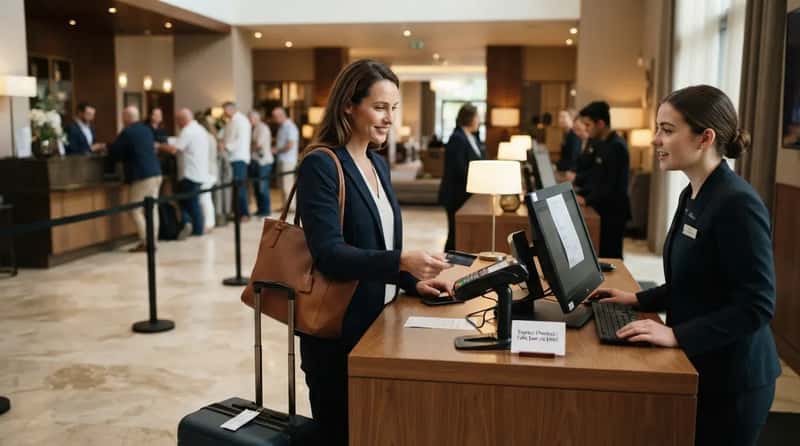
Asking about express checkout at check-in – rather than discovering it exists on your last morning – means you can skip the lobby line entirely when it’s time to leave. Confirming whether your final folio will be emailed, and to which address, also prevents the common headache of a bill landing in an old inbox you rarely check.
This is particularly useful for business travelers who need an itemized receipt quickly for expense reports. Many guests don’t realize express checkout is available until they’re already standing in a slow line with bags in hand. Setting it up on arrival turns departure day into a five-second formality instead of a wait.
14. Ask About Early Check-In the Moment You Arrive, Even If It’s Not Confirmed

Arriving before the standard check-in time and simply asking – rather than assuming the room won’t be ready – resolves far more often in the traveler’s favor than people expect. Housekeeping often finishes rooms ahead of schedule, and desk agents can typically see in real time which rooms are already clean and available.
Even when an early room isn’t ready, asking immediately means you get added to a priority list instead of waiting in uncertainty. Guests who ask directly at the counter get early access far more often than those who just show up hoping. Bags can also be safely stored at the desk in the meantime, freeing you to start the trip immediately instead of sitting in a lobby watching the clock.
At a Glance
- Asking immediately puts you on a priority list for early rooms
- Desk agents can see in real time which rooms are already clean
- Bags can usually be stored free at the desk while you wait
- Guests who ask directly get early access far more often than silent walk-ins
None of these fourteen moves take more than a minute or two at the counter, yet together they prevent nearly every common hotel headache: surprise charges, noisy rooms, missing keycards, wasted mornings, and unnecessary lines. The guests who never seem to have hotel problems aren’t the lucky ones – they’re the ones who ask a few extra questions before the elevator doors even close.
What’s the one check-in question you always ask that saves you every single time? Drop it in the comments – the next traveler reading this might need it.