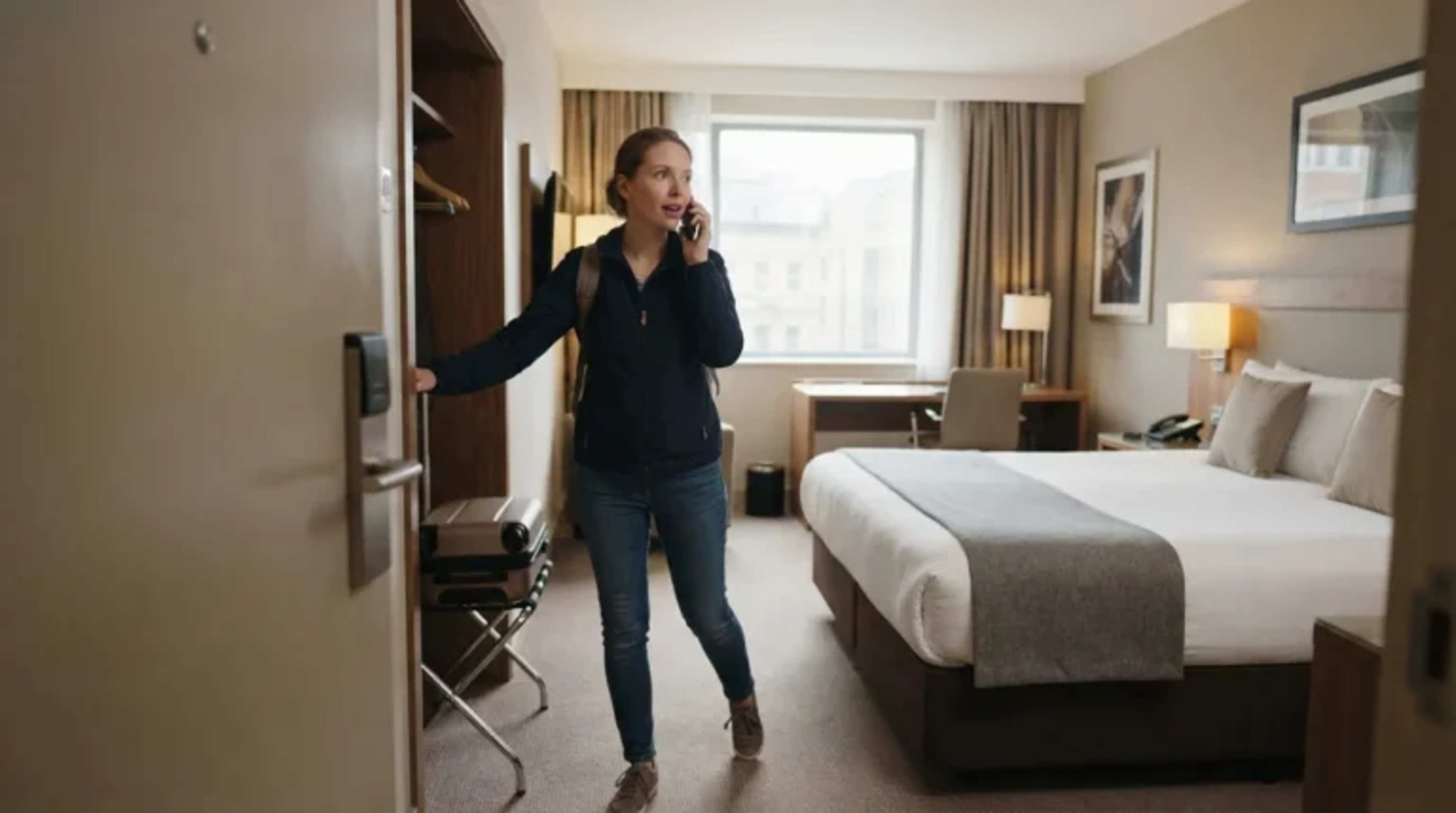
Most people walk into a hotel room, toss their bags on the bed, and start scrolling for restaurant recommendations. That first hour feels like dead time – the boring gap between the front desk and the actual vacation. But ask hotel staff, road warriors, or anyone who’s ever fought a damage charge on their credit card, and they’ll tell you the opposite is true.
That first hour is quietly the most important sixty minutes of the entire stay. The difference between a smooth trip and a ruined one almost always gets decided before a single shirt comes out of the suitcase – and if you skip these steps, you usually don’t find out until it’s already too late to fix.
1. Screenshot the Hotel’s Name, Address, and Phone Number
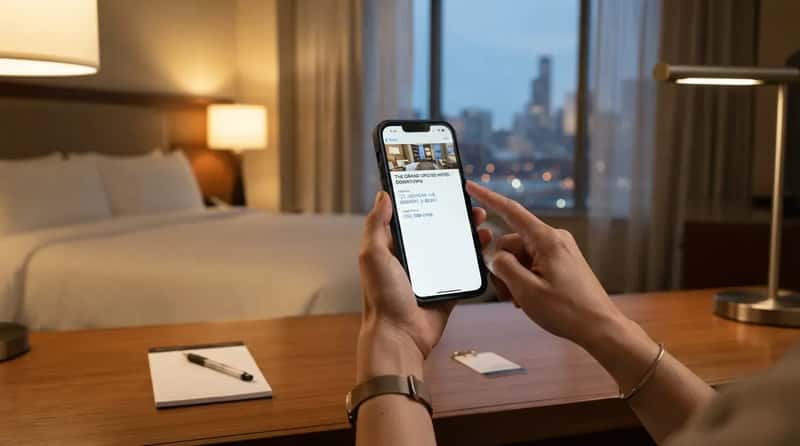
It sounds almost too simple to matter, but plenty of travelers get burned by skipping it. Wi-Fi glitches, cell signal drops, or your phone dies right when you need directions back after a night out. Having the exact hotel name and address saved offline means a rideshare driver, a taxi, or even a stranger with a phone can get you home safely no matter what.
This matters even more in cities packed with multiple properties from the same chain within a few blocks of each other. Telling a driver “the Marriott downtown” in a city with four Marriotts is a recipe for a very expensive, very late night. A ten-second screenshot solves a problem most people never think about until they’re stranded on a sidewalk at 1 a.m.
2. Do the Two-Minute Bed Bug Check Before You Unpack Anything
This is the one step almost everyone skips, and it’s the one with the most visible consequence if you do. A recent survey found that roughly 1 in 7 U.S. travelers encountered bed bugs in the past year, and about 20% of those sightings happened in four- and five-star hotels. Price tag and star rating simply don’t protect you.
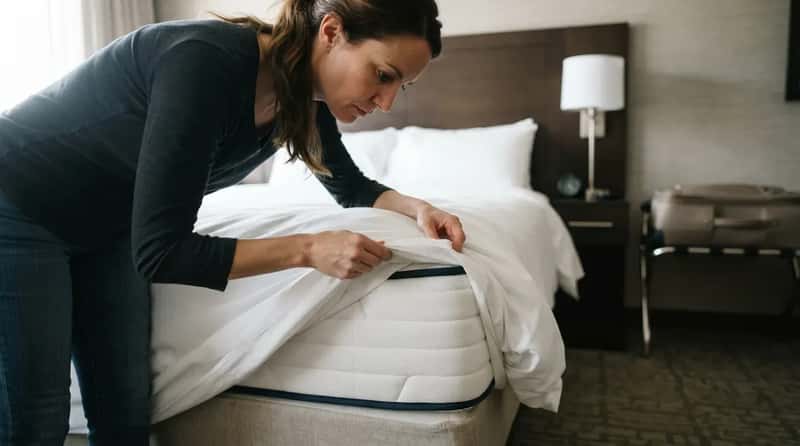
The fix takes less time than checking your email. Pull back the sheets and inspect the mattress seams, the headboard, and the corners of the box spring before your suitcase ever touches the luggage rack. Bed bugs hide well beyond the mattress itself – they’ve turned up in retail stores, ambulances, and offices too – so check the nightstand joints and headboard just as carefully. Do it before you unpack, not after, so your bags never touch an infested surface.
Fast Facts
- Bed bugs can survive for several months without feeding, so an empty-looking room is never a guarantee.
- Rust-colored or dark spotting along mattress seams is one of the clearest early warning signs.
- High-turnover rooms tend to see more activity, but luxury and budget properties are both affected.
- The bites themselves aren’t known to spread disease, but they can trigger itching and allergic reactions.
3. Count the Doors Between Your Room and the Exit
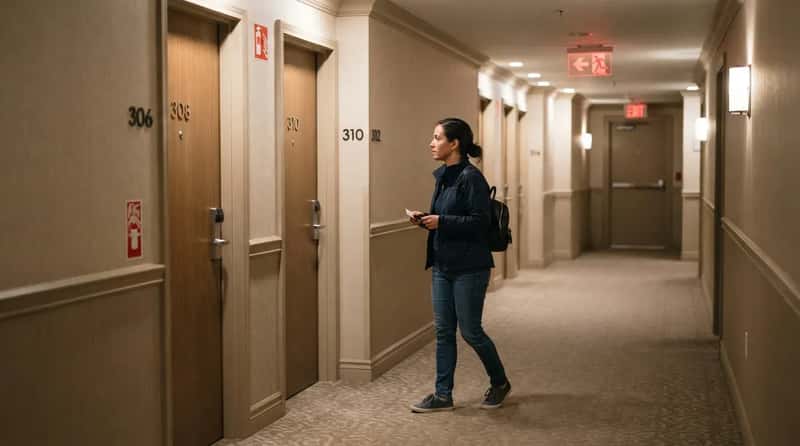
Fire departments have repeated this advice for decades, and almost nobody actually does it. After you check in, count the doors between your room and the nearest stairwell, because elevators can’t be used once a fire breaks out and thick smoke fills the hallway.
It feels dramatic until you realize how simple it is. Locate both of the nearest stairwells and remember the number of doors between your room and each one, because in a real fire the hallway may be pitch black and impossible to see through. Firefighters say this thirty-second habit has genuinely saved lives during hotel fires, when smoke made hallway exit signs invisible.
4. Test the Water Before You Trust the Room

Turn on the shower and sink before you fall in love with the room. Some hotels – especially older properties or ones mid-renovation – have water pressure or temperature problems that only show up once the building’s plumbing is under load in the evening. Finding out at 7 a.m. that there’s no hot water is a miserable way to start a vacation day.
This is also your best window to request a room change without a fight. Front desks are far more willing to switch rooms in the first hour than after you’ve already unpacked and settled in. Catching a plumbing issue immediately, instead of complaining about it days into your stay, gets you a faster and friendlier fix.
5. Photograph Every Scratch, Stain, and Broken Latch
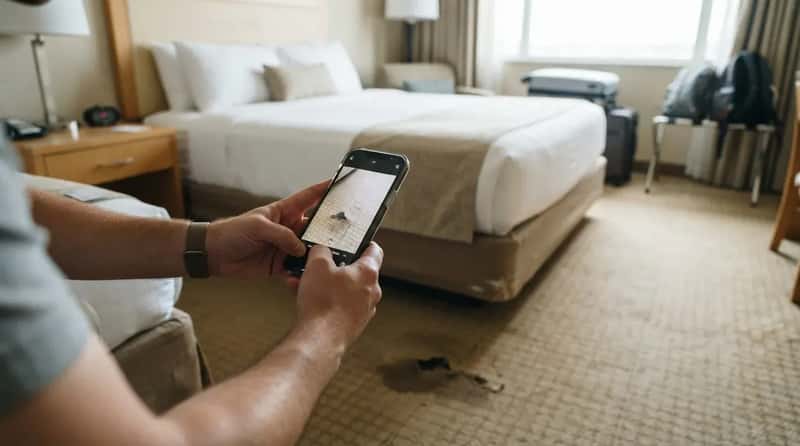
This step alone saves travelers hundreds of dollars in disputed damage fees. Before you unpack anything, walk the room and photograph or video every mark, stain, cigarette burn, or broken fixture – even the small stuff. Hotels increasingly charge guests for damage found during checkout inspections, and without proof, it’s simply your word against theirs.
Time-stamped photos are the difference between a quick apology and a $200 surprise on your card. Most guests never think to document a room until something goes wrong, which is exactly when it’s too late. A two-minute walkthrough with your phone camera is cheap insurance against a bill you didn’t cause.
Worth Knowing
- Your phone’s default camera app already time-stamps and geotags photos automatically – no extra app needed.
- Don’t just shoot the obvious stuff; capture remotes, irons, hangers, and bathroom fixtures too.
- Emailing the photo set to yourself creates a backup record separate from your phone.
- If you spot pre-existing damage, ask the front desk to note it in your file right away.
6. Open the Curtains Before You Judge the View
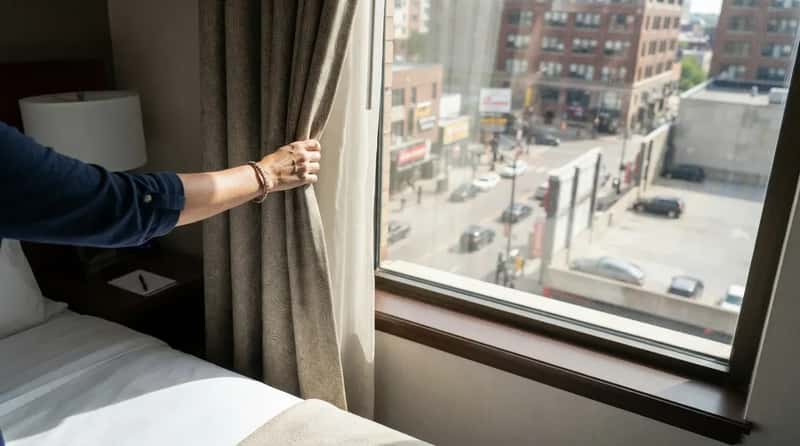
Hotels love showing off photos of their best rooms while quietly assigning guests to ones facing parking lots, air conditioning units, or brick walls. Opening the curtains in the first few minutes tells you exactly what you’re working with, while there’s still time to ask for something better.
It matters for sleep, too. Rooms facing a busy street, a pool deck, or an ice machine hallway tend to get noisy at night, and you won’t know that until the property fills up later in the evening. A view that looks perfectly fine at 3 p.m. can turn into a nightmare once the pool bar cranks up at 9 p.m., so checking early – and asking to switch if needed – beats the awkward call after you’ve already unpacked.
7. Check the Safe With Your Own Code, Not the Default One
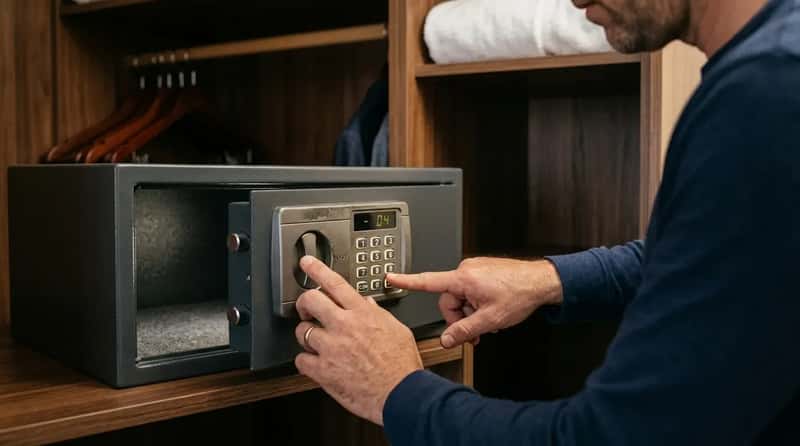
In-room safes are one of the most overlooked security risks in hotels. Many guests assume the safe is automatically secure, but plenty of properties don’t reset factory codes between guests, and sometimes a previous guest’s old code is still active by accident.
Set your own code immediately, then close the door and test it before you trust it with your passport or laptop. A surprising number of travelers discover mid-trip that their “locked” safe was never actually secured, usually because they set a code without confirming it registered. It takes thirty seconds and prevents a genuinely stressful afternoon spent arguing with hotel security over a missing item.
8. Call the Front Desk With One Question Before You Get Comfortable

Frequent travelers swear by a single phone call in the first hour: ask directly whether anything is scheduled that could disrupt your stay – fire alarm testing, pool maintenance, construction, or a large event group checking in on your floor. Front desk staff know this information but rarely volunteer it upfront.
This one call has saved travelers from waking up to jackhammers at 8 a.m. or losing a pool day to unannounced maintenance. Hotels are generally required to disclose known disruptions if you ask directly, but almost nobody does. Asking early, while you still have leverage to request a different room, beats complaining after the fact.
Worth Knowing
- Ask specifically about fire alarm testing, pool closures, and construction – staff often won’t mention these unless asked.
- Large group check-ins on your floor can mean noise late into the night; ask if one is scheduled.
- If something disruptive is planned, request a room on a different floor or wing while rooms are still available.
- Front desk staff are far more accommodating to this question in the first hour than after 9 p.m.
9. Peek Inside Every Drawer and Closet
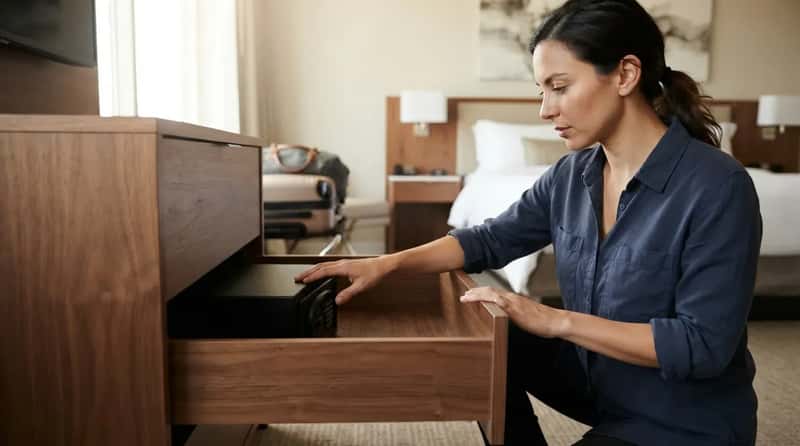
Housekeeping doesn’t always catch everything left behind by the previous guest, and it’s not uncommon to find forgotten chargers, clothing, or worse tucked into drawers, the closet safe, or under the bed skirt. Checking before you unpack means your belongings never accidentally mix with someone else’s leftovers.
It’s also just practical. Knowing exactly how much drawer and hanger space you have in the first ten minutes means you unpack once instead of shuffling things around later. Guests who skip this step are far more likely to leave items behind at checkout, simply because they never fully mapped out where everything went in the first place.
10. Flip the Deadbolt and Test the Peephole
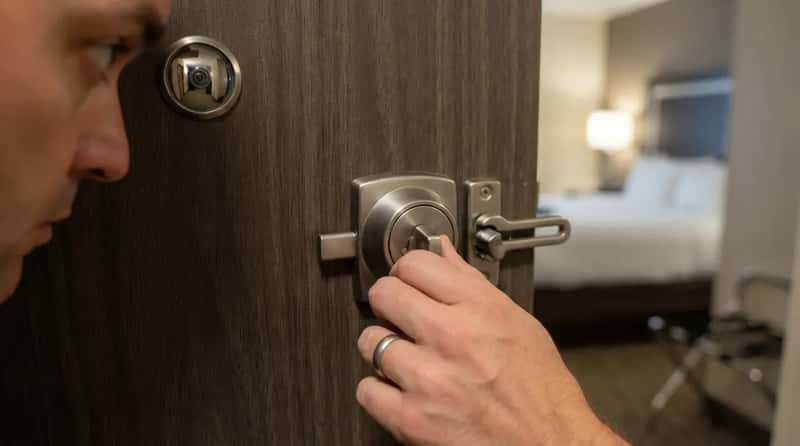
Hotel room security is inconsistent even among big-name chains, and testing your locks in the first few minutes is a habit solo travelers and families both swear by. Check that the deadbolt actually engages, that the security chain or bar isn’t broken, and that the peephole gives a clear, undistorted view of the hallway.
This matters more than most guests assume. A meaningful number of hotel security complaints involve deadbolts that looked fine but didn’t actually latch, something guests only discover after an unwanted knock at 2 a.m. If anything feels loose or doesn’t fully catch, report it immediately rather than hoping it’ll be fine for one night.
Quick Compare
- Deadbolt: your primary lock – should fully engage into the frame with a solid click, not just rest against it.
- Security chain or bar: a secondary barrier – check it isn’t already snapped or hanging loose.
- Peephole: should give a clear, undistorted view – not cracked, blocked, or clouded over.
11. Locate the Thermostat and Actually Learn It

Modern hotel thermostats range from a simple dial to a confusing digital panel with hidden settings, and figuring it out at midnight when you’re too hot to sleep is nobody’s idea of fun. Spend two minutes in the first hour testing heating and cooling so you already know how the system responds before you need it urgently.
Some properties also use motion-sensor thermostats that shut off cooling when the room reads empty, which explains why rooms can feel stifling when you get back from a full day out. Guests who skip this step are the ones most likely to call the front desk in frustration after 10 p.m., when getting a technician up to the room takes far longer than it should.
12. Ask About Late Checkout Before You Even Unpack

Late checkout requests made at check-in, or within that first hour, get approved far more often than requests made the morning you’re leaving. Front desks handle these on a first-come basis tied to the next guest’s arrival time, and asking early puts you at the front of that mental list.
It’s a small habit with an outsized payoff on trips with early flights or a late night before checkout day. Most guests wait until the last morning to ask, by which point the best late-checkout slots are already gone. A simple question asked early can buy you two or three unhurried extra hours.
At a Glance
- Requests made in the first hour are typically weighed against the next guest’s arrival time, not just staff mood.
- A one to three hour extension is common when the room isn’t needed right away for the next guest.
- Loyalty status often unlocks guaranteed late checkout – worth confirming your tier’s perk when you ask.
- Asking again at breakfast rarely helps once the best slots are already claimed by earlier requests.
13. Note Where the Ice Machine and Emergency Exits Actually Are
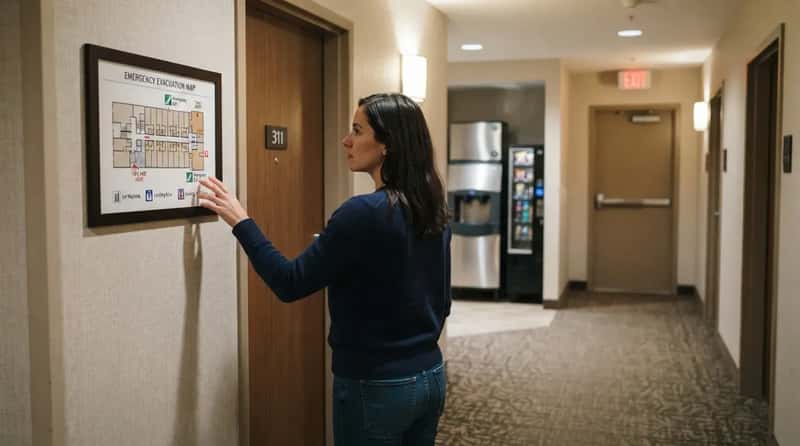
It’s a small detail, but knowing exactly where the ice machine, vending area, and nearest stairwell sit on your floor saves real frustration later – especially if you’re traveling with kids, need medication kept cold, or don’t want to wander unfamiliar hallways at midnight.
This ties directly back to the safety habit from earlier: most hotel evacuation maps posted on the back of your door show the ice machine, vending area, and emergency exits together. Glancing at that map in the first hour means you already know your way around before you ever actually need to. It’s a two-minute habit that quietly pays off almost every day of the stay.
14. Register Your Loyalty Number if You Skipped It at Check-In

This is the step with the biggest long-term financial payoff, and it’s the one guests forget most often. If your loyalty number didn’t get attached to the reservation at check-in – which happens more than hotels like to admit – fixing it in the first hour is far easier than trying to claim missing points weeks later.
Once a stay is fully processed at checkout, some chains make it genuinely difficult to add missing points or elite-night credit after the fact. Travelers who wait until checkout to notice a missing loyalty number often lose the points permanently, especially on promotional stays with bonus offers attached. A quick call to the front desk in that first hour locks in credit that can be worth real money toward a future free night.
None of these fourteen habits take more than a few minutes individually, but stacked together they cover almost every way a hotel stay can quietly go sideways – bed bugs, fire risk, lost points, disputed damage fees, a room that’s too hot to sleep in. The travelers who never seem to have hotel horror stories aren’t lucky. They’re just running these small, unglamorous checks in the first sixty minutes, long before the suitcase ever gets unpacked.
Which of these do you already do without thinking twice, and which one are you stealing for your next trip?