
Most people treat breakfast like a formality – something to inhale on the way out the door. But a growing body of research suggests the first hour of your morning quietly sets your energy, focus, mood, and even your heart health for the entire week ahead.
The people who look sharp and steady by Thursday, while everyone else is running on fumes, aren’t following some elite biohacking protocol. They’re doing a handful of small, unglamorous things in a specific order – and most of us skip nearly all of them without even noticing.
#15 – They Eat at a Consistent Time Every Morning

Timing isn’t just a detail – it’s the foundation everything else rests on. Breakfast has emerged as a key factor in preventing cardiovascular disease, partly because of what’s on the plate, and partly because of how well it aligns with your circadian rhythm.
Your body’s internal clock primes digestive enzymes, hormones, and insulin sensitivity around expected meal times. Eat at random hours and you’re quietly fighting your own biology.
People who eat at a consistent hour report fewer mid-morning energy crashes and less impulsive snacking by 11 AM. Predictable inputs produce predictable, stable outputs.
Timing is only half the picture, though. What actually lands on the plate matters just as much – and that’s where #14 changes the game.
#14 – They Front-Load Their Protein

The average breakfast in most households is dominated by refined carbs – toast, cereal, a pastry grabbed on the run. Nutrition researchers consider this one of the most costly habits people don’t realize they have.
Protein digests slowly, which keeps you full longer and slows glucose absorption. Studies on breakfast composition have found that meals with around 35 grams of protein keep people satisfied far longer than meals with only 13 grams.
That blood sugar stability isn’t just about hunger – it directly shapes mood and decision-making all morning. People who start with 30-plus grams of protein report fewer cravings and sharper focus well into the afternoon.
Fast Facts
- Research points to a rough 30-gram protein threshold at breakfast for peak appetite control.
- A 150-pound adult needs about 54.5 grams of protein across the whole day, under standard guidelines.
- Eggs, Greek yogurt, and cottage cheese are among the quickest ways to hit that morning target.
Get the protein right, and you’ve set the table for everything else. But what you drink first thing may matter even more – that’s #13.
#13 – They Hydrate Before They Eat Anything

Most people reach for coffee before water. That quietly tanks the first hour of their day.
After 7 to 8 hours without fluid, your body wakes up mildly dehydrated. Even a 1 to 2 percent fluid loss is consistently linked to reduced concentration, slower reaction time, and creeping fatigue.
Drinking 400 to 500ml of water before your first bite primes digestion, kickstarts metabolism, and helps your kidneys flush overnight waste. It’s one of the cheapest performance habits people routinely skip.
The coffee isn’t going anywhere. But the order you drink things in matters – and so does what comes next, in #12.
#12 – They Don’t Skip Breakfast Entirely (But They’re Nuanced About It)

The internet is full of intermittent-fasting evangelists insisting skipping breakfast is the secret. The real picture is messier than that.
Across dozens of studies, skipping breakfast is a consistent predictor of higher body fat, worse blood sugar control, elevated cardiovascular risk, mood disturbances, and weaker cognitive performance. Yet when researchers pool randomized trials, there’s no clear effect of skipping breakfast on weight alone – so the weight-loss argument is genuinely unsettled.
Where the evidence is unambiguous: skipping breakfast reliably hurts mood and mental sharpness – especially for people doing focused or knowledge-based work. A regular breakfast is tied to lower stress and better concentration throughout the day.
For most working adults, eating something real beats skipping. But #11 reveals what actually separates the sharp from the sluggish.
#11 – They Include Fiber-Rich Foods
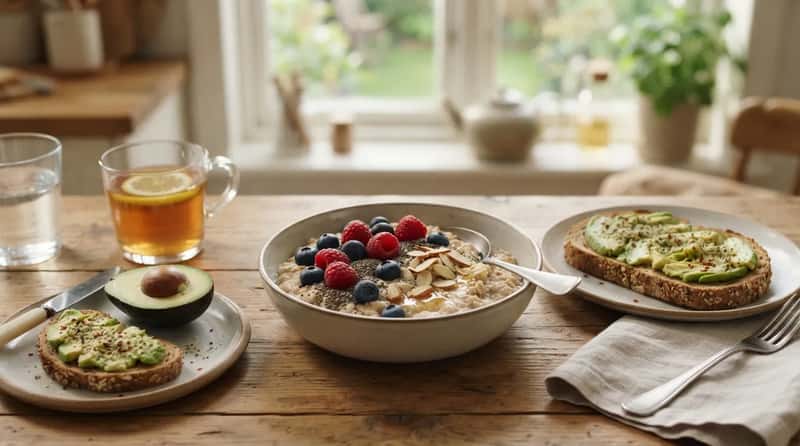
High performers don’t just eat protein in the morning – they pair it with fiber, and for good reason. Fiber slows the digestion of everything else on the plate.
That means slower glucose absorption, longer satiety, and a gentler energy curve instead of the spike-and-crash that refined breakfast foods deliver. Oats, berries, whole-grain toast, and chia seeds show up again and again in the diets of people with the highest overall diet-quality scores.
Some gut health researchers now point to breakfast as the single most impactful window for feeding beneficial gut bacteria, since the microbiome is most active right after the overnight fast. What you feed it first matters disproportionately.
This habit quietly wipes out the 3 PM energy collapse most office workers just accept. And #10 compounds the effect in a way almost nobody talks about.
#10 – They Eat Mindfully, Not in Front of a Screen

Here’s the one that triggers the most pushback: people who thrive all week deliberately keep screens away from breakfast. Scrolling news or email activates your stress response before the day has even started.
Elevated cortisol at breakfast disrupts insulin sensitivity and makes overeating more likely, because distracted eating consistently means under-registering how much you’ve actually consumed.
Research on mindful eating shows that people who eat without screens consume fewer calories AND report higher satisfaction from the same meal. That’s a rare two-for-one.
It doesn’t require meditation – just 10 to 15 minutes of actually tasting your food. What happens right after breakfast matters just as much, and #9 is one of the most underrated habits on this list.
#9 – They Get Light Exposure Within 30 Minutes of Waking

This one sits right alongside breakfast timing, and it’s deeply connected to it. Even 10 minutes near a bright window or outside signals your brain’s internal clock to suppress melatonin and anchor your rhythm for the day.
The payoff is sharper alertness, better mood, and – crucially – an easier time falling asleep that night. People who pair morning light with a consistent breakfast time essentially double down on their biology, and the effect compounds across the whole week.
The combination of morning light and structured breakfast may be more powerful for sustained weekly energy than any supplement on the market. It’s also completely free.
While light sets your clock, what you drink with breakfast can either support or sabotage everything you just built – which brings us to #8.
#8 – They Limit Added Sugar at Breakfast

This is where most people quietly fall apart without realizing it. Ironically, breakfast choices that spike blood sugar can actually increase total daily calorie intake by making you hungrier before lunch.
Flavored yogurts, “healthy” granolas, fruit juices, and sweetened oat packets can pack 20 to 40 grams of added sugar before 9 AM. That triggers a rapid insulin spike, followed by the crash that makes concentration feel like wading through mud.
People who limit added sugar at breakfast consistently report steadier energy through lunchtime and fewer afternoon cravings. It’s the glucose swings, not just the totals, that wreck focus and working memory.
Worth Knowing
- The American Heart Association caps added sugar at about 25 grams a day for women and 36 grams for men.
- A single serving of flavored yogurt or sweetened granola can eat up half that budget before 9 AM.
- Plain yogurt or steel-cut oats let you add your own fruit for sweetness without the hidden spike.
You don’t need a joyless breakfast – just knowledge of where the sugar hides. Habit #7 shows you exactly what to replace it with.
#7 – They Include Healthy Fats

Fat at breakfast is still treated with suspicion by a lot of people, and that thinking is genuinely outdated. Eggs, avocado, nuts, seeds, and olive oil slow gastric emptying and support satiety in a way low-fat, high-carb breakfasts simply can’t.
They also help absorb fat-soluble vitamins A, D, E, and K that are often sitting right there on the same plate. The smartest breakfast isn’t low-fat or low-carb – it’s built around protein and healthy fat as anchors, with smart carbs filling in the rest.
People who structure breakfast this way report dramatically fewer cravings between meals. Across a full week, that compounds into noticeably better choices everywhere else.
None of these food habits work as well without the behavioral habit buried in #6.
#6 – They Prep Breakfast the Night Before
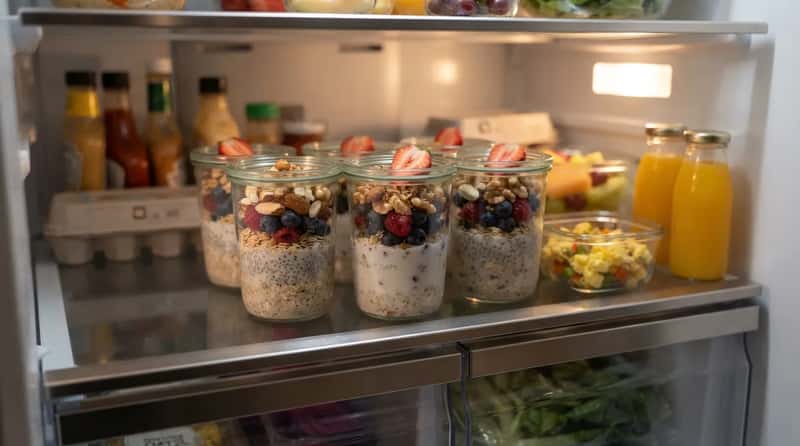
Willpower is at its lowest in the morning, and decision fatigue is real – it starts the second you open the fridge and stare blankly inside. People who consistently eat quality breakfasts almost universally have a system.
Overnight oats, eggs batch-cooked on Sunday, the same staples always stocked, a simple rotating plan. The decision gets made the night before – morning-you just executes it.
This removes the single biggest barrier to breakfast quality: time pressure. When you’re running late with nothing ready, you either skip or grab something processed, and both outcomes cost you.
The next habit, #5, is one of the most contested in nutrition – but the evidence has quietly settled on one side.
#5 – They Don’t Drink Fruit Juice

Fruit juice is one of the most persistent health myths in the breakfast world. Orange juice has been a morning staple for generations, and most nutritionists now consider it a poor choice.
A glass of orange juice can carry as much sugar as a can of soda, with almost none of the fiber that makes whole fruit genuinely healthy. Without that fiber, you’re basically drinking liquid sugar with a vitamin C label.
Whole fruit – an orange, berries, a sliced apple – delivers the same vitamins with the fiber intact, and the metabolic effect is completely different. The glucose curve is flatter, the fullness lasts longer, and people who make this swap notice the difference within days.
Quick Compare
- Orange juice (8 oz): heavy sugar load, virtually no fiber.
- Whole orange: similar vitamin C, a few grams of fiber, slower sugar release.
- Net effect: steadier blood sugar and longer-lasting fullness from the whole fruit.
What you drink matters enormously. But #4 is about something most people have never even considered.
#4 – They Eat Breakfast at a Table, Not Standing Over a Counter

This sounds almost comically simple, but where you eat measurably changes what and how much you consume. Eating standing up, in the car, or hunched over the counter is linked to faster eating, weaker hunger cues, and greater total calorie intake across the day.
It signals to your brain that this meal doesn’t really count. Sitting at a table, even briefly, tells your body a meal is actually happening – which triggers saliva, gastric acid, and enzyme release that improve digestion.
High performers treat breakfast as a non-negotiable anchor point, not something squeezed in between other things. The table isn’t about comfort – it’s functional.
Habit #3 is where things get genuinely surprising, because it has almost nothing to do with food.
#3 – They Avoid Checking Their Phone for the First 20 Minutes

The people who seem to handle their weeks with the most composure share a surprisingly consistent habit – they don’t open their phone the second they wake up. Checking email or social media first thing floods the brain with input that triggers reactive thinking before you’ve had a single intentional thought.
That reactive state tends to linger well into the morning. Even breakfast eaters who pair their meal with anxious scrolling are starting the day with scattered attention.
A 20-minute phone-free window around breakfast lets your prefrontal cortex – the part of your brain responsible for planning and focus – come fully online before notifications hijack it. The difference isn’t subtle once you’ve tried it for a week straight.
At a Glance
- Phone-free mornings are linked to lower reactive stress and sharper early-day focus.
- A short delay before checking notifications lets the brain’s planning center engage first.
- Even 20 screen-free minutes at breakfast can shift the tone of the whole morning.
The real leverage habit, though, is #2 – the one that separates people who merely have a breakfast routine from those who are genuinely looked after all week.
#2 – They Pair Breakfast with a Single Daily Priority

This is the habit that turns a morning meal into a genuine performance ritual. People who thrive all week use the calm of a structured breakfast to name one single priority for the day – not a to-do list, not a schedule review.
People who identify their top priority before the day’s reactive demands begin are dramatically more likely to actually accomplish it. Breakfast is simply the natural pause where that decision gets made.
This also quietly kills the low-grade anxiety of feeling busy but never productive. Deciding what matters most over a calm meal, instead of reacting to whoever emails first, changes the shape of the entire day.
All of it leads to habit #1 – the one the data suggests matters more than any single food choice on this list.
#1 – They’re Consistent, Not Perfect

Here’s the finding most people miss entirely: it’s not the superfood smoothie or the perfectly optimized macros that keeps people thriving all week. Habitually skipping breakfast has been tied to elevated risk across several chronic health conditions, and skipping it several days a week appears to carry real cardiometabolic cost.
The key word in both findings is habitual. It’s the people who show up with a decent breakfast most mornings – not the ones who nail it once a week – who accumulate the biggest advantage over time.
Regular breakfast habits are consistently linked to lower stress and better concentration throughout the day.
Nutrition research consensus
Regular. Not elite. Not complicated. Just consistent – that’s the whole game.
The Bottom Line

What you do at breakfast sets a biological and behavioral tone for the entire day, and those days add up to your entire week. Protein first, sugar limited, timing steady, water before coffee, and your phone left alone for twenty minutes – none of it is exotic, and none of it is hard on its own.
The research doesn’t ask for perfection. It rewards showing up most days, not all of them.
The people who look rested and sharp by Thursday, while everyone else runs on fumes, didn’t discover some secret. They just stopped skipping the boring stuff.
Bonus: The Sunday Batch That Makes This Whole List Effortless

Every habit above works better when breakfast requires zero morning decisions – and there’s one weekly ritual that makes that automatic.
- On Sunday, crack a dozen eggs into a greased 12-cup muffin tin, mix in chopped spinach and shredded cheese, and bake at 350°F for 18-20 minutes.
- Portion two muffins per container – refrigerate what you’ll eat within 5 days, freeze the rest for up to 2 months.
- Each morning, microwave two straight from the fridge (or freezer) for about 45 seconds – that’s over 20 grams of protein with no thinking required.
- Set a glass of water on the counter the night before so it’s the first thing you drink, before the container even comes out of the fridge.
This single ritual removes the decision fatigue behind at least five of the habits above, so the “hard” version of a good breakfast becomes the easy default all week long.