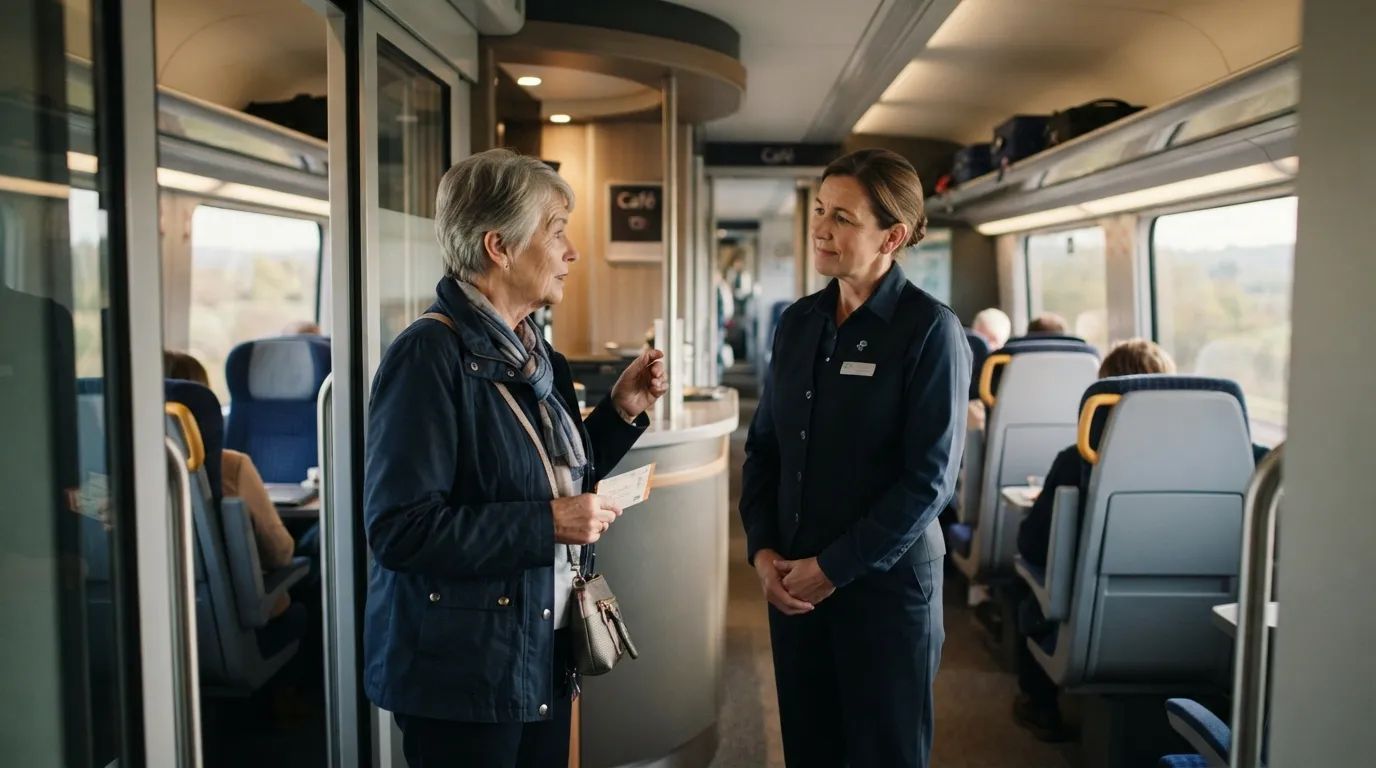
Watch a group of seasoned older riders board a train and you’ll notice something odd. They walk right past open seats like they’re hunting for something specific. They are, and nobody ever handed them a diagram.
Amtrak’s senior discount now starts at 65, not 62, and none of these seats appear in any brochure. They come from habit, from watching crews, and from years of learning which spots dodge the noise, the stairs, and the sway. Here’s what rail guides, car layouts, and longtime riders say about where the regulars end up, and one of the smartest moves isn’t a seat at all.
#15 – The Quarter-Point Seat That Dodges the Slamming Doors
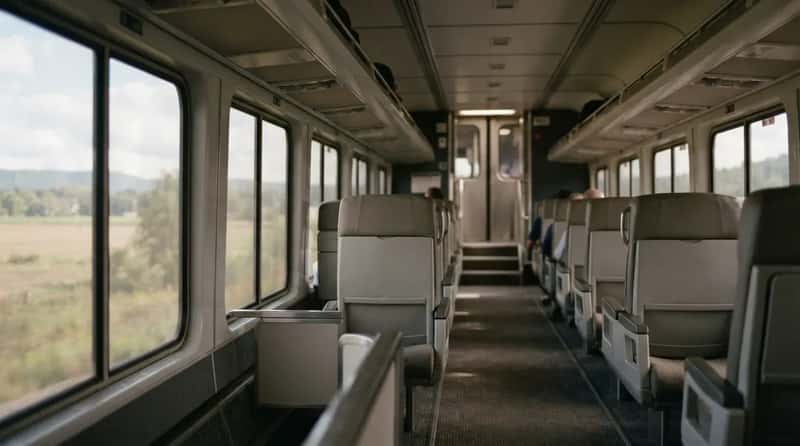
Regulars almost never grab the seat closest to the door. Connecting doors sit at both ends of a coach and swing open every time someone walks through. One veteran rider on an Amtrak forum says the quietest seats tend to be about a quarter or three quarters of the way along each coach.
On two-level cars, that spot also keeps you clear of the stairwell traffic in the middle. You pick it up by watching where the same faces settle trip after trip, then counting rows when you board.
It’s a small trick, but riders who use it say the seat’s position matters more than whether it’s a window or an aisle. And the next spot works because of plain physics…
#14 – The Middle-of-the-Car Seat Where the Ride Runs Smoothest
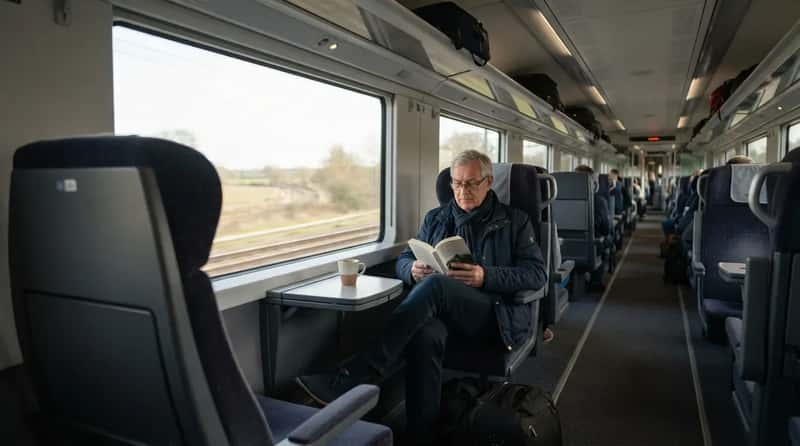
The smoothest spot on a train is closer to physics than luck. Forum regulars repeat the same rule: the center of any car usually delivers the best ride. One longtime rider says he sits toward the middle of single-level cars, farthest from the trucks, which means the wheels.
Fewer jolts from the track mean steadier coffee and calmer knees. Not everyone agrees it’s worth the trade, though. Some riders insist the difference is slight and a good window beats a smooth floor, while others won’t sit anywhere else on a long overnight run.
Quick Compare
- Middle of the car: farthest from the wheels, so fewer jolts and a steadier cup of coffee.
- Good window seat: a better view, and some riders say that beats a smoother floor.
- Long overnight runs: this is where the middle-seat loyalists dig in hardest.
The two camps have been arguing about it for years, and neither is budging. The next position has an advantage you can’t see from the platform…
#13 – The Downstairs Seat With No Stairs and Less Sway
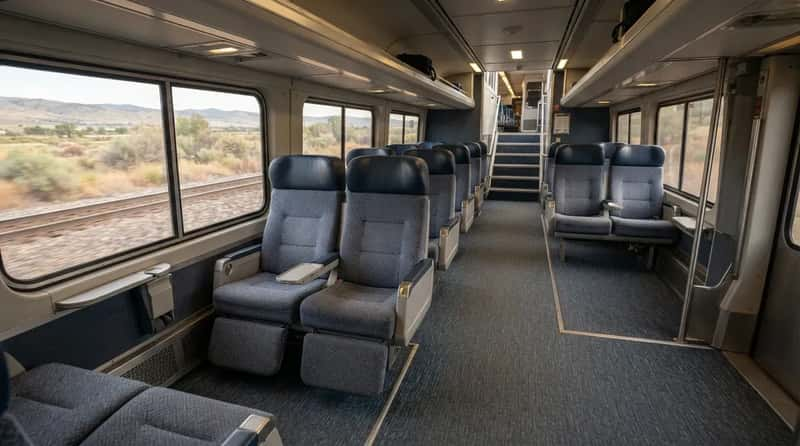
On a double-decker train, the seat that spares your knees is the one you can walk straight into. Lower-level seats make getting on and off easier, because you don’t have to climb stairs or wait to exit. One rail travel guide adds that you also feel less sway down there, which helps riders prone to motion sickness.
These bi-level Superliner cars run on Western routes, the Auto Train, and the City of New Orleans. There’s another perk regulars rarely mention: only the upper level connects to other cars, so downstairs sees much less foot traffic.
Fewer strangers walking past your elbow all day is a real quality-of-life upgrade. But there’s a smaller, more specific pocket of downstairs seats, and it’s #12…
#12 – The 12 Downstairs Seats Built for Riders Who Struggle With Stairs
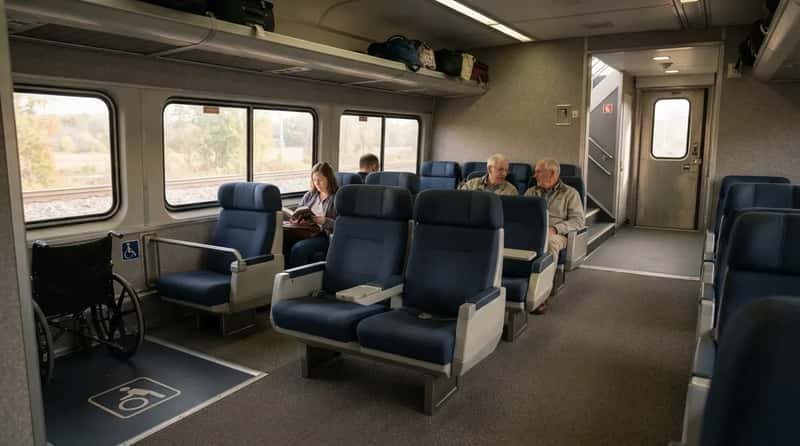
A typical accessible Superliner coach has a small pocket of seats set aside for exactly this. These cars generally have 62 seats on the upper level and 12 on the lower level, plus space downstairs for a wheelchair. Rail forum veterans explain that these are normal coach seats, just on the lower level so there are no stairs.
They sit near wider aisles leading to the door and restrooms, which is why they’re so popular. Here’s where opinions get heated. Some riders say anyone should be free to grab a lower-level seat, while others argue these spots should stay open for people who truly can’t manage stairs.
The honest answer is that policy can vary by train and change over time, so ask Amtrak before you count on one. Next up is a downstairs choice with a surprisingly different reputation…
#11 – The Auto Train’s Quieter Downstairs Coach Seat
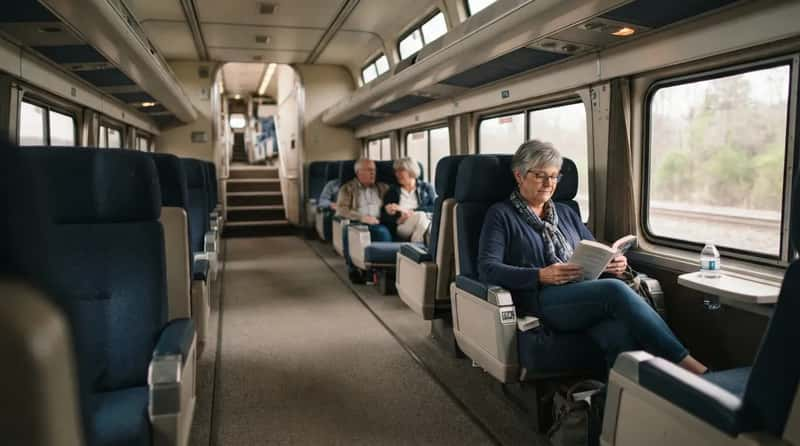
The Auto Train has its own seating habit among regulars. Coach passengers can reserve a seat on the lower level, which is a bit quieter than the main upper level. The train covers an 855-mile route, so a quiet seat matters far more here than on a short hop.
One guide also notes that families with kids are usually seated in the same car, which tends to be better for everyone. Here’s a twist the senior discount fans miss: the 10% senior discount is not valid on the Auto Train.
So the seat that costs you more is also the one the discount skips. The next position has a reputation that splits riders right down the middle…
#10 – Upstairs Is the “Best” Seat, Unless You Hate the Walk
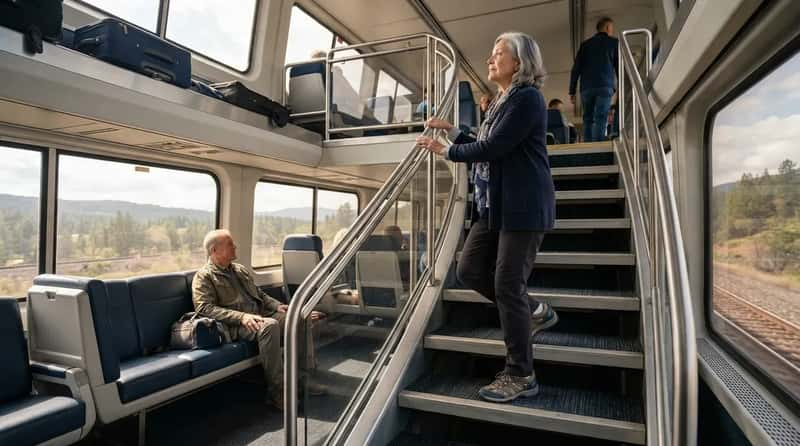
Plenty of guides crown the upper level the winner. One calls it the best place to sit in coach, with the view as the main advantage. You can also move freely from car to car, and the observation and dining cars are reached through the upper level.
While most guides rank upstairs first, some riders with sore knees call it the biggest mistake on a bi-level train. Climbing a staircase on a moving train is not the same as climbing one at home.
Others say the view and the freedom to wander are worth every step. But one specific upstairs row comes with a catch most people learn the hard way, and it’s #9…
#9 – The Row Behind the Stairs With Extra Legroom and No Tray
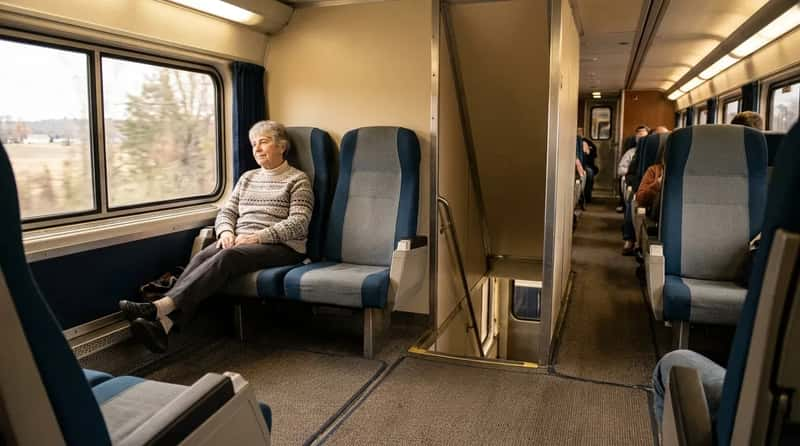
Crew members and regulars have a favorite upstairs spot. One lead service attendant says he prefers the upper level just behind the stairs, where you miss out on a tray table but gain two to three extra inches of legroom. That’s on top of what is already generous, since most Superliner coaches have seat pitch of about 50 inches, far better than single-level Amtrak coaches.
There’s a debate about the other side of the stairs, too. Another rider prefers sitting ahead of them because the light stays on all night, though not too close to the end door.
Fast Facts
- Most Superliner coaches offer seat pitch of about 50 inches.
- Behind the stairs adds roughly two to three inches more legroom.
- The trade-off: no tray table in that row.
- Ahead of the stairs, one rider likes that the light stays on all night.
The legroom win comes with a no-tray trade-off, so decide whether you eat at your seat. And there’s a glass-walled spot where nobody has to pick a seat at all, #8…
#8 – The Sightseer Lounge, the Glass-Walled Escape From Your Seat
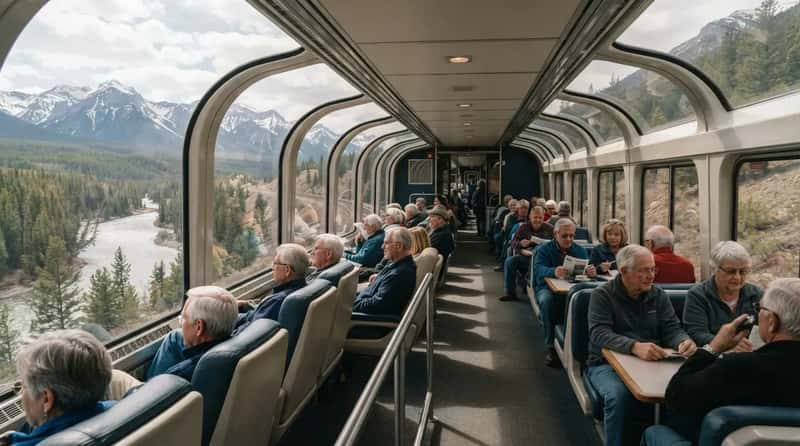
Regulars don’t stay in one spot all day. On Superliner trains, the upstairs lounge is a glass-enclosed space to get away from your seat, and one railroad writer calls it the highlight of the experience. Routes like the Empire Builder list a sightseer lounge car among their observation facilities.
Downstairs, a staffed snack bar serves café fare, snacks, and drinks. The lounges also changed over time. They were built with only scenery-facing seats, but table seating was added to at least one side of every car during overhauls.
The seats you see today are not the ones the cars started with. And one set of table seats suits a very specific kind of traveler, #7…
#7 – The Table Seats That Turn a Train Ride Into a Card Game
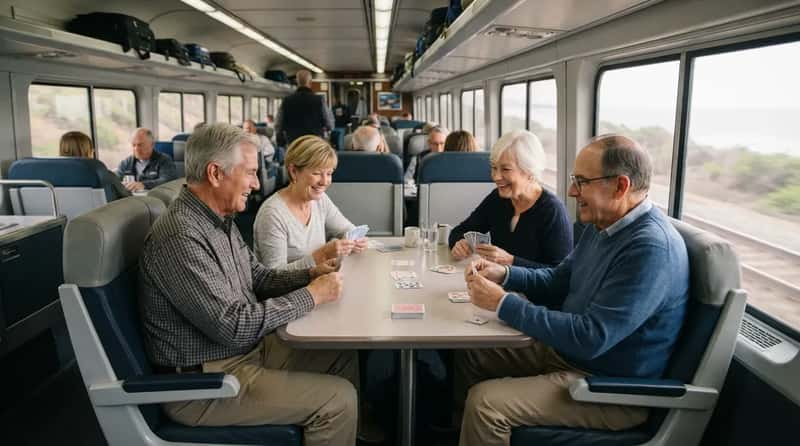
Some bi-level cars include seating built for company. On California’s coach-baggage cars, there are six workstation tables where groups of four can meet, plus two club seating areas where groups of four sit facing each other. It’s a smart pick for grandparents traveling with grandchildren, or friends who’d rather talk than stare out the window.
Solo riders often see it differently. Some argue that sitting face to face with strangers is the biggest mistake for anyone craving peace. A table seat can feel cozy or cramped depending on who joins you.
Regulars pick based on whether they’re traveling with company. The next spot is chosen by people who’ve been burned by a heavy suitcase, #6…
#6 – The Lower-Level Spot Next to the Luggage Rack and Restroom
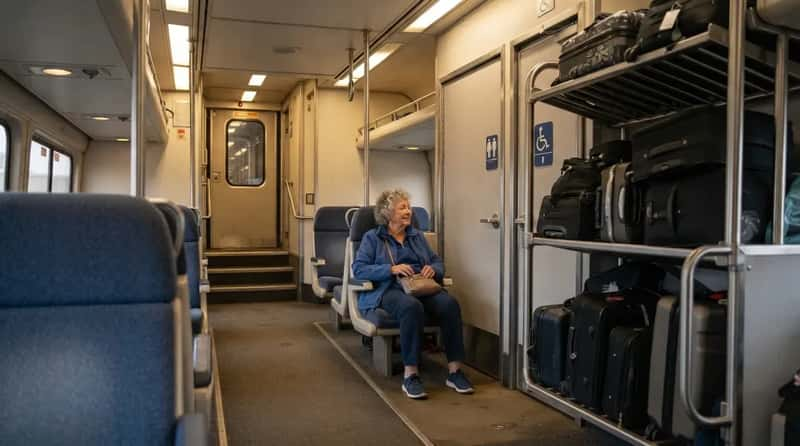
Smart riders think about where their bag will live. On California’s bi-level cars, the lower level has two restrooms, one of them wheelchair accessible, and a large luggage rack. Those cars also offer 13 lower-level seats and one wheelchair position.
A seat nearby means short walks and a bag you can keep an eye on. It’s a quiet kind of planning, and regulars choose seats around the bathroom and bag, not the window.
Nobody advertises it, but it saves a lot of awkward shuffling. The next choice depends on something you can’t control, which way the train is going, #5…
#5 – The Water-Side Window That Flips Depending on Direction
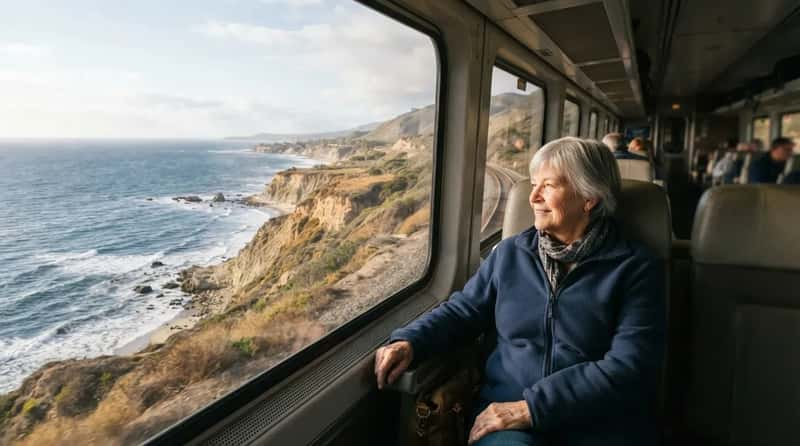
Experienced coastal riders check the compass before they pick a side. On California’s coast-hugging stretches, the ocean sits to the west. That means it’s on the right when you’re heading south and on the left when you’re heading north.
Booking the “wrong” side can leave you staring at backyards for most of the trip.
Some regulars think chasing the water side is overrated. They argue the best views come in short bursts, and a comfortable seat matters more across a whole day. Others say a sea view is the whole point.
Either way, the decision starts with which direction you’re facing. And speaking of facing, the next position is a classic argument, #4…
#4 – The Forward-Facing Seat Queasy Riders Swear By
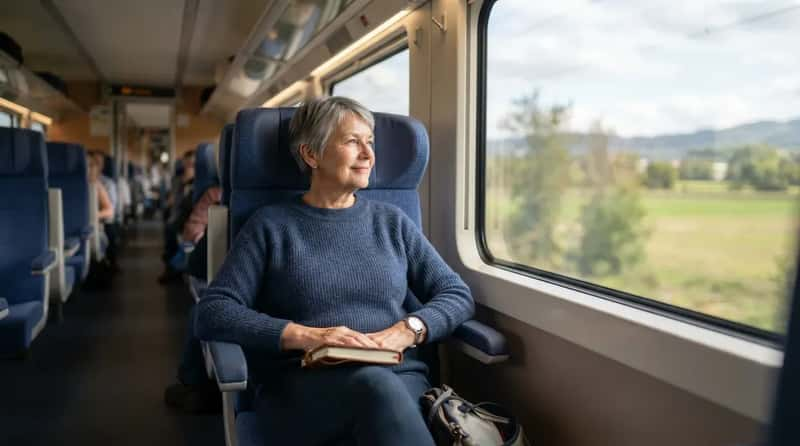
Ask a group of seasoned riders about motion sickness and many say face forward. The idea is simple: your eyes see the same motion your body feels. Some riders also pair it with a lower-level seat, since there’s less sway on the lower level.
Not everyone buys it. A few riders say rear-facing seats feel calmer, and they like watching the scenery slip away. There’s no universal answer, and personal experience beats advice.
Worth Knowing
- Forward-facing: your eyes see the same motion your body feels.
- Rear-facing: some riders find it calmer and enjoy watching the scenery slip away.
- Pairing forward-facing with a lower-level seat adds less sway to the mix.
- Cost of experimenting on a long trip: nothing.
It’s a free adjustment that costs nothing to try, so on a long trip, test both before settling. But there’s one car where even the chattiest regulars lower their voices, #3…
#3 – The Quiet Car Seat Where Phone Calls Are the Enemy
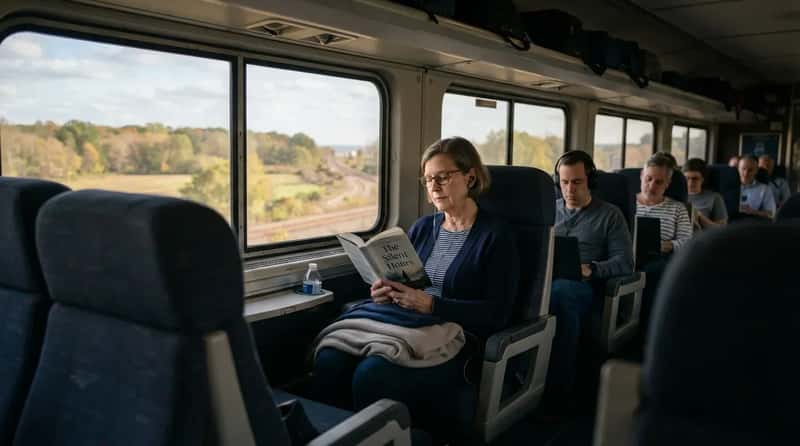
On select trains, mostly in the Northeast, Amtrak runs a Quiet Car. The rules are simple: no cell phone calls, low voices, and headphones for anything with sound. Regulars who value silence love it, while those who like to chat with the seatmate learn quickly to pick a different car.
Some riders think the Quiet Car is overrated. They say it can feel tense, with everyone waiting for someone to slip up. For readers and nappers, though, it’s often the best seat on the train.
Check whether your route has one before you book. The next position comes with a trap hiding in the price, #2…
#2 – The Lower-Level Roomette That Skips Stairs and the Discount
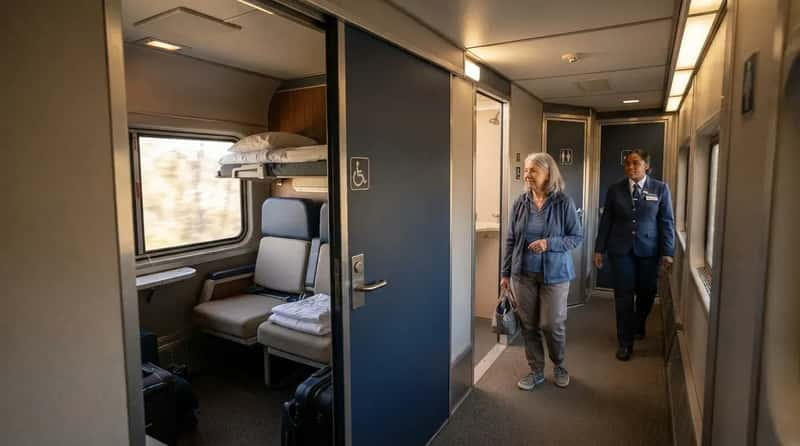
Overnight riders have their own seat-picking game. On Superliners, some compartments are on the lower level and some are on the upper level. For travelers who struggle with stairs, the accessible room is on the lower level, past the shower and restrooms, and every sleeper car has an attendant to assist you and the other passengers.
Here’s the catch. The 10% senior discount applies to the rail fare portion but not to the sleeping-accommodation charge, which is usually the larger cost. You generally must be 65 for domestic trains, but 60 on cross-border trains run jointly with VIA Rail Canada.
So the age most people assume is 60 doesn’t apply to most routes. And the number one position has nothing to do with the seat itself…
#1 – The Quiet Question Regulars Always Ask the Attendant
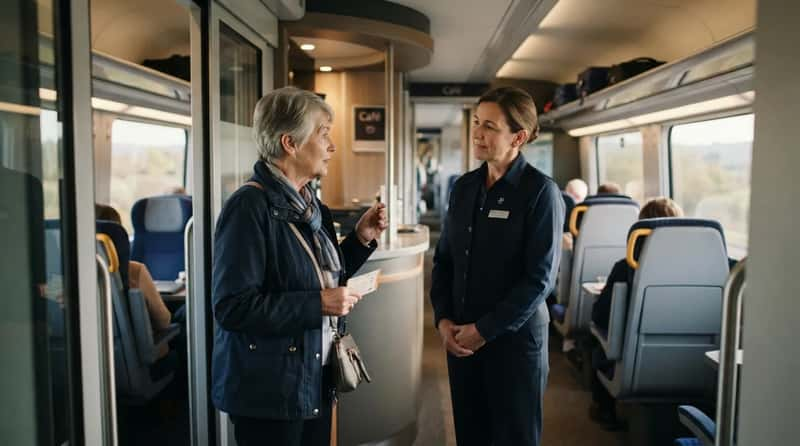
The smartest move isn’t a seat at all. It’s asking. One forum veteran explains that a reserved seat is not an assigned seat, and says you’re free to pick any seat you want on the lower level of any car. Another poster says seats in the accessible section didn’t used to be assigned, apart from the two wheelchair spots.
The picture is mixed, though. Another rider believes the lower level is reserved for riders with disabilities, and policies can change. If you’re traveling alone and want food, one regular advises you tell the coach attendant when you board.
At a Glance
- One forum veteran: a reserved seat is not the same as an assigned seat.
- Another rider’s view: the lower level is for riders with disabilities.
- Policies can change, so confirm before you count on a seat.
- Traveling alone and want food? Tell the coach attendant when you board.
The regulars’ real secret isn’t a seat. It’s that they say what they need out loud, early, and politely.
Rail regulars aren’t hiding magic seats. They watch, they ask, and they match the seat to the body they have that day. The quarter-point seat dodges the noise, the middle of the car smooths the ride, and downstairs spares the stairs.
Even the discount has a catch: the age is 65 on most routes, and sleeper charges are left out. The next time you board and spot an older rider walking past a perfectly good seat, don’t wonder what they’re doing. They already know where they’re headed, and now so do you.