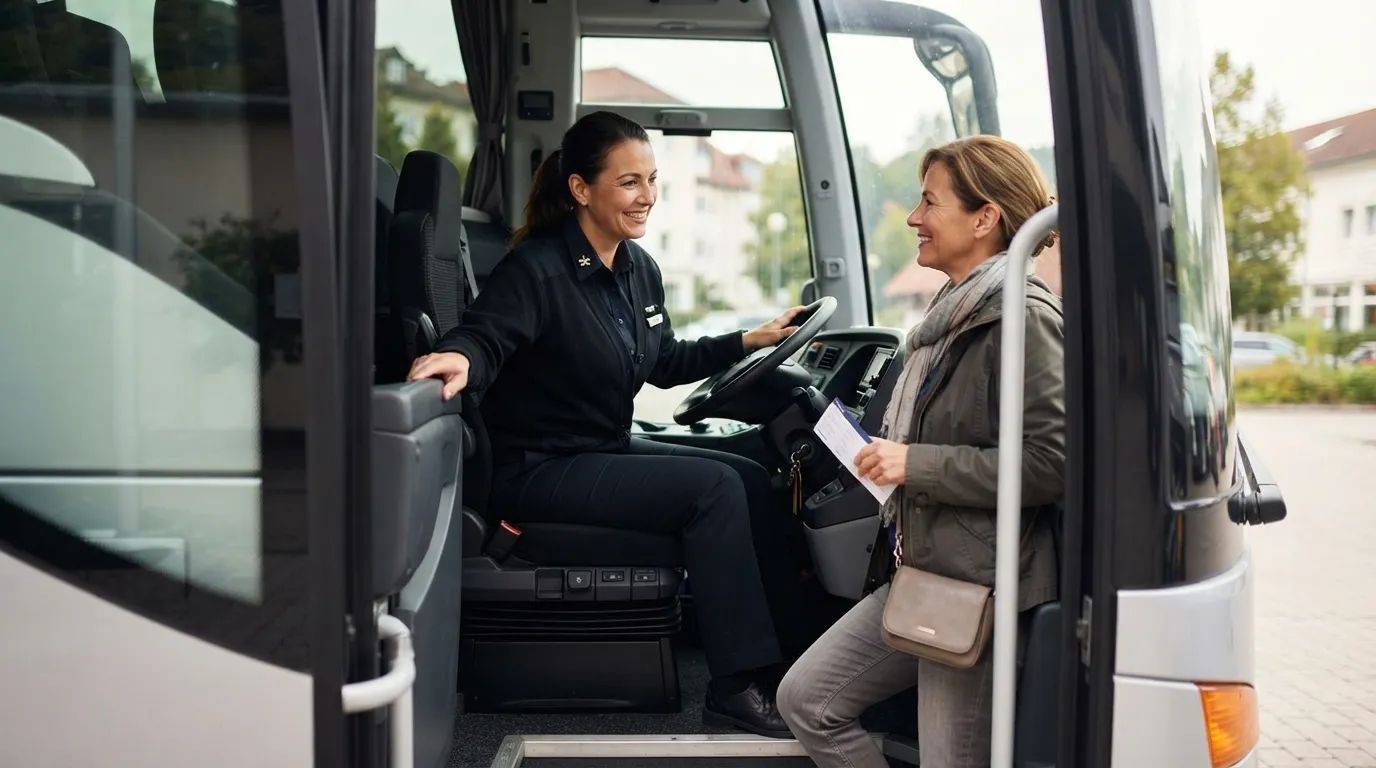
You picture a coach tour as the easy kind of vacation: pick a seat, lean on the window and let someone else handle the driving. Then day one starts, and everyone else seems to know a set of rules you were never given. Somebody is already counting heads, somebody else is guarding a seat with a jacket, and a stranger is quietly judging your suitcase.
These unwritten customs run almost every trip, and they are rarely printed in the brochure or mentioned at check-in. Some are small and some can cost you money, your seat or a spot on the bus. The strangest ones are explained by facts most passengers never hear, and a couple of them only make sense once you see what the driver is up against.
#1 – The Window Seat You Grabbed on Day One Probably Isn’t Yours for the Week
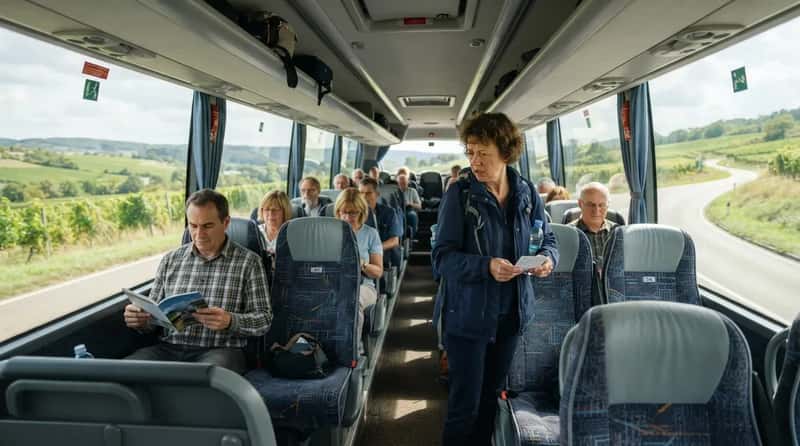
Plenty of tours quietly run a seat rotation, and nobody mentions it until someone is sitting in your spot. Many operators move everyone a few rows each day so the front and back get shared fairly. The announcement is usually made once, early, and it’s easy to miss.
Other groups skip rotation and let everyone choose. That has its own drama, because by day three people treat their seat like property. Ask the guide on day one which system you’re in, so you don’t learn it the awkward way.
- Rotation system: everyone moves on a schedule.
- Free choice: people usually settle into the same seats within a day or two.
Here’s a take that starts arguments. Many travelers swear the front row is the best seat on the bus, but some veterans call it overrated. You see the road, but you also see every sudden brake.
But the next custom decides how your whole morning goes, and it has nothing to do with seats…
#2 – “Departure at 8:00” Secretly Means “Be Sitting Down by 7:50”

The clock on a coach tour counts from when the wheels roll, not from when you start walking toward the door. The printed time is the departure time. Boarding is expected to happen before it.
The math explains why guides get strict. On a 40-person coach, one passenger who is five minutes late costs the group about 200 minutes of combined time, more than three hours. Multiply that across a week of mornings and it adds up fast.
Guides are often juggling timed entries and meal reservations. One slow start can squeeze the whole afternoon. Latecomers get remembered, fairly or not.
Speaking of strangers, there’s a ritual that happens every time you re-board, and most people don’t understand it until it’s explained…
#3 – The Headcount Ritual That Happens Every Single Time You Re-Board

The guide walking down the aisle counting heads isn’t being dramatic. Leaving a passenger behind in an unfamiliar town is the nightmare scenario for any tour director. That’s why the count happens after every stop, even a ten-minute coffee break.
The custom is simple. Return to your usual seat, stay put until the count is done and tell the guide if you’re skipping the next stop. Don’t wander back to the shop for one more postcard while the count is happening.
- Sit in your usual seat so the count goes quickly.
- If you’re leaving the group early, say so out loud.
It can feel like being treated like a schoolchild. In practice, the count is the reason you’ll never be the person standing alone on a sidewalk in a foreign city, watching your coach pull away.
Counting heads is easy. Counting suitcases is where tours get strict, as the next item shows…
#4 – The One-Suitcase Rule Most First-Timers Learn Too Late

Many tours cap luggage at one checked suitcase per person plus a small carry-on. Rules vary by operator, so read your paperwork before you pack. The coach’s underfloor hold is big, but it isn’t endless, and 40 people’s bags have to fit.
Tours also tend to run on a bag-outside-your-door schedule. Your tagged suitcase has to be in the hallway by a set time, and the driver or porters load it. Miss that window and you’ll be dragging it yourself while the coach waits with the engine running.
Here’s an opinion that gets heated. Plenty of veteran tour travelers say the oversized suitcase is the real first-timer mistake, and no amount of souvenir room is worth it.
The next custom isn’t about convenience at all. It’s about something most passengers assume doesn’t apply to buses…
#5 – The Seatbelt Nobody Else Seems to Be Wearing

Newer coaches have seatbelts, and the person next to you may not be using theirs. In the U.S., federal rules require lap-and-shoulder belts on new motorcoaches built from late 2016 onward. The belt is usually tucked down into the seat gap, so it’s easy to miss.
Buckling up is a quiet habit among experienced travelers. They do it without making a point of it. Guides often remind the group at the start, and then hardly mention it again.
Here’s the catch. Older coaches built before the rule may still be on the road with no belts at all. That’s why the experience can differ from one operator to the next.
Belts are one thing. The next item is about what some countries charge you for something you assume is free…
#6 – The Rest Stop Where You Pay to Use the Restroom

Many first-time visitors to Europe get caught off guard by this. In many places, public and highway-stop restrooms charge a small fee, usually in coins. Some stops give you a voucher back that you can spend inside.
Tour directors know the pattern and often warn the group at the first break. They’ll mention it once, and then everyone is expected to remember. If you’re standing at a turnstile with only a credit card, you’re the reason the line stops moving.
Worth Knowing
- Fees at many European stops commonly run from about 50 cents to 1 euro.
- Some turnstiles take coins only, so cards won’t always help.
- Keep a few small coins in a pocket, not buried in a bag.
- Ask the guide which stops charge and which don’t.
It sounds trivial until you’re the one doing the awkward pocket search with a crowd behind you. And the stops matter even more once you hear about what’s on the coach itself…
#7 – The Onboard Toilet That Most Guides Treat as a Last Resort
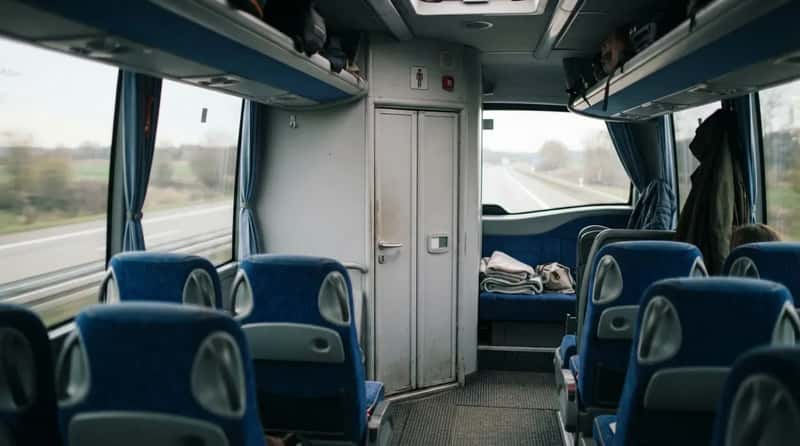
Many coaches in Europe have a toilet, and many operators treat it as emergency-only. It’s small, it’s tucked at the back and its capacity is limited. Some drivers also ask that it not be used for anything beyond the basics.
Here’s the opinion that splits tour groups. Some passengers call the toilet a lifesaver, while plenty of guides treat it as a last resort and a source of complaints. Ask early so you know your coach’s rule.
The real custom is planning around the stops. The guide usually announces how long until the next break. People who skip a break “because I’m fine” are often the ones asking for an unscheduled stop an hour later.
Of course, what goes into you on the bus has its own set of rules too…
#8 – The Snack Rules Written in Fine Print No One Reads
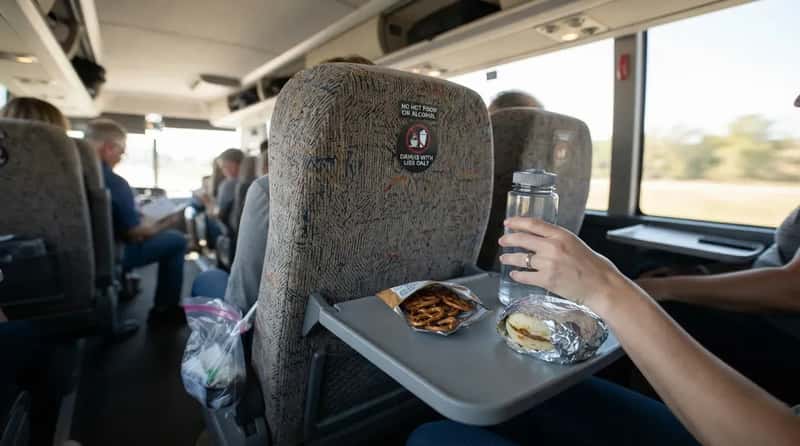
Eating on a coach isn’t a free-for-all. Many operators ban hot food, strong-smelling meals and alcohol onboard. Water and dry snacks are generally fine, but your tour’s policy may be stricter.
The reason is simple. A coach is a shared space, and the same seat will be used by someone else tomorrow with only a quick clean in between. One spilled drink or one tuna sandwich can be remembered for the rest of the trip.
At a Glance
- Usually fine: water in a bottle with a lid, dry snacks, mints.
- Often banned: hot meals, smelly food, alcohol.
- Always smart: bag your trash and carry it off at the next stop.
The customs follow from this. Use drinks with lids, take your trash with you at stops and don’t leave wrappers in the seat pocket. Drivers notice who leaves a mess and who doesn’t.
Now for the custom that decides whether you ever find your way back to the bus, and it involves a microphone…
#9 – When the Guide Picks Up the Mic, That’s the Part You Can’t Miss

Most of the day’s commentary is optional listening, but one part isn’t. The briefing before each stop carries the details that matter, including the exact meeting time and the exact meeting spot.
Plenty of lost-passenger stories start the same way. Someone was chatting, missed the briefing and showed up at the wrong place. It’s the one moment where tuning out has a real consequence.
There’s also an unspoken rule about the driver. Talking to them while the coach is moving is generally discouraged, since they’re focused on traffic. Save it for when you’ve stopped.
After the briefing, many groups head to a stop that tests your patience more than any other…
#10 – The “Cultural Stop” That’s Actually a Shopping Stop

Many tours include visits to workshops, factories or showrooms. Some are real craft demonstrations, and some are clearly sales opportunities. Critics in several destinations have long argued that certain stops are built around commissions, so it pays to read your itinerary closely.
Here’s the part first-timers don’t realize. You are never required to buy anything. Browsing, thanking the host and returning to the coach on time is completely normal.
Many travelers see these stops as a highlight, while others call them the biggest waste of daylight on the itinerary. Both camps usually ride on the same coach.
If shopping stops are the free part, the next item is where the extra costs start to show up…
#11 – Optional Excursions and the Awkward Art of Saying No

Tours often offer extras that aren’t in the base price, such as an evening show, a boat ride or a special dinner. The guide will usually ask who’s interested and collect names. In front of the whole coach, it can feel like a social test.
It isn’t one. Declining is normal, and on most trips some of the group sits out each extra. You’ll typically get free time to explore, rest or find your own dinner.
- Decisions are often due a day or two early, because the guide has to book numbers.
- Ask what the free-time option looks like before you decide.
The people who say yes to everything often end up with the biggest bill. The ones who say no to everything sometimes miss the highlight. Most veterans pick one or two.
Whichever you pick, the next custom is the one that makes people the most uncomfortable…
#12 – The Tip Envelope Nobody Warned You About

On most coach tours, tipping the tour director, the driver and any local guides is customary, even if it isn’t required. Amounts depend on the operator, which is why two people on the same street can be handing over very different sums.
The suggestions vary a lot. Go Ahead Tours suggests the equivalent of $10-$12 per person per day for the Tour Director and $4 for the bus driver. Trafalgar’s guidance is $5-7 per person per day for the Travel Director and $3-5 for drivers. Check your own trip documents.
Quick Compare
| Operator | Tour Director (per person/day) | Driver (per person/day) |
|---|---|---|
| Go Ahead Tours | $10-$12 | $4 |
| Trafalgar | $5-$7 | $3-$5 |
Groups often pool the money. It is common for an envelope to be passed around the coach and presented together at the end of the trip. That’s the moment first-timers never see coming.
And the tour director and driver aren’t the only people expecting something…
#13 – The Local Guide You Meet for Two Hours Also Expects a Tip

Many tours bring in local experts for single sites or city walks. They’re separate from your tour director, and custom says they should be tipped too. Do it right at the end of their tour, since you’ll only see them once.
The amounts are smaller. Trafalgar calls $2-3 per person customary for a half-day tour and $5 for a full day. Go Ahead suggests about $2 per person per tour.
Currency matters, too. Tips should generally be given in cash and in local currency, unless your Tour Director advises otherwise. If the trip crosses borders, ask which currency they prefer.
Tips cover the people. But there’s a hidden force that controls the schedule, and it isn’t the guide…
#14 – The Law That Secretly Decides When Your Coach Has to Stop
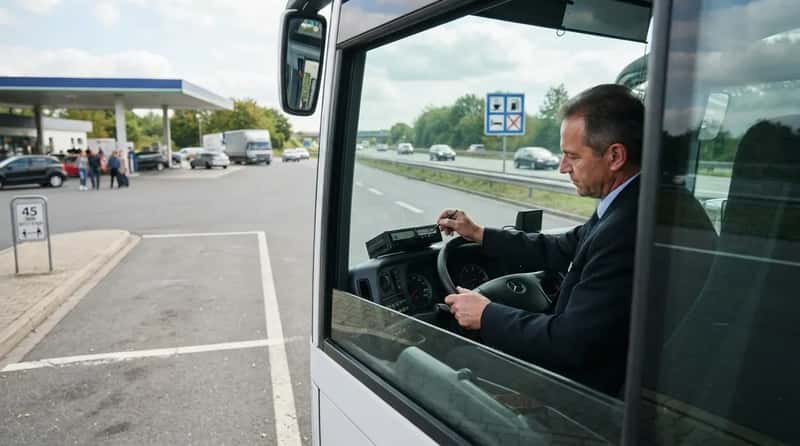
When the guide says the coach has to leave right now, it’s often not about the itinerary. Professional drivers are bound by hours-of-service rules. In the U.S., federal limits for passenger-carrying drivers allow up to 10 hours of driving after 8 consecutive hours off duty, and no driving after the 15th hour on duty.
Europe has its own system. Drivers generally must take a 45-minute break after 4.5 hours of driving. The standard daily driving limit is 9 hours, extendable to 10 hours twice a week.
Fast Facts
- U.S. passenger-carrying drivers also face weekly caps: 60 hours on duty in 7 days, or 70 hours in 8 days.
- In Europe, weekly driving is capped at 56 hours.
- Europe also limits driving to 90 hours across any two consecutive weeks.
- The European 45-minute break can be split into a 15-minute stop followed by a 30-minute one.
That’s why a late start can cause real problems. The driver can’t simply make up time by driving longer. The hours are tracked, and the schedule has to fit inside them.
Which brings us to the person behind all those hours, and the custom that matters most…
#15 – The Person Behind the Wheel Is the One Most Passengers Never Talk To

The driver is often the first one at the coach and the last to leave. They load the bags, handle tricky parking and thread a huge vehicle down roads built long before coaches existed. Yet many passengers walk past them every day without a word.
The custom veterans swear by is simple: say good morning. It takes two seconds, and drivers remember who does it. On a week-long trip, that small habit can change the whole feel of the coach.
Timing matters when it’s time to say thanks. Tip your driver the last time you’ll see them, and don’t assume you’ll get another chance at the hotel.
Look back over the list and a pattern shows up. Nearly every custom exists to protect shared time, from rotating seats and headcounts to the 8:00 rule and the driver-hour limits. Forty strangers have to move as one group, and these small habits are what make that possible.
None of it is hard once someone tells you, and most tours simply never do. Which custom surprised you the most, and which one would you add to the list? Drop it in the comments.