Most people walk into a hotel room and see a blank slate: crisp sheets, shiny glasses, a lock on the door. Seasoned travelers see something else. To them, it’s a stranger’s apartment that happens to have been vacuumed.
Before they unpack a single sock, they run a quiet routine that fire officials, pest-control pros and university researchers keep recommending. Some steps take under a minute. One of them happens after the trip is over, and one study’s “dirtiest surface” result surprised even the people who measured it.
#15 – They Drop the Bags in the Bathroom Before Anything Else
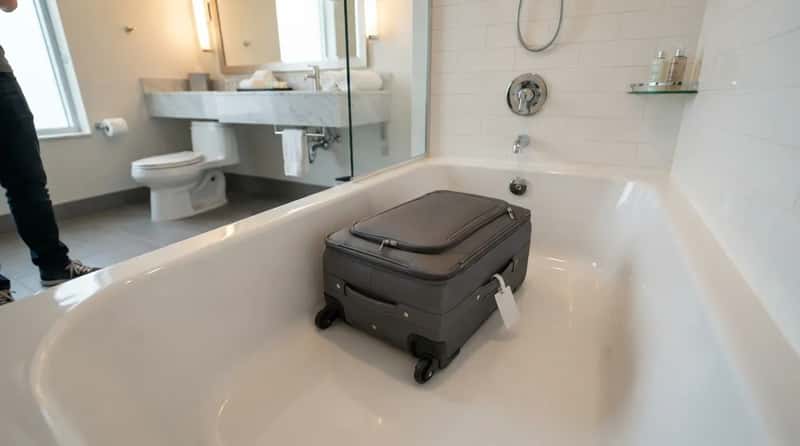
The first stop for a veteran traveler is the bathroom, not the bed. Consumer Reports advises putting luggage on a luggage rack or in the bathroom while you inspect the bedding and furniture. Smooth surfaces like an acrylic tub are too slick for bed bugs to crawl up. It looks a little paranoid, but it takes seconds.
Here’s the twist: the star rating doesn’t protect you. Budget motels and five-star resorts have both dealt with infestations. The odds of running into bed bugs are generally low, but they’re not zero. Experienced travelers simply won’t gamble with the one item that follows them home.
But that’s nothing compared to what they do next with the bed itself…
#14 – They Peel Back the Sheets Like Detectives
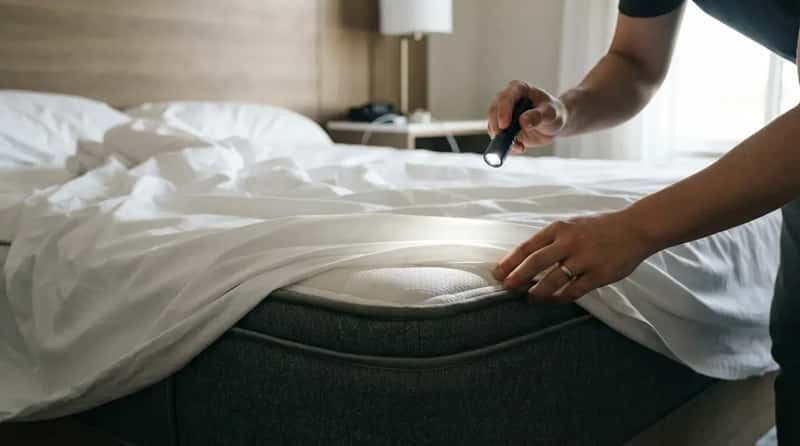
Experts say the mattress is where the real inspection starts. Pull back the sheets and look along the seams, edges and piping. You’re hunting for dark spots, stains, shed skins or live bugs. Adults are about the size of an apple seed, so this is a close-up job.
Don’t stop at the mattress top. Check the box spring too, since bed bugs love the cracks, and shine a flashlight into the gap between the wall and the headboard. As for that viral “hotel iron trick”? Heat does kill bed bugs, but pest pros say the trick isn’t foolproof and doesn’t replace a careful visual check.
The next habit has nothing to do with bugs, and it could matter far more in the dark…
#13 – They Count Doors Down the Hallway
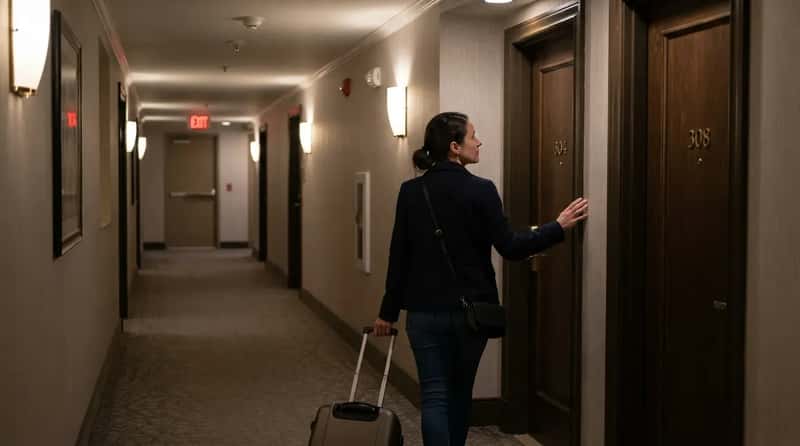
Experienced travelers know exactly how many doors sit between their room and the exit. The U.S. Fire Administration says to count the doors between your room and the exits, because it helps if you ever have to get out in the dark. It’s an odd little ritual. It’s also one of the most repeated tips from fire departments.
The reason is simple. In a fire the hall can go dark and smoky, and the exit stairway can be nearly impossible to spot. The USFA also says to find the two closest exits from your room. Some travelers walk the route once, just to learn it by feel.
Counting doors is only half the plan, though. The other half is hiding in plain sight…
#12 – They Actually Read the Map Behind the Door
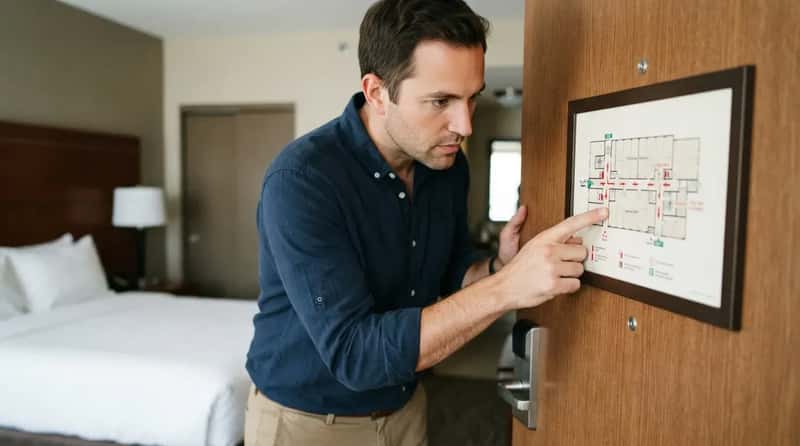
That evacuation diagram on the back of the door is not decoration. It shows your nearest exits, and most guests walk right past it. If your room doesn’t have one, you can request one from the front desk.
Veterans go one step further. They locate two different stairways in case one is blocked. They also check that the exits open, and if one is locked, they report it to management right away. A locked exit is exactly the kind of problem you want to discover on day one, not during an alarm.
Then there’s a two-second test almost nobody bothers with…
#11 – They Press the Smoke Alarm Test Button
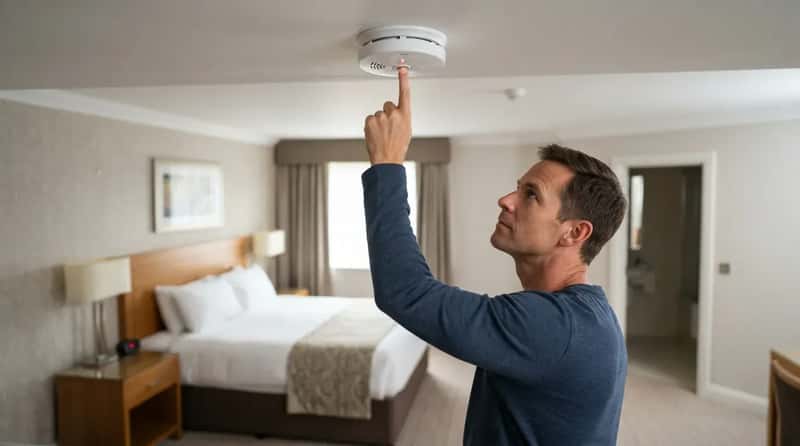
Some travelers test the smoke alarm in every single room. The alarm should have a small test button, and pressing it should trigger the sound. If it doesn’t, they ask for a room change or tell management immediately. It’s a home-safety habit applied to a bed they’ll sleep in for one night.
Bedrooms deserve the attention. NFPA figures say 12% of hotel and motel fires began in a bedroom, yet those fires caused 72% of the associated civilian deaths. That’s a small share of fires causing most of the deaths. The USFA also recommends hard-wired smoke alarms and sprinklers in every guest room.
Fast Facts
- 12% of hotel and motel fires started in a bedroom, per NFPA figures.
- Those bedroom fires caused 72% of the associated civilian deaths.
- The test takes about two seconds: press the button and listen.
- No sound means ask for another room or tell management right away.
Once the alarm works, the next question is what’s sitting next to your pillow…
#10 – They Park the Key and Shoes by the Bed
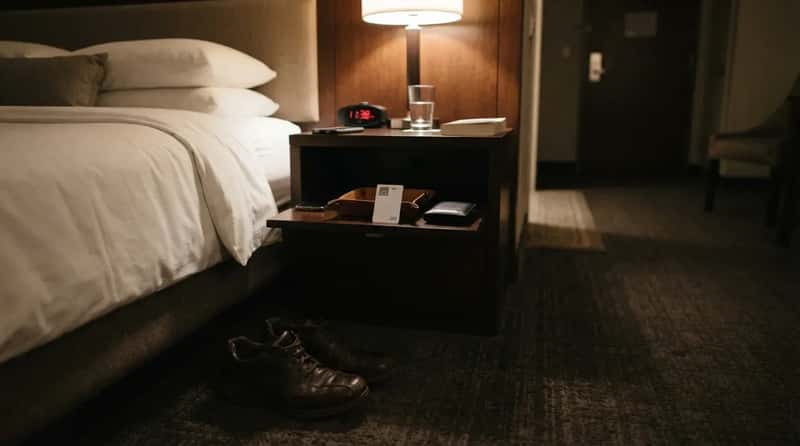
A frequent flyer’s nightstand setup looks oddly specific. Shoes and room key go right beside the bed for quick access. Fire departments say to keep the key by your bed and take it with you if there’s a fire. Fumbling around a dark room barefoot is not a plan.
Smoking gets a warning too. NFPA data shows smoking materials started 10% of hotel and motel fires but caused 79% of the deaths. Officials say flatly: never smoke in bed. It’s the kind of stat that makes the shoes-by-the-bed habit feel sensible rather than fussy.
Now for a surface most people touch within 60 seconds of walking in…
#9 – They Wipe the Remote Before Touching It
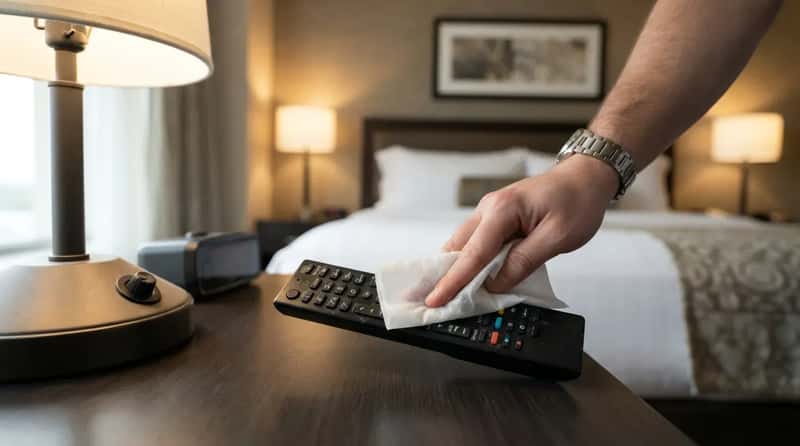
The TV remote has a bad reputation, and researchers helped earn it. University of Houston researchers reported at a 2012 microbiology meeting that remotes were among the most heavily contaminated items in hotel rooms. They also found high contamination on the bedside lamp switch. Frequent travelers carry a few disinfecting wipes for exactly this reason.
Keep it in proportion, though. The team swabbed nine rooms in three states, so it was a small study. One of its supervisors noted the remote may be no dirtier than one at home, but there’s a “stranger factor.” The highest contamination turned up on the housekeeping cart, on the mop and sponge. That matters because a cart can carry bacteria from room to room.
And the remote isn’t even the germiest thing in the room, according to one ranking…
#8 – They Skip the Bathroom Counter, the Germ Champion of One Big Study
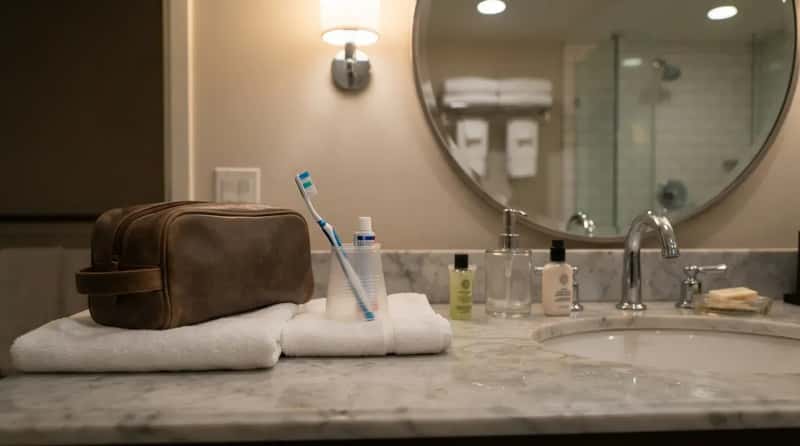
Paying more didn’t buy a cleaner bathroom counter in one widely reported analysis. In four-star hotels, the counter was the most bacteria-laden surface of all. Three-star counters carried far fewer bacteria than four-star ones, and fewer than five-star ones too. Yes, the fancier rooms lost that round.
That stings for anyone who upgrades for cleanliness. The report said four-star rooms appeared to have the most germs overall. The counter is where many guests set their toothbrushes, so experienced travelers use a toiletry bag or a towel barrier. The study’s own advice: most of these surfaces can be disinfected fairly easily with wipes or spray.
Quick Compare
- Four-star: the counter was the most bacteria-laden surface in the study.
- Three-star: counters carried far fewer bacteria than four-star ones.
- Five-star: also cleaner than four-star, so a higher price didn’t predict the result.
Speaking of things that go near your mouth, check what’s sitting by the sink…
#7 – They Distrust the “Clean” Glass by the Sink
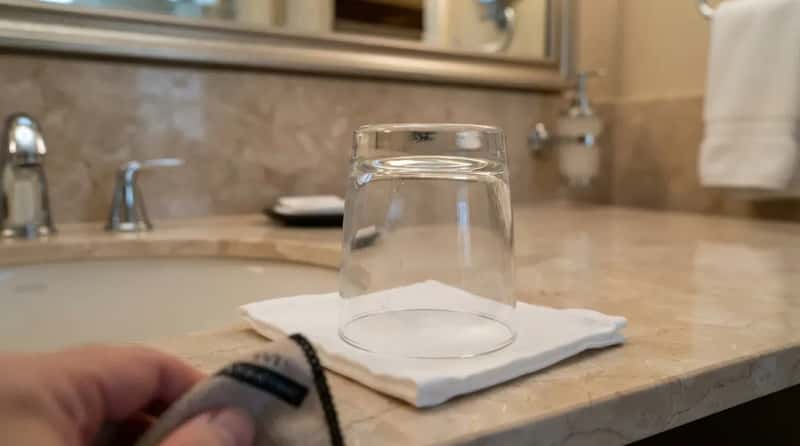
A sparkling glass doesn’t always mean a properly cleaned one. A hidden-camera investigation by NBC’s Today showed housekeepers drying drinking glasses with dirty towels from the ground. That was one investigation, not every hotel. But it explains why frequent guests don’t take glassware at face value.
Cleaners themselves have flagged the problem. Drinking glasses and minibar glassware are among the easiest items to shortcut during a fast turnover, according to one report on cleaners’ admissions. With high turnover and limited staff, there often isn’t time to deep clean every room every day. Some reports cite about 30 minutes per room.
Cleaning isn’t the only thing that worries them at night. There’s also the door…
#6 – They Use Every Lock, and Some Bring Their Own
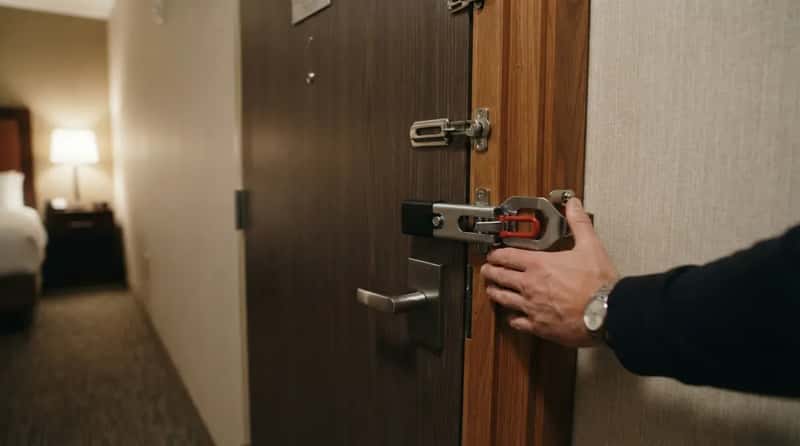
Latch, deadbolt, and sometimes a gadget from the suitcase. Using every lock on the door gives you multiple layers of protection during a stay. Some travelers add a portable door lock, a small metal device that costs less than a dinner out.
This one splits travelers. Some swear by the extra peace of mind. Others call it overkill, since the hotel’s own locks already do the job. The one honest catch is that it’s one more thing to undo in an emergency, so careful travelers practice removing it in the dark.
Next up is a cheap item fire officials keep telling people to pack…
#5 – They Keep a Flashlight Within Arm’s Reach
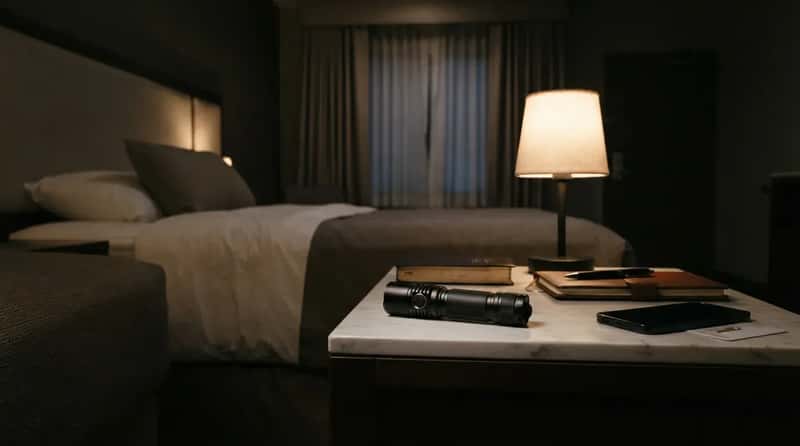
A flashlight is the most boring and most useful thing on the nightstand. Fire officials advise packing one with fresh batteries, since it can guide you through a dark, smoky hall or signal rescuers. Your phone light works in a pinch. It also doubles as your bed bug scanner.
Other hotel fire rules are just as blunt. Crawl low in smoke, because the freshest air is near the floor. If you can’t escape, wait at the window and signal with a flashlight or a light-colored cloth. None of it is glamorous, and all of it is worth knowing before check-in.
Worth Knowing
- Pack a flashlight with fresh batteries, since it can guide you or signal rescuers.
- Your phone light works in a pinch, and it doubles as a bed bug scanner.
- In heavy smoke, crawl low, where the freshest air is.
- Can’t get out? Wait at the window and signal with a light or a light-colored cloth.
Now back to the bugs, because the smartest move comes when you actually find something…
#4 – They Ask for a New Room Without Apologizing

Experienced travelers don’t negotiate with a suspicious mattress. If they spot warning signs, they request a different room, preferably on a different floor. The floor part matters more than most guests realize. Moving next door can mean the same problem with a new room number.
They also don’t feel awkward about it. Fox Pest Control says to notify hotel staff immediately, because they need to know and should help you. A short, calm request usually works better than a confrontation.
The next habit sounds backwards, because it means not using what the room offers…
#3 – They Leave the Drawers Empty
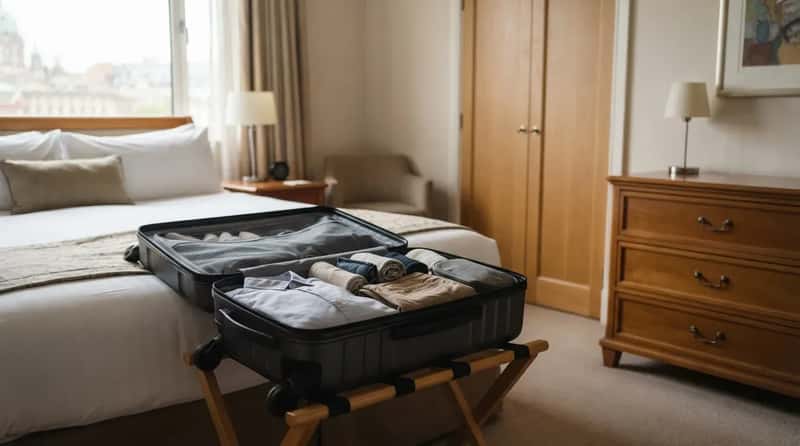
Many pest pros say unpacking into the dresser is a mistake. Terminix recommends skipping the hotel’s drawers and closets and keeping your things in the suitcase when possible. Other pest experts say to leave drawers and closet shelves alone until they’ve been carefully inspected. It feels unnatural on a week-long trip.
The suitcase itself matters. Hard-shell suitcases are easier to inspect, offer fewer hiding spots, and are much easier to clean than soft-sided ones. Pest experts also say to inspect any chair or couch before you drop clothing on it. The habit trades a little convenience for a lot less worry.
At a Glance
- Drawers and closets: skip them, or inspect first.
- Suitcase: hard-shell is easier to inspect and clean than soft-sided.
- Chairs and couches: check them before setting clothes down.
One more test happens right at the door, and it’s the one that could save your life…
#2 – They Test the Hallway Door Before Opening It
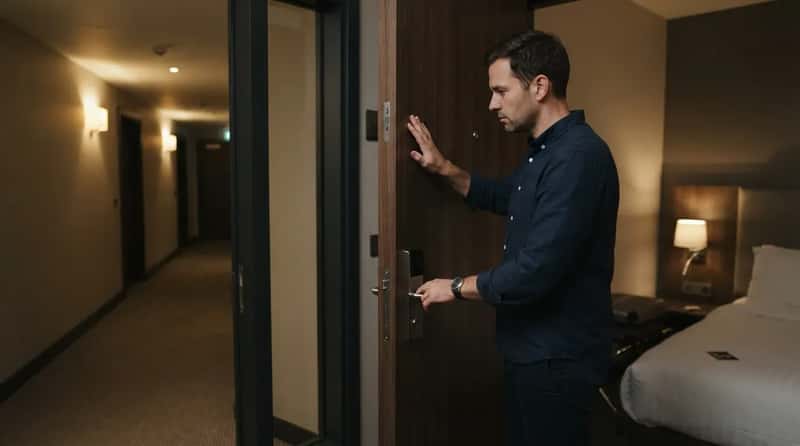
If the alarm sounds, the door itself becomes your first piece of information. Fire officials say to touch the door with the back of your hand to check its temperature. If it’s hot, don’t open it. Seal the door with wet towels or sheets.
That’s a lot to remember in a panic, so travelers rehearse it mentally once. The rest of the checklist is short:
- Turn off fans and air conditioners.
- Use the stairwell, never an elevator, because it could stop at the floor of the fire.
Then call the fire department and give them your location. Every habit earlier on this list, from the counted doors to the key by the bed, supports this exact moment.
But the habit at the top of this list doesn’t happen in the hotel at all…
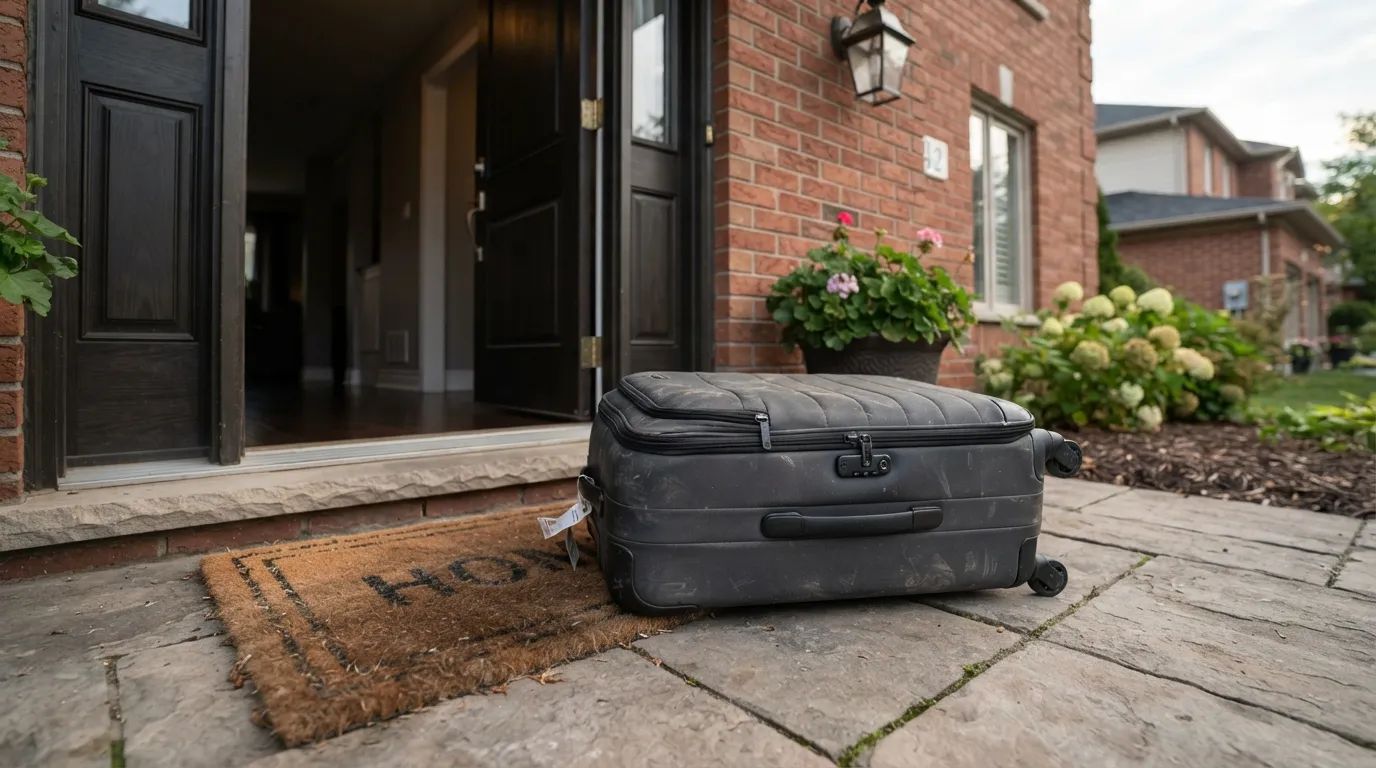
#1 – They Leave the Suitcase Outside When They Get Home
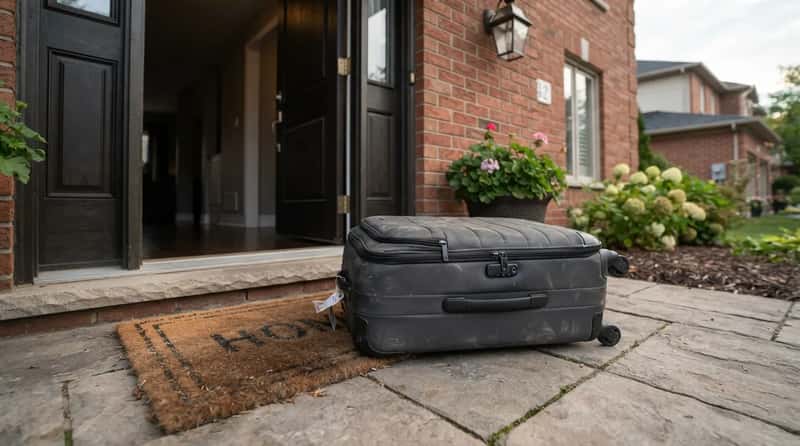
The most seasoned travelers keep protecting their home after they’ve left the hotel. Bed bugs can hitchhike on luggage and clothing and infest homes after a trip. Consumer Reports notes they can settle into mattresses, box springs and furniture. A hotel problem becomes a house problem in a single carry-in.
So they follow a routine. They isolate the luggage, keep bags outside or in a garage until they can clean them, and wash everything. The suitcase doesn’t cross the threshold until it’s dealt with. It’s the least glamorous habit here, and the one people regret skipping most.
None of these habits require paranoia. They’re small, boring checks that fire officials, pest experts and researchers keep repeating: count the doors, test the alarm, put the key by the bed, keep the luggage off soft surfaces, and wipe what everybody touches.
The biggest surprise may be that the bathroom counter, not the remote, topped one analysis, and paying more didn’t guarantee cleaner. Most of the risk is low. The regret from ignoring it isn’t.
Which of these habits do you already follow, and which one are you adding on your next trip?