Most people treat a layover as dead time – a frustrating gap wedged between one uncomfortable flight and the next.
Experienced travellers look at that same stretch of time and quietly turn it into something they control instead of something they endure.
They’ve built a set of habits, one connection at a time, that most casual flyers have never even heard of.
Some of these habits save money. Others save the entire trip – and a couple will make you wonder why nobody told you sooner.
15. They Check Visa Rules Before Booking, Not at the Gate
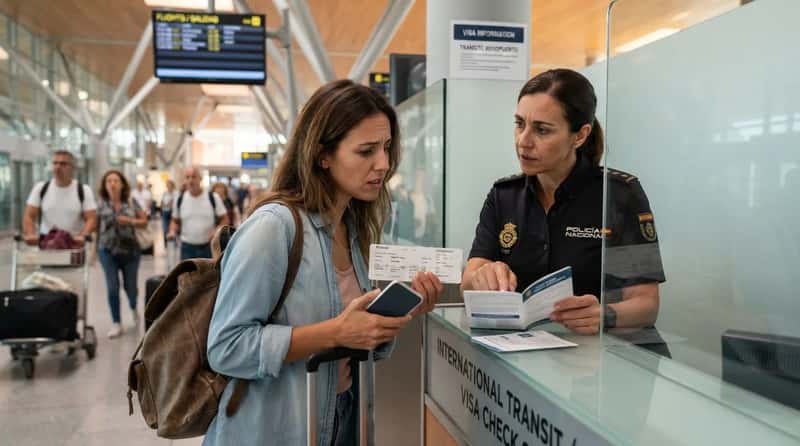
Most first-time travellers assume visa rules only apply to their final destination. That assumption falls apart the moment they try to leave the airport during a layover.
To step outside, you need either visa-free transit access or the correct visa for that country – not just your actual destination. Transit rules shift constantly; in 2025, Spain added a mandatory airport transit visa for citizens of certain countries, even for passengers staying entirely within the terminal.
Outdated forum posts won’t save you here. Some countries are relaxing entry rules while others tighten them without warning, and border officials increasingly base decisions on the specific route and airline.
Experienced travellers check this the second they see a connecting itinerary, not when they’re standing at a gate being turned away. But visa rules are only the opening move – the next habit is about something colder and more mathematical: the real numbers behind connection times.
14. They Treat Minimum Connection Times as a Floor, Not a Promise
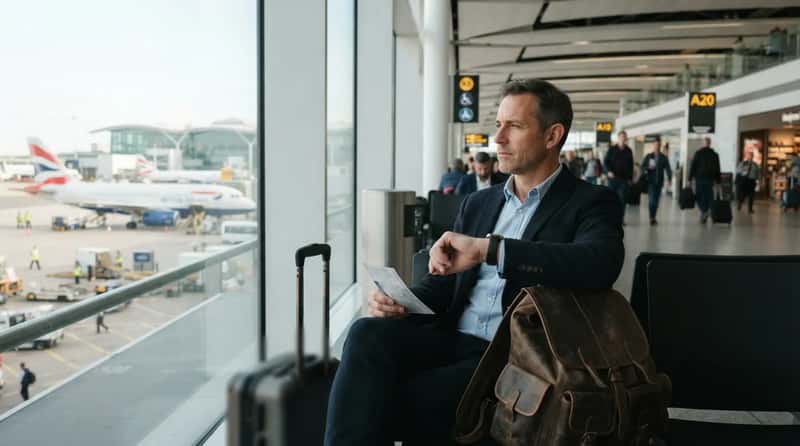
Airlines publish a Minimum Connection Time for every airport – the shortest window their own system will allow between two flights. It’s not a recommendation. It’s a bare legal minimum that assumes everything goes right.
Even staying inside the transit zone doesn’t guarantee an easy connection. Some major hubs still require security rescreening, which can quietly eat the exact minutes that made your layover “legal” in the first place.
Experienced travellers build in real buffer well beyond that posted minimum, and they treat the extra time as non-negotiable.
Fast Facts
- Domestic connections: add 60-90 minutes of buffer
- International connections: add 2-3 hours of buffer
- Mega-hubs like Heathrow, Charles de Gaulle, or Dubai: add 3+ hours
- Customs or a bag recheck involved: add another 30 minutes
They plan this the same way they’d budget extra time for traffic before a job interview – because they’ve missed a connection once, and they’ve never wanted that particular panic again. Knowing how much time you have is one thing. Knowing exactly what to do the moment you land is a completely different skill.
13. They Walk the Terminal Before They Do Anything Else
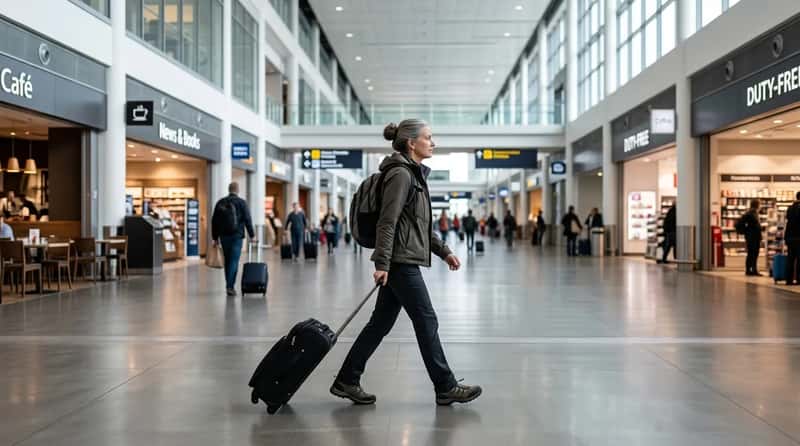
The instinct after a long flight is to find the nearest seat and collapse into it. Most rookies do exactly that the moment they land at a connecting airport.
Experienced travellers do the opposite – they walk first, deliberately, before sitting anywhere. Deep vein thrombosis is a real risk after hours of barely moving your legs, and a lap or two around the terminal is the fastest way to reset circulation.
That first walk pays off a second way too: it shows you where the bathrooms, charging points, and decent food actually are, not where a terminal map assumed they’d be. Rookies spend the first hour of a layover lost and confused.
Experienced travellers spend that same hour getting oriented instead. Once they’re oriented, they do something at security that most people never even think to plan for.
12. They Empty Their Pockets Before Joining the Security Queue
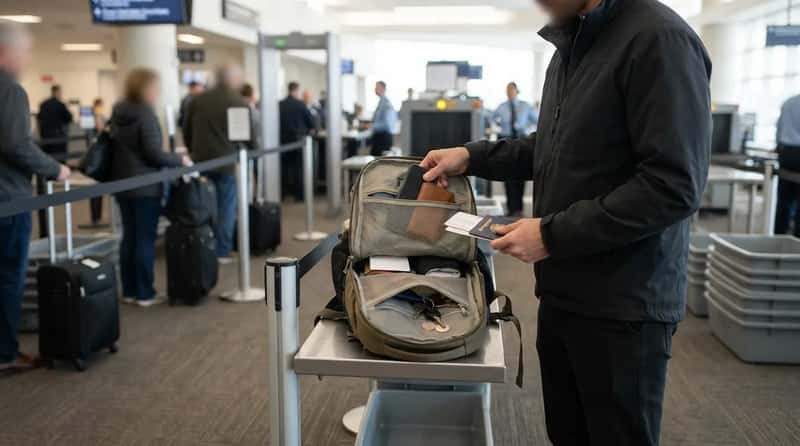
This habit sounds almost embarrassingly simple, which is exactly why most travellers still skip it. Before ever joining the security line, experienced travellers move everything from their pockets into a zippered pouch inside their carry-on.
It takes about thirty seconds, and it eliminates one of the most common, entirely avoidable stress spikes in the whole airport experience. By the time they reach the scanner, there’s nothing left to fish out, drop, or forget behind.
It’s also why experienced travellers clear security visibly faster than everyone around them. No fumbling, no re-trays, no anxious glance at the departures board.
Thirty saved seconds doesn’t sound like much until you’re running a tight connection and those seconds are the whole margin. But the single biggest security time-saver on this list isn’t a habit at all – it’s a card sitting in their wallet.
11. They Use Trusted Traveller Programmes to Cut Immigration Time
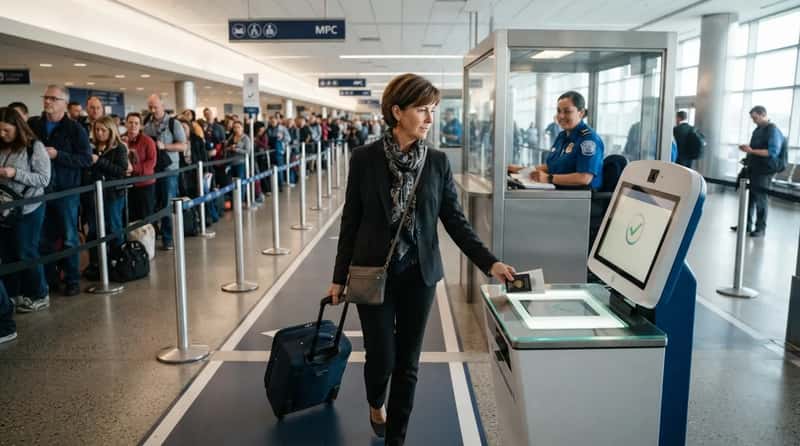
Most leisure travellers have never bothered applying for Global Entry or TSA PreCheck. Experienced travellers treat them as close to non-negotiable.
Quick Compare: Immigration Wait Times
- No trusted traveller program: up to 90 minutes during peak hours
- Global Entry: often under 5 minutes
- Mobile Passport Control (Visa Waiver nationals): typically under 10 minutes
That kind of swing can be the literal difference between making a connection and watching it leave without you. On plenty of itineraries, there’s no margin to spare.
Transit passengers who are Visa Waiver Program nationals can also use the Mobile Passport Control app to pre-submit their passport, declaration, and photo. MPC lanes sit right beside Global Entry lanes.
The upfront cost and interview appointment put a lot of casual travellers off. Frequent flyers treat it the way they treat travel insurance – a small, certain cost to avoid a much larger, uncertain one.
10. They Split the Layover Into Three Blocks, Not One Open Window
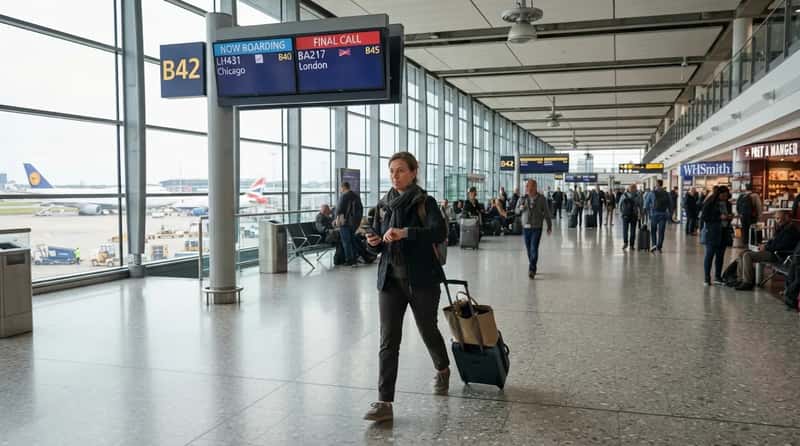
Rookies calculate a layover as one single open block of free time, then burn it aimlessly wandering or scrolling. Experienced travellers split it into three distinct pieces instead.
The first block covers the immediate arrival: walking the terminal, clearing any re-screening, confirming the gate hasn’t changed. The middle block is where the actual layover happens – rest, a real meal, a shower, maybe even leaving the terminal entirely.
The third block is a strict, protected buffer of 60-90 minutes reserved purely for getting back to the gate. Nothing is allowed to eat into that final window, no matter how good the middle block feels.
This structure is exactly why experienced travellers are never the ones sprinting through a terminal with a boarding pass in one hand and a half-eaten sandwich in the other. They’ve already eaten properly, and how they think about food during a layover is its own discipline entirely.
9. They Eat Strategically, Not Emotionally

Airport food is expensive, and eating badly before a long flight makes the next several hours noticeably harder on your body. Experienced travellers think about timing their meals around where they’re going, not where they’ve just been.
If a red-eye is coming up, they eat a proper meal during the layover instead of relying on cabin service at 2am. It’s a small decision that changes how the entire overnight flight feels.
Seeking out local cuisine inside the airport can also be genuinely worthwhile without ever leaving the terminal. Hub airports like Singapore Changi, Istanbul, and Doha have restaurants that reflect the actual food culture of the country, not a generic food-court version of it.
They also avoid the trap of eating twice – once out of boredom, once because they’re genuinely hungry. That’s where most travellers quietly burn through their layover budget.
8. They Carry Their Own Power, and Never Rely on Public USB Ports
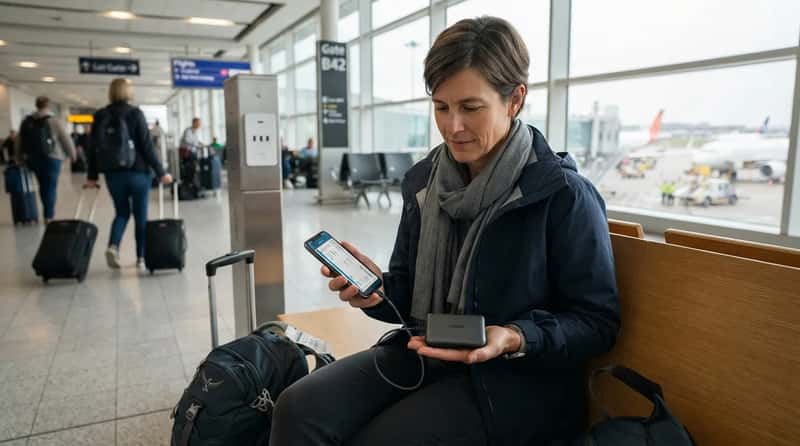
Running out of battery mid-layover is a rookie problem. Trying to fix it by plugging into a public charging station is a bigger one.
Experienced travellers bring their own portable power bank and avoid public charging points altogether – and the reasoning has less to do with paranoia than with simple control over their own devices. A fully charged power bank gets checked before every trip the same way a passport does.
Boarding pass, itinerary, hotel confirmation, taxi app – nearly every piece of travel infrastructure now lives on a phone. Letting that phone die mid-journey is the modern equivalent of losing your paperwork in 1995.
Experienced travellers treat battery life as a safety margin, not a convenience. But there’s another kind of disconnection they actively plan for during long layovers, and it’s one of the more counterintuitive habits on this list.
7. They Download Everything Before They Leave Home
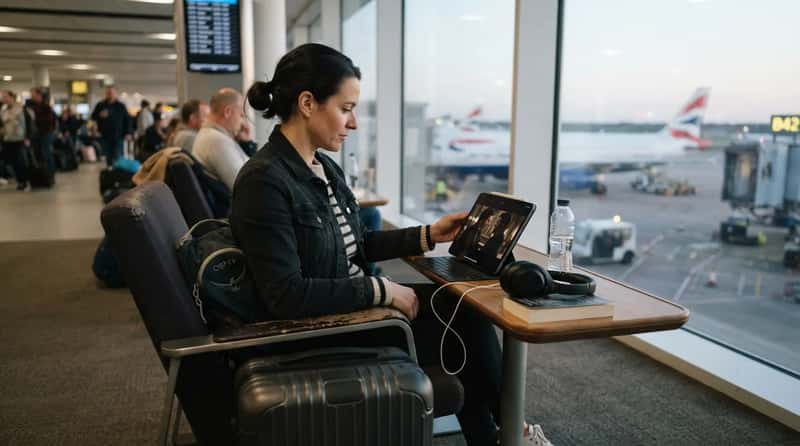
Airport Wi-Fi is notoriously unreliable, and even a decent lounge connection can buckle under heavy simultaneous use. Relying on it to stream or work is one of the most reliable ways to waste a layover.
Experienced flyers download everything before they ever leave the house – films, podcasts, offline maps, e-books, the work document they’ve been avoiding. Whether the airport’s network cooperates or not stops being relevant.
The real skill is matching content to layover length. A 90-minute connection gets a podcast; a five-hour layover gets the project that’s been sitting untouched for weeks.
This is how experienced travellers make long layovers feel shorter without spending a cent on entertainment. Once a layover is long enough, though, they stop managing time and start refreshing their entire body.
6. They Find a Shower, Even When It Isn’t Free

A shower mid-journey isn’t a luxury to experienced travellers. It’s maintenance, plain and simple.
Most airports have shower facilities somewhere – a gym, a help desk, a dedicated pay-per-use setup – and it’s worth asking rather than assuming there isn’t one. Many of these facilities include toiletry kits and towels for a low rental fee.
Many lounges include showers as well, and even without lounge access, plenty of major airports sell shower access on its own. The physical impact of a hot shower mid-layover on how the next flight feels is easy to underestimate.
Cabin air is dry, circulation is poor after hours of sitting, and arriving already feeling grimy compounds jet lag fast. Experienced travellers have learned that spending fifteen dollars on a shower quietly saves them the entire first half of their arrival day.
5. They Know Exactly When a Lounge Is Worth It (and When It Isn’t)
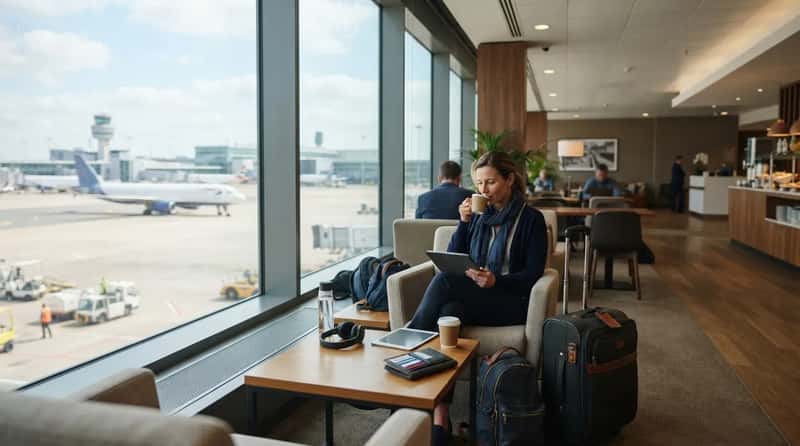
The lounge conversation among travellers is almost always framed wrong. People either assume they can’t get in, or assume it’s automatically worth whatever it costs.
In reality, lounge access is a tool – sometimes it’s not worth it, and sometimes it saves the entire day. There are four main paths in: a premium travel credit card bundled with lounge access, a standalone Priority Pass membership, a walk-up day pass, or airline elite status.
At a Glance: Priority Pass Membership Tiers
- Standard: $99 a year, $35 per lounge visit
- Standard Plus: $329 a year, 10 free visits then $35 each
- Prestige: $469 a year, unlimited free visits
- Guests: $35 per visit, on every tier
The downsides are real too. Lounges get crowded during peak hours, there’s no private room, and genuine sleep is basically impossible.
A lounge is an upgrade to waiting, not an alternative to rest, and experienced travellers know that distinction cold. Which is exactly why, for actual sleep on a long layover, they go somewhere else entirely.
4. They Know When to Book a Sleep Pod or Transit Hotel
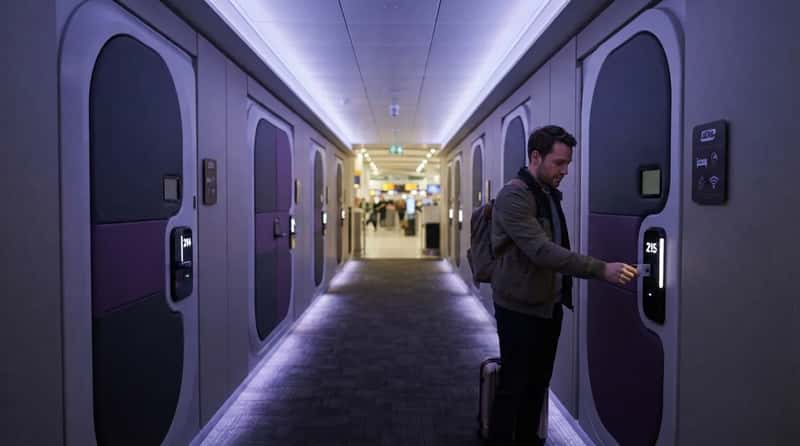
The gap between a miserable overnight layover and a manageable one usually comes down to one decision made well before arriving at the airport. Experienced travellers make that call in advance, not at midnight in a row of plastic chairs.
Quick Compare
- 4-8 hour layover: a sleep pod, roughly $30-65 per hour with a 2-4 hour minimum
- Transit hotel: inside the terminal, no customs needed, usually booked in 4-hour blocks
- 8+ hour layover: a day-use hotel room for better value and real comfort
Transit hotels in Singapore, Doha, Incheon, and several European hubs sit right inside the terminal with no customs required at all. YOTEL operates inside Heathrow Terminal 4.
Deciding which option fits the layover happens calmly, ahead of time – and that calm comes from the next habit, which is really about mindset.
3. They Leave the Airport When the Layover Is Long Enough

Sitting in a terminal for six hours when an entire city sits thirty minutes away is one of the most consistently underrated travel mistakes people make. Experienced flyers live by a simple rule instead.
If the layover runs over five hours and entry clearance allows it, they’re already outside the terminal. Local transit apps and airport shuttles make short trips genuinely easy, and some airports even run free city tours for exactly this situation.
Singapore Changi has an entire indoor waterfall and forest, plus a free city tour for transiting passengers. Turkish Airlines offers a complimentary guided tour of Istanbul for eligible long-layover travellers.
These aren’t obscure hacks – they’re published, official programmes that millions of travellers fly straight past without ever knowing they exist. But none of it works without the one habit that keeps a whole journey from unraveling when something goes wrong.
2. They Always Carry a Backup Plan Before They Need One
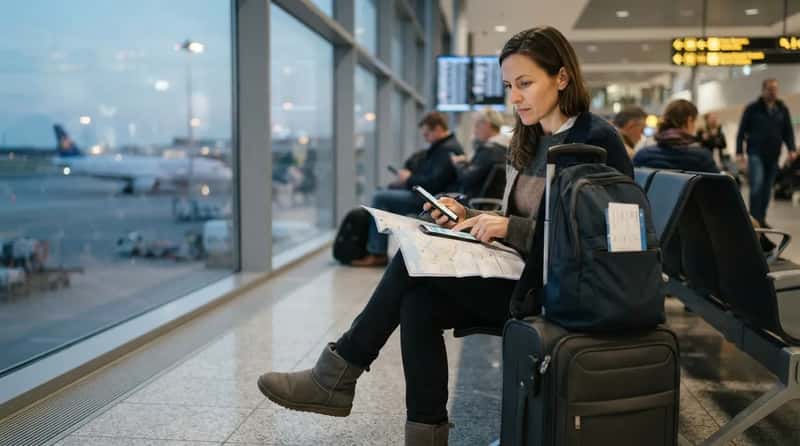
Gate changes, delays, and cancellations don’t rattle experienced travellers, because they’ve already gamed out the most likely failure scenarios long before they happen. A backup plan is loaded before the layover even starts.
When a short layover is unavoidable, travelling with a carry-on instead of checked luggage gives far more flexibility – no waiting at baggage claim, no risk of a bag missing the connection, and the ability to move fast the second a gate reopens.
Scoping out the airport map ahead of time is a real edge too. Several airline apps include a feature showing estimated transit time between gates and terminals, which becomes genuinely useful the moment a delay forces a scramble.
Having a backup plan isn’t pessimism – it’s the single behavioral difference between travellers who absorb disruption calmly and travellers who get flattened by it. And it leads directly to the habit every experienced traveller considers the most important one of all.
1. They Choose the Right Airports Before They Book the Ticket

Every other habit on this list can be undermined by one decision made at the very start: routing through the wrong hub. Experienced flyers choose airports deliberately, before booking, not after getting stranded in one.
The best hub airports for missed connections aren’t necessarily the ones with the nicest shops. For international-to-international connections, the safer target is at least two to three hours at large airports and ninety minutes at smaller ones – at mega-hubs like Heathrow, Dubai, or Charles de Gaulle, three hours is the real minimum worth planning around.
Airports like Singapore Changi and Amsterdam Schiphol are consistently rated among the most connection-friendly in the world – not because they’re beautiful, but because their layouts are compact, their signage is clear, and their transfer procedures are fast.
If you fly even a few times a year, getting genuinely good at layovers is one of the most useful travel skills you can build. And it starts with the airport you choose, not the one you end up stuck in.
The Bottom Line
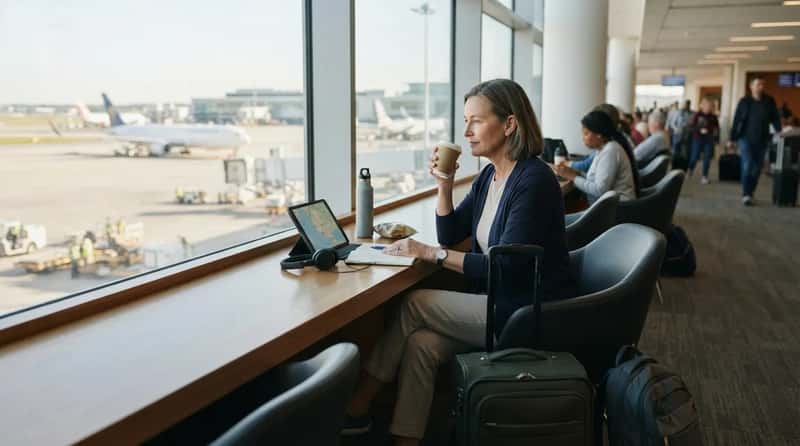
Experienced travellers don’t have better luck at airports. They have better habits, built from missed connections, dead phones, and layovers survived the hard way so nobody else has to repeat them.
The through-line across all fifteen is preparation before arrival: checking visa rules at the booking stage, keeping connection times realistic, having a backup plan already loaded, and choosing the right hub airport from the start.
The less glamorous habits – emptying pockets before security, splitting a layover into three blocks, downloading content at home – are the ones that quietly separate a traveller who arrives composed from one who arrives frazzled.
Which of these fifteen do you already use, and which one do you wish someone had told you years ago? That’s usually the one worth starting tomorrow.
Bonus: The Rebooking Move That Beats the Customer Service Line Every Time
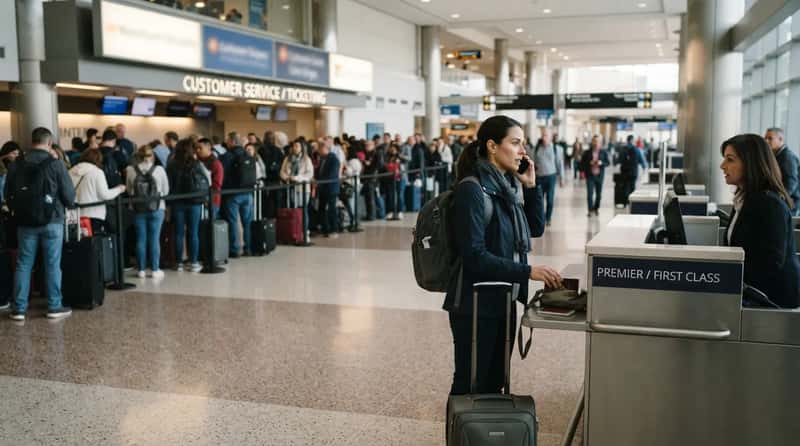
When a flight gets cancelled or a connection is clearly going to be missed, the biggest mistake is walking straight to the main customer service line with everyone else from your flight.
The travelers who get rebooked first are usually doing something different in the first five minutes, before that line even forms.
- Call or use the airline’s app chat to start rebooking the moment you sense trouble – do this from the plane’s wifi or the gate before you even reach the terminal, since phone agents can often see the same availability as the desk.
- While that call is in progress, walk toward a smaller, less obvious counter – an international transfer desk, a business or first-class check-in line, or a gate agent’s podium – and ask politely if they can help, since these lines are almost always shorter than the main service desk.
- If you booked separate tickets rather than one connecting itinerary, check whether you added a self-transfer protection product at booking (offered by sites like Kiwi.com); it’s the only thing that guarantees rebooking help if the airlines involved won’t cooperate with each other.
- Screenshot every new confirmation number the instant you get one – a rebooking is only real once it shows a new record locator, not just a verbal promise from an agent.
Most travelers only learn this after standing in a two-hour line once. The ones who already know it are usually rebooked and walking to their new gate before that line has even moved.