A cruise looks like the easiest vacation on earth: unpack once, eat well, and let somebody else do the driving. For a first-timer over 60, it can be exactly that. But the mistakes below are the ones that quietly turn a dream week into a story people tell with a wince.
Some cost a missed dose, a sore hip, or a ruined port day. One can leave a family with a bill in the tens of thousands of dollars, or far more. And it has nothing to do with the buffet. Stick around, because the number-one slip-up is the one almost everybody makes with total confidence.
#15 – The Prescriptions Packed in a Suitcase That Arrives Hours Late

The most important thing you bring is often in the wrong bag. Checked luggage is usually delivered to your cabin after you board, and sometimes not until evening. If your daily medication is inside, you’re stuck watching the hallway for a suitcase. A missed dose on day one is a very avoidable way to start a vacation.
Keep every medication in your carry-on, in the original pharmacy bottles. Bring a printed list of names and doses, and pack a few spare days’ worth. Weather can change a port call, and a delayed flight home can stretch a one-week trip into a longer one.
That one is easy to fix. The next mistake gets locked in months before you board…
#14 – The Two-Week Voyage Booked Before Ever Setting Foot on a Ship

Some first-timers fall for a long itinerary because the per-night price looks like a steal. But a ship is a very particular kind of vacation, and you can’t know how you’ll feel about it until you’ve lived on one. You can’t hop off in the middle of the ocean if it turns out you hate it. Long sailings also tend to include plenty of sea days, with nothing outside the window but water.
Plenty of veteran cruisers say they jumped straight into a long trip and loved it. Many travel advisors argue the opposite for newcomers. A short sailing of a few nights tells you whether you like the crowds, the schedule, and the motion. Then you can book the big one with confidence instead of crossed fingers.
Quick Compare
- Short first trip: low risk, quick answers, and an easy exit if the ship isn’t for you
- Long first trip: bigger savings per night, but no escape hatch and more sea days
Even a smart trip length can go wrong once you pick your room, and that mistake follows you every single day…
#13 – The “Bargain” Cabin Sitting Right Above the Nightclub

Where your cabin sits matters more than which category you book. A cheap room at the far end of a hallway means a long walk to the elevator, over and over, all day. A room near the elevators or under the pool deck can mean noise at hours you never planned on. Most first-timers never look at the deck plan before they pay.
Check what’s directly above and below your room. A cabin next to a lounge or galley can turn a quiet week into a loud one. The balcony question splits cruisers, too. Some call it essential, while others say first-timers overpay for a view they barely use.
Now picture the room is perfect. Then the ship drops anchor, and the real surprise begins…
#12 – The Port Day That Turned Out to Be a Boat Ride and a Cobblestone Hill

Not every port is a flat stroll from the gangway. At some stops the ship anchors offshore, and small boats called tenders carry passengers to land. That means stepping from a platform onto a moving boat. On some ships, tender rules can limit certain mobility devices, so it pays to ask your cruise line before you book.
Then there’s the ground itself. Old European harbors and island towns are famous for uneven stone streets and steep lanes. Check your itinerary for tender ports before you commit. Pick shore excursions by the activity level the cruise line lists, not by how gorgeous the photo looks.
Meanwhile, another mistake is already working against you, before you feel the first wave…
#11 – The Seasickness Remedy Taken After the Nausea Starts

Modern ships have stabilizers, but they don’t make the ocean disappear. Rough stretches still happen, and some people feel it even in calm water. Most motion-sickness medicines work better when taken before symptoms start, not after. Waiting until you’re green is the classic error.
Talk to your doctor before you sail. Prescription options like the scopolamine patch have to go on ahead of time. Older adults can react differently to some of these drugs, with side effects like drowsiness or confusion. That’s exactly why a pre-trip conversation beats a panic purchase at the ship’s gift shop.
But the real health surprise comes from something almost every passenger does at the buffet door…
#10 – The Hand Sanitizer Habit That Doesn’t Stop the Cruise Ship Bug

Everyone has seen the dispensers at the dining room entrance. Many passengers treat a quick squirt as full protection. The CDC says washing with soap and water is the better defense against norovirus, the stomach bug cruises are famous for. Sanitizer is a backup, not a replacement.
The CDC’s Vessel Sanitation Program tracks outbreaks on ships that sail to U.S. ports. It counts an outbreak when 3 percent or more of passengers or crew report stomach illness. Wash for at least 20 seconds before eating and after the restroom. Skip the shared serving spoons when you can, and let the crew serve you.
Next up is a mistake that looks harmless but quietly reshapes your whole evening…
#9 – The Dinner Plan Made at 6 p.m. Instead of Weeks Earlier

Many first-timers assume they can sort out dinner once they’re aboard. Then they find the popular specialty restaurants and the best show times already full. On many cruise lines, reservations open before you even sail, and the best slots go early. You end up eating at an hour you’d never choose.
Check how your line handles dining. Some offer set seatings, others flexible dining. If you’re an early riser, an assigned late seating can wreck your schedule. Extra-fee restaurants aren’t always better than the included dining room, so pick one or two special nights rather than paying for every meal.
Worth Knowing
- Booking windows for dinners and shows vary by cruise line, so check yours before you sail
- Set seatings give you the same table and time every night, while flexible dining lets you choose
- Early risers may prefer an early seating over a late one
- One or two specialty nights usually beat paying extra for every dinner
Still, that’s mild next to what can happen when you wander off on your own in port…
#8 – The Dockside Tour Guide Who Wasn’t Going to Wait for the Ship

Step off the ship and you’ll meet friendly operators offering a cheaper tour. Independent tours can be great, and they often cost less. Here’s the catch: if you’re late on your own, the ship is not obliged to wait. If it leaves without you, catching up at the next port is your job and your bill.
Ship-organized excursions work differently because the cruise line coordinates with the tour operator. That tie to the ship’s schedule is a big part of what you’re paying for.
- Ship excursion: pricier, but timing is linked to the ship
- Independent tour: often cheaper, but the return is your responsibility
And then there’s the final bill, which holds a surprise for nearly everyone…
#7 – The “All-Inclusive” Fare That Wasn’t All Inclusive

Most people believe the ticket price covers the week. In reality, the base fare usually covers your cabin, main dining, and basic entertainment. Service charges, drinks, Wi-Fi, specialty dining, spa treatments, and excursions are commonly extra. Daily service charges are typically billed per person for every night of the trip. Check your cruise line’s current rates before you pay.
Most ships run on a cashless system charged to your cabin account. Review it on the app or the cabin TV a few times during the week, not just on the last night. If something looks wrong, it’s far easier to fix while you’re still on board.
The next item sounds trivial, but it ruins more evenings than you’d think…
#6 – The Suitcase Built for the Brochure, Not the Ship

Brochure photos show sunshine and linen. The real ship has air conditioning that can feel arctic, wet decks, and a long walk to dinner. Pack layers, and shoes with real grip. Many cruise lines prohibit extension cords and surge-protected power strips, so check the rules before you stuff one in your bag.
Dress codes are also looser than many first-timers expect. Some ships still hold an “elegant” evening, but plenty of cruisers skip the full formal look. Read your line’s guidance and pack one nicer outfit for the occasion. Then leave the rest of the heavy wardrobe at home.
At a Glance
- Layers for chilly dining rooms and breezy decks
- Grippy, comfortable shoes for wet surfaces and long hallways
- One nicer outfit for an elegant night
- No extension cords or surge-protected strips unless your line allows them
But the most gut-sinking paperwork mistake is still to come…
#5 – The Passport Left in the Drawer Because “A Birth Certificate Is Enough”

On some closed-loop cruises, which start and end at the same U.S. port, American citizens can often sail with a birth certificate and a government photo ID. That’s the rule that leads people to leave the passport at home. Here’s the problem: if something goes wrong in a foreign port, you may need a passport to fly home.
Illness, a missed ship, or a family emergency can all send you to an airport in another country. A passport makes that situation far less painful. Make sure your name matches across your tickets and documents. Then confirm the exact requirements for your itinerary with the cruise line.
Next, a healthcare mistake that catches even the most careful planners…
#4 – The Ship’s Medical Center Treated Like a Hospital
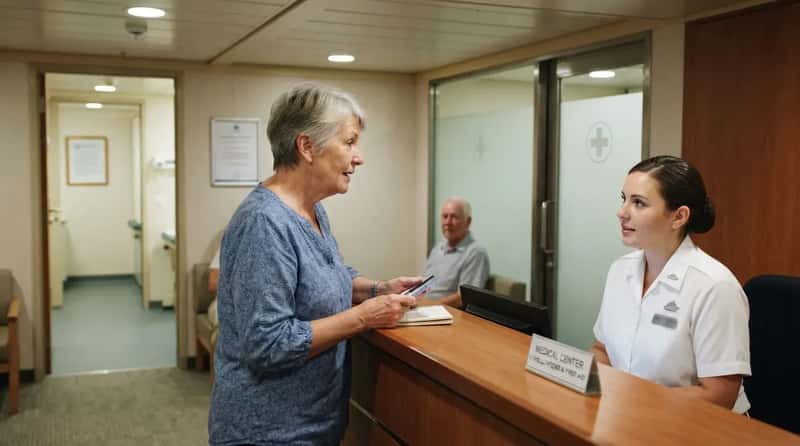
Cruise ships have medical centers, and they’re a real help for minor problems. They typically handle basics like first aid, prescriptions, and consultations. But they are not a full hospital. Serious cases may need to be treated ashore or evacuated.
Then comes the bill. Onboard treatment is typically paid out of pocket, since most domestic health plans, including Medicare, aren’t accepted outside the U.S. Many first-timers only learn this at the infirmary desk. Ask your insurer exactly what’s covered before you sail, not while you’re on the gurney.
Fast Facts
- Ship clinics are built for everyday issues, not major surgery
- Serious emergencies may mean treatment ashore or evacuation
- Onboard care is typically paid out of pocket
- Ask your insurer in writing what it covers at sea
And the next number is the one that makes experts wince…
#3 – The Evacuation Policy That Covers a Fraction of the Real Cost

Having travel insurance isn’t the same as having enough. The CDC says medical evacuations can cost upward of $250,000. Yet 35% of seniors buy less than $250,000 in medical evacuation coverage, and 32% buy less than $100,000 in emergency medical coverage.
Even a cruise line’s own bundled policy can be thin. One line’s standard policy, as reported in early 2026, included just $25,000 in emergency medical and $50,000 in evacuation coverage. That gap could leave a family holding a bill in the tens of thousands. Read the limits on the policy, not the headline.
But the deadline on the next mistake can close before you’ve even started packing…
#2 – The Insurance Window That Slams Shut Two Weeks After the Deposit

Timing matters as much as the policy. To get options like pre-existing condition waivers or Cancel For Any Reason coverage, travelers typically need to buy within 14 to 21 days of their first trip deposit. Wait longer, and those benefits may vanish.
Plenty of people wait. Squaremouth reports that 55% of senior cruisers miss out on key benefits because they buy too late. The deposit date, not the sailing date, usually starts the clock. Exact deadlines vary by insurer, so read the terms the day you pay.
And the number-one mistake is the assumption almost everyone makes without a second thought…
#1 – The Medicare Card That Doesn’t Work at Sea

This is the big one. A reported 76% of senior cruisers miss out on travel insurance protections by assuming Medicare extends abroad. It feels logical, since you’re an American on an American-booked vacation. But the ship sails into international waters, and the rules change.
Medicare covers care at sea only in narrow cases, such as when the ship is in U.S. territorial waters or an emergency happens within about six hours of a U.S. port. Neither Medicare nor most health plans cover medical evacuation, which is often the largest cost. The single most common assumption on a senior’s first cruise turns out to be wrong.
Look back over the list and a pattern shows up. These mistakes are rarely about the ship itself. They’re about assumptions: that meds can ride in the suitcase, that every port is flat, that the infirmary is a hospital.
The costliest one is financial. Medicare generally doesn’t follow you to sea, evacuation can top $250,000, and the window for the best protection can close within two to three weeks of your deposit. Get the paperwork, the cabin, and the pills sorted, and the rest of the trip is genuinely relaxing. Which of these would have caught you off guard?