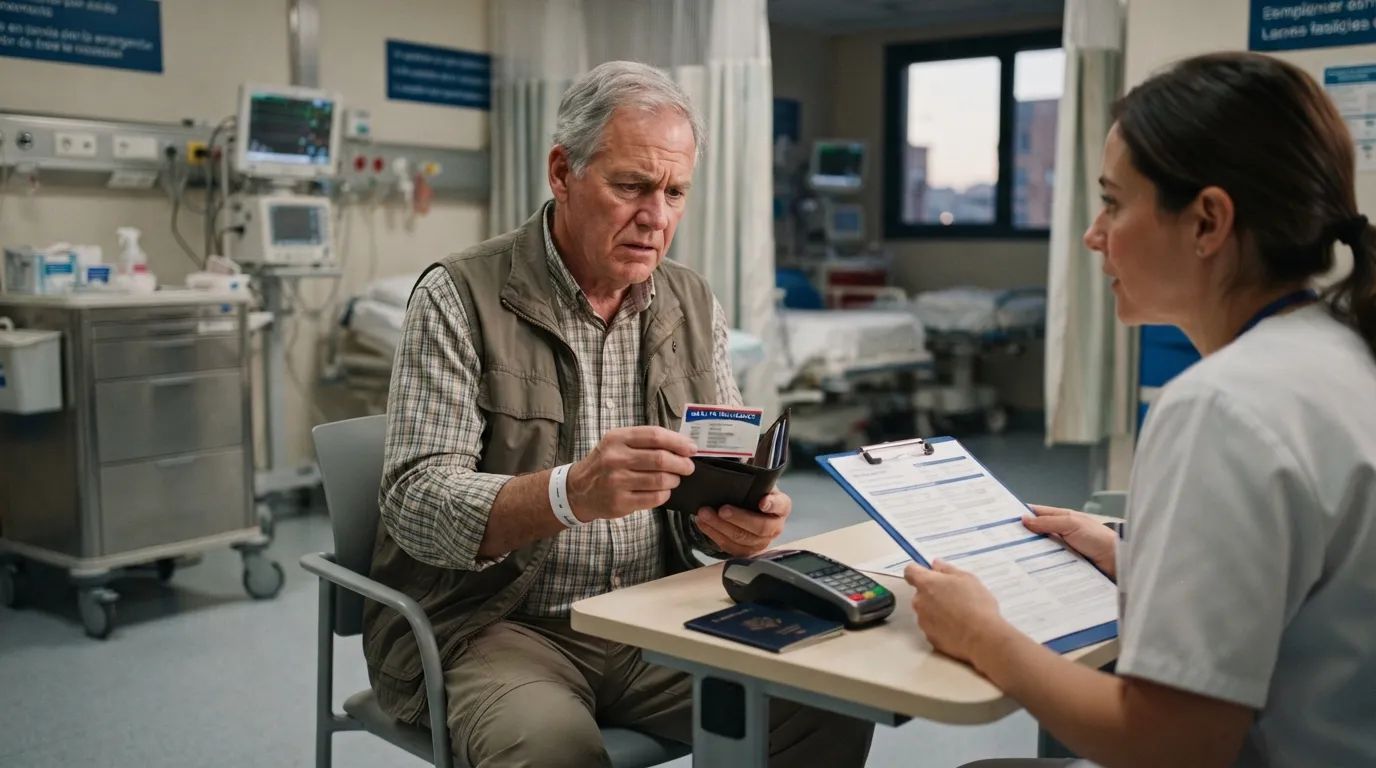
You’ve flown plenty. You’ve raised families, run households, and maybe crossed an ocean once or twice, so a trip abroad should feel like riding a bike. Then you get to the airport counter and learn that the rules were quietly rewritten while your passport sat in a drawer.
New border scans, online permits, and lookalike websites are catching experienced travelers off guard. The biggest mistakes rarely come from age or stamina. They come from assumptions that used to be true. And one of them involves a card already in your wallet that may stop working the moment you land.
#15 – The Passport That Looks Fine but Quietly Isn’t
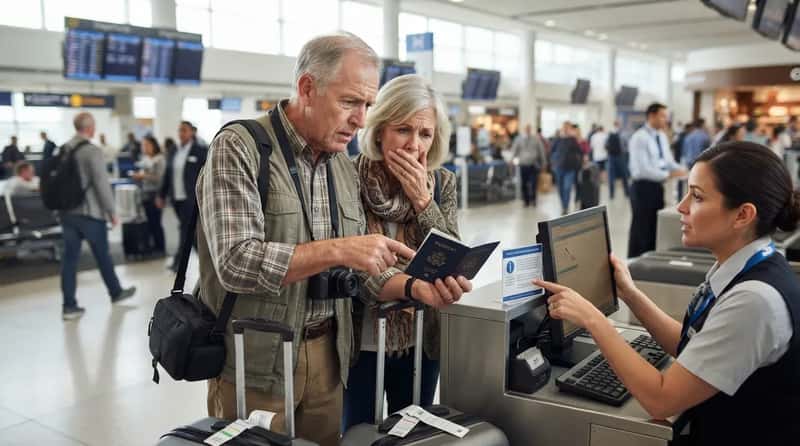
A passport can sit in a drawer for years and still wreck a trip. Many countries want it valid for months beyond your return date. Schengen rules generally ask for at least three months past your planned departure, on a passport issued within the last ten years.
That means a book with “a few months left” can fail the test. An airline can refuse to board you before you ever reach the border. Routine renewals have recently run about four to six weeks, not counting mailing time, and photo problems are a common reason applications get held up.
And that’s the easy mistake. The next one starts with a Google search…
#14 – The Official-Looking Websites That Aren’t

The fastest way to waste money before you leave home is a lookalike website. Americans heading to the United Kingdom now need an approved Electronic Travel Authorisation before boarding a flight, ferry, or Eurostar. The fee is £20, and it’s valid for two years.
The official route is the gov.uk site or the UK ETA app. Third-party sites reportedly charge $75 to $100 or more for the same thing, and some look remarkably convincing.
Europe adds its own twist. The EU’s planned ETIAS travel authorization has been delayed more than once, so check the official EU site for its current status before paying anyone. Any site offering to process an application early is a red flag. Panic sells, and these sites know it.
Quick Compare
- Official UK ETA: £20, valid for two years, through gov.uk or the UK ETA app.
- Lookalike sites: reportedly $75 to $100 or more for the same permission.
- EU ETIAS: check the official EU site for status, and ignore anyone offering an early application.
But the next change doesn’t happen online. It happens at the border booth…
#13 – The Border Scan Nobody Warned You About
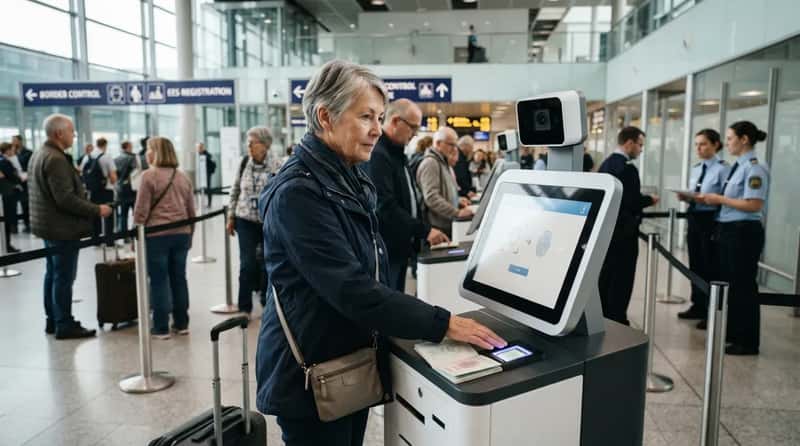
Your passport may not get a stamp in Europe anymore, and that’s no relief. The EU’s Entry/Exit System became fully operational at external borders on April 10, 2026. It swaps stamps for digital records and collects a facial image and fingerprints from many non-EU visitors.
The catch is time. Border lines vary by country and airport, and first-time registration can slow things down at busy crossings. If you’ve booked a tight connection through a European hub, that scan can eat your layover. On a short connection, the line, not the flight, is now the biggest risk.
Once you’re through, the next problem is the one you’re dragging behind you…
#12 – The Giant Suitcase That Becomes Everyone’s Problem

That roomy checked bag felt like freedom at home. Overseas, it meets cobblestones, narrow stairways, and train platforms with no ramp. Many older European buildings have steep steps and elevators that barely fit one person.
The bag isn’t the real problem. The route just wasn’t built for wheels.
Plenty of seasoned travelers call the “just in case” suitcase the biggest packing mistake after 60. Their logic is that every extra pound becomes a favor you have to ask a stranger for. If you can’t lift it overhead alone, it’s probably too big.
Lost luggage is the other risk, so pack a change of clothes and essentials in your carry-on. Still, the next mistake costs far more than a bag…
#11 – The Phone Plan That Costs More Than the Hotel

Skipping your phone abroad sounds relaxing until you’re lost at midnight. Boarding passes, translation apps, hotel messages, and ride apps all depend on a connection. Pay-as-you-go roaming can add up fast, and carrier day passes pile up over a two-week trip.
Many recent phones support eSIMs, which let you add a local data plan before you even take off. Ask your carrier about its international options too, and compare prices.
Download offline maps for each city before you leave. An offline map still works when the signal dies in a train tunnel or an old-town alley. Some people insist the real way to travel is to unplug and wing it. That’s a fine idea until your driver can’t find you.
Speaking of surprise costs, the next one hides in plain sight at the checkout…
#10 – The Card Machine Question That Costs You Quietly

At a shop or restaurant abroad, the card terminal may ask whether you’d like to pay in dollars or the local currency. It feels helpful. It’s usually the worse deal.
This is called dynamic currency conversion, and the exchange rate behind it tends to favor the merchant’s processor. Always choose the local currency.
Money plans need a backup too. Tell your bank you’re traveling so a foreign charge doesn’t freeze your only card, and ask whether your card has a PIN, since some terminals abroad expect one. Carry two cards stored in separate places, so one lost wallet doesn’t strand you. Keep a little local cash for taxis and tips.
Then there’s what happens when the schedule gets too ambitious…
#9 – The “Six Cities in Eight Days” Itinerary

After years of waiting, it’s tempting to see everything at once. Plenty of travel pros call this bucket-list sprint the biggest waste of a long-awaited trip. You end up spending more time packing, checking out, and waiting in stations than actually seeing anything.
A single train transfer can swallow most of a day. Add jet lag, which can leave you foggy for a few days after a big time change, and a packed schedule gives you no room to recover.
At a Glance
- Six cities in eight days means five moves, with barely a day per stop.
- Checkout, station time, the ride, and check-in can eat most of a travel day.
- Jet lag can linger for days, right when your schedule is busiest.
- Three bases in eight days leaves room for the unplanned moments.
One extra night in a single city often beats an extra city. Build in a slow day for every few busy ones. A late breakfast and a long café afternoon are often what travelers remember most.
Next up is a mistake that can get you stopped at customs…
#8 – The Pill Bottle That Raises Eyebrows
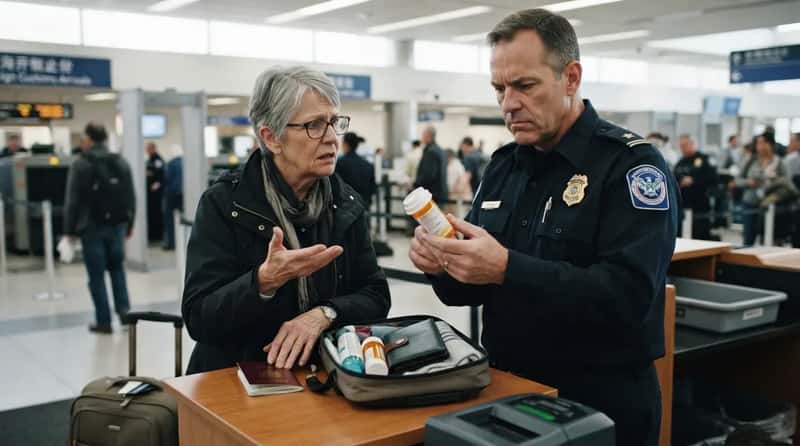
Your daily prescription could be restricted in the country you’re flying into. Rules on medication differ widely, and what’s routine at home may need paperwork elsewhere. Carry medications in your carry-on, in original labeled containers.
Pack extra days’ worth in case of delays. Never trust a checked bag with the one thing you can’t replace.
Bring a doctor’s note or printed list that includes generic drug names, since brand names change overseas. Check the destination country’s embassy website well before you go. A harmless-looking cold remedy from your bathroom cabinet can be regulated abroad. It’s a boring step, and it’s the one that keeps small problems small.
The next risk starts at 35,000 feet…
#7 – The Long-Haul “Sit Still and Endure” Plan

That nine-hour flight isn’t just a test of patience. The CDC notes that blood clots in the legs are a risk on long trips, especially those of four hours or more. Sitting still for hours is the main culprit, and the risk rises with age and certain health conditions.
The fix is simple and slightly embarrassing. Walk the aisle every hour or two, and flex your ankles and calves in your seat. Drink water, and ask your doctor whether compression socks make sense for you.
Moving in the aisle is a medical recommendation, not bad manners. Take the aisle seat if you can. The next mistake happens before you ever board…
#6 – The Doctor Visit You Skipped

A pre-trip checkup feels like overkill. It’s actually one of the cheapest forms of insurance on this list. The CDC recommends seeing a doctor or travel clinic ideally four to six weeks before you go.
Some vaccines need more than one dose spread over weeks. Waiting until the week before can make that impossible.
Use the visit to check on routine shots like flu, COVID-19, and tetanus boosters, and ask about destination-specific health risks. Bring a short summary of your conditions and medications in case a foreign doctor needs it. Many travelers walk into a foreign clinic without a single page of their own medical history.
Next up is a hotel problem few people think to check…
#5 – The Charming Hotel With 62 Stairs

That photogenic old hotel might not have an elevator. Or it may have one that fits two people and no luggage. Booking sites don’t always flag stairs.
Even “ground floor” can mislead you. In many countries, the first floor sits one flight above the street.
Email the property before booking. Ask about stairs, elevators, step-free access, and whether the shower has a high tub edge. One short email can save you from hauling your bag up several flights. Check the walk from the station too.
Next comes a mistake that can empty your wallet in seconds…
#4 – The Tourist-Trap Moment Thieves Wait For
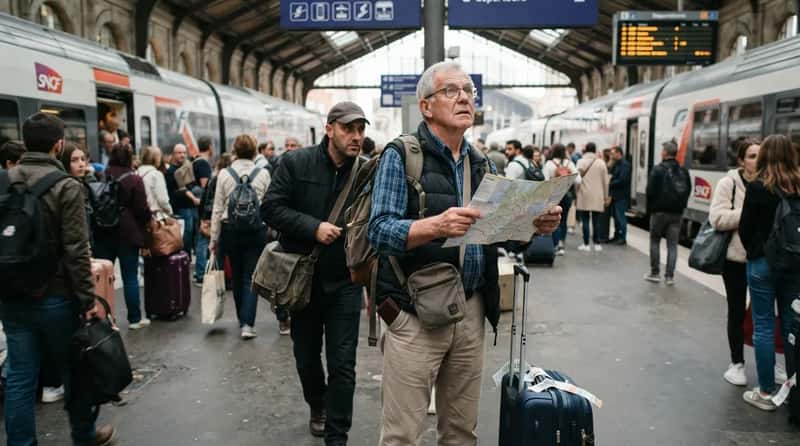
Pickpockets don’t pick on age. They pick on distraction. Crowded metros, busy landmarks, and packed train stations are classic spots, especially in big tourist cities.
Travel fatigue makes it worse. A tired traveler juggling a map, a bag, and a ticket machine is the easiest target.
Keep your wallet and phone in front pockets or a zipped bag worn across the body, and split your cash and cards between two spots. Check the State Department’s travel advisory for your destination before you book, since countries are rated on four levels. The riskiest minute is often the one right after you step off a train. That’s when you’re looking up, not down.
But the free tool at #3 is the one hardly anyone uses…
#3 – The Free Safety Net Almost Nobody Uses

The State Department runs a free program called the Smart Traveler Enrollment Program, or STEP. You register your trip online and get safety alerts for your destination. It also helps the embassy reach you in an emergency, like a natural disaster or civil unrest.
It takes a few minutes and costs nothing.
Pair it with a simple home base. Email your itinerary, hotel names, and flight numbers to a family member, and keep digital copies of your passport and insurance card. If your bag is stolen, a photo of your passport can make a replacement much faster. Most people never do any of this.
The next two are the costly ones…
#2 – The Insurance Policy Bought Too Late

Travel insurance isn’t one product. Medical coverage, trip cancellation, and emergency evacuation are separate pieces, and policies mix them differently.
Timing matters too. Many policies offer a pre-existing condition waiver only if you buy within a short window after your first trip payment. Miss that window, and the coverage you most wanted may not apply.
That’s why a policy is best bought when you book, not when you pack. Read the exclusions and ask exactly what counts as pre-existing. A trip you can’t cancel, plus a policy that won’t cover your condition, is a double loss. “Cancel for any reason” upgrades cost more and typically refund only part of your expenses.
Still, nothing tops the assumption at #1…
#1 – The Medicare Card That Stops Working at the Border
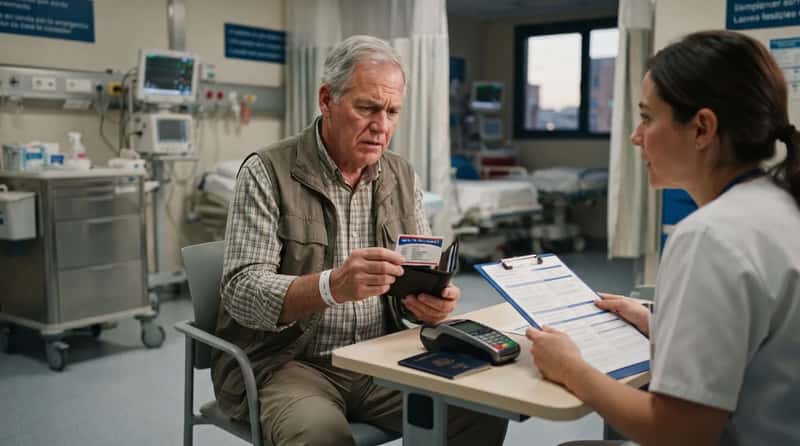
This is the assumption that costs the most. Original Medicare generally doesn’t cover health care outside the United States, with only narrow exceptions. Many Medicare Advantage plans don’t either, though some offer limited emergency coverage.
Many travelers only find this out while sitting in a foreign emergency room.
Some Medigap plans include foreign travel emergency coverage, but with caps and conditions. In many countries you pay the hospital first and file for reimbursement later. A medical evacuation flight can cost tens of thousands of dollars.
Worth Knowing
- Medigap Plans C, D, F, G, M, and N include foreign travel emergency coverage.
- It typically pays 80% of covered emergency care after a $250 deductible.
- There’s a $50,000 lifetime limit, and the emergency generally has to begin during the first 60 days of a trip.
- Many Medicare Advantage plans offer little or nothing abroad, so ask before you book.
Call your plan before you go and ask exactly what’s covered overseas, then match it with travel medical insurance. It’s the dullest phone call of your trip, and the one you’ll never regret.
The biggest surprises on a first trip abroad in years aren’t about age. They’re about a world that kept moving while you were home. Passports, permits, border scans, and even Medicare all work a little differently than you remember.
The good news is that most of these fixes take minutes, not money. Make the boring calls now, and the only surprise left is how good it feels to be back out there.