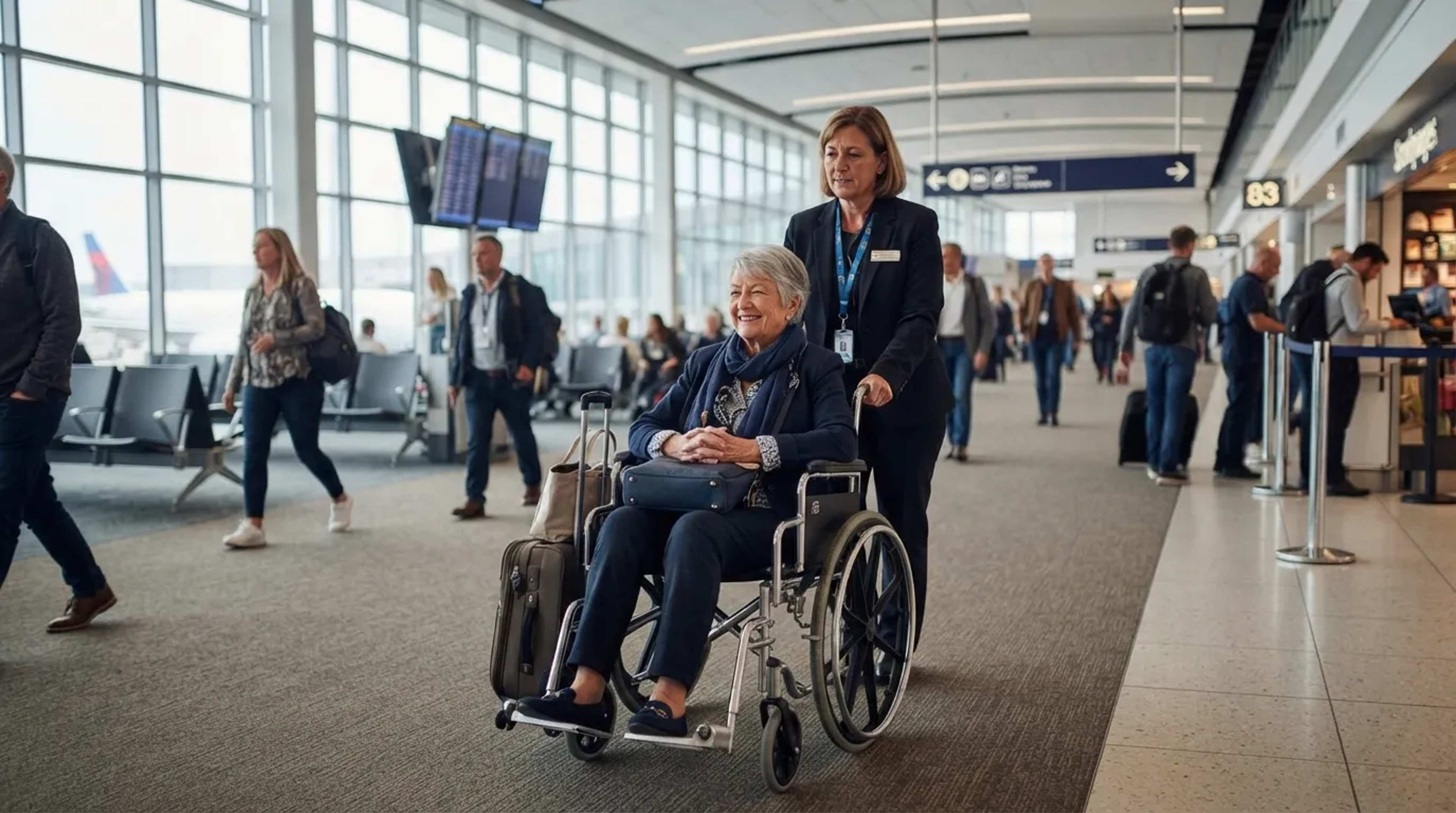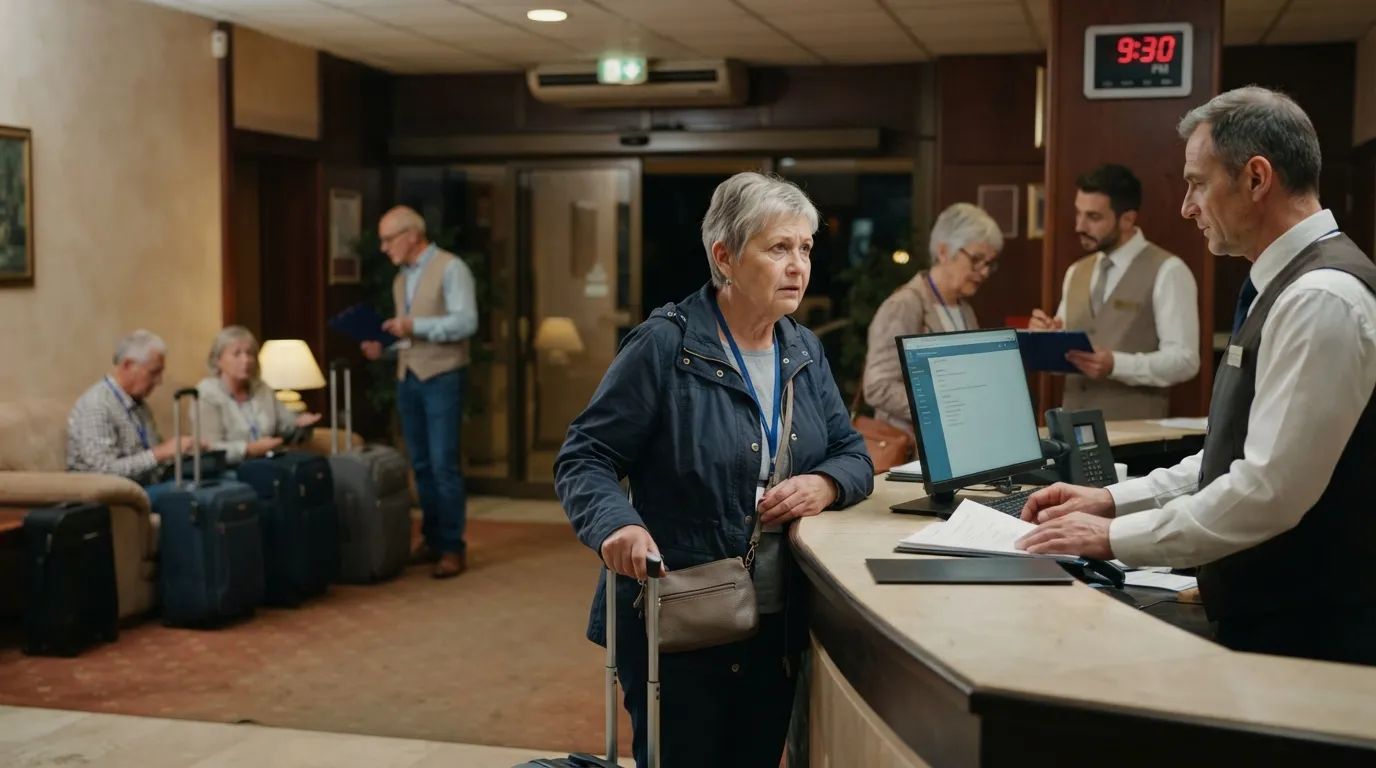
Most retirees assume the hard part of a group tour is the walking. Ask the guides, though, and they’ll tell you the real trouble starts with something much smaller. It’s a jacket left on a bus seat, a late return from free time, or an insurance card that goes quiet the moment you cross a border.
Some of these slips only cause awkward silences on the coach. Others quietly cost thousands of dollars. And the one guides rank at the very top has nothing to do with the bus, the hotel or the pace.
#15 – The Sightseeing-Marathon First Day That Guides Dread

Day one is where plenty of tours quietly go wrong. You land after a long flight, your body thinks it’s 3 a.m., and the itinerary promises three hours of walking before dinner. Some travelers grumble that an easy first day wastes money they paid for.
Experienced guides know better. Jet lag, a crowd of new faces and a day of airports stack up fast, and the traveler who pushes through often fades by day two, right when the best stops begin. Guides would rather see you at dinner rested than at a landmark half asleep.
But that’s nothing compared to what guides say about #14, and it involves a ticking clock.
#14 – The “Quick” Free-Time Window That Strands a Whole Bus
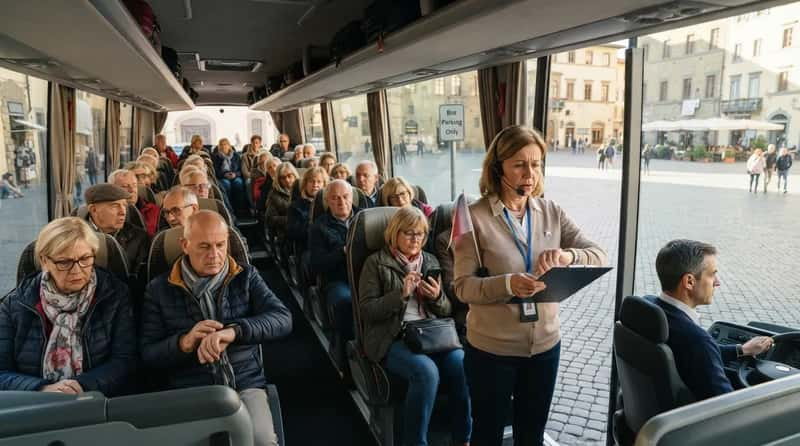
One late traveler can reshuffle an entire afternoon. Free time feels like freedom, but poor time management leads to missed departures and a lot of stress. Guides also say the gap between “be there” and “be ready to leave” confuses first-time group travelers constantly.
The ripple effect is real. Group tours run on tight, pre-arranged schedules with hotels, restaurants and attractions, so one person’s delay can hold up forty others. The result is a shortened stop, a rushed lunch or a cold dinner reservation. Nobody says a word on the bus, but everybody notices.
- Set a phone alarm 15 minutes before the meeting time.
- Photograph the bus and the meeting spot before you wander off.
Next up is a cold war that starts with a single jacket.
#13 – The Jacket on the Bus Seat That Starts a Cold War
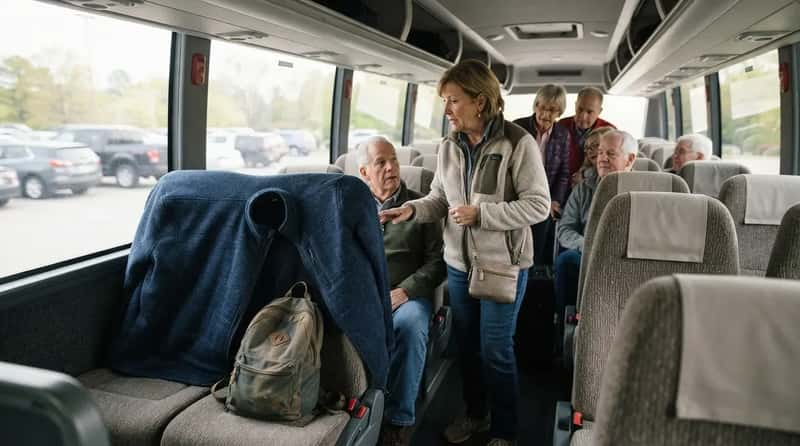
The first-day seating fight is real, and guides have watched it play out hundreds of times. Many coach tours rotate seats on purpose so everyone gets a turn near the front. Yet some travelers drape a jacket over a seat and treat it as theirs for the whole trip.
Guides say smoother travelers ask about the rotation policy first, rather than after someone politely asks them to move on day three. The window-seat scramble is a classic day-one flashpoint. The unpopular truth is that a “claimed” seat on a rotating coach isn’t a right. It’s just a jacket.
But the next mistake is about money, and guides see it play out on the very last night.
#12 – Tipping the Wrong Person While the Right One Gets Nothing

Tipping confusion is one of the quietest sources of guide frustration. Some travelers hand their envelope to a local step-on guide who showed up for one afternoon. Meanwhile the tour director who’s been with the group since departure ends up with nothing.
Customs differ by company and country, and some tours pool tips while others don’t. Many operators list suggested amounts in their pre-trip paperwork, so it’s worth reading. A group that tries to work it out together on the final night usually gets it wrong. Sorting it out on day one is easier on everyone.
Next comes a mistake that happens at the dinner table, and the kitchen pays for it.
#11 – The Dietary Note That Reaches the Kitchen Too Late

Restaurants on group itineraries aren’t cooking to order. They often prep set menus in advance, so early notice gives the kitchen time to adjust. Mention an allergy after the plates are out, and you get a rushed substitute, or a cold plate while everyone else finishes dessert.
Mealtimes matter more than people admit. Many older travelers take medications with meals, so some tour operators ask restaurants for earlier seatings, which helps with blood sugar and sleep. Guides can only fix what they know about. Mention it at booking, then remind the tour director again before the first dinner.
Worth Knowing
- Tell the operator about allergies and dietary needs at booking, not at the table.
- Repeat it to the tour director before the first group dinner.
- Ask whether an allergy card in the local language is available.
- If meals are tied to medication timing, say so early.
But the next mistake looks tiny, and guides say it causes real panic.
#10 – The Dead Phone That Turns Into a “Where Is He?” Alert

A dead battery is a bigger problem than it sounds. By lunchtime on day one, it’s one of the most common and most avoidable frustrations guides hear about. On a tour, your phone is also your camera, your translator and your lifeline.
Group tours depend on people being reachable. If you’re running late and nobody can call you, the whole coach waits and wonders. A dead phone is also the first thing that fails when you can’t find the meeting spot. A small battery pack and a charging habit at the hotel each night prevent most of it.
The next entry splits guides and travelers, and it’s all about speed.
#9 – Pretending the Pace Is “Fine” While the Whole Group Slows Down Anyway

Nobody wants to be the slow one. But guides say hiding it backfires. Some experienced guides argue that a “see everything” itinerary is the biggest mistake in senior travel, and that fewer stops with more time make better memories. It’s a controversial take, and plenty of travelers disagree.
The math is hard to argue with. In a mixed-age group, the same route can take far longer than the brochure suggests, which is why good guides plan around realistic group speed rather than their own. If you’re struggling and say nothing, the group slows down anyway. It just happens with more frustration and less planning.
But the next mistake is about the ground under your feet, and it’s the one guides watch most closely.
#8 – The Cobblestones Nobody Warned You About
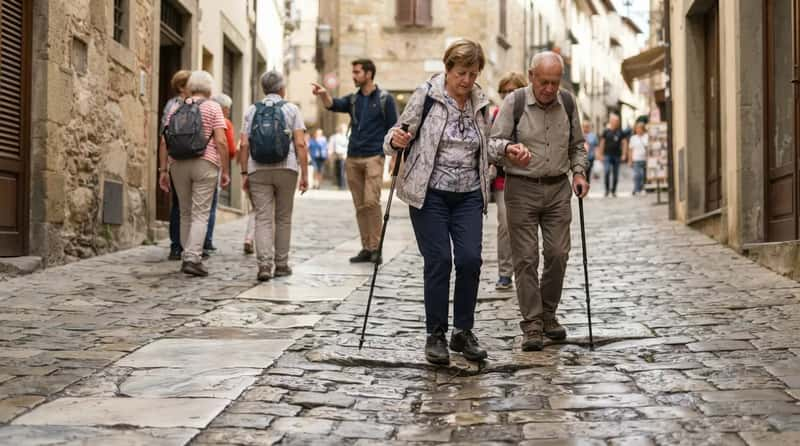
Old towns are built for looks, not for balance. Worn stone, slick marble, steep steps and ship gangways all tend to show up on the same itinerary. Guides see every one of those surfaces as a risk.
The common mistake is footwear. Shoes bought the week before the trip, stiff soles or flimsy sandals leave you with less grip right when you need more. One bad step can end a trip for the traveler and rearrange the day for everyone else. Shoes broken in at home for a few weeks are a cheap fix.
The next mistake doesn’t involve walking at all. It’s about the opposite.
#7 – Sitting Still for Hours on Coaches and Planes

Long travel days hide a risk most people ignore. Older adults face a higher-than-average risk of deep-vein thrombosis, which happens when blood clots form in the veins, usually in the legs. Sitting still for hours on a plane, train or coach can contribute to it, and the extra risk can linger for weeks after a long trip.
The fixes are boring but effective. Get up and walk the aisle about once an hour when you can, and ask the driver about rest stops on a coach. If you’re stuck in your seat, raise and lower your toes and heels every 20 minutes or so.
- Stand up and walk at every rest stop, even if you don’t need the restroom.
- Talk to your doctor before the trip if you already have clot risk.
But what’s in your carry-on may matter even more than how you sit.
#6 – Medication in the Wrong Bag, on the Wrong Clock

Pills are the one thing a guide can’t replace. Many travelers pack medications in checked luggage that may not reach the hotel room for hours, or at all. The safer habit is to keep every prescription in your carry-on, with a few extra days’ supply in case you get stuck somewhere.
Time zones add a second trap. If you take medications and cross several zones, ask your healthcare provider whether to stay on home-zone time or switch to local time. There’s a money catch too. Medicare doesn’t cover prescription drugs purchased abroad, so an overseas refill means paying full price.
Fast Facts
- Keep all prescriptions in your carry-on, never in checked luggage.
- Leave pills in their original labeled containers.
- Pack a few extra days’ supply in case of delays.
- Carry a list of generic drug names, since brand names can differ abroad.
- Ask your provider about dose timing across time zones before you leave.
The next mistake is made months earlier, and it’s about numbers.
#5 – Booking a Giant Group Without Asking How Big It Is
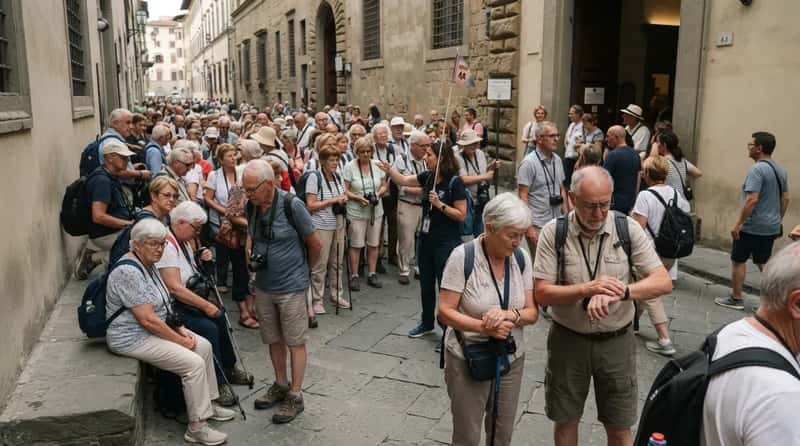
Group size changes the whole experience, and many travelers never ask. In a large group you’re often rushed and talked at rather than talked with, and it’s hard to connect with the guide or each other. Some travel writers go further and argue that very large, impersonal groups can signal a stretched-thin operation. That’s one opinion, but it’s worth checking before you pay.
Logistics are the quieter issue. A group of 30 people needs more time to gather, check attendance, use restrooms, settle meal arrangements and board vehicles. Every stop stretches. For travelers who tire easily, all that standing around can hurt more than the walking does.
Quick Compare
- Smaller group: faster boarding, easier headcounts, more one-on-one time with the guide.
- Larger group: longer waits at restrooms, meals and attractions, and fewer chances to ask for help.
- Ask before booking: the maximum group size and the typical daily walking pace.
But the next mistake is about one bad night, and it can sour a perfectly good trip.
#4 – Writing Off the Whole Tour Over One Underwhelming Hotel

First impressions on a tour can be misleading. Guides say judging an entire tour company by one disappointing arrival-night hotel is a common, and often unfair, first reaction. Arrival night is the worst time to judge anything. You’re tired, the room is unfamiliar and the flight is still in your legs.
Demanding a switch usually goes nowhere, since rooms are often pre-booked in a block. There’s a smarter move. Travelers can ask the tour manager for a room near the elevator or on a lower floor, if that’s what they need. A polite, specific request works better than a complaint.
Next comes a mistake guides see in the busiest places, and it can cost more than a bad room.
#3 – Relaxing in the Crowds Where Pickpockets Wait for Tour Groups
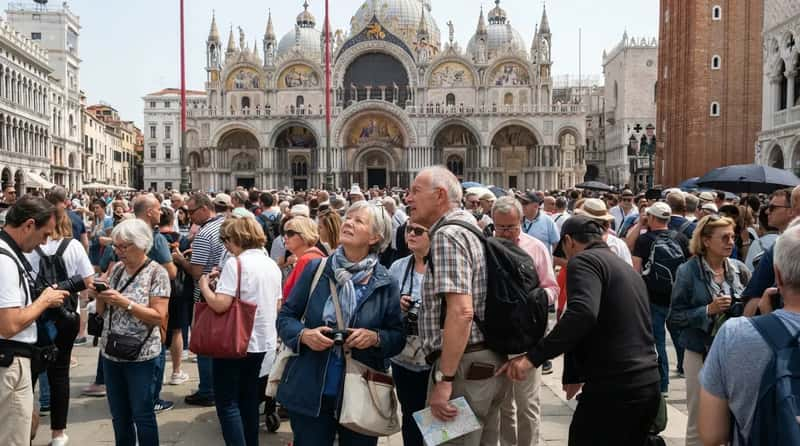
Thieves know where tour groups go. Guides say pickpockets target groups because tourists are distracted, jet-lagged and predictable. A guide giving a talk at a famous landmark is the perfect cover.
The mistake is relaxing. Wallets in back pockets, open totes on the shoulder and phones sitting on café tables all make the job easy. The fix is simple and a little dull. Carry one card and a little cash, and keep a zipped bag in front of you. Leave the passport in the hotel safe unless a stop requires it.
But the last two mistakes are the ones guides say they dread most, and both involve money.
#2 – Assuming Medicare Packs Its Bags Too

This one catches more travelers than any other. Medicare typically doesn’t cover health care when you travel outside the U.S. There are rare exceptions, but even then you may need to pay upfront and file the claim yourself. Most people discover this only after the hospital bill arrives.
Medicare Advantage isn’t a loophole. Most Medicare Advantage plans follow the same international rules as Original Medicare. Some Medigap plans do cover foreign travel emergencies, but eligibility, deductibles and benefit limits need careful review. Read your own plan before you pack.
And the biggest mistake of all is hiding inside the fix.
#1 – The Cheap Travel Policy That Covers Everything Except the Emergency

Buying “travel insurance” isn’t the same as buying medical coverage. Many basic policies focus on trip cancellation and baggage, with only limited medical benefits. A policy that refunds a canceled flight but barely pays a hospital isn’t the protection most people think they bought.
What should a good one include? Emergency treatment and hospitalization abroad, emergency medical evacuation, coverage for acute onset of pre-existing conditions, and repatriation of remains. Age can also raise the price. Travelers over 60 can often still buy coverage, but costs may run higher. Read the evacuation limit before you pay.
The biggest group tour mistakes aren’t dramatic. They’re a jacket on a seat, a late return, a phone at 5% and an assumption about Medicare. The costliest of all is a thin insurance policy nobody read closely.
Guides don’t want you to travel less. They want you to arrive rested, ask early and know exactly what your coverage will do when the day goes sideways.