By July, the cobblestone lanes you’ve seen on postcards are packed with tour groups, and hotel prices have climbed with them. In April and May, the same towns exhale. The lanes, canals, and castle walls feel like they belong to the people who showed up early.
Seventeen towns are ahead, from a whitewashed hilltop spiral in Puglia to a canal village with no roads through its center. The last one is the least expected of all, and it may change when you book your next trip.
#17 – Sitges, Spain: Mediterranean Warmth Without Barcelona Prices
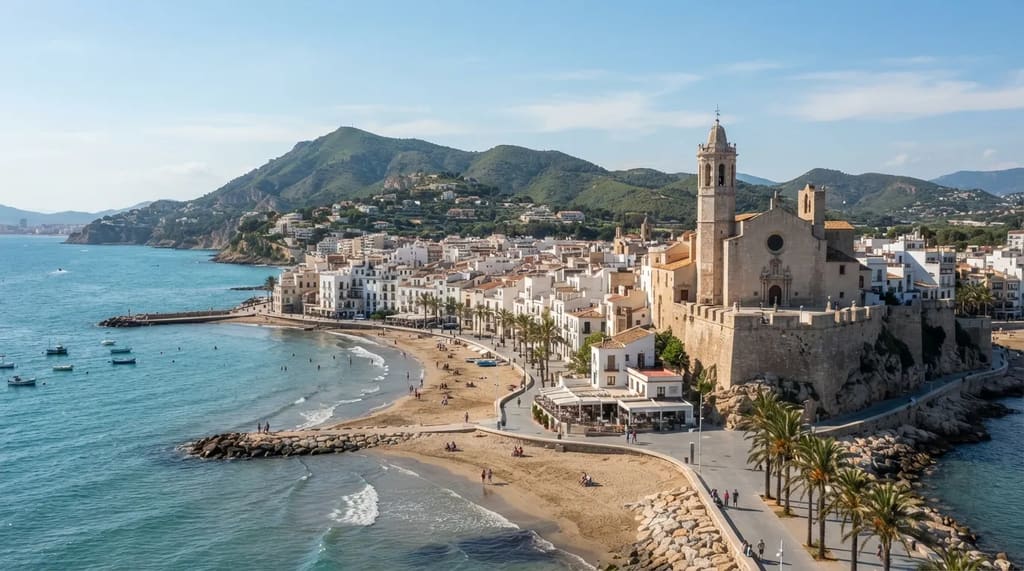
Barcelona gets the crowds. Sitges, a short train ride down the Catalan coast, gets the easy afternoons.
In spring, days are warm but not heavy, evenings stay cool, and terraces wake up. The Garraf hills behind town turn properly green.
Avoid Easter week itself and rooms get easier to find and easier on the wallet. The old town sits so close to the beach that you can walk from church to shoreline in about five minutes.
The walking trails in the Garraf hills open up in spring, once the winter mud has dried and before the heat makes midday hikes miserable.
#16 – Tallinn, Estonia: Medieval Towers Still Standing After 700 Years
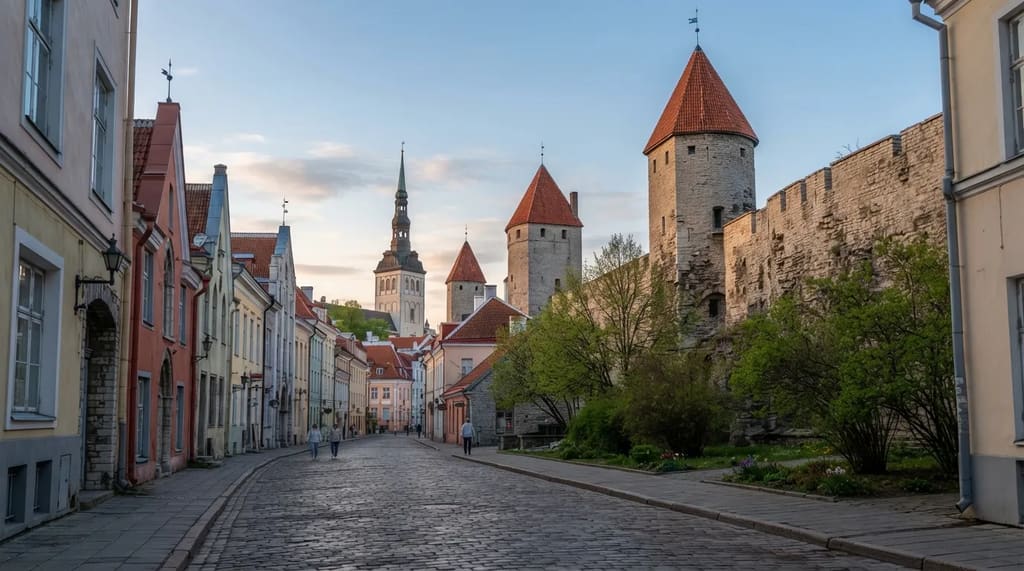
Estonia rarely makes the first-trip list for Americans, which is exactly the opening. Tallinn’s Old Town is one of the best-preserved medieval city centers in northern Europe, with limestone towers and Gothic guild halls that date back to the 14th century.
Spring here is light-jacket weather through May, but the northern latitude hands you long evening daylight. In April, the lanes between the Town Hall and Toompea Castle are almost empty of the summer crowds, and they feel a little quiet, a little echoing, and serious about their own history.
Pairing Tallinn with a Baltic cruise? Going in May rather than August makes every port stop calmer.
#15 – Ronda, Spain: A White Town Perched Above a Gorge
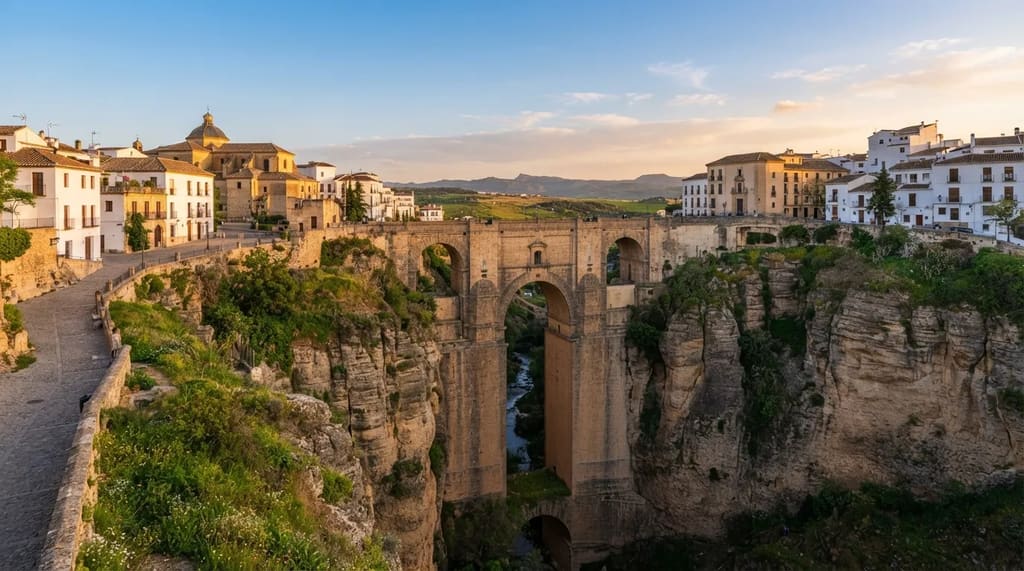
Ronda is split in two by a gorge called El Tajo, and an 18th-century stone bridge stitches the halves together. You’ve probably seen that bridge in photographs without knowing where it is.
The old town, La Ciudad, is a maze of cobblestone lanes, old churches, and small plazas where locals gather in the late afternoon. Day-trippers from the Costa del Sol crowd the streets at midday, but mornings and evenings stay quiet and golden.
Spring brings mild days in the high teens to low 20s Celsius, far better walking weather than a summer when the gorge bakes. Stay the night and you can have the bridge views almost to yourself at sunset.
Ronda is also considered the birthplace of modern bullfighting, and its 18th-century Real Maestranza bullring is one of the most historic in Spain. You don’t have to attend a fight to find the architecture worth your time.
#14 – Locorotondo, Puglia, Italy: A White Circle in a Valley of Olive Groves
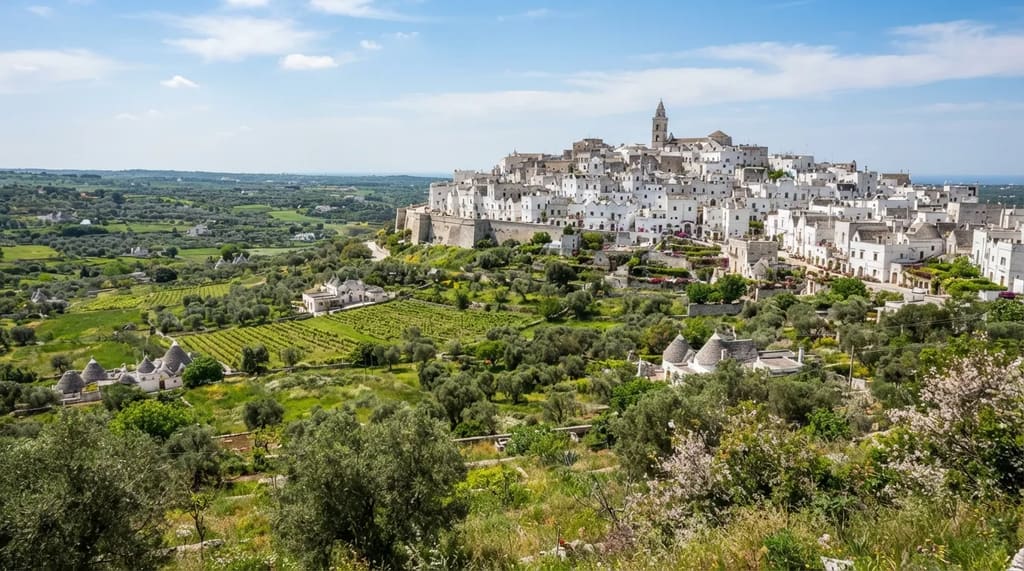
Locorotondo means “round place,” and the name is literal. This whitewashed hilltop town in the Valle d’Itria winds its streets in rings around the summit, with olive groves, vineyards, and stone farmhouses spread below.
Almond blossom comes early, in late winter, but by April and May the valley is green and soft. Locorotondo and nearby Cisternino feel more lived-in than the far more famous Alberobello, which is worth knowing before you book.
Fast Facts
- The name translates to “round place,” and the street plan follows it.
- The town sits in the Valle d’Itria, surrounded by olive groves and vineyards.
- April and May bring a green, soft valley instead of a dry summer landscape.
- Cisternino, nearby, makes an easy second stop.
The old town is compact, and a quick loop takes minutes. The real reward is a slow hour of wandering, especially on a weekday when the town stays local.
Spring’s mild temperatures also make the walks between hill towns pleasant, before summer turns the same paths into a dry slog.
#13 – Rethymno, Crete, Greece: A Venetian Harbor Still Living Its History
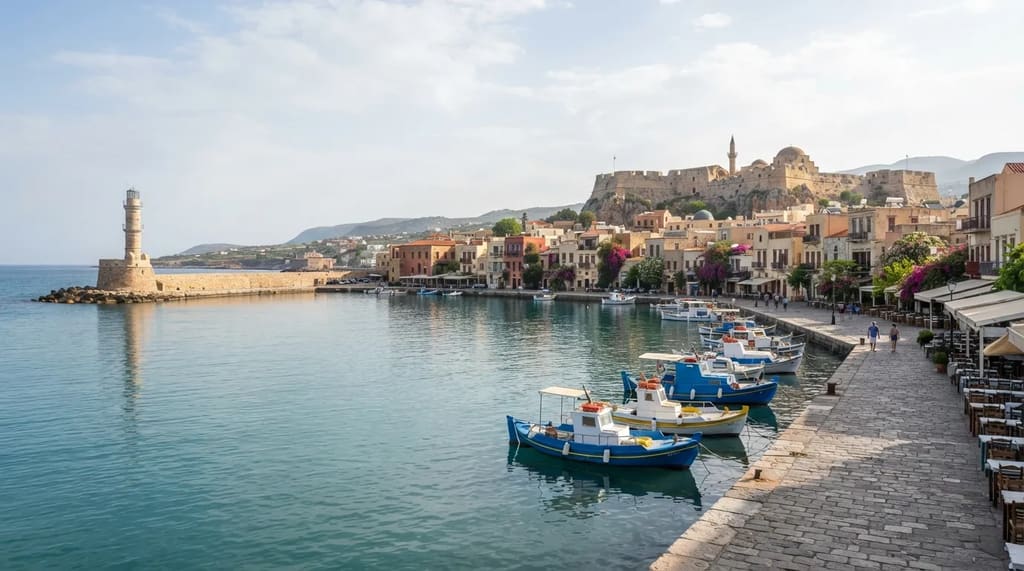
Rethymno is one of Crete’s biggest towns, and it still feels small. The old town is Venetian at heart, with a harbor, a Venetian loggia, and narrow lanes that smell of coffee and sea air.
In spring the weather is warm but not fierce, the sea is calm, and the summer crowds haven’t arrived. It’s also a far better season for hiking on Crete.
The Fortezza, the huge Venetian fortress on the town’s headland, is much easier to enjoy in spring when you aren’t sharing it with tour groups.
#12 – Óbidos, Portugal: A Walled Medieval Town You Can Walk the Ramparts Of
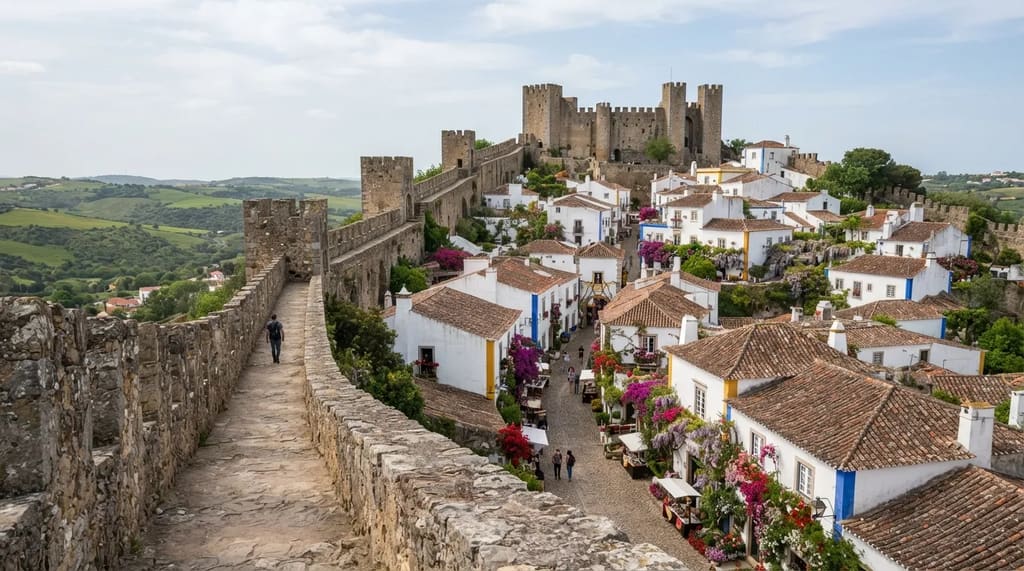
Óbidos looks like a town someone forgot to modernize. Whitewashed houses with bright trim, cobbled lanes, and flowers spilling over doorways sit inside medieval walls, with a castle at the top of the hill.
In early spring the town usually hosts its International Chocolate Festival, which turns the streets into a sweet-smelling market worth timing a trip around. Óbidos is about an hour north of Lisbon, so it works as a day trip, though a night inside the walls feels like a different place.
Spring also brings long, sunny days that are ideal for slow walks. Hold on to this one: another Portuguese hillside town up ahead is even more dramatic.
#11 – Colmar, France: Half-Timbered Houses Along a Canal in Alsace
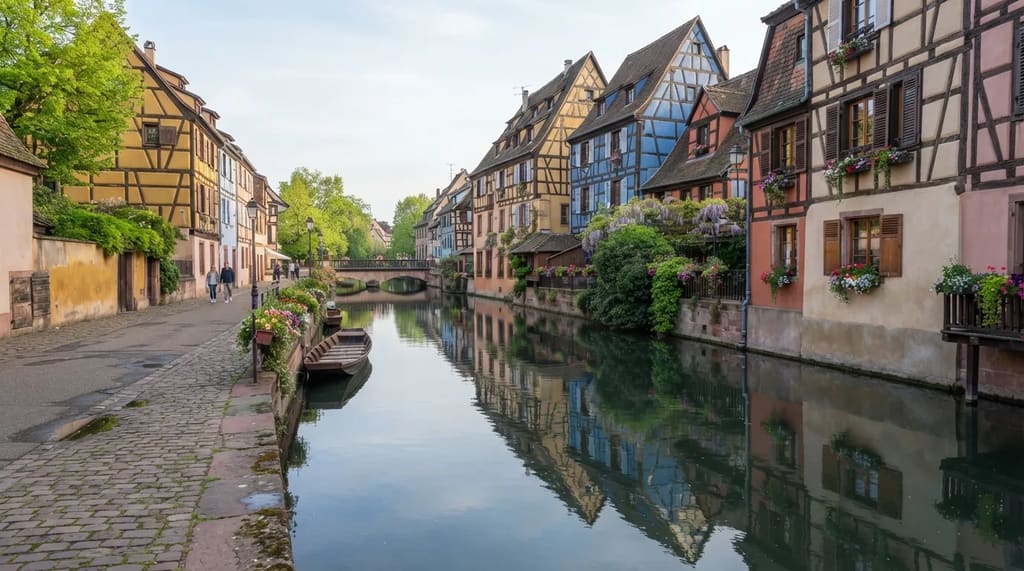
Colmar, in Alsace near the German border, looks like it was lifted from a children’s picture book. Colorful half-timbered houses, cobbled lanes, and canals fill the center, and the town is often said to have inspired Disney’s Beauty and the Beast.
In summer, the Little Venice quarter turns into a bottleneck of tour boats and selfie sticks. In April, the same canals are quiet enough that you can hear the water.
Spring also brings Easter markets, and the vineyards along the nearby Alsace wine route turn green. Colmar is so tied to its Christmas markets that spring remains genuinely undervisited.
#10 – Piran, Slovenia: A Car-Free Adriatic Town That Looks Like Italy
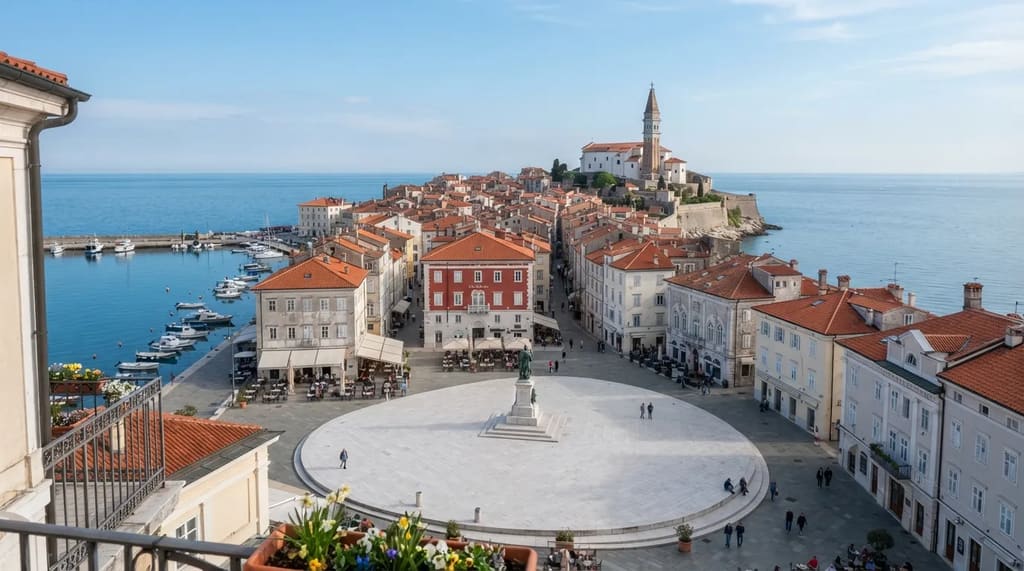
Piran sits on a narrow peninsula along Slovenia’s short slice of Adriatic coast. Slovene and Italian are both spoken here, and the Venetian-style old town feels more Italian than many places in Italy.
Cars are largely kept out of the old town, so you can wander narrow lanes, peek into small galleries, and linger over a seafood lunch. The main square, Tartinijev trg, is named for the Baroque composer Giuseppe Tartini, who was born here in 1692.
In April and May the Adriatic is calm, the light is clear, and restaurants are open and unhurried in a way they simply aren’t in July.
Slovenia has grown more popular in recent years, so Piran’s spring advantage may be narrowing. For now, April and May are still noticeably calmer than summer.
#9 – Bruges, Belgium: Canals, Chocolate, and Actual Quiet in the Morning
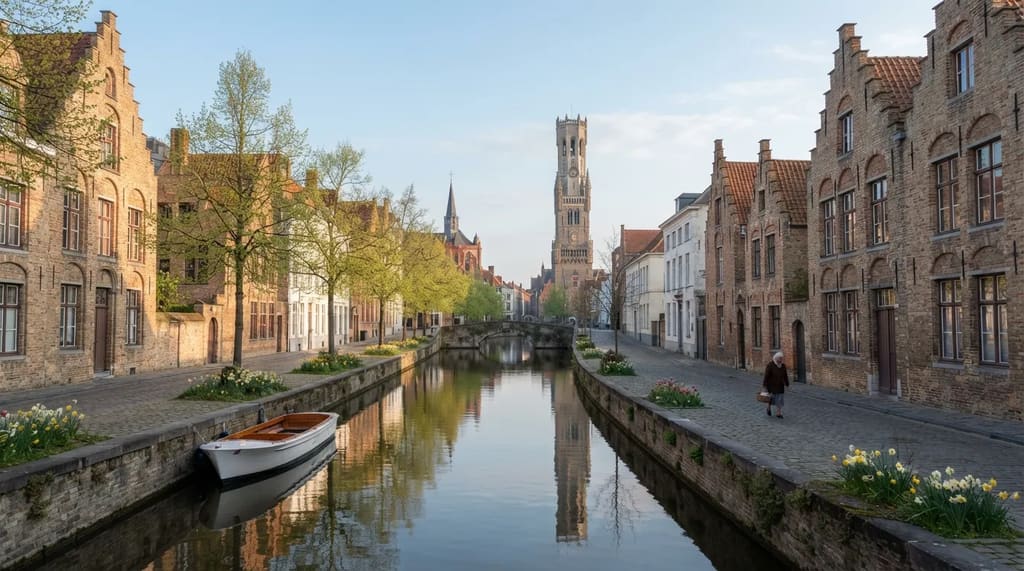
Bruges is one of Europe’s most photographed small cities, which should disqualify it from a list about avoiding crowds. In summer, it nearly does. In spring, the math changes.
The Beguinage fills with daffodils in March and early April, and seeing it on a clear morning is the kind of moment July tends to crowd out. The medieval center is a UNESCO World Heritage Site,1 the beer scene is serious, and the chocolate shops are not for show.
Stay at least two nights instead of treating Bruges as a day trip from Brussels. The mornings and evenings, after the day visitors leave, are when the city really lives.
Canal boat tours that feel performative in a crowd feel completely different at 9 a.m. in April, when you share the water with almost no one.
#8 – Alberobello, Puglia, Italy: The Trulli Town That Spring Keeps Reasonable
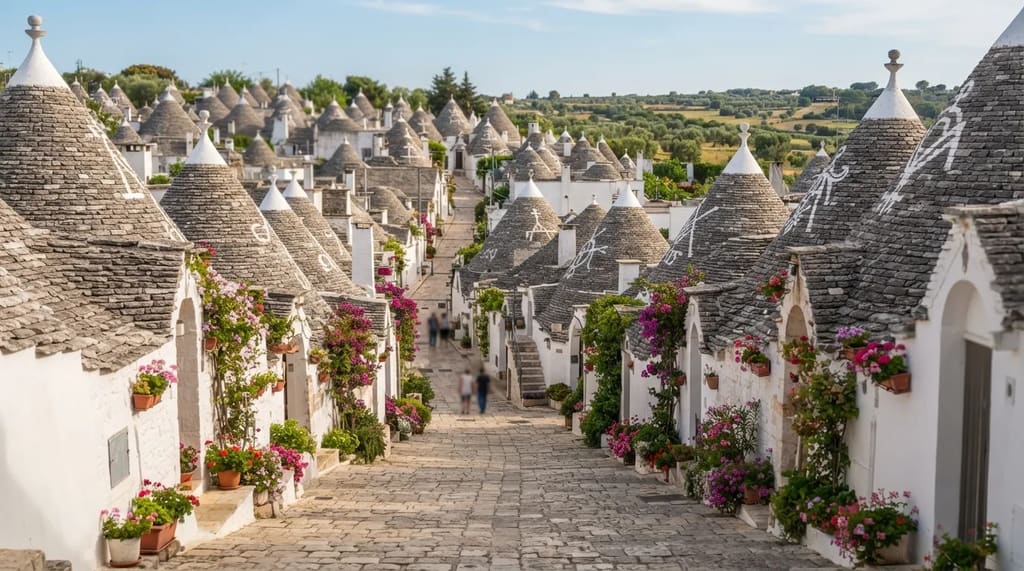
Alberobello is where Puglia’s famous trulli, the cone-roofed limestone houses, are most concentrated. The town is a UNESCO World Heritage Site, and it gets busy once summer arrives.
In spring, the Rione Monti district, with more than a thousand trulli stacked up a hillside, is something you can walk through without the crush. The dry-stone countryside nearby is also at its most walkable before the heat sets in.
Pair Alberobello with a day in Locorotondo from earlier on this list. One shows you how the Valle d’Itria photographs, and the other shows you how it actually lives.
Quick Compare
- Alberobello: UNESCO-listed, famous for its cone-roofed trulli, and the busier of the two once summer arrives.
- Locorotondo: Circular hilltop layout, a more lived-in feel, and best on a slow weekday wander.
#7 – Český Krumlov, Czech Republic: A Baroque Castle Town on a River Bend
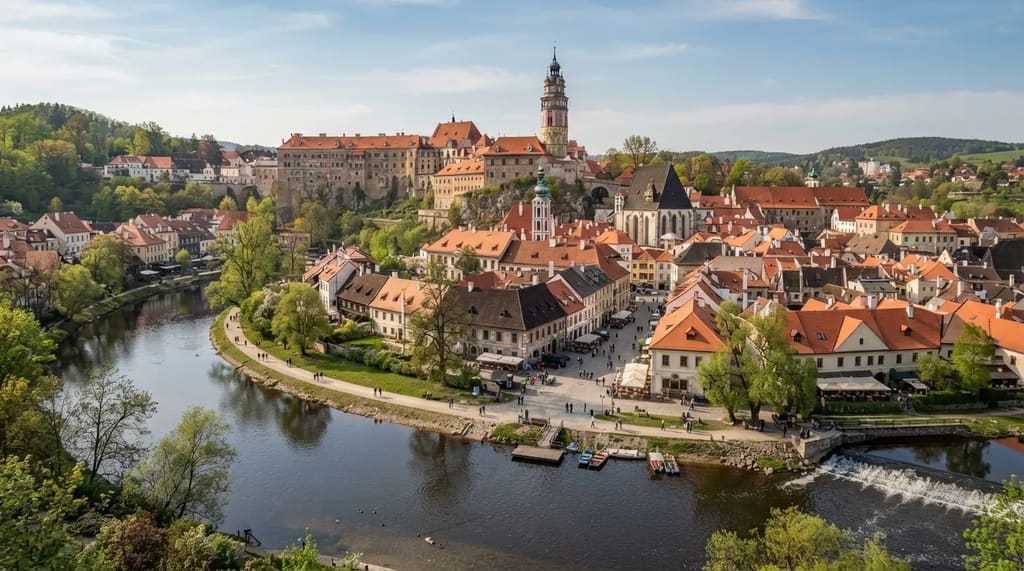
Český Krumlov sits inside a horseshoe bend of the Vltava River, with a huge castle complex rising over the rooftops on a rocky spur. In spring, it gets riverside strolls, castle views, and just enough sunshine for a pint outdoors.
Summer brings rafts, crowds, and a very different mood. The castle is one of the largest in the Czech Republic, and its Baroque theater is among the best-preserved of its kind in the world.
The town is a few hours by car or bus from Prague, so it fits neatly into a Czech itinerary rather than needing its own trip.
Next, a town that looks so ancient it has played the part in a James Bond film.
#6 – Matera, Italy: 9,000-Year-Old Cave City Carved Into a Ravine
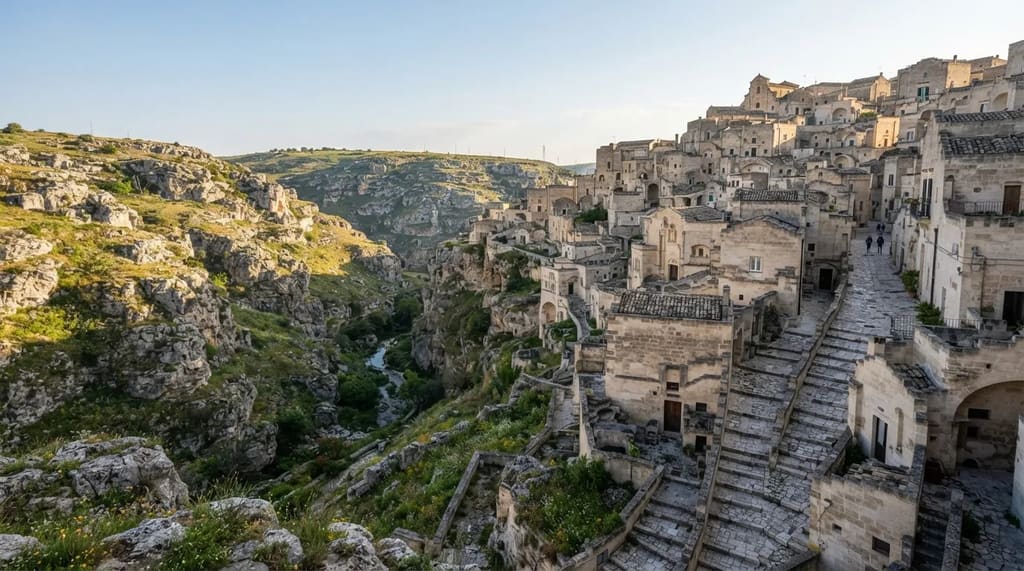
Matera, in Italy’s Basilicata region, is among the oldest continuously inhabited settlements in the world. Its ancient cave dwellings, the Sassi, were carved into the walls of a ravine over thousands of years, and the cityscape is unlike anything else in Europe.
In spring the golden stone glows in soft light, and mornings are quiet enough to absorb the place rather than just photograph it. Be ready for stairs, steep alleys, and uneven paving, which matters for anyone with mobility concerns.
Matera appeared in a James Bond film, which pushed it further into the mainstream, but spring keeps the volume reasonable. It also takes a few hours to reach from Naples, and that small barrier helps keep it calmer than places with direct high-speed rail.
#5 – Rothenburg ob der Tauber, Germany: The Medieval Town That Earned Its Fairy-Tale Reputation
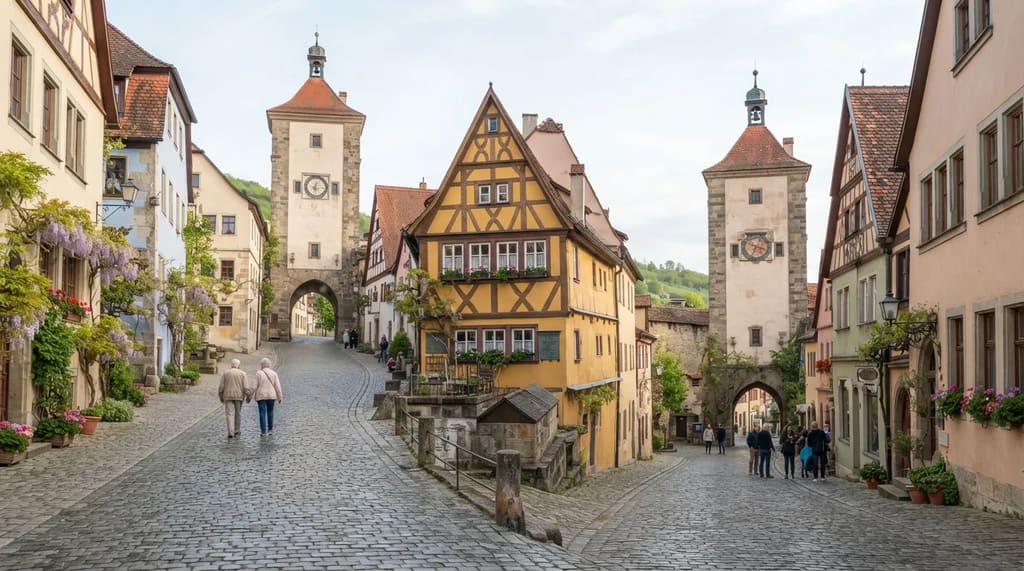
Rothenburg ob der Tauber, in Bavaria, is one of Germany’s best-preserved medieval walled towns. With its half-timbered buildings, town walls, and market square, it looks like a stage set, which means summer brings enormous crowds.
In spring, it earns the reputation honestly. A mild April morning reads very differently than a hot July afternoon with tour buses lined up outside the gate.
The Night Watchman tour is a local favorite. A guide in period costume leads you through the town after dark, and with smaller spring crowds it feels like theater rather than a shuffle.
Rothenburg also sits on the Romantic Road, Germany’s famous scenic driving route, which is especially pretty in spring. It’s a fairy-tale town that hasn’t been spoiled, though one alpine village up ahead has been copied by an entire country.
#4 – Hallstatt, Austria: The Alpine Lake Village So Famous China Built a Copy
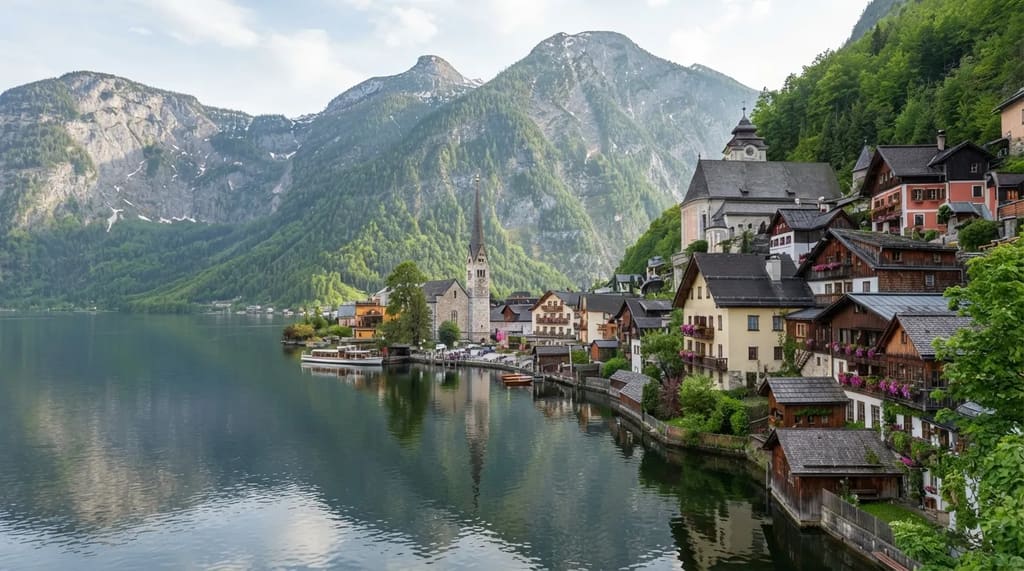
Hallstatt is a village of roughly 700 people squeezed between a cliff and an alpine lake in Upper Austria. The area is part of a UNESCO World Heritage cultural landscape, listed in 1997.2
The lakeside view is so widely circulated that a replica of Hallstatt was built in China. That tells you how famous the original is, and why timing matters.
Worth Knowing
- Roughly 700 residents share the village with a very large number of visitors.
- The UNESCO cultural landscape listing dates to 1997.2
- The salt mine above the village is one of the oldest in the world.
- Day-trippers peak at midday, so an overnight stay is the best crowd strategy.
Spring means flower boxes starting to overflow, a lake that looks freshly washed, and thinner crowds than summer. The salt mine above the village is also less crowded in spring.
Even in spring, midday brings day-trippers, so the trick is to stay overnight. At dawn, with mist on the water and almost no one around, you see the version of Hallstatt the postcards promised.
#3 – Sintra, Portugal: Palaces in the Fog Above the Atlantic
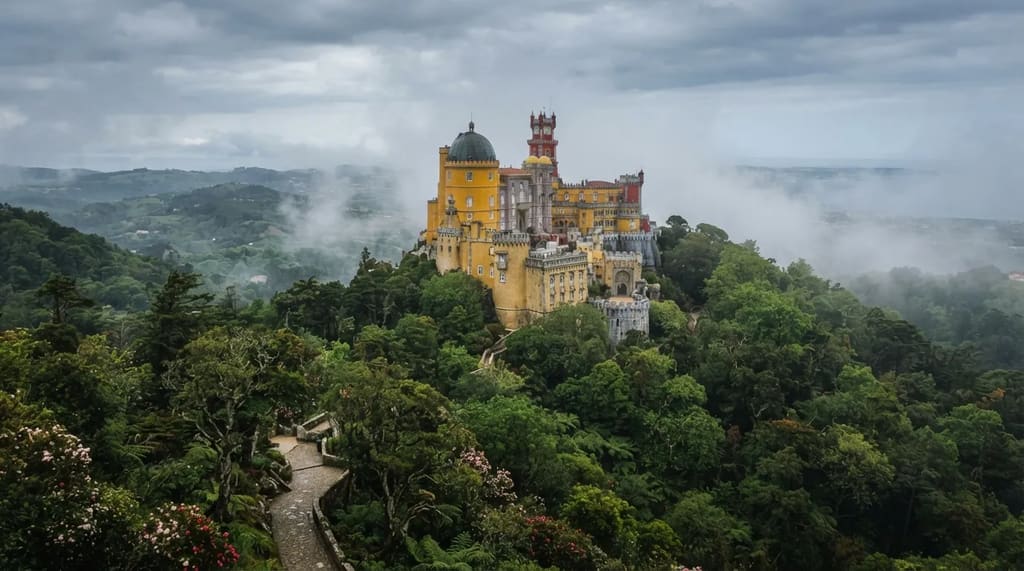
Sintra is a small town about 25 kilometers west of Lisbon, where Portuguese royals built summer retreats in the hills above the Atlantic. The hillside is covered in colorful palaces, formal gardens, and Moorish castle ruins, often wrapped in coastal fog.
That moody weather makes for brilliant photos, and spring crowds are lighter. The yellow-and-red Pena Palace is the headliner, but the Quinta da Regaleira, an early 20th-century estate with an initiation well you can climb down into, deserves equal time, along with the Moorish Castle ruins.
Related Stories From Travelbinger
All three are easier to visit in April than in August, when the popular sites are packed and buying tickets ahead is wise.
Óbidos and Sintra are both easy trips from Lisbon, so a spring visit can fold them together. Next up is a village where the main road is a canal.
#2 – Giethoorn, Netherlands: A Car-Free Village Navigated Entirely by Boat
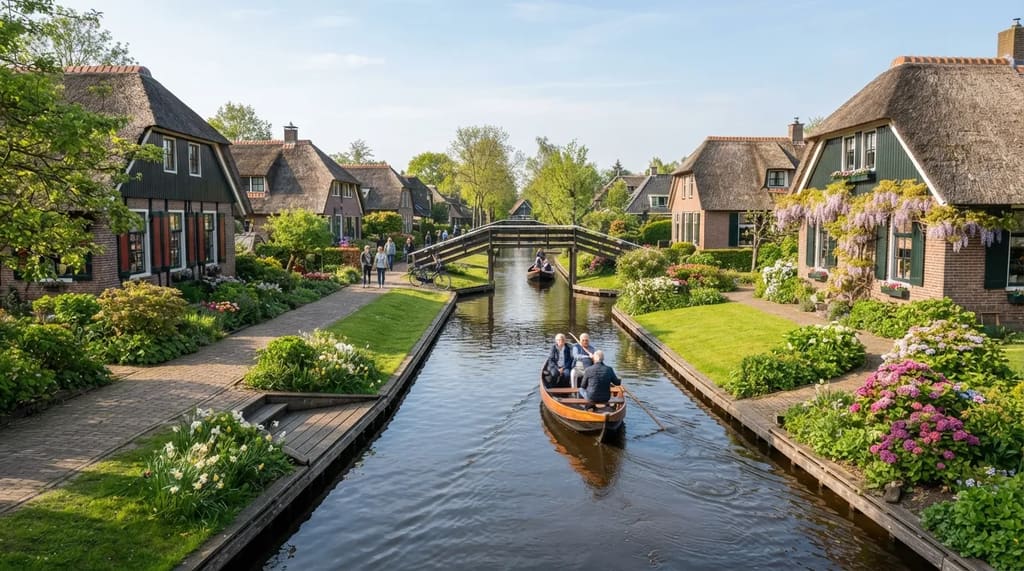
Giethoorn, in the Dutch province of Overijssel, has no roads through its historic center. You get around on foot, by bike, or by small boat, which has earned it the nickname “Dutch Venice.”
Narrow waterways, footpaths, and well over a hundred small bridges connect thatched-roof homes, cafés, and gardens. Around a million visitors come each year,3 and in summer the central canal can get genuinely unpleasant.
Spring is a different story, with birdsong, new leaves, and flower boxes adding color along the water’s edge. Weekday mornings are quieter year-round, and in April the effect is even stronger.
One honest note: Giethoorn is not where you’ll find the Netherlands’ famous tulip fields. Save those for a separate day at Keukenhof.
The village is about two hours from Amsterdam by public transit. Small electric boats are the classic way to see the historic center.
#1 – Roskilde, Denmark: The Viking Town Everyone Files Under “Summer”
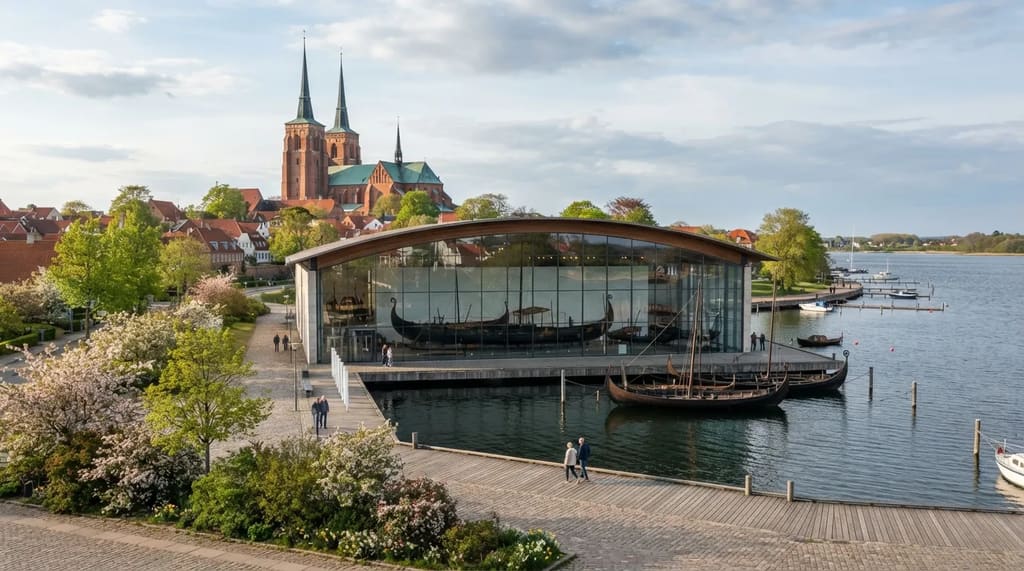
The most surprising spring town on this list isn’t a lakeside village or a walled hilltop. It’s Roskilde, a small city about 25 to 30 minutes west of Copenhagen by train.
Roskilde was Denmark’s capital from the 10th century until 1443. Its cathedral, a UNESCO World Heritage Site, is the burial place of 39 Danish monarchs across nine centuries.4 5
On the waterfront, the Viking Ship Museum displays five Viking ships excavated from Roskilde Fjord in 1962,6 including a longship and a cargo vessel. They are reassembled from fragments and displayed in a hall by the water, and they are among the most affecting historical sights in Scandinavia.
At a Glance
- Getting there: about 25 to 30 minutes by train from Copenhagen.
- Royal history: Denmark’s capital until 1443, with 39 monarchs buried in the cathedral.
- Must-see: five Viking ships pulled from Roskilde Fjord in 1962.6
- Timing trap: the Roskilde Festival takes over in late June and early July.
In spring, you can linger in front of them without being nudged along by the group behind you. So why does almost nobody think of Roskilde in April?
Because the town is best known for the Roskilde Festival, Scandinavia’s largest music festival, held in late June and early July. That reputation makes most travelers file Roskilde under “summer destination” and never reconsider.
The spring version, before the festival infrastructure goes up and while the fjord paths are green and quiet, is a completely different place from the one in June.
The train from Copenhagen takes under half an hour,4 and you spend the day in a town with a thousand years of royal history. The crowds are nowhere near what you’d find in a more famous spot.
That’s the pattern behind every town on this list. Europe’s crowds are not spread evenly across the calendar, and the people who figured that out early pay less, see more, and come home less exhausted than everyone who went in July.
So which of these towns have you been meaning to visit for years without quite pulling the trigger? And what’s actually stopping you from going in April instead of August?
- UNESCO Historic Centre of Brugge: https://whc.unesco.org/en/list/996/
- UNESCO Hallstatt-Dachstein Landscape: https://whc.unesco.org/en/list/806/
- Giethoorn Residents’ Guide: https://giethoornvillage.com/
- Roskilde Cathedral Official Site: https://roskildedomkirke.dk/english/
- Visit Denmark Roskilde Cathedral: https://www.visitdenmark.com/denmark/explore/roskilde-cathedral-unesco-world-heritage-site-and-800-years-royal-history-gdk619579
- Viking Ship Museum Collection: https://www.vikingeskibsmuseet.dk/en/professions/the-boat-collection