Somewhere in the U.S. right now, people are eating lunch outside in short sleeves while the rest of the country scrapes ice off windshields. The 15 getaways below are where that happens in January and February, from mild walking-weather streets to 84-degree Caribbean afternoons.
Not every stop hits true summer numbers, and a few come with honest asterisks. But the No. 1 pick runs well into the 80s while the best the mainland manages is the mid-70s, and you won’t need a passport to reach it.
#15 – Savannah, Georgia: Spanish Moss, Sunshine, and No Winter Coat
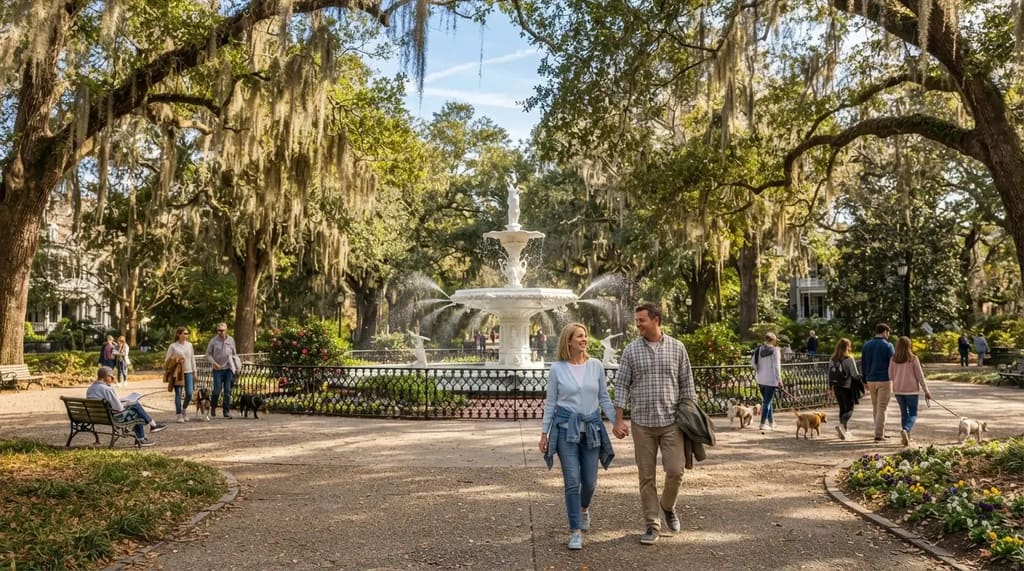
Savannah won’t hand you beach weather. It hands you something just as rare in January: a long, easy walk with your jacket tied around your waist.
Highs generally run in the 60s°F, and the historic district is at its quietest, so hotel and rental rates tend to dip. Picture Spanish moss over Forsyth Park and oak-lined squares in mild, mid-60s sunshine.
It’s warmth plus history plus value. For real beach weather, you have to keep heading south, and the next stop has other plans for your evening.
#14 – New Orleans, Louisiana: Jazz, Beignets, and Streets You Can Finally Enjoy
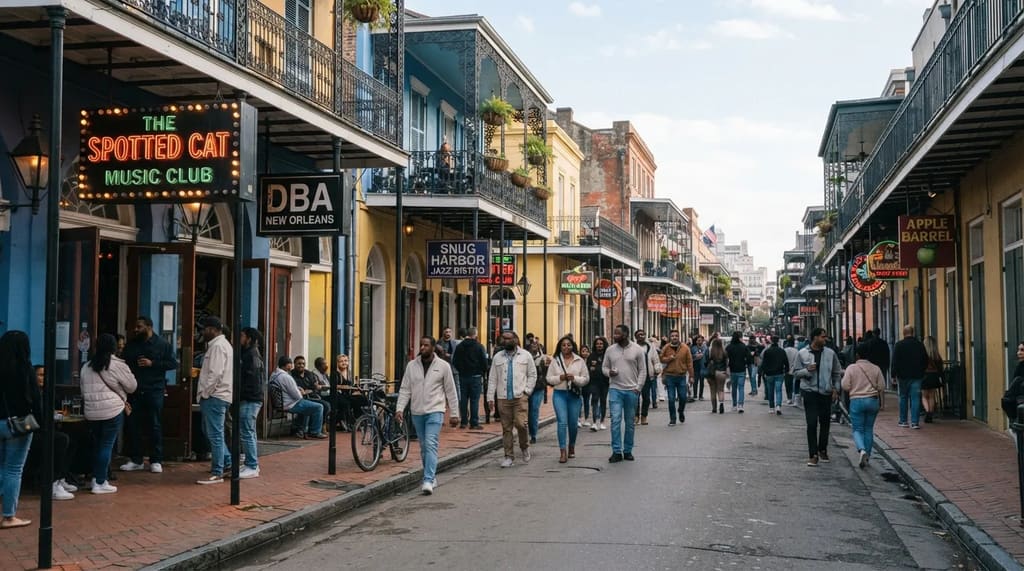
Forget the sweaty, shoulder-to-shoulder poster version of New Orleans. In winter, highs run in the low-to-mid 60s°F, which is perfect for walking the French Quarter, eating your way across the city, and catching live music on Frenchmen Street.
The catch is Mardi Gras. Carnival season builds toward a February or early-March finale, and crowds and prices surge as it nears.
Go in January or early February, and you get the mild weather and easier restaurant reservations without the festival markup. Check the year’s Mardi Gras date before you book.
It’s warm, but not pool warm. For that, the next stop heads to Florida’s Gulf Coast.
#13 – Anna Maria Island, Florida: The Quiet Gulf Coast Alternative to Clearwater
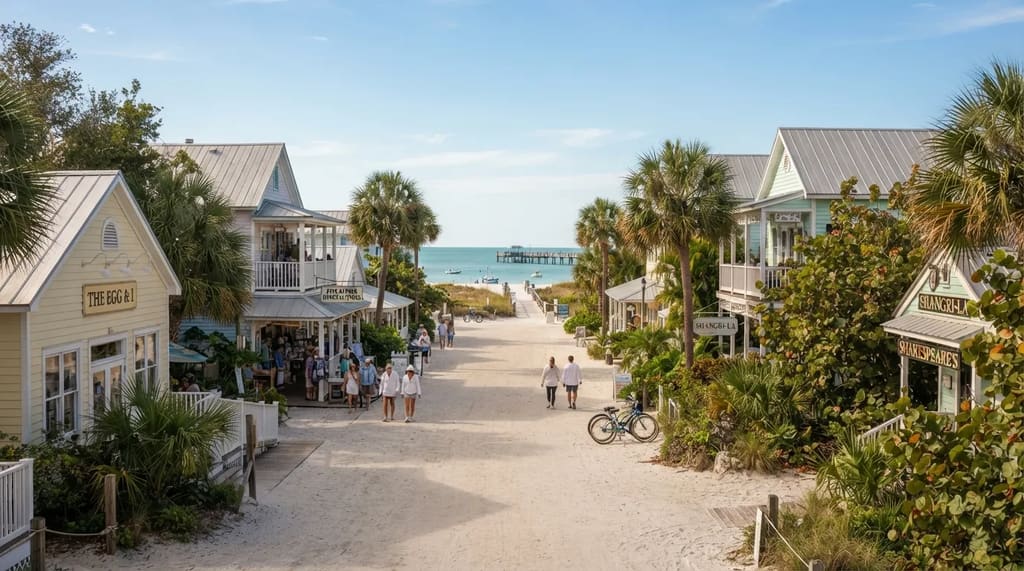
Anna Maria Island sits just north of Sarasota, and experienced Florida travelers tend to pick it over the busier beach strips. January and February highs run in the low 70s°F, with white-sand Gulf beaches and plenty of fresh seafood.
The island is small enough to walk or bike, and January is a good time to watch for manatees in the area. The Gulf is cooler than the air this time of year, so plan on wading more than swimming.
That’s the calm version of Florida. If you want a few more degrees, the next stop is a bit farther south and noticeably warmer.
#12 – Naples and Marco Island, Florida: A Few Degrees Warmer, a Lot More Polished
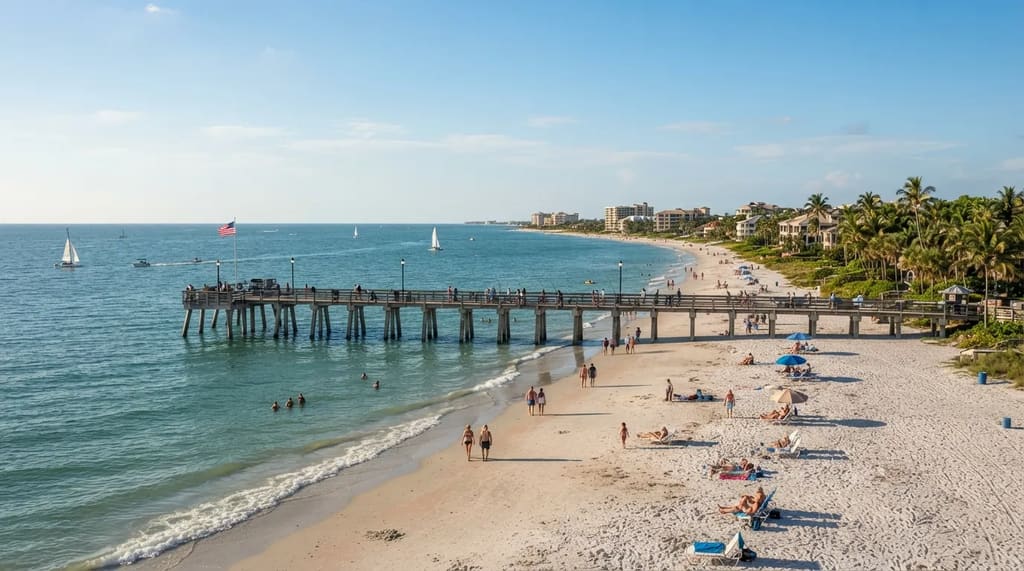
Naples runs warmer than the Gulf Coast cities to its north, with January highs around 76°F and February near 78°F. That small gap is the difference between a beach day and a beach day you don’t have to talk yourself into.
Naples Pier strolls, shelling trips, and catamaran cruises all work in winter. Marco Island, about 20 minutes south, adds quieter beaches and access to the Ten Thousand Islands, where kayakers and birdwatchers go to skip the resort strip.
If warmth is the priority and the budget stretches, Naples beats Sarasota and Clearwater on temperature. The difference is small, but it shows up in the same direction every winter.
That’s Florida’s Gulf side. The Atlantic side has its own warm answer.
#11 – Palm Beach, Florida: Where Winter Means Linen, Not Layers
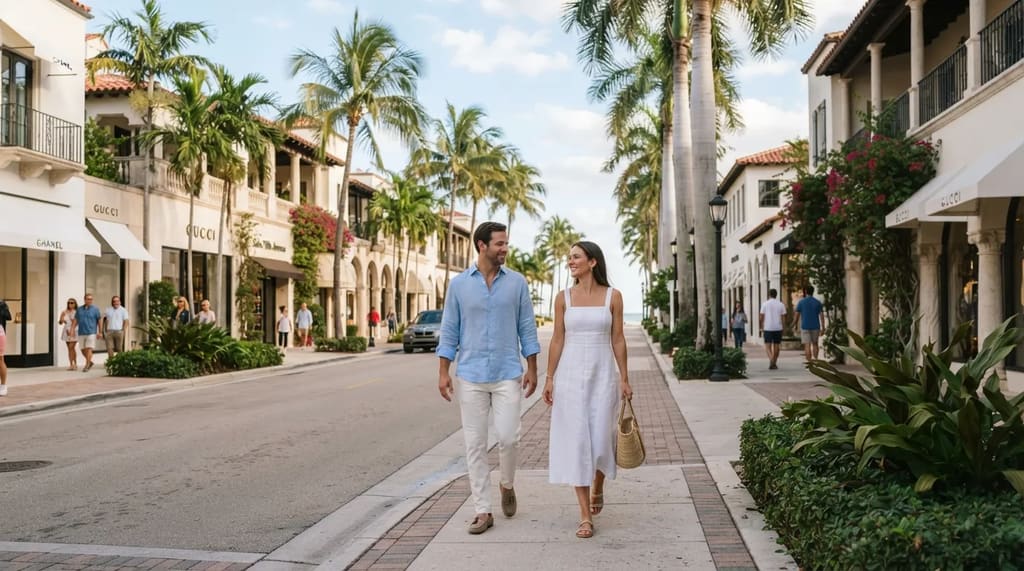
Palm Beach is one of Florida’s warmest January stops, with daytime highs of roughly 72 to 77°F and mild nights in the 60s. It’s the kind of place where an evening walk doesn’t require a sweater.
Lodging runs from oceanfront resorts to smaller inns on the mainland side in West Palm Beach. The inns are easier on the wallet and still close to the water.
Florida’s warmth comes with humidity and the occasional cold front. The next stop trades the ocean for something else: sun you can set your watch by.
#10 – Scottsdale and Phoenix, Arizona: Blue Skies on Repeat
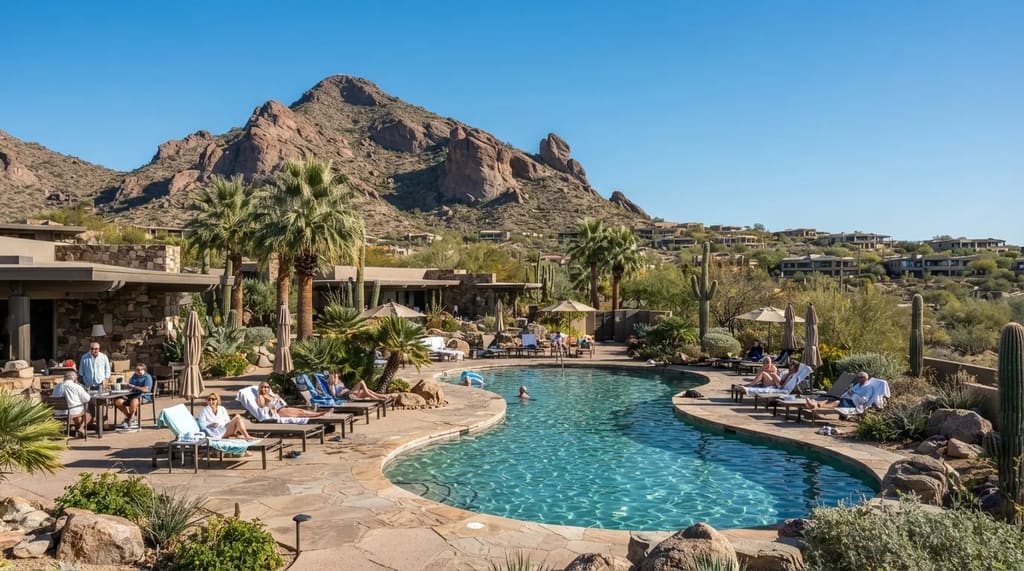
Arizona won’t give you beach weather, but it gives you something Florida can’t promise. Phoenix and Scottsdale are among the safest bets in the country for clear, dry January days, with highs around 68°F and roughly an inch of rain for the entire month.1
Resort pools, desert hikes, and golf all work in January because the heat isn’t the enemy yet. The tradeoff is the evenings, when temperatures drop quickly after sunset, so pack layers for dinner.
The desert delivers sun but no ocean. For both, the California coast makes a case, at the cost of a few degrees.
#9 – San Diego, California: The Pacific Winter That Never Turns Harsh
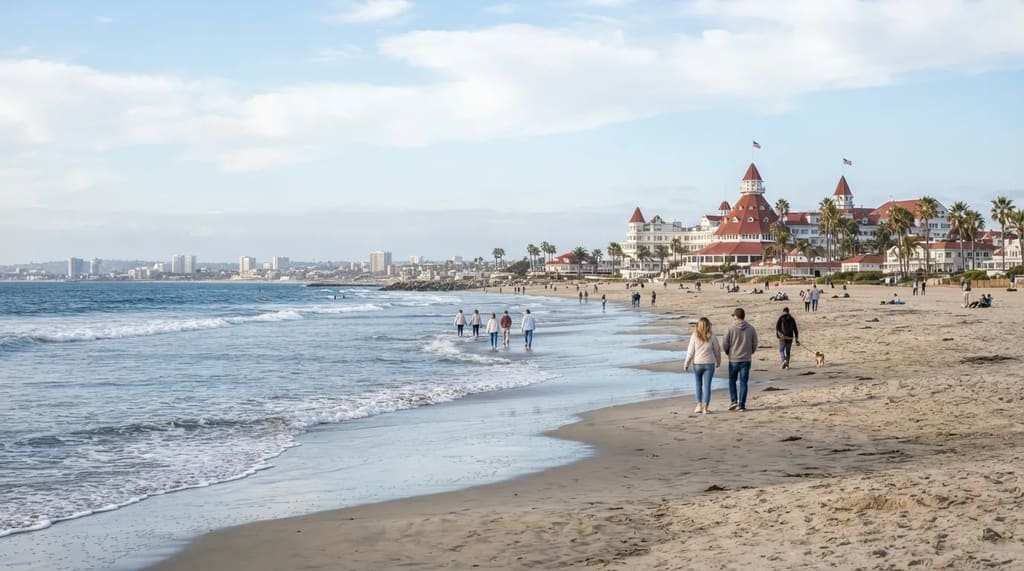
San Diego’s winters are famously mild, with January highs around 65 to 67°F and plenty of clear days. It’s not shorts-and-sunscreen weather for everyone, but it’s a world away from February in Chicago or Minneapolis.
The zoo, Balboa Park, the harbor, the craft brewery scene, and Coronado Beach are all open in January, often at prices below the summer peak. Bring a light jacket for mornings and evenings, because afternoons are the payoff.
Winter is also gray whale migration season off the San Diego coast.2 The Pacific itself is cold, though, so swimming without a wetsuit is a hard sell.
Worth Knowing
- January highs run about 65 to 67°F.
- Mornings and evenings call for a light jacket.
- Gray whales pass the coast in winter.
- The Pacific stays cold, so bring a wetsuit if you want to swim.
If a cold ocean is a dealbreaker, the next stop skips the coast entirely.
#8 – Palm Springs, California: Old Hollywood Warmth, Two and a Half Hours From L.A.
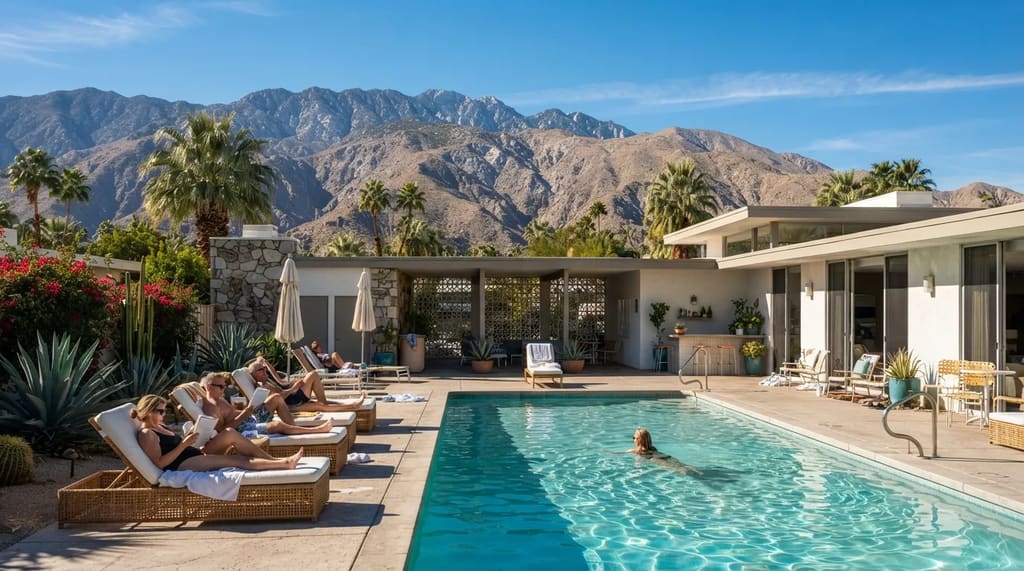
Palm Springs sits in the desert about two and a half hours east of Los Angeles, and it runs warmer than San Diego in winter, with January highs around 71°F. The signature is the swing: sun-soaked afternoons, then a real chill after dark.
Mid-century modern architecture, the aerial tramway up Mount San Jacinto, and the vintage and design shops on Palm Canyon Drive are all in play in January. Many resorts heat their pools, so a winter swim is realistic.
That’s desert warmth with a resort town built around it. The next stop is bigger, louder, and warmer: Miami.
#7 – Miami and South Beach, Florida: Winter’s Biggest Stage, With a Price Tag to Match
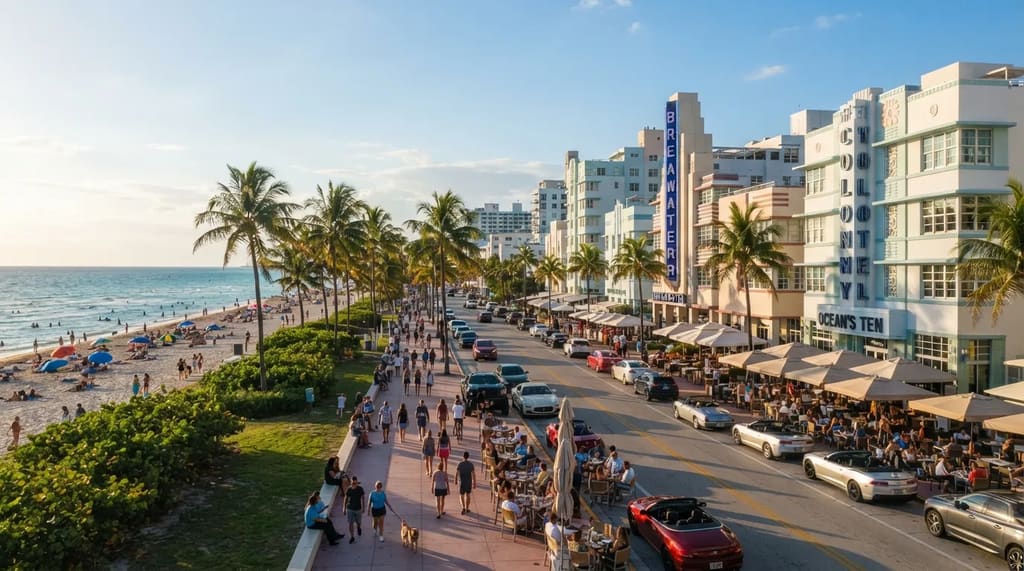
Miami has been selling the American winter escape for roughly a century, and it still delivers. January highs run in the mid-to-upper 70s°F, and the ocean is warm enough to wade or swim in.
South Beach in January means outdoor dining everywhere and Art Deco buildings glowing along Ocean Drive in low winter sun. The catch is cost, because winter is peak season and hotel rates climb to match.
If your budget is tight, the Gulf Coast stops earlier on this list can be gentler on the wallet.
Miami is the big-city version of warm. The next stop is the opposite: cheaper, quieter, and way down at the tip of Texas.
#6 – South Padre Island, Texas: The Budget Beach Town Winter Travelers Keep Missing
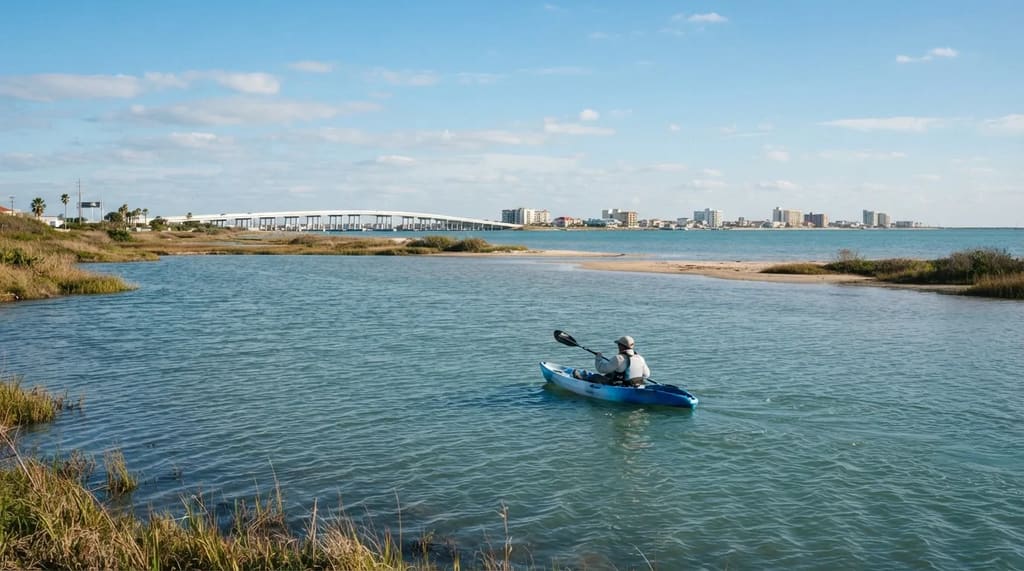
South Padre Island sits at Texas’s southern tip near the Mexican border. It’s famous for spring break and surprisingly peaceful in winter, with January and February highs of roughly 65 to 70°F.
The island is about 34 miles long, with calm Laguna Madre on one side and Gulf surf on the other. Lagoon kayaking and fresh local seafood make it an easy-on-the-wallet pick, and the crowds don’t arrive until spring break does.
Fast Facts
- Location: the southern tip of Texas, near the Mexican border.
- Length: about 34 miles.
- January and February highs: roughly 65 to 70°F.
- Two shorelines: calm Laguna Madre and Gulf surf.
The next stop climbs the thermometer by sticking close to warm water.
#5 – The Florida Keys: Where Winter Cold Fronts Fizzle Out
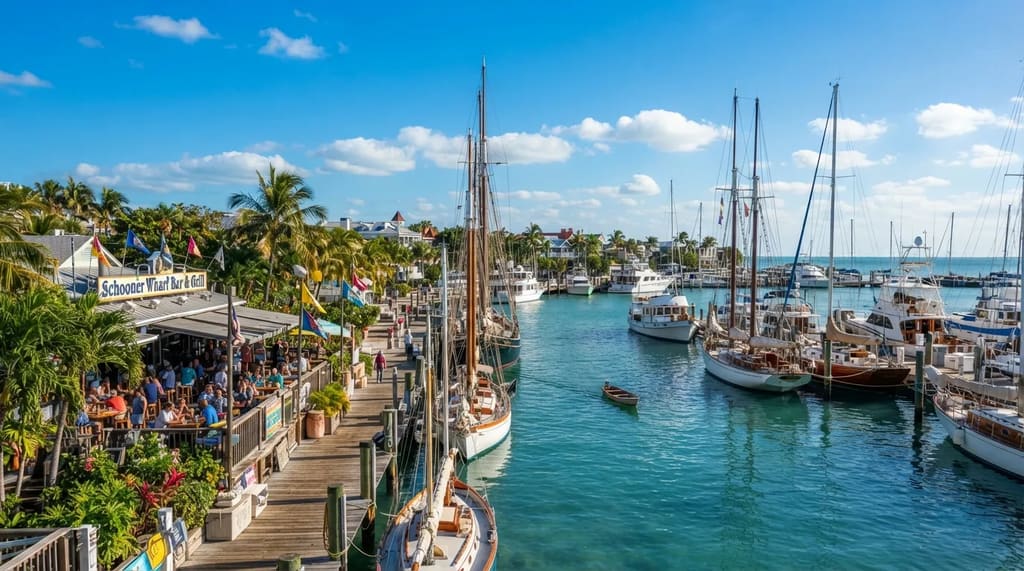
When cold fronts push frost onto mainland Florida, the Keys are usually spared.3 Key West averages a January high near 75°F and a February high near 77°F, with lows around 65 and 68°F.3
The reason is water. The Keys have a mild tropical-maritime climate shaped by the Gulf Stream and the Gulf of Mexico, so summer and winter temperatures rarely differ by more than about 10 degrees.4
January also brings roughly 250 hours of sunshine, or about eight hours a day.
That’s about as warm as the mainland gets. To go warmer, you have to leave it, and the next three stops do, with no passport needed for U.S. citizens.
#4 – Honolulu, Oahu, Hawaii: Warm Water, Big Waves, and No Real Off-Season
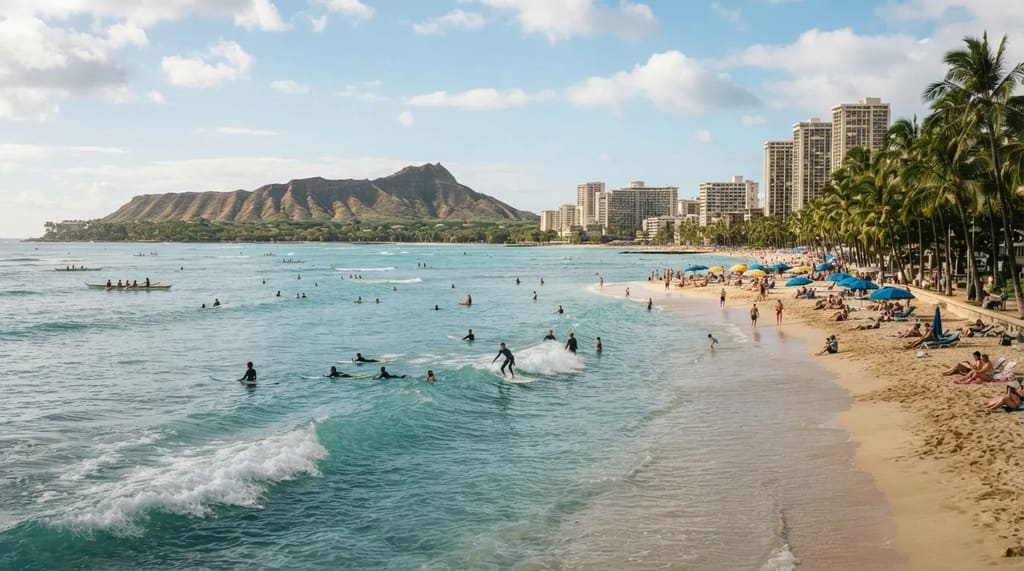
Honolulu’s January highs hit about 80°F, with nights near 66°F and brief showers that pass quickly. The ocean runs around 77°F, comfortable for swimming and for beginner surfing at Waikiki.
Winter is also when the North Shore’s giant surf arrives. You can watch serious waves from the sand without getting wet.
The cost is getting there. It’s about a full day of travel each way from much of the East Coast and Midwest, while West Coast travelers face friendlier math.
Quick Compare
- Honolulu (Oahu): Big-city energy, Waikiki surf lessons, and giant North Shore waves in winter.
- Maui: A slower pace, humpback whales, and dry south-side beaches in Kihei and Wailea.
Honolulu is only a short hop from Maui, but the two islands feel very different.
#3 – Maui, Hawaii: Humpback Whales, Dry Beaches, and Summer-Like Afternoons
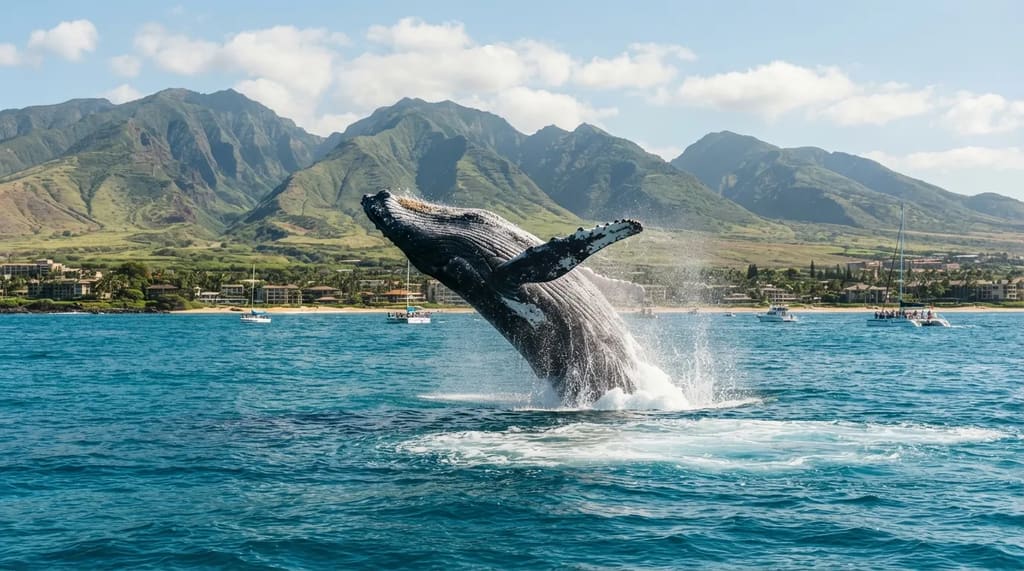
Maui earns its own slot because the experience is different. Afternoons hover around 80°F, trade winds keep things comfortable, and humpback whales arrive in Hawaiian waters for the winter.
Related Stories From Travelbinger



Peak whale season runs roughly January through March,5 and watching from shore or a boat is a true wildlife spectacle. For the driest weather, stay in Kihei or Wailea on the south side, which sit in the island’s rain shadow.
Maui is about as scenic and naturally rich as American travel gets. Yet two destinations left run even warmer, and neither needs a passport.
#2 – San Juan, Puerto Rico: Tropical Heat Without a Passport
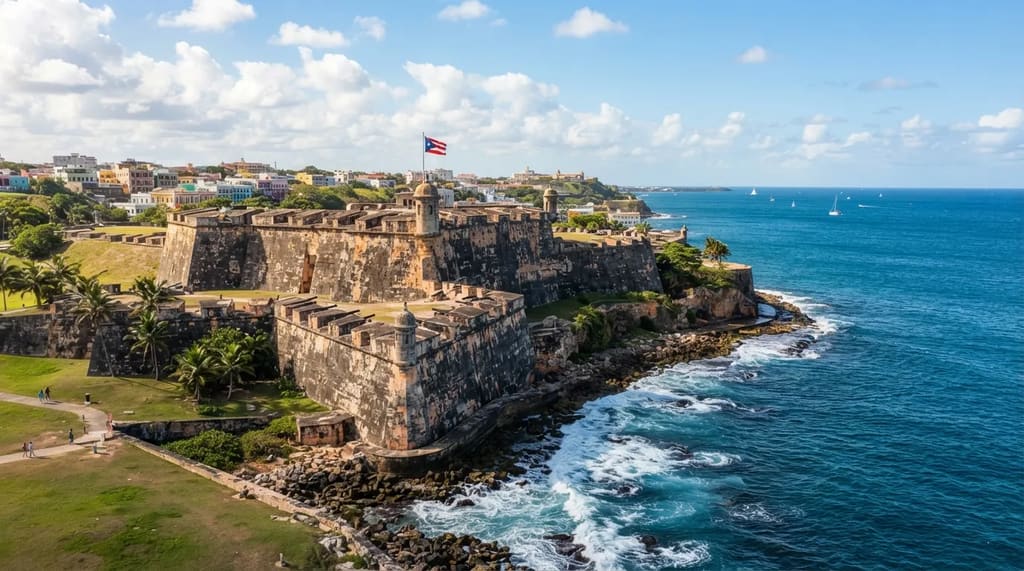
If you count U.S. territories, Puerto Rico edges out Hawaii on pure warmth. San Juan averages about 84°F by day and 72°F at night in January, numbers most of Florida doesn’t see until late spring.
Winter is also one of the drier, breezier stretches of the year, and the sea stays in the high 70s°F. U.S. citizens don’t need a passport to go.
San Juan is the warmest big-city option on the list. The No. 1 pick matches its heat and swaps the city for something wilder.
#1 – The U.S. Virgin Islands: Mid-80s Warmth, Dry Skies, and a National Park Beach
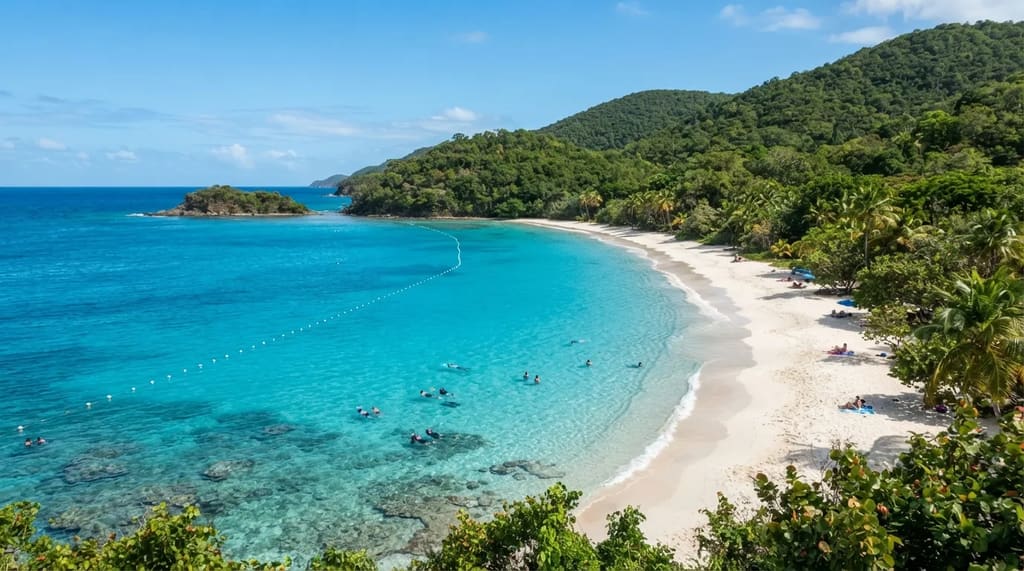
On St. Thomas, January highs reach about 84°F, with nights near 73°F and ocean water around 80°F. That’s roughly nine degrees warmer than Key West, and U.S. citizens still don’t need a passport.
Winter and early spring are the islands’ dry stretch, with February among the driest months. Peak warmth and low rain risk land in exactly the months this list is about.
St. John anchors the experience. Well over half of the island is Virgin Islands National Park, with snorkeling right off the beach at Trunk Bay.6
San Juan matches the USVI on temperature, but the islands win on wildness, with less development and a national park instead of a big-city coastline. For the warmest, most tropical winter under a U.S. flag, St. John in February is the best answer on this list.
Where to Point Yourself This January
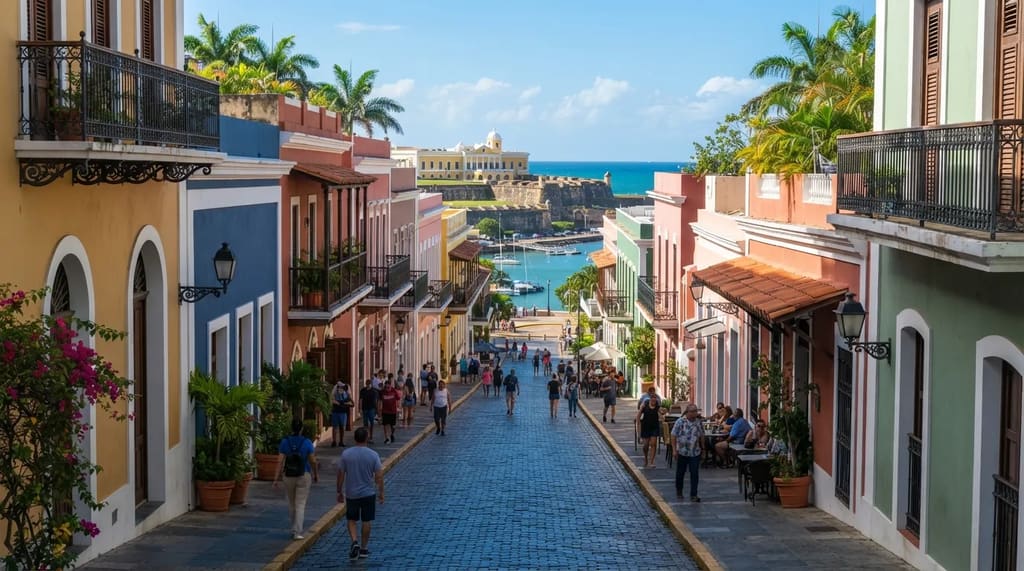
Savannah and New Orleans win on atmosphere and value, Florida wins on easy beach days, and the desert wins on sheer sunshine. Hawaii and the Caribbean territories are where the thermometer stops apologizing and starts reading like July.
At a Glance
- St. Thomas, USVI: about 84°F in January.
- San Juan, Puerto Rico: about 84°F in January.
- Honolulu and Maui: around 80°F.
- Naples, Florida: about 76°F in January.
- Key West, Florida: about 75°F in January.
Wherever you land, the gap between a gray January at home and a warm one somewhere else may be smaller than you think. Somewhere on this list, there’s an outdoor afternoon with your name on it.
Bonus: The Insider Trick Nobody Tells You
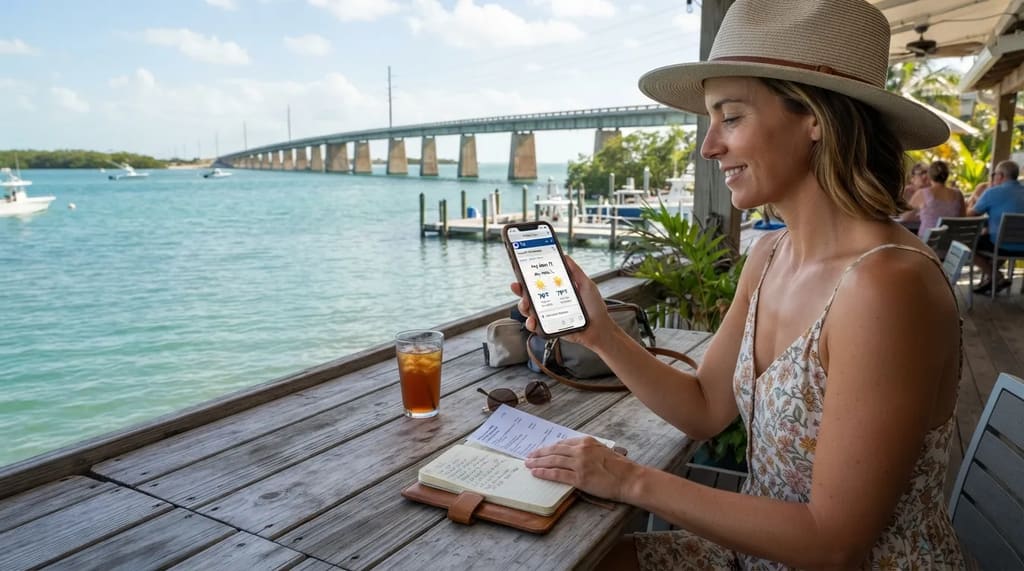
Don’t just book a warm place. Book a flexible warm place, because even Florida and the Gulf Coast get the occasional cold front.
Here’s the simple playbook savvy winter travelers use:
- Choose refundable or free-cancellation lodging and flights you can change, even if the rate is a little higher than the non-refundable one.
- Check the National Weather Service forecast at weather.gov for your exact destination about a week and a half before departure, then again a few days out.
- Fly into a hub with options. If a cold front is forecast for the Florida mainland, a flight into Miami or Fort Lauderdale lets you pivot south to the Keys, where cold fronts tend to fizzle out.
- Keep a backup in your back pocket. A cold snap on the Gulf Coast can make the Atlantic side, the Keys, or a nonstop flight to San Juan the smarter call.
It costs you a few minutes of checking. It can save a whole trip from a gray, windy week.
- NWS Phoenix January Review: https://weather.gov/psr/January2021ClimateData
- San Diego Natural History Museum: https://www.sdnhm.org/blog/blog_details/gray-whales-are-frolicking-along-the-san-diego-coastlines/27/
- Visit Florida Keys Weather: https://visitfloridakeys.com/plan-your-trip/travel-tips/weather
- NWS Florida Keys Climate: https://www.weather.gov/key/climate
- NOAA Humpback Sanctuary Boating Guide: https://hawaiihumpbackwhale.noaa.gov/visit/boating.html
- Virgin Islands National Park Guide: https://morethanjustparks.com/virgin-islands-national-park/