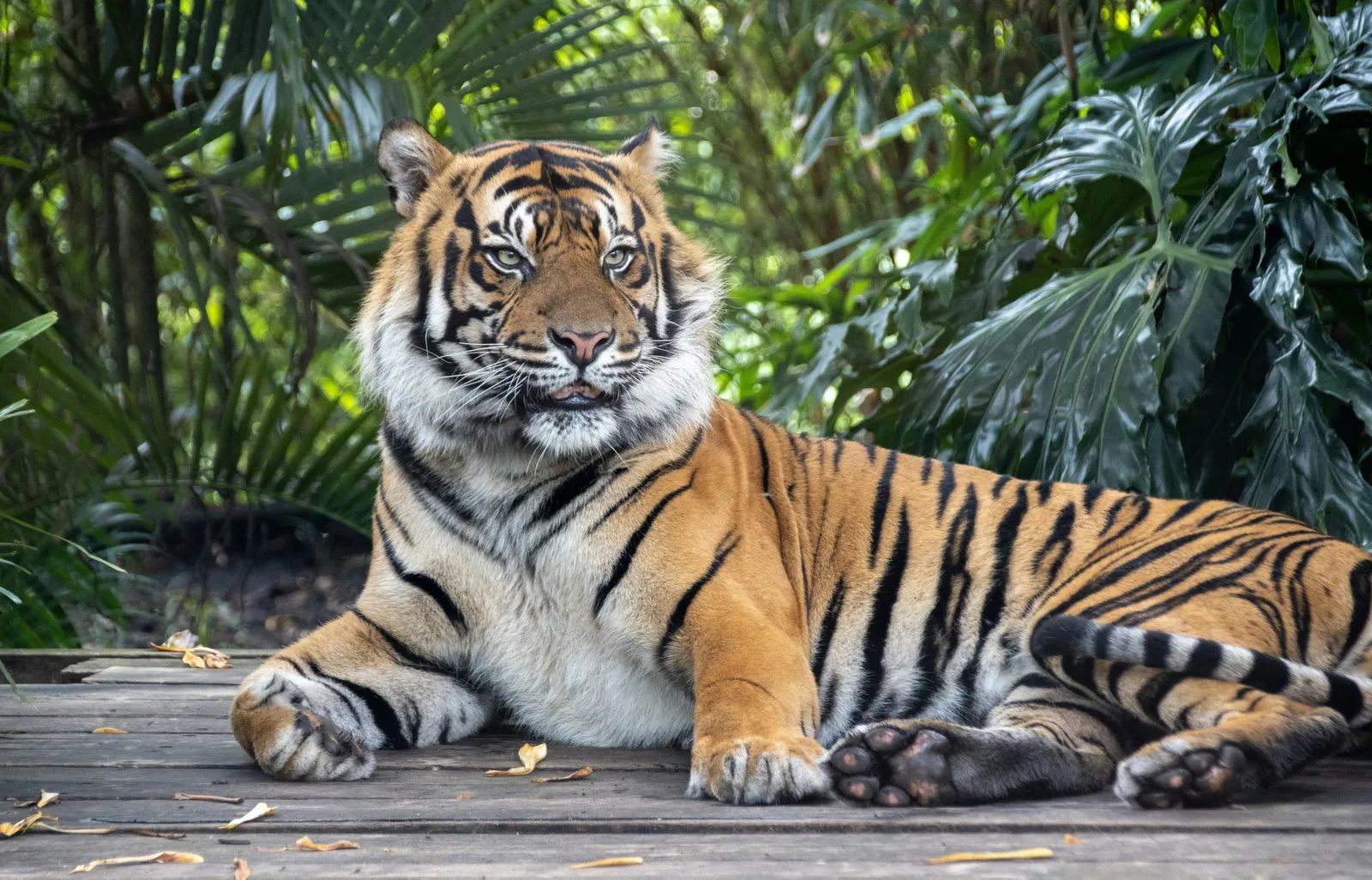
Clouded tiger cats are so hard to trap that a single capture is considered an achievement, which makes a researcher’s seven captures stand out. Tadeu de Oliveira, who leads the Tiger Cats Conservation Initiative, a group that studies the smallest wildcats of South and Central America, has described the difficulty in blunt terms. The work centers on the cloud forests of Costa Rica and was reported by Mongabay ([1]).
A cat known mostly through a lens
The clouded tiger cat, also called the clouded oncilla, lives in remote mountain forests. The clouded oncilla lives in remote montane forests, at elevations above 1,500 meters (5,000 feet). Its range is narrow, and this tiny wildcat’s range is limited to the cloud forests of Costa Rica and Panama.
Much of what scientists have learned came from indirect evidence. The species has primarily been known from camera-trap images and specimens found dead. One researcher, the Central American clouded oncilla is not only the most endangered wild cat in Mesoamerica, but also an endemic subspecies restricted to a highly susceptible and fragile habitat in Costa Rica and Panama.
Oliveira told Mongabay in a phone interview that catching one is uncommon. “It is rare to catch a tiger cat. Period.” He added that several tiger cat species exist and that the information available is still thin. A 2024 study that reached a similar conclusion that the clouded tiger cat is a distinct species helped sharpen the picture of this group ([3]).
Seven captures and a long search
According to her doctoral adviser, conservation biologist Mark Hebblewhite, Amaia Autor, a Ph.D. student at the University of Montana, has been searching for these animals in the Talamanca Mountains of Costa Rica since mid-2022. Her first trap went up in March 2023. Since then, she has captured, examined and collared seven separate individuals, a total that the source describes as a research first.
The collars are not simply a marker of success. They allow her to follow each animal’s movements over time. One field caption describes how Autor fits a small GPS collar to an anesthetized clouded oncilla, enabling her to track its movements for up to four months. A wildlife veterinarian with Cuatro Gatos Conservación, a Costa Rican initiative, confirmed in an email to Mongabay that Autor is the first person to capture free-ranging individuals of this species for research and to carry out GPS tracking studies.
Related Stories From Travelbinger

What the results can and cannot yet show
Autor is now analyzing her data in Montana as part of her doctoral work, so the full findings have not been published. The table below separates what is known from what remains open.
| Finding | Limitation | Next step |
|---|---|---|
| Seven individuals captured, examined and collared since March 2023 | All work so far is concentrated in the Talamanca Mountains | Data analysis is underway at the University of Montana |
| GPS collars recorded movements | Tracking periods of up to four months leave longer patterns unclear | Researchers need more data before drawing broad conclusions |
| Capture of free-ranging cats for research is described as a first | The claim rests on expert confirmation rather than a published comparison | Peer-reviewed results will determine how the findings are judged |
Oliveira’s warning that information remains scarce still applies. Still, each collared animal adds a piece to a picture that has rested largely on blurry camera frames and rare specimens. For a small cat in a fragile mountain habitat, that kind of detail may prove as valuable as the capture count itself.