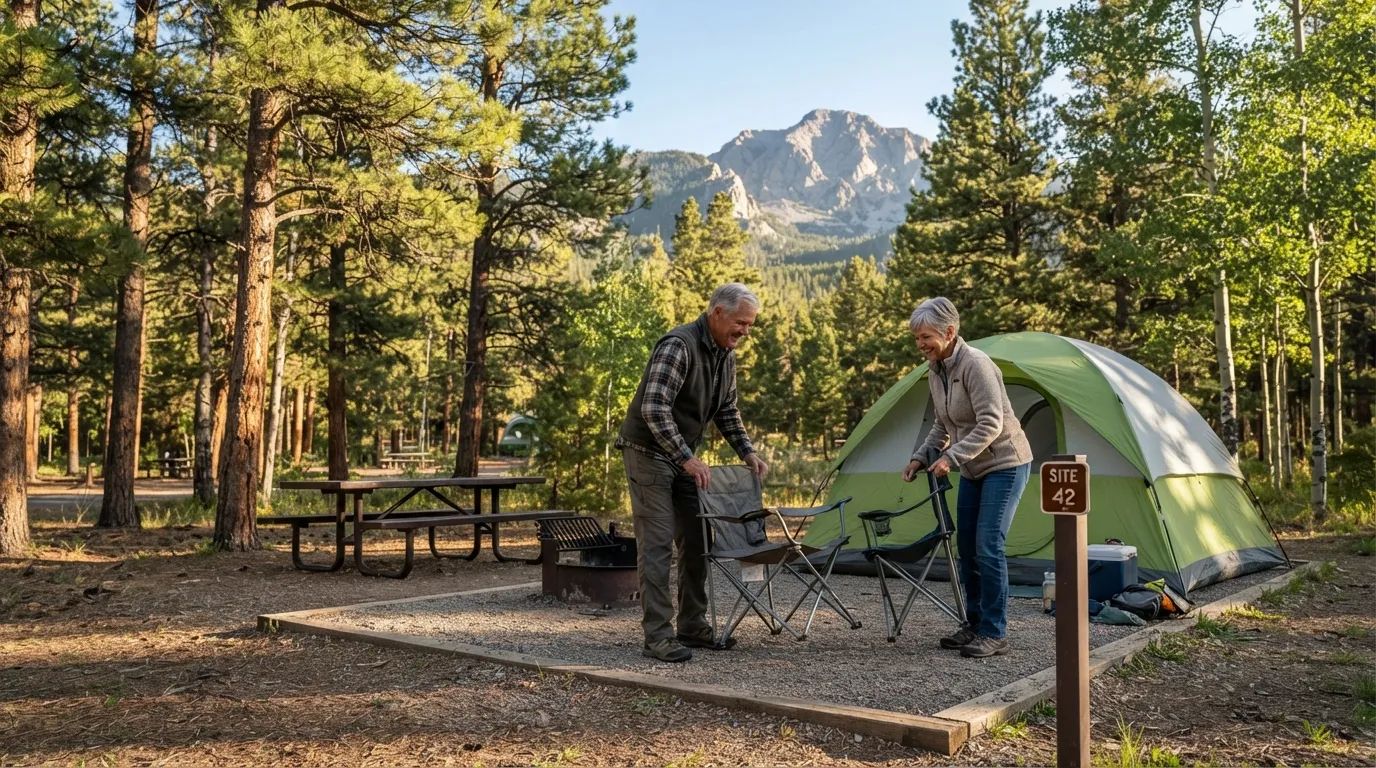
You hand your card to the ranger, hear “you’re all set,” and drive off feeling like you saved a few bucks. That’s what most people over 62 think the national park “senior discount” is. In reality, one small card can cover your whole car, cut camping bills in half, and work at thousands of federal sites beyond the famous parks.
And that’s only the part people at least half-know about. Some perks have strings attached. One version of the card can be free. A price change in 2026 made the senior deal look even better next to what everyone else pays. Keep scrolling, because the best savings aren’t at the gate.
#15 – The $80 Card That Can Outlast Every Gate Fee You’ll Ever Pay
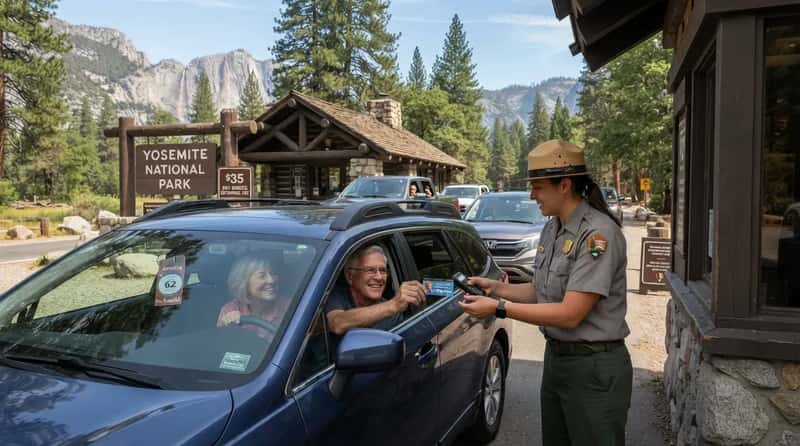
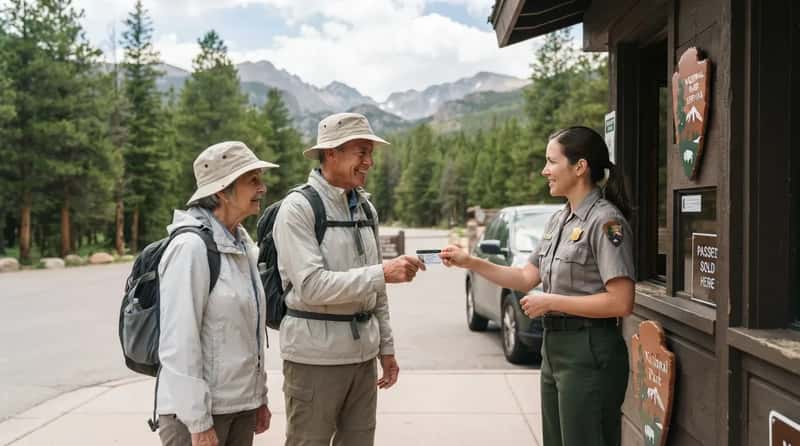
Plenty of visitors over 62 pay full price at the gate and never learn they didn’t have to. U.S. citizens and permanent residents ages 62 and older can buy an annual Senior Pass for $20 or a lifetime pass for $80, according to the National Park Service. You’ll need documentation of your age and residency or citizenship. Everything else on this list builds on that one card.
The math is quick. Many of the big national parks charge $35 or more per vehicle, so a few trips can cover the cost. One senior-focused guide says the lifetime pass breaks even after three or four visits. After that, the lifetime version never needs to be renewed, no matter how many gates you drive through.
#14 – That Dusty Golden Age Passport Is Still Worth Something
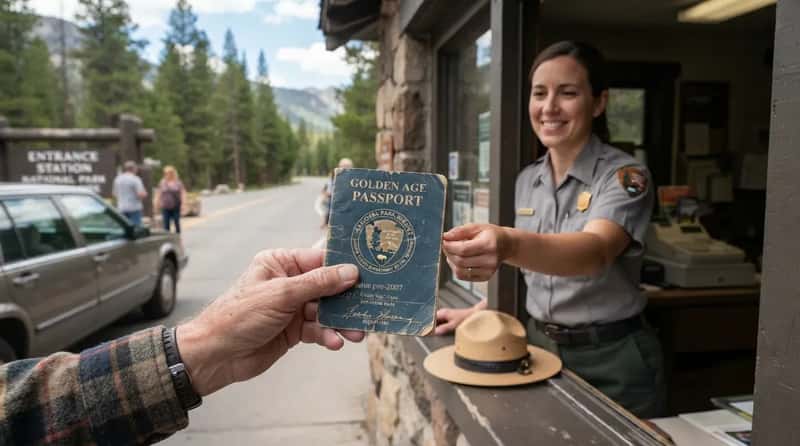
An old card in a kitchen drawer might still get you in for free. The Golden Age Passport was the older version of today’s senior pass. As of January 1, 2007, the Senior Pass and Access Pass replaced the Golden Age and Golden Access Passports that had been issued before then.
Here’s the part that surprises people: those cards didn’t expire. Golden Age Passports are no longer sold, but they continue to be honored according to the terms of the pass. A card bought before 2007 can still do the job. If you or a relative kept one, check the drawer before you pay for a new pass.
Quick Compare
- Golden Age Passport: Issued before 2007, no longer sold, still honored under its terms.
- Senior Pass: Sold today to ages 62 and up, at $20 annual or $80 lifetime.
- Access Pass: Took over from the Golden Access Passport in the same 2007 changeover.
#13 – Pay in Four Installments, Then Trade Up for Free
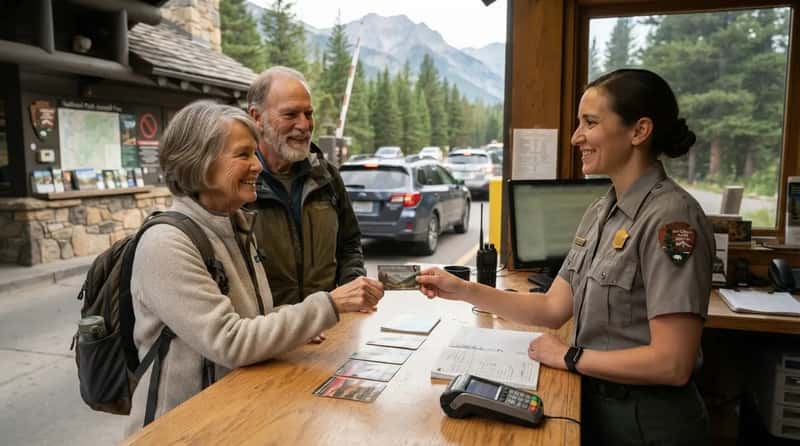
You don’t have to commit to the lifetime pass on day one. The National Park Service lets you buy four consecutive annual passes and then exchange them for a lifetime pass at no extra cost. That spreads the $80 across four years of $20 payments.
There’s a catch. The trade-in happens at a staffed fee station, and it doesn’t work online. Four small purchases quietly turn into a lifetime pass. Skeptics say the lifetime pass is the better buy for anyone who knows they’ll keep visiting, while the installment route suits people who aren’t sure yet.
#12 – The $10 Mistake Hiding in the Online Checkout
Buying the pass from your couch can cost more than buying it at a park. The USGS online store adds a $10 processing fee, which makes a lifetime pass $90 and an annual pass $30. It’s an easy mistake to make, because the website looks official and nothing warns you.
Passes bought in person at federal recreation sites don’t carry that fee, so a lifetime pass is $80 and an annual pass is $20. The same card costs 12.5% more online, going by the $10 on top of $80. If you’re heading to a fee-charging site anyway, buy it there.
#11 – Your Whole Car Gets In on One Card
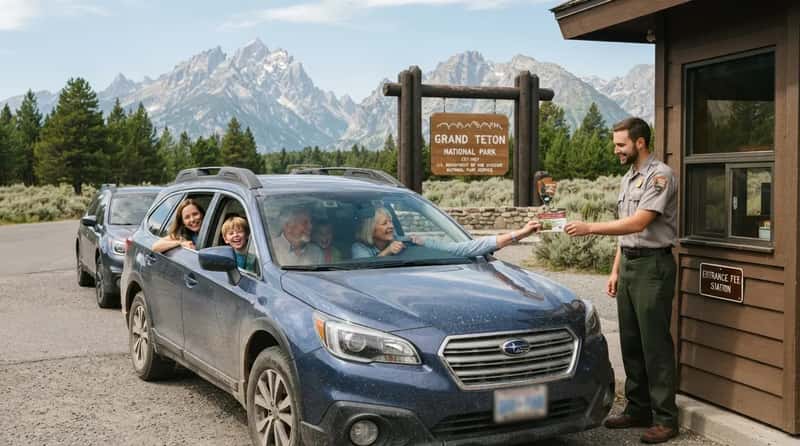
The pass isn’t just for you. At sites that charge by the vehicle, it admits the pass holder plus the passengers in one vehicle. That includes friends, neighbors, and the grandkids buckled in the back seat.
The wording matters, though. The pass covers passengers in a non-commercial vehicle, so a commercial tour van is a different story. One senior in the driver’s seat can cover everyone in the car. That’s the feature that makes the pass feel less like a personal discount and more like a family perk.
At a Glance
- Per-vehicle sites: The holder and everyone riding in one private vehicle get in.
- Commercial vehicles: Tour vans don’t get the same treatment.
- Per-person sites: The rule shifts, as the next entry explains.
#10 – The Four-Adult Rule for Sites That Charge by the Head
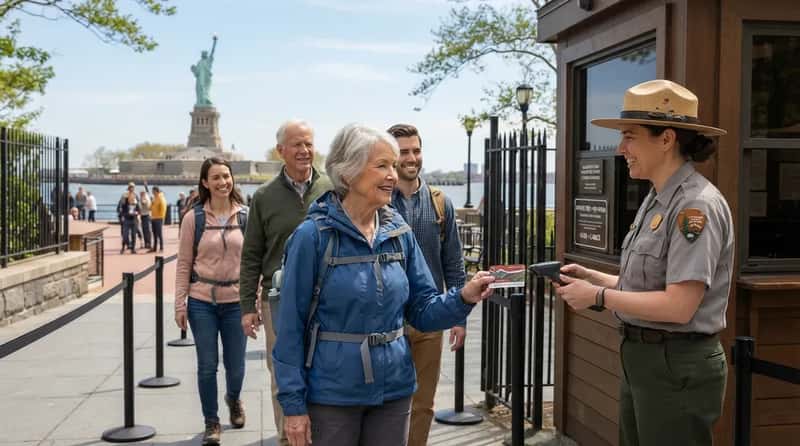
Some places don’t charge per car, and there the rule changes. At per-person sites, the pass covers the holder plus three adults, not to exceed four adults. That’s a sizable group on a single card.
Most people don’t find out the rule exists until they’re standing at a booth with a line behind them. Knowing it ahead of time lets you plan group outings without surprise charges. Four adults can get in on one senior’s card. Only one person needs the pass, so the rest of the group can leave their wallets alone.
#9 – The Pass You Used to Lose in the Glovebox Now Lives on Your Phone
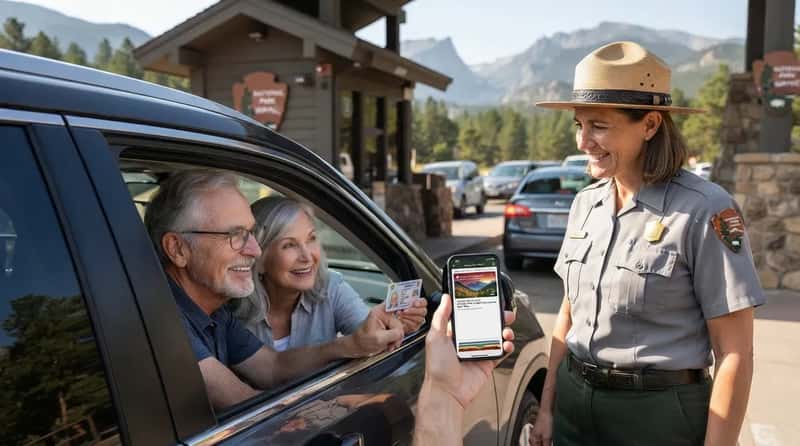
Something changed this year that most people haven’t noticed. As of January 2026, America the Beautiful Passes are also available through Recreation.gov in a new digital format. Senior Annual and Senior Lifetime passes are both on the list.
The Forest Service says you can store, manage, and access your digital passes from your Recreation.gov account, mobile app, or mobile wallet. The pass can now sit in your phone’s wallet. You’ll still need documentation to prove your age. For anyone who has ever torn apart a glovebox at a park entrance, though, this is a real upgrade.
#8 – Half Off Boat Launches, Swim Areas and Special Tours
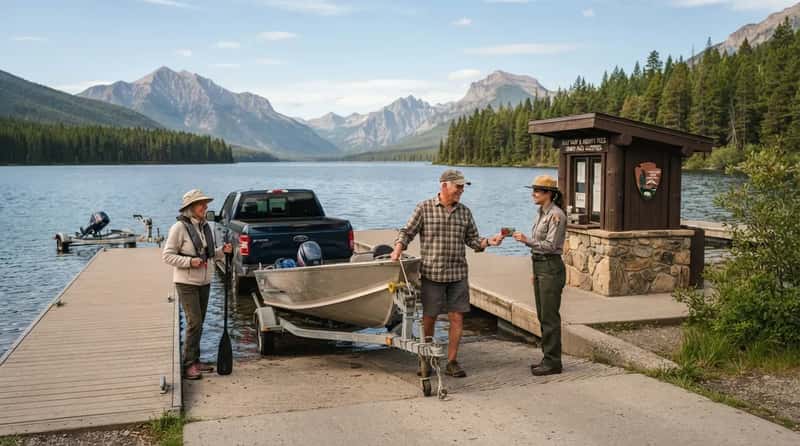
Entry is only part of the story. The Senior Pass also gives a 50% discount on some amenity fees, such as camping, swimming, boat launching, and specialized interpretive services at some sites. Those two words, “some sites,” matter a lot.
The discount isn’t uniform. In some cases, only the pass holder gets the 50 percent reduction. Half-price perks can cover swimming, boating and tours, but only at certain places. Ask at the desk before you pay full price for anything on that list.
#7 – The Lakeside Loophole Most Park Fans Skip
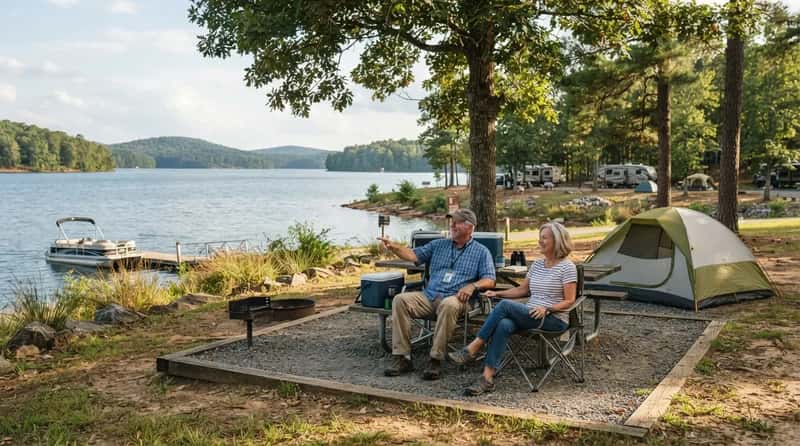
Some of the best deals aren’t in national parks at all. Thousands of lakes, reservoirs, and recreation areas managed by the Army Corps of Engineers are also covered. Most people never think to try the pass there.
The savings carry over to camping. Senior Pass holders get 50% off camping fees at Corps-managed campgrounds. A Camping World guide also reports that the Tennessee Valley Authority gives discounts at its campgrounds to Senior Pass holders. That guide is a few years old, so confirm current policy before you go. Federal lakes can be a bargain that rarely makes the travel lists.
Worth Knowing
- Army Corps lakes, reservoirs, and recreation areas are on the pass’s list.
- Corps-managed campgrounds give Senior Pass holders 50% off camping fees.
- TVA campground discounts come from an older guide, so verify before you book.
- Look up who runs the campground first. It decides whether the discount applies.
#6 – A Pass With Thousands of Places to Use It

The card says national parks, but its reach is much wider. It covers entry to more than 2,000 federal recreation sites. Those sites are run by six federal agencies.
The list includes national forests and wildlife refuges, along with monuments and recreation areas. The pass works at thousands of sites beyond the famous parks. Many people only pull it out a few times a year at the big names. Used well, it works more like a year-round recreation membership.
#5 – The Free Version Some Seniors Qualify For
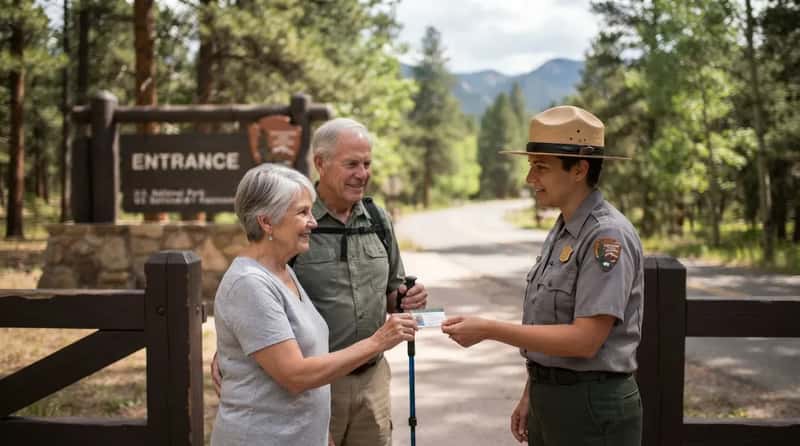
The $80 isn’t the only route. The Access Pass is a free lifetime pass for U.S. citizens or permanent residents with permanent disabilities. Anyone over 62 who meets that definition may qualify, and it comes with the same core benefits.
Many people assume the disability has to be total. It doesn’t. A Parks & Points guide says the disability does not have to be 100%, and proper documentation is required. A free lifetime pass can exist for the people who need it most. The same guide notes a $10 processing fee if you order online or by mail. Check your eligibility before you pay for the Senior Pass.
Fast Facts
- Cost: Free, and good for life.
- Who qualifies: U.S. citizens or permanent residents with a permanent disability.
- The bar: The disability doesn’t have to be 100%, but paperwork is required.
- The catch: A $10 processing fee applies to online or mail orders.
#4 – Non-Residents Now Pay $250 a Year While You Pay $80 Once
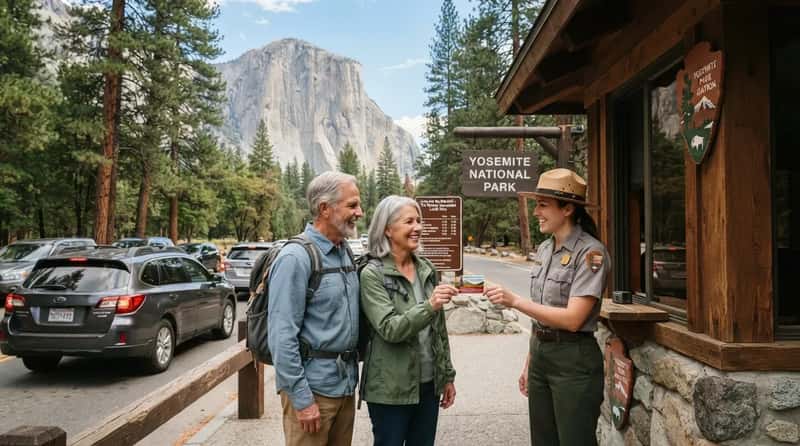
Seniors are sitting on a better deal than they might realize. The standard annual pass for U.S. residents costs $80. That’s the exact price of the Senior Lifetime Pass, which means the general public pays every year for what you pay once.
One senior-focused guide notes that a new non-resident annual pass was introduced at $250. That makes the gap look enormous. What the public pays for one year, you pay once for life. Some retirees argue the whole pricing system now favors the 62-and-over crowd. Whether that’s fair is a debate for the comments.
#3 – Where the Discount Quietly Stops
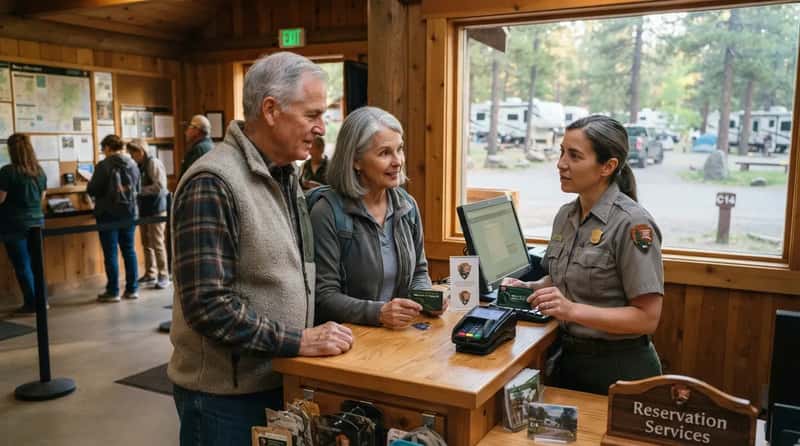
The pass is generous, but it isn’t a magic wand. The Forest Service lists extras such as hookups, dump stations, special tours, transportation systems and reservation services as expanded amenities. These aren’t fully covered, though Senior and Access Pass holders do get 50% off single family campsites.
There’s also a rule on outside operators. The pass generally does not cover or reduce special recreation permit fees or fees charged by concessionaires. The park service also notes that you may need a reservation at a few high-traffic sites. Entry can be free while the extras still cost money. Knowing that ahead of time saves a lot of awkward moments at the counter.
#2 – Most National Park Sites Never Charge at All, and That Changes the Math
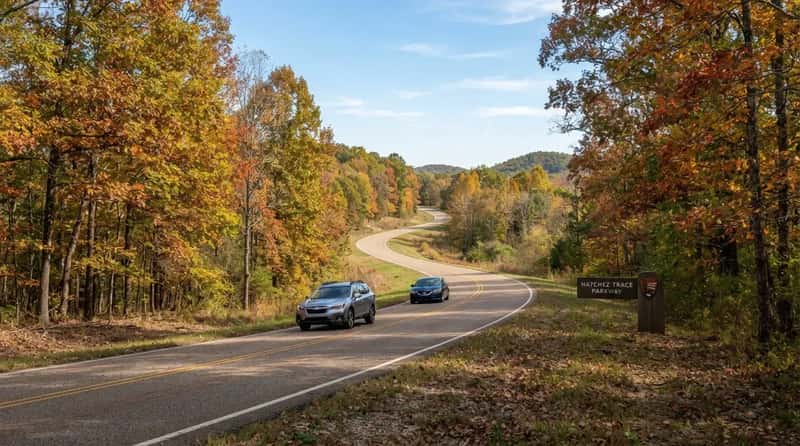
Here’s a twist: a lot of national park sites cost nothing to enter. The National Park Service says most of its sites are free to visit, and only about a hundred of its 400-plus units charge an entrance fee. That means plenty of trips never touch the pass.
That changes how you should plan. Most park units don’t charge entry at all. Some frequent visitors argue that if you only visit free sites, the pass is a waste. They have a point. But for big-name parks that charge per vehicle, it pays off fast.
#1 – Half-Price Camping Is the Biggest Saving of All
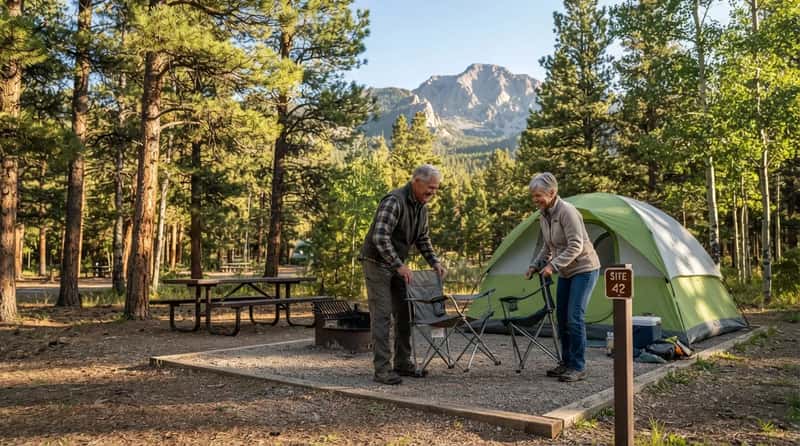
The real money isn’t at the gate. It’s at the campground. Senior Pass holders get free entrance to sites that charge entrance and standard amenity fees, plus a 50% discount on fees at federal campgrounds.
Run a rough example. If a federal site costs $30 a night, a ten-night trip drops from $300 to $150. That’s a hypothetical, but the 50% rule is real. The camping discount can be worth more than the pass itself in a single trip. Even the Forest Service confirms it: holders of Senior and Access Passes get 50% off single family campsites.
The biggest surprise isn’t any single perk. It’s how many of them stack up on one small card. An $80 pass can cover your whole car, open thousands of federal sites, and take half off camping, and the Access Pass can even be free.
Meanwhile, plenty of visitors over 62 still pay full price at the gate. Always check the fine print on what the pass doesn’t cover. Which of these perks surprised you most, and did you already know about the camping discount?