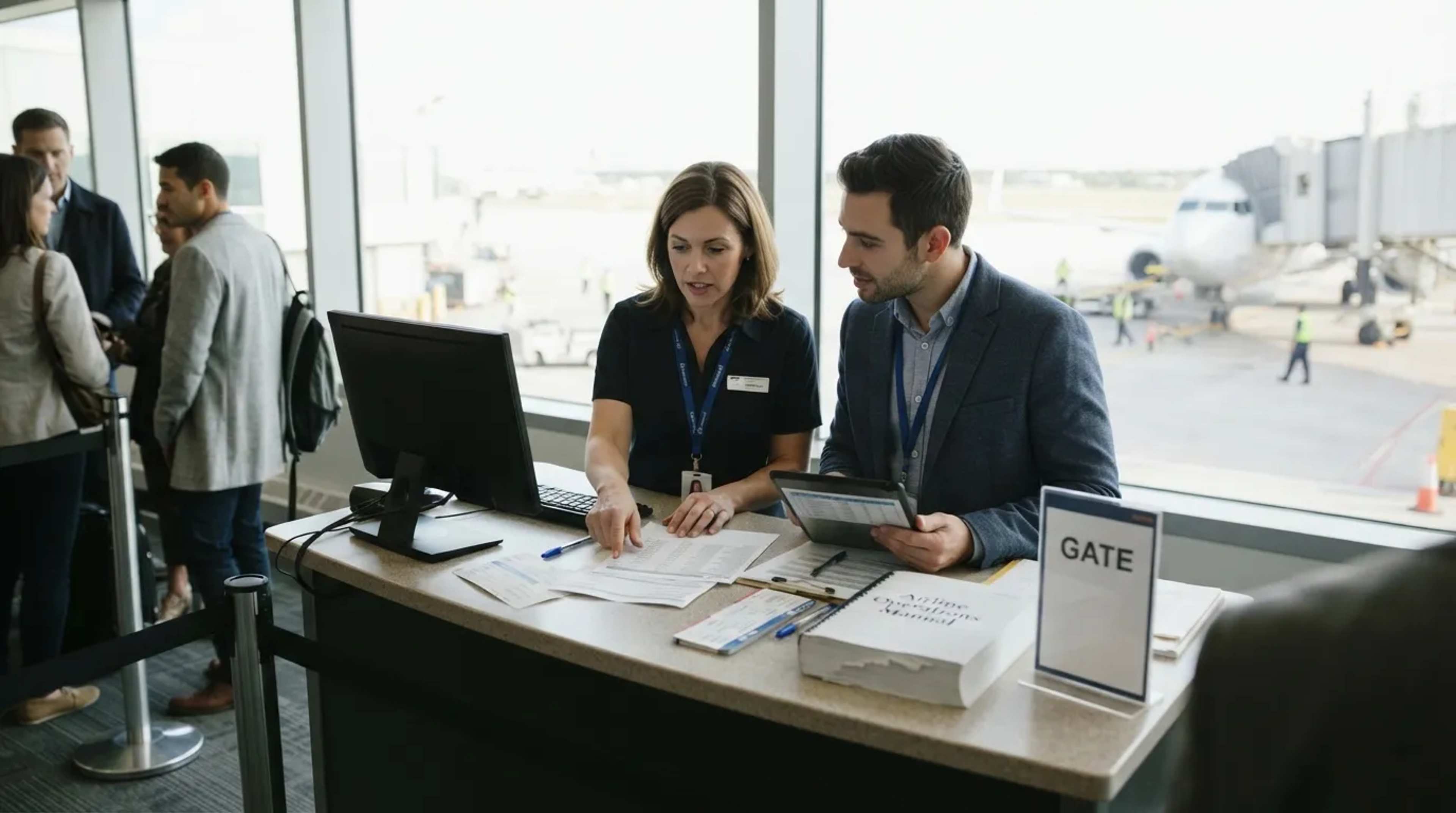
You probably think a gate agent’s job is scanning boarding passes and calling groups. That’s the ten minutes you see. The hour before it is a different job entirely, and it’s where these 15 problems live: seat maps coming apart, standby lists reshuffling by the minute, and sometimes a plane that doesn’t match the one on your ticket.
Some of these problems are small and a little funny. Others can quietly cost a passenger thousands of dollars, and one starts with something sitting in your own bag. Keep scrolling, because the last entry comes with real dollar figures.
#15 – The Family Seated Apart by a Booking Glitch
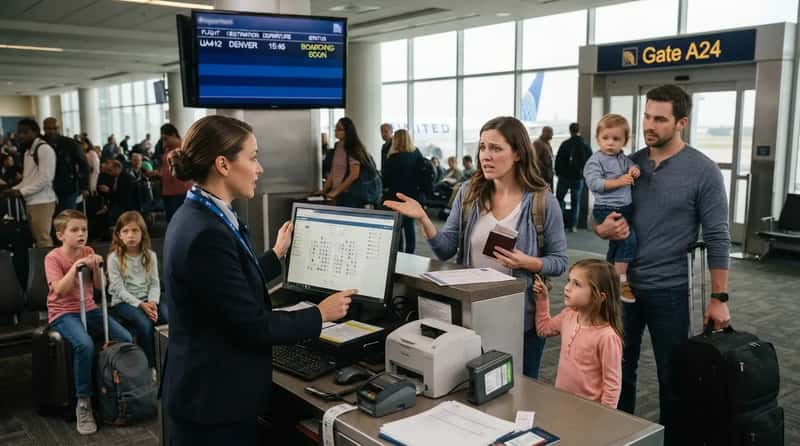
You booked together, paid together, and still ended up scattered across the cabin like strangers. It’s an awful feeling, and it’s more common than most people realize. Agents regularly process seat assignments for passengers the booking system has separated. The split usually isn’t anyone’s decision. It’s what the software did when it couldn’t find seats side by side.
Here’s the twist: an empty seat on the map may not be empty to the agent. Airlines block seats for families or people who need assistance, and other seats are held for elite members or still open for sale. The gate is often where the repair work happens, one swap at a time.
And the list agents are watching next is changing right now.
#14 – The Standby List That Reshuffles Until the Last Minute
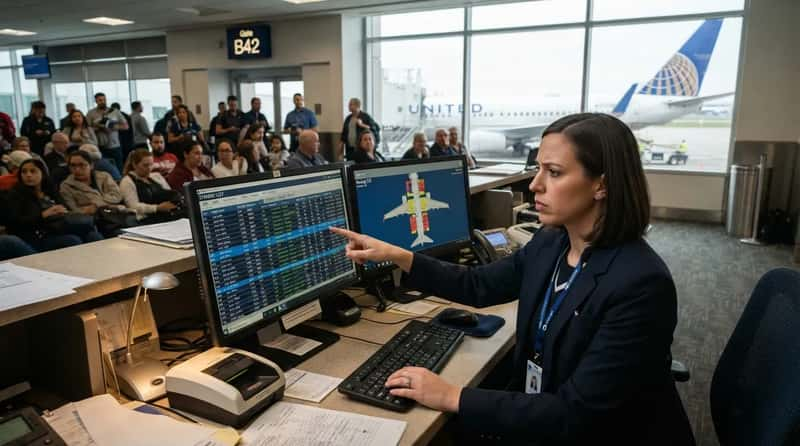
The standby list isn’t a simple line. It’s a live puzzle. Agents watch the open seats and clear unconfirmed passengers in priority order right up to the final minutes. Every no-show and missed connection can move someone up, or leave someone behind.
Priority isn’t first come, first served. It typically depends on how much a passenger paid and their status in the frequent flyer program. Someone who arrived hours early can still lose out to a higher-status traveler. Standby passengers who don’t get a seat roll onto the list for the next flight, and the waiting starts over.
At a Glance
- What sets the order: fare paid and frequent flyer status, not arrival time.
- What moves it: no-shows and missed connections.
- When it settles: not until the final minutes before departure.
- If you miss out: you roll onto the next flight’s list.
To the people stuck in the waiting area, it can look unfair. To the agent, it’s a ranking they don’t control. Either way, the next problem starts with a promise the airline made too many times.
#13 – The Oversold Flight and the Quiet Plea for Volunteers
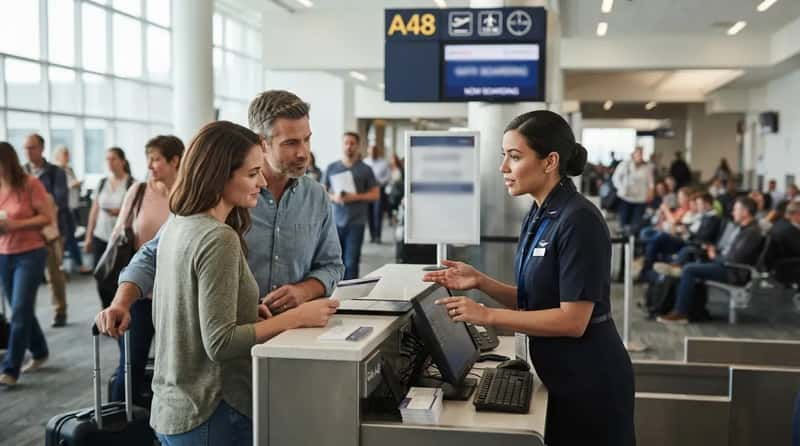
An oversold flight starts with a polite question, not a bump. Airlines must ask for volunteers first and must offer compensation without being asked. The gate team has to work through that step before anyone is turned away.
The first offer is often modest, typically free rebooking plus a small travel voucher. But that’s only the opening bid. The Department of Transportation says there’s no limit on the money or vouchers an airline may offer volunteers. An agent’s authority on compensation can be limited, so politely asking for a supervisor is a reasonable step.
If volunteers do step up, the cabin changes too, and that brings us to a list almost nobody sees.
#12 – The Upgrade Queue That Runs on Software, Not Smiles
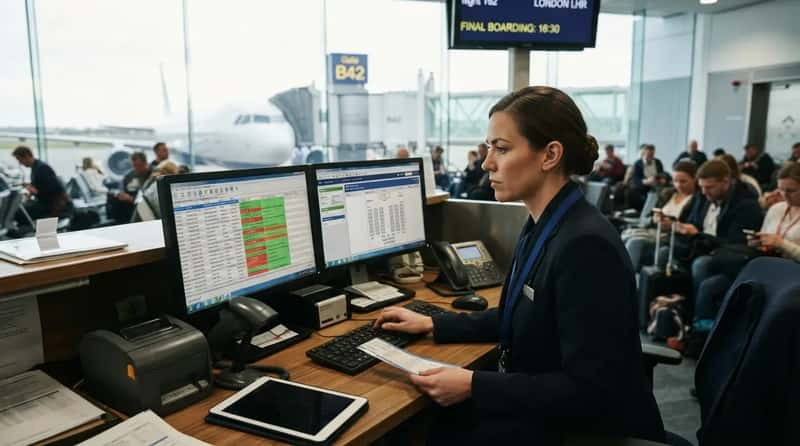
Upgrades don’t go to whoever charms the agent hardest. They go to a list. Agents work through it in order, clearing eligible passengers into premium cabins based on frequent flyer status and fare class. That’s a software ranking, not a mood.
Even agents have limits. They can move passengers between classes, but typically only when operations directs it, often for weight-and-balance reasons. Many cabin changes are about the aircraft, not about you. That’s why a seat shuffle at the last minute can feel random from the outside and completely logical from the inside.
Behind all those moves sits a set of numbers the pilots depend on.
#11 – The Paperwork That Can’t Be Finished Until the Final Headcount
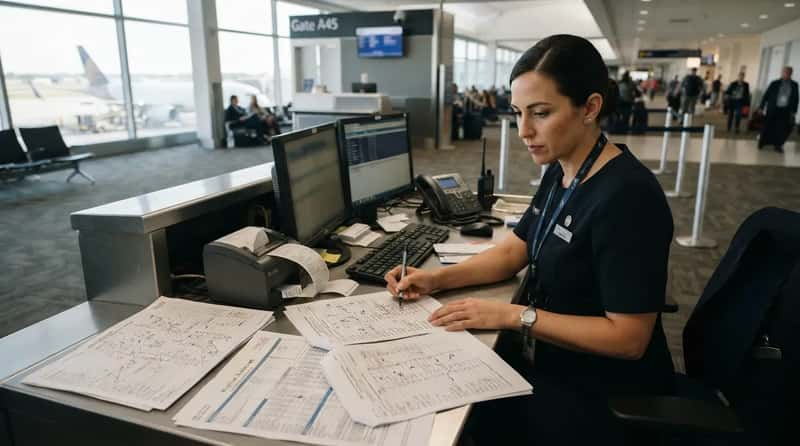
A flight can’t leave without its paperwork. Agents print passenger lists and weight-and-balance information, which pilots use for flight calculations. One veteran agent wrote that the ramp’s numbers go into a template, and the agent adds the final passenger count.
That count is often the last piece. Standbys and missed connections can change it at the very last minute. The number on the page is rarely final until the last person is sorted. Sometimes a seat is reassigned for weight and balance, and the agent has to untangle the confusion that follows.
Paperwork isn’t the only thing that has to fit. Sometimes it’s a bag.
#10 – The Carry-On That Was Never Going to Fit
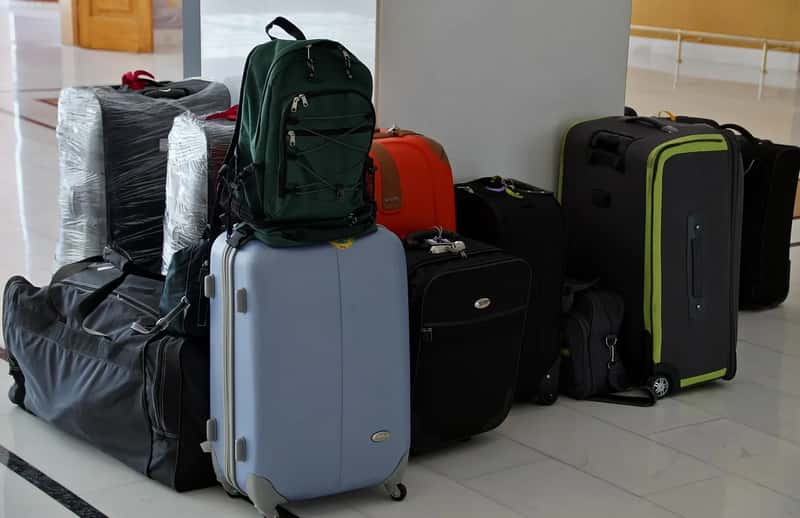
The bag looked fine in the parking lot. At the gate, it becomes a problem. Agents watch carry-ons for size and piece limits, which often means gate-checking oversized items. They have to make those calls before the overhead bins fill up.
Some gate checks are routine. Tags for strollers and car seats are a standard part of the job. The gate team has to tag and track each item, which is why asking before boarding helps. Plenty of travelers grumble that the overhead-bin squeeze is the airline’s own doing, and the agent is the one left to manage it.
But one thing can never ride below the cabin floor, and it’s probably in your bag right now.
#9 – The Power Bank That Can’t Ride in Cargo
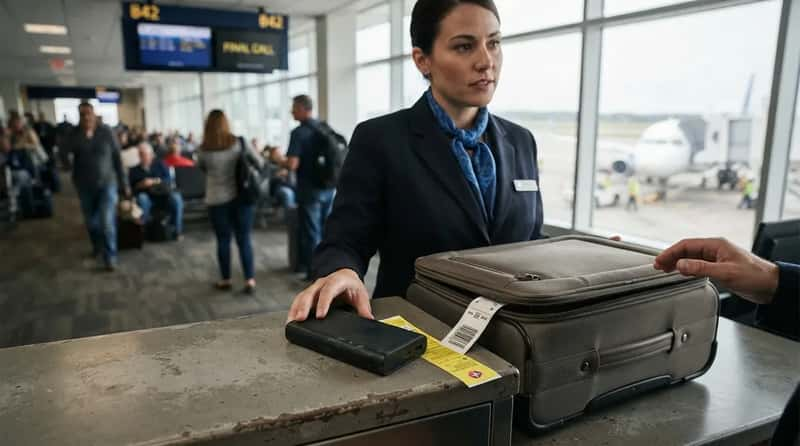
The most overlooked item in a gate-checked bag is the one that can start a fire. When a carry-on is checked at the gate or planeside, all spare lithium batteries and power banks must be removed and kept with you in the cabin. That’s FAA guidance.
One 2026 travel guide warns that no one at the gate will take the power bank out for you. The reasoning, as that guide puts it, is that crew can’t detect or suppress a thermal runaway event in the cargo hold. It’s a quiet rule with a scary reason behind it.
Some of the busiest gate work, though, is the kind you never notice.
#8 – The Wheelchair Request That Has to Be Lined Up Early
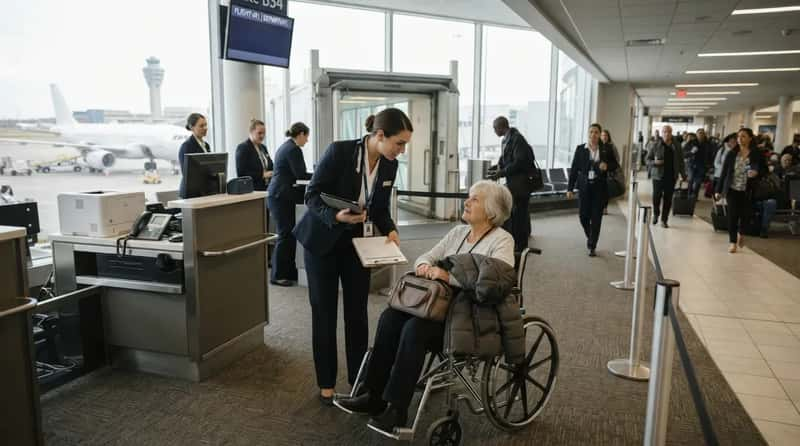
Agents coordinate help for wheelchair passengers and children traveling alone, all while preparing the same plane to depart again. That’s a lot of moving pieces in a very short window. Most of it happens out of sight.
The job also takes training. Agents help passengers who need mobility assistance get to the gate and board, and may attend special training for it. That coordination happens alongside every other task in the final hour. Seats are also sometimes blocked in advance for people who need assistance, which is one more reason early notice helps.
The next passenger comes with a checklist all their own.
#7 – The Child Flying Alone and the Hand-Off Plan
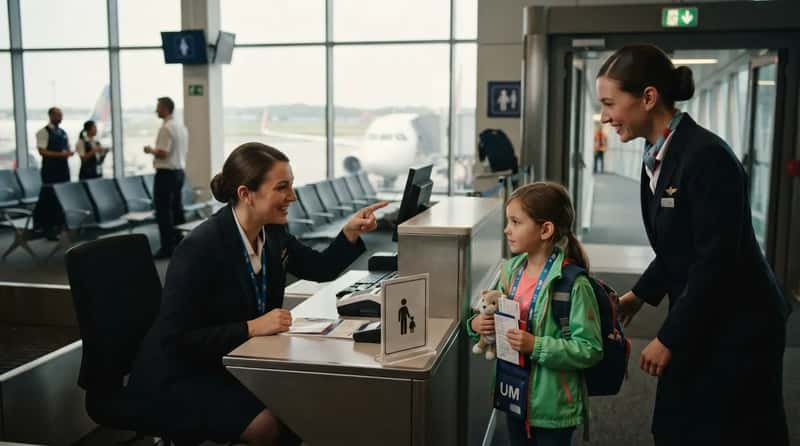
A child traveling solo adds a whole second checklist to the hour. Agents help unaccompanied minors board safely and make sure the inflight staff know the child may need supervision. That communication has to happen before the cabin fills.
Worth Knowing
- Who’s in the loop: the gate agent and the inflight crew, before boarding opens.
- Why timing matters: the hand-off has to be settled before the cabin fills.
- What varies: each airline sets its own rules for these travelers, so details differ by carrier.
These young travelers also shape big decisions. When agents think about holding a flight, they don’t want to strand unaccompanied minors or elite frequent fliers. A child’s travel plan can shape how long a plane waits. Airline rules for these travelers vary, so the details differ by carrier.
Then there’s a checkpoint that can end a trip before it starts.
#6 – The Passport Check That Can End a Trip at the Door
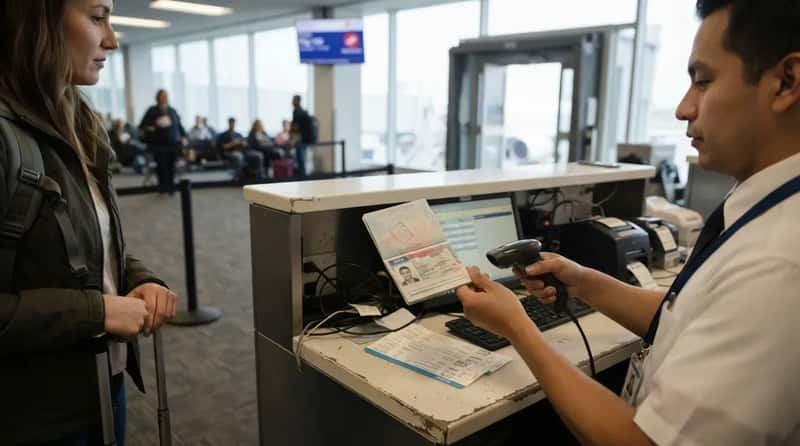
On international flights, the gate doubles as a document checkpoint. Agents spend time verifying passports and any necessary visas. That happens before general boarding even begins.
They also match people to their passes. Agents may cross-reference boarding passes with ID to make sure everyone boards the right flight. One missing document can end the trip right at the gate. The goal is that every passenger is legally and operationally ready to fly before the door closes.
Sometimes the document is fine and the ticket is the problem.
#5 – The Ticket Glitch That Only Shows Up at the Gate
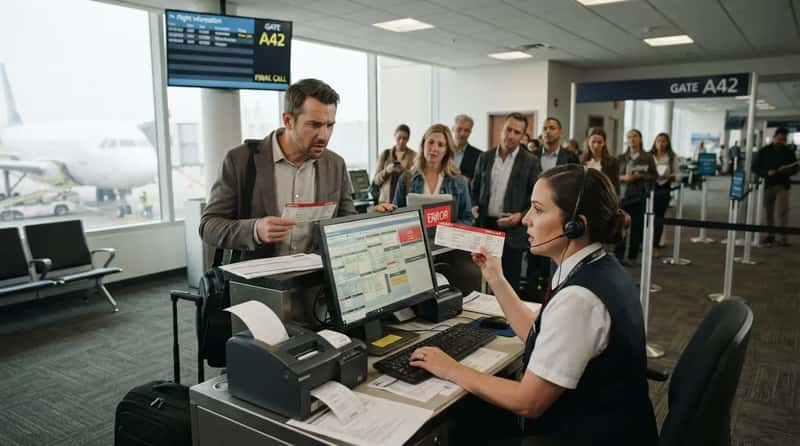
Sometimes the ticket looks perfect until the moment it doesn’t. Agents handle ticketing discrepancies, from collecting unpaid baggage fees to reissuing boarding passes after system errors. These tend to surface late, when the line is already forming.
Agents can see everything about each customer’s ticket. That means a small data error can become a big gate problem. Attention to detail also matters so passengers board the right flight with the right tags on their luggage.
Now comes the call that makes someone furious no matter how it goes.
#4 – The Plane That Might Wait for Late Connections

Sometimes the real question is whether to wait. If a large group is delayed, or it’s the last flight of the day, agents might hold a plane. It’s one of the most debated calls at the gate.
It isn’t a free choice. Agents have to weigh whether the crew will “time out.” The crew’s legal clock can matter more than your connection. One veteran agent wrote that if a flight arrives after yours departs and you aren’t holding, those seats can go to standbys.
Why It Stands Out
- It’s a judgment call: there’s no single rule that fits every delay.
- The clock is real: a crew that times out can’t simply keep waiting.
- Someone always loses: held seats can otherwise go to standbys.
- Who’s weighed in: large groups, last flights of the day, unaccompanied minors, and elite fliers.
Whichever way the decision falls, someone feels wronged. And none of it matters until the cabin is ready.
#3 – The Cabin Crew Sign-Off Behind Every Boarding Call
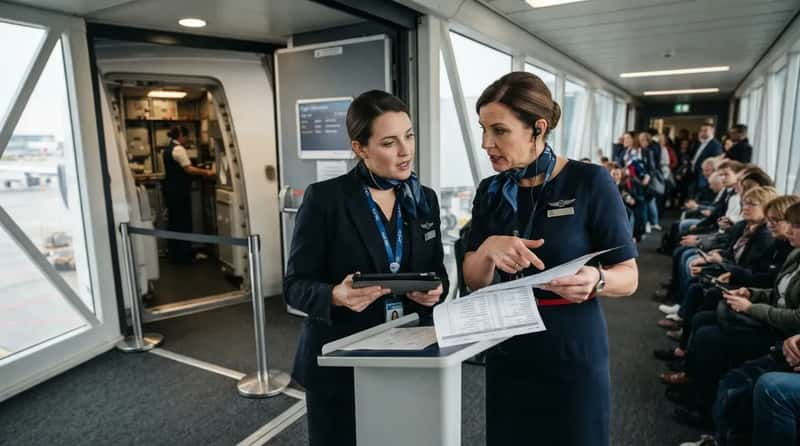
Boarding doesn’t start on the agent’s say-so alone. One former agent wrote that flight attendants prepare the plane first and tell the agent when boarding can begin. Procedures vary by airline, but crew readiness matters.
Other problems can interrupt that. Agents deal with last-minute seat changes, upgrades, customer questions, and crew or maintenance issues. Any one of those can push back the first boarding call. To passengers, it just looks like a gate area full of people staring at a closed door.
Then there’s the surprise that can change the whole plane.
#2 – The Aircraft Swap That Quietly Cuts Seats
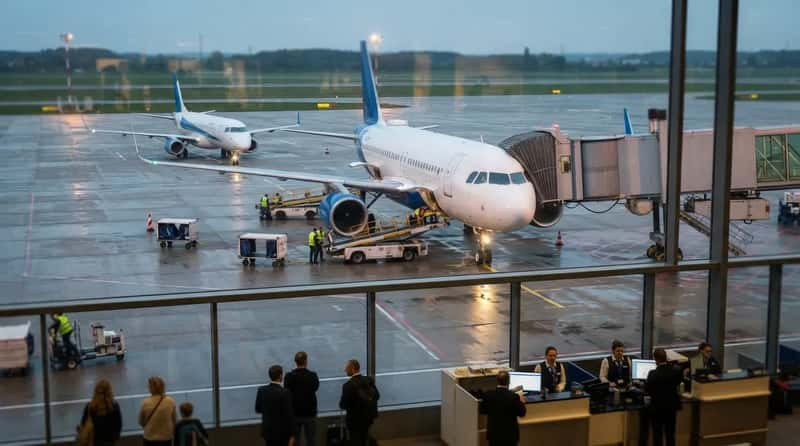
Overbooking isn’t the only way you can lose a seat. Denied boarding can come from overbooking, aircraft changes, crew shortages, or weight limits. The plane you booked may not be the plane that shows up.
The rules take a swap seriously. If the aircraft is changed to a smaller model, passengers can be eligible for the same compensation as with an overbooking. Weight limits can also force a smaller load. Under some conditions, a plane’s operating weight may need to be reduced for a safe takeoff.
So what does “compensation” actually mean in dollars? That’s the last problem, and the most expensive one.
#1 – The Bump Math That Decides Who Gets Paid
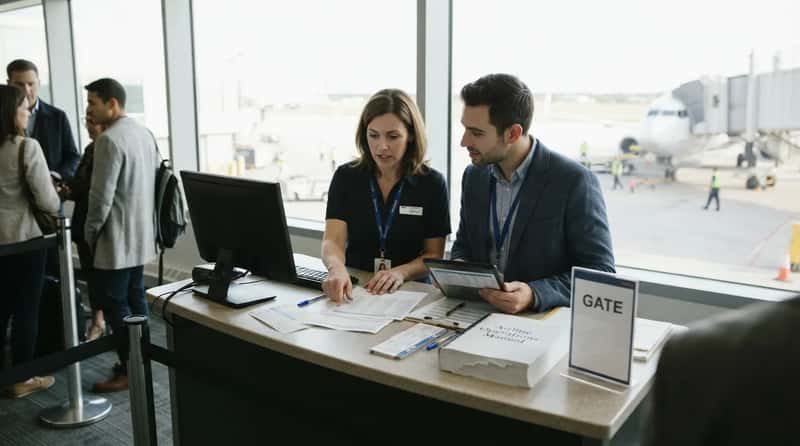
When nobody volunteers, the airline has to pay by formula. For domestic flights, a one-to-two-hour delay in arrival brings 200% of the one-way fare, up to $1,075. A delay of more than two hours brings 400%, with a cap of $2,150. On a $200 one-way fare, a 2.5-hour delay works out to $800.
If you reach your destination within an hour of the original arrival, you get nothing. Exceptions in 14 CFR 250.6 can also remove the payment. Amounts are adjusted periodically, so it’s worth checking the current Department of Transportation page before you count on a number.
Quick Compare
| Payout | Domestic delay | International delay |
|---|---|---|
| None required | Under 1 hour | Under 1 hour |
| 200% of one-way fare, up to $1,075 | 1 to 2 hours | 1 to 4 hours |
| 400% of one-way fare, up to $2,150 | Over 2 hours | Over 4 hours |
That’s the strange part of the final hour at a gate. Almost every problem on this list is invisible from your seat, and every one of them gets solved before you’ve even heard your group called.
Next time you’re waiting by that closed door, remember that the quiet agent at the desk isn’t doing nothing. They’re doing everything.