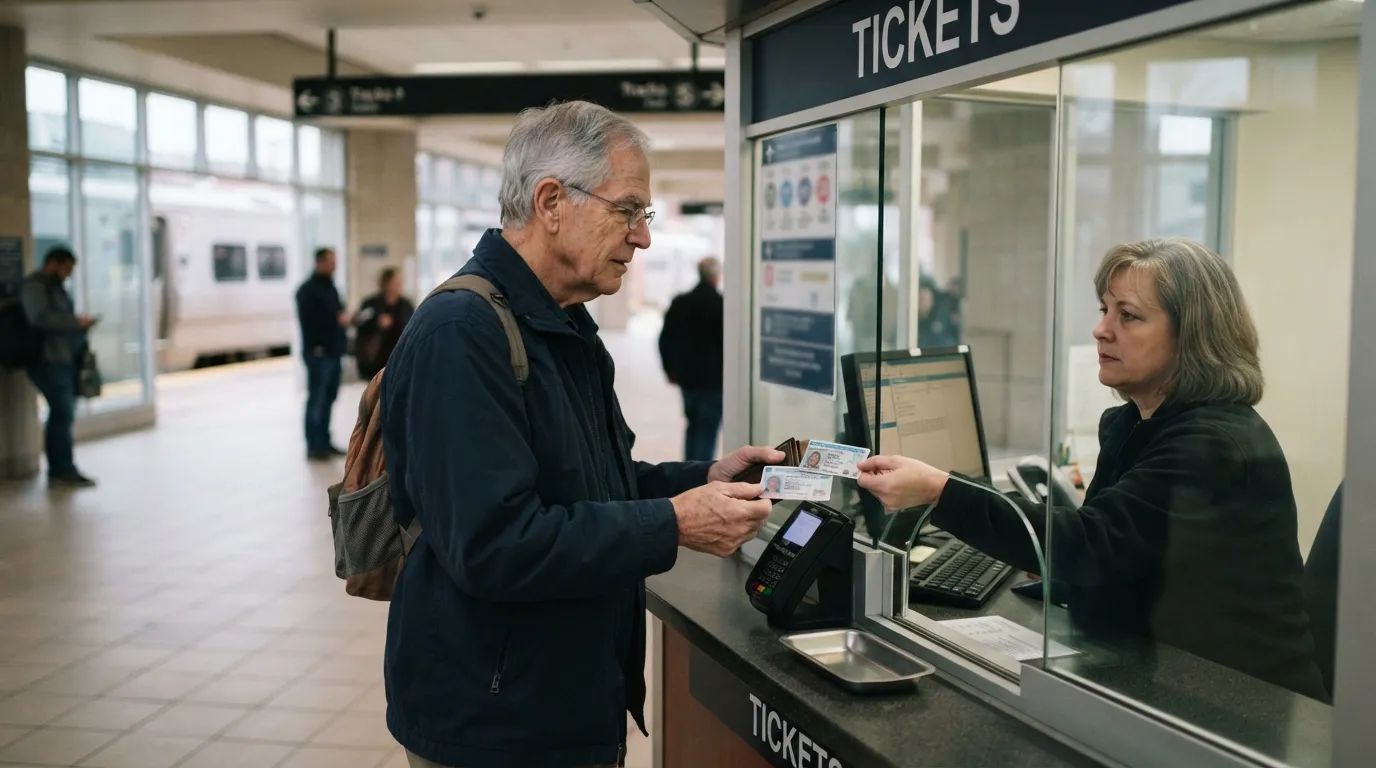
Most riders over 65 assume the senior discount shows up on its own, like a coupon the system just knows about. It usually doesn’t. Amtrak’s 10% off, Britain’s one-third-off railcard and half-price commuter rail in New York are all real, but many of them only appear if you pick the right option, carry the right ID, or simply ask.
Some of these deals start at 60, not 65. Some skip the sleeper car entirely. One accepts a Medicare card but turns away a Medicaid card at the window. And one tiny booking choice can quietly cost you money on a ticket you thought was already discounted. Let’s start with the one most Americans miss on the very first screen.
#15 – Amtrak’s 10% Senior Fare Doesn’t Apply Itself

The most common rail discount for Americans 65 and up is also the easiest one to miss.
Amtrak travelers 65 and over can get 10% off most rail fares on most Amtrak trains. But you have to choose “Senior” as at least one traveler type when booking, and the discount then applies automatically. There’s no promo code to hunt for. Leave the default “Adult” selected and you simply pay full price.
Some riders shrug at 10%, but on a $200 ticket that’s $20, and it adds up on a round trip. One guide says the discount may not combine with Saver Fares or other promotions, so compare totals before you book.
- You must be 65 or older on the day of travel.
- The Auto Train and weekday Acela trains are excluded.
But that’s nothing compared to what happens if you’re only 60 and heading north of the border (#14).
#14 – The Amtrak Rate That Starts Five Years Early
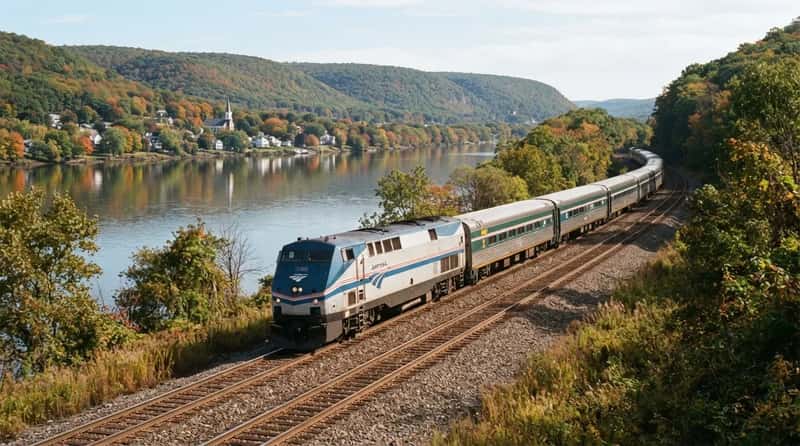
Some Amtrak riders qualify at 60, and plenty never realize it.
On cross-border services run jointly by Amtrak and VIA Rail Canada, the 10% senior discount applies from age 60. One recent FAQ names the Maple Leaf, which links New York and Toronto, as an example.
Travelers aged 60 to 64 who book as regular adults leave money on the table. That’s five years of discounts hiding in plain sight. Pick the senior traveler type, then check that the total actually drops.
At a Glance
- Domestic Amtrak routes: 65 and over
- Amtrak/VIA cross-border routes: 60 and over
- Booking step that unlocks both: choosing the senior traveler type
The next twist hides inside the trip most seniors dream about: the overnight sleeper (#13).
#13 – The Sleeper-Car Catch Nobody Mentions at Booking

The overnight train is where the 10% discount shrinks the most.
The discount doesn’t apply to sleeping accommodation charges. It covers the underlying rail fare, while the sleeper charge is usually the bigger piece of a roomette or bedroom price.
The savings on a cross-country sleeper may be much smaller than the headline suggests. Guides disagree on Business class. One says Business and First class upgrades are excluded, while another says the discount applies to Coach and Business class. Trust the final price screen, not the blog post.
And the paperwork rules are stricter than most people expect (#12).
#12 – Why Your Spouse Pays Full Price and You Carry ID

The senior fare belongs to one person only, and it comes with a paperwork check.
Amtrak guidance calls for valid photo ID at purchase and on board. A driver’s license or passport is the usual proof. Leave it in the suitcase overhead and you may have an awkward conversation in the aisle.
With a companion, only the senior passenger gets the reduction. A younger spouse or friend pays the regular fare. If you’re booking for a mixed group, add each person under the right traveler type.
Cross the border, though, and another railroad has a bigger markdown waiting (#11).
#11 – VIA Rail’s 15% Senior Deal Comes With a Deadline

Canada’s national railway is offering seniors a bigger percentage than Amtrak does.
Passengers 65 and over can get 15% off Economy Plus, Business and Business Plus fares, any day of the week, on all VIA Rail routes. You book at least 30 days ahead and select “Senior (65+).”
The booking window runs to January 5, 2027, for travel between September 9, 2026 and April 30, 2027. VIA’s own page calls it a limited-time offer. Older guides still list 10% for age 60, so check VIA’s official page first.
Now for the discount fans call the best in the world, and it costs less than a theater ticket (#10).
#10 – Britain’s Senior Railcard Takes a Third Off for £35

For one yearly fee, an entire country’s rail network gets cheaper.
The Senior Railcard is an annual card for people 60 and over. It takes a third off Standard and First Class tickets, Advance fares and Off-Peak travel. The price rose from £30 in 2025 to £35 in 2026.
There is no upper age limit and no income test. Anyone 60 or over qualifies. Fans call it the best-value senior rail perk anywhere. That’s opinion, but at this price it’s hard to argue on paper.
Most buyers also overlook a cheaper way to pay for it (#9).
#9 – The £80 Three-Year Card Most Buyers Skip

Renewing every year is actually the pricier habit.
The three-year card costs £80, saving £25 compared with three single-year cards. The math works: three one-year cards come to £105. You also skip the yearly renewal chore.
Quick Compare
- One-year card: £35
- Three one-year cards back to back: £105
- Three-year card: £80, a £25 saving
That’s a £25 saving for committing once. The catch is certainty. If health or travel plans are unclear, the one-year card is the safer bet. Otherwise, the three-year option is the quiet winner.
Next up is a feature that makes even tiny journeys worth the discount (#8).
#8 – No Minimum Fare, Plus One London Morning Catch
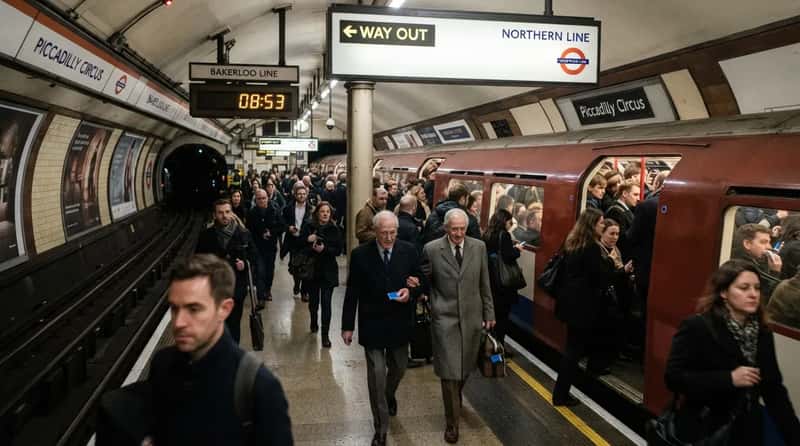
The Senior Railcard doesn’t care how short your trip is.
Northern Railway says there is no minimum or maximum fare, so a short hop is discounted like a long haul. That’s different from some other age-based cards.
There is one trap. The discount isn’t valid in the London and South East morning peak. Early weekday trains into the capital are where seniors most often get caught. Timing details vary by route, so check before you travel.
The card has a second life underground, if you know where to register it (#7).
#7 – The Railcard Trick That Cuts London Tube Fares
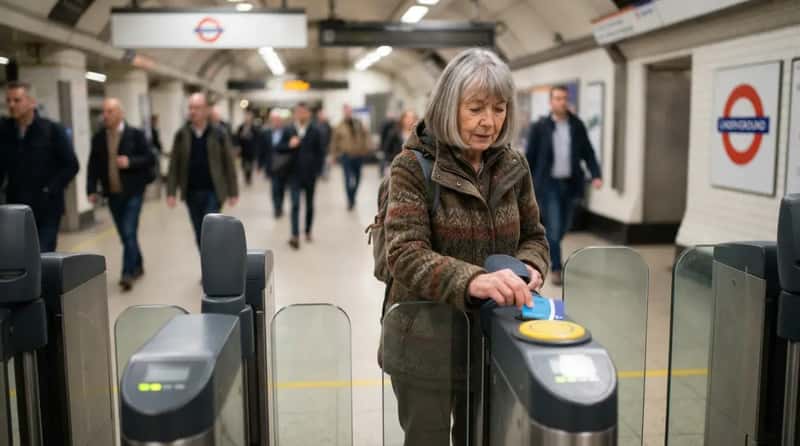
Without one extra step, your card does nothing below street level.
Railcards don’t discount the Underground, DLR or buses by default. But the Senior card can be added to an Oyster card for one-third off Off-Peak tube and DLR fares, and you register it at a TfL ticket office or selected stations.
Trainline says linking it gets one-third off Off-Peak pay-as-you-go fares. Its page also mentions that people 60+ who live in a London borough can apply for a free Oyster Photocard. That page is dated, so check Transport for London before relying on it.
Now back to America, where one commuter line cuts fares in half (#6).
#6 – Half-Price Commuter Rail on the LIRR and Metro-North

New York’s commuter railroads quietly take up to 50% off for seniors.
Seniors 65 or older, people with disabilities, and Medicare recipients save up to 50% off the full one-way peak fare. Tickets are valid on all trains until 4 a.m. the day after purchase.
The catch is weekday mornings. Reduced-fare tickets can’t be used on LIRR morning peak trains arriving at Penn Station, Grand Central, Atlantic Terminal, Hunterspoint Avenue or Long Island City between 6 and 10 a.m. Evening peak trains are fair game. Metro-North has a similar rule for Grand Central.
There’s also a hidden perk for riders who miss the ticket window (#5).
#5 – Buying on the Train Costs Seniors No Extra

Missed the ticket machine? The penalty aimed at everyone else doesn’t apply to you.
Reduced-fare riders can buy tickets onboard without paying the onboard surcharge. Reduced-fare tickets are sold at ticket offices and on the train, and the onboard price isn’t higher, but they can’t be used in morning peak hours.
For seniors, the usual onboard surcharge disappears. Have your proof of age ready when the conductor comes through.
Worth Knowing
- Accepted proof includes a Reduced-Fare OMNY card or MetroCard, a Medicare card, a driver’s license, a birth certificate or a passport.
- Reduced-fare tickets are sold at ticket offices and on the train.
- Morning peak trains are still off-limits for these tickets.
Frequent riders may have an even better option waiting at the ticket office (#4).
#4 – The Shareable 10-Trip Ticket

One ticket booklet may cover several trips, and more than one rider.
A 2025 reader guide reports that 10-trip reduced-fare tickets are valid for 60 days, can be shared among eligible riders, and aren’t valid inbound peak. That’s a guide, not the railroad’s own wording, so confirm the details at a ticket office.
The sharing detail could make it a bargain for couples who both qualify. The MTA also points out that daily or frequent commuters can get similar savings and more flexibility with a monthly ticket. Run the numbers for your own schedule.
The next ID mix-up gets riders turned away at the window (#3).
#3 – Your Medicare Card Doubles as a Fare Pass
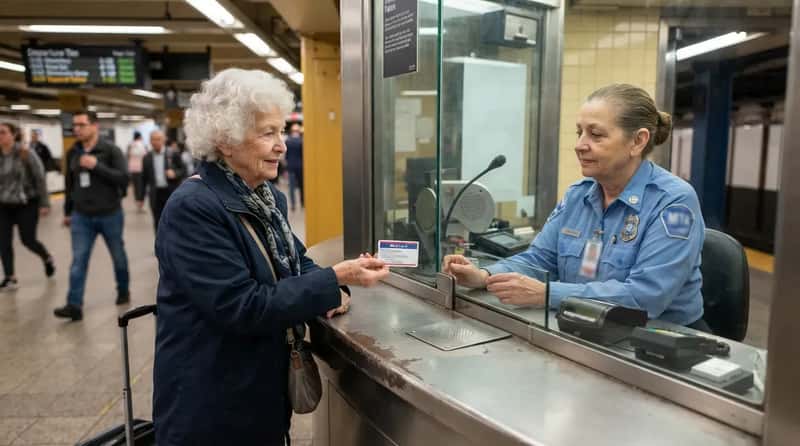
A Medicare card works at the ticket window, and a Medicaid card does not.
The MTA says a Medicare card is accepted, but a Medicaid card is not valid for reduced fares. Mixing up the two is an easy way to get turned away. Other accepted documents include a driver’s license, birth certificate or passport showing you’re over 65.
The discount lists Medicare recipients as their own category, alongside seniors and people with disabilities. If you hold a Medicare card, bring it.
The next discount comes with a weekly cap that most riders have never heard of (#2).
#2 – NYC’s Reduced-Fare Card and Its Lower Weekly Cap

Half-price subway rides come with a second, quieter bonus.
Reduced-fare covers New Yorkers 65 and older and halves the fare on subways, buses and the Staten Island Railway. Under the current fare structure, reduced rides are listed at $1.50 against a full $3.00.
The weekly cap also halves. Local transit’s cap is $35 a week, or $17.50 for reduced-fare customers. After that, rides are unlimited for the rest of the seven days.
Fast Facts
- Single ride: $1.50 reduced versus $3.00 full
- Weekly cap: $17.50 reduced versus $35 full
- Covers subways, buses and the Staten Island Railway
- Apply in person at one of 29 subway stations with 24/7 Customer Service Centers
Getting the card takes some effort. You can also use the MTA’s Lower Manhattan center or mobile sales vehicles. Reporters note that in-person applying can be a barrier, and the MTA will ship cards to applicants who apply by mail.
The biggest discount of all isn’t any one railroad’s idea (#1).
#1 – The Federal Half-Fare Rule Behind Many Transit Systems
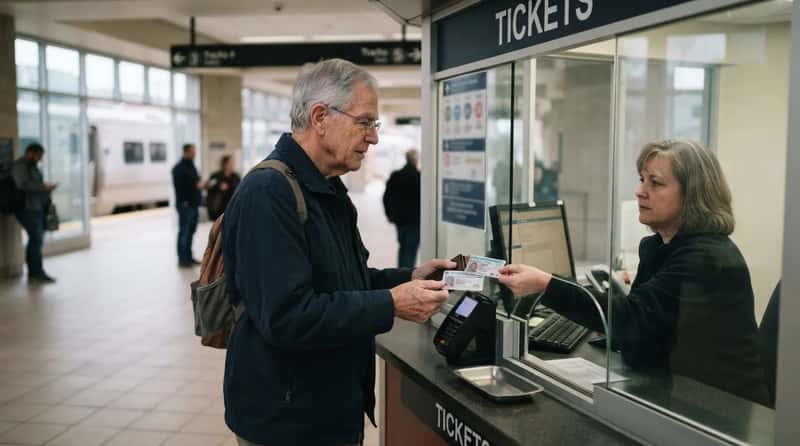
The broadest senior rail break is written into federal transit policy.
Federal transit law has long required agencies that take certain federal funds to offer half-price fares off-peak to seniors 65 and over. Medicare cardholders are included in that rule. Details vary by agency, so ask how your local system applies it.
Many agencies go beyond the minimum, and the ages differ. One guide lists NJ Transit with a 62+ threshold. The rule is a floor, and local programs build on it, which is why the same train ride can cost seniors different amounts in different cities.
Which brings us to the one lesson all 15 have in common.
Almost none of these discounts are automatic. Amtrak makes you select “Senior” yourself. The Amtrak/VIA cross-border rate starts at 60, not 65. The sleeper charge is left out. And New York’s commuter rail accepts a Medicare card but not a Medicaid card.
Rules change and some deals come with deadlines, so check the official page before you pay. The savings are real, but they tend to go to the people who ask. Next time you’re at a ticket window or a booking screen, ask first.