You survived the hard part. The train got you across the state, your seat was fine, and then you step onto the platform and realize the trip isn’t over. At some of America’s best-known stations, the walk from train to taxi is the leg nobody warns you about.
We lined up 15 stations, from the shortest hop between platform and curb to the longest slog. No agency publishes measured platform-to-taxi distances, so this order is an editorial call, based on station layouts and each station’s own taxi guidance. The gap between the easiest and hardest is bigger than you’d guess. And the station at the very bottom isn’t the one most people would pick.
#15 – San Diego Santa Fe Depot: The Platform That Practically Hands You to the Curb
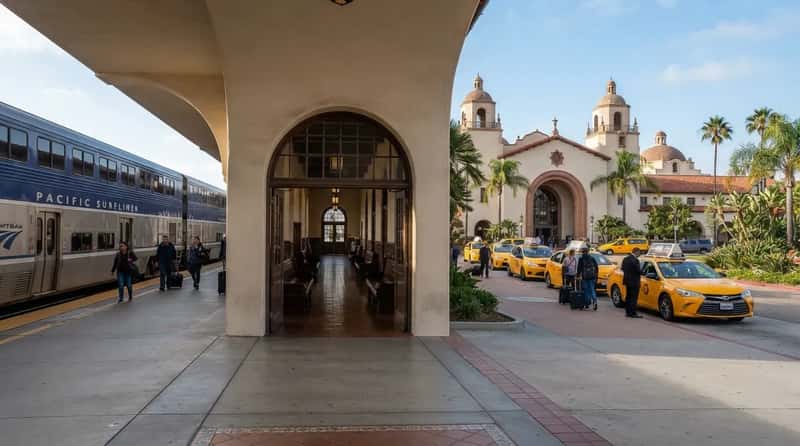
The shortest platform-to-taxi trip on this list belongs to a depot that opened in 1915. Its tracks run at ground level behind the Spanish Colonial Revival building. No deep stairwell or tunnel separates your seat from the main hall, which is rare for a big-city station.
At a Glance
- Opened in 1915
- Spanish Colonial Revival building
- Tracks at ground level behind the main hall
- Cabs and rideshare cars gather at the front curb
From the platform it’s a stroll through the waiting room and out to that curb. We’re working from layout, not a stopwatch, so treat this as the baseline. Every station below makes the trip harder. And the next one has a landmark you’ll spot long before you reach the street.
#14 – Portland Union Station: A Clock Tower, a Neon Sign, and Almost No Walk
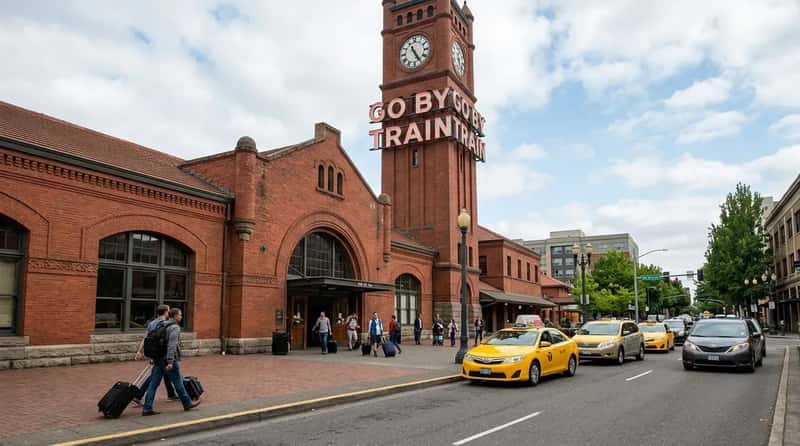
Portland’s 1896 depot is famous for its tall clock tower, and the walk to the street is just as simple. The platforms sit at ground level directly behind the old building. To reach the front doors, you cross the historic waiting room and that’s about it.
That’s why it feels like an easy arrival. The glowing “Go By Train” sign on the tower is one of the best-known rooftop signs in the city. You’ll probably be looking up at it while you wait for your ride. The next stop is also a straight shot, but it tests how long a single concourse can feel.
#13 – Boston South Station: One Long Concourse and You’re Out
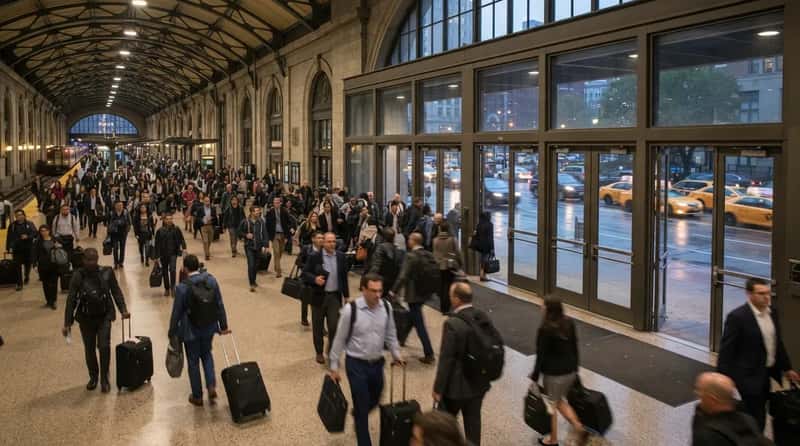
South Station is a terminal, so the tracks end right at the concourse. That makes the walk a straight line instead of a maze. Step off the train, head the way everyone else is heading, and the street-side doors are in front of you.
Cabs typically line up on the Atlantic Avenue side of the building. The hardest part is usually the crowd, not the distance. At rush hour, commuters can turn the concourse into a slow-moving river, and you’re swimming against it with a suitcase. Still, the next station has an extra step this one never asks of you.
#12 – New Orleans Union Passenger Terminal: A Mid-Century Hall With a Short Exit
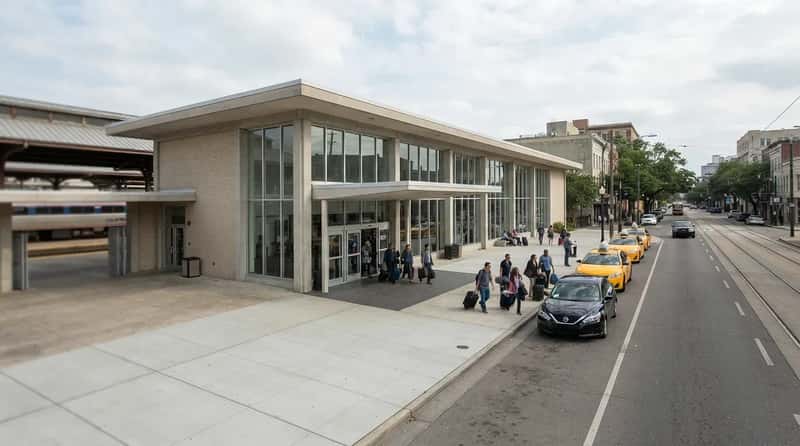
New Orleans’ terminal opened in the 1950s, and its layout is old-school and direct. Trains stop at the back of the building, and the front doors face Loyola Avenue. Most passengers cross the main hall once and they’re done.
The platform isn’t the problem here. The real friction is figuring out exactly where your ride is meeting you. A short walk turns into a long one if you head to the wrong side of the building. It’s a lesson that matters even more at the next station.
#11 – Baltimore Penn Station: Gorgeous Hall, Stairs Between You and the Curb
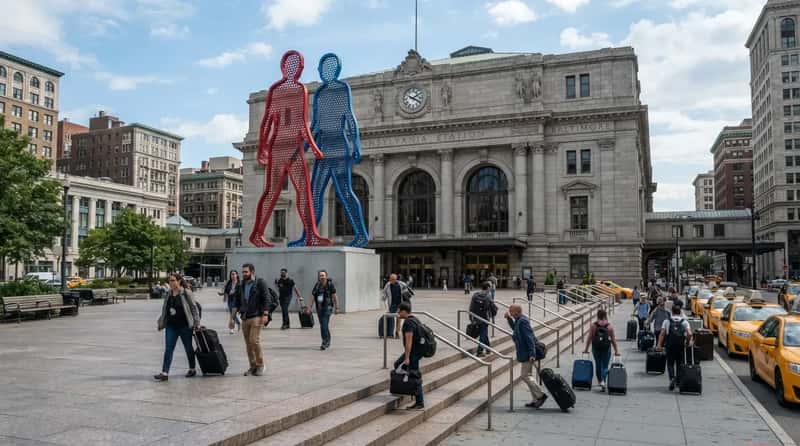
Baltimore’s Beaux-Arts station dates to 1911, and you notice the grandeur the moment you walk in. You also notice that stairs and elevators connect the platforms to the main hall. That extra vertical step is where this station starts to cost you time.
Outside, a huge sculpture called Male/Female towers over the front plaza. Plenty of visitors stop to photograph it while hauling luggage toward the cab line. It isn’t a long walk, but it isn’t a straight one either. The next station asks you to cross an even bigger room.
#10 – Philadelphia 30th Street Station: A Cavernous Concourse Between Train and Cab
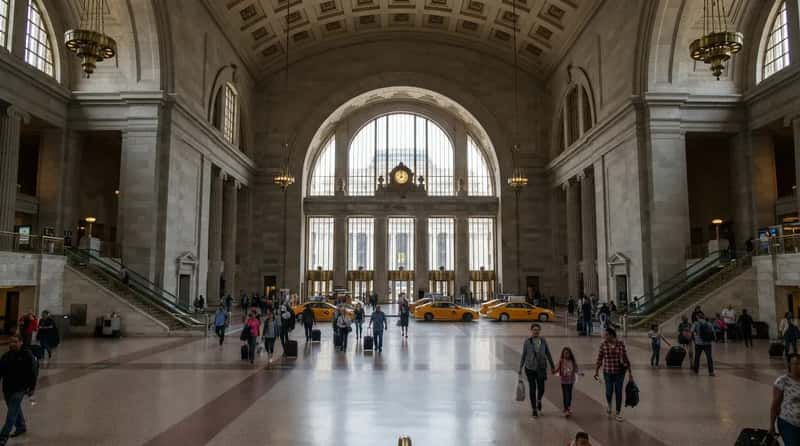
30th Street opened in 1933 and was built on a monumental scale. Passengers move between the platforms and the street through a vast main concourse. Stairs, escalators, and elevators handle the change in level, but the room itself is the longest part of the trip.
Taxis wait outside the main entrance, and you can see the doors from far away. The ceilings soar roughly 95 feet overhead, and the room was designed to impress, not to rush you out. That’s great for a photo and less great when your ride is idling at the curb. The next station has a different problem: too many people headed in too many directions.
#9 – Newark Penn Station: Three Systems Under One Roof, and Plenty of Signs to Follow
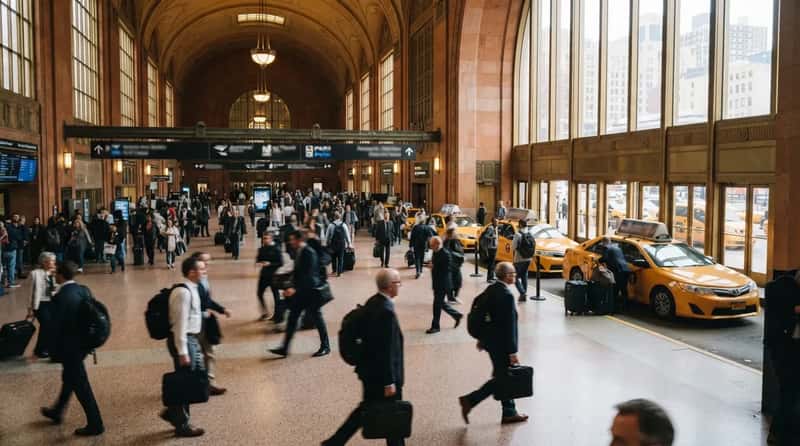
Newark Penn is a busy shared hub. Amtrak, NJ Transit, and PATH all use the building. That means you may be dodging commuters headed for a completely different platform.
Worth Knowing
- Three rail systems share one building: Amtrak, NJ Transit, and PATH
- The walk to the curb is modest, but the foot traffic is not
- Street-exit signs beat following the nearest crowd
- Rush hour is when the shortcut stops feeling short
The distance to the curb isn’t extreme, but the crowd can be. Newark is one of the busiest stops on the Northeast Corridor. Following the signs for street exits, instead of the nearest crowd, saves time. Next up is a station with a landmark tower that does nothing to help you find the cab line.
#8 – Seattle King Street Station: A Venice-Inspired Tower With a Walk to Match
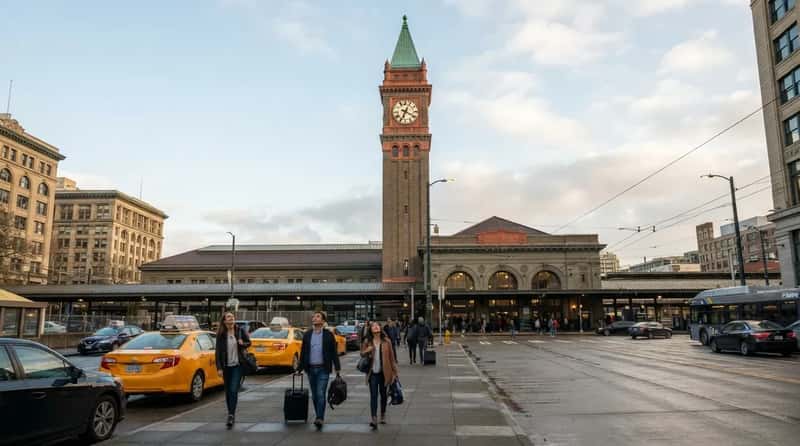
King Street Station’s 1906 clock tower was inspired by the Campanile in Venice. Its platforms sit behind the historic building, so passengers move through the restored waiting room to reach the street. That room reopened after a major renovation in 2013.
The walk is moderate. The building itself is more famous than the walk through it. Visitors often stop to stare at the ceiling and lose their place in line. The next station adds a longer trek, and a crowd that likes to linger.
#7 – Denver Union Station: A Great Hall and a Long Canopy Between Them
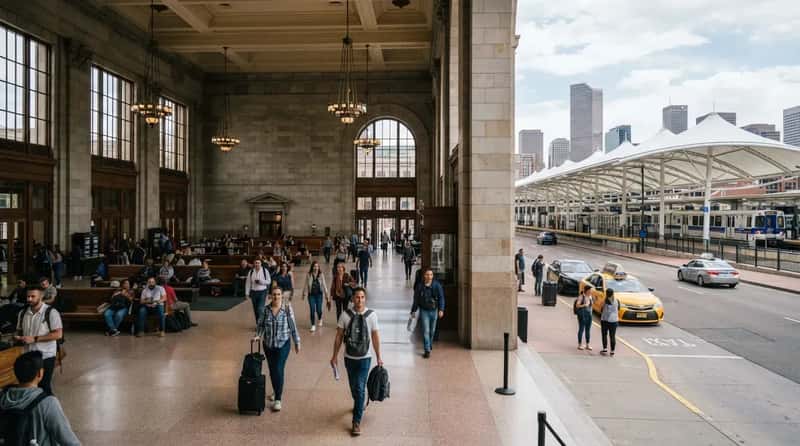
Denver’s station is a blend of old and new. The historic Great Hall faces the street. The rail platforms run beneath the long white canopy of the Train Hall behind it.
That means a walk through the Great Hall before you reach the curb. Denver’s Great Hall is as much a hangout as a transit stop. People linger there, so slow foot traffic can stretch your trip. Taxi and rideshare zones sit on the surrounding streets, so follow the posted signs. Our next station has a cab desk with actual operating hours.
#6 – Washington Union Station: A Taxi Desk That Closes Before Your Train Does
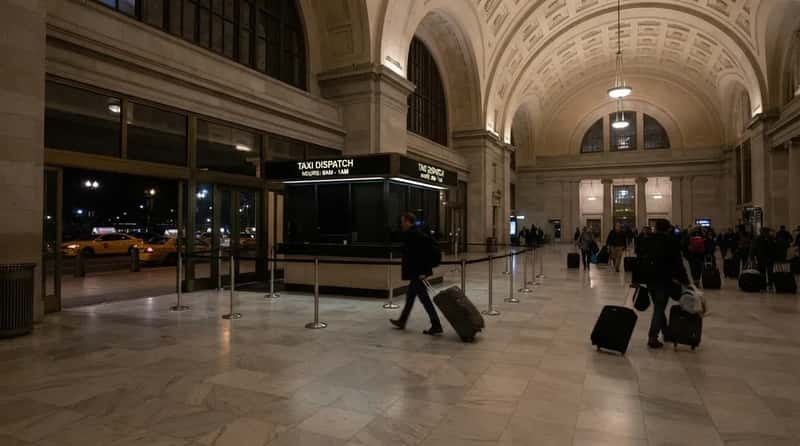
Union Station is often cited as drawing roughly 40 million visitors a year, and it feels like all of them are in the Main Hall at once. You’ll cross a lot of marble to get anywhere.
Fast Facts
- Train gates sit on the main level
- The cab line forms out front
- Taxi dispatch at the Main Hall entrance runs 8 a.m. to 1 a.m. daily
- After 1 a.m., you’re on your own to call a ride
The taxi dispatch hours matter more than the distance. After that, you may need to call a service for a late-night ride. Late arrivals often discover this only after dragging their bags the length of the hall. Next comes a station where the cab line isn’t even on your side of the street.
#5 – Chicago Union Station: The Taxi Line Is Across the Street From the Escalators
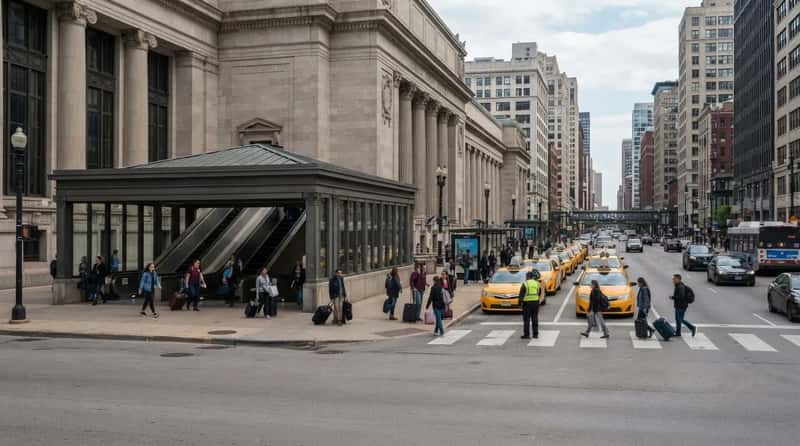
In Chicago, you ride the escalators up from the platforms to Canal Street. Travelers are directed to the Canal Street escalators, and the cab stand is across the street. That crossing is part of the distance, and you make it with traffic right beside you.
The official taxi starter is on the north side of Jackson Street, between Canal and Clinton. It’s a trip with a climb, a crosswalk, and a curb, all before you sit down. When cabs are available, the line moves quickly. The next station is the grandest on our list, and its tracks sit far below the street.
#4 – Grand Central Terminal: 44 Platforms and a Street Far Above Your Train
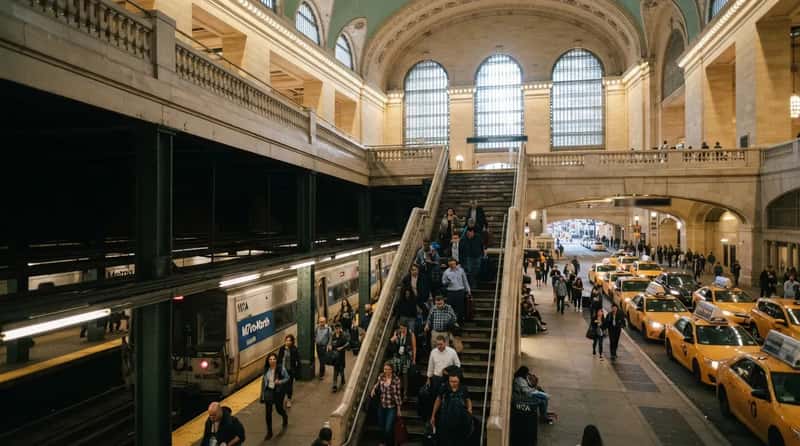
Grand Central opened in 1913 and still has more platforms than any other railway station in the world. That’s 44 platforms and 67 tracks, split between an upper and a lower level. If you arrive on the lower level, you have a long climb to the street.
Taxi lines form outside at street level. Few people realize the lower-level tracks sit beneath the upper ones, adding another climb. Travelers who misread the layout sometimes end up in the wrong concourse entirely. The next station has its taxi stand on a side street.
#3 – Moynihan Train Hall: Newer, Brighter, and Still a Walk to the Cab Line
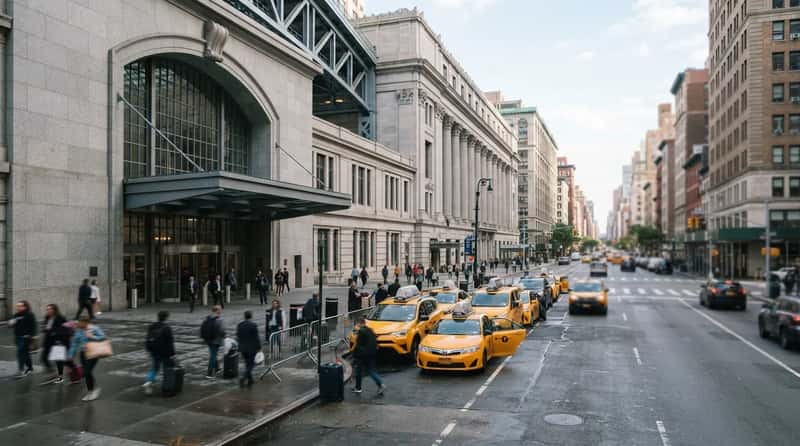
Moynihan Train Hall opened in January 2021 as an expansion of Penn Station. A main hallway links the west side of Penn Station, near Eighth Avenue, with the new hall. The platforms below are still the same deep ones.
The main taxi stand is on 31st Street, between 8th and 9th Avenues. Rideshare pickups are mid-block on 33rd Street, between 8th and 9th Avenues. That means two different curbs for two different kinds of ride. The hall is far brighter than old Penn, but the trip to the curb is still a trek. Next is a station with a taxi problem of a different kind.
#2 – Los Angeles Union Station: No Taxis Waiting and a Tunnel Under the Tracks
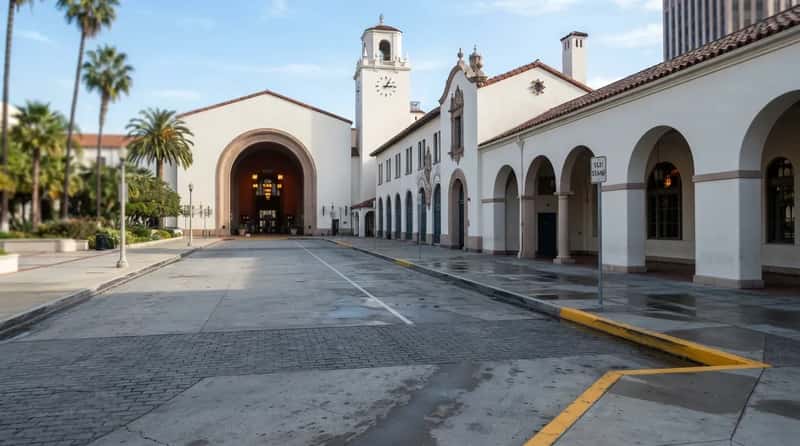
LA’s Union Station sits on the west side of the tracks. Passengers coming from the Patsaouras Transit Plaza on the east side go through a pedestrian tunnel beneath the tracks. It’s a long underground walk, and it comes before you’ve even started looking for a ride.
The station says the taxi stand is in front of historic Union Station West, but no taxis wait there. You need to request one by phone or app. That’s an official stand with no standing line, which is a strange thing to discover with luggage in hand. The last station has a wrong-exit problem that can trip up even regulars.
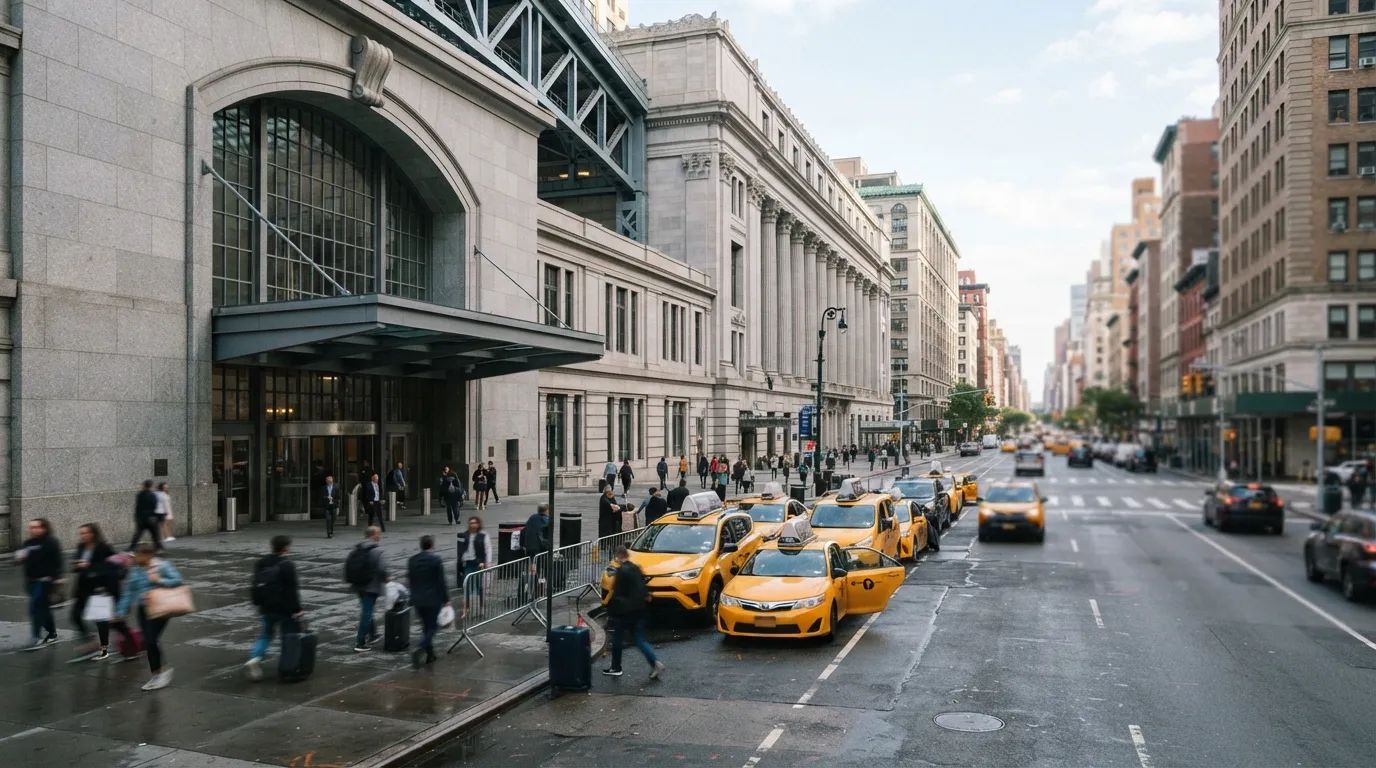
#1 – New York Penn Station: Deep Platforms, Three Taxi Corners, and One Wrong Exit
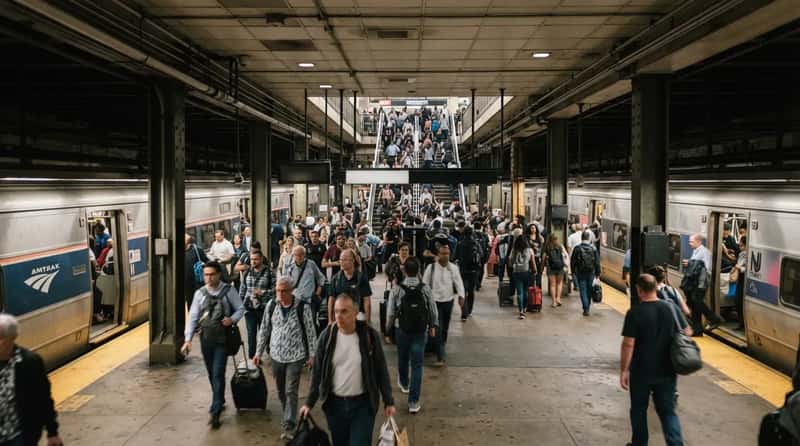
Penn Station has 11 island platforms and 21 tracks, all underground. Taxi stands are spread around the building, and pick the wrong one and your trip gets longer.
Quick Compare
- Stand one: 7th Avenue and 32nd Street
- Stand two: 8th Avenue and 33rd Street
- Stand three: 31st Street, between 8th and 9th Avenues
The taxiway between 31st and 33rd Streets has been closed to taxis and private vehicles since September 11, 2001. That’s why cabs can’t pull up near the platforms. Direction matters too: Seventh Avenue is one-way, so the wrong stand can send you the wrong way. Exit on the wrong side and you may end up walking around the block to find the line.
The shortest walks on this list belong to old depots with ground-level tracks. The longest belong to stations where the platforms sit deep and the taxis don’t.
Which station has made you walk the farthest with a suitcase?