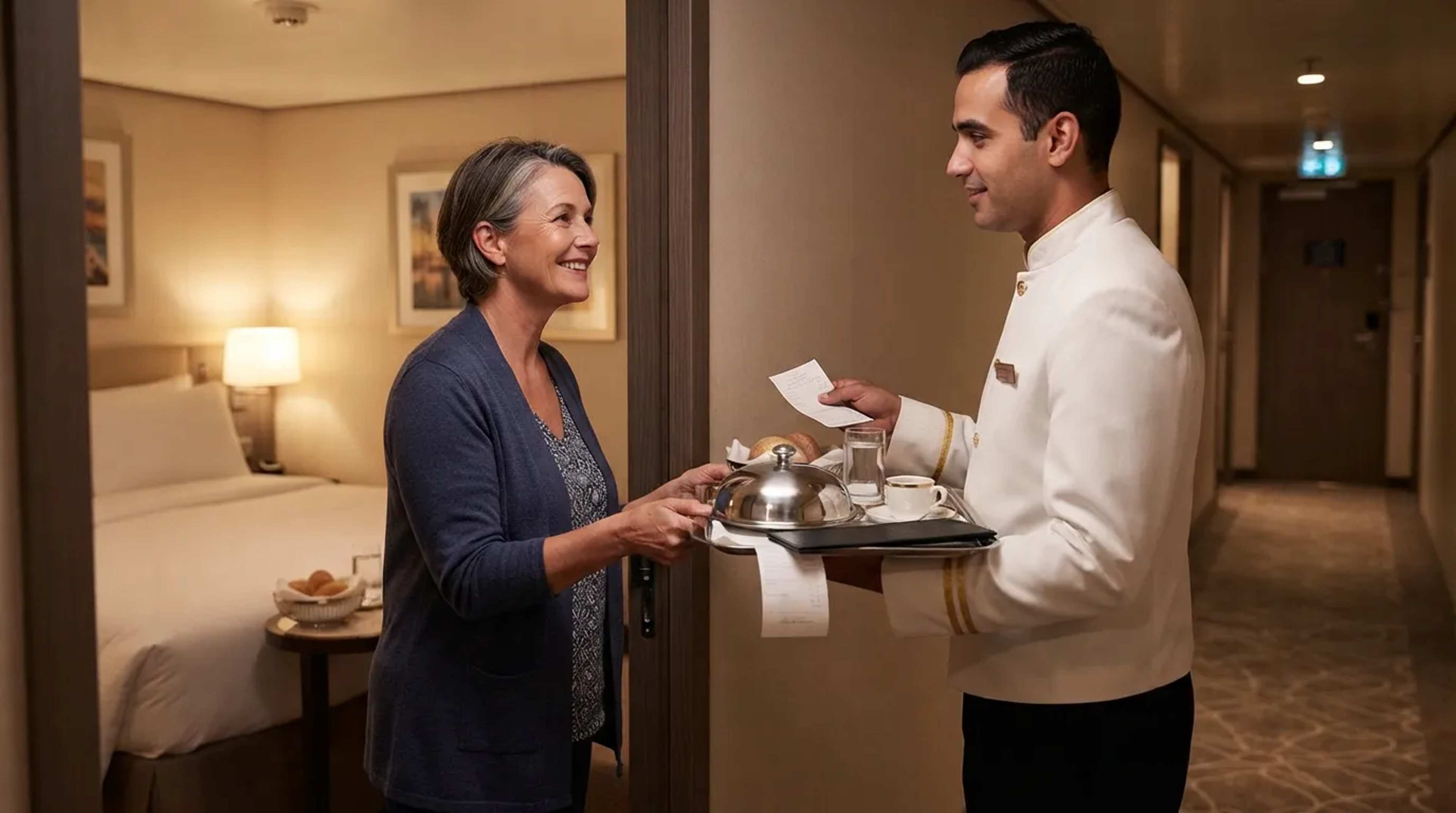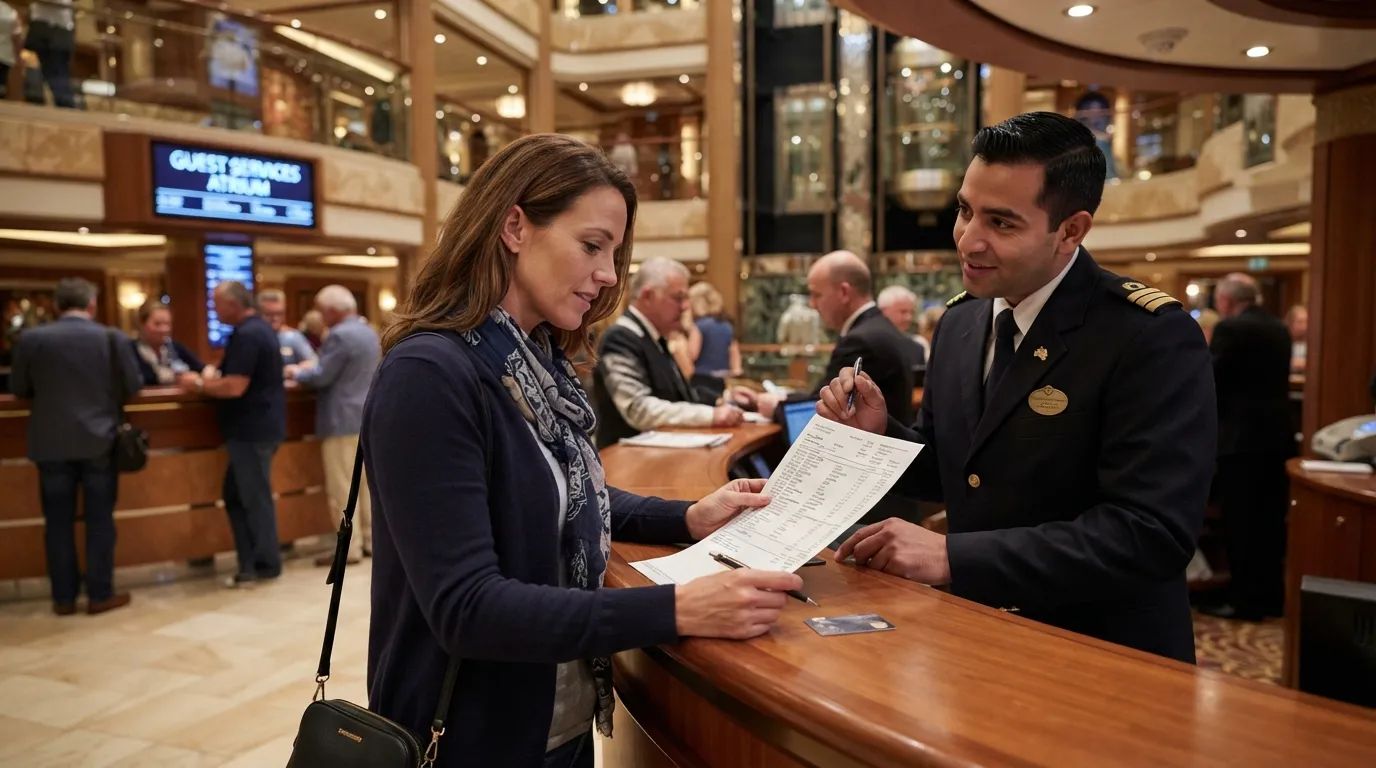
Most cruise passengers board believing the fare is the fare: the ship decides what you get, and anything else costs extra. So they sleep with a half-empty closet, pay for things they didn’t need to, and quietly give up on small comforts that were sitting in a supply closet the whole time.
These 15 requests are routine for crew, rarely mentioned, and approved far more often than passengers expect. The last one on the list is the one most people write off as pointless, and it may carry the biggest dollar value. First, though, we start with something as small as a coat hanger.
#15 – Extra Hangers the Steward Keeps in a Drawer
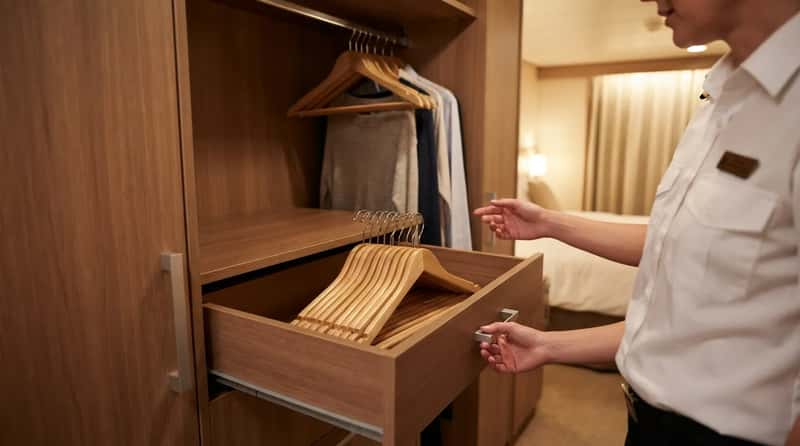
Cabin closets come stocked for a long weekend, not a week at sea. Cruise Critic lists extra hangers among the things a steward can bring on request.1
Stewards tend to keep a supply on hand because the question comes up constantly. They just don’t mention it during the cabin introduction.
Hangers are the easy win. The next favor happens at dinner, and it makes plenty of people nervous to ask.
#14 – A Second Entrée in the Main Dining Room
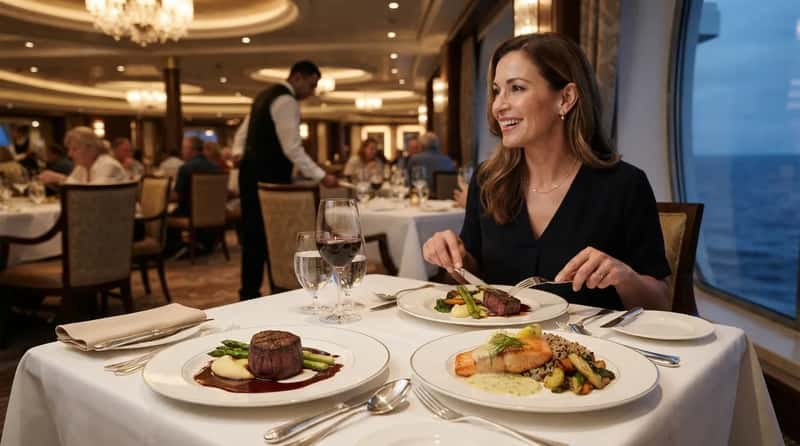
The common assumption is that one dinner means one entrée. On many ships, main dining room menus let you go well beyond a single appetizer, entrée, and dessert.
If you can’t choose between two dishes, ask for both. Policies vary by line, but most waiters hear this request without blinking.
That same waiter can also rescue something most passengers abandon at the table.
#13 – Saving an Unfinished Wine Bottle for the Next Night
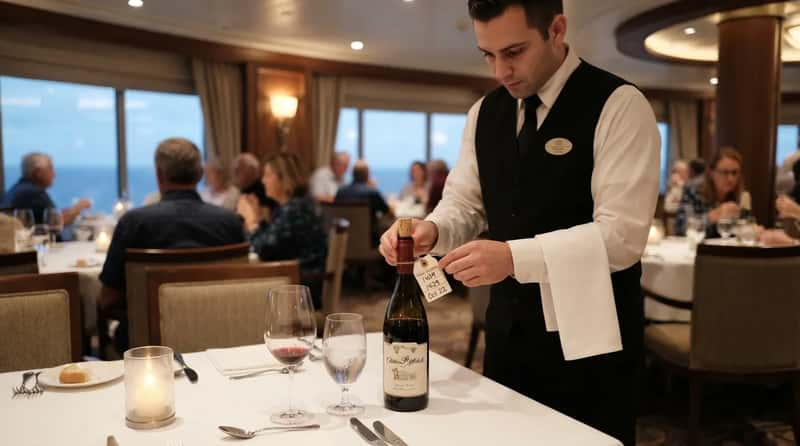
Ordering a bottle and not finishing it is common on a seven-day sailing. Most passengers either rush through the rest or leave it behind, which wastes real money.
Waiters can usually label the bottle with your cabin number and store it for the following night. Some will even send it to another restaurant on board.2
No loyalty status is required. You just have to ask before you leave the table.
Worth Knowing
- Ask before you stand up, since staff need your cabin number to label the bottle.
- Storage rules differ by cruise line and sometimes by ship.
- Moving a bottle to a specialty restaurant is up to the ship, so confirm before you count on it.
- Mention it again at your next dinner so the waiter knows to fetch it.
#12 – Off-Menu Cocktails at the Bar
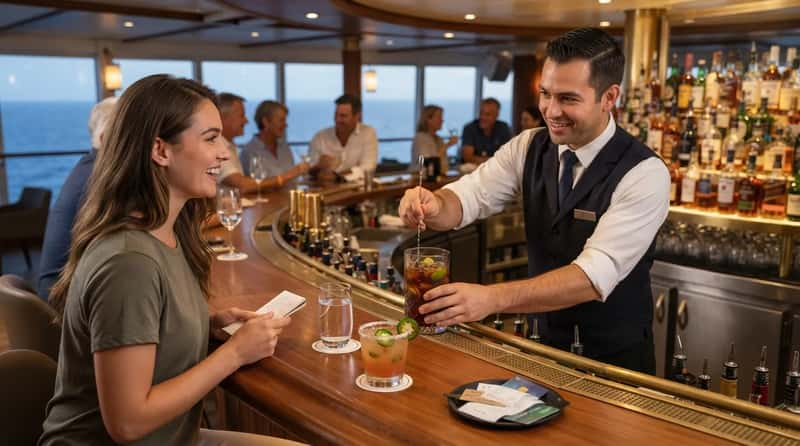
The drink menu is a starting point, not a ceiling. When a first-time cruiser asked whether she could order a Bloody Mary or a spicy margarita that wasn’t on any menu, seasoned cruisers told her yes, as long as the bar has the ingredients.
Bars on large ships stock a standard well that covers far more combinations than the printed list suggests.
Before you order a round, remember that a gratuity of roughly 15 to 20 percent is typically added to the bar bill. A six-dollar beer can quietly become a seven-dollar beer.
#11 – Free Seasickness Remedies Without a Medical Visit
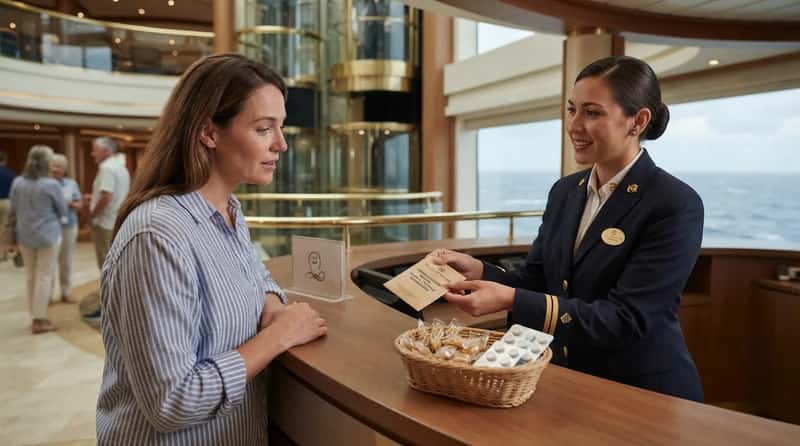
When the sea turns rough, many passengers suffer through it or pay for a formal medical visit. They never think to ask at the front desk.
On many ships, the purser’s desk or guest services can hand out ginger candies or basic motion-sickness tablets at no charge.3 Cruise lines would much rather you be comfortable than miserable in your cabin.
If you take other medications, mention that before trying anything new.
#10 – A Borrowed Power Strip or Adapter from Your Steward
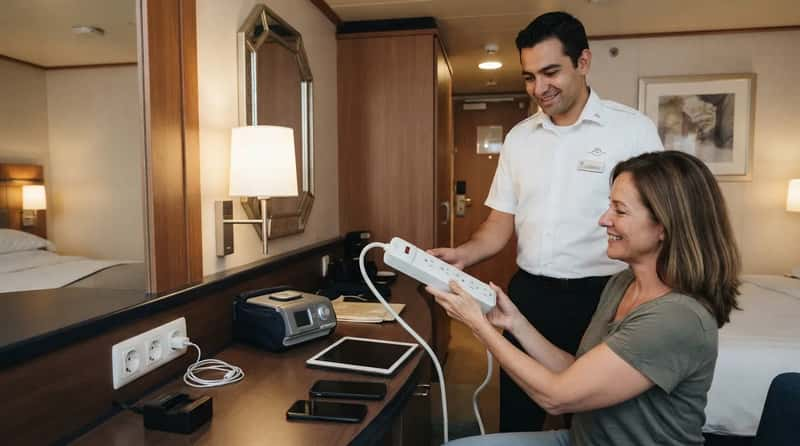
Standard cabins typically have only one or two outlets. That’s a real problem if you’re traveling with a CPAP machine, two phones, a tablet, and a camera charger.
Regular power strips are often confiscated at security, but stewards can often supply cruise-approved ones or spare adapters.1 Passengers who never ask spend the week fighting over a single outlet.
Ask on arrival, before the problem develops. A steward asked on day one is far more likely to follow through than one juggling a full roster mid-week.
#9 – Ordering the Previous Night’s Dish Again
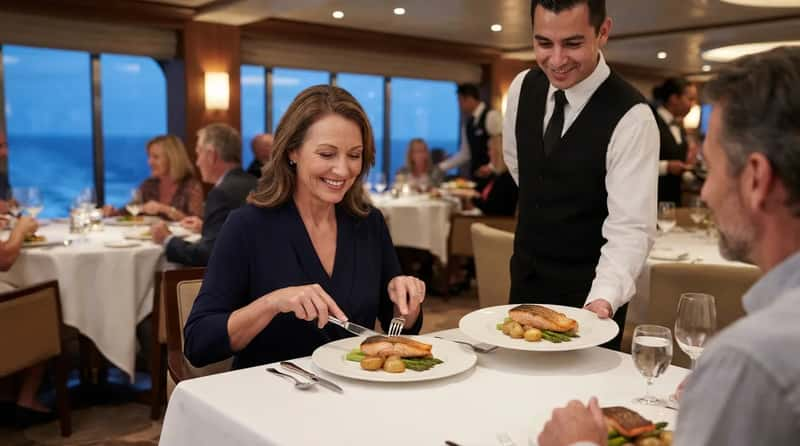
Maybe Tuesday’s salmon was exactly right and Thursday’s menu looks tired. On most major lines, you can simply ask for Tuesday’s dish again.
Kitchens plan the week’s menus in advance, so the ingredients are often still on board. Asking costs nothing, and the worst answer is a polite no.
That same planning pays off at the specialty restaurants, where timing can change the price.
#8 – A Specialty Restaurant Discount on the First Night
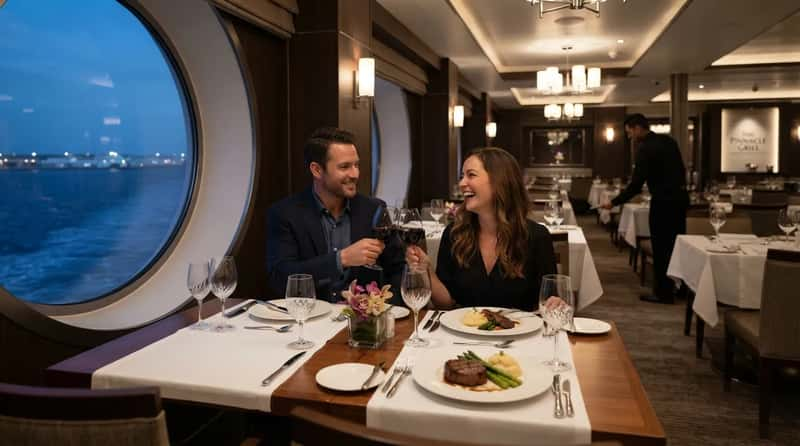
Specialty restaurants carry a surcharge, and on some lines that surcharge isn’t always the same on the first evening. Many cruise lines offer a discount for booking on embarkation night.
Most passengers eat at the buffet or main dining room that first night, so specialty venues often have empty tables. That can mean a lower price, or simply an easier reservation at a popular spot.
On a ten- or fourteen-night sailing, where specialty dining adds up, that small edge matters more.
At a Glance
- Best window: embarkation day, while most guests are still exploring the ship.
- The upside: a possible lower price or an easier table at a popular restaurant.
- Who gains most: travelers on longer sailings who plan several specialty meals.
- Smart move: check the line’s app or guest services for the current offer before you book.
#7 – Skipping the Towel Animals and Setting Your Own Cabin Service Schedule
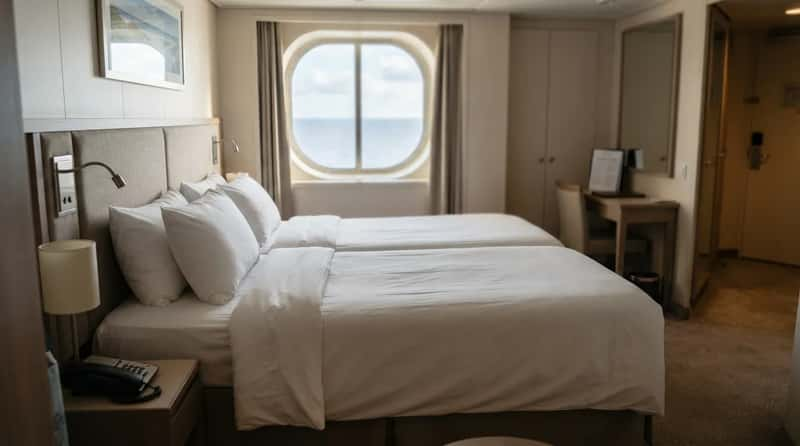
Towel animals are charming for about two nights. If you’d rather not find one on your pillow, your steward can skip them without any awkwardness.1
Most stewards can also adjust turndown, push beds together or apart, and make up your cabin at a time that fits your routine. Tell them once on day one and you’ve reshaped the whole week.
#6 – Cabin Slippers Without a Suite Booking
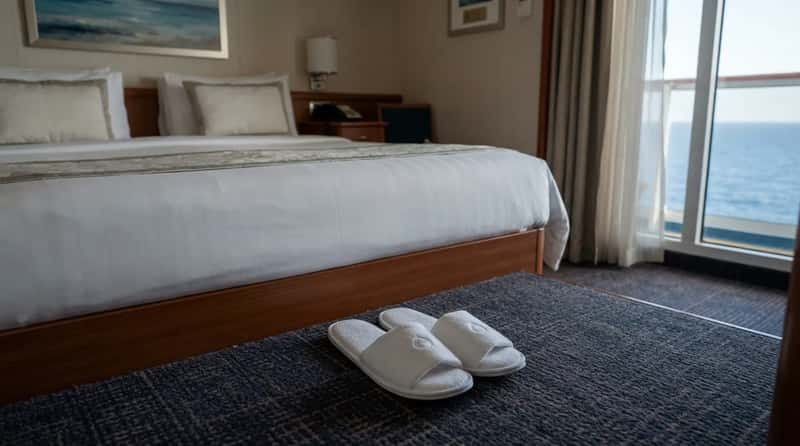
Slippers feel like a suite perk, but they’re often available on board for anyone who asks. Your room attendant can usually bring a set.
Robes, mattress toppers, and other extras may be available too, though availability varies by ship and cabin category. These items exist in the ship’s supply. They just don’t show up without a request.
#5 – Loyalty Perks You’ve Already Earned but Nobody Applied
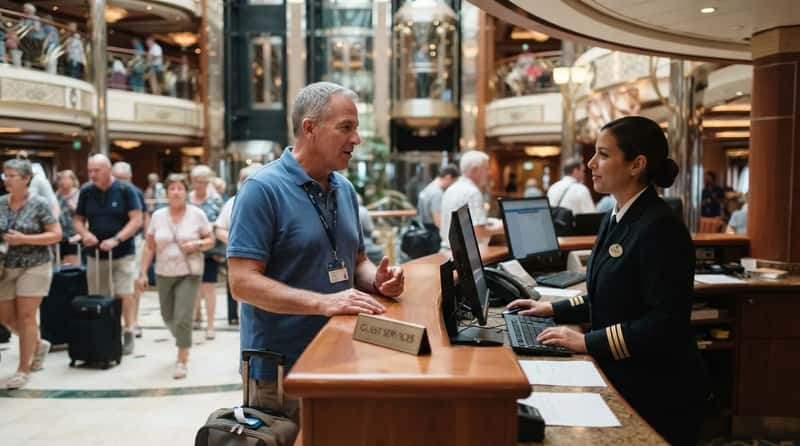
If you’ve sailed the same line more than a couple of times, you likely hold a loyalty tier with perks attached. The catch is that some benefits only appear when you bring them up.
Higher-tier members on some lines can receive extras such as laundry service, special access, or onboard credit. Plenty of guests have logged enough sailings to qualify without realizing it.
Five minutes at the purser’s desk on embarkation day can settle exactly which tier you’re in and what comes with it.
#4 – A Preference Added to Your Passenger Profile
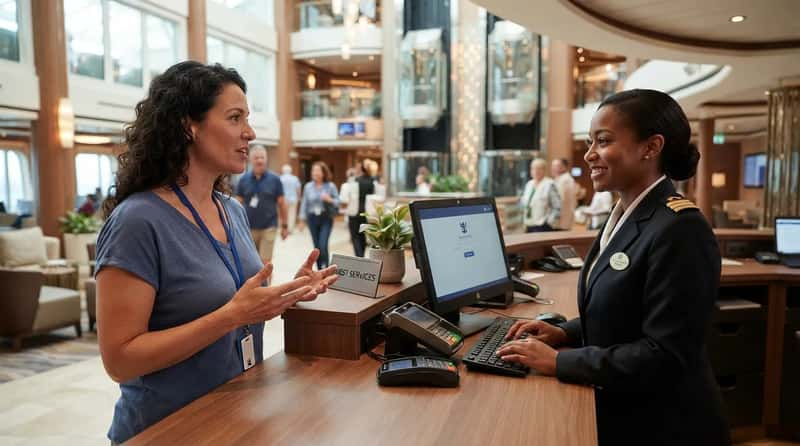
This is one of the most underused tools on any ship. Guest services can note your preferences on your passenger profile so they travel with your reservation instead of living in one waiter’s memory.
A dietary restriction, an allergy, a pillow type, or a cabin-temperature preference can all go on file. On a seven-day cruise, one five-minute conversation can prevent a half-dozen small frustrations.
Profile notes are low-effort requests. The next one takes a little more nerve.
#3 – Compensation for a Genuine Cabin Problem
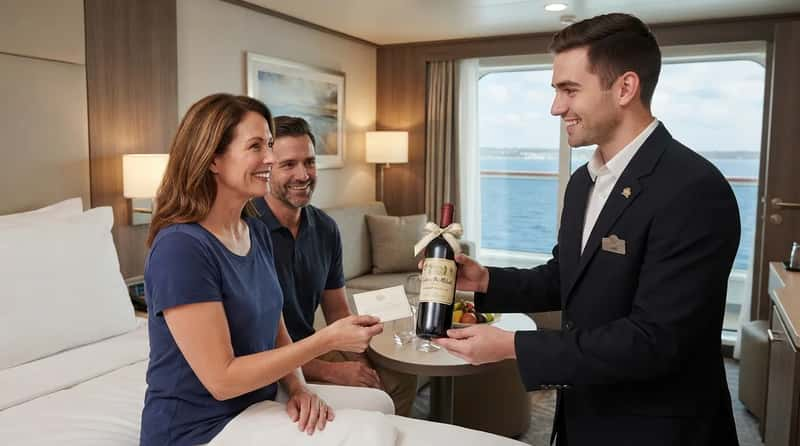
Noisy air conditioning, a slow drain, a faulty safe: most passengers mention it once, hear an apology, and let it go. That’s often where they leave money and goodwill on the table.
When a real problem is reported politely and clearly, the ship sometimes offers something extra. It might be a bottle of wine, a specialty dinner, or onboard credit, though nothing is guaranteed.
The timing matters. A specific, friendly report on day one gives staff time and options, while the same complaint on the last evening at sea gives them almost none.
Fast Facts
- Report the issue the day you notice it, not at the end of the trip.
- Be specific: what is wrong, where it is, and when it started.
- Ask what can be done instead of opening with a demand.
- Stay friendly, since any goodwill gesture is at the ship’s discretion.
#2 – A Day-Two Cabin Upgrade at a Discounted Rate
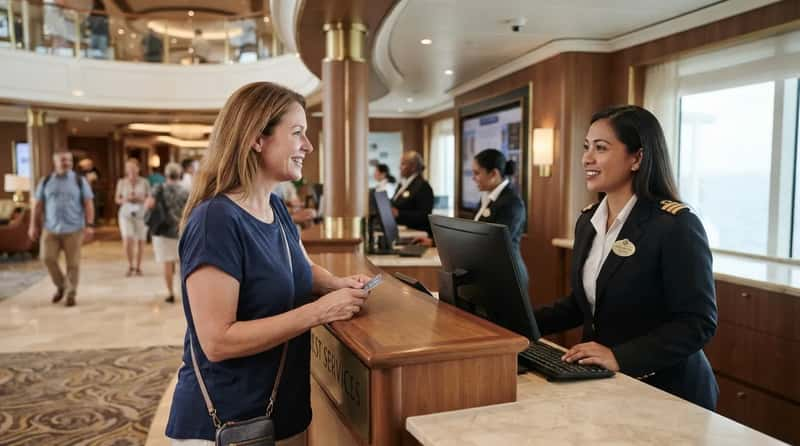
Check-in is a poor time to ask about an upgrade, because the terminal is chaotic and the ship’s cabin situation is still shifting. Once the ship has sailed, the cruise line has a clearer picture of which cabins are actually empty.
A cruise line would often rather sell an empty balcony at a discount than leave it vacant. You might ask: “I know we’re already on board, but if there are any unsold balconies, I’d be interested in upgrading. What’s available?”
Upgrades are never guaranteed, and free ones are rare. A friendly, low-pressure ask matters more than you’d think.
#1 – Booking Your Next Cruise On Board for Perks You Can’t Get at Home

This is the request with the largest potential dollar value on the list. It is also the one passengers are most likely to dismiss, because it feels like walking into a sales pitch.
But the future-cruise desk is where cruise lines often put their best incentives, including onboard booking offers, reduced deposits, and extra onboard credit.4 5 Some of these don’t appear on the public website.
Some lines also have senior or loyalty rates that are easy to miss online. A three-minute conversation could save a few hundred dollars or add perks that most people on board never knew existed.
Why It Stands Out
- Some offers are made on board and may not appear on the public website.
- Perks can include reduced deposits and extra onboard credit.5 6
- Asking for details doesn’t commit you to booking anything.
- A quiet moment at the desk lets you compare options without pressure.
The future-cruise consultant won’t chase you down the hall to explain any of it. But they have every reason to help if you simply ask.
That’s the thread running through all 15 of these. Every item is something the ship already has, already does, or already offers, and none of them require a complaint, a confrontation, or a special connection. They need a polite, specific question at the right moment, ideally early in the sailing when crew have the most room to say yes.
The passengers who leave feeling like nothing was ever included are usually the ones who never asked. What’s the one thing you’ve always assumed you couldn’t request on a cruise?
Bonus: The Last-Night Account Check Nobody Tells You About
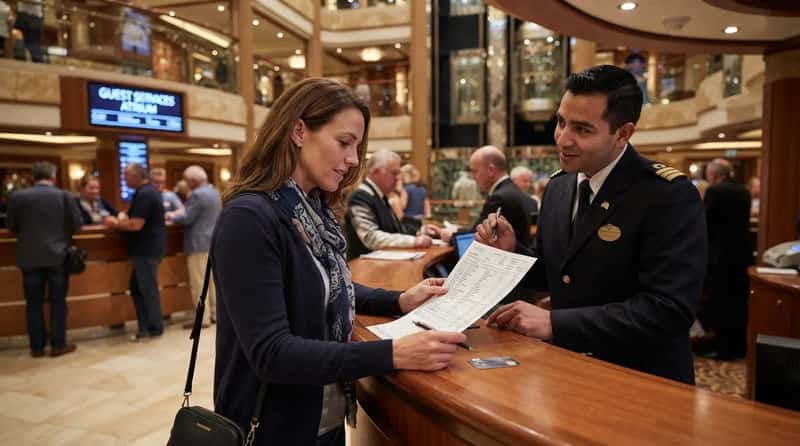
Before you pack your last bag, audit your onboard account at guest services. Mistakes and unwanted charges are far easier to fix while you’re still on the ship than after you’ve gone home.
- Pull a printout the day before disembarkation. Most ships can print your itemized folio, or show it on the cabin TV or the line’s app. Do this while the desk is still staffed and not swamped.
- Check every line. Look for duplicate drink charges, a specialty dinner you canceled, a spa or shore-excursion charge you didn’t make, or a package you thought you’d removed.
- Ask about the automatic gratuity. On many lines, guest services can adjust the daily service charge if service fell short, or raise it if someone went above and beyond. Policies differ by cruise line, so ask what’s allowed on your ship.
- Use up or redirect leftover credit. Ask whether unused onboard credit can still be spent or applied somewhere before the account closes, since many lines won’t refund it afterward.
Keep the corrected printout until your credit card statement posts. If something still looks wrong, you’ll have a paper trail showing exactly what you reviewed and when.
- Cruise Critic Steward Requests: https://www.cruisecritic.com/articles/things-cabin-steward-give-request
- Cruise Critic Wine Guide: https://www.cruisecritic.com/articles/wine-on-cruise-ships-what-to-expect
- Celebrity Seasickness Guide: https://www.celebritycruises.com/blog/how-to-prevent-seasickness-on-a-cruise
- Cruise Critic Onboard Booking: https://www.cruisecritic.com/articles/booking-a-cruise-onboard-how-to-score-extras-and-discounts
- Holland America Onboard Booking: https://www.hollandamerica.com/en/us/faq/onboard-cruise-experience/onboard-information/what-are-the-benefits-of-booking-onboard
- The Points Guy Onboard Booking: https://thepointsguy.com/cruise/future-cruise-booking-onboard/