Coach touring looks like the effortless way to see the world. Someone else drives, someone else navigates, and the scenery just rolls by. But watch travelers over 65 who take bus tours year after year, and you’ll notice something the brochures never mention: the smooth trips aren’t luck. They’re built from tiny habits repeated at every single stop.
Some of these routines take ten seconds. One fits in a wallet. One involves a medical bill that can top $100,000, and another means deliberately skipping an attraction you already paid for. Count down from #15, because the habits near the top are the ones veterans swear they’d never travel without.
#15 – The Seat-Side Daypack That Never Goes Under the Bus
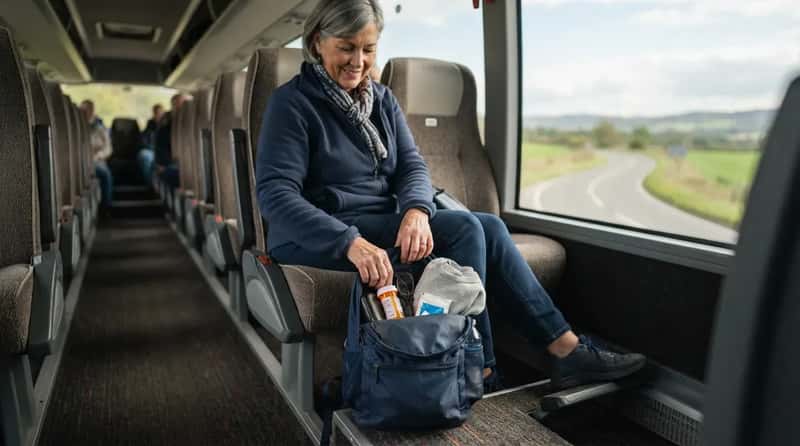
The most useful item on any coach tour is the one that never touches the luggage bay.
Seasoned travelers keep a small bag at their feet with everything they might need before the next hotel. That means medications, reading glasses, a phone charger, tissues, a sweater, and a snack. The luggage bay stays sealed until the hotel, which can be hours away.
A classic rookie mistake is packing the daily pills in the suitcase underneath the bus. By the time they notice, the coach is on the highway and the bag is out of reach.
- Keep medications in their original containers
- Add a spare pair of readers, since glasses get lost
But the next habit has saved more travelers from panic than any packing trick.
#14 – The Photo of the Bus That Ends the Parking-Lot Panic

Every coach looks identical in a crowded lot, and veterans know it.
At each stop, many experienced travelers snap a quick photo of the coach. They get the number on the front or side, the license plate, and a landmark nearby. Then they save the guide’s cell number in their phone on day one.
It sounds fussy until you step out of a market and face six identical white buses. Large attractions often send several tour groups to the same parking area at once. The photo takes two seconds. Wandering the lot for ten minutes costs you your snack time and your peace of mind.
Even so, the seat you pick matters more than most people admit.
#13 – The Aisle Seat Secret Behind Fewer Stiff Legs
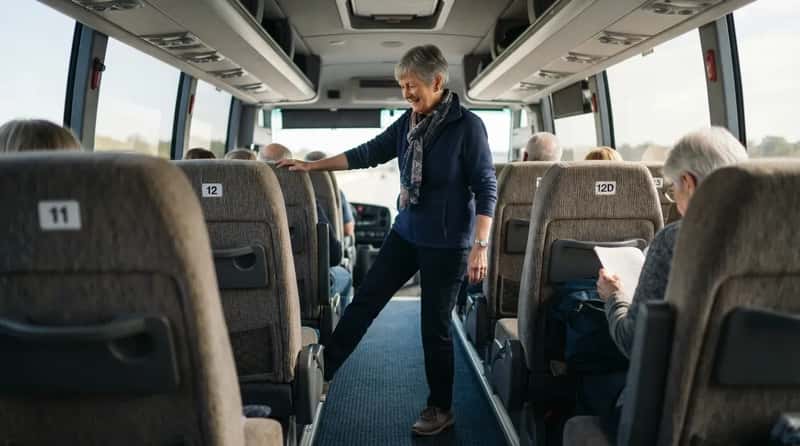
Window seats win the photos, but the aisle wins the trip.
The CDC notes that anyone traveling more than 4 hours, whether by air, car, bus, or train, can be at risk for blood clots. It also says the risk is generally very small, but older age is a listed risk factor, with risk increasing after age 40.
That’s why the CDC’s travel guidance suggests choosing an aisle seat when possible, so you can walk around every 2-3 hours. Experienced coach travelers worked this out on their own. They’d rather trade a scenic view for the freedom to stand up without climbing over a neighbor.
It may sound like a boring priority. In practice, it’s the one that keeps the rest of the day enjoyable.
Quick Compare
- Aisle seat: easy to stand, stretch, and walk every 2-3 hours
- Window seat: best views and a place to lean for naps, but every exit means asking a neighbor to move
- Veteran pick: aisle on long driving days, window on short scenic hops
But sitting in the right spot is only half of it.
#12 – The Seated Calf Routine Nobody Sees
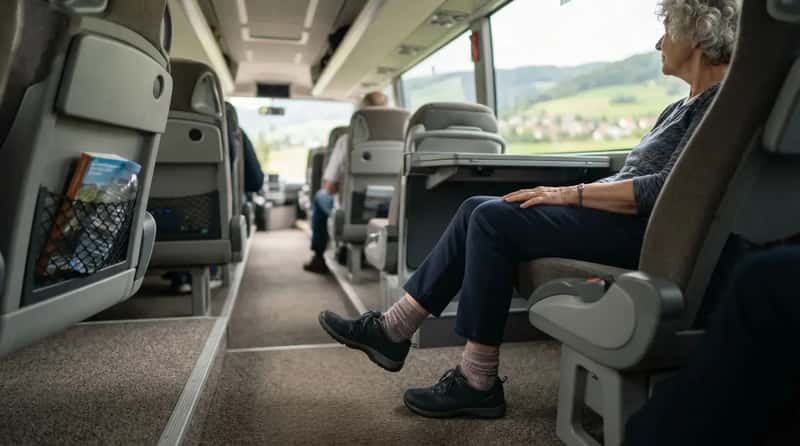
The best circulation habit on a coach is one your seatmate will never notice.
CDC travel guidance suggests exercises you can do right in your seat. Raise and lower your heels while keeping your toes on the floor, then raise and lower your toes while keeping your heels on the floor. It also suggests tightening and releasing your leg muscles.
The CDC’s DVT podcast page adds a simple rule of thumb: move your legs frequently and walk around every 1-2 hours. On a coach tour, every scheduled stop is basically a built-in circulation break. Veterans get off the bus even when there’s “nothing to see.”
The next routine sounds backwards, and it’s where many travelers go wrong.
#11 – Sipping Water Instead of Dodging It

Skipping water to avoid a bathroom stop is the oldest bad bargain on the bus.
Plenty of travelers cut back on drinks because they don’t want to hold up the group. Veterans do the opposite. They sip steadily through the day and use the scheduled stops to take care of business.
Health guidance on travel and blood clots lists avoiding alcohol and staying well hydrated among its basic tips. That means the cocktail on the coach is working against the habit that keeps you comfortable. It’s a small thing, but over a ten-day itinerary it adds up.
Groups tend to run smoother when everyone knows the bathroom plan. If you’re unsure, ask the driver at the start of the day how long the first stop will be.
The next habit has nothing to do with water and everything to do with the air conditioning.
#10 – The Layering Trick That Beats the Coach Thermostat

The temperature inside a coach rarely matches the temperature outside.
Air conditioning blasts at the front, the back warms up, and an hour later you’re stepping into a sunny parking lot in the same clothes. Experienced travelers dress in thin layers. A light cardigan, a scarf, and a packable jacket can each go on or off in seconds.
Plenty of veterans will tell you the scarf is the most useful thing they own. It works as a neck warmer, a lap blanket, and a sun shield. And because it’s small, it lives in the seat-side bag.
Now for a routine most travelers quietly ignore, and the numbers behind it are startling.
#9 – Buckling Up When Nobody Else Does
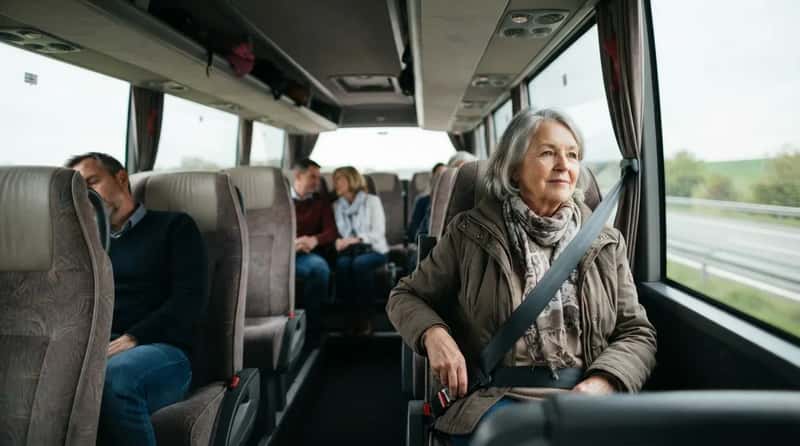
On a coach, the people wearing seat belts are the exception, and the data backs the exception.
The U.S. Department of Transportation announced a rule requiring lap and shoulder seat belts for each passenger and driver seat on new motorcoaches and other large buses. Yet NHTSA’s own retrofit assessment found that belt use rates on motorcoaches are typically under 10 percent.
At a Glance
- Under 10%: typical belt use on motorcoaches, per NHTSA
- Up to 44%: estimated drop in fatalities if belts are required
- Up to 45%: estimated drop in moderate-to-severe injuries
The agency stresses that motorcoach travel is overall a safe form of transportation. But a belt only works if someone actually clicks it. Older coaches may not have them at all, since NHTSA decided against requiring retrofits.
The next habit costs nothing, and it’s the reason veterans never have to run for the bus.
#8 – The “Ten Minutes Early” Rule That Everyone Quietly Copies

The person who is never last back on the coach usually isn’t walking faster, just planning earlier.
Experienced travelers set a phone alarm for the departure time minus ten minutes. They write the time on a card, not just in their head. They also head back to the meeting point before they feel they need to.
Groups often wait for stragglers, and everyone notices. Nobody wants to be the person the whole bus is waiting on. Being early also buys time to use the restroom and refill a water bottle before the next leg.
But the real chaos starts long before the bus doors open.
#7 – Packing the Night Before, Every Single Night
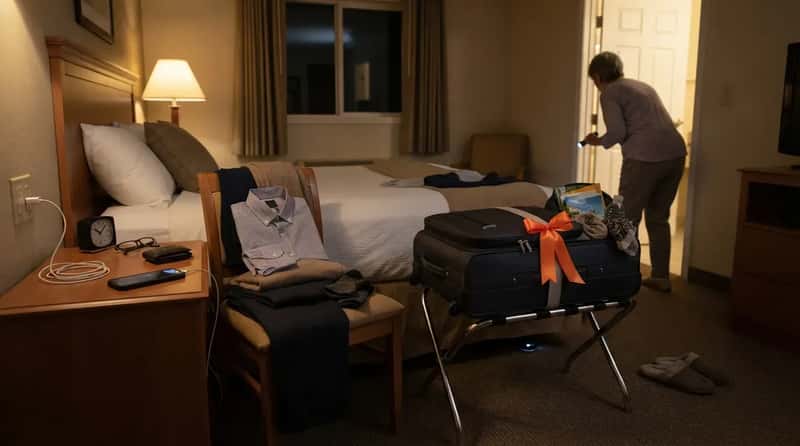
Hotel mornings on coach tours are fast, and the people who suffer are the ones who pack at dawn.
Luggage often has to be outside the room or at the bus at a set time. Veterans do the bulk of the repacking each evening. Clothes for tomorrow go on the chair, and anything they’ll need goes in the daypack.
They also do a final sweep: bathroom outlets, bedside tables, under the bed, the safe. Chargers left plugged in behind the nightstand are one of the classic things people leave behind in hotel rooms. A bright ribbon on each suitcase handle also helps you spot your bag in a pile of identical black ones.
- Lay out tomorrow’s outfit before bed
- Do a “four-corner” sweep of the room before leaving
The next routine depends on your pills, not your packing.
#6 – The Pill Organizer With a Backup Plan

Medication mix-ups are the kind of trip-ruiner nobody plans for.
Experienced travelers use a weekly pill organizer and set phone alarms for each dose. They bring a few extra days’ worth in case of delays. They also carry a printed medication list covering drug names, doses, and the prescribing doctor’s contact details.
The moment you most need that list is the moment you’re least likely to remember what’s on it. If you cross time zones, ask your doctor or pharmacist beforehand how to adjust your schedule. They know your prescriptions. A travel blog doesn’t.
Next comes a footwear habit most people overlook until their feet start complaining.
#5 – Two Pairs of Shoes and a Chat With the Doctor
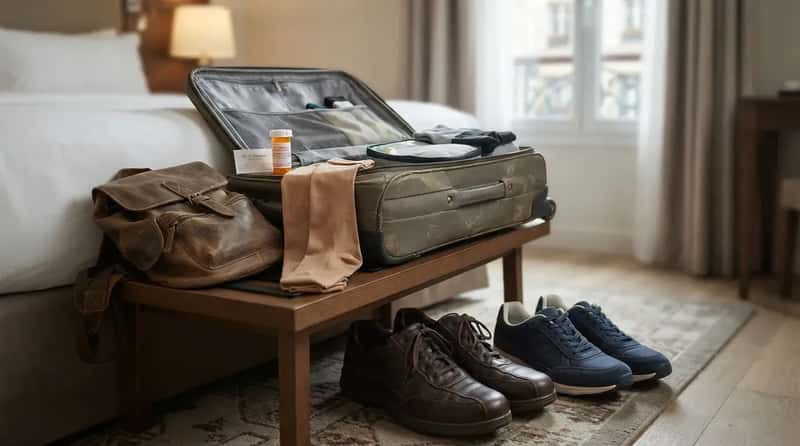
Feet take the most punishment on a coach tour, and veterans treat them that way.
Walking on cobblestones one day and a hotel lobby the next is hard on a single pair of shoes. Experienced travelers rotate between two comfortable pairs, so pressure points shift. Fresh, dry socks go in the daypack too.
Swollen legs are also common after long hours seated. The CDC advises people to talk to their doctor about wearing compression stockings or taking medicine before departure if they have additional risk factors for blood clots. That makes compression socks a medical conversation, not just a drugstore impulse buy. A doctor can check the fit and strength for you.
Worth Knowing
- Rotating two pairs of shoes shifts pressure points from day to day
- Fresh, dry socks in the daypack are a cheap midday reset
- Compression stockings are worth raising with your doctor before you leave
- Fit and strength matter, so ask for guidance instead of guessing
The next habit costs nothing and pays off at every stop.
#4 – Introducing Yourself to the Guide on Day One

The people who get the best service on a tour are usually the ones who said hello first.
Veterans walk up to the guide and the driver on day one. They share their name and mention anything worth knowing, like a bad knee, a slower walking pace, or a need for early restroom stops. They also ask how much walking each day includes.
Guides can’t adjust for needs they don’t know about. A simple heads-up often leads to a better seat, a shorter route, or a warning before the long climb. And it takes about thirty seconds.
Some travelers still think asking for help is a sign of weakness. Experienced ones see it as the smartest way to stay on the tour for the whole itinerary.
That leads to the habit no tour brochure would ever recommend.
#3 – Skipping a Stop on Purpose

The best-kept secret of veteran coach travelers is knowing which stop to sit out.
First-timers often feel they must see every attraction. Seasoned travelers pick their battles. They’ll skip the third museum of the day, grab a table at a café, and watch the town go by. Then they arrive at the evening events with energy left.
Plenty of experienced travelers argue that the “must-see” fourth stop of an eight-hour day is the biggest waste of the ticket price. A rested traveler enjoys the highlight. An exhausted one just survives it. People land on both sides of this, but the veterans rarely regret the rest.
But the most costly mistake on any trip doesn’t happen on the bus at all.
#2 – Checking What Medicare Won’t Cover Before the Wheels Roll

Many travelers assume their health coverage follows them everywhere, and that’s the expensive mistake.
Original Medicare generally does not cover healthcare services received outside the United States, and that includes Canada, Mexico, and Europe. That matters for any coach tour that crosses a border, even for a day.
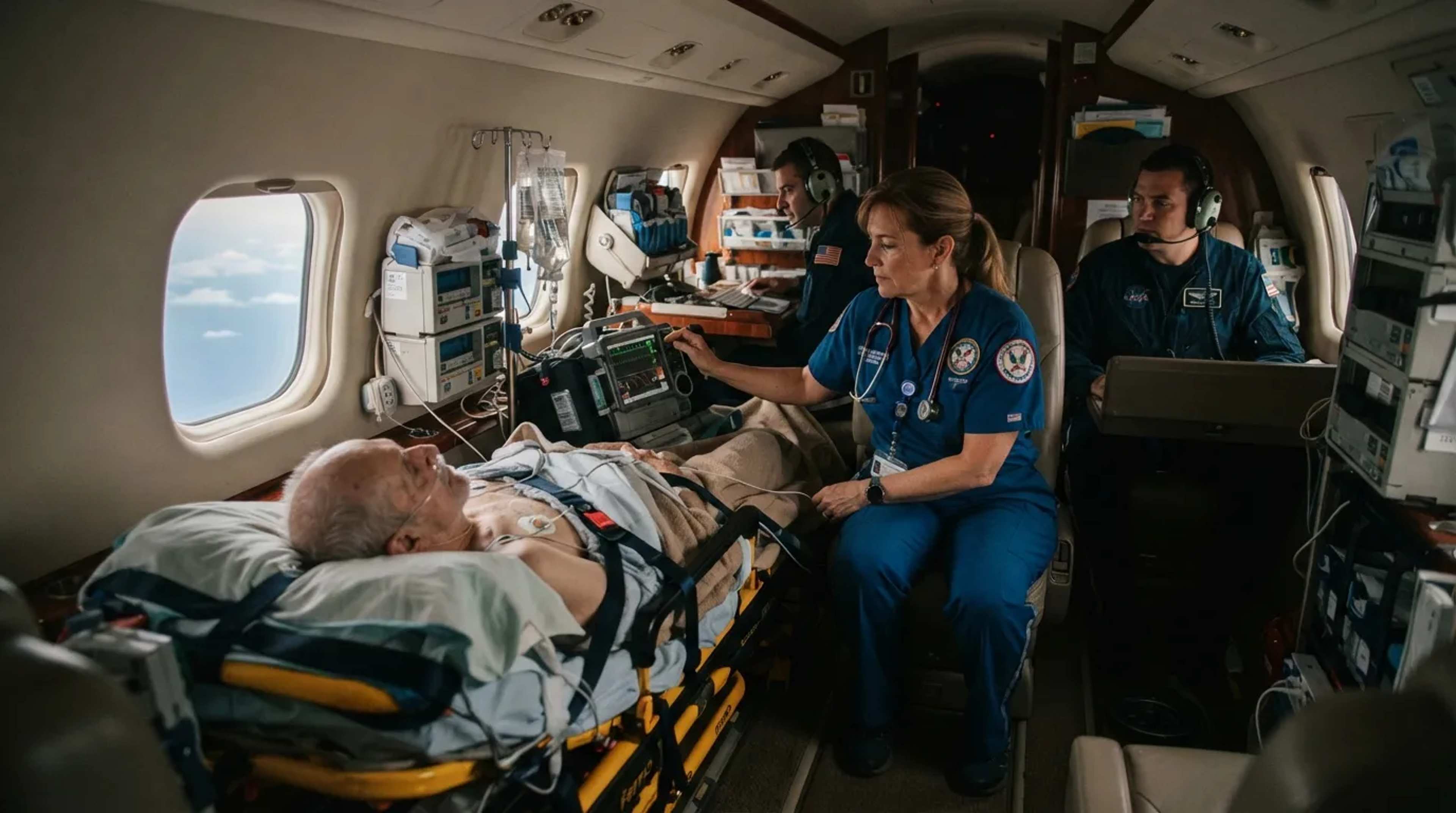
Some Medigap plans offer a foreign travel emergency benefit. One source describes it as limited coverage with a $250 deductible, 80% coverage, and a lifetime limit of $50,000. Meanwhile, one travel insurer notes that medical evacuation by air ambulance can cost over $100,000 internationally. That’s why veterans check their policy and ask about supplemental travel insurance before they pay a deposit.
And the one habit veterans rank above all the others takes up less room than a credit card.
#1 – The Emergency Card That Speaks When You Can’t
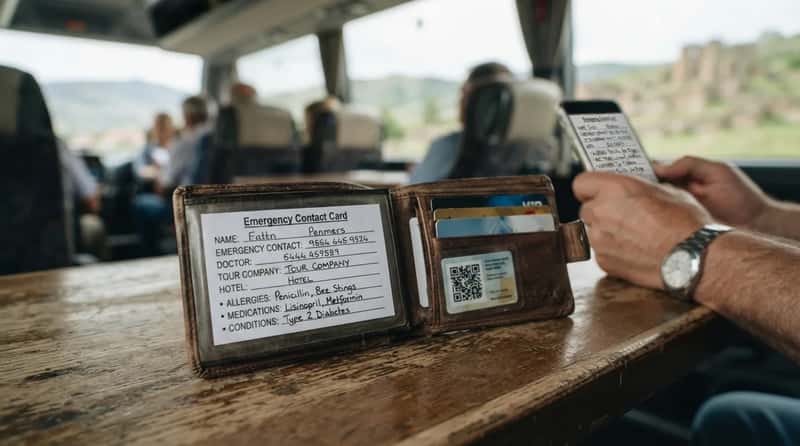
The most important thing a veteran traveler carries fits in a wallet.
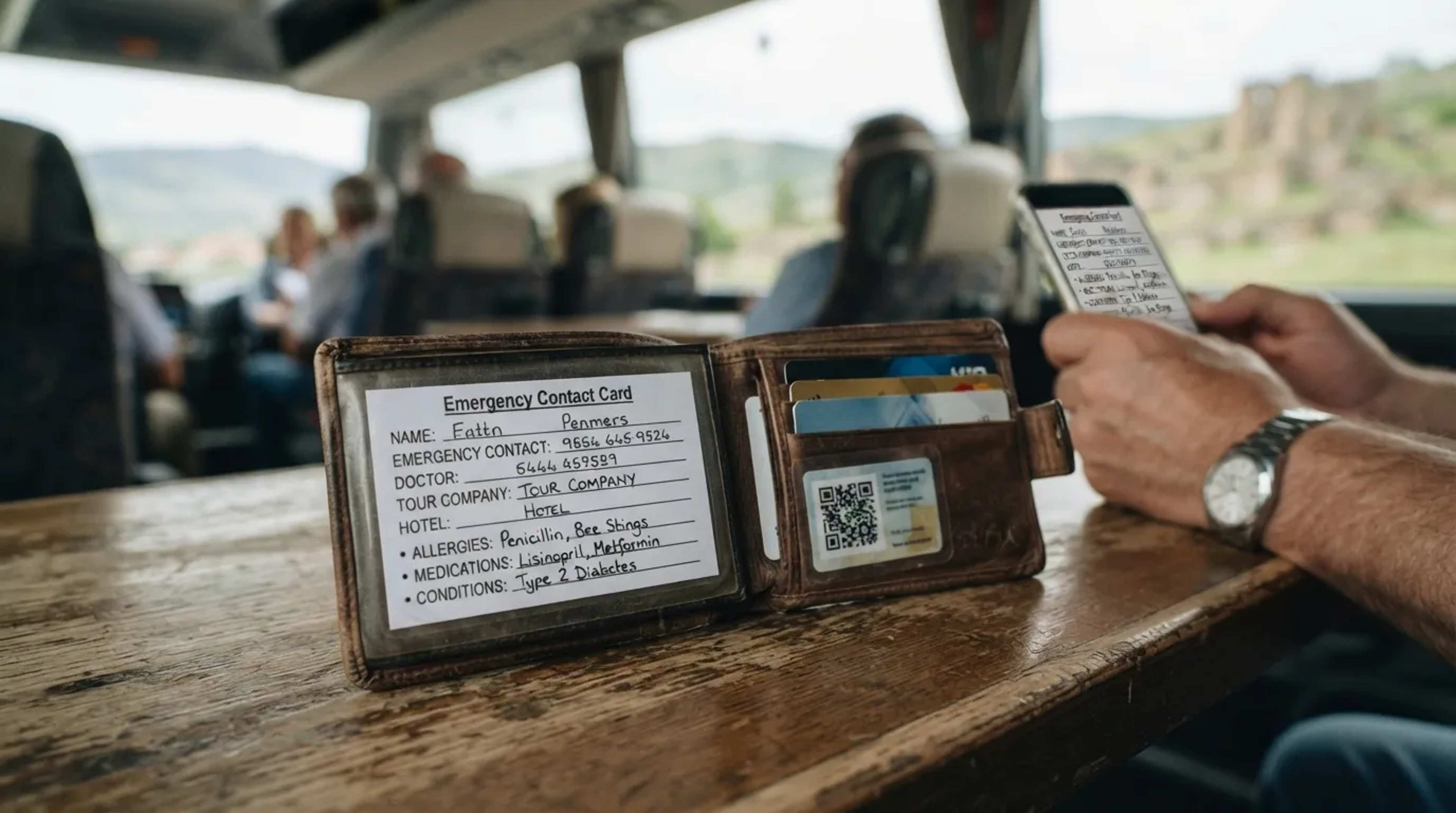
It’s a simple card with the basics: name, emergency contacts, medical conditions, allergies, current medications, and the doctor’s phone number. Many travelers keep a second copy as a note or photo on their phone that responders can easily find.
If something happens, you may not be able to explain, and your seatmate won’t know the details. A card gives a stranger the facts in seconds, with no guessing and no waiting for a callback. Add your tour company’s emergency number and the hotel’s name, since both are the first things anyone will ask.
Fast Facts
- Keep one copy in your wallet and one on your phone
- Use plain words, since a stranger may be reading it in a hurry
- Include allergies and current medications, not just diagnoses
- Write the hotel name and tour emergency number at the bottom
It takes ten minutes to write and almost nothing to carry. Experienced travelers will tell you it’s the one routine they’d never skip, and the one they hope to never need.
None of these habits is exotic. Keep the pills within reach, choose the aisle, move your legs, and buckle up even when almost nobody else does. And never assume Medicare travels with you.
Some of these cost nothing, a few take a phone call, and one fits behind your driver’s license. Together they turn every stop from a scramble into the part of the trip you actually remember.