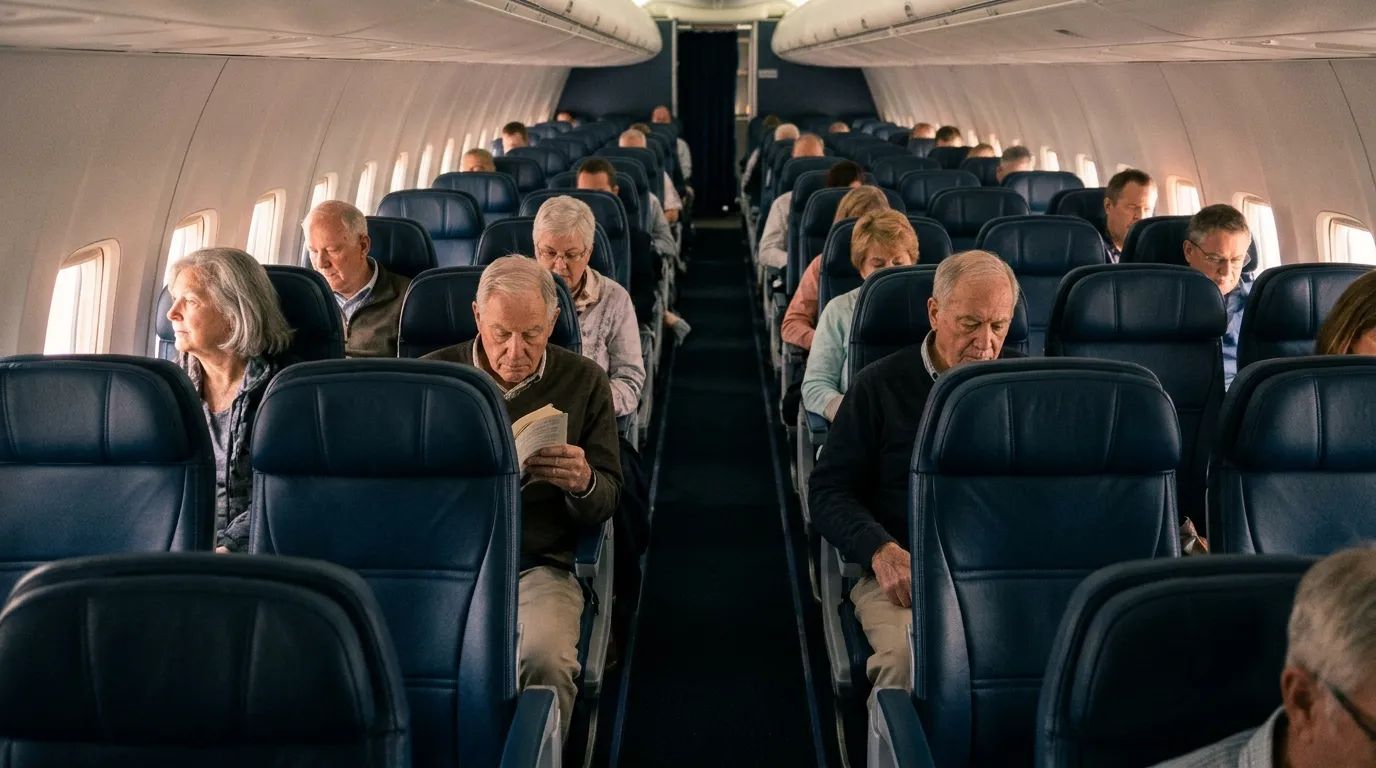
You turn 65, walk up to the gate on a half-empty flight, and expect the agent to wave you toward the best seat in the house. That’s the myth. The reality is blunter: age alone almost never unlocks anything. Yet a handful of small, real accommodations get approved at check-in and at the gate all the time.
What makes this list strange is how unevenly it works. Some of these moves are legal rights tied to a disability, not a birthday. Others are pure discretion that changes from one agent to the next. And one, waiting at the very end, started as a Reddit post and had nothing to do with seniors at all.
#15 – The Aisle Seat Swapped In for a Middle Seat Nobody Needed
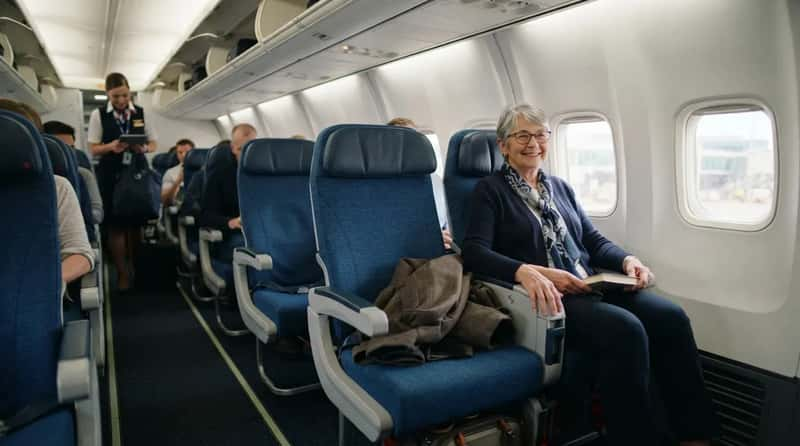
The simplest move on this list is the one people overlook. On a flight with open rows, an agent can slide you out of a cramped middle seat and into an aisle with a few keystrokes. One gate-agent roundup says that once boarding is nearly finished and no-shows are confirmed, agents can freely reassign the empty seats they were forced to hold.
That matters if you need frequent restroom trips or stiff knees make climbing past neighbors miserable. There is no blanket federal rule that gives you an aisle for being 65. For passengers with a disability who identify themselves, airlines must provide a seat that best accommodates the disability if the passenger meets the airline’s procedures. Everyone else is running on goodwill.
But the next move is one that federal law says nothing about, and agents grant it anyway…
#14 – The Seat Closer to the Front That No Rule Promises
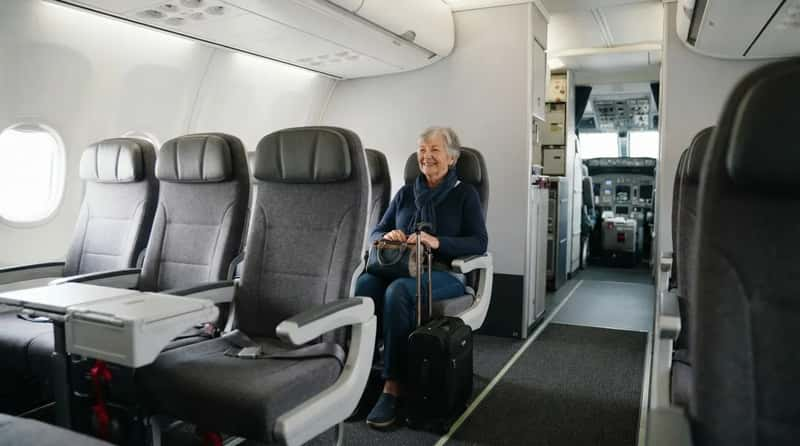
This one is a favor, not a right. One travel guide aimed at older flyers notes that nothing in the federal rules promises it. Agents have discretion, but they can’t say yes to someone who never asked. A shorter walk down the aisle, and a faster exit at the end, can make a big difference for slower walkers.
Here is where opinions split. Some travelers say seniors deserve first crack at forward seats. Others argue that passengers who picked those seats months ago shouldn’t be shuffled for anyone. On a light flight the argument fades, because the seats are simply open. On a full flight, the conversation can end before it starts.
Quick Compare
- Rule-based: A bulkhead or roomier seat for a passenger with a fused or immobilized leg.
- Rule-based: A seat beside a personal care attendant who is helping you in flight.
- Agent’s call: A forward row, an aisle swap, or an open seat beside you on a light flight.
- Not enough on its own: Turning 65.
Next up is a request built around a ticking clock, and agents tend to respond to it differently…
#13 – The Forward Seat Handed Out for a Tight Connection
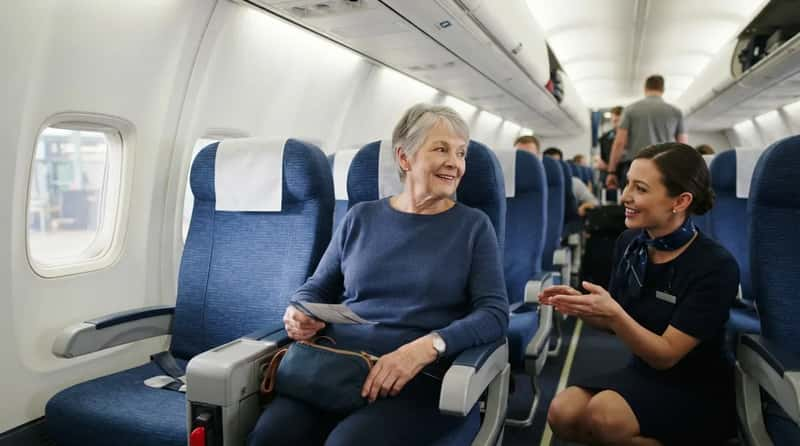
Connections are where older travelers feel the squeeze most. Airlines must help passengers with disabilities with boarding, deplaning, making flight connections, and transporting between gates. That duty is about assistance, though, not about choosing your row.
The seat itself is the discretionary part. Tell the agent you have 35 minutes to cross a terminal and you walk slowly, and a forward seat with open space around it becomes an easy operational fix. Agents respond better to a logistics problem than to a comfort wish. If the flight is packed, expect to hear that the app or a fare upgrade is the only route.
And the next arrangement is one that many travelers quietly refuse to ask for…
#12 – The Seat Near the Lavatory, a Trade-Off Few Mention
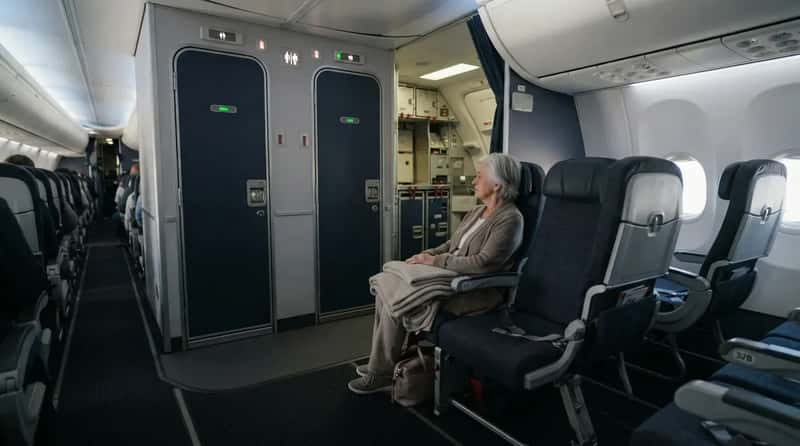
When rows are open, agents can place a traveler near a restroom, and for some older passengers that is the whole point. Fewer steps, less time standing in the aisle, and less awkward squeezing past strangers can turn a dreaded flight into a manageable one.
There is a catch that frequent flyers love to debate. Many travelers rank seats near the lavatory as the worst on the plane. They cite the line, the door noise, and the smell. Others say it’s worth every minute when mobility is the priority. Agents rarely volunteer this seat, so you’ll need to ask, and say whether you want to be close or just on the right side of the aisle.
Speaking of sides, the next entry comes straight from federal rules, and it’s more specific than most people expect…
#11 – The Right Side of the Aisle for an Injured Leg
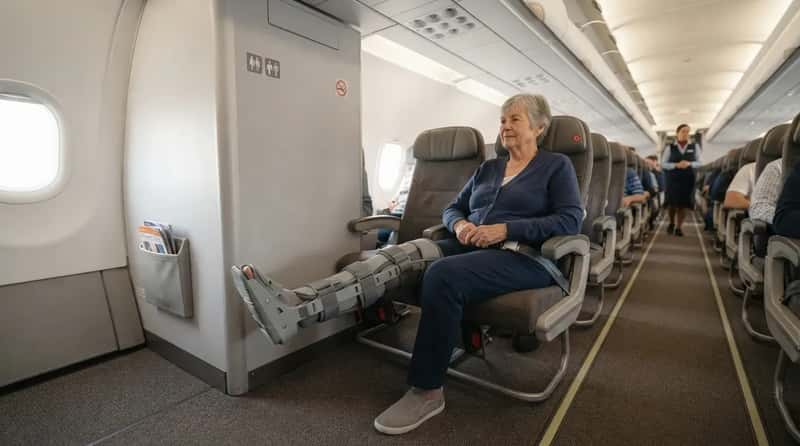
This is a real, written rule. For a passenger with a fused or immobilized leg, the airline must provide a bulkhead seat or other seat with greater legroom, on the side of the aisle that better accommodates the individual’s disability. It is about how you physically fit and move, not about age.
Plenty of seniors have knee replacements or hip problems that make one side of the aisle easier than the other. Agents know this, and on a light flight they can often honor the preference even outside the strict rule. Most people don’t realize the aisle side is part of the regulation itself.
The next seat isn’t about sides at all, but about a feature built into the aircraft itself…
#10 – The Row With the Armrest That Actually Lifts
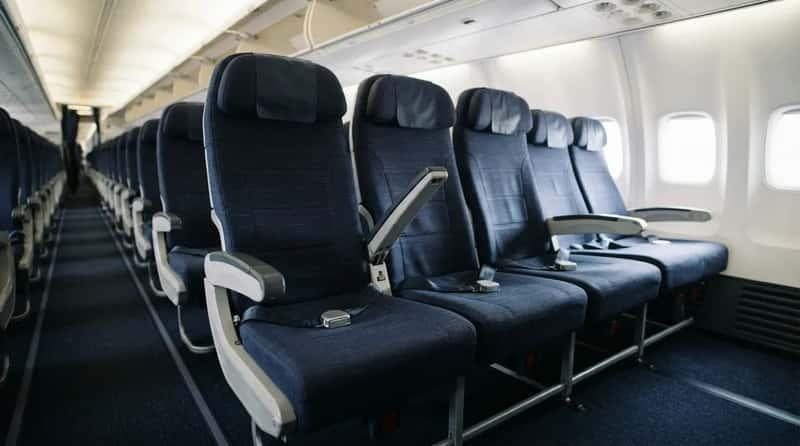
Not every aisle seat is equal. Federal rules require airlines to give a seat in a row with a movable aisle armrest to a passenger who uses an aisle chair to access the aircraft and cannot readily transfer over a fixed aisle armrest. Airlines must also train staff in where these seats are and how they work.
On a light flight, agents have more freedom to put that passenger exactly where they need to be, with an empty seat beside them for an easier transfer. Many travelers never notice these seats exist. They look like any other aisle seat until someone raises the armrest.
But the next entry has a surprise twist, because the “better” seat isn’t always better…
#9 – The Bulkhead Seat That Comes With a Hidden Downside
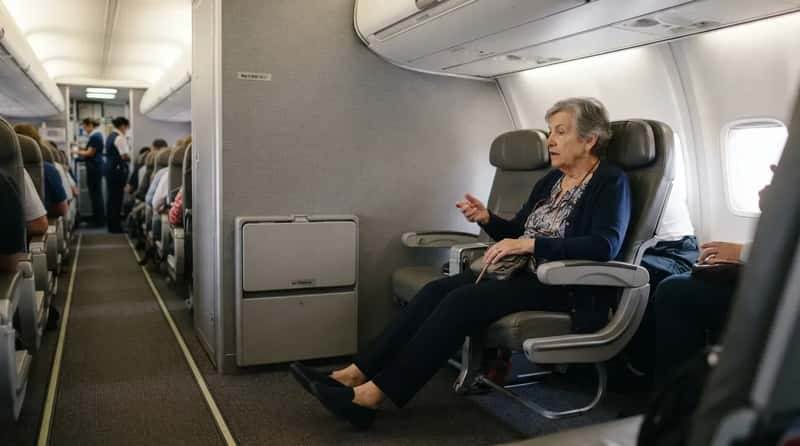
Bulkhead rows look like the jackpot because there’s no seat in front of you. Airlines do have to offer a bulkhead seat, if one exists, or another seat with more legroom, to a passenger with a fused or immobilized leg. That is a legal accommodation, not a courtesy.
The twist is that bulkhead seats often have no under-seat storage. Disability travel resources often suggest keeping essentials in a bag under the seat in front of you, which a bulkhead row doesn’t have. That means medication, glasses, and a phone charger can end up in the overhead bin during takeoff. Some seniors say they’d rather have a regular seat with an open neighbor.
Worth Knowing
- The legal bulkhead accommodation is tied to a fused or immobilized leg, not to age.
- Without a seat in front of you, there is usually no floor space for a personal bag during takeoff and landing.
- Keep medication, glasses, and a charger in a small pouch you can grab before stowing your bag.
- For some travelers, an open seat beside them beats extra legroom.
The next entry is about who sits beside you, and the rules get firm on this one…
#8 – The Seat Right Next to a Caregiver or Companion
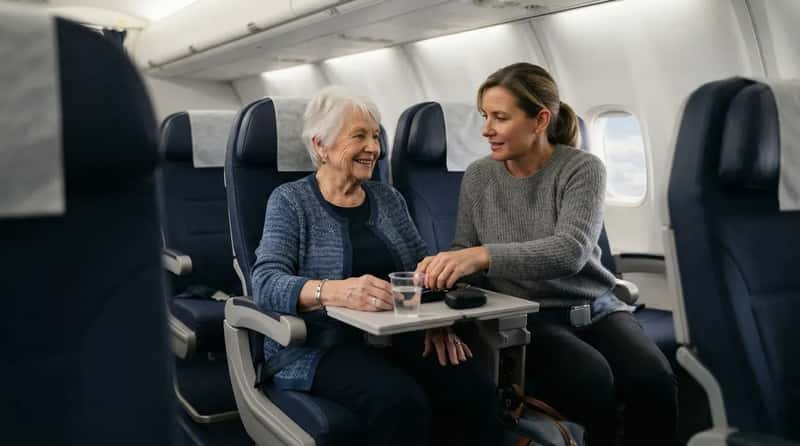
When someone is helping you during the flight, airlines must seat them next to you. The regulation covers a personal care attendant performing a function airline staff aren’t required to perform, such as assistance with eating. It also covers readers and interpreters in the right circumstances.
Here is the fine print most families miss. An airline is not required to provide more than one seat to a passenger with a disability unless that passenger purchased multiple seats. On a light flight, an agent may still seat a couple or a parent and adult child together as a courtesy. The law protects the helper’s seat, not a spouse’s.
The next seat involves a four-legged passenger, and the rule has a choice built in…
#7 – The Seat Chosen Around a Service Animal
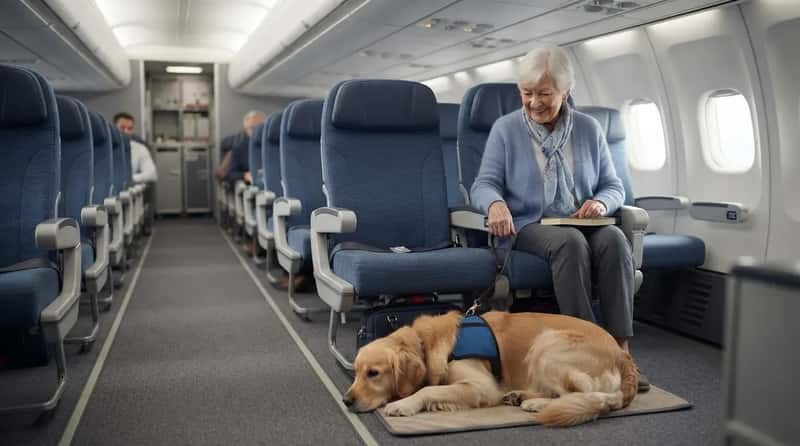
Most people assume service animals automatically go to the bulkhead. Actually, the rule gives the traveler the choice. The airline must provide either a bulkhead seat or a seat other than a bulkhead seat, as the passenger requests.
That choice matters. Some handlers prefer a bulkhead for floor space, while others want a regular row where the animal can tuck in at their feet. On a flight with empty rows, an agent can hand over a spot with open space beside it, so the animal isn’t crowded. The decision belongs to the passenger, not the gate.
But the next one is the opposite of a perk, and it may be the biggest misconception on this list…
#6 – The Exit Row Shuffle That Moves You Out, Not In
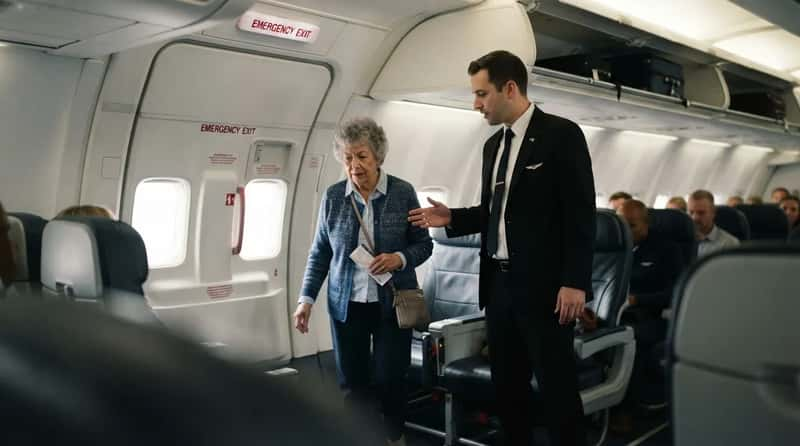
Many people assume exit rows are a reward for older travelers who want legroom. It’s the reverse. Federal exit-row rules are built around whether a passenger can perform emergency tasks, such as operating the exit and helping others. Agents can and do reseat people who can’t.
That means a gate agent might move a senior out of an exit row they booked and into a standard seat nearby. This is the one move on the list that has nothing to do with comfort. Age is not the test. Ability is. Many seniors qualify, and some don’t.
Our next entry is about boarding order, and one airline change made it rarer than ever…
#5 – The Early Boarding That Lets You Pick Your Own Seat
On airlines without advance seat assignments, the rule works differently. If a carrier doesn’t provide advance seat assignments, passengers who identify as needing a seating accommodation must be allowed to preboard and select the seat that best meets their needs. That includes boarding ahead of other preboarders.
Then came a big change. Southwest’s move to assigned seating in 2026 ended the open-seating scramble that made this trick famous. Preboarding itself still exists, since passengers who identify as having a disability at the gate and need extra time to board must be given the chance to preboard. It just no longer comes with a free pick of the cabin on that airline.
Fast Facts
- The pick-your-seat preboarding rule applies only to airlines with no advance seat assignments.
- You must identify yourself as needing a seating accommodation.
- Eligible passengers can board ahead of other preboarders.
- Southwest’s 2026 switch to assigned seating removed the open-cabin pick on that airline.
The next entry changed in 2026 too, and it swung hard in the traveler’s favor…
#4 – The Free Empty Seat Beside You, Back After a Reversal
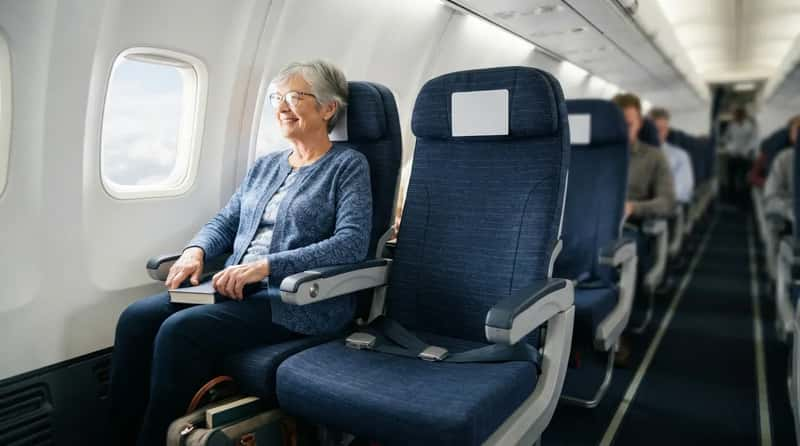
Travelers who need more room, including older passengers, saw a major swing in 2026. Southwest updated its policy so gate agents can provide a complimentary second seat at the gate, provided adjacent space is available. The change followed a stricter rule that had pushed people to buy the seat in advance.
The catch is simple. If no adjacent seats are available, Southwest will work to rebook you on a later flight. Gate discretion is better than it was, but a full flight still offers no guarantees. Other airlines have their own rules, so don’t assume this travels with you.
But the real secret to most of these moves is about timing, and it’s the one thing agents wish you knew…
#3 – The Seats That Unlock Minutes Before Boarding

Agents hold seats back for late elite flyers and standby passengers. Once that risk passes, they can release them. One roundup says a request about 20 minutes before boarding often gets an instant move to an aisle or window, but ask too early and the seat is still locked.
That’s one source’s estimate, not an official rule, so treat it as a guideline. The bigger point is that agents often can’t move you until their own holds clear. They may also be placing standby passengers in the open seats, which is why moving yourself unannounced causes problems. A former agent warned that switching seats without telling the crew can cause delays, especially when standby passengers are waiting for those empty seats.
The next entry is where one passenger’s gain becomes another passenger’s loss…
#2 – The Priority Seat Someone Else Has to Give Up

Airlines can designate certain seats as priority seats for passengers with disabilities. They can also sell those seats to others, but they must give notice that those passengers are subject to being reassigned if needed to provide a required accommodation. Translation: someone gets moved.
That can create friction at the gate, especially when the displaced passenger paid for the spot. Still, the rule is clear. One federal training example covers a carrier whose bulkhead seats normally go to frequent flyers. The agent must still give the last bulkhead seat to the passenger with a spinal condition. Many travelers have no idea the rule works this way.
And the last entry started as a Reddit post, before anyone connected it to older travelers…
#1 – The Gate Agent Who Gave Everyone an Empty Middle Seat
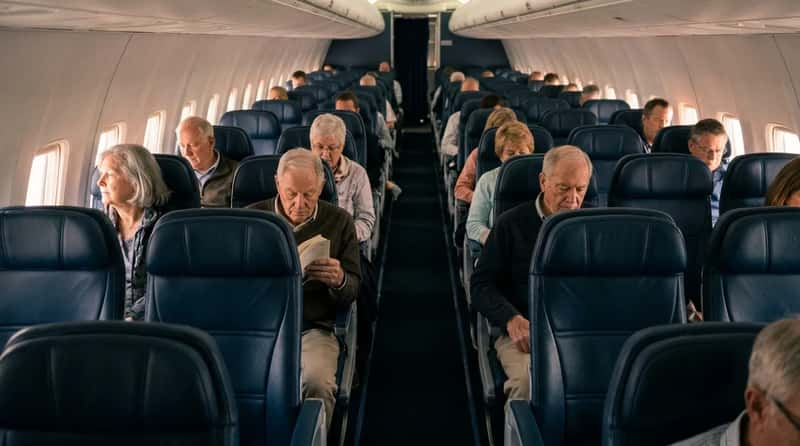
This one was never about seniors, and that is the surprise. In December 2024, a Delta passenger shared a seating chart on Reddit from a light flight out of St. Louis. The user wrote that the gate agent rearranged seating to try to make sure everyone had an empty middle seat.
The poster said they had never heard of an agent doing that. The photo showed nearly every middle seat empty, with passengers moved to window or aisle seats. For an older traveler, that kind of reshuffle means the seat beside you stays open, and nobody has to ask. It’s the rarest arrangement on this list because it depends entirely on one agent’s judgment.
Why It Stands Out
- It happened in December 2024 on a Delta flight out of St. Louis.
- The proof was a seating chart posted on Reddit.
- Passengers were moved to window or aisle seats so middle seats stayed empty.
- Nobody had to ask. The agent started it.
So the myth falls apart, but something better takes its place. Turning 65 won’t earn you a better seat on its own. The reliable moves come from federal rules tied to disability, like movable armrests, bulkhead seats, caregiver seating, and service animal choices. Everything else, from aisle swaps to forward rows to a free empty neighbor, lives on discretion.
On a light flight, that discretion can feel like a small kindness from a stranger at a podium. It costs the agent a few keystrokes, and it can change the whole trip for the person in the seat.