Most people assume a coach tour lives or dies by the itinerary – the castles, the coastlines, the little wine stops along the way. That’s not quite true. Ask anyone who has spent eight hours on a motorcoach and they’ll tell you the real trip happens row by row, mile by mile, between the window and the aisle.
The seat you land in on day one can quietly decide who becomes your new travel friend, whether you feel queasy by lunchtime, whether you actually catch the guide’s best stories, and whether your vacation photos come out crisp or streaked by a plastic window decal. Here’s what years of tour-company policy and seasoned traveler frustration reveal about the seats nobody warns you about before boarding.
#15 – The Window Seat With the Hidden Sticker That Ruins Every Photo
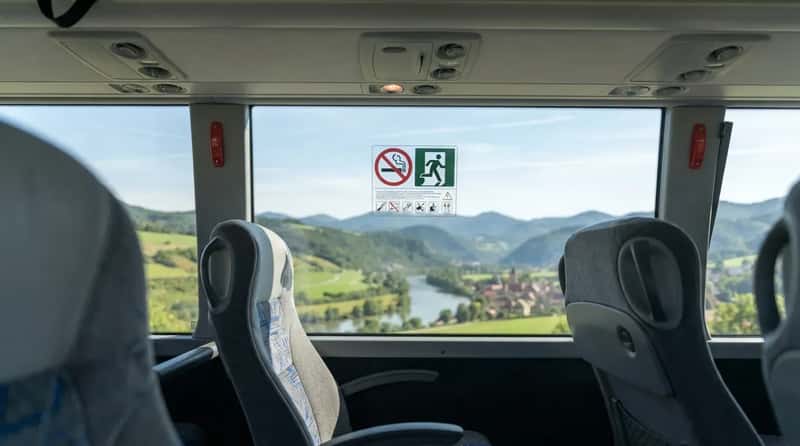
Grabbing a window seat feels like a small victory until you notice the fine print stuck right on the glass. Many coaches carry no-smoking decals or emergency evacuation stickers plastered directly onto certain windows, and experienced travelers now scan for that before they sit, because those markings will photobomb every scenic shot for the next week.
It sounds fussy, but walking the aisle and checking glass instead of headrests has become one of those quiet habits shared by people who take multiple coach tours a year. Pick the wrong row once, and you’ll never board without checking again.
#14 – The Seat Under the AC Vent That Nobody Brags About
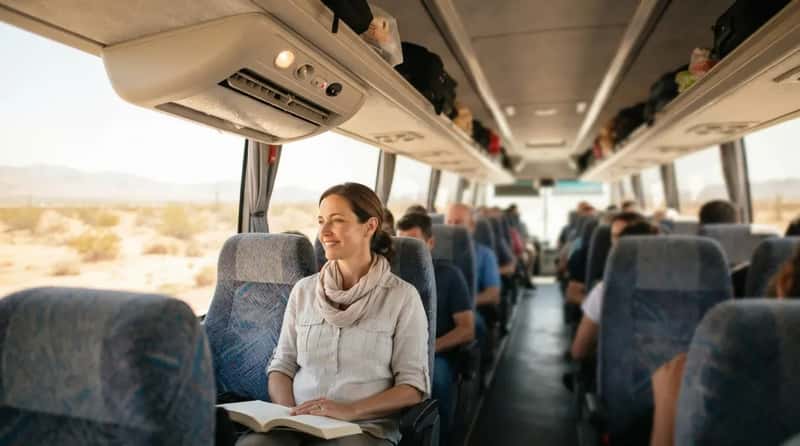
In hot climates, one of the least glamorous seat decisions turns out to be one of the smartest. Seasoned coach travelers specifically hunt for a seat directly below an air-conditioning vent, or one where the window actually opens, especially in regions where the heat is no joke.
Nobody posts a photo of that seat on social media. But it’s the difference between a comfortable ride through a heatwave and a miserable one, and the travelers who know this trick are usually the ones still smiling by hour six.
#13 – The Over-the-Wheel Seat That Splits Every Group in Half
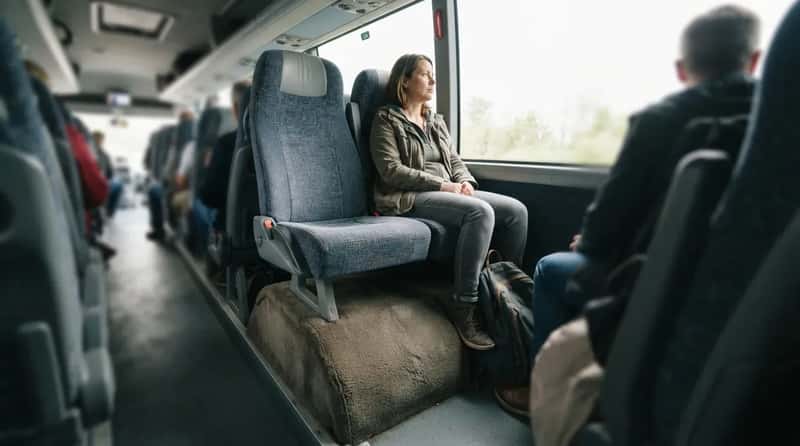
This is one of the most argued-about seats on any coach, and for good reason. Some travelers swear that if you struggle with motion sickness, the seats located over the wheels near the middle of the bus are the smoothest ride available, since that’s where the coach sways the least.
Other frequent riders disagree completely, insisting the wheel-well housing eats into legroom and makes the floor vibrate more than anywhere else on board. It’s a genuine split among tour veterans, and one that reignites itself in almost every travel forum.
Quick Compare
- Team Smooth Ride: seats over the wheel well sit closer to the coach’s center of gravity, so sway feels minimal.
- Team More Legroom: the wheel-well housing eats into foot space, especially on older coach models.
- Team Quiet Floor: some riders feel more vibration here than in rows farther back.
#12 – The Solo Traveler’s Row That Hands You a Stranger

Traveling alone on a coach tour comes with a seating reality many people never expect. Tour operators openly note that a person traveling solo, or a group of three or five, will usually need to share a row with someone else entirely, even though the company tries to keep actual friends together.
That means solo travelers, and even odd-numbered trios, are essentially handed a seatmate they’ve never met. For some, that turns into the best part of the trip – instant company for a week. For others, it’s the biggest surprise nobody mentioned before they boarded.
#11 – The Paid Front-Row Upgrade Some Companies Now Charge For
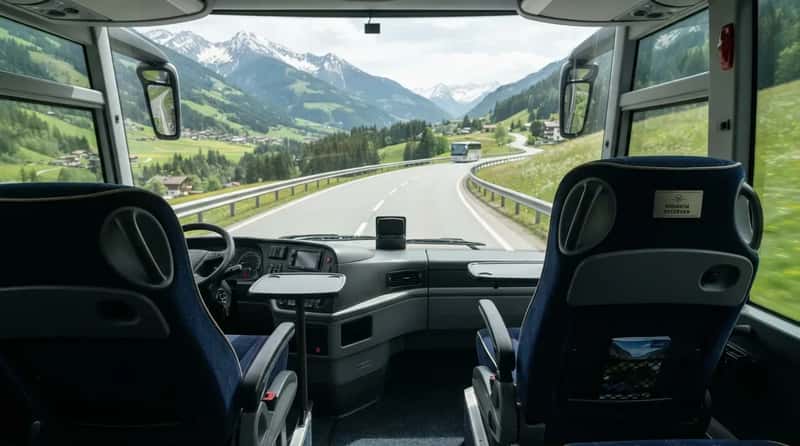
Front seats used to be a first-come, first-served scramble. Now some operators have turned them into an actual paid product. On certain European coach lines, travelers can pre-book the front seats for roughly fifteen dollars per person on tours up to six days, and the option is typically only available to bookings of two or four people.
It’s a small but telling shift – the best seat on the bus has quietly become a line item on the invoice. Travelers who don’t know this exists often find out only after the seat map is already locked.
#10 – The Restroom-Adjacent Seat Nobody Admits They Picked
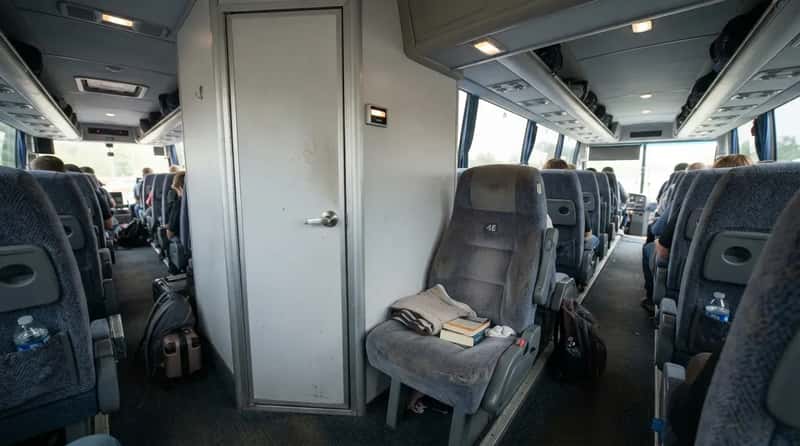
Every coach with an onboard restroom has a seat closest to it, and that seat carries a reputation. It’s genuinely convenient for anyone with a medical need or small kids, but it also means constant foot traffic, the occasional odor, and a door swinging open and shut for hours at a time.
Some travelers request it on purpose for the convenience; others land there by accident and quietly ask to move by day two. Tour directors say it’s one of the most commonly requested mid-trip seat swaps, right behind window-seat trades.
Worth Knowing
- Restroom-adjacent seats are usually the first ones a tour director offers to swap once a trip is underway.
- Door traffic tends to peak right after rest stops, when everyone lines up at once.
- Families with young kids often request this row on purpose for quick access.
#9 – The Door-Side Seat That’s Really a Mobility Lifeline

For travelers with mobility concerns, the seat closest to the boarding door isn’t a preference – it’s a necessity. Coach seating guides advise that anyone who needs an easier time getting on and off the bus should politely explain that to whoever is already sitting there, since most people will happily switch once they understand why.
That small negotiation plays out on nearly every multi-day tour, usually within the first hour of the trip. The unwritten rule among repeat coach travelers is simple: if someone asks for that seat for mobility reasons, you move without hesitation.
#8 – The Front Seat That’s Secretly Reserved for the Guide, Not You

Many travelers assume the front row is up for grabs like everywhere else on the bus. It often isn’t. On plenty of coaches, one front seat belongs to the Tour Manager by default, and a local guide may claim the other, quietly pulling what looks like the best seat on the bus out of the pool entirely.
This catches first-time tour-goers off guard almost every time. They book early specifically for that seat, only to discover on boarding day that staff already have first claim on it, and it’s rarely spelled out clearly beforehand.
#7 – The Rotation Seat That Moves You Two Rows a Day

Some coach companies refuse to let anyone camp in one spot for an entire trip. One well-known operator runs a strict daily rotation, moving passengers two rows clockwise each new drive day, so nobody gets stuck at the back – or hoards the front – for the whole tour.
Other operators run similar systems, shifting guests by an amount that depends on the group’s size. Depending on your personality, this is either the single best social mechanic on the trip or a mild daily annoyance you learn to tolerate.
At a Glance
- Rotation seating: everyone cycles through front, middle, and back over the course of the tour.
- Locked-in seating: your seat number stays the same until the last day.
- Social effect: rotation forces new seatmates every few days; locked seating rewards whoever booked first.
#6 – The Locked-In Seat You Keep for the Entire Journey
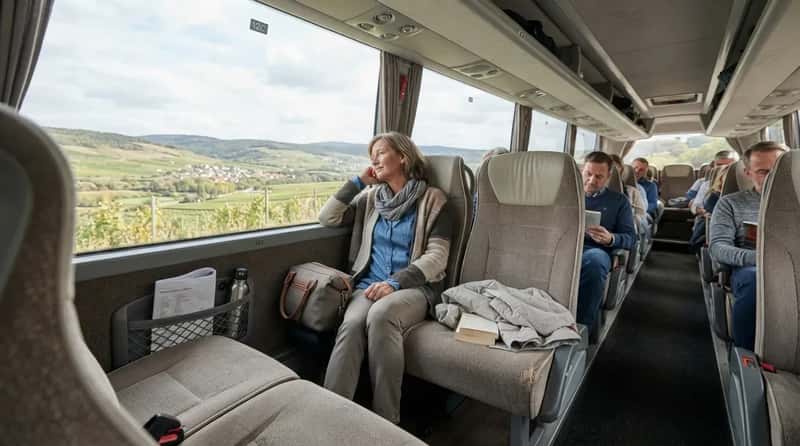
Not every company believes in rotation, and plenty of travelers are relieved to hear it. One long-running tour brand built its reputation on the opposite approach – among the first to introduce true seat assignment on bus tours – issuing a boarding pass with a specific number that stays yours for the whole trip.
For travelers who hate uncertainty, that’s a small revelation. No daily shuffle, no negotiating with strangers, no losing your spot to whoever boarded first. It’s become a real selling point some companies now advertise directly to nervous first-timers.
#5 – The Back Bench That’s Bumpier Than You’d Expect
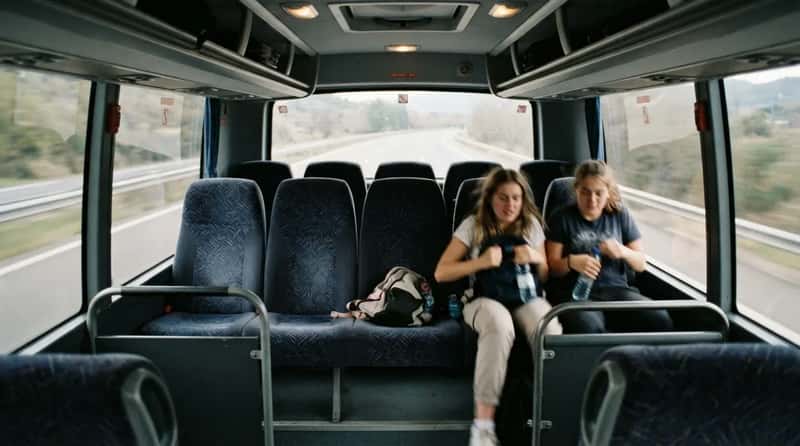
The rear bench looks appealing on paper – extra width, a sense of privacy, distance from the door traffic. In practice, it’s often the roughest ride on the coach. Charter bus experts note plainly that front seats usually offer a smoother ride with far less sway, while back seats are notorious for bouncing and triggering motion sickness on long highway stretches.
Younger travelers and back-row loyalists still fight for it anyway, treating it almost like a badge of honor. Everyone else quietly migrates forward after the first rough patch of road.
#4 – The Aisle Seat That Quietly Controls Your Whole Day
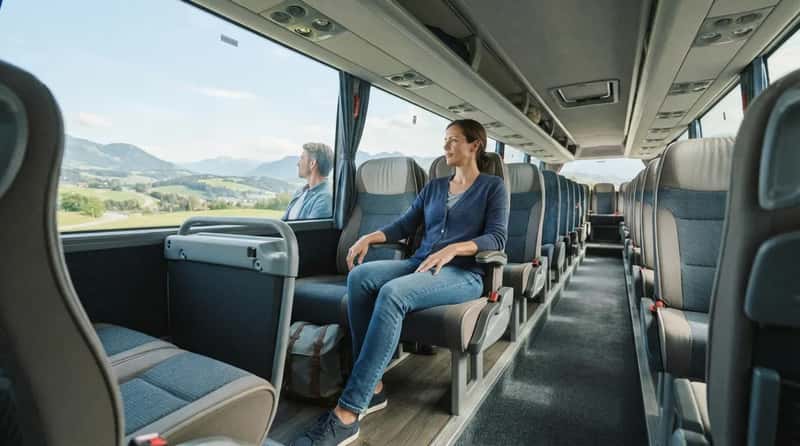
The aisle seat gets overlooked next to the flashier window option, but frequent coach travelers know it holds its own kind of power. It offers easy access for restroom breaks, stretching, and grabbing snacks from the overhead bins without disturbing anyone – a small freedom that matters enormously on a ten-hour driving day.
The tradeoff is real too: less control over the view, and getting bumped every time your row-mate needs out. Still, plenty of veterans now request aisle seats on purpose, arguing that freedom of movement beats scenery every time – a debate that tends to split comment sections right down the middle.
#3 – The Emergency Exit Row Almost Nobody Understands
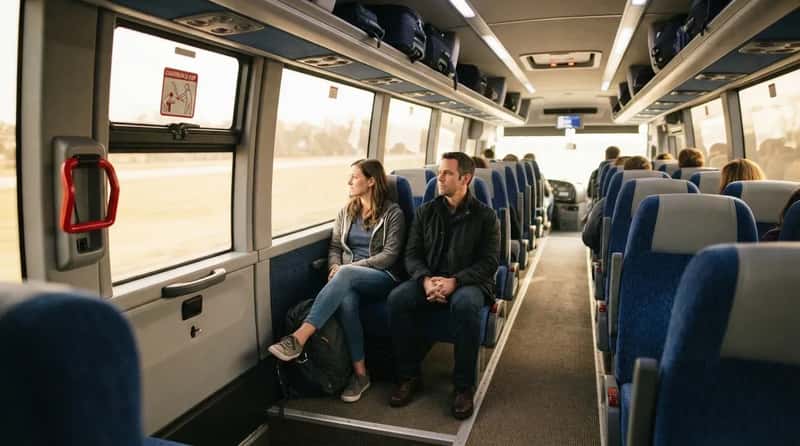
The emergency exit row exists on nearly every full-size motorcoach, since a standard configuration seats 47 to 55 passengers depending on the model, with larger coaches maxing out around 57 across roughly 14 rows. That exit row sits in the middle of all that seating, usually unmarked to casual passengers.
Few travelers realize it comes with informal expectations – staying alert, keeping the aisle clear, sometimes even a quiet briefing from the driver before departure. It’s rarely discussed in tour brochures, yet it matters more than almost any other seat on the bus if something ever goes wrong.
Fast Facts
- Standard motorcoaches typically seat 47 to 55 passengers across roughly 14 rows.
- Larger coaches can max out around 57 seats total.
- The exit row sits mid-cabin and is rarely marked for casual passengers.
- Drivers sometimes give a quiet briefing to whoever ends up in that row.
#2 – The Motion-Sickness Seat That Requires a Doctor’s Note

This is the seat request that surprises first-time tour travelers the most. Multiple operators now require actual medical proof before granting it – one company states plainly that anyone needing to sit up front due to motion sickness must provide a physician’s note. Another operator goes further, stating outright that it cannot accept doctor’s notes for front-seat requests at all.
It’s a surprisingly firm policy for something that sounds like a simple courtesy. Travelers who assumed a polite ask would be enough are often stunned to learn there’s real paperwork involved – or that no paperwork will move them at all.
#1 – The First Row That Decides Who You Become Friends With

Every seasoned tour director says some version of the same thing: the front row was never really about the view – it’s about who you end up bonding with for the next week. Whoever sits closest to the guide hears every aside, every local joke, every off-script story that never makes it to the microphone. On rotation-based tours, that access eventually spreads to everyone, since guests cycle through the front, middle, and back across the trip.
On locked-seat tours, it plays out differently: whoever books first essentially picks their social circle for the whole journey. It sounds dramatic for something as small as a bus seat, but multiple tour veterans describe it the same way – the front row isn’t the best seat because of the road ahead. It’s the best seat because of who ends up sitting in it.
Fifteen seats, fifteen completely different trips, all inside the same coach. Some of these choices are about comfort. Some are about who you’ll actually talk to for the next week. And a few, like the doctor’s-note rule or the guide’s reserved seat, are the kind of detail nobody mentions until you’re standing in the aisle wondering why your favorite spot is already taken.
The itinerary is what gets you excited before the trip. The seat is what decides how the trip actually feels once you’re living it, mile after mile, all the way home.