

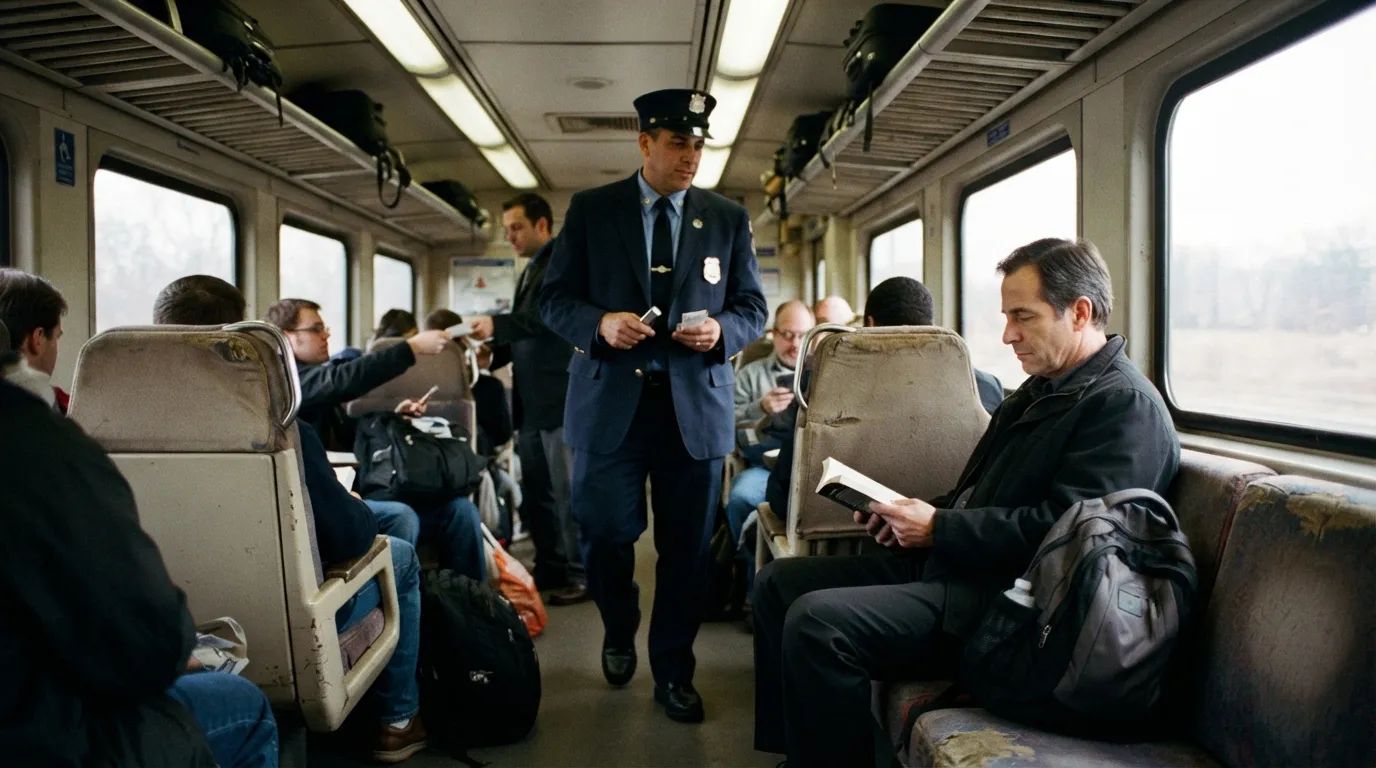
A conductor can check a ticket in half a second. But the seat you pick, and what you do the moment you sit down, often tells them how many trains you’ve ridden before. That’s what this list is about: 15 small seat choices that quietly separate the once-a-year traveler from the person who practically lives on the rails.
None of this is science, and no conductor would claim it is. But some of these patterns show up in Amtrak’s own rules and in the way commuter crews describe their work. The biggest giveaway also isn’t the one most people would guess. It’s much quieter, and it’s waiting at #1.
#15 – The Window Seat With the Phone Already Raised
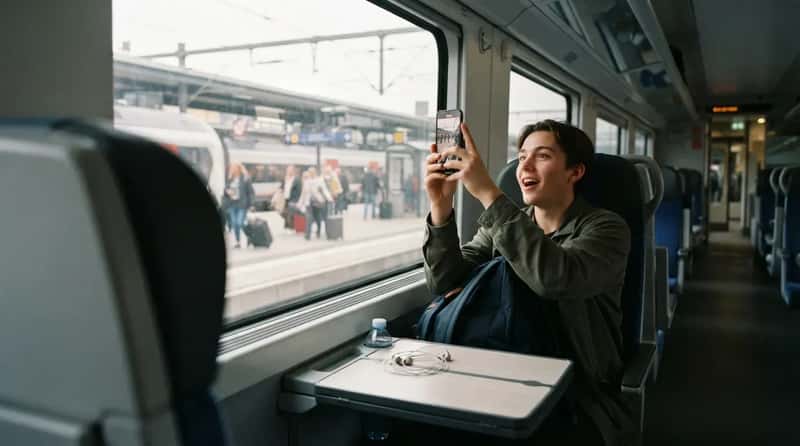
Watch the window seats right before departure. A first-timer slides in, lifts the phone, and starts filming the platform before the train has moved an inch. Conductors see it constantly. It’s a soft signal, not proof.
Someone on a once-a-year trip treats the seat as part of the destination, so the view comes first. Plenty of frequent riders love a window too. The difference is what happens next. The seasoned rider settles in, ticket ready, and barely looks up, while the newcomer is still working out which way the train is facing. That question matters more than you’d expect.
Quick Compare
- First-timer: phone up, filming the platform, still figuring out which way the train faces.
- Seasoned rider: seated, ticket ready, barely glancing up.
- Shared trait: both may love the window, so the seat alone proves nothing.
#14 – The Accidental Quiet Car Passenger Taking a Loud Call
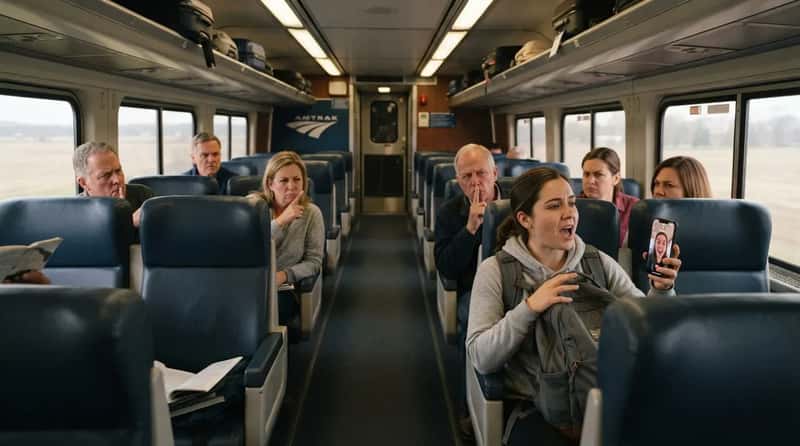
Every so often someone walks into the Quiet Car, opens a video call, and the whole car turns around to stare. Amtrak’s rule is plain: phone calls are not allowed, and passengers are asked to limit conversations. That goes even for riders who landed there only because nothing else was open.
One rail writer notes that most offenders either forget where they are or are new to Amtrak. That makes the loud caller an easy read for a conductor. The tell isn’t the noise itself. It’s the look on the person’s face when someone points to the sign.
#13 – The Bag Sitting Proudly in the Seat Beside Them
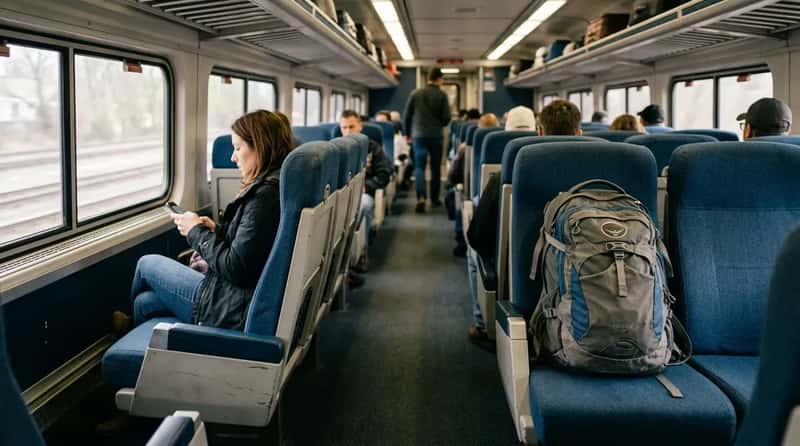
On a half-empty train, a backpack on the next seat looks harmless. On a full one, it becomes a problem. Amtrak asks passengers to take one seat per fare so other paying riders aren’t shut out. Conductors handle it gently, but they handle it a lot.
Here’s the catch. On many routes, conductors manage seating based on passenger volume, destination, and accessibility needs, so a request to move a bag is routine. The rider who lifts it before anyone asks usually knows how a busy train works. The one who looks startled by the request often doesn’t.
#12 – The Rider Stunned to Find Their Seat Faces Backward
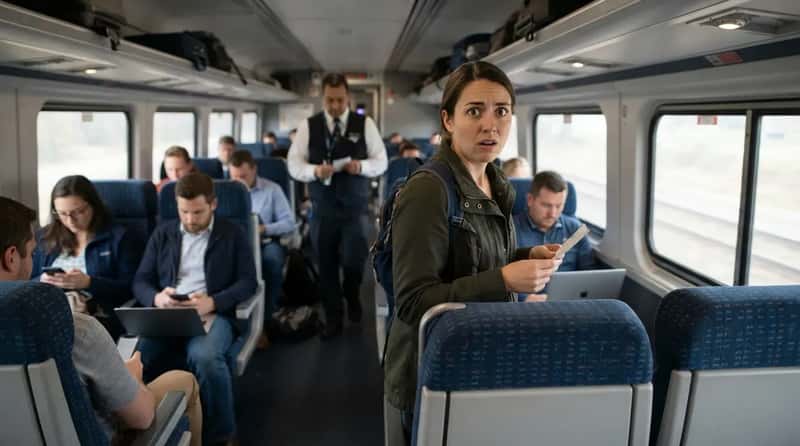
This one is recent. Since March 2, 2024, Northeast Corridor trains have been moving to fixed forward and backward seating, with about half the seats facing each way. Regulars have already adjusted. First-timers often act like the train made a mistake.
The reason is practical. Turning a train around used to mean crews had to wye it in New York and Washington, which takes about three hours each time. Business Class riders can now see which way a seat faces when they choose it. A conductor can usually spot the traveler who checked, because they’re the one who isn’t glancing around in confusion.
#11 – The Sneaky Move to the Empty Seat That Wasn’t Empty
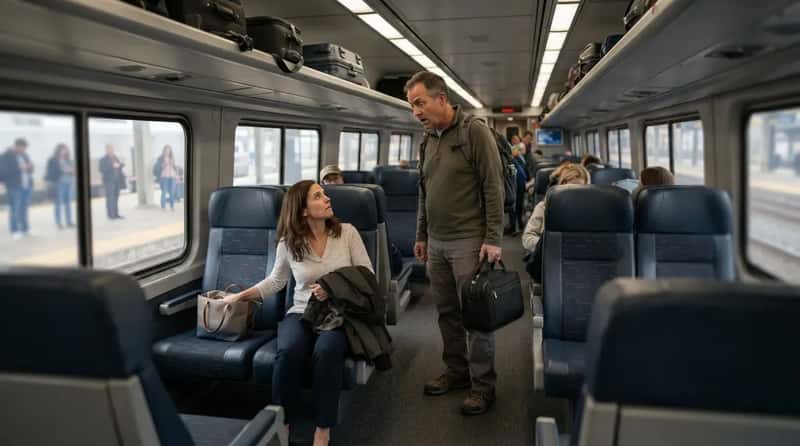
On reserved trains, the seat that looks empty may already belong to someone. Amtrak’s advice is blunt: change your seat in the app before moving, because someone boarding down the line may have already selected it. Newer riders skip that step all the time.
Worth Knowing
- An empty-looking seat may be booked by someone boarding at a later stop.
- Changing your seat in the app first is Amtrak’s own advice.
- The conductor can help check whether a seat is open between your origin and destination.
- A wrong-seat mix-up usually surfaces a station or two down the line.
The consequence shows up a station or two later. A passenger boards, checks the seat number, and finds a stranger sitting in it. Now the conductor has to sort out who goes where, with a line of people waiting in the aisle. A veteran rider rarely makes this mistake. The next clue involves a barcode above the seat.
#10 – The Tap-and-Scan Rider in First Class
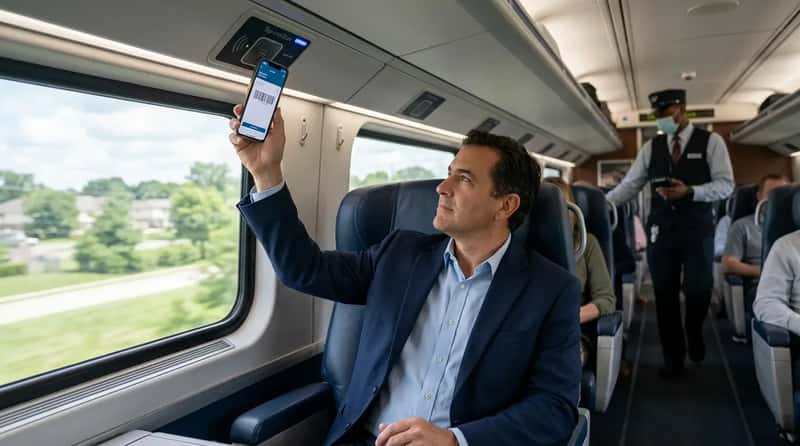
Some riders don’t wait for the conductor at all. On select Acela trains, passengers can tap a button in the app and scan a barcode above the seat. Once they do, the conductor’s scanner shows the ticket as validated. No fumbling, no digging for a phone.
When it launched, the perk was exclusive to Acela first class, so it may have expanded since. It rewards people who already know the app, their seat, and the routine. That’s a reliable sign of someone who has done this before. But some riders plan even further ahead.
#9 – The Acela Regular Who Books Car 2 on Purpose
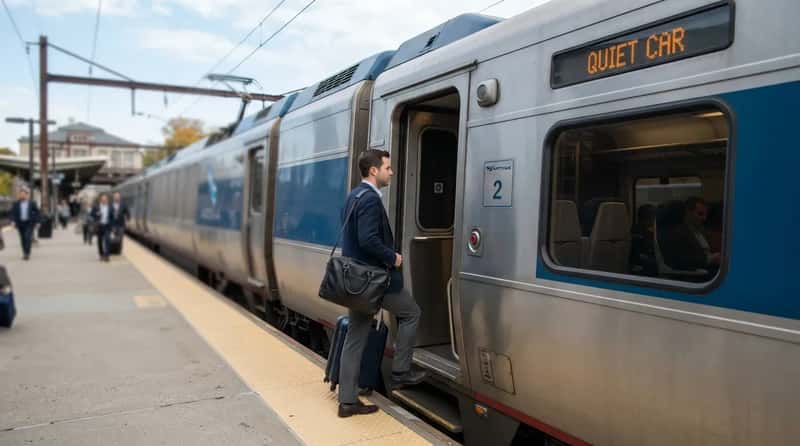
Acela riders who want silence don’t gamble. The Quiet Car is always Car 2 on Acela, and it’s marked on the seat map. They pick it in the app before they ever set foot on the platform.
Here’s the contrast. On the Northeast Regional and other services, the Quiet Car does not yet have seat selection, so seats are first come, first served. The rider who hustles to the same car every time is showing you how well they know the train. Some seasoned riders, though, make a very different choice.
#8 – The Traveler Who Parks in the Café Car to Take Calls
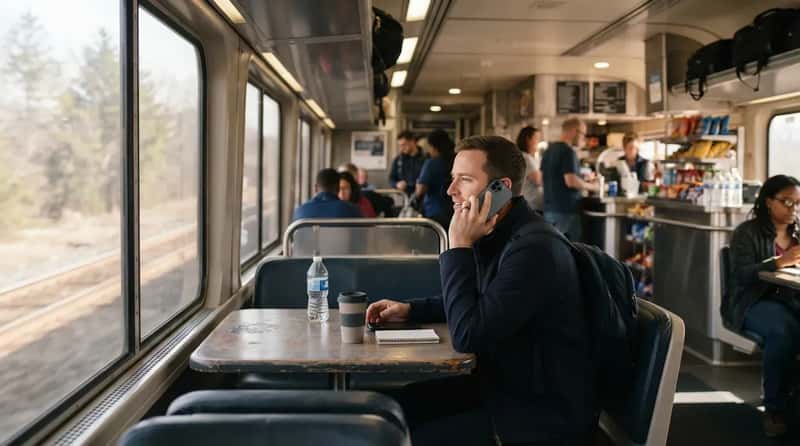
Here’s a habit that gives away a lot. Instead of taking a call at their seat and annoying everyone, some riders carry the phone to the café car. It offers a space to make calls or escape the quiet zone. It isn’t a permanent seat, but it works for a quick conversation.
Crew procedures point the same way. An enthusiast forum member shared an excerpt from what they described as an Amtrak manual, saying customers who must use a cell phone should be directed to the café or lounge car. Take that as a forum-sourced detail, not an official policy page. Even so, riders who move there without being asked have usually learned the train’s unwritten map. Some passengers pay for more certainty, though.
#7 – The Business Class Rider Who Refuses to Gamble
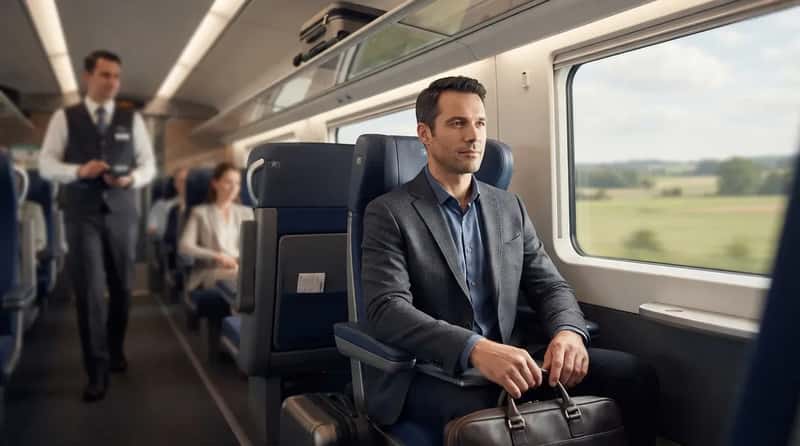
Paying extra for Business Class doesn’t automatically make someone a road warrior. But travel bloggers point out that Business Class and First Class cabins offer dedicated space and guaranteed seating. Frequent riders often value that certainty more than the savings.
Here’s the debate. Some argue that Business Class is a splurge for people who overpay out of habit. Others say it’s the smartest fare on a route you ride monthly. Conductors notice the difference in behavior. The confident rider walks straight to the assigned seat, while the occasional splurger studies the seat numbers. Then there’s the passenger who doesn’t move at all.
#6 – The Rider Who Stays Seated While Everyone Else Crowds the Door
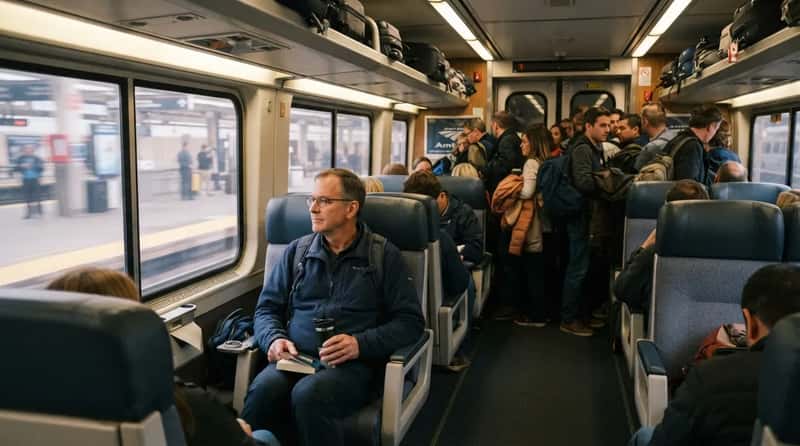
Right before a stop, a few passengers always stand up and pile into the vestibule. Amtrak etiquette guides discourage standing near the doors before arrival, and conductors release passengers car by car.
At a Glance
- The crowd: standing in the vestibule before the train has even stopped.
- The calm rider: stays seated until it’s time to move.
- The reality: doors don’t open early, and the train isn’t leaving without you.
The rider who stays put is showing you they know the routine. They know the doors won’t open early, and they know the train isn’t leaving without them. Conductors often read that calm as a sign of someone who has made this trip many times. The crowd at the door is usually a good hint of who hasn’t.
#5 – The Passenger Who Moves Without a Fuss When Asked
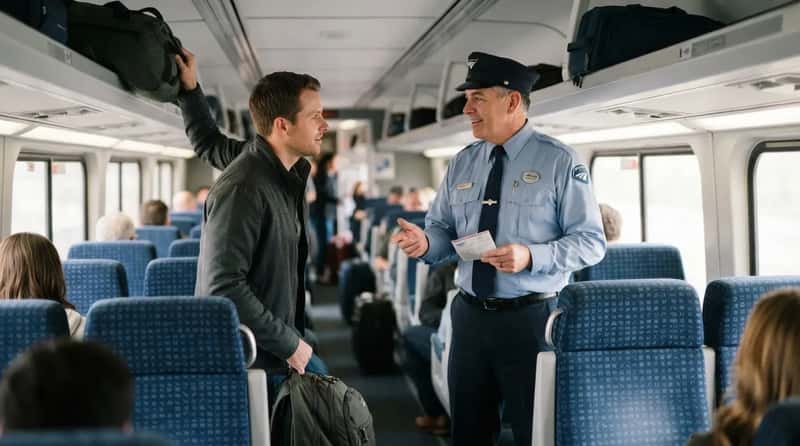
Every conductor has a story about seat requests. Amtrak says it reserves the right to transfer passengers from one car or train to another when operating conditions require. That’s not a threat. It’s how a crowded route gets sorted out.
The frequent rider tends to say “sure” and grab their bag. The occasional rider is more likely to push back, which is understandable if you’ve never seen how the seating gets managed. The response itself is a clue. But nothing gives a rider away like a small slip of paper.
#4 – The Seat With a Tiny Paper Tag That’s Secretly a Code
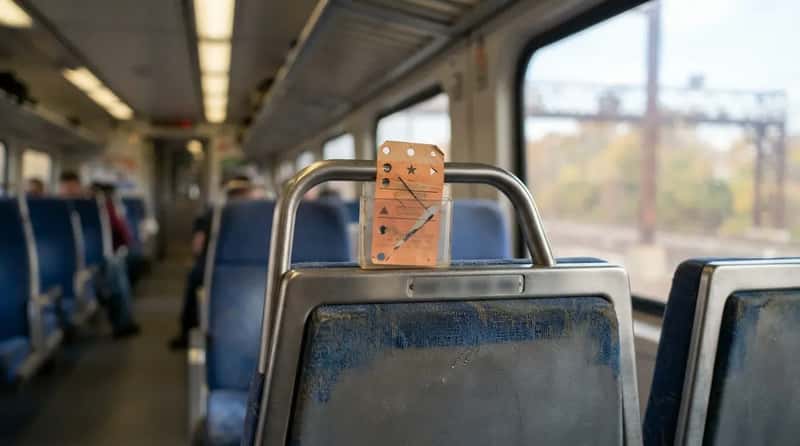
Watch a commuter train and you’ll spot a small slip tucked above or in front of a seat. It’s a seat check, and it’s more than paper. One Metro-North conductor described the system to a student reporter as a quiet code of visual cues, hole punches, and memory. Regulars know what those marks mean.
Rail fans report that crews combine color, folds, tears, and punches. Those marks can show the destination, how many people the check covers, or whether the seat is business class or coach. There are no universal rules, and forum members say crews often do it their own way. The rider who leaves the tag alone knows better than to touch it. What matters is what happens when one is missing.
#3 – The Seat With Nothing Above It
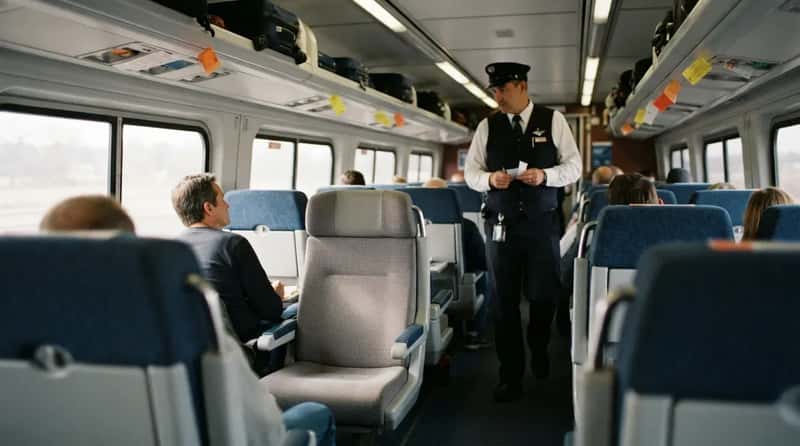
An empty spot above a seat tells the conductor exactly who to ask. Fans on a long-running Amtrak forum put it simply: anyone in a seat without a seat check will be asked for a ticket. The conductor doesn’t need to remember faces. The tags do the work.
Fast Facts
- No seat check above you usually means a ticket request is coming.
- Crews mix color, folds, tears, and punches, and there are no universal rules.
- Checks are changed often, so a saved one won’t work next trip.
- Forum riders say a modern 10-ride check carries the reservation number and initial valid date. Systems change, so treat that as a report, not a rule.
That’s why frequent riders are ready. They board, sit, and have the ticket out before the conductor is even halfway down the car. Newer riders often get caught off guard, especially if they expected a check at the gate. The moment the conductor walks up is when the difference shows. And then comes the mistake with the highest price.
#2 – The Sleeper Still in the Window Seat Past Their Stop
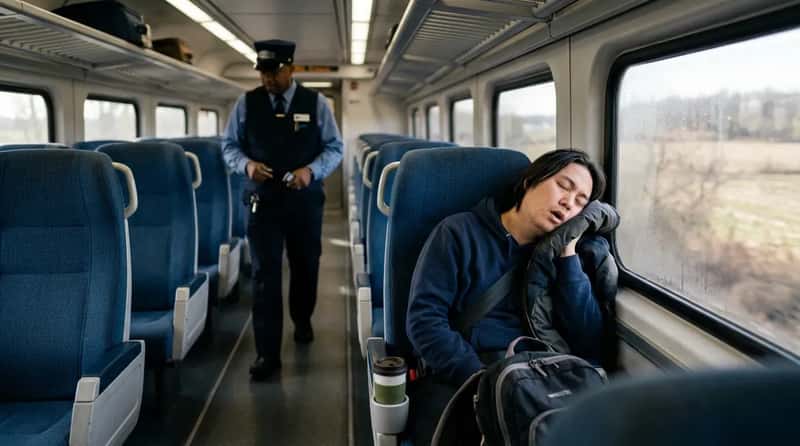
Everyone’s fear on a long ride is dozing off. A seat check helps the conductor catch it. As one Metro-North conductor explained, if a check shows the last stop and the person is still on board afterward, the conductor knows to charge them extra.
Regulars rarely wind up in this spot. They know their stop by the sound of the track and the light in the window, and they wake up on their own. The person who sleeps past is usually on a route they don’t take often. One more clue is the strongest of all, and it involves no words at all.
#1 – The Seat Where the Conductor Just Nods
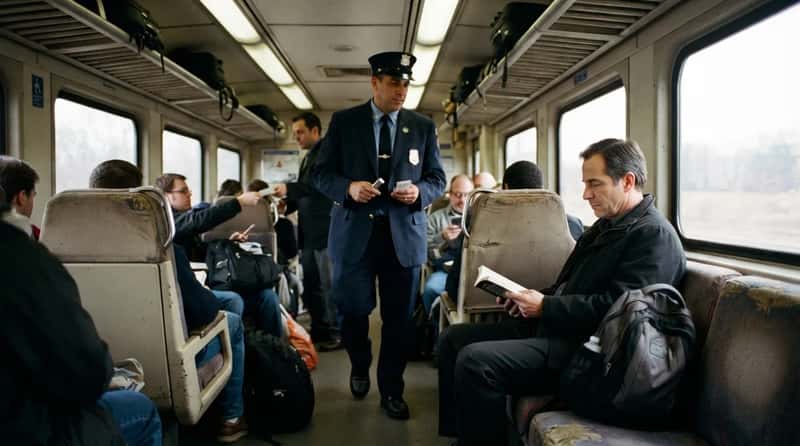
The clearest sign of a frequent traveler isn’t where they sit. It’s the moment the conductor walks by and doesn’t stop. On commuter lines, monthly and multi-ride tickets get a quick glance, and the regular rider gets a nod. Forum posts from riders who scanned modern seat checks say a check from a 10-ride ticket contains the reservation number and the initial valid date. Treat that as an enthusiast’s report, since systems change.
The real reason for the nod is simpler. As the Metro-North conductor put it, his job is to notice everything going on aboard the train. After years, that’s mostly faces. The same seat, the same calm, the same routine. That’s the one thing a first-timer can’t fake on their first ride.
No seat proves anything on its own. A window doesn’t make you a tourist, and a Business Class fare doesn’t make you a road warrior. But the small choices add up: the seat you pick, the app you check, the way you hold your ticket. Conductors read them faster than you’d guess, and the rest is rhythm, which only comes with miles.


