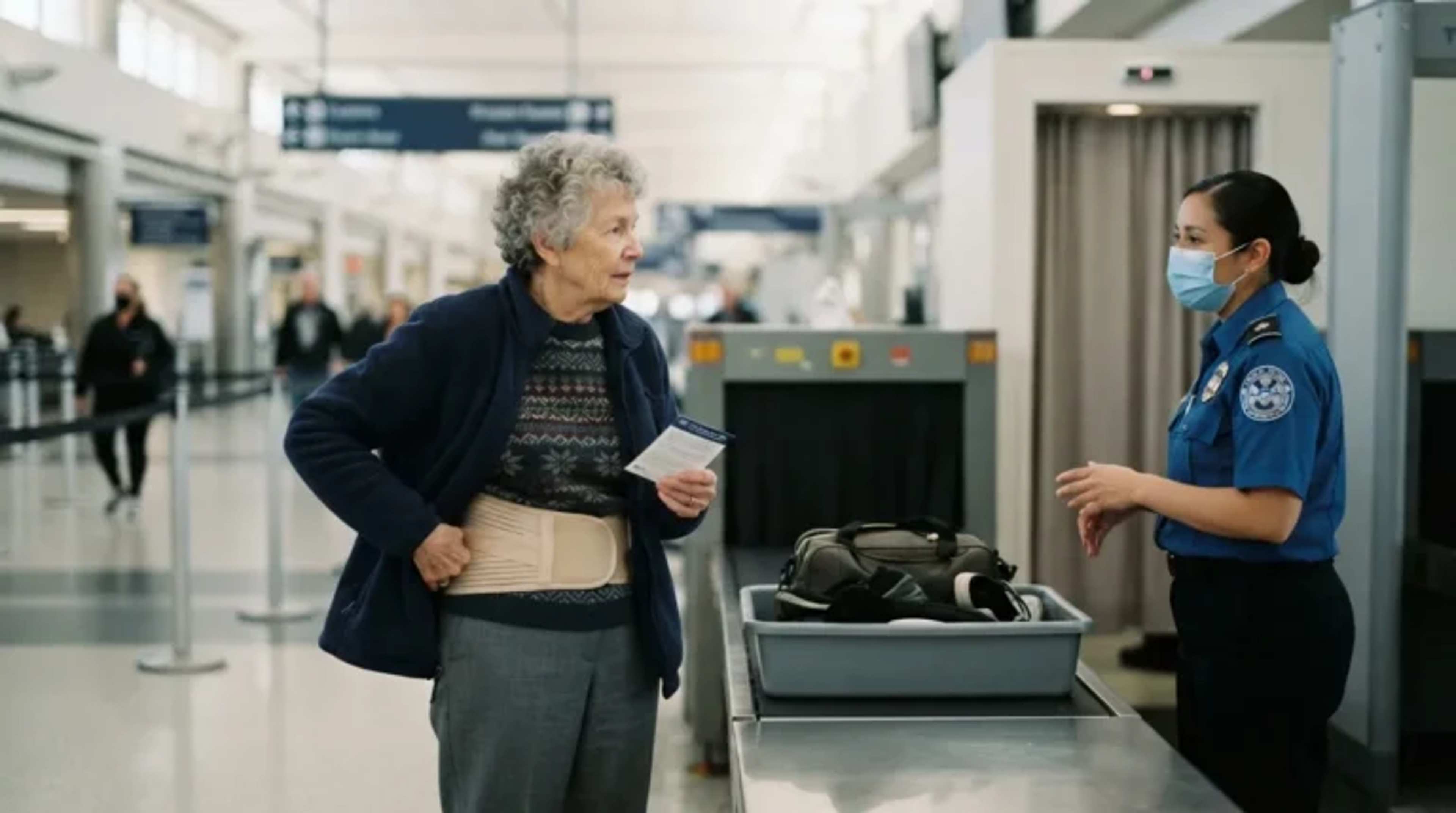
Most people assume airline perks for older travelers quietly disappeared years ago, buried under new baggage fees and basic economy restrictions. That assumption is wrong, and it’s costing patient travelers real money and real comfort every single week. The truth doesn’t live on a homepage banner or in a flashy email – it lives inside phone calls, hold music, and agents who are trained to help but never told to advertise it.
What separates the travelers who get upgraded seats, waived fees, and fares that never show up online isn’t luck or connections. It’s a specific kind of patience most flyers under 60 simply don’t have time for. Here’s what loyalty desk insiders actually do when you stay calm, stay polite, and stay on the line.
#15 – The Discount the Website Was Never Built to Show You

Airlines quietly keep senior fares off their apps and homepages, reserving them for travelers who actually pick up the phone. These discounts are typically reserved for passengers aged 65 and older and are only accessible by speaking directly to a booking agent. The website dropdown menu simply isn’t built to surface them, no matter how long you search.
Phone agents have access to internal booking codes that consumer websites don’t feature at all. Most travelers give up after one search-engine attempt and never realize a human agent could have found something better. The fare exists – it’s just hidden behind a phone number, not a search bar. But that’s nothing compared to what we found about #14.
#14 – Why Calling First Without a Baseline Price Can Backfire

Here’s the part loyalty desks won’t volunteer: a senior fare isn’t automatically the cheapest option on the table.
Smart callers check the online price before ever dialing reservations, because running the same route through a fare-comparison search sometimes reveals a flash sale that beats even a senior fare. Two minutes of comparing settles it either way. Skip that step and you might thank an agent for a “discount” that’s actually worse than what strangers online are paying that same day. That’s a small frustration – but #13 is where the real myth-busting starts.
#13 – The Southwest Senior Discount Everyone Still Believes In
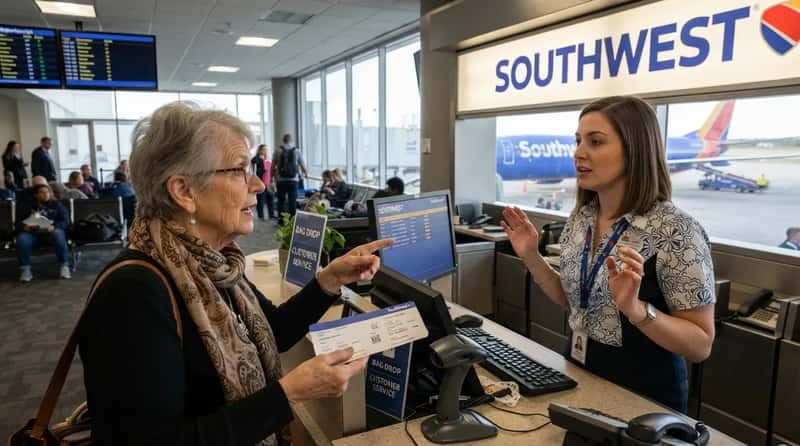
Ask ten travelers over 60 about Southwest’s senior fares and most will swear they still exist. They don’t, and that confusion causes real disappointment at the gate every week.
Southwest’s own help center confirms it no longer offers senior fares; the program was retired back in 2019. Meanwhile, 2025 brought new $45 to $55 bag fees and folded old “Wanna Get Away” fares into Basic Economy, leaving the Low Fare Calendar, midweek departures, and points as the only reliable savings left. The nostalgia is real. The discount isn’t. But #12 shows a carrier going the opposite direction entirely.
#12 – The Startling 55+ Discount Almost Nobody Books

While most airlines quietly gatekeep their senior perks behind age 65, one budget carrier throws the doors open a full decade earlier.
Frontier Airlines has offered a 55% discount for travelers aged 55 and older, one of the largest senior discounts on flights currently available anywhere. The 55FOR55 promo starts right at 55, meaning travelers barely into their mid-fifties can access savings most competitors reserve for people a decade older. Most people over 60 never even check this because they assume it doesn’t apply to them yet.
Fast Facts
- Frontier’s 55FOR55 promo begins at age 55, not 65 like most senior fares.
- The discount can reach up to 55% off select base fares.
- It’s rarely advertised, so agents don’t mention it unless you ask directly.
- Many travelers in their late 50s and early 60s skip it, assuming the perk starts later.
Next up, a discount that isn’t even about the senior at all.
#11 – The Companion Discount Nobody Advertises

Traveling with a spouse or adult child? Many international carriers will quietly discount that second ticket if you simply ask the right question.
Many international airlines offer discounted fares for companions traveling with seniors, and while this isn’t advertised online, calling directly and explaining the situation can unlock 10% to 25% off the second ticket, plus seats together at no extra cost. Loyalty desks rarely bring this up unprompted. You have to ask the specific question, not just request a discount in general. That politeness pays off again in the next secret, where a different phone line entirely changes your hold time.
#10 – The Special Line for Travelers 75 and Older
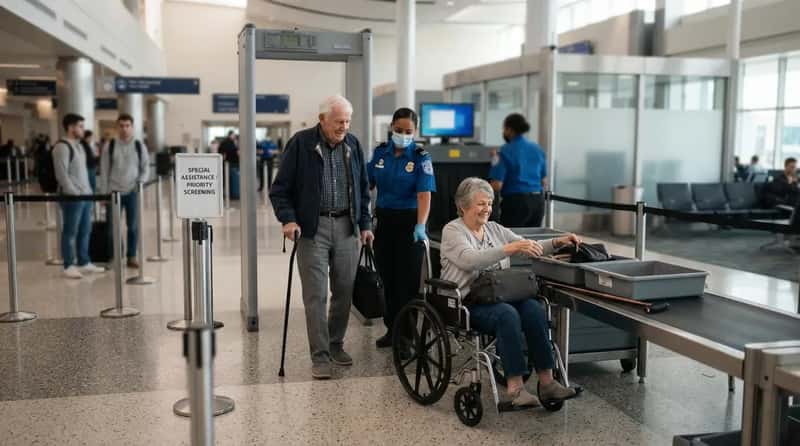
Most flyers have never heard of the government hotline built specifically for older passengers moving through security.
TSA has specific guidance and modified screening procedures for passengers 75 years and older. Calling at least 72 hours before travel connects you with a specialist trained to make screening smoother, and in practice this often means expedited screening designed to keep the whole process calmer. Almost nobody dials this number in advance, even though it’s free and government-run. But the wheelchair perk in #9 is the one families miss most often.
#9 – The Free Wheelchair Perk Airlines Hope You Forget

Confusion between TSA and the airline itself causes thousands of seniors to skip a free service every year.
Airport wheelchair service is provided by the airline, not TSA, and airlines are required to provide wheelchair and guided assistance to eligible passengers at no charge. You don’t need daily mobility issues to qualify – many seniors request help just to avoid long terminal walks or save energy for the trip ahead. The service is completely free, but it disappears the moment you assume TSA handles it instead. Still, the phone trick in #8 saves even more time than the wheelchair does.
#8 – The Different Phone Number That Skips the Line

Elite members aren’t just getting perks in the air – they’re getting an entirely separate customer service experience on the ground.
Elite members have access to dedicated phone lines and specialized agents who resolve issues faster, which becomes invaluable when flights get canceled or storms roll through. At the top tiers, you’re treated as a VIP, and agents recognize your value enough to go the extra mile. The hold-time gap between a general line and an elite line can stretch into hours during bad weather. That gap becomes even more valuable once you learn how to borrow status from another airline in #7.
#7 – The Status You Can Borrow From a Rival Airline

Loyal to one airline for years? That loyalty can sometimes transfer, no extra flying required.
If you currently hold elite status with another airline, some carriers will match you to an equivalent status for 90 days, completely free. American Airlines runs a similar Instant Status Pass program, matching elite members from Delta, JetBlue, Southwest, and United straight into AAdvantage tiers.
Quick Compare
- American Airlines: Instant Status Pass matches elites from Delta, JetBlue, Southwest, and United.
- Typical match window: around 90 days of equivalent elite status.
- Requirement: proof of current elite status with the other airline.
- Cost: free to request, no extra flights needed.
Most travelers never ask because they assume loyalty only flows one direction. It doesn’t – and the fee secret in #6 proves loyalty desks bend even further than that.
#6 – The Fee Waiver Nobody Puts in Writing

Change fees can wreck a budget fast, but status holders quietly skip them entirely – and sometimes so does anyone who simply asks.
Change fees, cancellation fees, and seat selection fees can often be waived for elite members, and since change fees can run $200 or more, this benefit alone can justify chasing status. Even entry-level Silver and Gold elite members get waived fees for seat selection, priority boarding, and same-day standby, plus a free checked bag at Gold. Nobody prints “ask nicely” in the fine print, but agents confirm it works more often than travelers expect. The miles trick in #5 is even less known.
#5 – The Miles That Refuse to Die

For years, travelers panicked about losing miles to inactivity. That fear is now mostly outdated, except for one major holdout.
If you fly Delta, United, or most other major U.S. carriers, your miles are now safe – the majority of large U.S. airline programs have eliminated mileage expiration entirely. American AAdvantage remains the outlier, with miles still expiring after 24 months of inactivity while Delta, United, and Southwest miles never expire at all.
At a Glance
- Delta SkyMiles: never expire.
- United MileagePlus: never expire.
- Southwest Rapid Rewards: never expire.
- American AAdvantage: miles expire after 24 months of inactivity.
Most AAdvantage members have no idea their miles are on a clock while everyone else’s aren’t. But the seat trick in #4 is the one frequent flyers guard most closely.
#4 – The Seat Map Trick Apps Don’t Show You

Not every seat in the same row is equal, and the app rarely tells you which ones are actually worth fighting for.
Airlines charge the same price for many rows, but some seats quietly offer more legroom, better recline, or quicker exit access if you know where to look. Detailed third-party seat maps reveal which spots have extra space, and choosing a seat near the bulkhead, exit row, or aisle can make boarding and bathroom access far easier. A phone agent can often confirm one of these seats when the app simply shows “unavailable.” Still, the fare trap in #3 might be costing you more than a bad seat ever could.
#3 – The Basic Economy Trap Senior Fares Quietly Dodge

Basic economy looks cheaper on paper, but it strips away the exact comforts a senior fare protects.
A discounted senior fare might look slightly pricier than a restrictive Basic Economy ticket, but it comes with free seat selection, standard boarding, and the ability to change your flight without brutal penalty fees. Travelers chasing the lowest number on the screen often unknowingly trade away exactly what makes a long flight tolerable. The “cheaper” fare frequently costs more once you factor in what it takes away. That tradeoff matters even more once you understand the timing rule in #2.
#2 – The 72-Hour Rule That Changes Everything

Timing isn’t a minor detail here – it’s the entire mechanism that makes these programs work in your favor.
Requesting specialized screening assistance requires contacting the airline or TSA at least 72 hours before departure, while wheelchair support should be requested at least 48 hours ahead so the reservation gets flagged with a special assistance note. That note is what alerts staff at check-in and curbside before you even arrive.
Worth Knowing
- Specialized TSA screening assistance: request at least 72 hours before departure.
- Wheelchair support: request at least 48 hours ahead.
- Both requests attach a special assistance note to your reservation.
- Same-day requests often mean these perks aren’t guaranteed.
Call the same morning as your flight and half these perks quietly vanish. Patience isn’t just a virtue here – it’s the literal deadline.
#1 – The Agents Who Remember You Because You Were Patient

Behind every waived fee and hidden fare is a human being deciding how far to go for you – and that decision is shaped entirely by how you show up on the phone.
They have literally gone into tears because they are so happy with our team and how much we comfort them and really show them that we care.
TSA Passenger Support Specialist
These same specialists routinely help older travelers with dementia who can’t navigate the airport alone, turning what could be a frightening day into a manageable one. The system rewards calm, patient travelers with a level of human attention that impatience simply can’t unlock. No app, discount code, or elite tier replaces that.
None of these 15 secrets require luck, insider connections, or expensive credit cards. They require a phone call, a little advance planning, and the patience to let an agent actually do their job. Airlines aren’t hiding these perks maliciously – they’re built for travelers who ask, wait, and follow up instead of clicking away after one search.
The travelers who benefit most aren’t the ones who fly the most. They’re the ones willing to spend ten extra minutes on hold.