You probably think the person behind the bar is just there to shake your cocktail and move on. That’s the myth.
The reality is sharper: experienced bartenders, especially the ones working tourist strips, hotel lounges, cruise ships, and airport terminals, read total strangers with almost forensic speed. By the time you’ve said a single word, they’ve already clocked how you walked in, guessed your nationality, and quietly placed a bet on your tip.
None of this is mind reading. It’s pattern recognition built over thousands of late shifts, and by the time you reach the last item on this list, you’ll understand why bartenders say it decides everything else.
15. The Way You Walk Through the Door
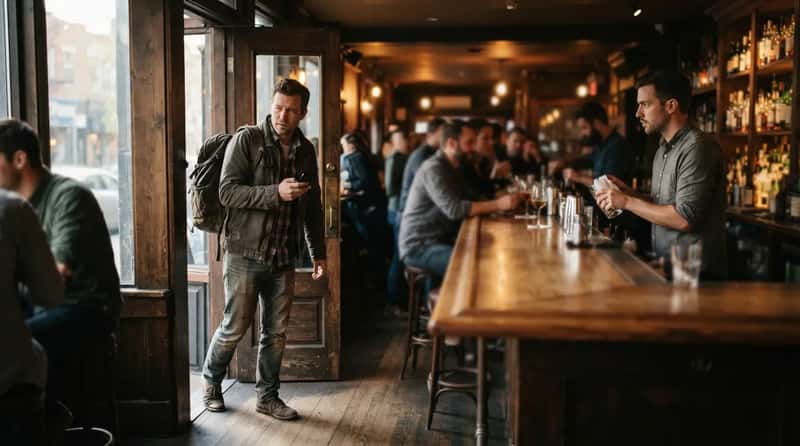
Your entrance sets the tone before you’ve said a single word, and bartenders are already reading it from across the room.
The first thing they scan for is how intoxicated you already are. Slurred words, unsteady steps, or a glassy stare, and they’ll quietly steer you toward water instead of a strong pour.
Travellers glued to their phones while scanning the room are the easiest tourists to spot. Confusion reads louder than any accent ever could.
Pace tells its own story too. Someone who walks in, scans, and picks a spot with purpose has clearly done this before, while someone who hovers near the door or opens a translation app hasn’t.
Fast Facts
- Unsteady walking or slurred speech gets flagged before a single order is placed.
- Phone-scanning near the entrance is one of the most common tourist tells worldwide.
- A direct, confident path to the bar reads as “regular,” even in an unfamiliar city.
- Hovering near the door or checking a translation app signals first-timer status instantly.
The first three seconds of your entrance already generate a verdict, and that verdict can shape how fast you’re served and how generous the pour turns out to be. Where you choose to stand next matters just as much.
14. Where You Stand and How You Lean
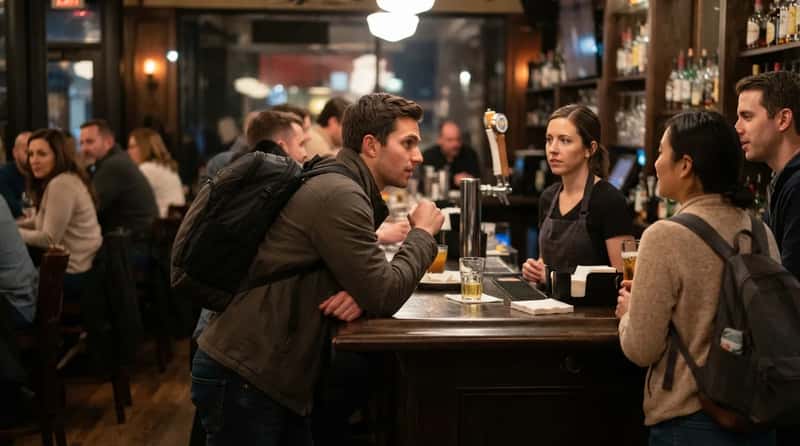
Before a single word leaves your mouth, your posture is already talking.
Most customers who want to order plant themselves right at the bar and turn to face it directly. The ones who don’t want service keep their distance, often mid-conversation with someone else.
Travellers are trickier to read because they often arrive mid-chat, luggage still on their backs. Staff look fast for the forward lean that says “I’m ready” versus the sideways stance that says “just passing through.”
Lean back mid-conversation and you’ve signaled something too, that you’re done talking and already know your order.
A single forward lean can be worth more than ten minutes of patient waiting; it’s the nonverbal cue that unlocks faster service almost anywhere in the world. What your eyes do next matters even more.
13. Whether You Make Eye Contact
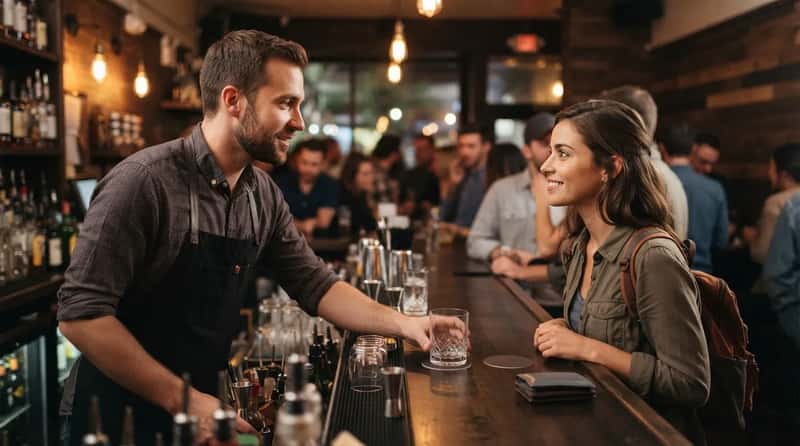
This one is more precise than most travellers realize, and getting it wrong costs real time at the bar.
When you walk up, a bartender glances your way on purpose. It’s their version of “I see you, I’m coming.” Look away too soon, and you’ve just told them you’re not ready yet.
Eye contact, patience, and a simple thank you sound like small things. In practice, most travellers miss at least one of the three.
The customers who smile, hold eye contact, and wait their turn are consistently the easiest to serve, and it shows in how quickly they get served.
Eye contact is the fastest way to jump the invisible queue without doing anything that annoys the person behind the counter. What happens the moment you actually speak is where things get even more revealing.
12. Your Accent, and Your Very First Sentence
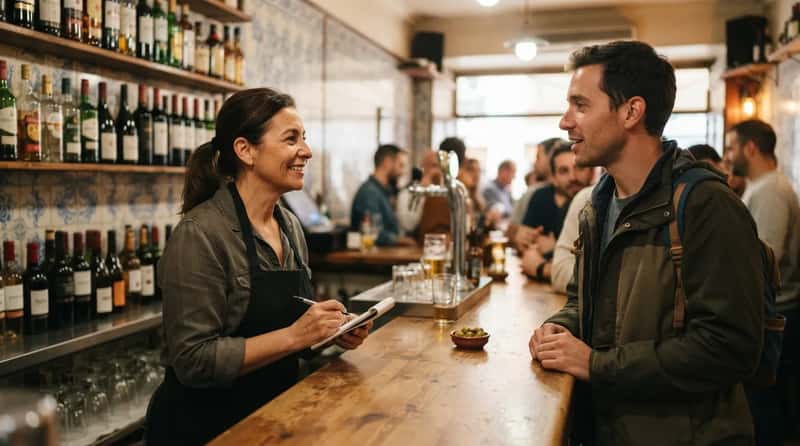
Bartenders in international cities play a running, surprisingly accurate game of guess-the-nationality. Your first sentence either confirms their guess or throws them completely.
Walk into almost any bar in Lisbon, Prague, or Bangkok, and staff can often name your country before you’ve finished ordering. It usually comes down to phrasing, or one small habit locals simply don’t share.
Seasoned staff build a mental map over the years of which nationalities drink what, tip how, and behave which way. Fair or not, that read shapes the interaction from the very first moment.
The traveller who opens with a warm “hi, how’s your night going?” instead of firing off an order gets coded completely differently, as someone who sees the person across the bar as a human first.
Replying to “how are you?” with a drink order is, apparently, one of the most common traveller tells in the business. The drink you actually order next makes things even more obvious.
11. The Drink You Order First
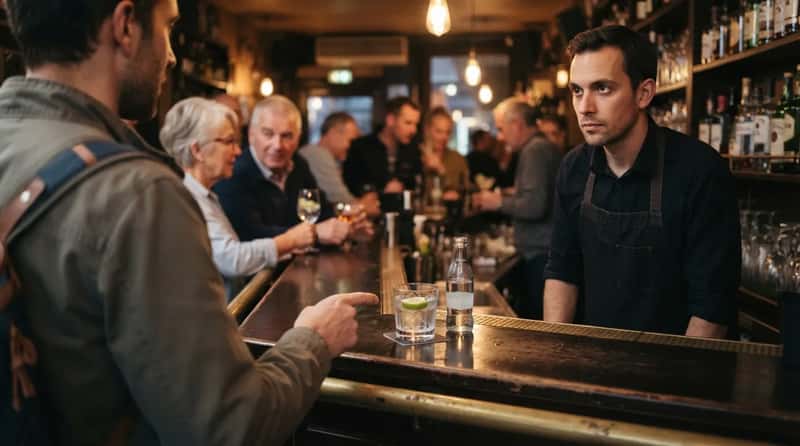
Your first order isn’t just a drink request. It’s a personality test that gets scored in real time.
A traveller’s choice gets read as a full character assessment within about thirty seconds. That assessment quietly shapes the tone, the speed, and sometimes the generosity of everything that follows.
Ask bartenders across Europe and vodka soda comes up constantly. It’s a safe, forgettable order back home, but it barely exists as a go-to anywhere outside North America.
Ordering something hyper-specific from back home, in a country with its own drinking culture, is the clearest version of this mistake. It quietly signals that you haven’t thought much about where you actually are.
Asking “what do you recommend?” resets the entire dynamic, and bartenders say it’s one of the clearest signs that someone actually knows how to travel. What you do next, how much you tinker with that drink, is where things get even more revealing.
10. How Many Times You Modify a Cheap Drink
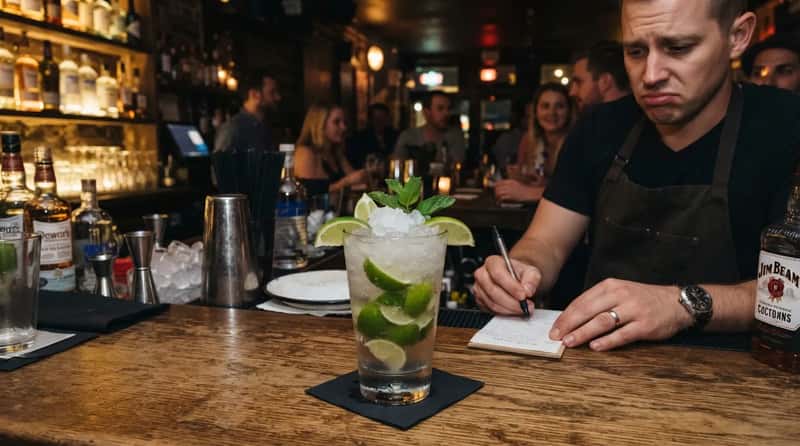
Every extra instruction you tack onto an order is a data point, and bartenders are quietly adding them up before the shaker even comes out.
Extra lime, light ice, a specific glass, go easy on the soda: piling modifications onto a low-cost drink is one of the clearest tip-prediction signals in the business. Maximum demands on a minimum-cost order rarely ends well for the traveller.
There’s a real difference between a genuine allergy and a reflexive habit, and bartenders can usually tell which one they’re dealing with. The first earns patience; the second earns a quiet internal sigh.
Five modifications stacked on a basic well drink is the moment most bartenders privately write off the tip before they’ve even started pouring.
Over-modifying a simple, cheap order is one of the industry’s most reliable low-tip predictors, and almost nobody who does it realizes it. What you do while that drink is being made says just as much.
9. How Restless You Get While You Wait
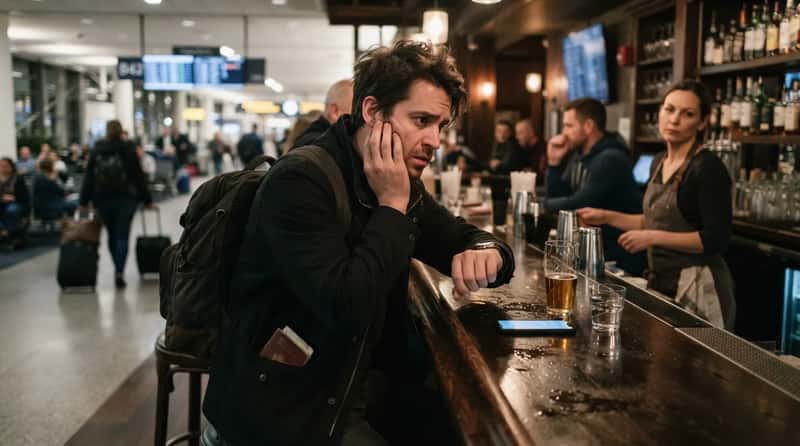
Standing still tells a bartender something specific. So does fidgeting, and travellers fidget more than almost any other type of customer.
Constant shifting and scanning the room can read as “waiting for someone” or “might bolt any second.” Calm, grounded body language says you’re staying a while.
For travellers, restlessness is often earned honestly: a flight to catch, a connection to make, a group waiting outside. Bar staff read vocal tone, eye contact, and small tells like a watch-check or a jaw rub, all at once.
People come straight off flights carrying visible weight, a delayed connection, lost luggage, a long day folded into their shoulders. Good bartenders spot it the second you sit down and quietly speed things up rather than drawing the interaction out.
Worth Knowing
- Watch-checking, jaw-rubbing, and repeated phone glances are classic “I’m on a deadline” tells.
- Luggage stacked nearby or a group waiting outside are instant visual cues of a traveler in transit.
- Bartenders often speed up service for visibly stressed guests instead of slowing down to chat.
- Calm, settled body language reads as “staying a while,” which can mean a more relaxed pace.
A visibly stressed traveller gets shorter pours, faster service, and less small talk. Bartenders essentially run triage the moment you sit down. How you treat them once the bar actually gets busy is a much bigger test.
8. How You Behave the Moment the Bar Gets Slammed
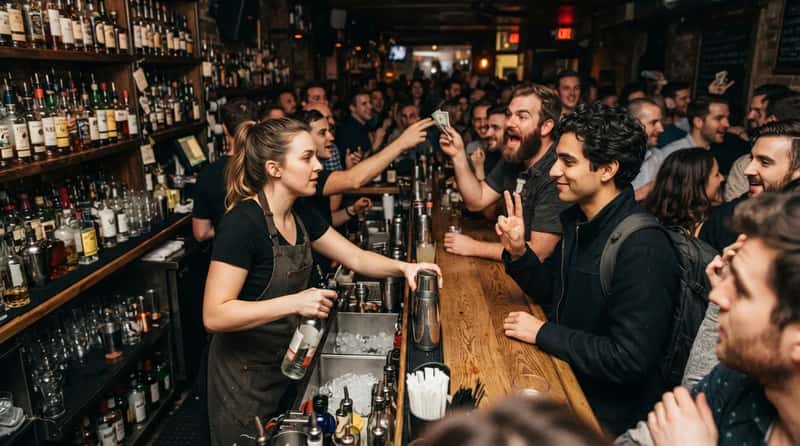
Bars get busy. How a traveller behaves in that exact moment is, according to bartenders across every kind of venue, one of the most revealing windows into character they get.
Guests who snap their fingers, cut in while someone else is mid-order, or grow visibly impatient during a rush tend to keep that same energy for the rest of the night.
Bartenders spot difficult guests early simply by watching how they treat staff and other customers during the busiest ten minutes of a shift. The traveller who stays calm, signals gently, and waits their turn gets clocked just as fast, and remembered far more warmly.
The single best way to get a bartender’s attention, almost every one of them will tell you, is simply to be patient. It sounds too simple to matter, but in a packed tourist bar, it functions like a superpower.
Impatience during a rush is the fastest way to turn a bartender from an ally into someone just going through the motions with you. How you actually try to flag them down is the sharper version of the same problem.
7. How You Try to Flag Them Down
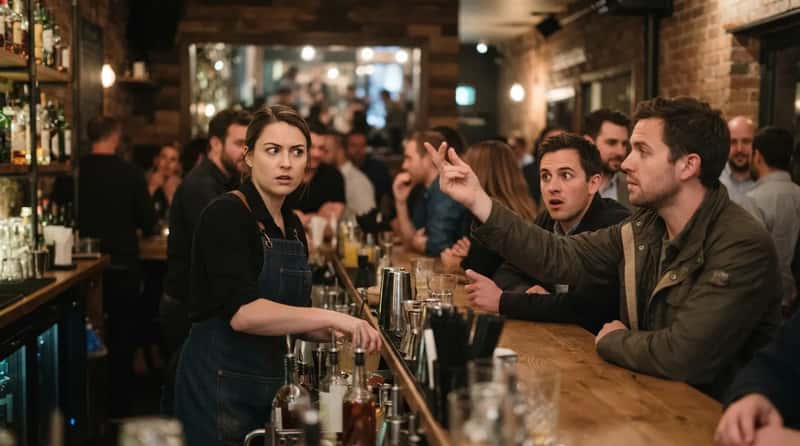
There’s a right way to get a bartender’s attention, and a very wrong way, and the wrong way is so common among travellers that staff worldwide talk about it with the same tired recognition.
This might be the most universally disliked traveller habit in the entire industry. A bartender is not a dog; snapping or whistling will not get their attention, at least not in a good way.
Snapping fingers or waving an arm is one of the clearest tells of an inexperienced traveller. The move locals learn fast instead, catching an eye, giving a small nod, costs nothing and works better.
What makes this habit so sticky is that it’s almost always unconscious. Travellers who’d never snap at a waiter back home somehow default to it the second they’re outside their comfort zone.
A quiet nod tells a bartender you’re ready without making them feel summoned like hired help. Once they’re finally standing in front of you, what you do with your wallet is the next thing they’re watching.
6. How You Handle Paying the Bill
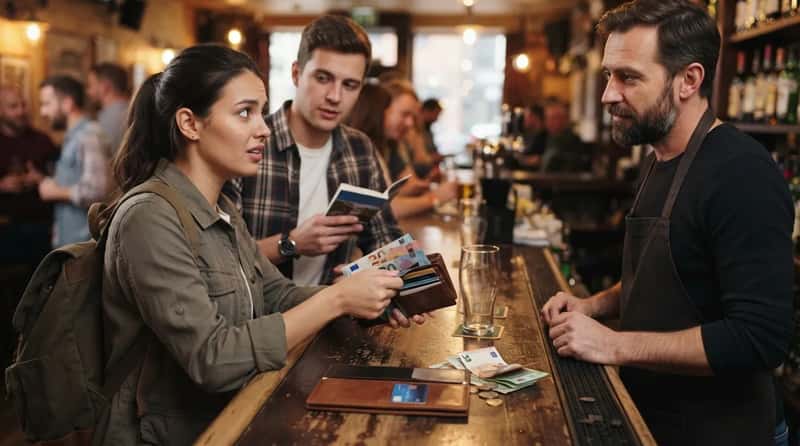
How you handle the bill tells a story that’s completely separate from what you ordered, and experienced bartenders read it as the finale of the whole interaction.
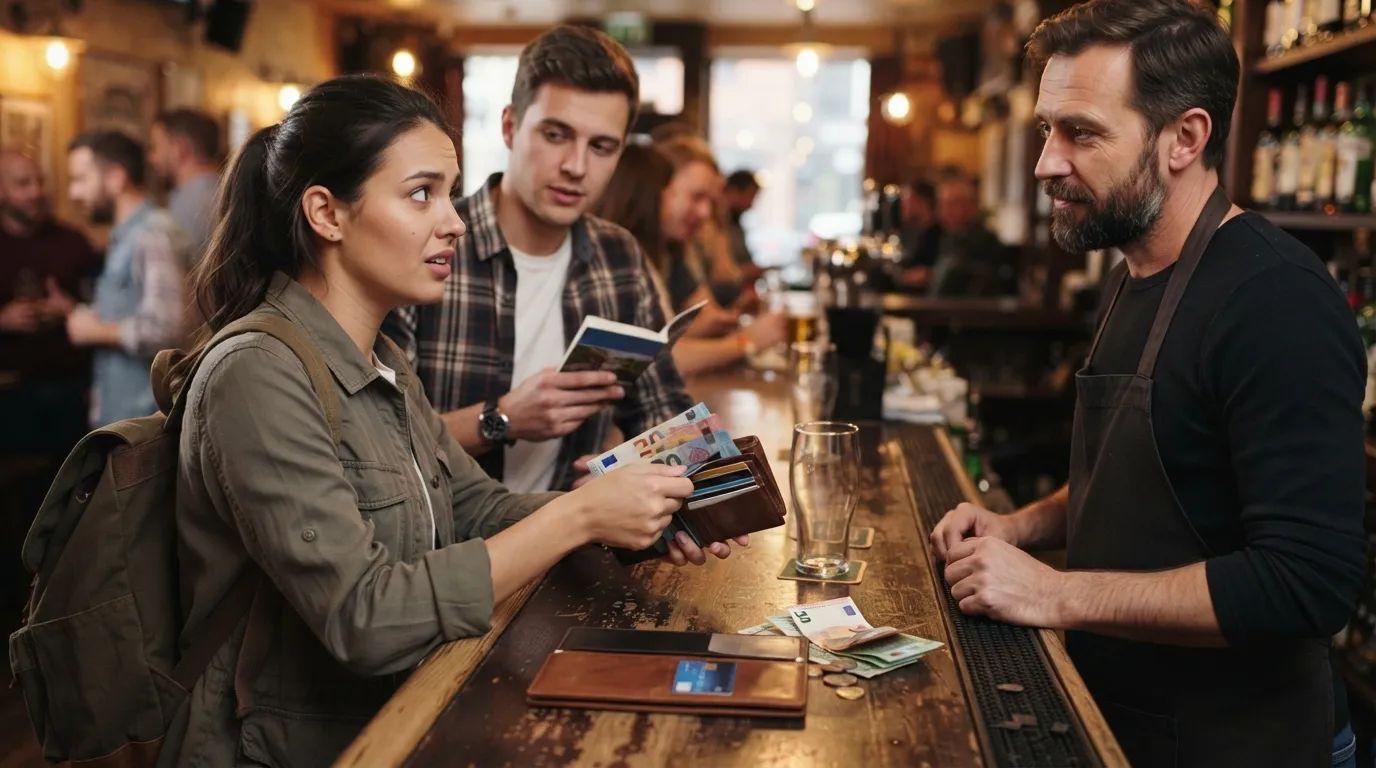
Bartenders notice whether you open a tab smoothly, whether you already know where your ID is, and whether you treat paying like a team effort. Payment norms vary wildly between countries, so travellers fumble here more than almost anywhere else.
Whether to pay per round or run a tab, whether card is even accepted, whether cash gets handed over or left on the bar, all of it is second nature to a local and a visible source of confusion for a tourist.
Guests who cover the whole table and sort the splitting out themselves are seen as generous and easy, and bartenders say it makes their entire job simpler.
Knowing the local payment ritual, card machine, cash on the bar, or a running tab, is one of the fastest ways to read as an experienced traveller instead of a confused one. Tipping customs, though, are an entirely separate minefield.
5. Whether You Actually Understand Local Tipping Rules
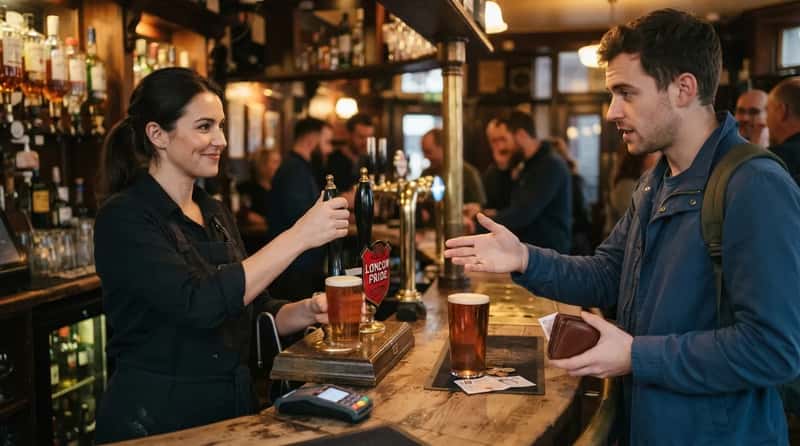
Tipping is one of the most loaded signals a traveller can send, and getting it wrong in either direction carries real consequences.
In England, you’d rarely tip in a pub, you’d buy the bartender a drink instead. In Japan, tipping is uncommon and can even feel awkward or out of place. The rules shift completely with every border you cross.
Quick Compare: Tipping by Region
- United States: 15–20% is the standard expectation at most bars.
- United Kingdom: Rarely expected in pubs; buying the bartender a drink is the traditional gesture instead.
- Japan: Not part of the culture, and offering a cash tip can come across as confusing rather than generous.
- Much of Western Europe: Service is frequently built into the price, so rounding up is usually plenty.
This one has genuine financial stakes for staff in tourist-heavy destinations. In most countries outside the U.S., tipping either isn’t part of the culture or it’s already folded into the price, and American travellers in particular get caught between their home habit and wherever they’ve actually landed.
Opening a tab and leaving a generous cash tip early sends an immediate, concrete message: you’ll take care of them, and they’ll take care of you.
Tipping at the wrong moment, in the wrong way, or not at all when it’s expected, bartenders read all three instantly. But before the bill ever arrives, the way you treat the people you walked in with is already giving away plenty.
4. How You Treat the People You Walked In With
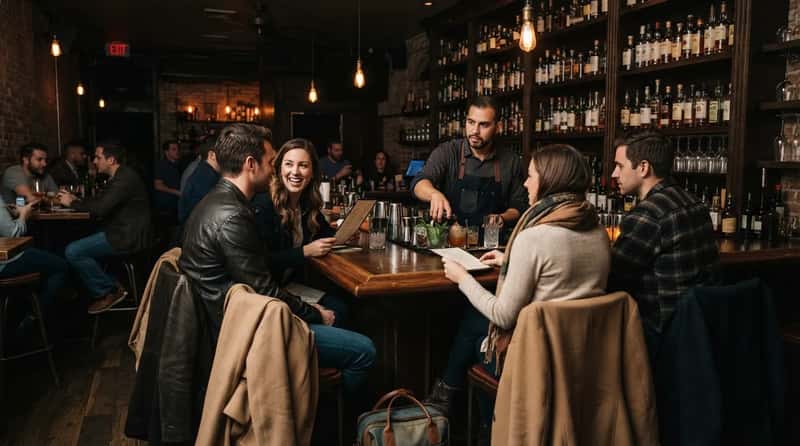
Walk in alone and a bartender is reading one person. Walk in as a group, and they’re running an assessment on every single one of you before you’ve ordered a thing.
Body language and social patterns let bartenders quickly sort out who’s a couple, who’s celebrating something, and who’s quietly open to meeting new people at the bar.
Within a travel group specifically, they’re watching for who defers to whom, who’s already unhappy, and who’s likely to over-order and dispute the bill later.
Walk in with four friends, and within seconds a bartender already knows who’s actually running the show. Bartender Antonio Hernandez, who works a Manhattan speakeasy, says solo orders, date orders, and group orders all hand over completely different intel.
The unhappy person hanging at the back of the group, the one who didn’t pick this bar, is always spotted first, because they’re the one most likely to cause friction later. How the group handles alcohol as the night wears on takes this to a whole new level.
3. How You Change After the Third Drink
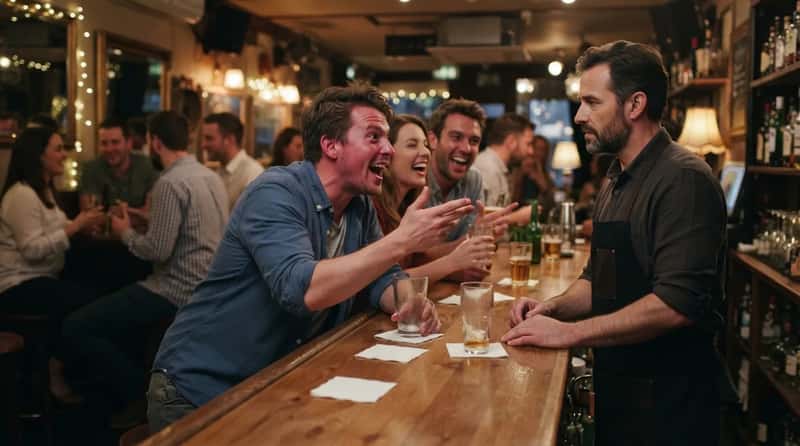
The transformation some travellers go through between their first drink and their fourth is something bartenders watch with professional detachment, and occasionally real concern.
The traveller who gets louder and starts treating staff like servants after drink three is the single most common source of friction in tourist bars worldwide. Experienced staff can often see it coming before the second round is even poured.
Good bartenders are constantly scanning the room for shifts in energy, tension between people, or early signs of conflict. It’s how they head off problems before they grow.
On the flip side, the traveller who gets warmer, more generous, and more curious as the night goes on is genuinely noticed, and quietly appreciated. Alcohol just removes the filter; whatever comes out was already there underneath.
How a traveller behaves at drink four might be the most honest version of them a bartender ever sees, and it decides whether they leave with a good story or a bad one. There’s one specific habit, though, that cuts through everything else on this list.
2. Whether You Actually Ask for a Local Recommendation
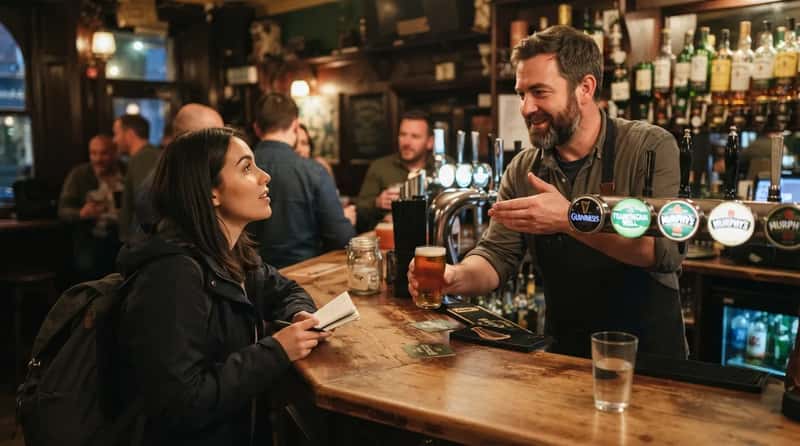
This is the one move that consistently, across cultures and every skill level behind the bar, changes the entire shape of the interaction.
The traveller who skips the menu and asks “what’s local, what’s made here, what do you actually like?” gets treated as a peer almost instantly. That question signals curiosity, not tourist-mode consumption.
Why It Stands Out
- It shifts the interaction from transactional to personal in seconds.
- It often unlocks off-menu pours or local specialties a guidebook wouldn’t mention.
- Bartenders say it’s one of the clearest signs of a traveler actually paying attention to where they are.
- It costs nothing extra and rarely adds any real time to the order.
Talking to a bartender can end up being one of the most rewarding parts of an entire trip. Staff in tourist-heavy cities spend most of their shifts on purely transactional exchanges, so a traveller who breaks that pattern stands out immediately.
Some guests carry visible weight when they sit down, a rough year, a hard flight, a trip that hasn’t gone to plan. Finding out what someone actually enjoys, or what “getting away” even means to them, is often the part of the job that makes the rest of it worth it.
Asking for a genuine recommendation turns a bartender from a vending machine operator into an insider handing you tips no guidebook has, and it costs nothing except a moment of real curiosity. Underneath all of it, though, sits the one quality that decides everything else on this list.
1. Whether You Actually See Them as a Person
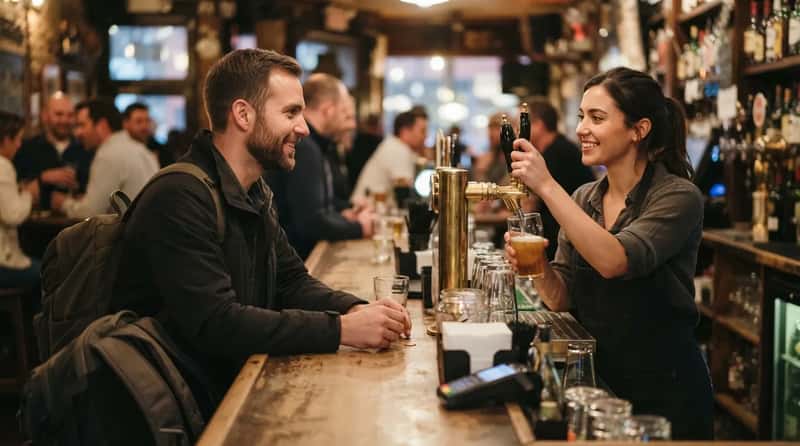
Everything else on this list, the posture, the order, the tip, the patience, feeds into one underlying read that bartenders make faster than any other.
The traveller who talks to bar staff like a vending machine is one of the most common sights in tourist-heavy bars, and one of the most remembered, not fondly. Bartenders talk to each other, and word travels faster than most guests realize.
Being decent to the person pouring your drink is genuinely the only trick most people need. If a bartender gets good vibes off you, there’s a real chance they go out of their way to make the night better.
Within the first four seconds, an experienced bartender has already clocked your nationality, guessed your budget, and quietly placed a bet on your tip, all before you’ve said a single word. That’s not luck. It’s pattern recognition built shift after shift, night after night, in the same hotel lounges and tourist bars where the same behaviors repeat like clockwork.
Every other signal on this list is really just a proxy for one fundamental question: does this person see me as a human being, or as a task? The travellers who pass that test consistently get better service, better recommendations, and a better night, every single time.
The Bottom Line
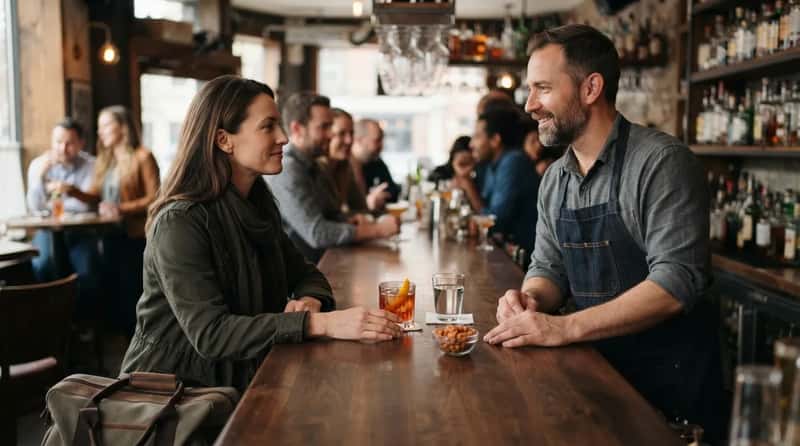
Bartenders are, job title aside, expert readers of human behavior, and travellers are some of their most studied subjects. Every entrance, every order, every impatient tap on the bar gets filed into a real-time profile that shapes the entire experience that follows.
The signals that work in your favor are strikingly consistent across cultures: calm body language, real eye contact, curiosity about what’s actually local, and basic decency toward the person doing the pouring.
The signals that work against you are just as consistent: snapping for attention, over-modifying a cheap drink, misreading the local tipping culture, and treating the bar like a drive-through window.
None of it requires a bartending degree to fix. It just requires noticing that the person across the bar has already noticed you.
Bonus: The Opening Move That Beats Everything Else on This List
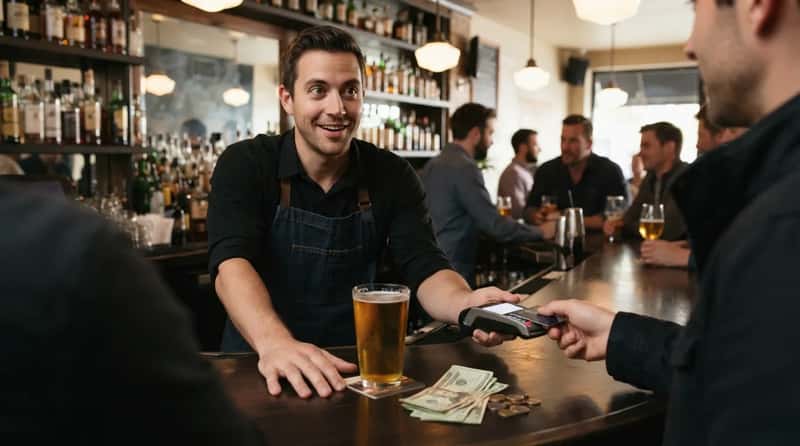
Here’s the one habit that consistently outperforms every single item above, and almost no traveler does it: pay and tip generously on your very first round, before the bartender has done anything to earn it.
Most people tip at the end, as a reward for good service already given. Insiders flip that order, and it changes how the rest of the night unfolds.
- On your first drink, tip well above the local norm right away, even a few extra dollars on a $6 beer sends the signal.
- Open a tab instead of paying per round; it removes friction and marks you as a low-maintenance regular for the whole visit.
- Say nothing about the tip, just leave it or hand it over naturally; let the gesture do the talking instead of announcing it.
- Then ask what they’d actually recommend next, layering curiosity on top of goodwill you’ve already banked.
Bartenders remember which tab opened generously in the first five minutes, and that memory tends to shape pour size, attentiveness, and even off-menu offers for the rest of the night.
It costs a few extra dollars up front, but it’s the single most reliable way to turn an ordinary night out into the kind of service most travelers never get.