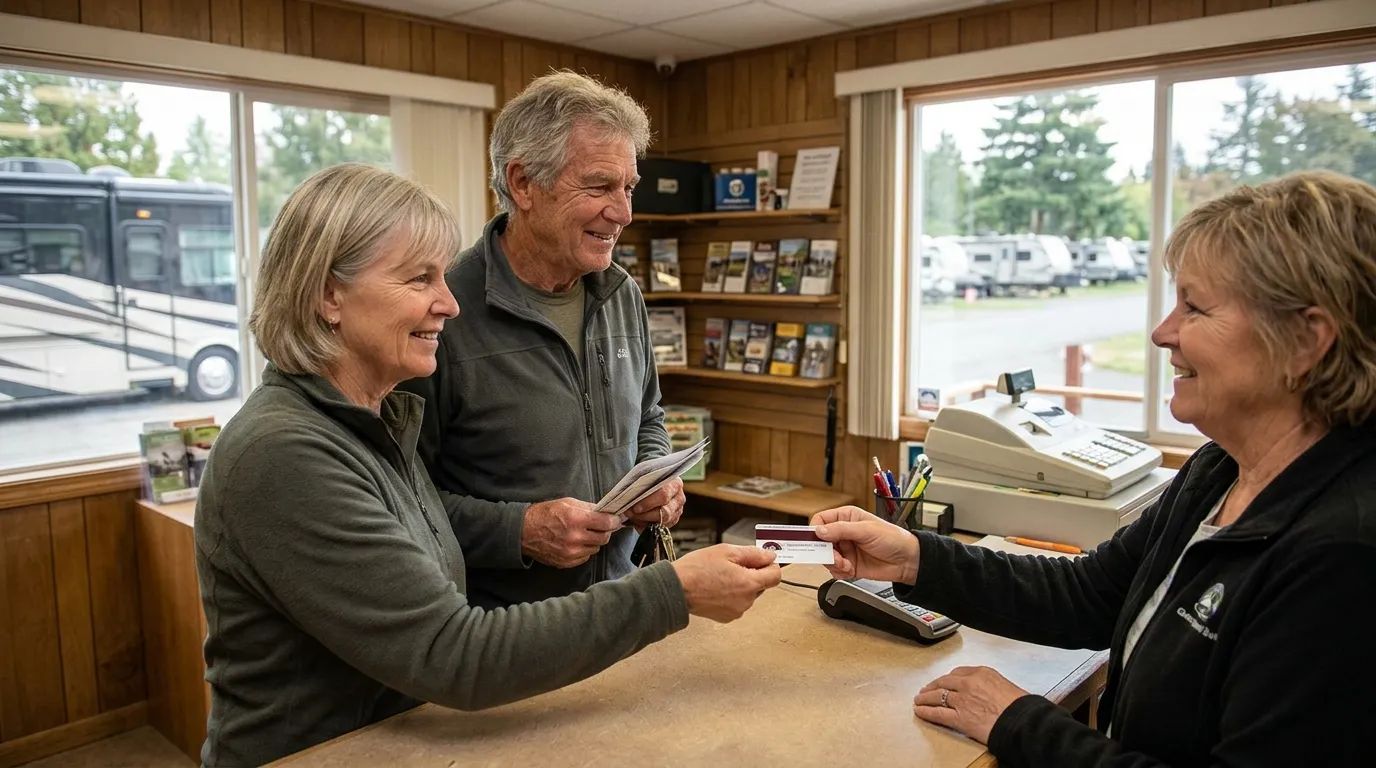
Most RV travelers over 60 pick a campground based on one thing: price. That’s the mistake that quietly ruins the trip.
The features that actually decide whether a trip is comfortable, safe, and worth repeating have nothing to do with the nightly rate. Smart campground owners have already figured this out, and they sort for it before guests even think to ask.
Here’s what campground insiders really prioritize for RV travelers over 60 – counting down to the one thing experienced travelers quietly put above everything else.
#15 – Pull-Through Sites That Don’t Require a Parking Debate
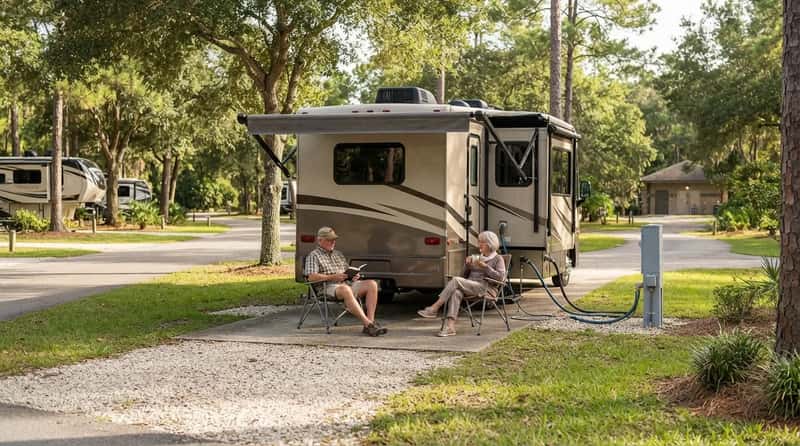
Backing a rig into a tight spot isn’t just stressful – it’s physically demanding in a way that compounds with age.
Level spots matter because they prevent the kind of excessive maneuvering and leveling that wears on aging joints. Pull-through sites skip the reversing dance entirely.
The smartest senior-focused parks offer long pull-throughs with full hookups – sewer, water, and electric – already connected. You drive in, hook up, and you’re done, no spotter and no argument with your co-pilot.
If saving $15 a night means wrestling your rig into a tight back-in site or dragging hoses uphill, that savings evaporates by day two. Sometimes the extra $20 buys an easier pull-in and roads you won’t dread driving on.
But a great parking spot means nothing if trouble is waiting at the end of the walk. Keep reading for #14.
#14 – Accessible Bathrooms With Grab Bars and Non-Slip Floors
This is the one most campground review sites forget to mention – and it’s the one that ends trips early.
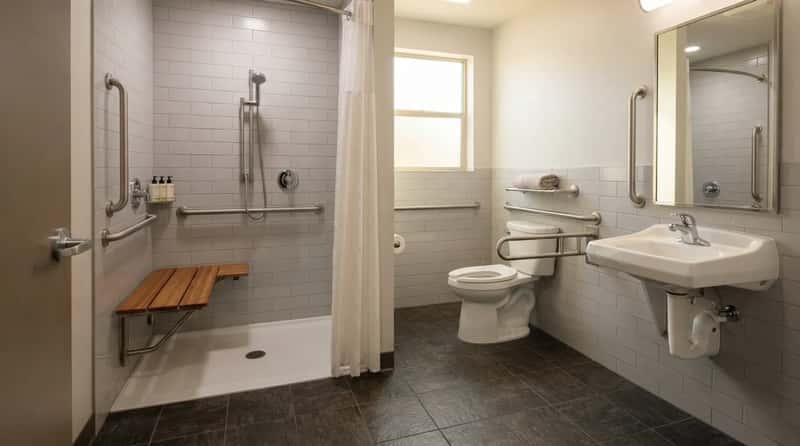
Senior-friendly RV parks build in ramps, walk-in showers, and barrier-free restrooms. Grab bars, low thresholds, and non-slip floors aren’t extras – they’re what stands between a relaxing stay and a hospital visit.
The best operators install these features before anyone asks for them, because the guests who need them most are often the least likely to complain. Lowered sinks and accessible toilets tell you a park actually planned for its audience.
The campgrounds that haven’t updated yet are quietly losing bookings to the ones that have. And the well-lit path between your rig and those bathrooms? That’s #13.
#13 – Well-Lit Walkways and Paved Paths
Getting up at 2 a.m. and navigating a dark, gravel-strewn path is a fall risk nobody talks about openly. Every smart campground owner thinks about it anyway.
Senior-friendly parks add well-lit walkways alongside security patrols and cameras. Lighting isn’t just a security feature here – it’s an accessibility feature that directly cuts injury risk after dark.
Fast Facts
- More than 1 in 4 adults 65 and older falls every year, and fewer than half tell a doctor.
- Falls are the leading cause of injury-related death among adults 65 and older.
- One fall roughly doubles the odds of falling again.
- About 1 in 10 falls causes an injury serious enough to need medical care.
Zero-step cabin entrances, adjustable-height picnic tables, and continuous firm pathways linking common areas all reduce barriers for older guests. A paved, well-lit path to the shower house is worth more to most travelers over 60 than a swimming pool.
Parks that nail this detail earn five-star reviews. The ones that miss it get the “be careful at night” warning in every comment section – and #12 covers what happens if something actually goes wrong.
#12 – On-Site Medical Access or Emergency Proximity
Most campground websites won’t advertise this. But the best owners have already thought through what happens when a guest needs help fast.
Some RV parks partner with nearby hospitals or clinics, while others offer basic first aid or emergency response systems on-site. Either way, quick access to care is treated as a real amenity, not an afterthought.
The best parks post local pharmacy and doctor information at check-in instead of burying it on a website nobody finds. For many travelers over 60, just knowing help is close is what actually lets them relax.
Solid emergency infrastructure means guests managing chronic conditions can enjoy a carefree stay instead of a cautious one. And speaking of relaxing, #11 covers what owners do to protect the peace.
#11 – Enforced Quiet Hours
Here’s a controversial one: plenty of campgrounds that market to seniors still don’t enforce quiet hours meaningfully. Owners who do get intensely loyal repeat guests.
55-and-older RV parks are dedicated to seniors on paper, with fabulous amenities to match. But dedication on paper and actual enforcement at 10 p.m. are two very different things.
When choosing a senior-friendly park, the key word to look for isn’t “quiet hours” – it’s whether reviews confirm they’re actually enforced. A posted policy with no follow-through breaks trust fast.
Peace and quiet are not marketing words. They’re either real, or they’re not.
Common refrain among 55+ RV park reviewers
A campground that posts quiet hours but ignores a midnight generator is worse than one that never advertised quiet hours at all. Owners who police this consistently see it show up directly in their repeat booking rate – and what they sort next costs them nothing to get right.
#10 – Reliable, Fast Wi-Fi
This might surprise younger readers, but travelers over 60 are among the heaviest users of campground Wi-Fi. Many are monitoring health devices, calling grandkids, or managing finances on the road.
The best senior-focused resorts wire Wi-Fi to every site, not just the clubhouse. That’s a fundamentally different product than a signal you can only catch standing near the office.
Free Wi-Fi has become a baseline expectation at the smartest senior RV parks, not a paid upsell. Owners still treating it as a premium add-on are losing bookings to parks that simply bundle it in.
Connectivity has quietly become as essential as water and electric hookups for this age group. Next, #9 is something almost nobody checks before booking – but should.
#9 – Laundry Facilities That Are Actually Easy to Use
Every RV has limited storage. Long-haul travelers over 60 do laundry often, and the campground laundry room either makes this painless or miserable.
Front-loading machines with low fronts make a real difference for guests with limited mobility. Larger machines that fit an RV-sized duvet matter too – fighting bedding into a standard coin-op machine is a genuinely frustrating way to spend an afternoon.
Placement matters just as much as the machines. A laundry room on the far edge of a large park means a long walk with heavy bags – a small thing that looms large after a few days.
The best owners locate laundry centrally, keep it clean, and make sure the machines actually work. #8 might be the most underrated feature on this entire list.
#8 – A Clubhouse That Actually Gets Used
A dusty rec room with a broken ping-pong table doesn’t count. The owners who get this right build a genuine community hub – and it changes how long guests stay.
Shuffleboard, pickleball courts, hobby groups, and local-interest presentations keep the calendar full. Some parks even run tours to nearby spots of interest.
But a clubhouse without programming is just an expensive building. The campgrounds that succeed schedule potlucks, game nights, and craft workshops – and guests extend their stays because of them.
Why It Stands Out
- Weekly potlucks and game nights turn a common room into a real meeting place.
- Shuffleboard and pickleball leagues create repeat matchups, not one-off games.
- Local-interest talks and guided day trips give guests a reason to stay an extra week.
- A staffed, climate-controlled clubhouse beats an unlocked storage shed every time.
Strangers become friends inside 48 hours at the parks that do this well. That kind of connection is powerful for travelers who are solo or newly retired – and the outdoor version of that same idea is #7.
#7 – Walking Trails and Low-Impact Outdoor Activity
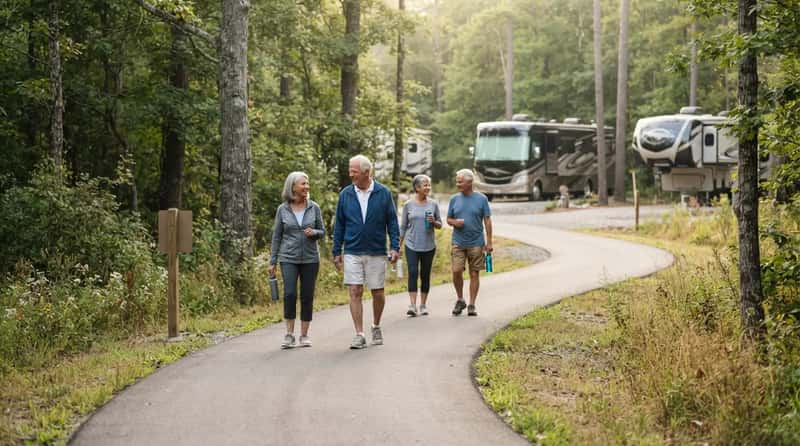
Not every traveler over 60 wants to hike a mountain. The campgrounds that get this right offer a spectrum, from flat walking paths to optional guided hikes.
Walking trails, pools, and fitness centers let guests keep their fitness routines going on the road. Morning walks and group exercise classes give people a reason to get moving without pressure.
Gentle movement supports cardiovascular health, balance, and mental well-being without demanding an intense workout. Owners who understand this build paths that are paved, well-signposted, and loop back easily – not trails that vanish into the woods.
The best senior parks offer roughly two miles of walking paths as a baseline, enough for real exercise without ever leaving the property. #6 is one that owners either nail completely or miss entirely – there’s no middle ground.
#6 – Pet-Friendly Policies That Are Actually Clear
More than half of RV travelers bring a pet along. For travelers over 60, that number trends even higher – dogs are companions, not accessories.
A park that says “pet-friendly” but then springs weight restrictions, breed bans, or a surprise $10 nightly pet fee creates friction instead of goodwill. The details matter far more than the label.
The best parks go further and add a fenced dog run for exercise – a small investment with an outsized payoff. For many senior RVers, that fenced pet area is a booking decision all on its own.
Always check the listing and recent reviews, since pet policies shift more often than other rules. But #5 is where owners can save guests real money – and most don’t shout about it nearly loud enough.
#5 – Senior Discount Programs and Membership Recognition
Here’s what most campground websites bury instead of leading with: stacking senior discounts can dramatically cut nightly costs. Parks that actively participate in these programs earn intensely loyal guests.
The America the Beautiful Senior Pass runs $80 for life and can break even in under a week of federal campground stays. That’s a return most financial products can’t touch.
Stacking a senior rate, a membership discount, and a weekday rate can turn a $42 nightly fee into under $29. That’s roughly 30% in savings that compounds into real money across a months-long trip.
Quick Compare
- Good Sam: 10% off nightly rates at more than 2,000 campgrounds nationwide.
- America the Beautiful Senior Pass: $80 one-time fee for ages 62+, up to 50% off camping fees on federal land.
- Escapees: 15% to 50% off at hundreds of partner campgrounds.
- AARP/FMCA: Member rates vary by park but are worth asking about at check-in.
Owners who clearly accept Good Sam, AARP, FMCA, and Escapees discounts capture guests actively filtering by those memberships. Through Escapees alone, members can access discounts of 15% to 50% at hundreds of partner campgrounds – and the parks that market this fill up first in shoulder season.
#4 – Full Hookups With 50-Amp Electric Service
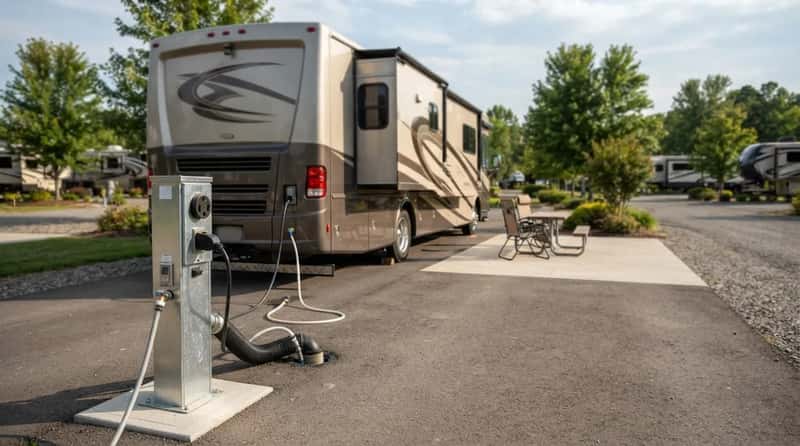
This one is non-negotiable for most RV travelers over 60. Owners still offering only 30-amp service are quietly losing a growing slice of the market.
Full hookups – water, sewer, and electric – eliminate the logistical friction of camping entirely. That matters more with age, not less.
50-amp service specifically matters because modern RVs run multiple air conditioning units, medical devices, and kitchen appliances at once. Running a CPAP, an electric blanket, and the A/C simultaneously on 30-amp service is asking for a tripped breaker at midnight.
The smartest senior-focused parks bundle full hookups with flat, paved pull-through sites as one package. #3 is the feature most campground marketing completely ignores – at its own cost.
#3 – Fitness Centers and Heated Pools
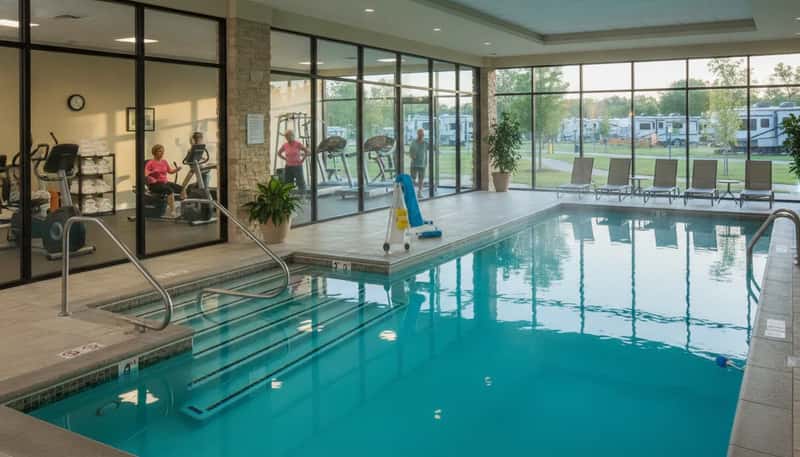
Many owners assume older travelers just want to sit still. The parks that built fitness facilities anyway have the wait lists to prove that assumption wrong.
Pools, fitness centers, and walking trails consistently rank among the top amenities senior RV travelers say keeps them coming back. A heated pool specifically stretches the usable season into cool spring mornings and autumn evenings.
At the best senior campgrounds, recreation halls, indoor heated pools, and miles of walking paths aren’t extras – they’re the core product. The indoor heated pool is one of the amenities most frequently mentioned in five-star reviews at senior RV parks, ahead of food and even Wi-Fi.
Add an on-site gym, live music, and horseshoes or shuffleboard on top, and you get a full resort experience at campground prices. #2 is the feature that has changed the senior RV market more in the last five years than anything else on this list.
#2 – Organized Social Events and a Built-In Community
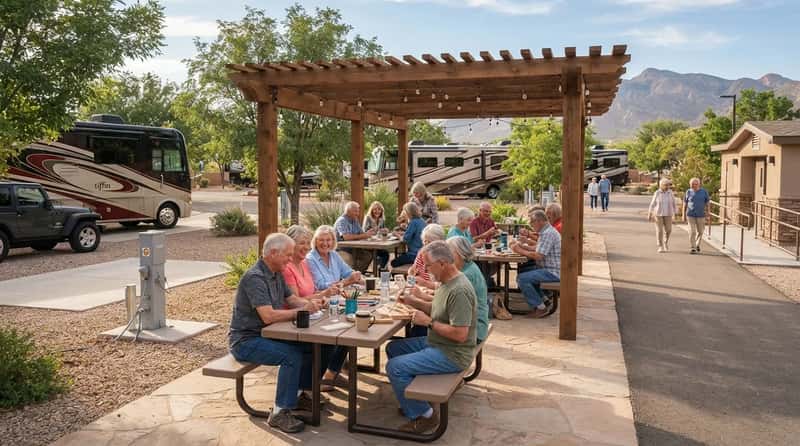
The biggest thing campground owners have learned about RV travelers over 60 is this: many aren’t just looking for a parking spot. They’re looking for connection.
Senior RV parks are increasingly designed around one keyword – community. And community doesn’t happen by accident; it has to be scheduled.
During peak season at the best senior resorts, expect a packed calendar of events almost every day. The campgrounds with the highest occupancy rates in the 55+ market are overwhelmingly the ones with the most active social calendars, not the ones with the prettiest views.
Shuffleboard leagues, pickleball courts, and hobby groups keep guests engaged and extend their stays. And #1? It’s the thing almost no campground owner talks about publicly, yet every experienced traveler over 60 puts at the top of their private checklist.
#1 – Genuinely Age-Appropriate Community Standards
This is the one that starts arguments in Facebook groups. But it’s real: the single most valued thing campground owners sort for senior RV travelers is who else is staying there.
Parks labeled 55+ promise a peaceful atmosphere with like-minded residents – but only reviews confirm whether that promise is actually kept. This isn’t exclusion for its own sake.
The pace, the noise level, and the shared expectations of a genuine 55+ community are fundamentally different from a general-audience campground. The best communities are built for people who chose this lifestyle deliberately, with a rhythm suited to long-term or seasonal stays.
Owners who enforce these standards consistently – and don’t bend the rules for every exception – build something guests will drive past five cheaper campgrounds to reach. Their loyal guests don’t need convincing, and they rarely leave a bad review.
The best campground owners understand that for travelers over 60, the entire experience – from pulling in to that first morning coffee – should already be sorted before the guest arrives. The ones who get this right barely need to advertise. Their guests do it for them.
What This Actually Means for Your Next Trip
None of the fifteen things on this list are gimmicks. They’re the quiet infrastructure – level pull-throughs, grab bars, enforced quiet hours, real community – that decide whether a trip feels effortless or exhausting.
At a Glance
- Level, full-hookup pull-through sites with 50-amp service
- Grab bars, ramps, and well-lit paths after dark
- Enforced quiet hours and a genuinely age-appropriate community
- An active social calendar with daily events in peak season
Miss two or three of these and a park gets average reviews. Nail most of them and it gets a wait list.
The most underestimated one on this list is the social calendar – the parks that build real community are consistently the ones that fill up first, every single season.
#16 – The Bonus Discount Club That Beats Every Membership Above
The Quick Compare list above left out the single deepest discount in the RV world, and almost no campground markets it loudly.
Passport America charges $49 a year and cuts 50% off the nightly rate at more than 1,100 campgrounds across the U.S., Canada, and Mexico – a steeper percentage than Good Sam, AARP, or FMCA offer.
- Join once for $49; the fee is typically paid back within two nights at a participating park.
- Before booking, check that specific park’s “Important Campground Notes” for blackout dates and stay-length limits, since each park sets its own rules.
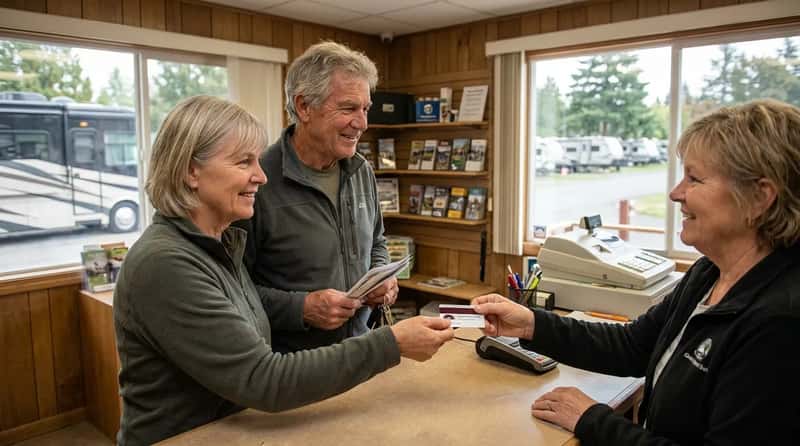
- Mention the membership when you make the reservation, then present your card at check-in – some parks won’t apply it after the fact.
- Stack it with a weekday rate or a second club like Escapees on the same stay for even deeper combined savings.
Owners who quietly accept Passport America alongside the memberships listed earlier are the ones filling their off-season calendars first.