You step onto the ship and the party seems to be already going. A big, friendly voice welcomes you, a show is queued up, and the day is mapped out like magic. Here is the twist: almost none of that is luck. Much of what feels spontaneous on day one was locked in before the first guest scanned a cruise card.
The cheerful voice on the loudspeaker is only the visible tip of a very busy operation. Job titles and duties differ by cruise line and ship, so these are common patterns rather than universal rules. But a few items on this list, especially the ones near the top, might change how you hear that welcome forever.
#15: That “Fresh” Daily Schedule Was Mostly Written Before You Arrived
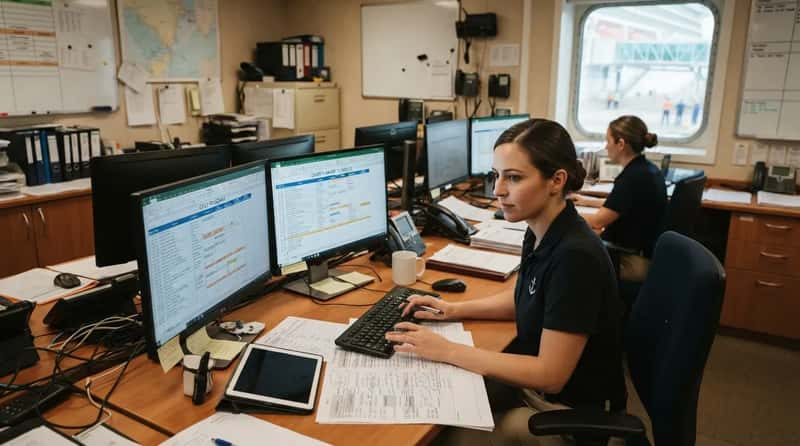
The printed or in-app schedule feels like it appears by magic each evening. On many mainline ships, the entertainment team (often under the cruise director) builds it from a template set well ahead of boarding. Royal Caribbean’s Cruise Compass, Carnival’s Fun Times and Princess’s Patter are all versions of the same idea. Embarkation day’s schedule is usually drafted before the ship even docks.
Port arrival times, sea-day rhythms and show slots all have to fit together like puzzle pieces. One late arrival can ripple through every event that day. But the first-night script hides something far less polished than it looks…
#14: The “Spontaneous” Welcome You Loved Is Actually Scripted
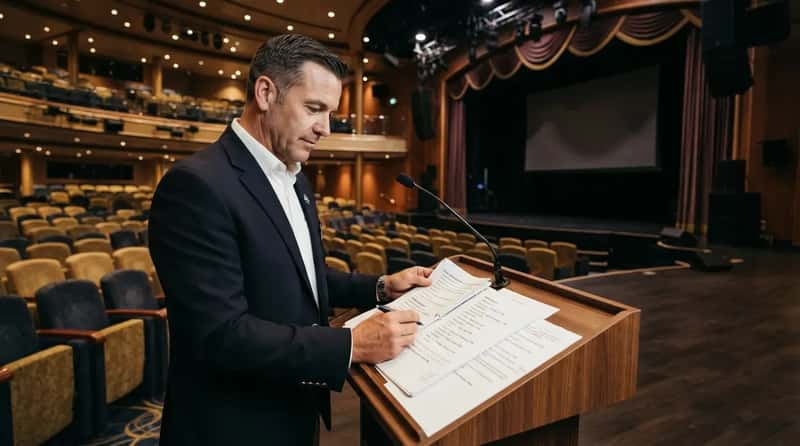
That big welcome-aboard energy is not improvised on the spot. Cruise directors typically work from outlines for the opening announcements, including what to say, when to say it and which safety reminders must come first. Many also carry a mental library of lines they have polished over multiple contracts and ships.
Some people find the constant cheer a little forced. Others point out that a ship full of strangers needs a loud, friendly anchor. Either way, the tone is chosen on purpose. And the first thing that voice has to cover isn’t fun at all…
#13: The Safety Drill Is the Fixed Point Your Whole First Afternoon Revolves Around
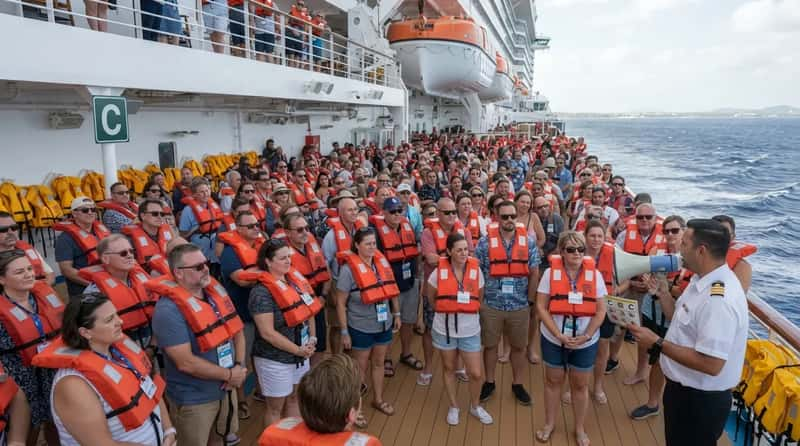
International safety rules, known as SOLAS, require passengers to be briefed on emergency procedures before or immediately upon departure. That puts the muster drill squarely in the middle of embarkation day. Cruise directors often voice the announcements, so they build the order of events around that fixed requirement. The sail-away party can only happen because the drill comes first.
Fast Facts
- The rule comes from SOLAS, the international convention on safety of life at sea.
- The general emergency signal is seven short blasts followed by one long blast.
- Guests are assigned a muster station, which is listed on the cruise card or in the cabin.
- The sail-away party is typically scheduled after the briefing is done.
Many lines now use digital check-ins, such as Royal Caribbean’s “Muster 2.0” model, which moves part of the briefing onto your phone. That means less time standing shoulder to shoulder on deck. The schedule still has to leave a clear window for it. Next up is a job that looks like pure entertainment but runs on a brutal clock…
#12: Turnaround Day Is a Race Where Nobody Sees the Starting Gun
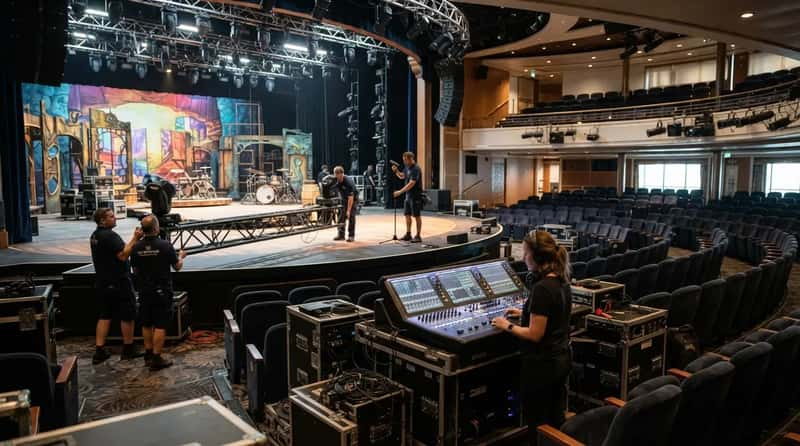
When one group of guests leaves, the next group is often arriving within hours. In many U.S. ports, disembarkation starts in the morning and new guests board by midday. The whole ship has to reset in that narrow window, and entertainment teams use it to check sound, lights and stages for the first show. Nobody sees this part, yet it decides whether opening night feels smooth.
Crew members often move from one sailing to the next with very little real downtime. That pressure is exactly why so much is planned ahead and so little is left to chance. Speaking of planning, one group of people has their arrival timed almost to the minute…
#11: The Headline Act Boards With a Plan and Very Little Rehearsal Time
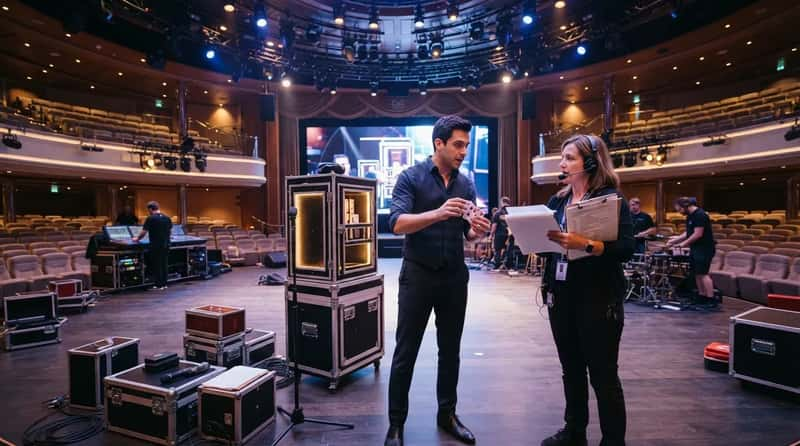
The comedian, singer or magician you see on night one didn’t just wander in. Guest acts are booked in advance, often through a central entertainment office on shore. They typically arrive with a set length, a technical rider and show times already assigned. Many embark at the start of a sailing, which squeezes their rehearsal into embarkation day.
Mainstream lines also tend to keep comedy in the main theater family-friendly and push edgier sets to late-night slots. That split is planned, not accidental. But the stars of the ship aren’t always the ones brought on board…
#10: The Dancers Opening the Big Show May Also Run Your Trivia Game
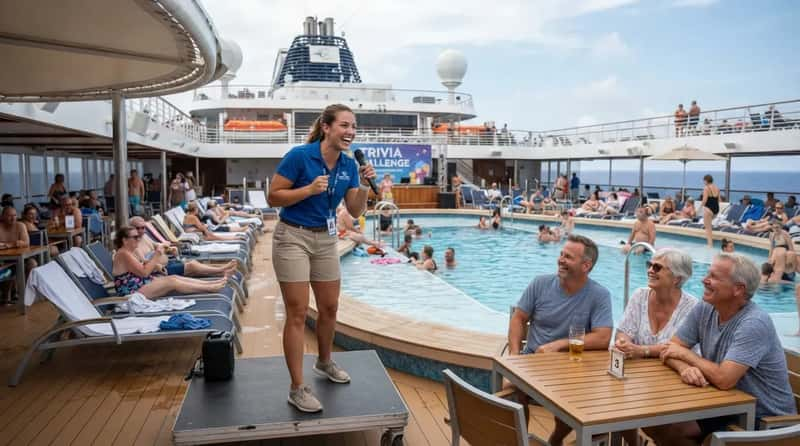
The singers and dancers who open the big production shows have fixed rehearsal blocks that begin the moment guests clear the theater. On ships with two performances of the same show, the schedule is built so the cast can do both without a collapse in energy. The same performers may also be hosting parties and games that very day. It is a real juggling act.
Quick Compare
- What you see: a glittering production number in the main theater.
- What may be happening: rehearsal blocks, costume checks and a second performance still to come.
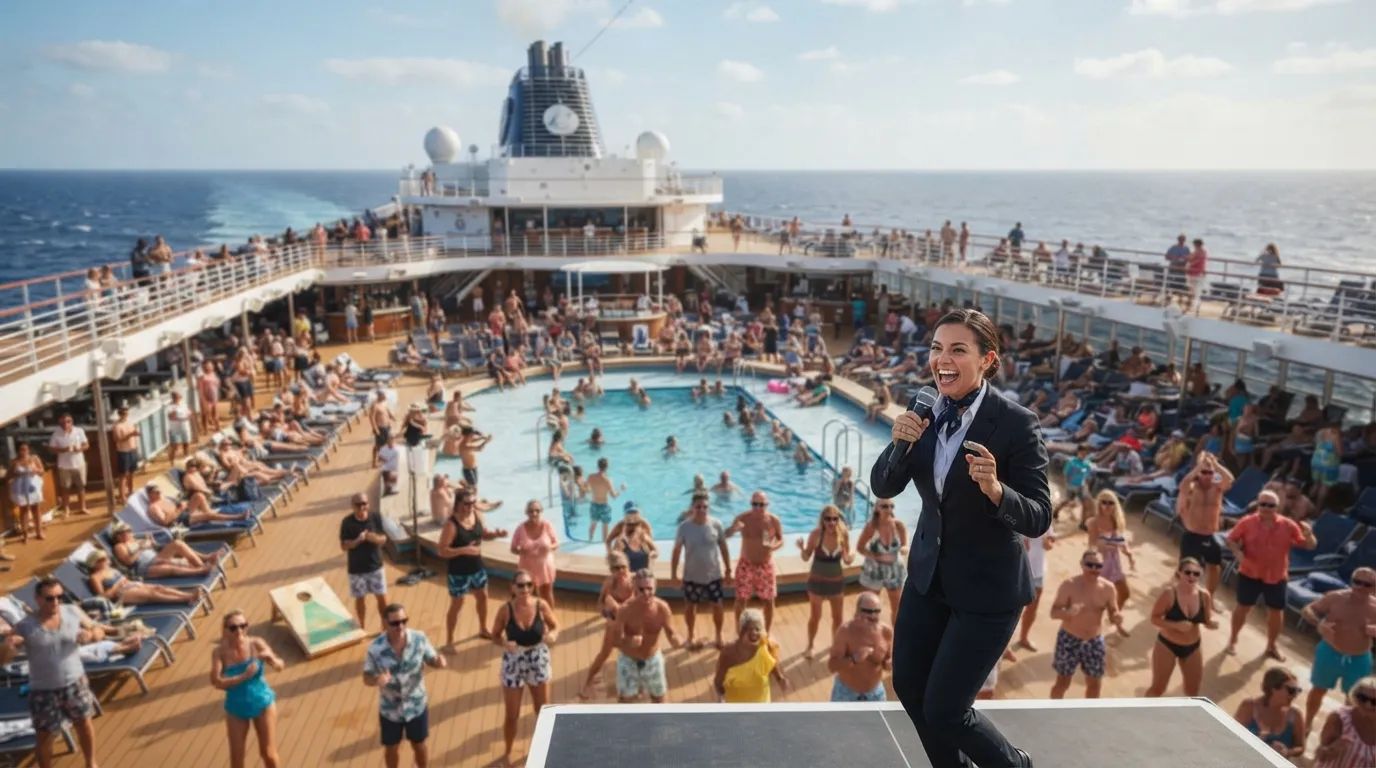
- By the pool: a friendly host with a microphone, who might be a cast member in another outfit.
That is one reason the cruise director, the cast manager and the technical team stay in constant contact during planning. A costume problem or a missing cast member can reshuffle an entire evening. The plan has backups for exactly that. Next comes a setup aimed at the smallest passengers…
#9: The Kids’ Club Is Staffed and Ready Before the First Parent Peeks Inside
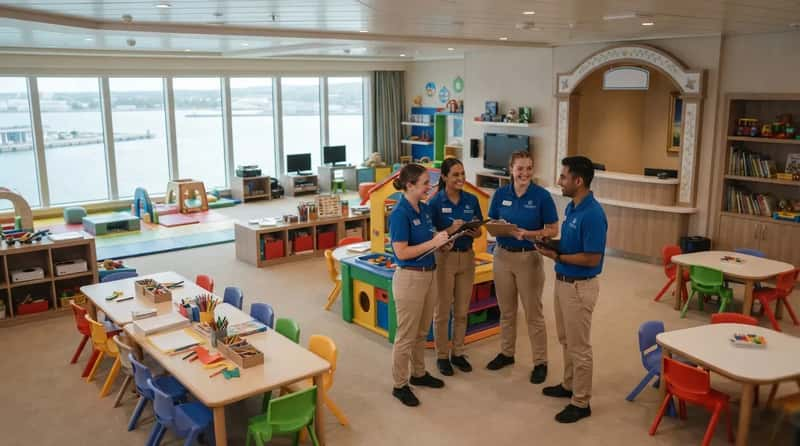
Many lines let parents pre-register children for youth programs before sailing, which gives staff a head count by age group. Clubs for different age bands are set up, and the first activities are timed for that first afternoon. Youth teams usually have their own briefing before guests board. The play space has to look perfect, because it is the first thing worried parents inspect.
Parents often judge a whole cruise by how comfortable their kids feel on day one. That is why this setup gets so much attention. Not every plan involves children, though. Some involve a very specific table…
#8: That “Surprise” Toast on Night Three Was Requested Weeks Ago
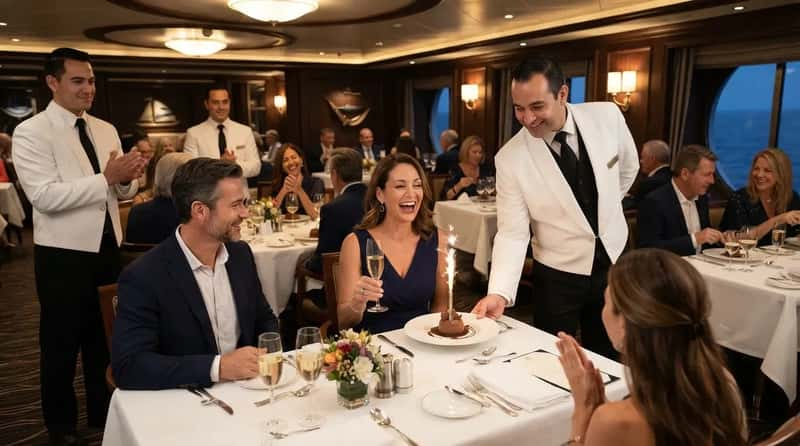
Birthdays, anniversaries, vow renewals and group gatherings are often flagged to the onboard team before the ship sails. Cruise lines commonly ask guests to share milestone events, and entertainment and dining staff then work them into the schedule. A “spontaneous” celebration at dinner may have been set in motion long before anyone packed a bag. The cruise director’s team often coordinates who shows up and when.
Group cruises, such as reunions or fan sailings, work the same way and may get their own meet-ups on the calendar. Meanwhile, another team is building something that depends entirely on the weather…
#7: Every Outdoor Party Has a Secret Indoor Twin
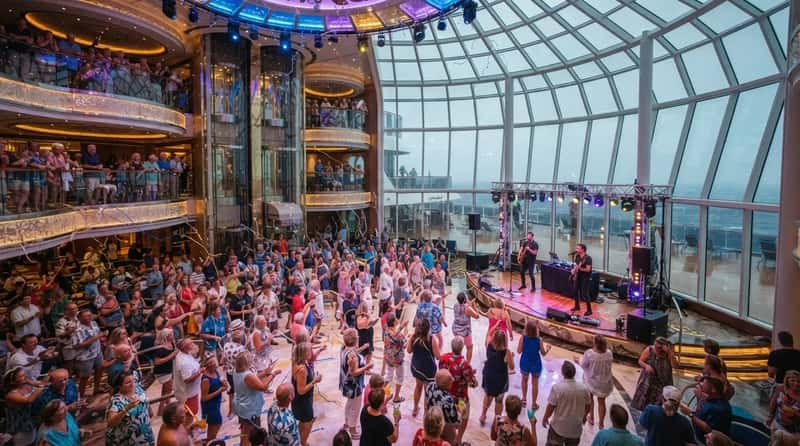
Pool parties, deck games and sail-away celebrations all depend on the sky cooperating. Entertainment teams generally prepare indoor alternatives before the voyage starts, such as moving a game to a lounge or the atrium. Rough seas or high winds can close open decks, and the schedule has to bend. The captain and bridge team make the safety calls, and the cruise director reshapes the day around them.
Worth Knowing
- “Weather permitting” on a schedule is a clue that a backup plan already exists.
- Closing open decks is a safety decision made on the bridge, not by the entertainment team.
- Common fallback spots include the atrium, theater and indoor lounges.
- Changes are usually shared through announcements and the ship’s app.
That is why the schedule sometimes says “weather permitting.” The backup venue is often chosen long before anyone knows it will be needed. The same logic applies to something many guests never think about until they’re stuck in it…
#6: On Tender Days, the Waiting Line Has Been Choreographed in Advance
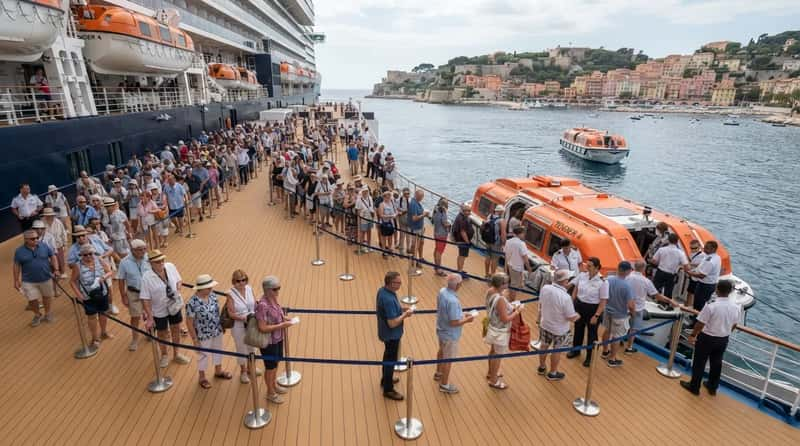
Some ports have no pier big enough for a cruise ship, so the vessel anchors offshore and guests ride small boats called tenders. Those days need a very different plan, including how tickets are handed out, who goes first and what fills the waiting time. Excursion groups are typically scheduled to leave first. The onboard team usually builds that order before the voyage begins.
While that line inches forward, someone also has to keep thousands of impatient vacationers entertained. And not every itinerary survives the trip, which is where the next item comes in…
#5: A Missed Port Can Become a Sea Day in a Matter of Hours, and They’re Ready
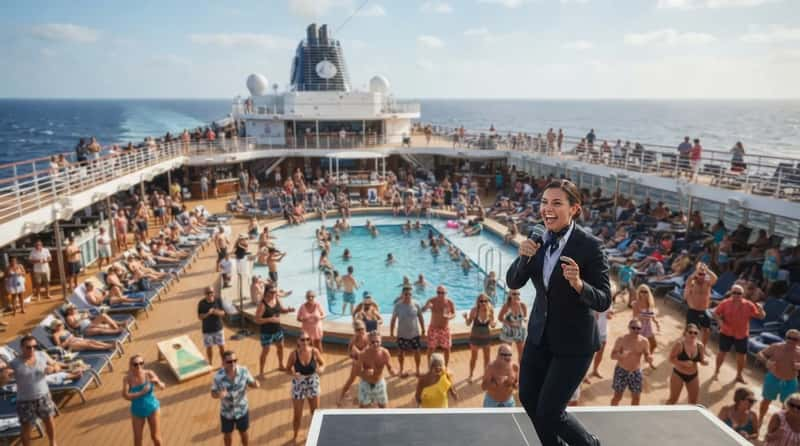
Cruise contracts generally allow lines to alter ports and times for safety, weather or operational reasons. That means cruise directors often have standby content ready, such as extra sea-day activities, talks and games. Port changes are decided above the cruise director’s level, but the entertainment team has to react fast. A canceled stop can turn into a full day of onboard fun with only hours of notice.
How a crew handles these moments is often what separates a shrug from a furious guest review. Another prepared moment tends to be far more dramatic…
#4: Theme Nights Take Props, Lighting and Several Departments Working Overtime
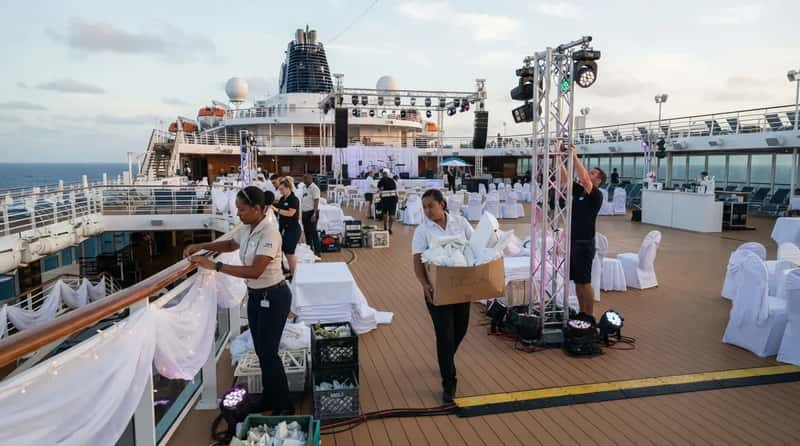
White parties, 70s nights and deck BBQs are not thrown together from scratch. Props, lighting changes and music playlists are organized ahead, and the crew time needed to transform a deck is built into the schedule. Many lines list their theme nights in pre-cruise materials so guests can pack for them.
Why It Stands Out
- A shared dress code gives total strangers an easy reason to start talking.
- Lighting, music and decor can change the feel of a deck in a few hours.
- Theme nights are announced early, so guests can plan outfits before they sail.
- Joining in is optional, which keeps the mood fun instead of forced.
Some travelers say dress-up nights are the most overrated part of cruising. Others say they are the whole point. Either way, a deck that looks effortless can need several departments to change it over in a few hours. And the biggest crowd-pleaser of all gets planned with unusual care…
#3: Even the Trivia Prizes and Bingo Cards Are Stocked on Purpose
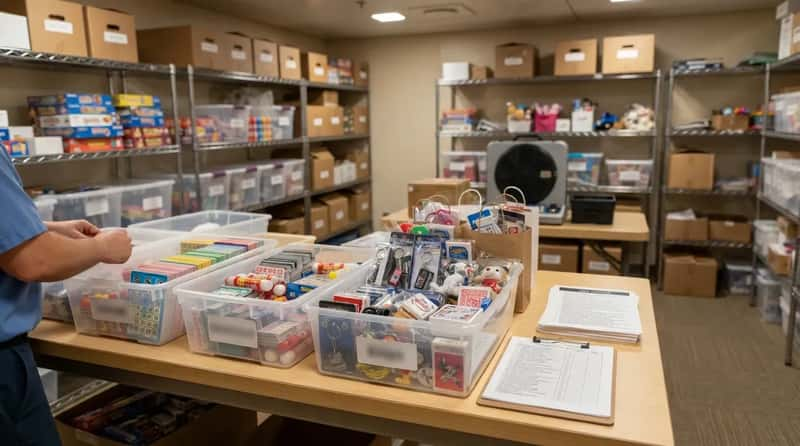
Those prize bags and game props are not random. Entertainment teams track what’s on hand for the length of the voyage, from cards and markers to branded items. Quiz questions are usually prepared in advance and rotated across sailings. Even the choice of which game goes in which time slot can reflect what has worked on that ship before.
Critics say these games are filler. Fans say a team of new friends at a trivia table is the real memory of the trip. Behind the fun, a quieter group of guests gets special attention…
#2: Accessibility Plans Are Quietly Built Before Anyone Reaches the Gangway
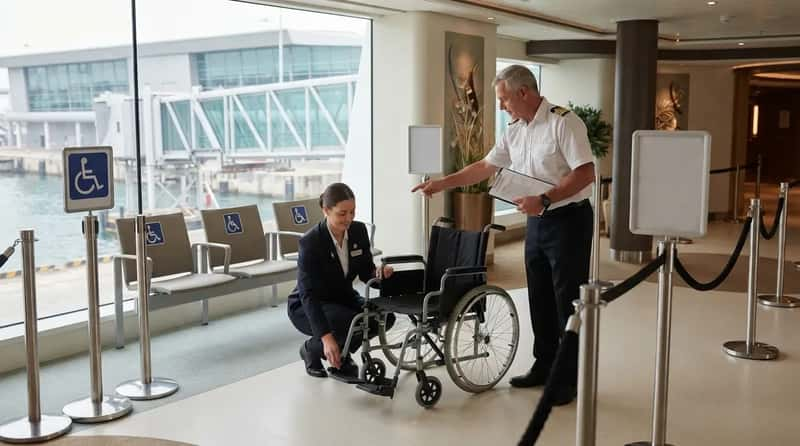
Guests who need mobility help, hearing support or other accommodations are usually asked to tell the cruise line in advance. Those requests get passed to the onboard teams, who plan for assisted boarding, seating at shows and help during the drill. The extra time and space are arranged before the gangway opens. The cruise director often works with guest services and medical teams so announcements and events are workable for everyone.
It is one of the least visible jobs in the whole operation, and one of the most meaningful. But the last item is the one holding every other piece together…
#1: The Whole Crew Is Briefed to Sound Like One Voice
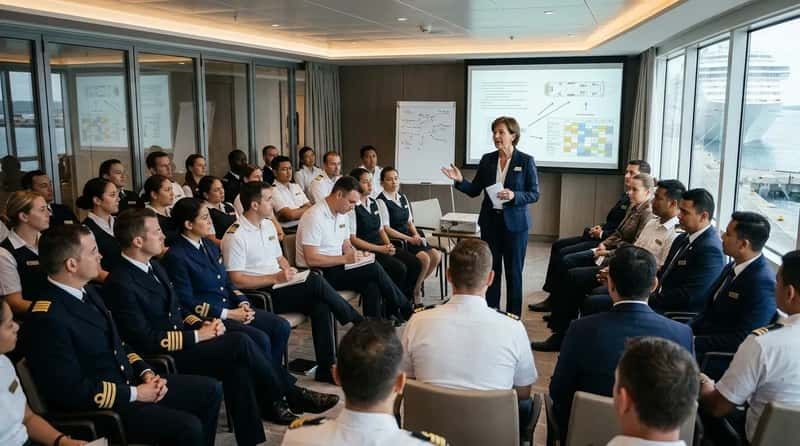
The reason a cruise feels coordinated is that the cruise director’s team, the hotel staff, the dining crew and guest services are working from the same plan. Departments meet during turnaround to align on timing, key announcements and the day’s priorities. Many lines run regular crew meetings for exactly this purpose. The seamless feel you notice on day one comes from each person being told what their job is before you arrive.
That is why the whole operation can look easy even when it isn’t. One missed handoff, like a late announcement or a wrong time on the schedule, shows up fast for guests. Most of the time you never notice, because someone caught it hours earlier, out of sight.
The gangway opening is not the start of the show. It is the moment the audience finally gets to see what the crew has spent days preparing.
So the next time that confident voice rings out across the deck, remember that the welcome you’re hearing was waiting for you the whole time.