Most people think a cruise begins when they walk up the gangway with a drink in their future and nothing on their mind. Veteran cruisers know better. The trip they’re about to have was mostly decided weeks earlier, from a couch, with a laptop and a cup of coffee.
That’s why some travelers glide through embarkation day while others stand in a sweaty terminal line, find the best restaurant booked solid, and learn what their phone just cost them. With CLIA reporting record passenger numbers of more than 37 million worldwide in 2025, the good stuff sells out faster than it used to. Some of these moves take five minutes. One of them can save the whole vacation, and it’s the one people regret skipping most.
#15 – The Online Check-In That Decides How Early You Board

Skipping online check-in is a quiet way to lose half of embarkation day. Cruise lines typically open it weeks to a couple of months before sailing, and many assign boarding windows partly by when you finish. Finish early and you may land one of the first arrival slots, so you’re eating lunch on the Lido deck while others are still shuffling through the terminal. Wait until the last minute and you could be stuck with a mid-afternoon slot.
Experienced cruisers treat that arrival time like a real appointment. Show up far too early and you may be told to wait outside. Show up late and you walk into the most crowded stretch of the day. It’s a small form with a surprisingly big payoff.
#14 – The Specialty Dinner Table Booked Before the Ship Fills Up
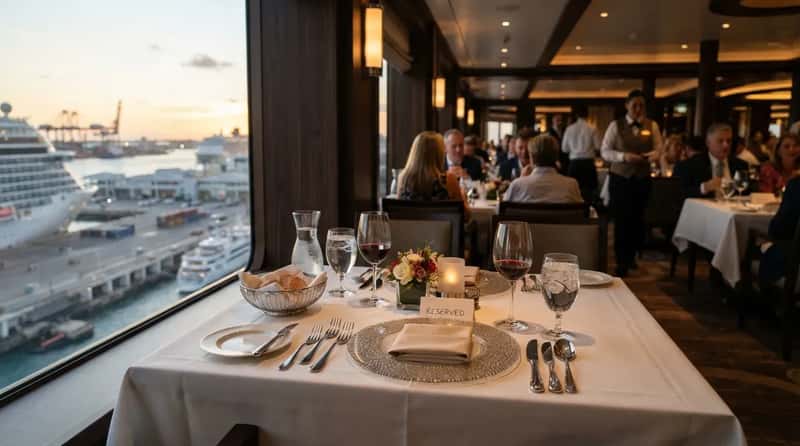
The best restaurant on board is often gone before you ever see the ship. Most lines open specialty dining reservations weeks or months ahead through their website or app, and cruise-planning guides consistently warn that prime evening times go first. Cruisers who wait until embarkation day often find only 5:00 p.m. or 9:00 p.m. tables left. On shorter sailings, the good slots can vanish almost immediately.
There’s a money angle too. Specialty restaurants commonly run roughly $25 to $60 per person, according to cruise planning guides, and prepaid dining packages can come in cheaper than paying per meal onboard. Still, plenty of cruise writers argue the main dining room is better than its reputation. So smart cruisers book one or two special nights and happily skip the rest.
#13 – The Cruise App, Downloaded and Logged In at Home

The cruise app is the ship’s new front desk, and nobody wants to set it up while standing in a terminal with a dying phone. Most major lines offer one for daily schedules, menus, reservations, and messaging. Connectivity can be spotty near ports and at sea, so cruisers create their accounts at home on solid Wi-Fi.
It also changes how day one feels. Instead of wandering the decks hunting for a paper schedule, you already know which show is worth the line. Families use the messaging feature to find each other without paying for phone service. Someone always says it’s the most useful thing they did, and it took ten minutes.
At a Glance
- Download the app and sign in while you still have home Wi-Fi.
- Check your reservation details and boarding information inside it.
- Look for daily schedules, menus, and booking tools for dining and shows.
- Many lines let travel companions message each other onboard, though the rules vary by line.
#12 – The Drink Package Math Nobody Wants to Do
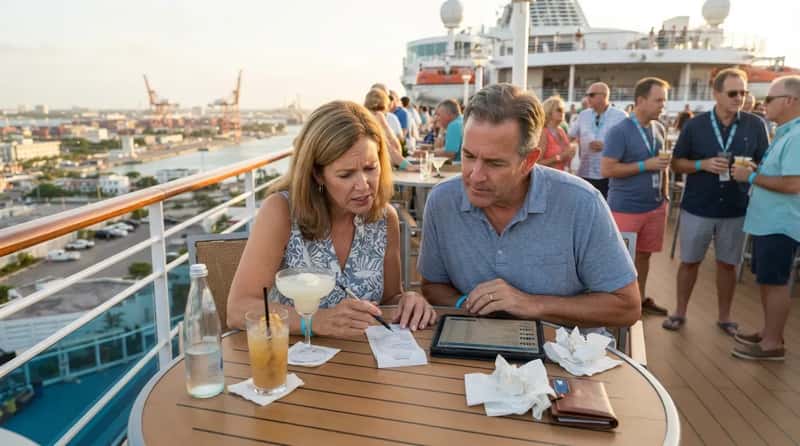
Here’s the controversial truth: for plenty of travelers, the drink package is a bad deal. On big mainstream lines it’s usually a flat daily fee that commonly lands in the $60s or well beyond per person, and many lines require every adult in the cabin to buy it. Add the automatic gratuity and the number climbs fast. Light drinkers often end up paying for far more than they’ll ever sip.
Veterans count their real habits before buying: how many drinks a day, what kind, and how many port days they’ll spend off the ship. Prepaying before sailing is often cheaper than buying onboard, so some do commit early. But they decide at home with a calculator, not at the bar with a smiling salesperson. The goal is to make the choice when nobody is selling to you.
#11 – The Spa Appointment That Vanishes by Embarkation Day

Spa time slots disappear faster than most travelers expect. Cruisers who want a massage on a quiet sea day book online through the line’s website before they board. Wait until you’re on the ship and you’re competing with everyone who had the same dreamy idea the moment the ports faded away. The best slots can be gone before the gangway even opens.
There’s a sneaky trick on port days, too. Travel guides note that spa specials often pop up when the ship is docked and most guests are ashore. A treatment while the ship is half-empty is calmer and often cheaper. Experienced cruisers plan the spa for the day they’re not off on an excursion.
#10 – The Phone Plan That Stops the Surprise Bill

Your phone can quietly rack up roaming charges the moment the ship pulls away from the dock. At sea, many phones latch onto expensive maritime networks instead of normal towers. It can happen even if you never make a call. That’s why seasoned cruisers sort out their plan before leaving home.
Some cruisers turn off cellular data entirely and use onboard Wi-Fi sparingly. Others add a carrier day pass for port days only. Either way, the decision gets made before the ship leaves, not after a bill shows up.
#9 – The Daily Gratuities Nobody Mentions in the Ad
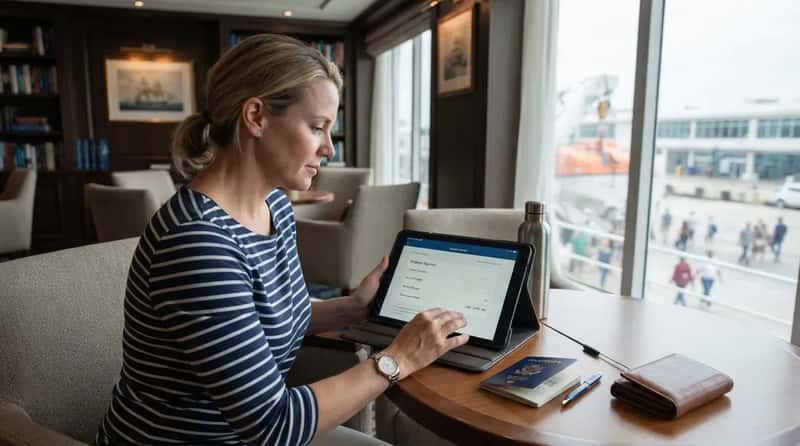
The advertised cruise price almost never includes the daily service charge. On many mainstream lines it lands in the high teens to mid-$20s per person per day, according to cruise guides. For a family of four on a week-long sailing, that can add up to hundreds of dollars. Experienced cruisers know that number before they book.
Prepaying takes one more bill off the table once you’re onboard. Some cruisers also set aside a little cash for a cabin steward who went above and beyond. That part is optional, but it’s a custom many seasoned travelers follow.
#8 – The Dietary and Accessibility Requests That Can’t Wait
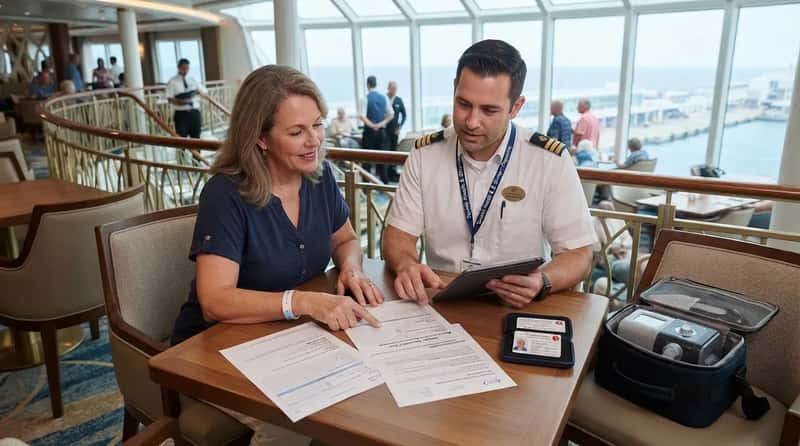
You can’t walk up to a buffet and hope for a safe meal when you have a serious allergy. Cruise lines generally want advance notice for food allergies, gluten-free needs, and medical dietary requests. Many have deadlines weeks before sailing. Miss the window and the first night can turn into a stressful scramble with a waiter and a manager.
The same goes for mobility help, accessible cabins, and medical equipment like CPAP machines or oxygen. Accessible cabins are limited, so booking early can be the difference between a smooth trip and a rough one. Experienced cruisers contact the line’s special-needs team and get every request confirmed in writing.
Worth Knowing
- Send allergy and diet requests right after booking, not the week before sailing.
- Ask for written confirmation, and keep a copy on your phone.
- Pack medications in their original packaging, plus a spare day or two of doses in your carry-on.
- On the first night, introduce yourself to the dining manager or head waiter so the request doesn’t get lost.
#7 – The Hotel Night That Keeps You From Missing the Ship

The ship will not wait for your delayed flight. It’s the oldest rule in cruising and the source of its most dramatic stories. If you miss departure on your own, you’re generally responsible for catching up at the next port at your own expense. One storm delay can turn a dream vacation into a frantic scramble across borders.
So experienced cruisers fly in the day before and book a hotel near the port. Many pick one with a shuttle or an easy ride to the terminal. It’s the cheapest insurance policy in travel, and the one that lets you actually sleep the night before.
#6 – The Flight Home That Doesn’t Start at Dawn

The last morning of a cruise moves faster than anything else onboard. Ships often dock early, and disembarkation can take hours depending on port rules and your assigned group. A 7 a.m. flight home is a classic rookie mistake. Seasoned cruisers book flights later in the day.
Many pick a flight after noon so they’re not watching the clock over breakfast. Others plan a lunch or a few hours in town before heading to the airport. Some also use self-assisted walk-off, where it’s offered, carrying their own bags in exchange for an earlier exit. The plan gets made long before that final sad omelet.
#5 – The Passport and Paper Backups You Hope You Never Need
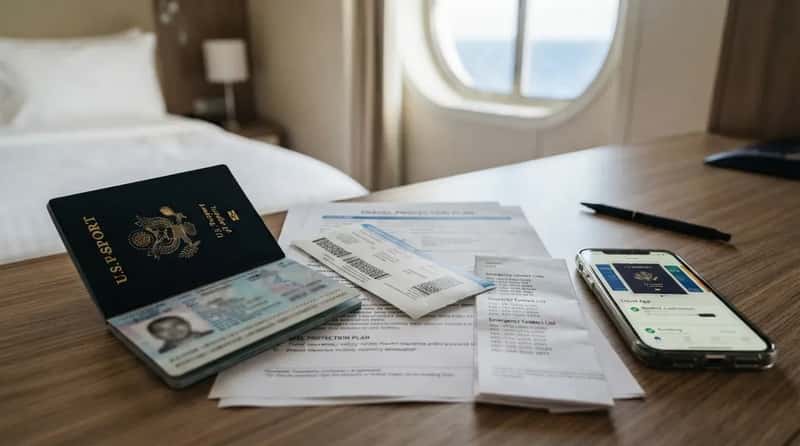
You may not strictly need a passport for every U.S. cruise, but experienced travelers bring one anyway. For U.S. citizens on closed-loop sailings that start and end in the same American port, a birth certificate and government photo ID are generally accepted. But if you miss the ship or get sick and have to fly home from a foreign port, you’ll need a passport.
Veterans also keep paper and digital copies of passports, insurance policies, and emergency numbers in separate places. They check expiration dates months ahead, since some countries require validity beyond your trip dates. It’s boring right up until the moment it isn’t.
#4 – The Carry-On Bag That Beats the Late Luggage
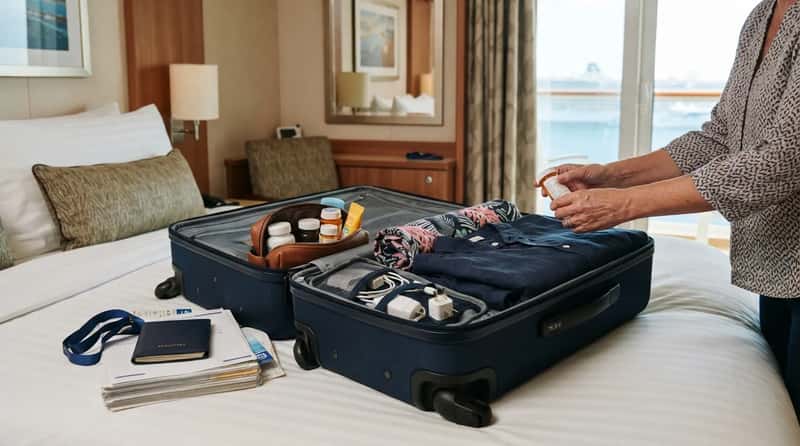
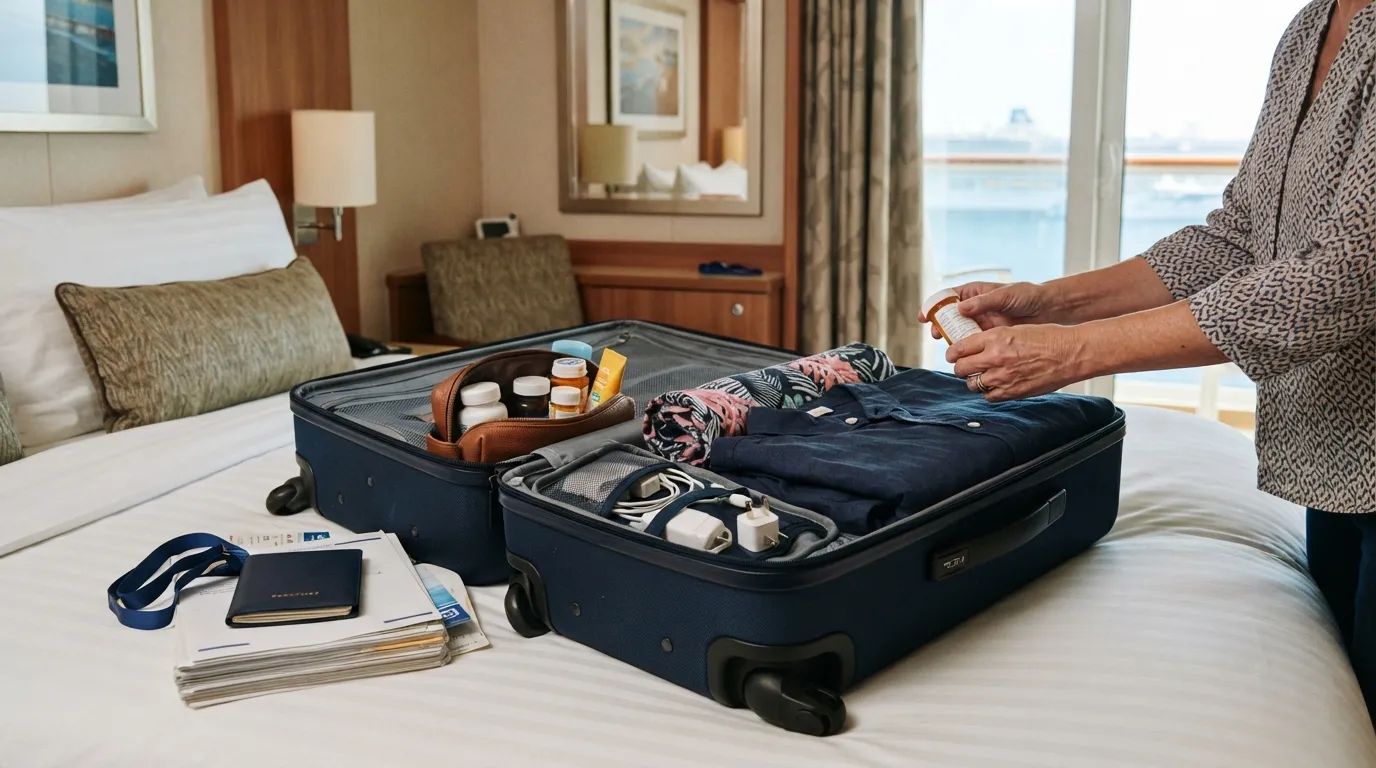
Your suitcase will probably not be waiting in your cabin when you board. Bags are collected at the terminal and delivered to cabins later, often in the afternoon or evening. Until then, whatever’s in your carry-on is all you have. That’s why experienced cruisers pack it like a mini vacation.
Inside go medications, a swimsuit, sunscreen, chargers, and a change of clothes for dinner. Documents and valuables stay with you, never in the checked bag. Some also bring a small power strip, but lines commonly ban ones with surge protectors, so check the rules first.
Quick Compare
- Keep with you: medications, passports, boarding documents, valuables, chargers, swimsuit.
- Safe to check: formal outfits, extra shoes, bulky toiletries, spare layers.
- Don’t forget: attach the cruise line’s luggage tags to every checked bag before you reach the terminal.
#3 – The Cabin Picked on a Deck Plan, Not a Whim
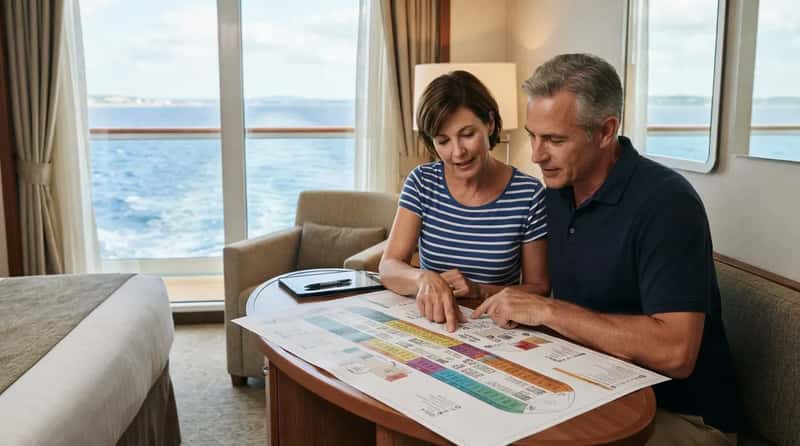
The cheapest cabin can come with the loudest surprise. Experienced cruisers study the deck plan to see what’s above, below, and beside the room. A cabin under the pool deck or near a nightclub or galley can mean scraping chairs and thumping bass at odd hours. They look at the neighbors as much as the room itself.
Midship rooms on lower decks tend to feel steadier, while high rooms at the front or back feel more movement. And a balcony, while lovely, is often overrated on cold-weather itineraries. Whether it’s worth the extra cost depends entirely on where you’re sailing.
#2 – The Shore Excursion Choice That Decides If You Make It Back
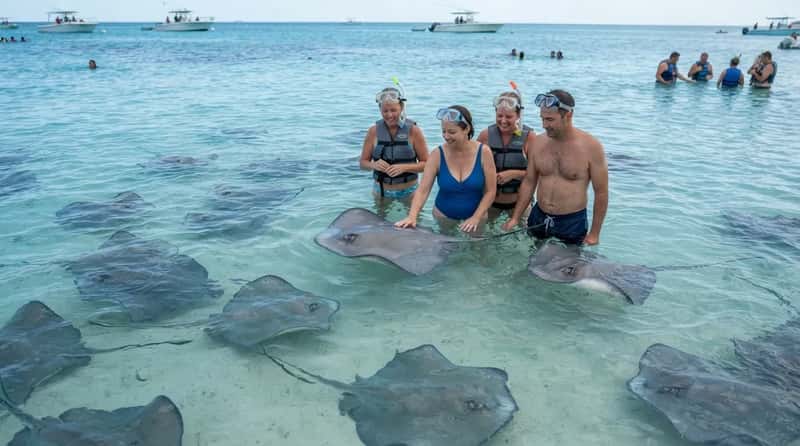
The most popular tours can sell out weeks before the ship sails. Travel writers note that famous excursions, like stingray swims or waterfall climbs in the Caribbean, can disappear early. Cruisers who wait can be left with leftovers. And here’s the rule that matters even more: if a ship-run tour runs late, the ship generally waits. If an independent one does, it often won’t.
So veterans decide ahead whether to pay extra for peace of mind or take a risk for savings. Some argue ship-sponsored tours are overpriced and herd-like, and that’s a fair point at certain ports. Others book one ship tour at the riskiest stop and go independent at the easy ones.
#1 – The Travel Insurance That Cruise Lines’ Own Plans Don’t Always Match
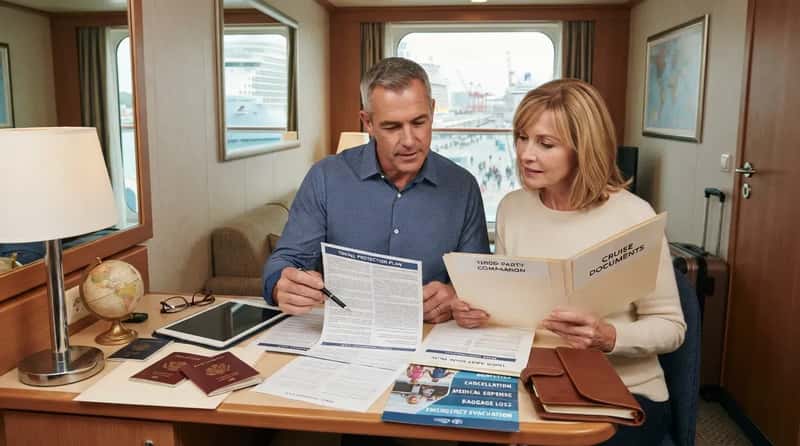
The thing experienced cruisers never skip is the thing beginners skip most. Travel insurance can cover cancellations, medical emergencies, missed connections, and lost bags. Cruises are prepaid and often costly, and a medical emergency at sea or in a foreign port can get expensive fast. Travel writers warn that a cruise line’s own protection plan is often less comprehensive than a third-party policy.
That’s why veterans read the fine print, compare policies, and buy coverage for every traveler in the cabin. They check medical evacuation limits and what actually counts as a covered delay. It isn’t exciting, but it protects the money behind everything else on this list.
The real cruise secret was never an upgrade or a loophole. The cruisers who seem effortlessly lucky are usually the ones who did the boring things first, so everything left to chance on board is the good kind.