Most of us treat airport security like a coin flip. You either land the fast lane or get stuck behind someone unpacking an entire toiletry bag. But the people who glide through aren’t lucky. They’re doing small, boring things long before they reach the bin.
On July 7, 2024, TSA officers screened 3,013,413 people, which works out to about 35 passengers every second. At that volume, one fumbled pocket or one buried baggie ripples back through the whole line. Some of the habits below sound too simple to matter, and a few cost real money when people skip them.
#15 – They Start Security at Home, Because the Clock Is the First Checkpoint
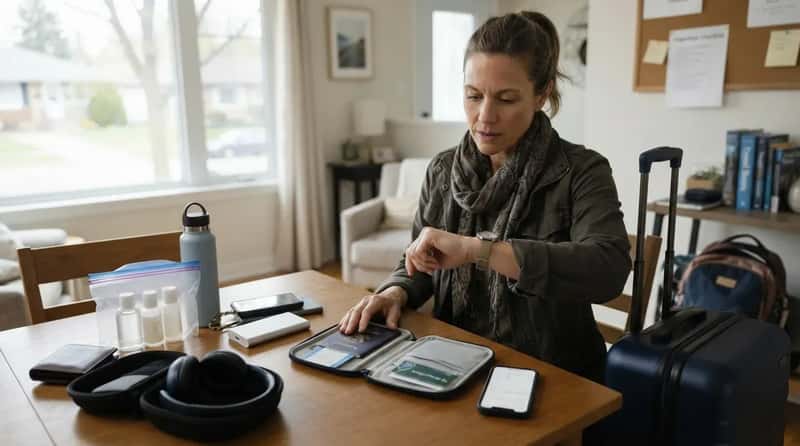
Experienced travelers begin security the moment they leave the house. One 2026 guide recommends arriving about 2 hours early for domestic flights and 3 for international ones. TSA says it staffs to wait standards of 10 minutes or less in PreCheck lanes and 30 minutes or less in standard lanes.
Those wait times are targets, not promises, and a packed holiday morning can blow right past them. Seasoned flyers add extra padding on peak days, and not only at the giant airports. Some frequent flyers say two hours is overkill, but plenty of others have watched their flight leave without them. The next habit takes five seconds, and most people skip it.
#14 – The Liquids Bag Rides in the Outer Pocket, Never at the Bottom
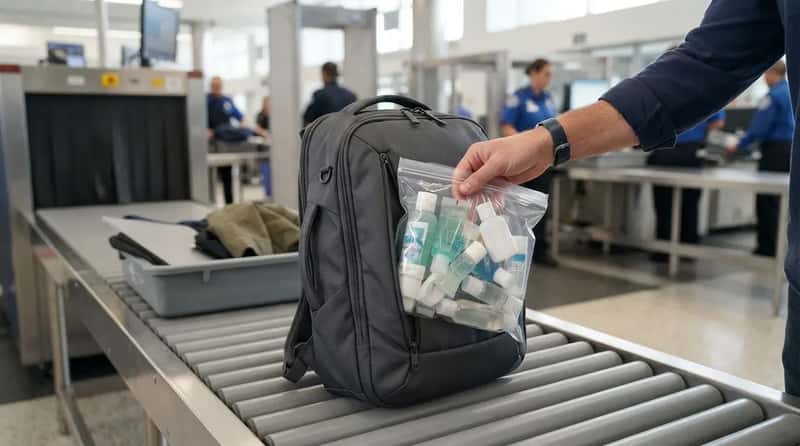
The 3-1-1 rule hasn’t gone away. Each container must be 3.4 ounces (100 ml) or less, and all of them fit in one quart-size bag. Pros keep that bag in an outer pocket so one hand can grab it in a single move.
Most people never realize that a bag buried under a sweater is what turns a quick screening into a public unpacking session. Some airports now use CT scanners that let you keep liquids and laptops in your bag, but 3-1-1 remains the nationwide baseline. Experienced travelers prep for the old way because they don’t know which lane they’ll get until they’re standing in it. And that’s only half the lane story in #13…
#13 – PreCheck Holders Know Exactly What It Buys, and What It Doesn’t
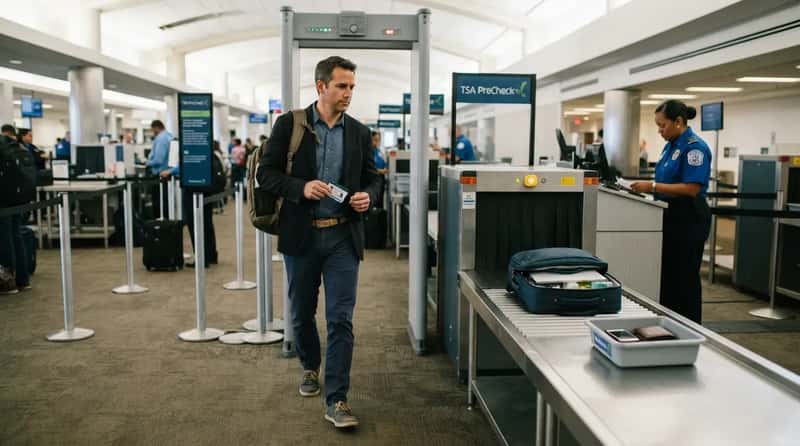
The real perk is simple. In a PreCheck lane you can generally keep your shoes, belt, and light jacket on, with your laptop and liquids bag packed away. That’s a lot of unpacking you never have to do. Veterans enjoy the speed and quietly protect it by staying in the right lane.
Here’s what trips up newcomers. PreCheck gets you a faster line, but it does not replace proper identification. Even the fast lane has a gatekeeper. We’ll meet that gatekeeper at #1, but first, a shoe habit that sounds outdated and isn’t.
#12 – They Still Wear Slip-On Shoes, Even Though the Shoe Rule Changed
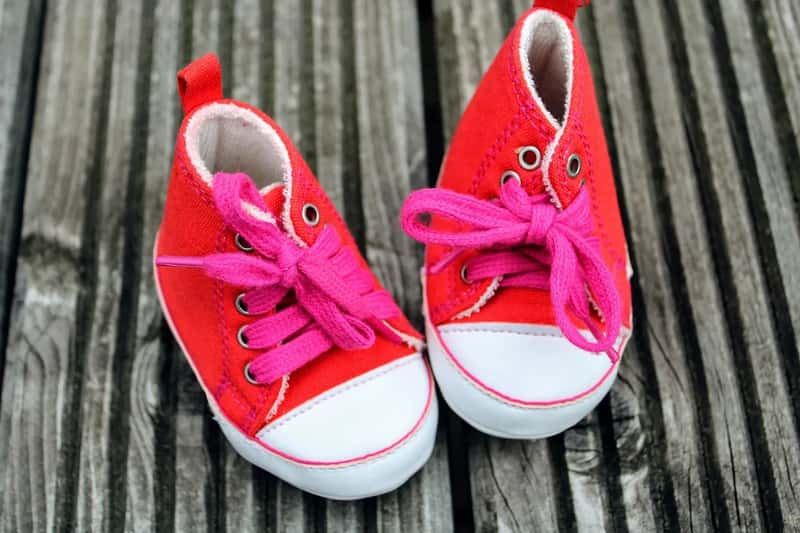
The old shoe shuffle is mostly dead. As of July 8, 2025, passengers can generally keep their shoes on at TSA checkpoints. Experienced travelers still pick slip-ons anyway, because officers can still ask you to remove your shoes if they need to do extra screening.
That’s the whole logic. Mandatory shoe removal has ended, but it may still be required after an alarm. The best shoe is the one that costs you nothing if the rule changes mid-walk. Some travelers say laces no longer matter, and veterans with hiking boots disagree. Up next is a pocket trick that quietly prevents a second trip through the scanner.
#11 – Their Pockets Are Already Empty Before They Reach the Line
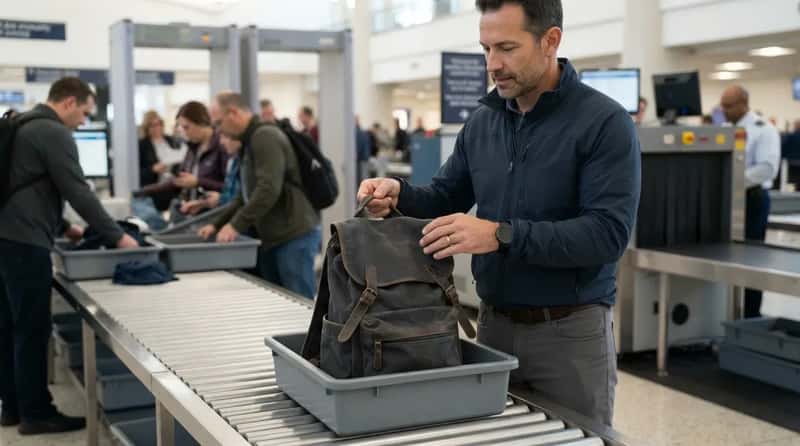
Smart travelers do the dumping early. One checklist says to put your belt, watch, and loose coins in your bag before you join the line. By the time they reach the bins, there’s nothing left to fumble. The scramble you see at the front of the line is almost always a prep problem.
Keys, wallet, and phone go into one bag pocket, always the same one. That habit also guards against the classic checkpoint mishap of leaving something behind in a bin. Rushing creates exactly that kind of mistake. But even a perfect routine falls apart if you misread the lane, which brings us to #10.
#10 – They Read the Lane, Not Just the Line
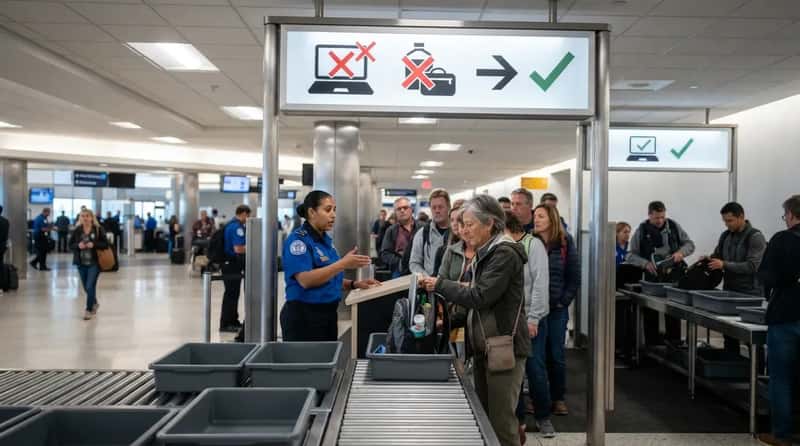
Not every checkpoint works the same way. At airports with newer CT scanners, travelers may be able to keep laptops, tablets, and compliant liquids inside their bags. At other airports, the same items still come out. One 2026 guide notes that lane-by-lane instructions still matter.
Pros watch the first person ahead of them and listen closely to the officer’s instructions. Unpacking when you don’t have to wastes time, and not unpacking when you do gets you pulled aside. It’s a small skill, and few travelers practice it. Next up is a loophole in the liquids rule that most people never use.
Quick Compare
- Standard lane: Laptop and quart-size liquids bag usually come out of the carry-on.
- PreCheck lane: Shoes, belt, and light jacket can generally stay on.
- CT scanner lane: Laptops and compliant liquids may stay inside your bag.
- The tiebreaker: Follow the officer’s call, whatever the last lane told you.
#9 – They Pack Solids, Which Have No Size Limit at All
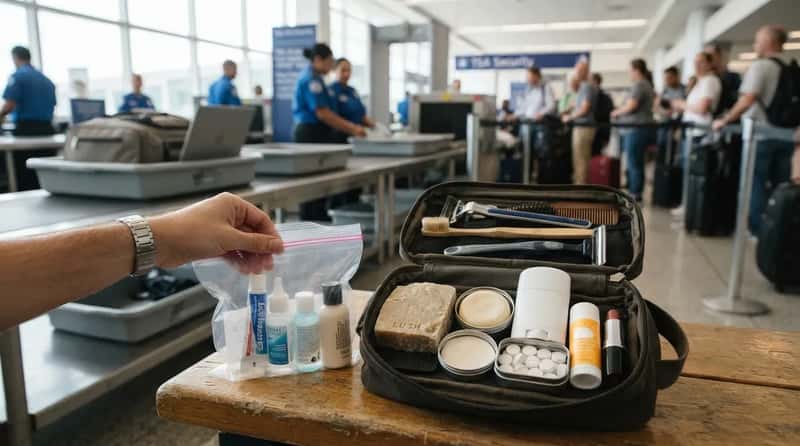
The liquids rule has a gap that travelers rarely exploit. Solids like bar soap, shampoo bars, toothpaste tablets, lipstick, stick deodorant, and powder makeup have no size limit. A full-size shampoo bar sails through while a big bottle of shampoo gets tossed. Veterans build their toiletry kit around that fact.
The tricky part is knowing what counts. If you can squeeze, smear, pump, or pour it, TSA counts it as a liquid, which catches items like toothpaste, mascara, peanut butter, and hummus. That’s how a simple lunch spread ends up in the trash can. And the next item is a gamble even pros argue about.
#8 – They Know the Frozen-Solid Trick Comes With an Expiration Time
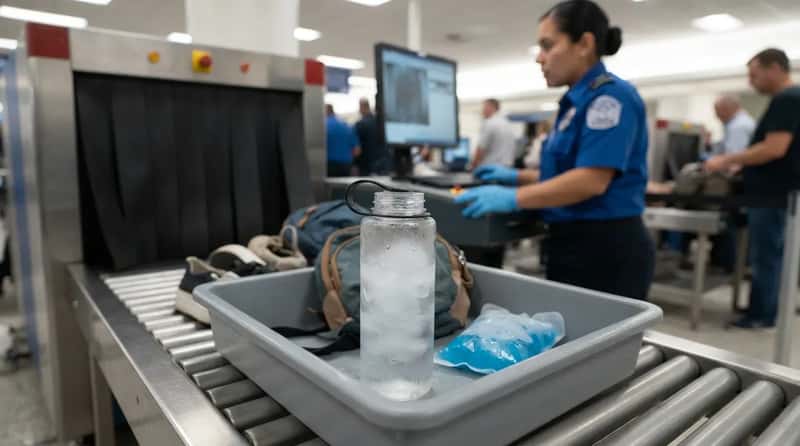
You’ve probably heard that frozen liquids can pass. That’s partly true. A frozen liquid passes as a solid only if it’s frozen rock-solid at screening, and slushy or melting items get confiscated. The difference between “allowed” and “trashed” can be a few degrees.
That’s why experienced travelers treat it as a gamble in summer, not a plan. A long drive to the airport or a slow line gives your freezer pack time to soften. There’s one exception to the liquid limits, which we’ll cover soon. But first, a rule about bottle size that has cost people their favorite products.
#7 – They Know a Nearly Empty Bottle Still Gets Tossed
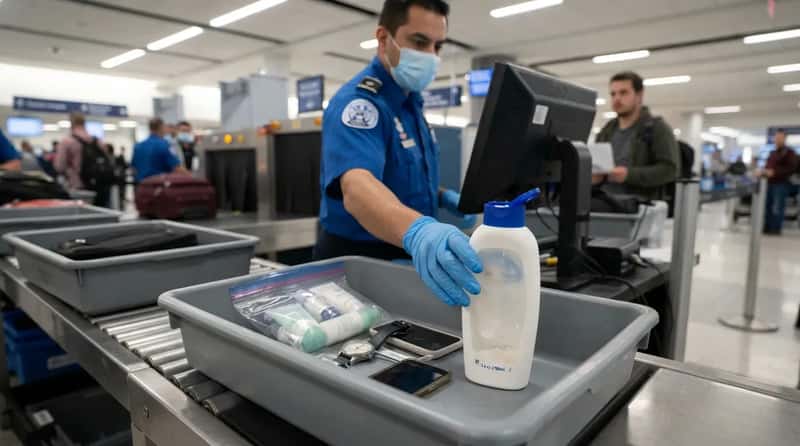
This one stings. TSA judges the size of the container, not how much product is left inside. A larger bottle will be confiscated even if it is nearly empty. That almost-finished full-size bottle of sunscreen is still a full-size bottle to the officer.
Pros avoid the heartbreak by decanting into small containers or buying travel sizes. Anything bigger goes in checked luggage, and the official guidance is just as blunt. The next item surprises people who think they’ve got their toiletry bag figured out.
#6 – They Remember That Powders Can Trigger a Second Look
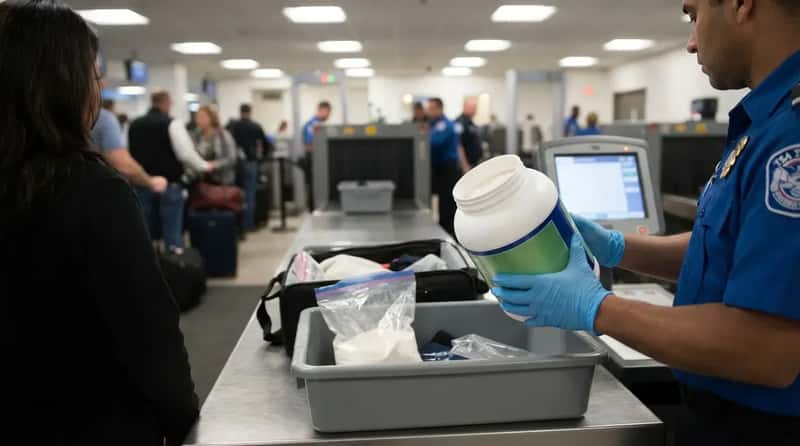
Powders look harmless, and that’s the trap. One 2026 breakdown lists powders over 12 ounces (350 ml) as items that may need separate screening in a carry-on. Protein powder and baby powder can turn a quick pass into an extra stop. Experienced travelers know it’s about the amount, not just the type.
The fix is simple. Keep large powder containers in an easy-to-reach spot, and expect that an officer might want a closer look. Better yet, pack smaller portions in a baggie. Shaving a few ounces off your load can mean fewer delays. Now for a routine that most people get exactly backward.
At a Glance
- The line: 12 ounces (350 ml) is where powders may get extra attention.
- Common culprits: Protein powder, baby powder, and similar bulk containers.
- Smaller amounts: Less likely to need a separate screening step.
- Best move: Pack large containers where you can lift them out fast.
#5 – They Run the Bins Like a System, Not a Dump
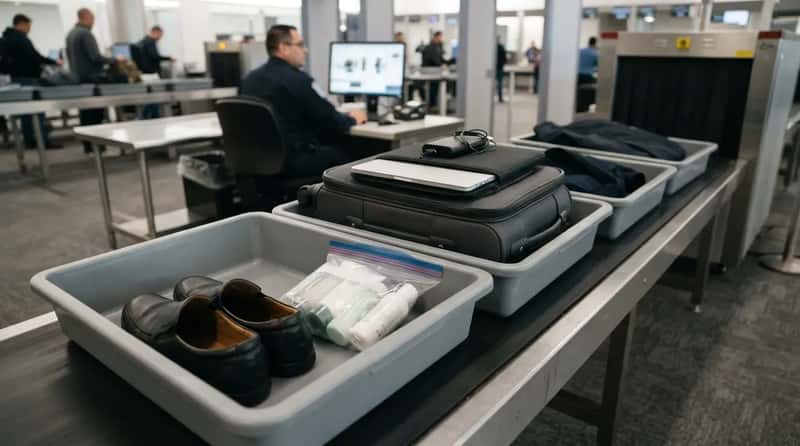
Watch a pro at the belt and you’ll notice a pattern. One checklist puts shoes and the 3-1-1 bag in the first bin and the carry-on in the second, and says not to stack bins. Laptops and power banks go on top of the carry-on contents. Stacked bins slow down the officers who are trying to read the X-ray.
Of course, this is the routine for a standard lane. At a PreCheck or newer scanner lane, the quart bag can stay in your bag. Pros adjust to the lane in front of them. Next up is a habit that saves money and a very particular kind of frustration.
#4 – They Carry an Empty Bottle and Fill It After the Scanner
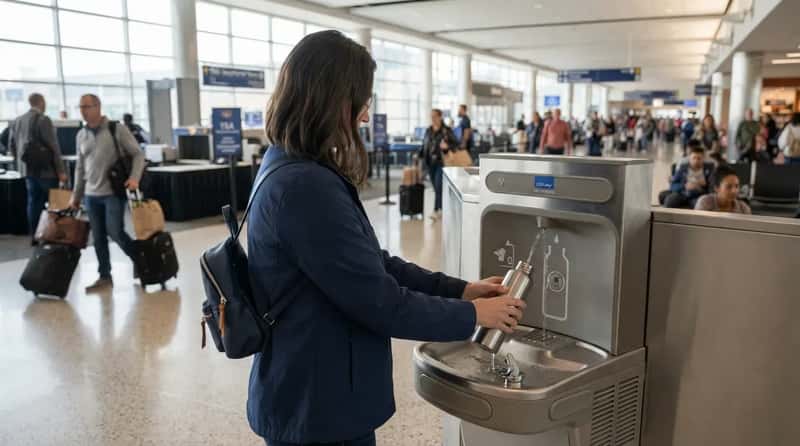
A full water bottle is a liquid, and it’s over the limit. Every liquid in a carry-on must be in a container of 3.4 ounces or less. So the bottle gets dumped or chugged at the front of the line. Veterans bring the bottle empty and fill it on the other side.
That also means skipping the airport price tag on bottled water. Plenty of airports have refill stations past security, though locations vary, so look around. Some travelers insist paying for airport water is the cost of convenience. Others call it the most avoidable fee in the terminal. Next, a rule about batteries that has nothing to do with liquids.
#3 – They Keep Power Banks and Spare Batteries in the Carry-On, Never Checked
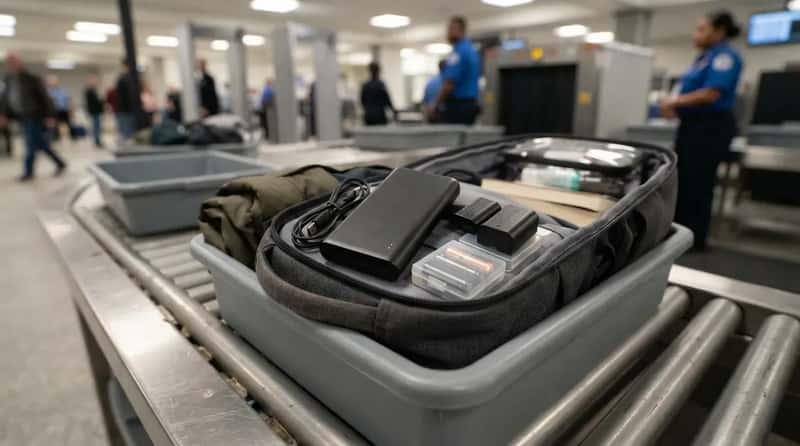
Here’s a rule that has nothing to do with the quart bag. Under U.S. aviation safety rules, spare lithium batteries and portable power banks belong in your carry-on, not in checked luggage. A battery fire in the cargo hold is much harder to deal with than one in the cabin. Pros keep them within reach.
Keeping them near the top of your bag also helps at the checkpoint. A tangle of cables and batteries can look confusing on an X-ray, and an officer may want a closer look. Having them handy makes that quick. Next comes a habit that’s part honesty, part homework.
#2 – They Declare Medical Liquids Out Loud and Look Up Everything Else
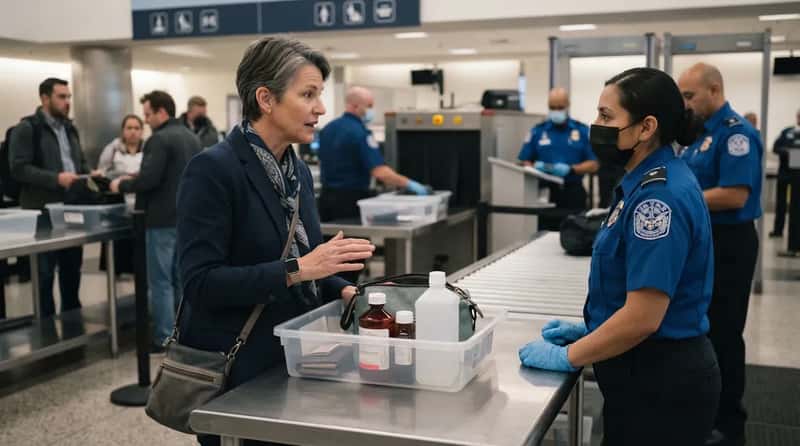
Some liquids get a pass. Prescription liquids, breast milk, formula, and any liquid frozen solid at screening can exceed 3.4 ounces, but they must be declared. The key word there is “declared.” Veterans say it out loud before the bin, rather than hoping nobody notices.
When they’re unsure about something, they look it up. TSA’s “What Can I Bring?” tool is a searchable official list of what’s allowed in carry-on and checked bags. Declared items may take extra time, so give yourself a cushion. And the biggest surprise of all comes down to a small card in your wallet.
Worth Knowing
- Who it covers: Medically necessary liquids, plus breast milk and formula for travelers with infants.
- How much: Reasonable quantities, not a bottomless bag.
- How to pack: Keep them separate from your quart bag so they’re easy to hand over.
- What to expect: Extra screening, so a calm cushion of time helps.
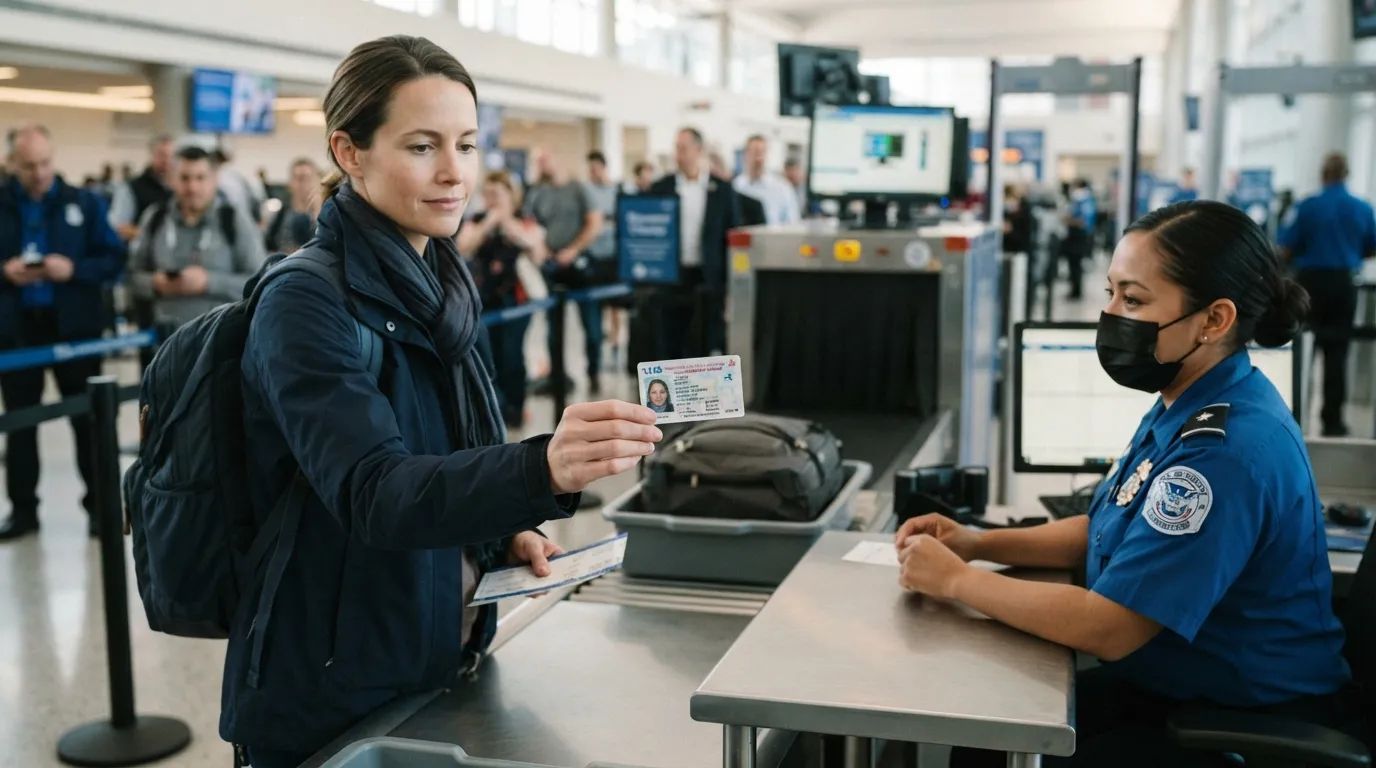
#1 – They Show Up With the Right ID, Because the Fallback Costs $45
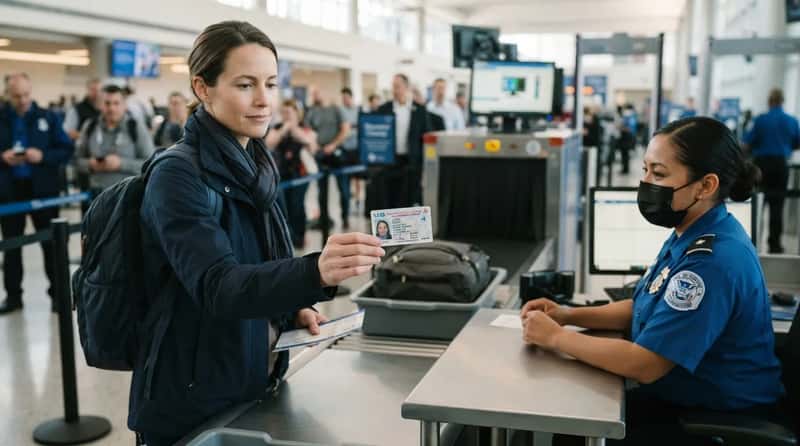
This is the one that catches the most people off guard. REAL ID enforcement began on May 7, 2025. Since February 1, 2026, domestic flyers without a REAL ID (the gold star) or a passport can pay a $45 ConfirmID fee that verifies identity for 10 days. That’s a fee for a card you could have fixed at the DMV.
Here’s the catch. Paying the fee does not automatically guarantee clearance, because TSA must still be able to verify the traveler’s identity. Experienced travelers check their ID the way they check their boarding pass. It’s the least exciting habit on this list, and the one that decides whether the rest of it even matters.
The fastest travelers aren’t lucky. They prep early, pack for the rules as they actually stand in 2026, and keep one eye on the lane in front of them. The best surprises were the small ones: solids with no size limit, a half-empty bottle that still gets tossed, and a $45 fee for the wrong ID. Rules shift and checkpoints differ from airport to airport, but good habits travel well. Which of these have you watched someone else do and thought, “Why didn’t I know that sooner?”