To most guests, the hotel breakfast buffet is the one perk where nothing can go wrong. Shiny trays, endless bacon, a waffle iron with your name on it. To the kitchen, it’s a daily tightrope walk. One comparison found buffet breakfasts generate roughly 300 grams of food waste per person, versus about 130 grams for menu orders.
Long before you wake up, cooks are timing, labeling and checking temperatures so your morning looks effortless. And the thing chefs mention first isn’t the one you’d guess. A few ordinary habits quietly undo hours of work, and the reasons behind them are stranger than you’d expect.
#15 – The Half-Eaten Plate Is the Pet Peeve Chefs Mention First
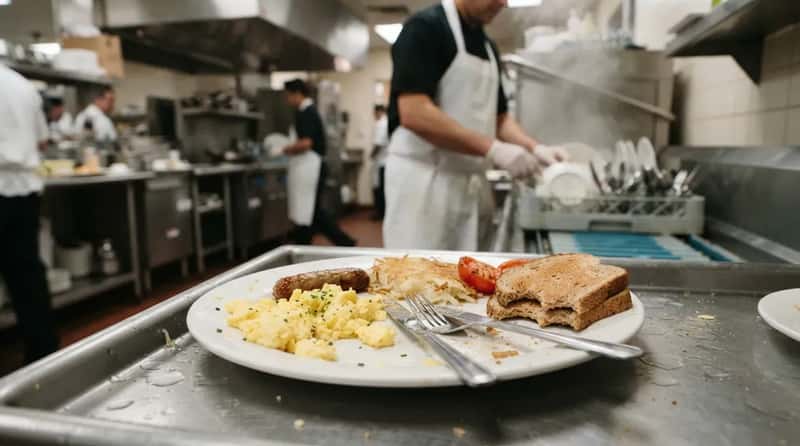
Ask a hotel chef what stings most at breakfast, and the loaded plate that comes back half full tops the list. Anthony DiGregorio, executive chef at the JW Marriott Reston Station, says it bothers him when people fill their plate and eat only half. He doesn’t want his team’s hard work going in the trash.
He has also pointed out that if the food is eggs, the chickens behind them lived a life that shouldn’t be for nothing. To the people who prepared it, wasted food feels personal. Most guests never see that side of the pass, where the scraping happens.
But the numbers behind that frustration are even harder to ignore, starting with #14…
#14 – Buffets Quietly Create Double the Waste of Ordering Off a Menu
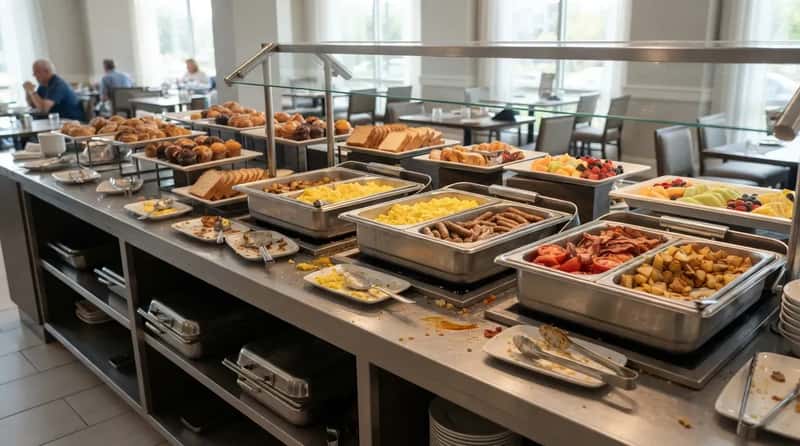
The buffet itself, not just the guests, is part of the problem. Breakfast buffets generate more than double the waste of à la carte meals, at roughly 300 grams per person compared with 130 grams. That’s the hidden price of an open spread.
Menu orders are cooked for one specific person. Buffet trays have to look full for the last guest in line, which means some food will never be eaten. That tension is built into the format, and chefs live with it every morning.
And the plate you pick up may be working against you, as #13 shows…
#13 – The Big Plate Trick That Makes You Take (and Toss) More
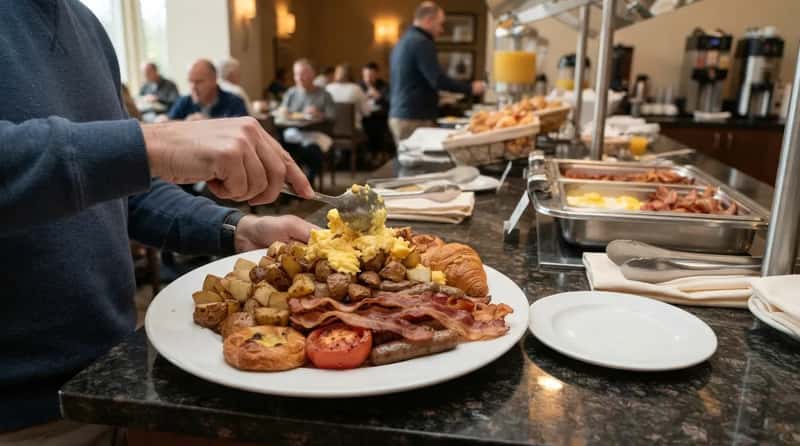
Plate size changes what lands on it. People reportedly eat 45% more and waste 135% more food when given a large plate instead of a small one. Notice that waste jumps far more than eating does.
This is why some hotels have switched to smaller plates. Chefs aren’t trying to be stingy. They’ve watched huge plates turn a sensible first round into a pile that nobody finishes.
There’s also a belief behind the overloading that researchers have now named, in #12…
#12 – The “Get Your Money’s Worth” Mindset Has an Actual Name
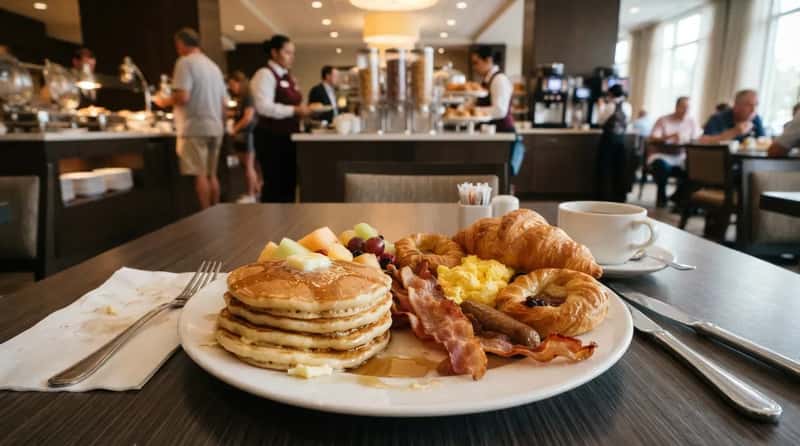
A 2025 study in the International Journal of Hospitality Management interviewed hotel managers and chefs about breakfast buffet waste. Hotel staff identified guest behavior as the primary cause. The researchers coined the term “pay riders” for guests who try to squeeze the most value from what they paid by loading up. They also described a “fear of loss,” the nagging worry that the good stuff will run out.
Here’s the contrarian take. Most travelers see piling on as smart value, but many kitchen staff see a mistake with a visible consequence. In many cases breakfast is already folded into your room rate or ticket price, so extra pancakes you don’t eat don’t lower your bill. They just fill a bin.
Yet that nearly empty tray you resent has a good reason behind it, as #11 explains…
#11 – That Half-Empty Tray of Bacon Isn’t Neglect
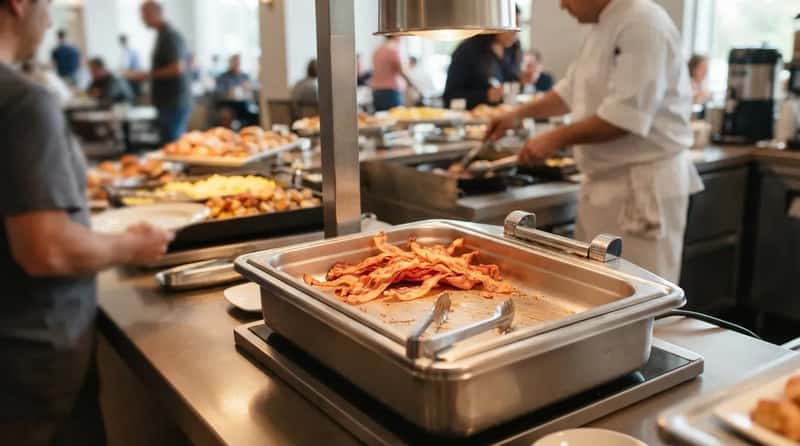
Guests often assume a low tray means a sloppy kitchen. Often it’s the opposite. Hotels are adopting live stations and batch cooking so they can align food output with real demand instead of hypothetical full capacity.
Smaller batches mean fresher food. A tray that has sat under a heat lamp for an hour doesn’t taste like one that just left the kitchen. Chefs would rather refill often than let a full tray go stale for the sake of appearances.
Quick Compare
- Small, frequent refills: hotter food and better texture, though the tray may look low for a few minutes.
- One giant tray all morning: looks abundant, but the food sits longer and dries out.
- Live stations: cooked when you ask, so very little is left over.
Then there’s the temperature rule that explains a lot, in #10…
#10 – Your Scrambled Eggs Are on a Strict Temperature Clock
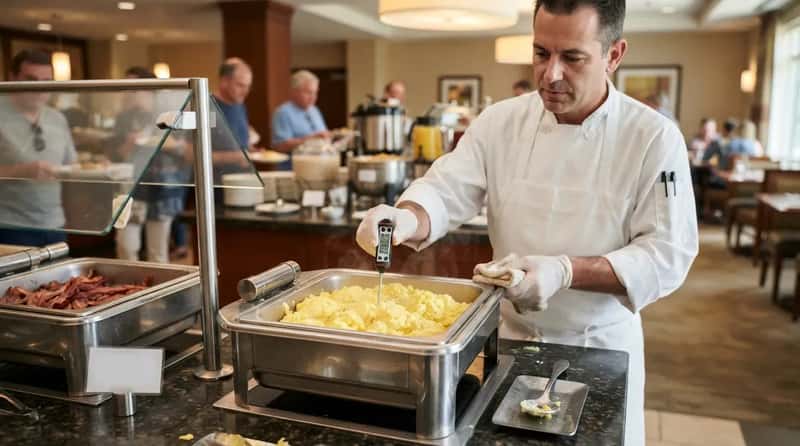
Breakfast is full of foods that bacteria love. Under the FDA’s Food Code, hot foods are generally held at 135°F or above, and cold foods at 41°F or below. Scrambled eggs, sausage and yogurt all fall under those rules. Kitchens check temperatures on a schedule, not on a hunch.
That’s why a chef may pull a tray that looks perfectly fine to you. The visual isn’t the test. The thermometer is, and the timing matters more than the appearance.
And those same rules drive one of the most jarring sights at any breakfast, in #9…
#9 – Why Perfectly Good-Looking Food Still Ends Up in the Bin
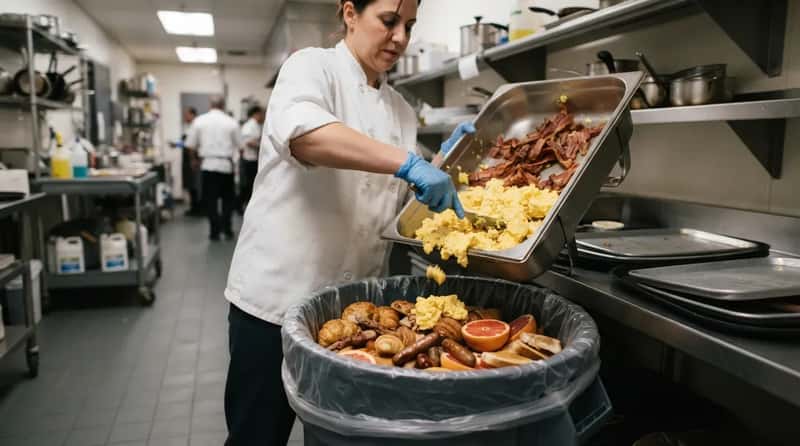
Breakfast cleanup can shock guests who happen to see it. One journalist in Tenerife watched staff shovel food from platters into outdoor bins, and most of it looked fresh and untouched. It feels wrong to watch.
Hotel sustainability leaders point to regulation. Lourdes Ripoll de Oleza of Meliá Hotels International says food safety legislation imposes strict guidelines on hotels. Once buffet food has been out on display, kitchens often can’t take the risk of serving it again. That’s why chefs would much rather prevent surplus than deal with it afterward.
But one guest habit can spoil a whole tray in seconds, as #8 reveals…
#8 – One Personal Fork Can Contaminate a Whole Tray
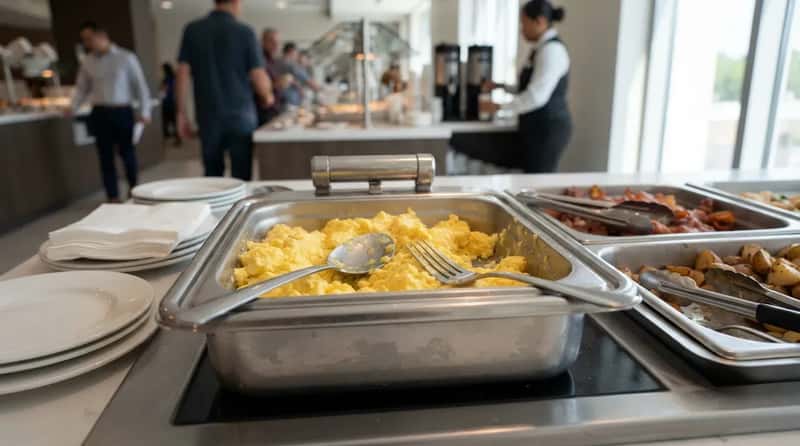
The rule is simple and constantly broken. Never use your own utensils to take food from shared trays. It sounds like an overreaction until you picture a tray that dozens of people will reach into.
Chefs also ask guests to leave serving spoons where they belong. Moving one from tray to tray spreads allergens and bacteria between dishes that were never meant to touch. The guest who does it usually has no idea. The next person in line pays the price.
Fast Facts
- Use the tongs or spoon that came with the tray, never your own fork.
- Return each serving utensil to the dish it belongs to.
- Grab a clean plate for round two.
- Touch only what you plan to take.
That brings us to a question chefs would love to hear more often, in #7…
#7 – The Allergy Question Chefs Actually Want You to Ask
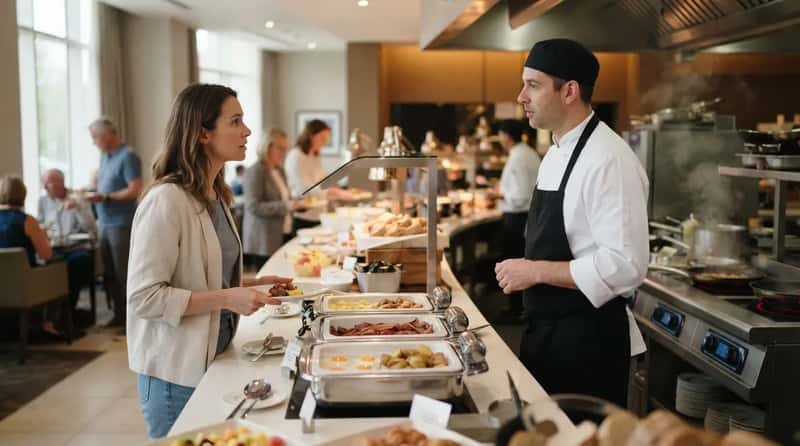
Many guests hesitate to bother the kitchen about food allergies. Chefs say that’s backwards. In the U.S., nine foods are legally recognized as major allergens, including sesame, which was added in 2023. Breakfast hits several of them at once: eggs, milk, wheat, tree nuts.
Buffets are tricky because of cross-contact. A muffin crumb in the fruit or a shared spoon can undo careful labeling. A chef can tell you what’s in a dish and how it was made, but only if you ask.
Speaking of the egg station, the real story behind that line is in #6…
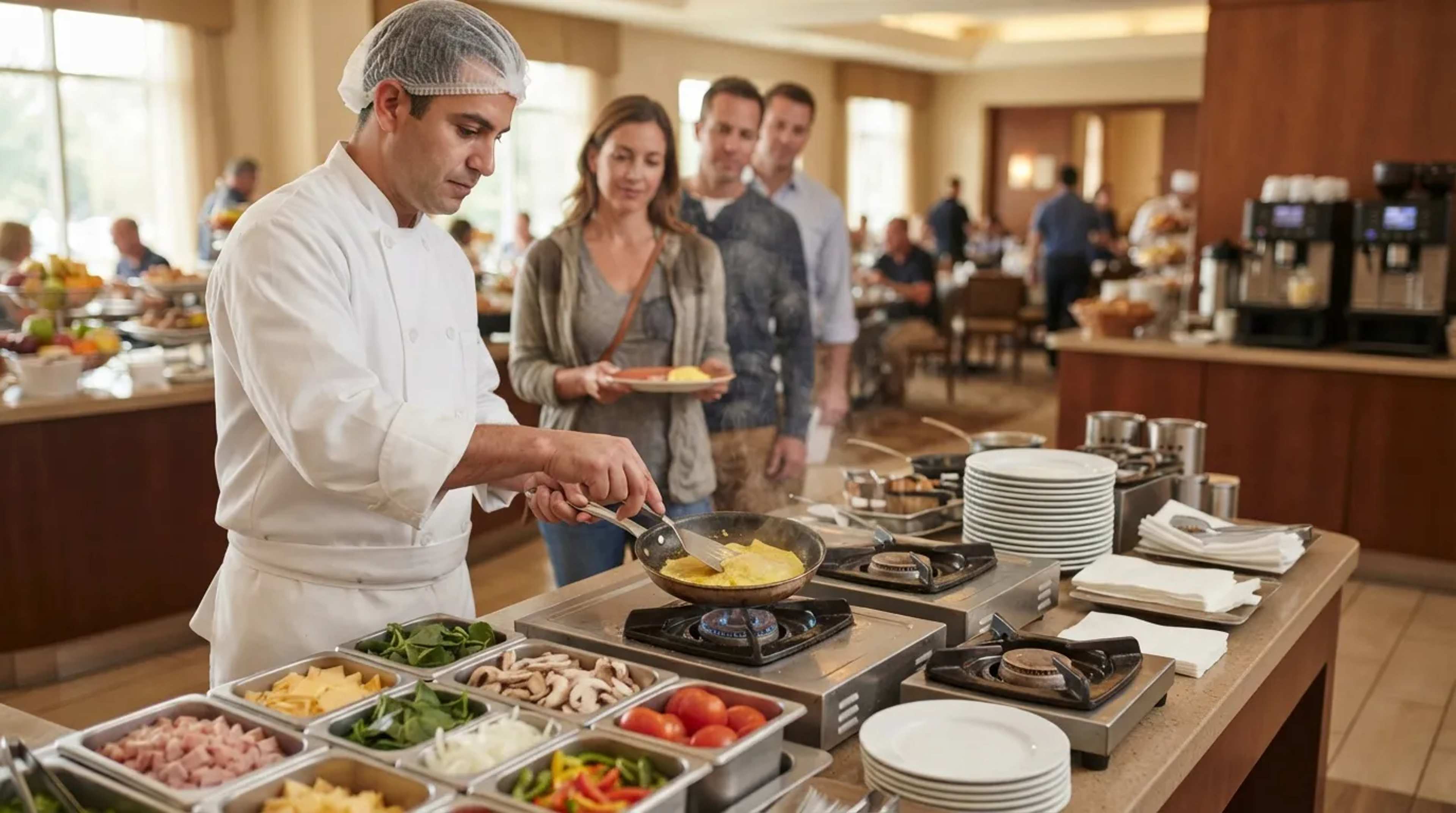
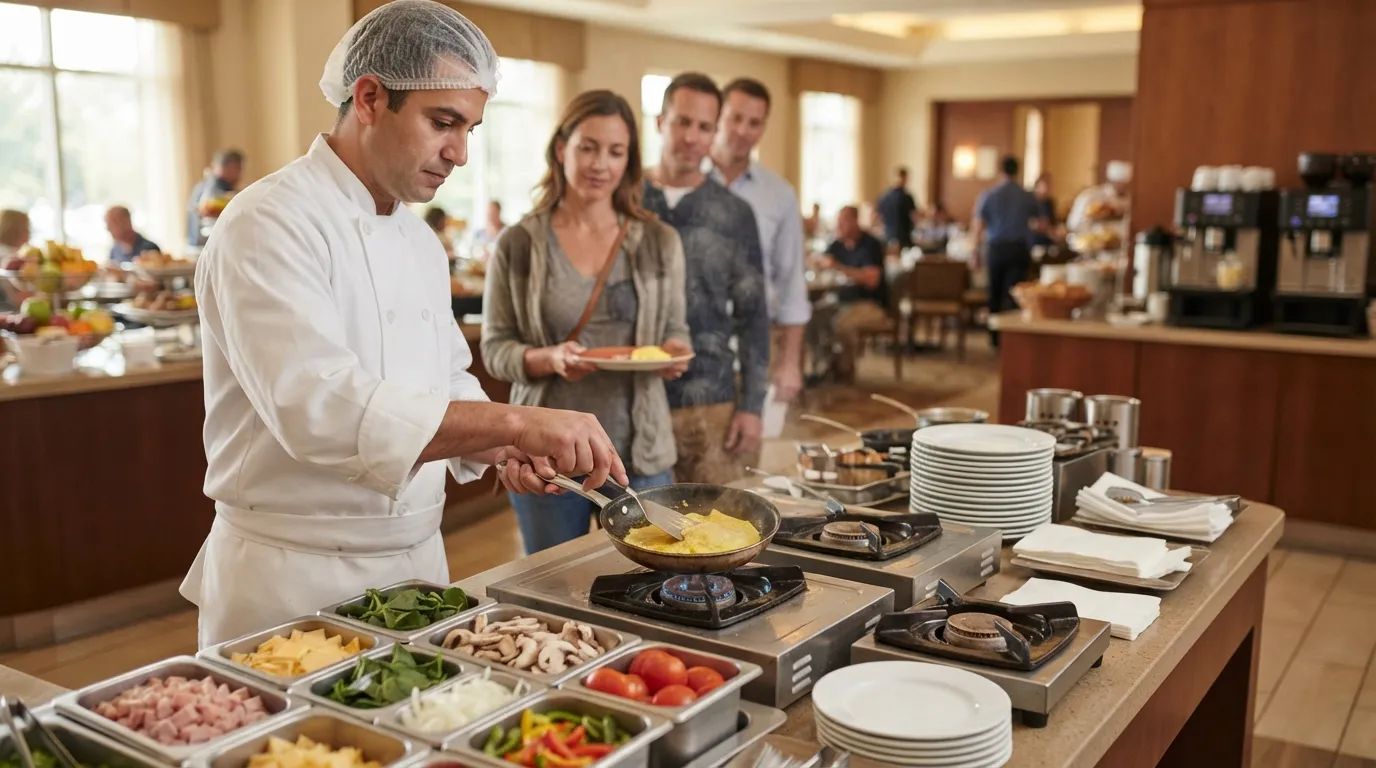
#6 – The Slow Omelet Line Is Actually the Smartest Station in the Room
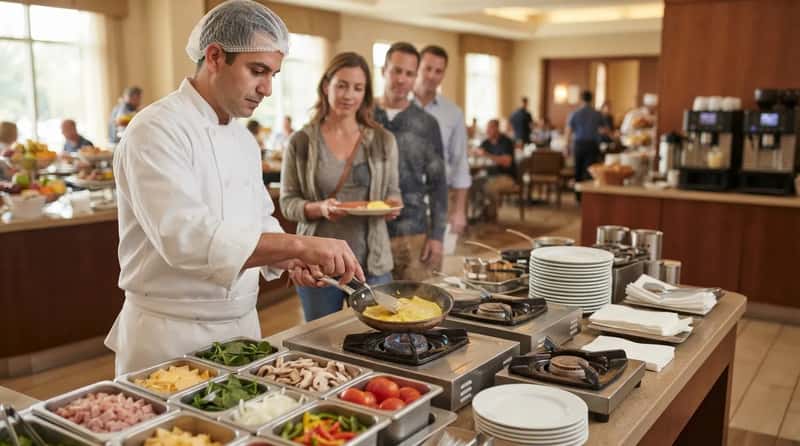
Guests love to grumble about the wait for made-to-order eggs. Chefs hear it daily. Here’s the twist: omelet, noodle and pancake counters align food output with real demand. Food is cooked for the person in front of you, not for a crowd that may never show up.
That wait is the price of fresh food with little waste. Cooking one pan at a time is slower than scooping from a tray, but the result is hotter and fresher. Many chefs would argue a ten-minute line beats a tray of dry eggs.
Why It Stands Out
- Your order is cooked for you, not for a crowd.
- Eggs go from pan to plate while they’re still hot.
- You can tweak it: fillings, how done, what stays out.
- Little is left over, so far less ends up in the bin.
But a bigger spread isn’t always what you think it is, as #5 shows…
#5 – A 60-Item Spread Isn’t the Luxury Sign You Think It Is
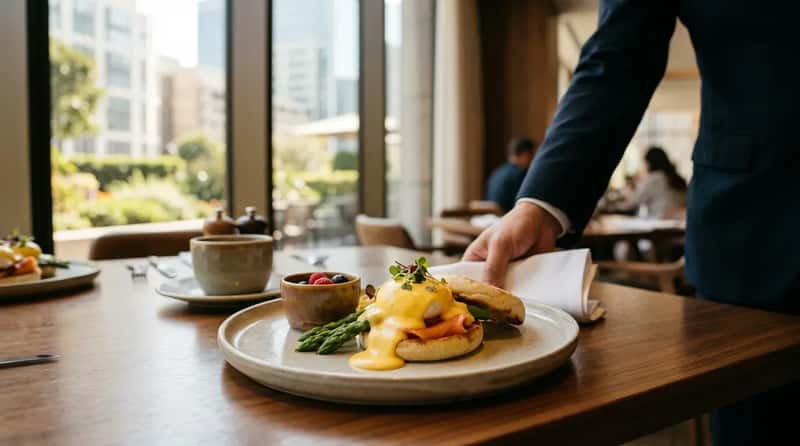
Most travelers treat a huge buffet as proof of a great hotel. Some chefs now argue it signals the opposite. Researcher Kelly Haws says buffets often lead to overconsumption through the “variety effect,” where more choices prompt guests to take, and waste, more.
Chef Pichaya “Pam” Soontornyanakij notes that luxury in hospitality is shifting from abundance toward quality and sustainability. Some hotels are moving away from buffets altogether, favoring chef-crafted menus and personalized dining experiences. The new status symbol is a plate that was made for you.
And hotels have found surprisingly small tricks that work, starting with #4…
#4 – Smaller Pastries Aren’t a Cost-Cutting Trick
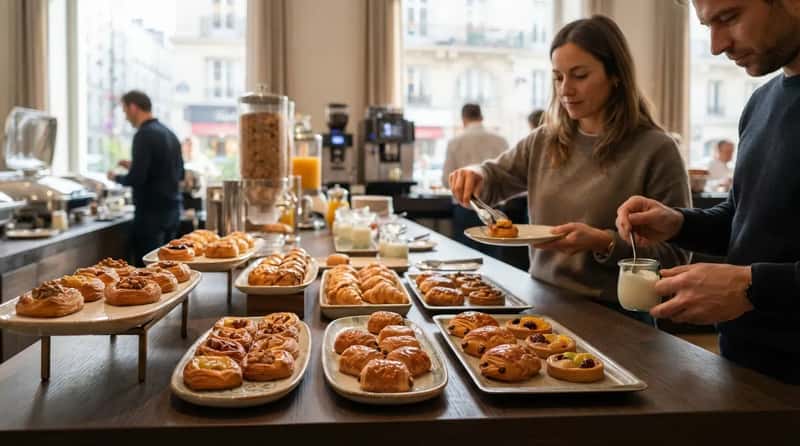
When pastries shrink or yogurt arrives in a little jar, guests assume the hotel is saving money. Chefs say there’s another reason. Scandic Hotels in Northern Europe reduced the size of its pastries so guests take smaller portions and come back for seconds.
It’s a common strategy. Ibis uses smaller plates, and Hilton Frankfurt offers yogurt and fruit in individual containers. Novotel Bangkok Sukhumvit puts up signs near the buffet reminding guests to take only what they can eat. The goal is less waste without hurting guest satisfaction.
But the real surprise is how closely kitchens are watching what you leave behind, in #3…
#3 – Cameras Over the Bin Know Exactly What You Left Behind
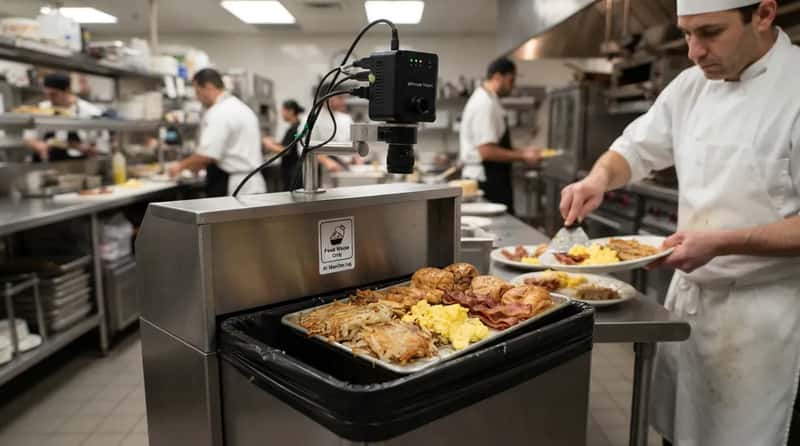
Chefs don’t guess what gets tossed anymore. Winnow and Leanpath pair smart scales with AI-powered food recognition cameras mounted above waste bins. These systems track what is thrown away by dish and prep station, showing chefs where they overproduce, usually the buffet.
Marriott has rolled out such tools across 53 hotels in the UK, Ireland and the Nordics. So that mountain of untouched hash browns isn’t invisible. It becomes data, and tomorrow’s tray gets smaller because of it.
So where does unserved food go once it’s out of the dining room? That’s #2…
#2 – Some Leftover Breakfasts Get a Second Life
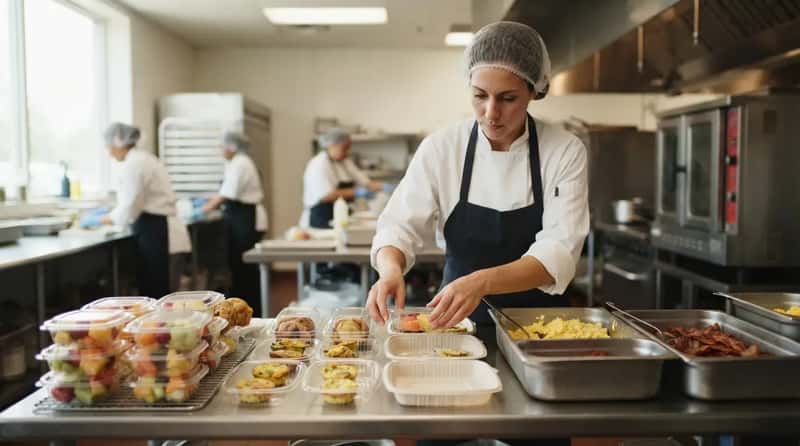
Not all surplus is trashed. Hilton combines monitoring with surplus-redistribution platforms, so leftover breakfasts can be safely repackaged and sold rather than discarded. It’s a quiet change guests rarely notice.
Practices vary by hotel, city and local food rules, so not every property can do this. But chefs say the goal is the same everywhere: cook closer to demand, and find a use for what’s left over. Waste prevention begins long before the bin.
But the biggest truth chefs want you to know is the one behind everything else, in #1…
#1 – Breakfast Is the Meal Your Whole Stay Gets Judged On
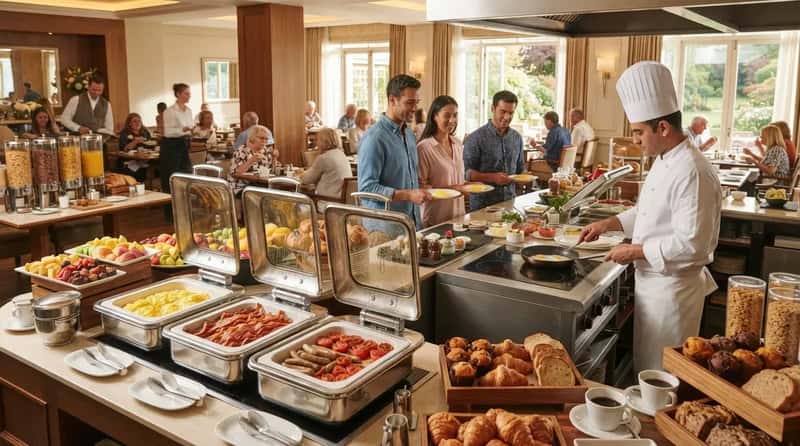
Chefs know something guests rarely say aloud. For many travelers, breakfast is the one meal everybody sees, and it can shape how they remember a whole stay. AFAR has argued that breakfast is the place to start when judging what makes a luxury hotel great.
The people running it are working to get that moment right, and your habits are part of it. Take what you’ll eat, ask when you’re unsure, and give the egg line a little patience. A kitchen that sees guests doing that has far less to throw away.
At a Glance
- Start with a smaller first round, then go back for more.
- Eat seconds while they’re still hot.
- Mention allergies before you fill a plate.
- Give the made-to-order line a few extra minutes.
So the next time you stand in front of a gleaming tray, remember the crew who timed it, checked it and cooked it for you at dawn. The best breakfast move is the simplest one: take a little, enjoy it hot, and go back for more.