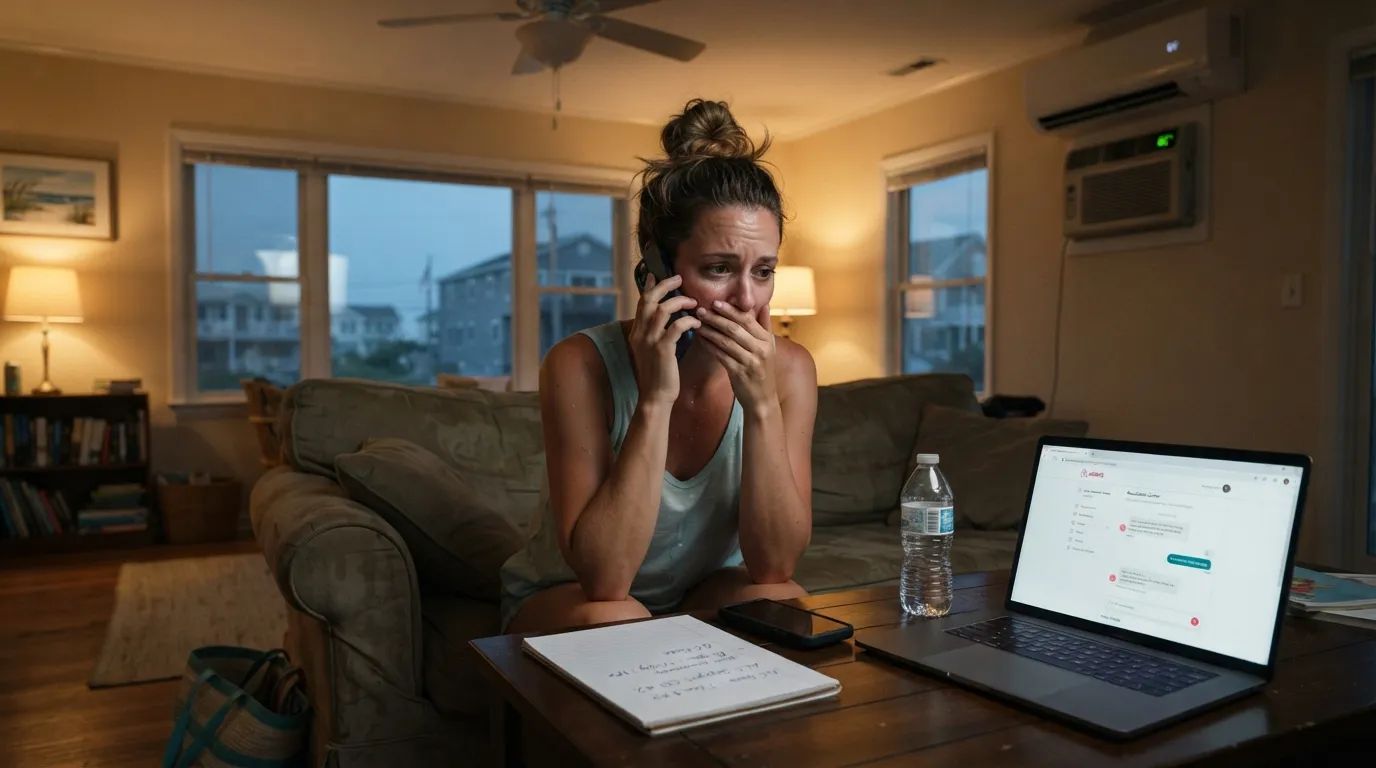
You picture the listing photos before you even land: the sun-drenched kitchen, the “two-minute walk to the beach,” the five-star average glowing like a promise. Then you check in, and the walk is closer to twenty minutes, the cleaning fee is bigger than your flight, and there’s a checkout chore list waiting for you like a second job.
That doesn’t mean vacation rentals are a scam. It means most people are booking them like hotels, and getting blindsided by rules the industry never puts in bold print.
Seasoned renters who’ve been burned once know exactly what to check before they ever hit “book.” First-timers find out the hard way, one surprise at a time.
Here’s everything the insiders already know – starting with the number on the listing page that isn’t the real number at all.
15. The Nightly Rate Is Almost Never the Real Price

The number that catches your eye on a vacation rental listing is almost always the lowest possible version of what you’ll actually pay.
Platform service fees from Airbnb or Vrbo typically take 6 to 12 percent of the subtotal. On a $3,000 rental, that’s over $300 in fees before you spend a single night there.
In some cases, the cleaning fee alone can exceed the nightly rate. What looked like an affordable stay quietly turns into something else entirely.
The fix is simple: sort your search results by total price, not nightly rate, so you’re comparing apples to apples from the start.
But the service fee is just the opener. Wait until you see what the cleaning charge does to a short trip.
14. Cleaning Fees Hit Hardest on Short Trips

A two-night getaway can be financially dismantled by a single line in the fee breakdown: the cleaning charge.
A $350 cleaning fee guts a two-night budget in a way it never would on a week-long stay. The fee covers the same property turnover, deep clean, fresh linens, and restocked essentials either way – it simply doesn’t shrink to match your calendar.
Some hosts charge less if guests handle basic tasks like taking out the trash or starting the laundry, so it’s worth reading the listing details carefully before you assume the worst.
If you’re only staying a night or two, message the host first to confirm exactly what the fee covers. It can save you from a nasty surprise at checkout.
That’s the fee you can see. There’s a whole other category of charges you might not spot until after you’ve already pressed “book.”
13. Extra Guest Charges Are Buried in the Fine Print

Most listings quote prices based on a base number of guests – often just two – and then quietly charge extra for every additional person.
Exceed the standard guest count and you may be charged per person, per night. This is especially common in resort-style condos where fees are tied directly to amenity access.
A family of six booking a property listed for four guests could easily face two or three extra nightly charges they never saw coming. Across a week-long trip, that adds up fast.
Most pet-friendly rentals also charge a non-refundable fee per pet. If you’re bringing the dog, don’t assume “pet-friendly” means free.
But fees are only part of the puzzle. What’s missing from the property can cost you just as much.
12. The “Convenience Gap” Is Real

Hotels stock the basics – soap, shampoo, coffee, toilet paper – because their whole business model depends on it. Vacation rentals have no such obligation.
Some hosts keep nightly prices low by offering the bare minimum in supplies. Insiders have a name for it: the “convenience gap.”
You arrive expecting a full kitchen. Instead you find one teabag, a nearly empty dish soap bottle, and enough toilet paper for one guest for one day.
Reading recent guest reviews is the most reliable way to tell whether a host stays genuinely stocked or leaves people scrambling to the grocery store on day one.
And if you think the damage deposit is just a formality, there’s something important you need to understand about how it actually works.
11. A Damage Waiver and a Security Deposit Are Not the Same Thing
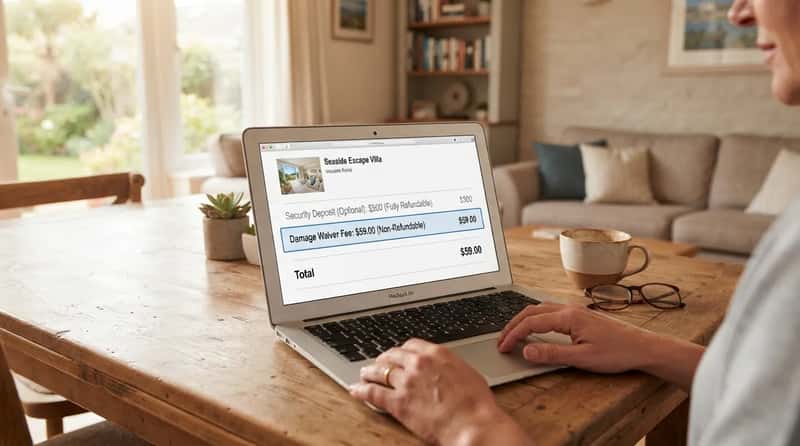
Guests often see a “damage waiver” on their checkout summary and assume it functions like a refundable deposit. That assumption can be costly.
A damage waiver is a small, non-refundable fee paid in lieu of a security deposit. It releases the guest from liability for most accidental damage up to a set limit.
What it doesn’t cover: theft of a guest’s personal property, or damage caused by breaking house rules – sneaking in a pet or smoking in a non-smoking rental, for instance.
Unlike a deposit, the waiver fee is non-refundable no matter what happens. Guests pay it in exchange for peace of mind, not a refund.
Now let’s talk about something most travelers skip right past – the house rules document that could get you removed mid-vacation.
10. House Rules Are a Legal Agreement, Not a Suggestion

Most guests click past the house rules section the same way they skip terms and conditions on a software update. That’s a serious mistake.
Rental contracts typically outline occupancy limits, noise restrictions, parking rules, and prohibited activities. Violating any of them can mean immediate removal – without a refund.
Quiet hours starting at 10 p.m., strict no-party clauses, bans on extra overnight guests: these rules are enforceable, and some hosts now use smart noise monitors that alert them the moment decibel levels cross a threshold.
More often than dramatic theft, hosts deal with excessive noise, unauthorized gatherings, and blocked driveways – the kind of complaints that spiral into problems with neighbors, HOAs, or local governments.
The rules inside the house are one thing. But regulations outside – at the city level – can affect your stay in ways nobody warns you about.
9. Local Laws Can Cancel Your Booking Before You Even Arrive
Fast Facts
- NYC’s Local Law 18 took effect in 2023 and sharply cut short-term rental listings citywide.
- Some cities require verified host registration before a platform will even process a booking.
- Unregistered listings can be delisted at any time, canceling active reservations along with them.
- Booking far in advance in a high-regulation market raises the odds of a mid-cycle cancellation.
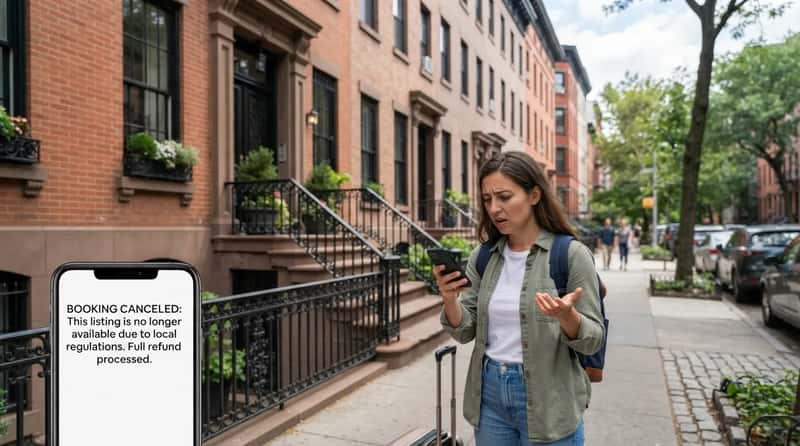
Short-term rental regulations have tightened significantly in cities across the U.S. and worldwide. A listing that’s legal today may not be legal by the time your trip rolls around.
In some cities, platforms like Airbnb, Booking.com, and Vrbo must verify host registration before processing bookings at all. Unregistered properties can be delisted at any time.
New York City’s Local Law 18, which took effect in 2023, is among the strictest short-term rental laws in the country and cut the number of available listings overnight. Other cities have followed with similar ordinances since.
If you’re booking months in advance in a high-regulation market, check whether the host is actually licensed. If they’re not, the platform may remove them – and your reservation goes with them.
But regulation isn’t the only cancellation risk. The host themselves can pull the plug too, sometimes right before your trip.
8. Host Cancellations Are More Common Than You Think

Unlike hotels, vacation rental hosts are individuals – and individuals have emergencies, sell properties, list on multiple platforms, and occasionally just change their minds.
One traveler booked a Vrbo property months in advance for a family reunion. The deal seemed “too good to be true,” and it was – an email later arrived saying the host was being de-platformed and the reservation was cancelled.
Platforms do offer rebooking help and some compensation when hosts cancel, but they can’t guarantee a comparable property at the same price, especially in peak season.
Booking with hosts who have a long track record of reviews and a verified “Superhost” or equivalent status significantly lowers – though never eliminates – the risk of a last-minute cancellation.
Cancellations are devastating. But there’s a subtler threat that costs just as many travelers money: the cancellation policy they agreed to but never actually read.
7. Cancellation Policies Vary Wildly and Refunds Are Never Guaranteed

Hotels typically let you cancel within 24–48 hours for a full refund. Vacation rental hosts operate on their own terms – and some of those terms are brutal.
A “strict” cancellation policy on Airbnb or Vrbo can mean zero refund if you cancel less than 30 days before check-in. Cancel two weeks out for a family emergency, and you may lose the entire payment.
Trip insurance add-ons can reimburse guests for sudden illness, a family emergency, or severe weather – and for hosts, it means fewer refund disputes and steadier income.
The lesson: read the cancellation policy before you book, not after. Seriously consider travel protection for any non-refundable reservation involving real money.
So you’ve made peace with the fees and the cancellation terms. Now consider what happens when you arrive and the property doesn’t match the photos.
6. Photos Are Professionally Staged – and Rarely the Full Picture
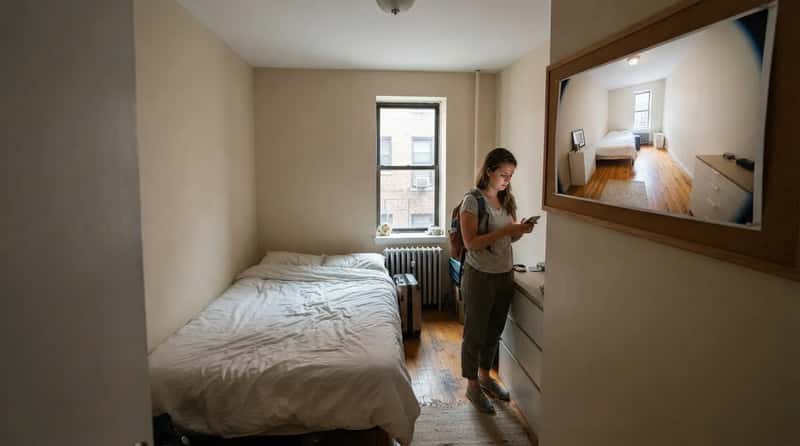
Wide-angle lenses, selective staging, and strategic lighting make almost any space look twice as large and three times as inviting as it actually is in person.
The warning signs are often published right on the listing page – buried in a caption, or hinted at in a review – but it’s easy to gloss over them, and that’s the mistake that costs you.
A “cozy” bedroom often means two adults will struggle to move around it. A “partial ocean view” might mean a sliver of water visible only from one corner of the balcony. These aren’t lies. They’re optimistic framings, and the photos are built to reinforce them.
The most reliable antidote is reading the most recent written reviews, not just the star rating. If multiple guests mention the same gap between the photos and reality, believe them, not the camera.
What happens if you get there and something is genuinely broken, missing, or wrong? The answer depends on something you probably haven’t thought about.
5. Customer Support Is Not a Guarantee – It’s a Process
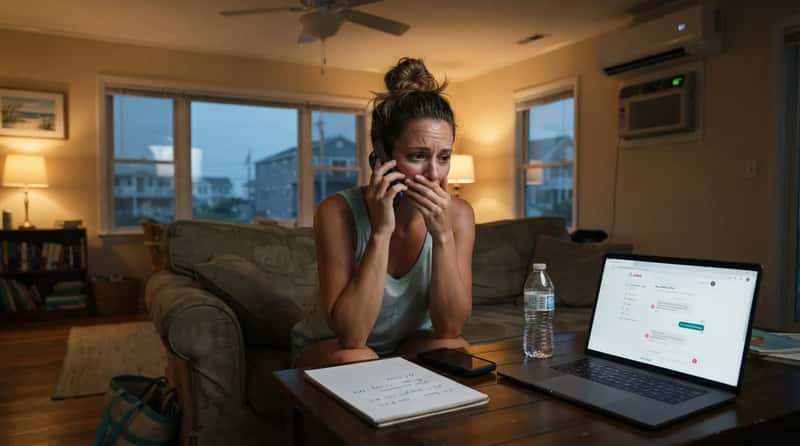
When something goes wrong at a hotel, there’s a front desk. At a vacation rental, there’s a contact number that may or may not get answered after business hours.
Platforms like Airbnb and Vrbo do provide customer service that can mediate issues and potentially offer alternatives or refunds – but it depends on the situation, and it takes time.
If the air conditioning fails on a Friday night in a beach town in August, waiting on a platform resolution can mean sweating through the whole weekend before anyone acts. Some hosts respond in minutes; others go silent for days. You don’t find out which kind you booked until a problem actually surfaces.
Before you book, check recent reviews specifically for how the host handled problems. A host who fixed an issue quickly and graciously is worth more than a slightly nicer property with a distracted owner.
Quick Compare
- Hotels: 24/7 front desk, an on-site fix often within minutes.
- Vacation rentals: a message or call to the host, with response times ranging from instant to days.
- Platform mediation: available as a backstop, but resolution can take hours or longer to arrange.
And while you’re managing expectations about support, there’s another thing that consistently catches guests off guard: what you’re expected to do when you leave.
4. Checkout Chores Are Often Extensive
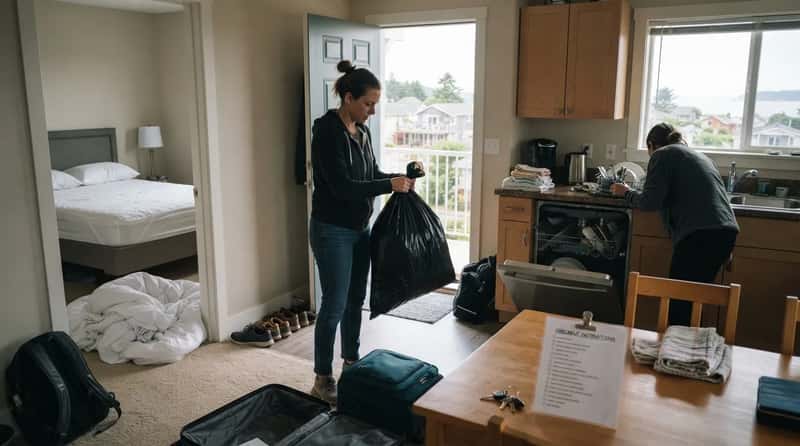
You paid a substantial cleaning fee. Logically, you’d expect the cleaning to be handled. In many rentals, you’re still expected to do a serious amount of work before you go.
Strip all the beds. Start the dishwasher. Take out every bag of trash. Put the furniture back where it was. Return all the towels. Some hosts hand you a checkout checklist that runs to a dozen items or more.
Standard cleaning fees rarely cover the full cost of rapid turnovers, mandatory consumables, and broader operating expenses – which is part of why hosts push some of that labor back onto guests.
This isn’t universal – some hosts ask for almost nothing at departure. But check the checkout instructions before you book, so you’re not blindsided by half an hour of chores the morning you’re trying to catch a flight.
All of that is frustrating. But the next point is the one that most dramatically changes how much you trust vacation rental listings going forward.
3. The Star Rating System Is Massively Inflated

A 4.7-star rating on a hotel would signal a very good property. On Airbnb or Vrbo, a 4.7 is often considered mediocre – and anything below 4.5 can be a genuine red flag.
The vacation rental review ecosystem suffers from grade inflation. Guests who had an acceptable stay often skip the review entirely. Guests who had a great stay almost always leave one – and because hosts and guests review each other mutually, there’s social pressure to leave positive feedback even when the stay was just fine.
Reviews are central to how listings attract bookings, which gives both hosts and platforms strong incentives to keep those averages high. That distorts what the numbers actually tell you.
The most useful data isn’t the star average at all – it’s the written content of the lowest reviews. Sort by lowest first, read what actually went wrong, and decide for yourself whether it would bother you.
That’s a system problem. The next one is personal – and it catches even experienced travelers off guard.
2. Scam Listings Are Sophisticated and Growing

Vacation rental fraud has moved well past the obvious “wire money to a foreign account” scam. Modern fraudulent listings are polished, convincing, and harder to catch than ever.
Travel security experts have been warning about scam listings for years, because even established platforms aren’t immune to fraudulent hosts slipping through verification.
Payments should always go through Airbnb or Vrbo directly, never through an outside link or method. Sophisticated scammers manufacture urgency or “special circumstances” to push guests off-platform, where all protection evaporates.
The warning signs are often sitting right there in the listing – in the reviews, the description, or the host’s response patterns – but most guests never look closely enough to catch them before hitting “book.”
All of that is worth knowing. But the single most important thing nobody tells you before your first booking changes the entire way you approach the experience.
1. You Have Far Less Protection Than You Think – Unless You Know How to Use It

Hotels operate under consumer protection frameworks built over decades. Vacation rentals are a different legal and operational category entirely, and when things go wrong, the path to resolution is far murkier.
Federal Trade Commission rules and various state regulations now mandate full price transparency, effectively banning hidden fees and deceptive pricing. Enforcement is inconsistent, though, and guests who don’t know their rights rarely exercise them.
The travel industry broadly has shifted toward advertising lower headline prices and layering ancillary fees on top of them. Vacation rentals are very much part of that ecosystem.
Worth Knowing
- Photograph every room at check-in, including any existing damage or mess, with a visible timestamp.
- Keep all host communication inside the platform’s messaging system, not personal text or email.
- Learn your platform’s official escalation path before you ever need it.
- Report problems the same day they happen – delayed complaints are harder to substantiate.
The guests who get the best outcomes aren’t the ones who never have problems. They’re the ones who document everything – photos at check-in, host messages through the platform so there’s a paper trail, and escalation through official channels instead of trying to resolve things informally.
Knowing that you have recourse, and exactly how to use it, is the single biggest advantage a vacation rental guest can have.
The Bottom Line

Vacation rentals offer space, privacy, and experiences hotels simply can’t match. They also come with a learning curve the platforms have little incentive to teach you.
The fees stack up faster than the nightly rate suggests. The photos are optimized, not accurate. The star ratings are inflated, the house rules are legally binding, and your protection as a guest depends almost entirely on how well you document your stay.
At a Glance
- Compare total price, not nightly rate, before you ever click book.
- Read the most recent written reviews, especially the low ones.
- Confirm the cancellation policy and the host’s registration status.
- Document check-in condition and keep every message on the platform.
Go in with your eyes open. Read the full fee breakdown, the cancellation policy, the recent written reviews, and the checkout instructions before you commit to anything.
The guests who do that almost always have a great time. The ones who skip it are the ones writing the warning reviews everyone else should have read first.