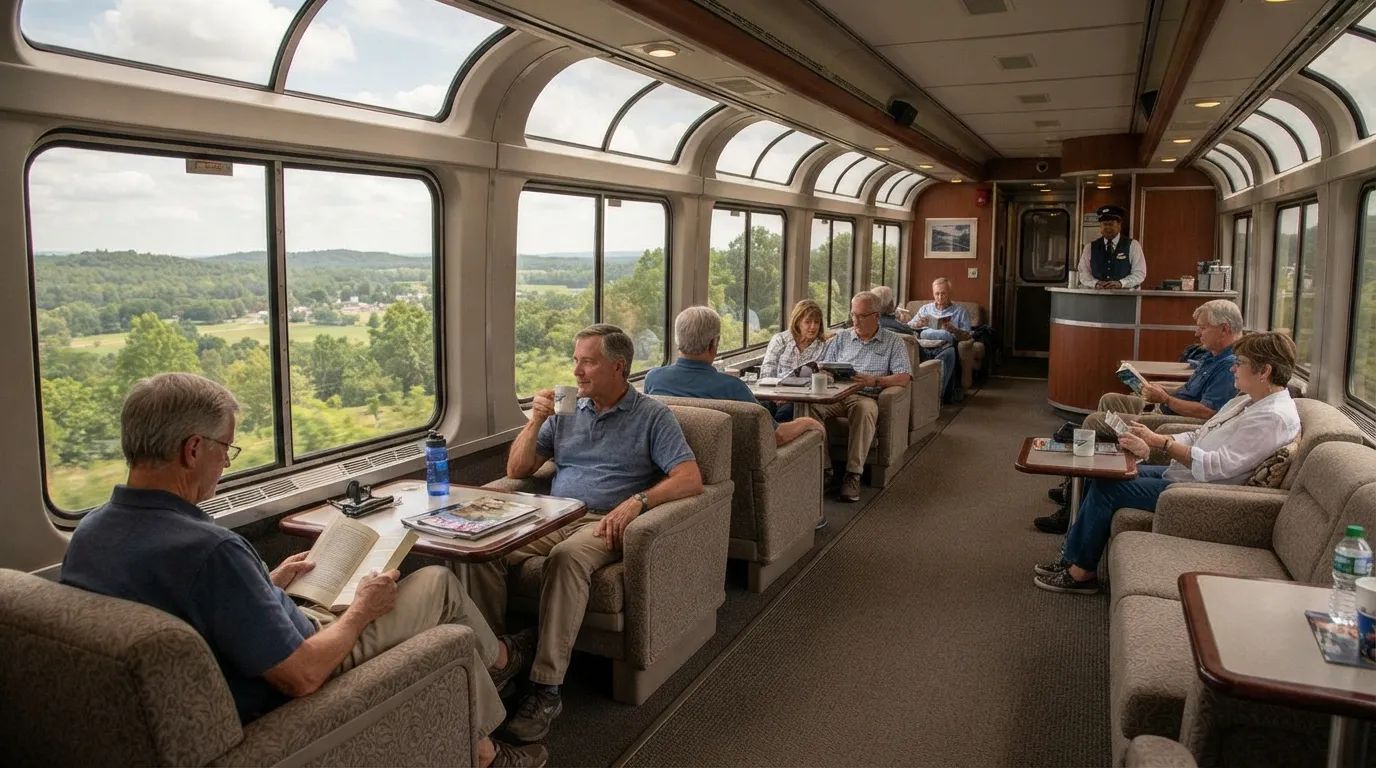
Most people picture an overnight train as a rolling restaurant with a sunset in the window. The crew’s view is different: a kitchen one floor below the diners, a stack of forms due before the train pulls in, and one tired attendant doing the work of three. Here’s what the people behind the plates actually see, based on Amtrak’s own pages, its service standards manual, and trade reporting from Trains magazine.
Some of it may change how you look at your next train meal. Some of it may annoy you. And one story near the end of this list explains why rail fans still get emotional about dining cars.
#15 – The Kitchen Is Downstairs, and Nobody Mentions It
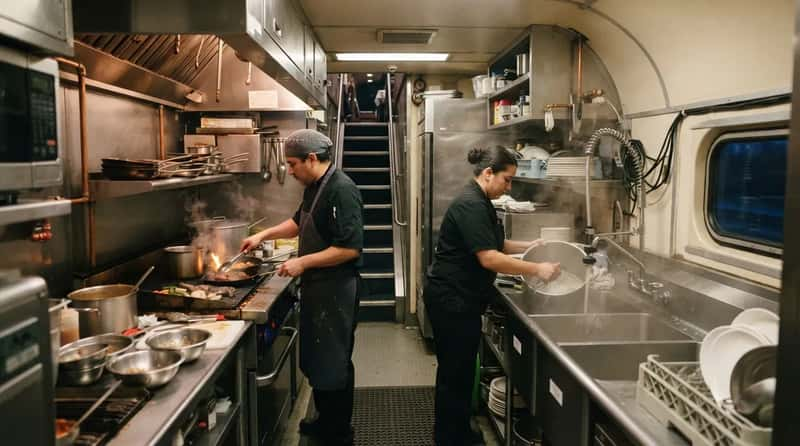
On the Superliner trains out West, the real work happens out of sight. Trains magazine reported from the Southwest Chief, where the chef and food specialist run the kitchen on the lower level of the dining car. Passengers eat upstairs and never see the grill.
The job is more than cooking. Amtrak’s posting says the chef helps load and unload food, handles cooking, plating, and prep, washes the pots and pans, and keeps the whole lower level clean. The person who plated your dinner is also the dishwasher.
#14 – The Crew Is a Cast of Roles Most Riders Never Learn
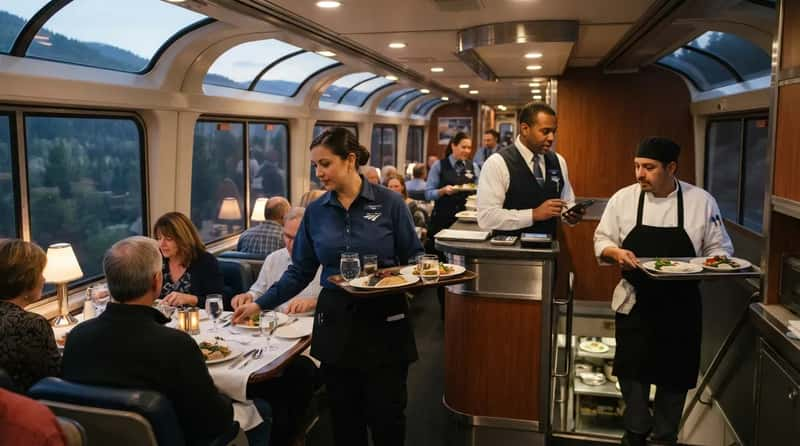
Passengers tend to see “the staff” as one big group. Amtrak’s service standards manual breaks it into clear jobs. It lists Chef, Food Specialist, Lead Service Attendant-Diner, Service Attendant, and Train Attendant Sleeping Car, among others, and each role has its own duties.
At a Glance
- Chef and Food Specialist: work the lower-level kitchen on Superliner trains.
- Service Attendant: carries food and drinks to dining car tables.
- Lead Service Attendant: holds the working fund for a lounge, café, or dining car.
- Train Attendant Sleeping Car: looks after the sleeper passengers.
The Service Attendant is the person who carries plates to tables. The manual says that role serves food and beverages to dining car passengers and is used mainly to supplement dining car staff. “Supplement” is the key word, because not every train has that extra pair of hands. You’ll see what that means a little later.
#13 – There’s a Cash Drawer and a Stack of Forms Behind Every Meal
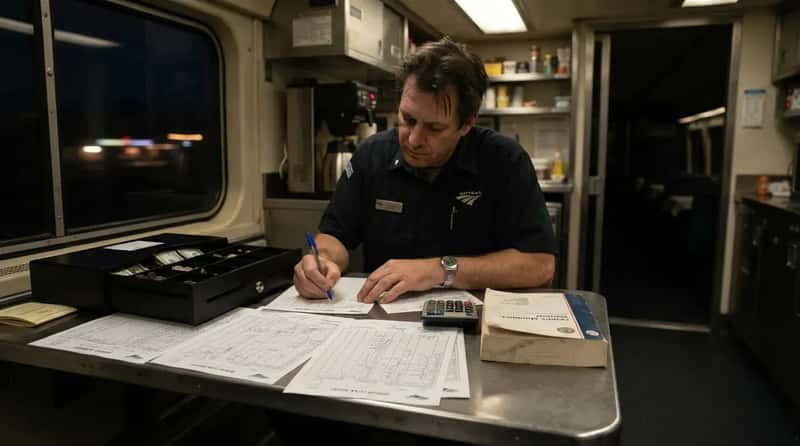
Food is only half the job. The service manual refers to a Dining Car Report and separate sales reports for the café/lounge car. Someone has to fill them out before the train gets in, usually after the last table has been cleared.
Money is handled too. The manual describes a working fund issued to the Lead Service Attendant assigned to a lounge, café, or dining car. Your dinner crew is part restaurant, part small business on wheels, and the paperwork doesn’t stop when the cooking does.
#12 – The Seating Plan Turns Strangers Into Dinner Companions
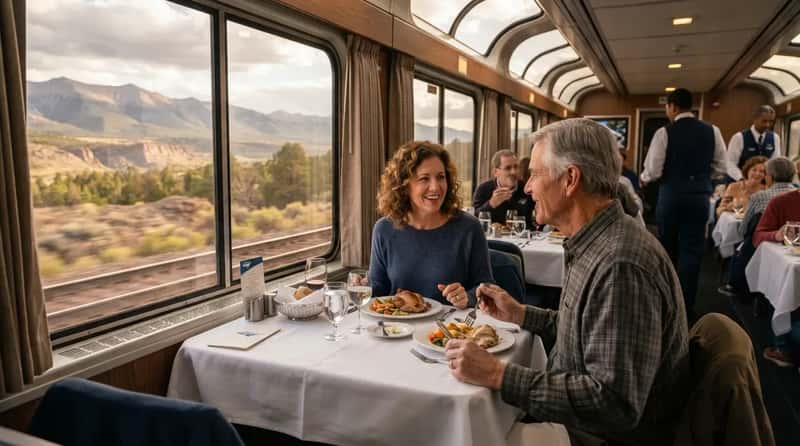
Traditional dining runs on shared tables. That means a sit-down meal in a full-service dining car, with a menu of entrées and communal seating. Crew members watch strangers go from silent nods to swapping life stories before the entrées arrive.
The seating isn’t random, either. Amtrak says customers on traditional-dining routes can make reservations for lunch and dinner. Behind the friendly chatter, the crew is managing a dining room schedule across several hours, and reservations are what keep a line from forming in the aisle.
#11 – The Café Car Goes Dark Just When Everyone Wants a Snack
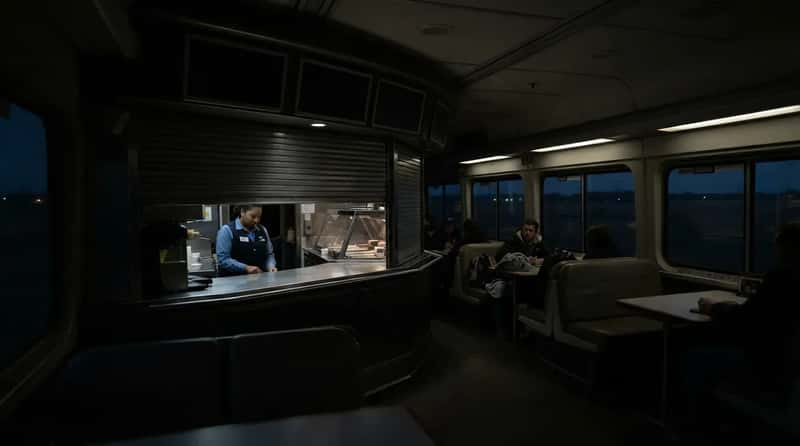
Plenty of passengers learn this the hard way. Amtrak’s long-distance trains have a café car open to everyone, but it closes overnight and during meal breaks. Crews hear the same hopeful question about it, usually around midnight.
The closing is not a mistake. The crew needs time to restock, count sales, and rest. The late-night hunger is real, though, and the crew is the one who has to say “we’re closed.” Experienced travelers pack their own snacks for exactly this reason.
#10 – Room Service Is Actually Part of the Ticket
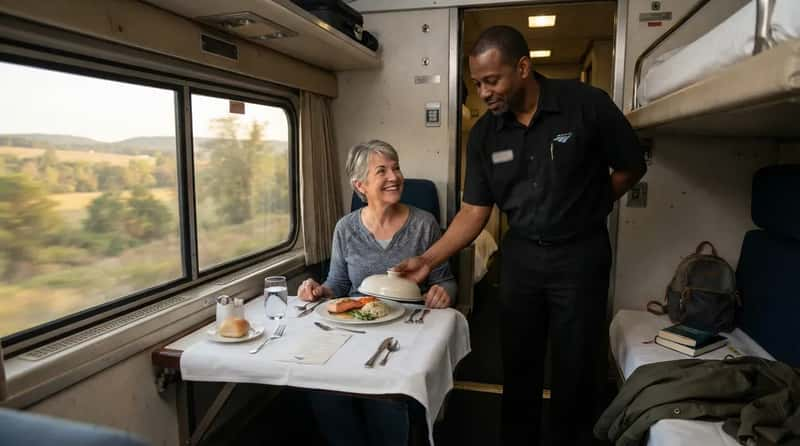
Some sleeper passengers never find this out. Amtrak lists complimentary room service as part of its Traditional Dining experience, so meals can be served in the dining car or delivered to the room. Crews see people eat a sandwich from their bag while a free dinner was an ask away.
On flexible dining routes, the attendant becomes the delivery person. Amtrak describes complimentary room service provided by the Sleeping Car attendant on those trains. That one person often covers beds, questions, and meals all at once.
#9 – Every Crew Base Was Trained on the Same Dishes
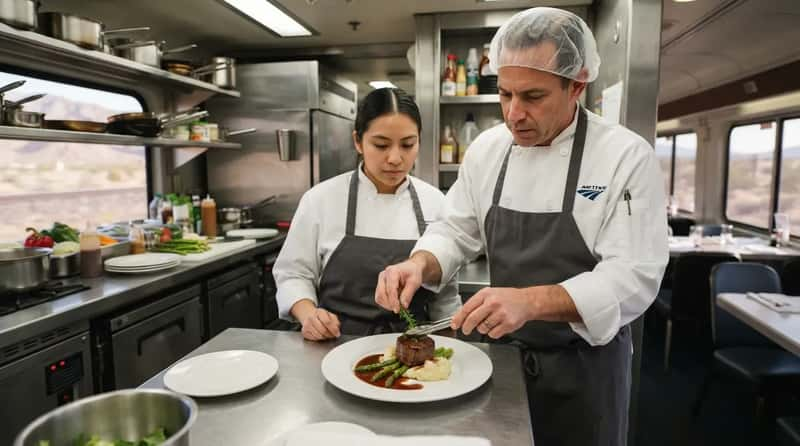
When Amtrak revived restaurant-style meals out West, it didn’t just hand crews a new menu. Trains magazine reported that Executive Chef David Gottlieb held training classes at every crew base, walking through each dish step by step. The goal was consistency on every train.
The change was big for the crews. Trains described freshly prepared breakfasts, lunches, and dinners replacing pre-packaged meals in a bowl. That’s the quiet reason a Chicago-to-Los Angeles dinner can feel closer to a restaurant than a tray. Not every route got the same treatment, as the next entries show.
#8 – The Train Splits in Spokane, and the Menu Changes With It
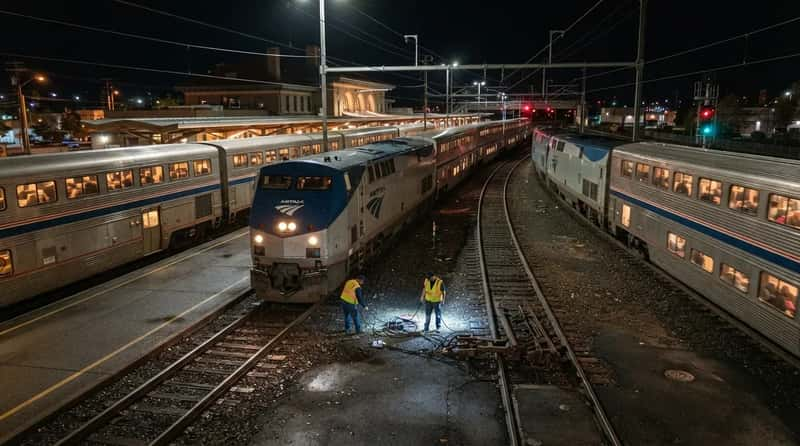
The Empire Builder has a nighttime twist. Its Portland and Seattle sections run separately for part of the trip. Amtrak says that between Spokane and Portland on Trains 27/28, hand-crafted dishes for dinner or continental breakfast replace Traditional Dining.
Crews have to plan around that split before the train moves. Passengers on the same railroad, even in the same sleeper, can end up with very different meals depending on which section they’re in. And that’s mild compared with the argument over the next entry.
#7 – Some “Dinners” Arrive Premade and Get Reheated
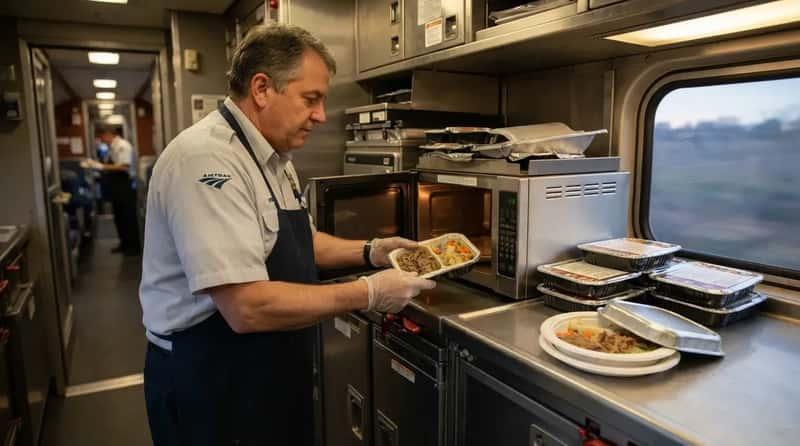
This is the part rail fans argue about most. Trains magazine describes flex meals as premade dishes that are reheated on board rather than prepared in the dining car. The crew’s job becomes heating, serving, and cleaning.
The hardware is simple. Wikipedia says flexible dining on the Silver Star consisted of pre-prepared meals heated in a convection oven or a microwave. Trains also noted that some trains, like the Cardinal, don’t run a diner at all. Many rail fans call this a downgrade for the price of a sleeper ticket, and plenty of passengers say it’s perfectly fine. The crew keeps the schedule either way.
Quick Compare
- Traditional Dining: a chef-prepared three-course dinner with table service, and the first alcoholic drink at dinner is on the house.
- Flexible Dining: premade dishes reheated on board, with no changes to ingredients.
- Crew workload: cooking and plating on one side, heating and serving on the other.
#6 – Allergy Requests Hit a Hard Wall
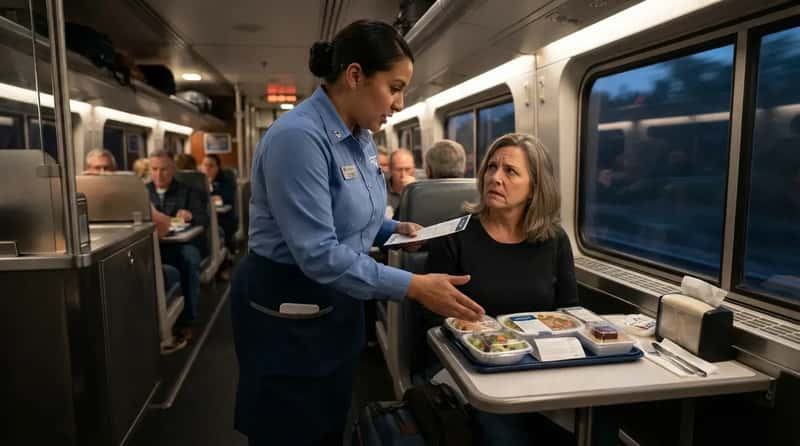
Premade means limited. One travel guide says the crew cannot change the ingredients or remove allergens from Flexible Dining meals. That puts the attendant in a painful spot when a passenger asks for exactly that.
Special meals have their own rules. Tasting Table reported that vegan meals on flexible dining routes were first-come, first-served, and that kosher meals needed advance notice, including 72 hours for an overnight route. Rules like these change, so Amtrak’s current policy and the attendant’s answer on the night matter more than any old blog post.
#5 – One Attendant Can Be the Whole Dining Crew
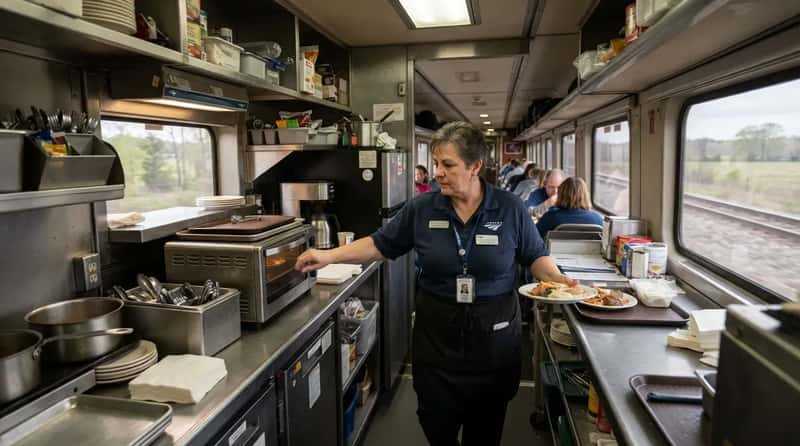
Here’s what crews would love you to know. Trains magazine reported that the City of New Orleans has a lone dining car attendant who heats food, delivers meals, and cleans tables, with no one assisting. That is a lot of jobs for one person.
The same Trains analysis drew a bigger conclusion. It said the universal lack of servers dramatically slows dining car throughput for both flex and traditional dining. In other words, the bottleneck isn’t the cooking, it’s the number of people available to carry the food.
#4 – On Some Trains, the Dining Car Is Just a Lounge for Sleeper Guests
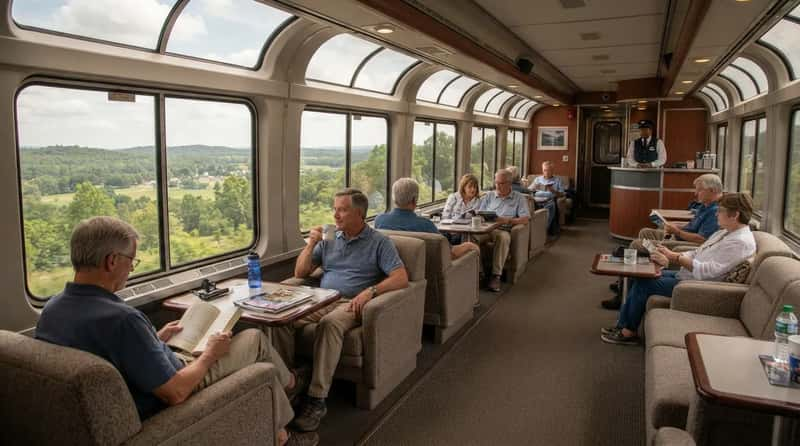
Walk through a train and you may find a dining car with no dinner in it. Wikipedia says the Crescent’s traditional dining was replaced with a reduced Flexible Dining menu starting October 1, 2019, and its dining car now serves as a lounge for sleeping car passengers only.
Coach passengers feel the difference. Trains notes that on trains with flex dining, the dining cars are only for sleeping-car passengers. The same railroad can offer a white-tablecloth dinner on one route and a lounge-only car on another. The crew works within whichever model the train uses, and the policies keep shifting.
Worth Knowing
- The Crescent’s traditional dining gave way to a reduced flex menu on October 1, 2019.
- On flex-dining trains, the dining car is for sleeping-car passengers only.
- Some trains, like the Cardinal, run no diner at all.
- The rules vary by route, so the same ticket type can mean very different evenings.
#3 – The Free Drink With Dinner Arrived Right Alongside the Cuts
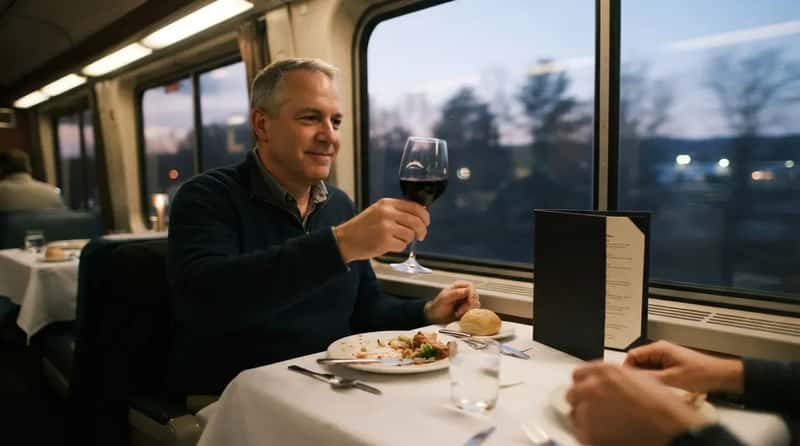
It’s one of the few perks that stayed popular. Amtrak says Traditional Dining includes the first alcoholic drink at dinner on the house. Passengers often treat it like a small toast to the trip.
That means the perk showed up beside a menu many fans dislike. The same guide calls it a welcome system-wide addition that began with the introduction of Flex Dining. A cut and a perk arrived together, and crews have been serving both ever since.
#2 – A Chef Can Grill a Flatiron Steak While the Plains Roll By
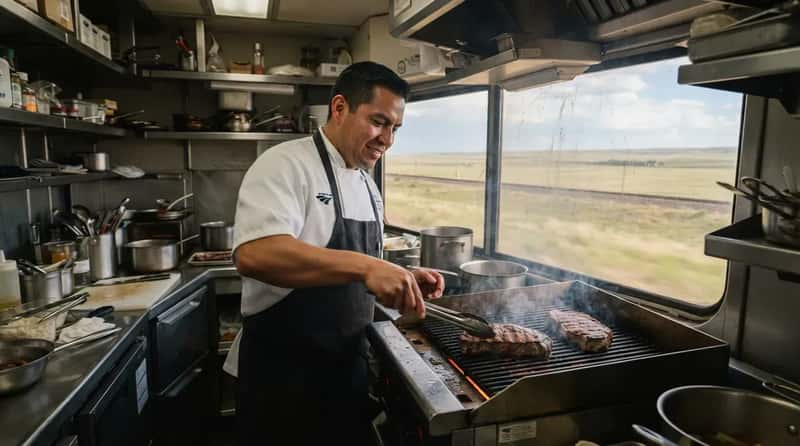
This is the scene crews are proud of. Trains magazine photographed Chef Frank Villasenor grilling a flatiron steak in the Southwest Chief’s lower-level kitchen on a July departure from Chicago. The cooking is real, and it happens in motion.
He was also candid about the change. The chef said he was “really surprised” by the new menu. Amtrak says Traditional Dining includes a chef-prepared three-course dinner with table service. For crews on those routes, that is the point of the whole job. But the best story on this list is about a dining car that disappeared.
#1 – The Silver Star’s Dining Car Vanished, Then Came Back
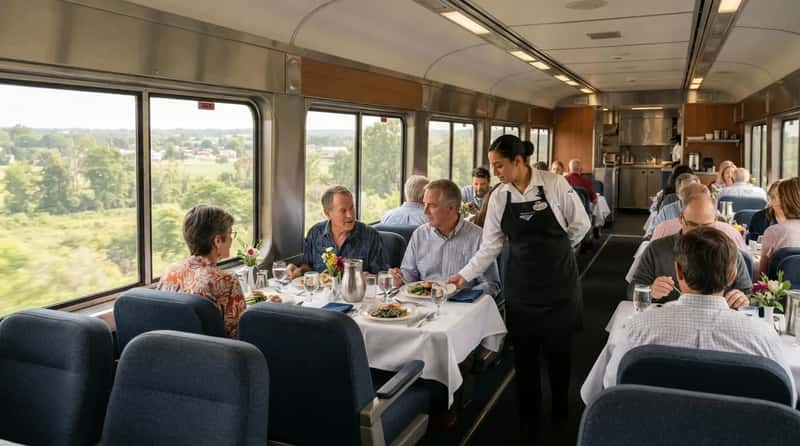
Few stories show what’s at stake better. On July 1, 2015, Amtrak removed the Silver Star’s dining car entirely, a controversial decision. Crews and regulars watched a classic service disappear from the train.
Then it returned, in stages. The dining car came back on May 1, 2020, with flexible dining. Traditional dining was formally launched on the Silver Star on June 24, 2023, and dining car access expanded to coach passengers on March 4, 2024.
Wikipedia lists the Silver Star’s last service as November 9, 2024, and the Floridian’s first service as November 10, 2024. By February 2026, Trains was photographing lunch served to coach and sleeping car passengers on the Floridian. The name changed, but a dining car that was once cut away is serving meals again.
Fast Facts
- July 1, 2015: the Silver Star’s dining car is removed.
- May 1, 2020: the dining car returns with flexible dining.
- June 24, 2023: traditional dining launches on the Silver Star.
- March 4, 2024: dining car access expands to coach passengers.
- November 10, 2024: the Floridian makes its first run, one day after the Silver Star’s last.
An overnight train meal depends on a small crew, a tight kitchen, a lot of paperwork, and rules that change by route. One railroad can run chef-cooked steaks on one train and reheated meals on another, and staffing often sets the pace more than the stove does.
So which dining car would you fight to keep: the white-tablecloth dinner with strangers, or the quiet flex meal in your room?