
Most travelers think the first ten minutes at a new destination are for flopping down, catching a breath, and scrolling Instagram. Seasoned travelers know better – those ten minutes are the most strategically important part of the entire trip.
The habits you lock in the moment you arrive quietly decide whether your stay runs like clockwork or unravels into a string of avoidable disasters. Here’s what travel insiders actually do – and why you’ve probably been getting it wrong.
#15 – They Have Their Documents Ready Before They Even Reach the Counter
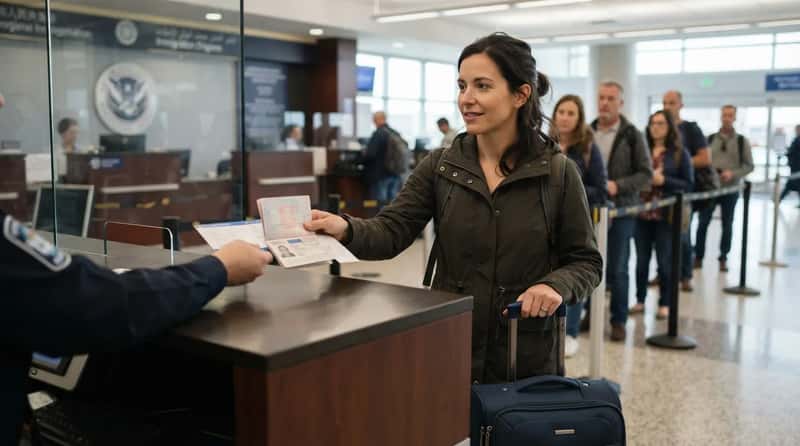
Rookies dig. Veterans don’t.
Seasoned guests treat the front desk line like a countdown, not a surprise. Their ID and card are already out before they reach the counter.
Guests who dig through an overstuffed wallet send a different signal. It’s tiny, but it’s the first data point staff quietly log.
This applies just as much at immigration and customs. Experienced travellers know their passport number by heart, so filling out arrival cards at 5am under bad light never slows them down.
But that’s nothing compared to what we found about #14…
#14 – They Verify Their Onward Connection Immediately
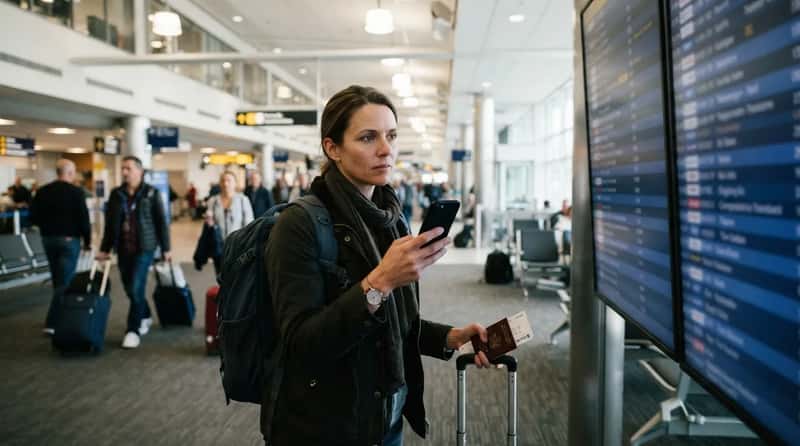
The moment the wheels touch down, veterans aren’t resting – they’re working.
A rookie finds the next gate and sits down. A seasoned traveler checks that the onward flight is on time, confirms the gate hasn’t changed, and checks in if they haven’t already.
Airlines overbook flights, gates shift without warning, and passengers get bumped for confirming last. That five-minute check costs nothing and prevents real damage.
Experienced travelers treat those first minutes after landing as intelligence-gathering, not a rest break.
But that’s nothing compared to what we found about #13…
#13 – They Screenshot the Room Number the Second They Get the Key
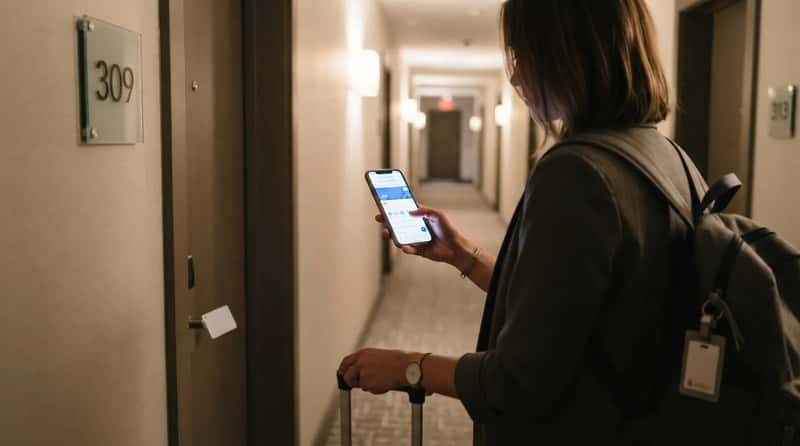
This one sounds almost embarrassingly simple. It isn’t.
Seasoned travelers save the room number and hotel address to their lock screen the second they get their key. Long hallways and jet-lag brain make it shockingly easy to forget which door is yours.
It also protects you if you get separated from a travel companion or need to give directions to a delivery driver. It takes three seconds – most people never do it once.
But that’s nothing compared to what we found about #12…
#12 – They Test the Door Locks Before Unpacking a Single Thing
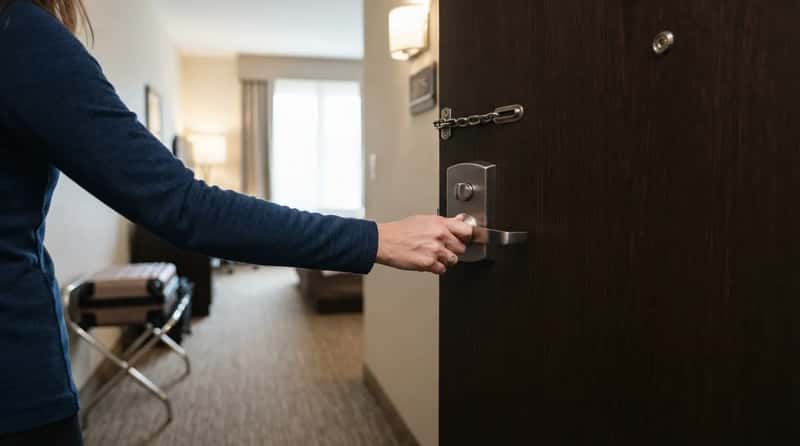
Not paranoia. Protocol.
The first thing a seasoned traveler does in any hotel room is check that the door locks properly – the deadbolt, the chain, whether the door closes on its own.
A broken lock is a real security issue, better discovered now than at midnight. Experienced travelers also check connecting doors to neighboring rooms and make sure they’re locked from both sides.
Fast Facts
- Check the deadbolt and security chain before anything else – they’re the first line of defense.
- Confirm the door closes and latches on its own, without help.
- Test any connecting doors to neighboring rooms from both sides.
- Check the peephole works before it gets dark outside.
The whole check takes under sixty seconds. Most guests skip it entirely – and only find the problem when it matters most.
But that’s nothing compared to what we found about #11…
#11 – They Note the Nearest Fire Exit Before They Do Anything Else
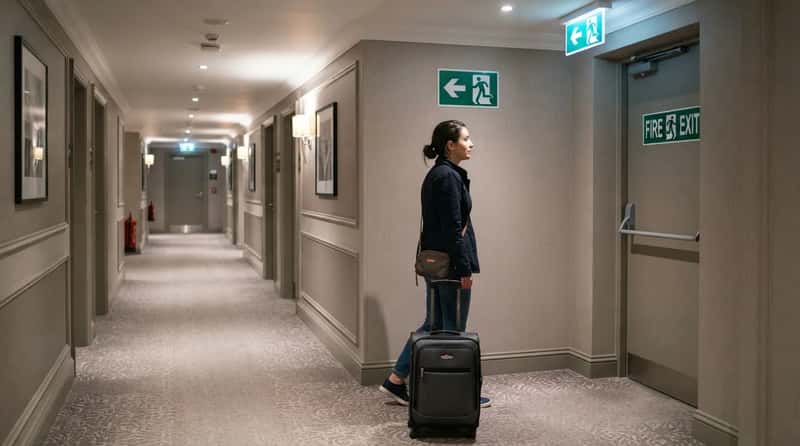
Nobody talks about this one – and that’s exactly the problem.
Seasoned guests note where the nearest fire exit is, even if they never expect to use it. Hotel layouts are unfamiliar territory, and disorientation is dangerous in an emergency.
Fire safety guidance flags this exact issue: guests rarely know a building well enough to find an exit under pressure. Seasoned travelers also check that exits aren’t blocked, and report it immediately if they are.
It takes thirty seconds to walk the corridor. It could one day be the thirty seconds that matters most.
But that’s nothing compared to what we found about #10…
#10 – They Call Ahead to Confirm the Booking Before They Even Walk In

Most travelers assume their reservation is fine. Seasoned travelers never assume.
Before heading to the hotel, they call to confirm dates, room type, and guest count. It prevents the most common arrival disaster: showing up to a room that doesn’t match what was booked.
At the desk, mentioning an early flight or a preference for a quiet floor – rather than mid-stay – gives staff time to actually act on it. The guests who communicate first get served best.
But that’s nothing compared to what we found about #9…
#9 – They Do a Full Room Photo Sweep Before Touching Anything

Experienced travelers walk in, drop nothing, and reach for their phone – camera first.
They photograph the walls, furniture, and carpet within the first few minutes. It protects them from being charged for damage they didn’t cause.
It takes ninety seconds and has saved countless travelers from bogus fees at checkout. Most people only discover those charges weeks later, buried on a credit card statement.
But that’s nothing compared to what we found about #8…
#8 – They Wipe Down the Five High-Touch Surfaces Immediately

A clean-looking room and a clean room are two very different things.
Cautious travelers wipe down the remote control, light switches, door handles, telephone, and bedside table. Housekeeping often rushes past exactly these spots.
The bathroom gets a quick check too – hair in the tub, water spots, whether the towels smell laundered or musty. It’s the clearest window into how a property is actually run behind the scenes.
But that’s nothing compared to what we found about #7…
#7 – They Report Issues Immediately, Not at Checkout

This is where most travelers quietly lose money and comfort – they wait.
Rather than waiting until bedtime, seasoned travelers call down almost immediately after settling in. Hotels are far more responsive early in a stay, while maintenance staff are still on shift.
Worth Knowing
- Dead outlets and burnt-out bulbs are easiest to fix in the first hour, not the last.
- Maintenance and housekeeping staff are more available earlier in a stay.
- A calm call now almost always beats a frustrated one at midnight.
- Early requests read as helpful feedback; late ones can read as complaints.
This solves problems before they start – the missing amenity, the dead outlet, the wrinkled shirt before a morning meeting. The window to fix things closes fast, and veterans act inside the first ten minutes.
But that’s nothing compared to what we found about #6…
#6 – They Set Up a Personal Charging and Essentials Station Right Away
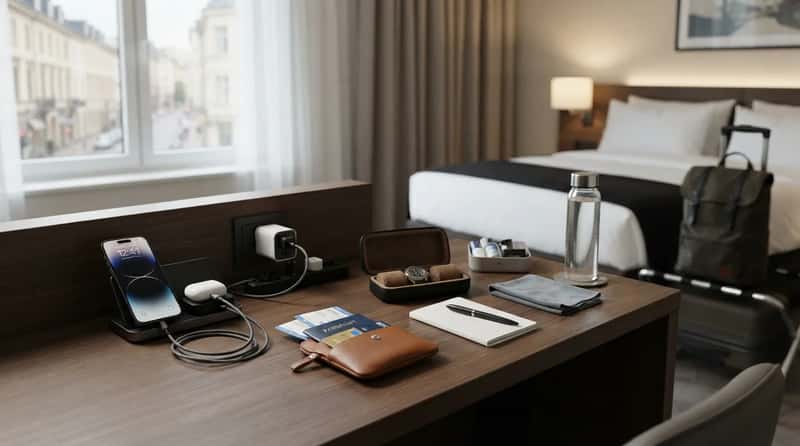
Disorganization on the road is a slow drain on your energy and time.
The moment a seasoned traveler settles in, they build little stations for everything – charger, documents, clean clothes. Wait until later and you never do it at all.
Skip this step and you’re digging through your suitcase every morning, hunting for a charger that’s mysteriously vanished. Five minutes of setup saves hours of frustration over the whole trip.
But that’s nothing compared to what we found about #5…
#5 – They Test Their Payment Cards the Moment They Land

On arrival, seasoned travelers buy something small right away – a coffee, a bottle of water, anything – just to see if the card works.
A blocked card in a foreign country at 11pm is not a minor inconvenience – it’s a crisis. Banks flag international charges as suspicious without warning, even after you’ve notified them.
They apply the same logic to paperwork, scanning passports, insurance, and documents to the cloud. Verify the backup works before you actually need it.
But that’s nothing compared to what we found about #4…
#4 – They Walk Outside to Reset Their Body Clock

Most travelers arrive and immediately retreat indoors. That’s exactly the wrong move.
Experienced travelers walk in natural light on arrival to reset their circadian rhythm. Light is the strongest signal your brain uses to recalibrate to a new time zone.
At a Glance
- Humidity in airplane cabins is usually less than 20 percent, leaving most travelers dehydrated on arrival.
- Homes are typically kept between 30 and 50 percent humidity for comparison – a big gap to recover from.
- Intentional light exposure can help facilitate circadian adaptation to the destination time zone.
- Skipping caffeine in favor of daylight and water speeds up the reset.
They also hydrate aggressively, knowing cabin air leaves them running a serious deficit before they even land. Light and water together are the cheapest jet lag fix that actually works.
Most people reach for coffee instead – and wonder why they feel broken for three days.
But that’s nothing compared to what we found about #3…
#3 – They Tell Someone Their Exact Whereabouts

This is the habit veterans never skip, no matter how experienced they become.
Seasoned travelers send their itinerary to someone they trust before they even leave the airport. A quick message with the hotel name, address, and check-in confirmation takes under a minute.
They also photocopy their passport, insurance, and emergency contacts, storing copies separately from the originals. It makes a police report or an emergency replacement far easier if something goes wrong.
The travelers who get into serious trouble are almost always the ones nobody knew how to find. Don’t be that traveler.
But that’s nothing compared to what we found about #2…
#2 – They Communicate Their Schedule to the Front Desk Upfront

Communication early in the stay changes everything that follows. Staff control how smoothly the rest of the trip goes – and seasoned travelers act accordingly.
Mentioning an early flight or a preference for a quiet floor at check-in, instead of mid-stay, gives staff time to actually act on it. It’s the fastest way to shift from “standard guest” to “guest we want to look after.”
Front desk staff control room allocation, upgrades, late checkouts, and quiet corridors. The traveler who speaks up first moves to the front of that queue, every single time.
But that’s nothing compared to what we found about #1…
#1 – They Get Their Bearings Physically, Not Just on a Screen
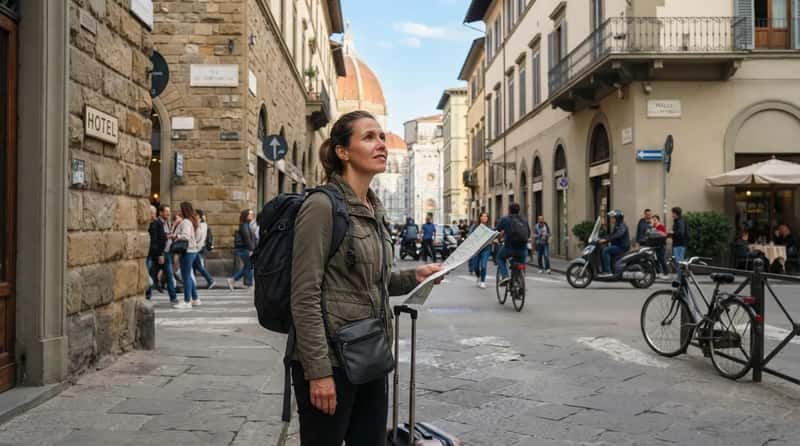
Here it is. The habit that separates tourists from true travelers – and it has nothing to do with apps.
The smartest move on arrival is a slow lap of the area – walking, biking, or riding public transport just to see where it goes. Ask a local which direction is north and let the city introduce itself.
Why It Stands Out
- It costs nothing and takes under ten minutes.
- It builds a mental map that no app can replicate.
- It turns a strange city into a familiar one almost instantly.
- It’s the one habit nearly every seasoned traveler shares.
Most first-day mistakes happen because travelers go straight from the hotel to a pre-planned attraction without ever orienting themselves. They spend the rest of the trip slightly lost, slightly stressed, and slightly missing the point.
The veterans step outside, walk a few blocks, and find the corner café. That’s the whole move – and almost nobody does it.
The Bottom Line

Ten minutes. That’s all it takes to separate a trip that runs smoothly from one that quietly falls apart.
Seasoned travelers know the stay starts the second they step out of the cab. What happens next quietly decides whether the trip goes smoothly or turns into a mess of surprise charges, bad sleep, and wasted time.
None of these habits require elite status, a bigger budget, or decades of stamps in a passport. They just require doing them deliberately, in order, every single time.
Lock the door. Walk in natural light. Tell someone where you are. Talk to the front desk like a human – the rest follows.
Which one of these do you already do – and which one are you adding to your routine? Drop it in the comments.