

Most people picture a cruise ship captain as the smiling face at the welcome cocktail party – someone who steers a very large boat and looks good doing it. That picture is almost insultingly wrong.
A captain commands what is effectively a floating city, carrying legal, moral, and operational responsibility for thousands of lives at once. Ask one what actually keeps them awake at night, off the record, and you get a very different list than the one printed in the safety brochure – and it starts with something most passengers dismiss in under thirty seconds.
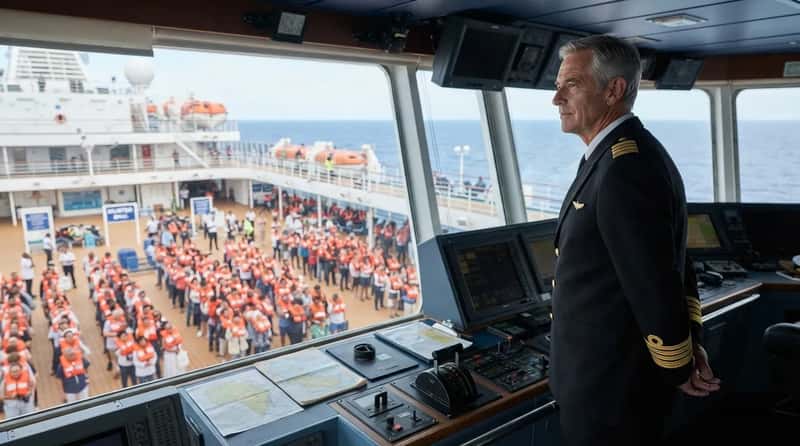
#15 – The Muster Drill Is Not Optional Entertainment
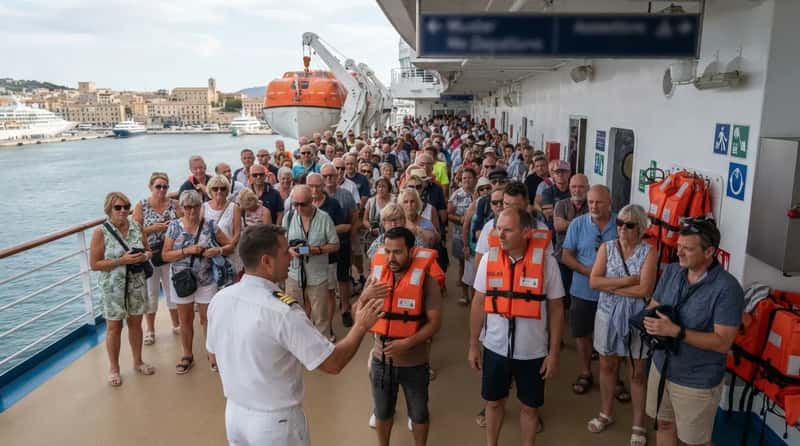
Most passengers treat the muster drill like the in-flight safety video – something to half-watch while scrolling a phone.
It’s mandatory for a reason. It teaches your station, your life jacket, and what each alarm means, and skipping the details is riskier than most people realize.
Every cruise ship runs this safety demonstration so passengers know exactly what to do in an emergency – lifeboat locations, proper life-vest use, and evacuation routes, all in one short session.
Some lines take attendance now to make sure everyone actually shows up. If an emergency happened and half the ship had skipped the drill, the result wouldn’t be confusion – it would be chaos.
That’s nothing compared to what’s next. Slide #14 covers a habit that puts passengers in real physical danger without them realizing it.
#14 – Going on Deck in Rough Weather Can Kill You
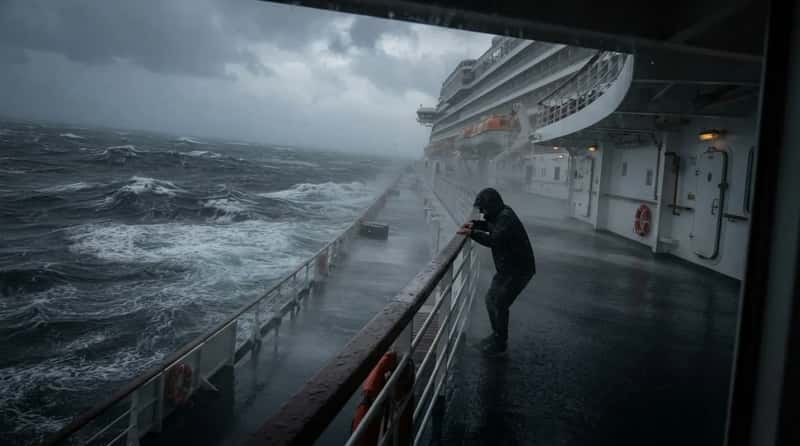
When a ship starts rocking, a surprising number of passengers head outside to “see what’s happening.” Captains find this genuinely alarming, not amusing.
Fifty-knot winds can lift a grown adult off their feet. On an open deck, that’s the difference between a good story and a body overboard.
Cruise ships are engineered to handle a huge range of sea conditions, but severe weather still carries real risk. When it hits, staying indoors and following crew instructions isn’t caution – it’s the only option that ends well.
Take comfort in this instead: modern cruise liners pass brutally strict stability tests before they’re ever allowed to sail. The ship can handle the storm. Your body on an open deck can’t.
But the weather issue is just the surface. Slide #13 reveals a behaviour that trips up even experienced cruisers.
#13 – Alcohol and Open Decks Are a Dangerous Combination
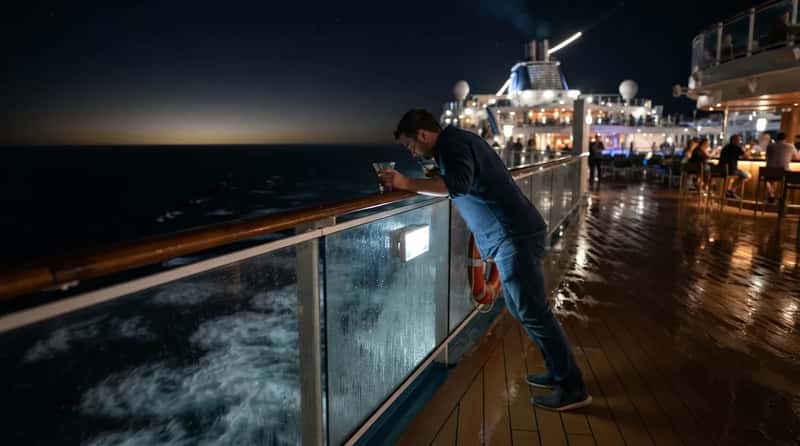
Cruise ships are famous for their bars, and there’s nothing wrong with a drink. But captains quietly watch the alcohol-related incident rate climb as the night goes on.
Overindulgence dulls judgment and reflexes fast. Leaning over railings or wandering into unauthorised areas after a few too many drinks is exactly how minor mistakes turn into emergencies.
Excessive intoxication is common enough on cruises that captains have a standing protocol for it. If a passenger becomes dangerously drunk and a risk to themselves or others, the captain has the legal authority to confine them to their cabin until they sober up.
That’s not a figure of speech. The captain’s word is law at sea, and most passengers have no idea just how absolute that authority actually is.
Speaking of the captain’s authority – slide #12 explains exactly how far it goes, and it will probably surprise you.
#12 – The Captain’s Authority Is Absolute – And They Mean It
Worth Knowing
- The captain’s authority to detain a passenger is rooted in maritime law and the ship’s flag state, not just company policy.
- Final jurisdiction over an arrest depends on where the ship is registered and which international agreements apply at the time.
- Common reasons for detention include violence, theft, safety violations, and possession of illegal items.
- A detained passenger stays confined until the next port, where local law enforcement takes over.
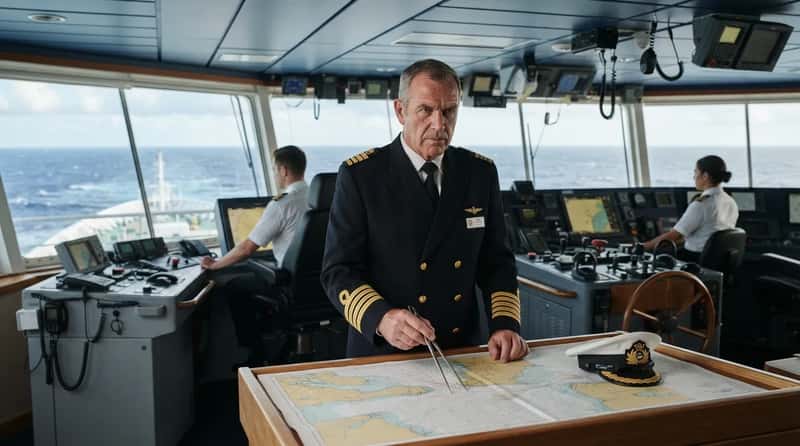
Most passengers think of the captain as a figurehead who makes announcements and shows up to the captain’s dinner. The reality is far more serious.
At sea, the captain is the ultimate decision-maker for safety and order on board – including the right to confine passengers to their cabins. That authority is rooted directly in maritime law and cruise line policy, not just ship tradition.
A captain can also arrest someone suspected of a crime on board, though final jurisdiction depends on the ship’s flag state and the specific international laws involved. Violence, safety violations, theft, and possession of illegal items are the most common reasons passengers end up detained.
Once confined, a passenger stays there until the ship reaches the next port and hands them over to local authorities. There’s no early release for good behaviour at sea.
But authority only matters if passengers understand the rules. Slide #11 covers a rule most people genuinely don’t know exists.
#11 – Never Flush Wipes Down a Ship’s Toilet
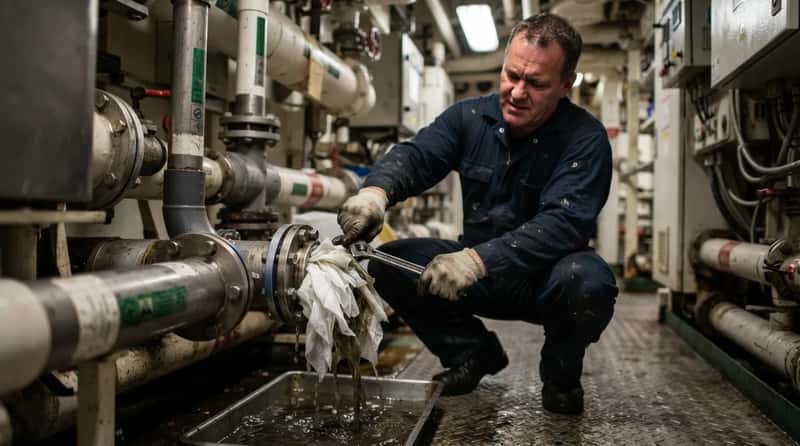
This one sounds minor. It isn’t. One passenger flushing the wrong thing can cause a plumbing crisis that affects an entire deck.
Most cruise ships run a vacuum-style waste system, similar to what you’d find on an airplane. Regular toilet paper is designed to break down in that system – wipes are not, and they clog it fast.
When that vacuum system fails, sewage and standing water pool in the lowest decks first. Interior cabins with no airflow trap the smell with nowhere to go, and it lingers for days.
Captains have rerouted schedules and pulled into ports early because of cascading plumbing failures that started with one passenger ignoring a simple sign on the back of a bathroom door.
Now let’s talk about the ship’s schedule – because slide #10 reveals something passengers routinely get wrong about how tightly everything is timed.
#10 – The Ship Will Genuinely Leave Without You
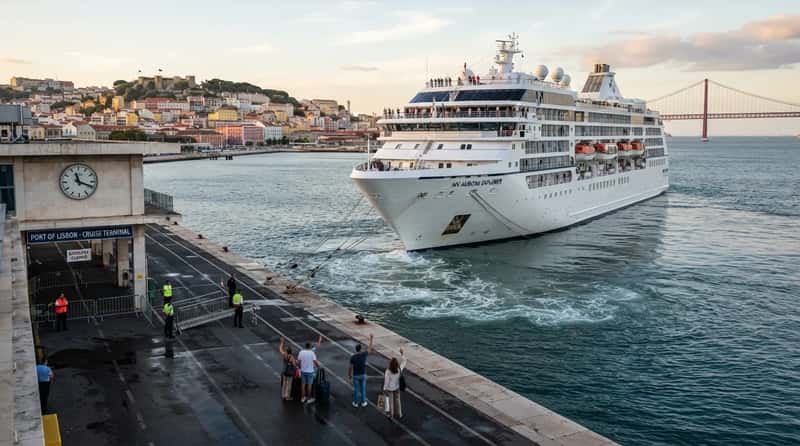
Passengers love to test departure times, assuming the ship will wait for a few stragglers. Captains wish they could explain how catastrophically wrong that assumption is.
Every port call runs on a strict arrival and departure window that the captain has to honour, no exceptions. That schedule is locked in by port authority agreements, customs clearances, and tugboat reservations well before the ship even docks.
None of that gets renegotiated because someone wants an extra hour ashore. Miss the departure window and the ship pays real financial penalties that don’t disappear just because a passenger was browsing a market stall.
The ship will sail. You will be responsible for getting yourself to the next port on your own dime, at your own risk.
But timing isn’t the only thing passengers underestimate. Slide #9 covers what they get wrong about the ship’s medical situation.
#9 – The Onboard Medical Centre Is Not a Hospital

Passengers often board with a comfortable assumption: if something goes wrong health-wise, the ship’s doctor will handle it. Captains know the reality is far more complicated.
Cruise ship medical care is nowhere near what you’d get on land. Some ships carry doctors trained in emergency medicine – some don’t, and there’s no requirement that they do.
A ship’s medical bay is built for stabilisation, not surgery. For a cardiac event, a stroke, or serious trauma, the only real options are a medevac or an emergency port diversion – and that decision rests entirely with the captain.
Talk to your doctor before you sail, keep your vaccinations current, and pack more of your prescription medication than you think you’ll need. There is no pharmacy run at sea.
Slide #8 moves from medical emergencies to an everyday problem that captains consider one of the most preventable – and most ignored.
#8 – Hand Hygiene Is Everyone’s Job, Not Just the Crew’s

Fast Facts
- The CDC’s Vessel Sanitation Program officially declares an outbreak once 3% or more of passengers or crew report matching gastrointestinal symptoms.
- Crew members are required to notify medical staff of their own symptoms immediately, a rule rarely enforced in land-based workplaces.
- Norovirus spreads through contaminated surfaces, food, and water as well as direct contact, which is why hand washing beats hand sanitiser alone.
- Once a ship crosses the reporting threshold, it triggers a formal CDC investigation, not just a routine cleanup.
Norovirus outbreaks on cruise ships make headlines, and passengers almost always blame the ship. Captains know the fuller picture, and it’s more uncomfortable than that.
Norovirus spreads through touch – surface to hand to mouth – and the single best defence is frequent hand washing with soap and water. Skipping the alcohol gel at the buffet isn’t a personal choice; it’s a shared risk.
One infected passenger who walks past the sanitiser station can seed an outbreak that sickens hundreds within 48 hours. The captain then answers directly to a CDC Vessel Sanitation Program investigation, with real consequences for the ship’s operating record.
Every gel station near a buffet, dining room, or gangway is there for a reason the captain takes dead seriously. Using it costs three seconds. Skipping it can quietly wreck a voyage for a thousand strangers.
Slide #7 covers a habit that passengers think is harmless but quietly creates serious problems for the entire crew structure.
#7 – Asking Crew Members to Break the Rules Puts Their Jobs at Risk
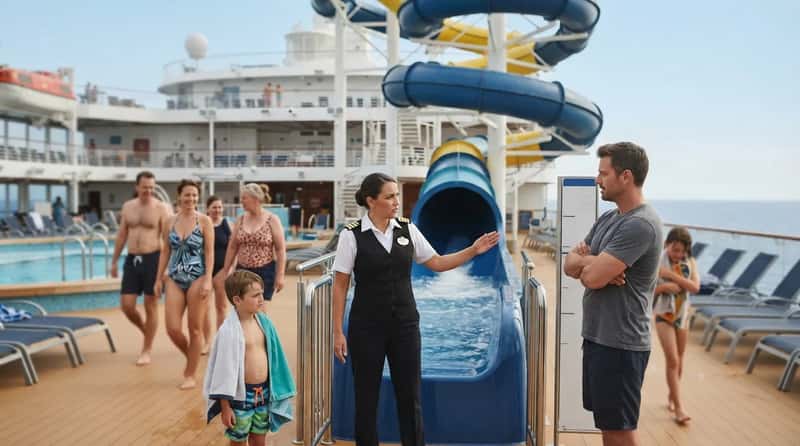
It seems like a small ask – let my child on the slide even though they’re too short, sneak a drink to a minor, bend one tiny rule just this once. Captains and crew wish passengers understood what that “small ask” actually costs.
These requests don’t just annoy the crew member – they put that person’s job on the line. Cruise lines take rule enforcement seriously, and “a passenger asked me to” is rarely an accepted excuse.
Crew members sign long contracts, work with no days off, and earn far less than most passengers assume. Pressuring them into bending a rule for your convenience is the kind of thing that bothers experienced cruisers just as much as it bothers the captain.
A crew member who loses their job at sea can end up stranded in a foreign port, far from home. That “one small favour” you asked for had consequences that followed someone else across the world.
Slide #6 is one most passengers have never considered – and it affects the captain’s ability to do their job every single sailing.
#6 – Saving Complaints for Your Online Review Helps No One

Passengers who seethe silently for seven days and then post a devastating review the moment they’re home are, from the captain’s perspective, one of the most frustrating patterns in the industry.
Broken air conditioning, billing errors, a rude interaction – these things happen. Crew genuinely want the chance to fix them while the ship is still at sea, not after the fact.
The crew can’t fix what they don’t know about. Whether it’s a cabin malfunction, an accident, or a disagreement with staff, raising it onboard gives someone the power to actually solve it.
A captain who hears about a problem can act on it within hours. A captain who reads about it in a review three weeks later can do nothing – except watch the same thing happen again on the next sailing.
Slide #5 goes deeper into a safety issue that most passengers have genuinely never thought about – and it involves knowing where you are on the ship.
#5 – Learning Basic Ship Directions Could Save Your Life
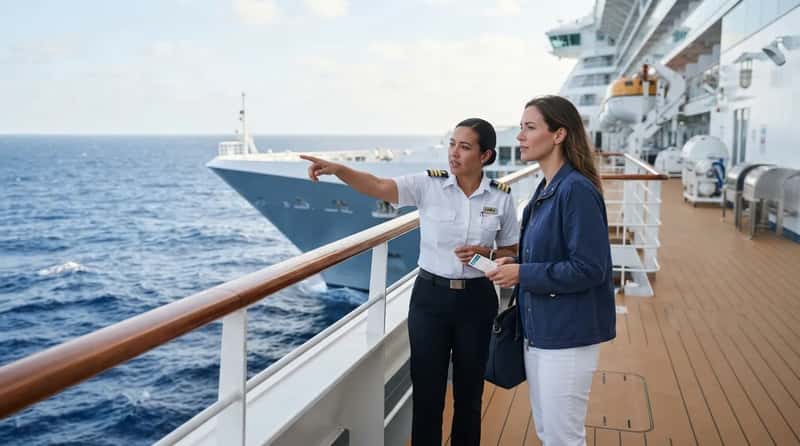
In an emergency, crew members direct passengers using nautical terms. Passengers who stare blankly at the word “port” lose critical seconds – and in a real evacuation, seconds matter.
Land-based instincts don’t help here. “Port side” means the left side of the boat when you’re facing forward, and it never changes no matter which way you’re standing.
The four terms worth memorising are port (left, facing the bow), starboard (right, facing the bow), bow (the front), and stern (the back). That’s the entire vocabulary you need.
Take two minutes on embarkation day to walk your muster route and count the fire doors between your cabin and your assembly point. In darkness or smoke, that landmark count is what gets you out – not a sign you can no longer read.
Slide #4 covers an issue that affects the captain’s legal standing – and most passengers are completely unaware it’s happening.
#4 – The Ship Is a Workplace, Not Just a Holiday Venue
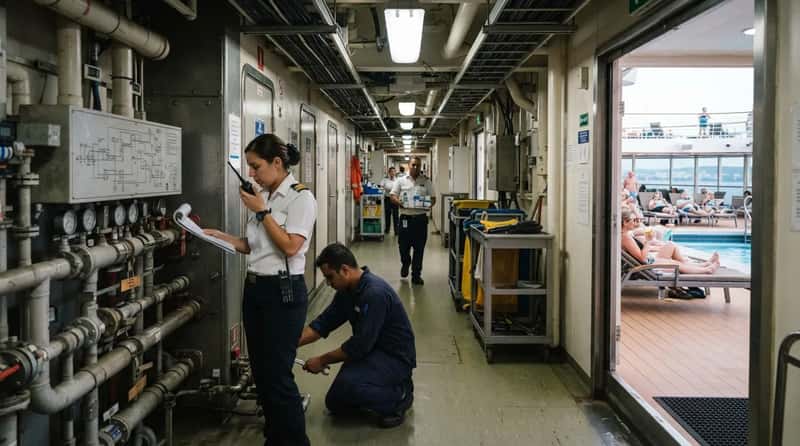
Passengers step on board and see a resort. Captains look at the same space and see a regulated maritime workplace with international legal obligations stacking up in every direction.
A modern cruise ship can carry up to 7,600 passengers plus crew across international waters. The captain answers to SOLAS passenger ship requirements, Safe Return to Port rules, CLIA-adopted medical standards, CDC sanitation inspections, and port state control at every single stop.
Your vacation is unfolding inside someone else’s workplace. While you’re sipping a cold drink in a padded lounger, a crew member is working a shift behind the scenes that never really ends.
Every shortcut a passenger takes – ignoring a barrier, wandering into a restricted deck, interfering with crew work – is a potential SOLAS violation the captain is ultimately liable for. They’re not being controlling. They’re managing a legally inspected facility under international law, whether it feels that way from the pool deck or not.
Slide #3 is the one that veteran cruisers debate fiercely – because it’s the piece of knowledge that separates a prepared passenger from a liability.
#3 – In an Emergency, Panic Is the Real Threat
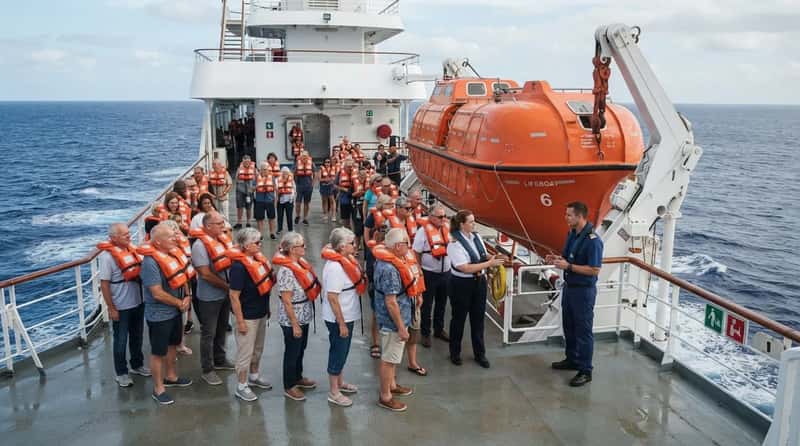
Worth Knowing
- Under SOLAS rules, lifeboats must be capable of launching within 30 minutes once passengers are mustered and life jackets are on.
- Survival craft are kept ready enough that two crew members can prep a launch in under five minutes.
- In cold open water, hypothermia can begin incapacitating a person within roughly 15 minutes – exactly why orderly movement beats a stampede for the exits.
Every evacuation training programme focuses on one variable that no amount of engineering can fully control: human behaviour under stress.
If the order to abandon ship ever comes, follow crew instructions as calmly as you can. Getting hundreds of people off a ship safely takes time, and the crew won’t wait until the last minute to start – so there’s no reason to push, shove, or panic.
One of the biggest real-world problems is elderly passengers who feel unsteady climbing into a lifeboat, which breeds apprehension fast. More able-bodied passengers stepping in to help, and staying visibly calm, genuinely improves survival odds for the whole group.
Captains who’ve managed real emergencies report the same pattern every time: the passengers who listened, moved steadily, and helped others were the difference between a controlled evacuation and a chaotic one. Staying calm in a crisis is a skill – and like any skill, it starts with deciding in advance that you’ll practise it.
Slide #2 holds the piece of knowledge that could define your entire cruise experience – and almost nobody boards with it.
#2 – Rudeness to Crew Affects the Whole Ship’s Atmosphere
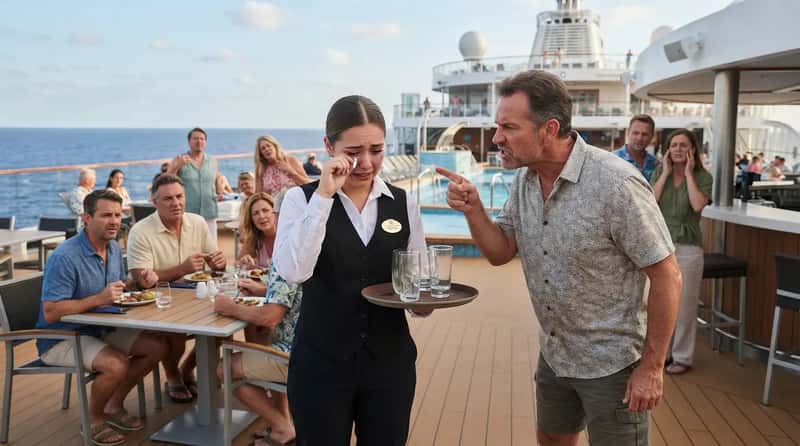
It sounds like soft advice. It isn’t. Captains understand something about crew morale that passengers never see: when one guest is repeatedly abusive, the ripple touches every interaction on the ship that day.
Complaining rudely, acting entitled, yelling at staff, refusing basic courtesy – these behaviours drive other cruisers just as crazy as they drive the crew. Ask around the cruise community and you’ll find plenty of people who’ve watched a fellow passenger act this way and quietly cringed.
Being on vacation isn’t a licence to do whatever you want. Some passengers are guilty of things that leave everyone around them – staff and strangers alike – scratching their heads.
A captain who receives multiple crew reports about the same passenger has both the authority and the quiet willingness to act. That might mean a formal warning, restricted privileges, or in serious cases, disembarkation at the next port with no refund and no argument.
And now the one that captains would make the subject of every pre-boarding announcement if they could – slide #1.
#1 – The Captain Cannot Save You from Yourself in a Restricted Area
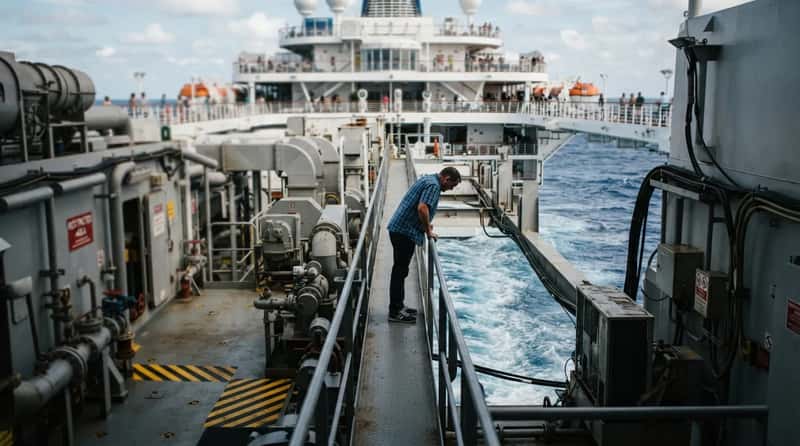
Of all the things ship captains quietly wish passengers understood, this is the one that keeps experienced maritime officers awake at night – because it’s the one where the consequences are irreversible.
Leaning over railings or wandering into unauthorised areas isn’t a suggestion to avoid. It’s a fundamental safety requirement backed by maritime law and international regulation, full stop.
The captain holds ultimate authority at sea, but that authority is reactive, not predictive. By the time a crew member spots someone in a restricted zone and actually reaches them, the dangerous moment may already have passed – or the worst may already have happened.
Every “restricted area” sign represents a real incident that happened on a real ship. The barrier at the edge of a machinery space, the locked door to a crew-only deck, the rope across a slippery aft section – none of it is there to be inconvenient. Someone, somewhere, was seriously hurt before that barrier went up, and the captain knows those stories even if the passengers never will.
The Bottom Line
At a Glance: What Actually Matters
- Take the muster drill seriously and know your fastest route to your assembly point.
- Stay indoors during rough weather, no matter how tempting the view looks from the railing.
- Wash your hands like the ship’s health record depends on it – because it genuinely does.
- Treat the crew’s rules, and the crew themselves, with the same respect you’d want shown to you.
Ship captains operate under a level of legal, logistical, and human responsibility that most passengers never glimpse from the sun deck.
From the muster drill they wish you’d take seriously, to the plumbing you’re quietly destroying, to the crew member whose career you’re risking with a casual request – almost every item on this list comes down to one thing: awareness.
The captain isn’t just the friendly face at the welcome cocktail. Under maritime law, they’re the person ultimately accountable for every life on board, and they’d genuinely sleep better knowing you understood even half of what’s on this list.
Which of these surprised you most – or which one do you think passengers are worst at following? Drop it in the comments below.
Bonus: The One Document Captains Wish Every Passenger Carried
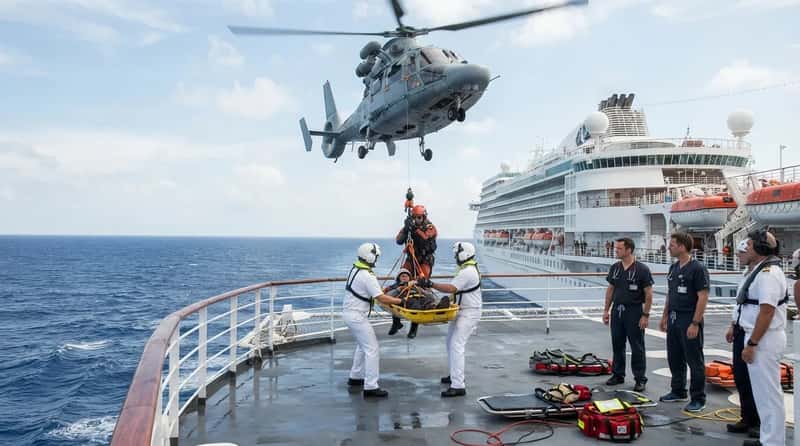
Every crew member has watched a family scramble when a real medical emergency hits mid-voyage – and the single biggest factor in how smoothly it goes is whether the passenger already had the right coverage lined up before boarding.
A standard travel policy is not enough. What actually matters is a policy with a dedicated medical evacuation and repatriation benefit, ideally at least $50,000 to $100,000, because a helicopter or boat evacuation from open water is billed at emergency rates with no ship-side discount.
- Buy a policy that explicitly lists “medical evacuation” or “emergency medical transportation” as a named benefit, not just trip cancellation.
- Save a screenshot of the policy’s 24/7 assistance hotline as your phone’s lock screen wallpaper before you board.
- On day one, hand a copy of your insurance card and any major medical conditions to guest services so it’s on file if you can’t speak for yourself later.
- Keep a printed copy in your cabin safe as backup – phones die, paper doesn’t.
This single step costs less than a specialty dinner but is the difference between a stabilised passenger being flown to a proper hospital within hours, or a family arguing with an insurer from a foreign port with no signal and no leverage.